My Account
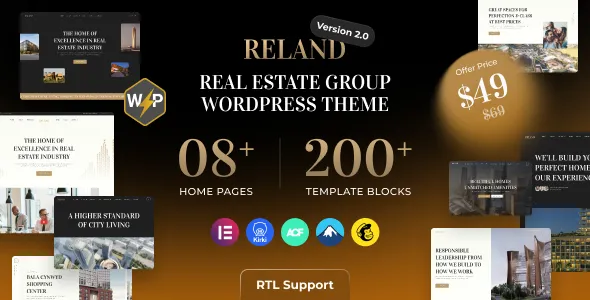
Reland – Real Estate Group WordPress Theme + RTL
Reland – Real Estate Group WordPress Theme + RTL is a website design solution for real estate agencies, property consultants, residential property developers, commercial real estate businesses, and property management companies looking to establish a professional online presence with WordPress. Designed around the needs of the real estate industry, this theme provides a starting point for presenting property services, introducing real estate professionals, showcasing residential and commercial projects, and helping potential clients discover relevant property information. Its RTL positioning also makes it relevant for websites that need right-to-left text presentation for languages such as Arabic and Hebrew, subject to the theme’s documented language support and configuration.
A professional real estate website should do more than display property photographs. It should communicate trust, organize information clearly, introduce available services, and help visitors take the next step in their property journey. Whether a business specializes in residential sales, rental properties, commercial buildings, luxury homes, property investment, or real estate consultancy, a carefully structured website can make its offerings easier to understand and explore.
Reland can serve as a foundation for creating a property-focused digital experience with WordPress. Website owners can plan pages around their services, company information, property listings, agent profiles, client inquiries, and useful real estate content. The exact layouts, listing functions, search options, integrations, and customization tools available depend on the theme version and compatible plugins. Reviewing the official documentation before installation helps confirm that the theme meets the requirements of a particular real estate project.
What Is Reland Real Estate Group WordPress Theme + RTL?
Reland is a real estate-oriented WordPress theme intended for businesses that want to present property-related services through a dedicated website. Rather than adapting a general business layout from scratch, a real estate theme offers a more relevant starting point for organizing property information and communicating with buyers, sellers, renters, investors, and property owners.
Real estate agencies can use a property-focused website to introduce their company, explain their services, display selected properties, and provide contact information. Property consultants can create pages describing their expertise, while developers may present residential communities, commercial projects, and completed developments.
WordPress provides a content management system for publishing pages, updating articles, organizing media, and maintaining website navigation. Depending on the theme’s included features and compatible extensions, a real estate website may also be configured to support property listing pages, property details, inquiry forms, agent profiles, and other useful real estate content.
The RTL aspect is particularly relevant for businesses serving audiences who read from right to left. When properly supported and configured, an RTL layout can help align text, navigation, and interface elements with the reading direction of the intended language.
Because the exact capabilities depend on the product release, website configuration, and supporting plugins, users should verify the included functionality and compatibility requirements before building their complete property platform.
Designed for Real Estate Agencies and Property Businesses
Real estate agencies need a website that presents their services professionally while making it easy for prospective clients to learn about the business. Visitors may be searching for a home to purchase, an apartment to rent, commercial space for their company, or an experienced professional to guide them through a property transaction.
Reland can be considered for an agency website that organizes these services into clear sections. A homepage may introduce the company and its main property services, while separate pages can explain residential sales, property rentals, commercial real estate, investment consultancy, and property management where relevant.
A dedicated About page can introduce the agency’s experience, service philosophy, and local market knowledge. Agent profile pages can help visitors understand who they will be communicating with, while a contact page can provide convenient ways to request assistance.
The website’s presentation should match the agency’s audience. A company focused on luxury homes may emphasize architectural photography and detailed property presentations. An agency specializing in rental accommodation may prioritize practical information and inquiry pathways.
A consistent design, accurate information, and clear navigation help establish a more dependable online experience. The theme should be customized around the actual services offered rather than filled with generic property content that does not reflect the business.
Showcase Residential Properties
Residential real estate websites help buyers and renters explore houses, apartments, condominiums, villas, townhouses, and other types of accommodation. Visitors often compare multiple properties before deciding which ones deserve closer attention.
A Reland-based website can be planned to present residential property information through organized listing pages and individual property details, subject to the theme’s available templates and compatible listing functionality. Each property page should provide the information visitors need to assess whether a property suits their requirements.
Useful property details may include the location, property type, asking price or rental rate, number of bedrooms, number of bathrooms, floor area, available amenities, and a description of the surrounding neighborhood. Only information verified by the agency or property owner should be published.
High-quality photographs can help visitors understand the layout, appearance, and features of a property. Images should represent the actual property accurately and should be optimized for suitable loading performance.
Where supported, a gallery can present multiple rooms and exterior views. Floor plans, location maps, virtual tours, and downloadable property documents may also be added through appropriate tools or integrations.
A good residential property page balances visual presentation with practical information. Visitors should not have to search through unrelated content to find essential details or discover how to arrange a viewing.
Commercial Real Estate Website Solutions
Commercial real estate businesses serve a different set of requirements from residential agencies. Their clients may be looking for office space, retail premises, warehouses, industrial facilities, hospitality properties, or land for business development.
Reland can be evaluated as a starting point for a commercial property website that organizes listings by property category and intended use. Dedicated pages can explain the agency’s commercial real estate services, introduce its team, and present relevant properties to business owners, tenants, investors, and developers.
Commercial property descriptions should prioritize details that influence business decisions. Depending on the property, useful information may include total floor area, available units, building specifications, access routes, parking availability, lease terms, zoning information, and suitability for particular business activities.
Where information is available and verified, the website can also explain nearby transportation links, commercial districts, and other location characteristics. Such details should be accurate and should not imply that a property has approvals, facilities, or permissions that have not been confirmed.
A structured commercial property presentation helps prospective clients compare available options. Clear inquiry options also make it easier for businesses to request additional documentation, discuss lease requirements, or arrange a site visit.
Property Listings and Detailed Property Pages
Property listings are an important part of many real estate websites because they help visitors browse available opportunities and identify properties that match their needs. The effectiveness of a listing experience depends on both the quality of the information and the ease of navigation.
Depending on Reland’s current feature set and compatible plugins, a website may be configured with listing cards, property detail layouts, category pages, and supporting navigation elements. Before relying on a specific listing feature, confirm that it is included or supported by the installed version.
A useful listing card typically displays the property’s main photograph, title, location, price, and a few essential characteristics. Too much information can make a listing difficult to scan, while too little can leave visitors unsure whether to open the full details.
Individual property pages can provide more comprehensive descriptions, image galleries, amenities, location information, and inquiry options. Consistent formatting makes it easier to compare properties and helps the website feel organized.
Property information should be kept current. Outdated prices, incorrect availability, and missing details can frustrate visitors and waste the agency’s time. Establishing a process for reviewing and updating listings is especially important for businesses with large inventories.
If a separate property management system or listing plugin is used, test how it works with the theme before publishing large numbers of listings. Compatibility, content migration, and the process for updating information should all be considered during setup.
Right-to-Left Layout Support for International Audiences
One of the distinguishing aspects of Reland is its RTL positioning. Right-to-left presentation is important for websites written in languages whose normal reading direction proceeds from the right side of the page toward the left.
Real estate agencies serving Arabic-speaking audiences may need navigation menus, headings, paragraphs, forms, and other interface elements to follow an RTL layout. Businesses targeting Hebrew-speaking users may have similar requirements. The exact language support and translation process should be checked against the current theme documentation.
A properly configured RTL website should do more than align paragraphs to the right. Navigation order, icons, spacing, form labels, breadcrumbs, buttons, and multi-column sections may need appropriate adjustments so that the interface remains intuitive.
Property content also requires careful attention. Numbers, prices, phone numbers, addresses, and mixed-language descriptions can behave differently within RTL text. Testing these elements helps prevent confusing presentation and formatting problems.
Website owners should review every important page in the intended language, including property listings, agent profiles, inquiry forms, and mobile navigation. Any additional page builder or listing plugin should also be checked for RTL compatibility.
For businesses serving multiple language communities, a suitable multilingual configuration can help organize translated pages and language navigation. However, RTL layout support and multilingual content management are different requirements, so each should be evaluated separately before launch.
Build a Professional Real Estate Company Website
A real estate company website should explain who the business serves, what services it provides, and why prospective clients may want to work with its team. Reland can be used as a foundation for organizing this information into a professional website structure.
A typical real estate business website may include a homepage, About Us page, property listings, services, agent profiles, client testimonials, market insights, and contact information. The precise structure should reflect the company’s size, property portfolio, and target audience.
The homepage can introduce the agency and direct visitors toward the most important property categories. A services page can explain buying assistance, selling support, rental services, property management, or investment consultancy where these offerings are genuinely available.
An About page can present the company’s background, professional approach, service locations, and team. Agent profiles can introduce individual representatives and explain their areas of expertise.
A contact page should make it easy to reach the company by providing accurate communication details and, where suitable, a contact form. Businesses should test all contact methods before the website goes live.
The overall goal is to create a coherent experience in which visitors can understand the business and find relevant information without unnecessary effort.
Property Search and Browsing Experience
When a real estate website contains many properties, browsing becomes easier when listings are organized into understandable categories. Visitors may want to distinguish between properties for sale and properties for rent, compare residential and commercial options, or explore a particular location.
Depending on the available theme features and compatible extensions, a Reland website may be configured with property categories, search fields, filters, or sorting tools. Users should verify which search and filtering functions are included rather than assuming that every property search capability comes with the theme.
Useful search criteria may include location, property type, price range, bedroom count, and other characteristics relevant to the inventory. The right filters depend on the business. A commercial property agency may need floor area and lease information, while a residential rental business may prioritize bedrooms and monthly rent.
Search controls should be easy to understand on desktop and mobile devices. Labels should be clear, and the results should communicate how many properties match the selected criteria when the supporting system provides that information.
It is also important to design useful empty-result states. If no property matches a search, visitors should receive a clear message and a practical way to adjust their criteria.
A simple, well-tested browsing experience can make a large property catalog easier to navigate and help users find suitable options more efficiently.
Property Images, Galleries, and Visual Presentation
Property photography plays a major role in the way visitors evaluate real estate online. Clear, relevant images can communicate room layouts, natural lighting, exterior appearance, landscaping, and other visual characteristics that matter to buyers and renters.
A Reland website can be customized around suitable property imagery using the gallery and media presentation options available in the theme or compatible plugins. Individual listings should prioritize accurate photographs that represent the actual property rather than unrelated stock images.
A thoughtful image sequence can begin with the property’s strongest exterior or interior view, followed by photographs that explain the layout and highlight important spaces. Captions may be useful when an image requires additional context.
Images should be optimized before publication. Oversized files can slow down property pages, particularly when a listing includes a large gallery. Appropriate compression and image dimensions can help balance visual quality and loading performance.
Alternative text should describe meaningful images where appropriate, supporting accessibility and helping users who rely on assistive technology. Decorative images can be handled differently depending on their purpose.
For luxury properties, architecture, and commercial developments, a carefully curated gallery can support a premium presentation. However, visual quality should always be combined with accurate descriptions and transparent property information.
Customization and Real Estate Branding
Every real estate company has its own identity, market position, and audience. Customization helps ensure that the website represents the actual business rather than looking like an unchanged demonstration layout.
Reland’s available customization options should be checked in its documentation. Depending on the supported settings and editing tools, website owners may be able to adjust colors, typography, page layouts, images, menus, and other visual elements.
A luxury property agency may choose understated colors, spacious layouts, and large architectural photographs. A residential rental business may prefer a practical design that makes prices, availability, and inquiry options easy to locate. A commercial real estate consultancy might use a more structured presentation focused on professional services and investment opportunities.
Brand consistency should extend across the complete website. The company logo, heading styles, button treatments, imagery, and written tone should work together to create a recognizable identity.
Replace placeholder information with authentic company details, current property photographs, and accurate service descriptions. Generic content can make a website feel unfinished and may leave visitors unsure about the business’s credibility.
Before applying extensive customizations, review which design settings are controlled by the theme and which depend on page builders or plugins. Maintain backups and test substantial changes before deploying them to the live website.
Responsive Design for Mobile Property Searches
Many people explore property options on smartphones and tablets, so responsive presentation is important for a real estate website. Visitors may browse listings while commuting, compare properties during a viewing, or share a property page with family members.
Reland is positioned as a WordPress theme for real estate websites, but the precise responsive behavior should be verified using the current release. Testing should cover the homepage, property listing pages, individual property details, galleries, menus, and inquiry forms.
On smaller screens, property cards should remain readable, important information should not become crowded, and images should fit their containers. Search controls should be convenient to operate with touch input, and navigation should make it easy to move between listings and other pages.
Buttons such as inquiry links and viewing requests should be easy to identify. Forms should avoid unnecessary fields and remain usable when the on-screen keyboard is open.
Responsive behavior can be affected by custom CSS, embedded maps, third-party widgets, and additional plugins. After installing extensions or changing layouts, review the website at several screen sizes.
A consistent mobile experience helps visitors explore properties comfortably and supports the practical needs of buyers, sellers, renters, and investors.
SEO-Friendly Structure for Real Estate Websites
Search engine optimization can help prospective clients discover property listings and real estate services through relevant search queries. A well-organized theme provides a useful starting point, but organic visibility also depends on the quality of the content, technical setup, local competition, and the website’s ongoing maintenance.
A Reland-based website should use descriptive page titles, clear headings, meaningful URLs, relevant internal links, and original property descriptions. Each important page should have a clear purpose and provide information that helps visitors understand the property or service.
For local real estate businesses, location-specific service pages may be useful when they provide genuine information about the areas served. For example, an agency can explain its experience in a particular neighborhood, discuss local property categories, and describe relevant services without creating repetitive pages that offer little value.
Property descriptions should be informative and accurate. Repeating the same keywords excessively does not improve the visitor experience. Instead, use natural language to describe the property’s location, characteristics, intended use, and verified amenities.
Image optimization, sensible internal linking, mobile usability, and reliable loading performance can contribute to a better website experience. Compatible SEO plugins may help manage metadata, sitemaps, redirects, and other supported settings.
Property websites should also review duplicate listing content, expired properties, broken links, and indexing behavior. When a property is no longer available, the agency should decide whether to remove the listing, update its status, or redirect the page based on its continuing value and the website’s structure.
No WordPress theme can guarantee a particular search ranking or amount of traffic. SEO results require useful content, appropriate technical configuration, and sustained attention to user needs.
Real Estate Content Marketing and Market Insights
A real estate website can offer more than listings. Educational articles and market updates can help prospective buyers, sellers, landlords, tenants, and investors understand important aspects of the property process.
WordPress blogging tools can support content such as home-buying guides, rental advice, property preparation tips, investment explainers, neighborhood introductions, and commercial real estate articles. Reland can be considered for a website that combines this editorial content with property and service pages.
An agency might publish a guide explaining the steps involved in preparing a home for sale. A rental business could explain common lease considerations, while a commercial property consultant might discuss factors businesses should assess before choosing a workspace.
Market commentary should be accurate, dated where appropriate, and supported by reliable information. Avoid presenting estimates or general observations as guaranteed financial outcomes. Readers should be able to distinguish educational information from professional advice tailored to their circumstances.
Relevant internal links can connect articles to the agency’s services, property categories, and contact pages. This allows readers to explore additional information naturally when they need further assistance.
A consistent editorial plan can help the business build a useful resource library over time. Prioritize topics that answer real customer questions rather than publishing large quantities of repetitive content solely to target keywords.
Lead Generation and Property Inquiry Forms
Generating inquiries is a central objective for many real estate websites. Visitors may want to arrange a property viewing, ask about availability, request additional photographs, discuss a valuation, or speak with an agent about selling or renting a property.
A Reland website can be configured with suitable inquiry pathways using the contact options supported by the theme and compatible plugins. Depending on the business requirements, these may include a general contact form, a property-specific inquiry form, or a request for a consultation.
A property inquiry form should collect useful information without creating unnecessary friction. It may ask for a visitor’s name, email address, preferred contact method, and question about the property. Additional fields should be included only when they serve a clear purpose.
When possible, an inquiry should be associated with the relevant property so that the agency can understand what the visitor is asking about. The exact implementation depends on the available listing system and form integration.
Calls to action should be clear and relevant. A property detail page may invite visitors to request further information or arrange a viewing, while a service page may encourage them to discuss buying, selling, or management requirements.
Before launch, test form validation, email delivery, confirmation messages, and spam protection. The agency should also have a process for responding to inquiries promptly and maintaining appropriate records.
Agent Profiles and Team Presentation
Real estate decisions often involve personal communication, so introducing the professionals behind an agency can help visitors understand whom they may work with. Agent profiles provide a place to present experience, areas of specialization, languages spoken, and contact details where appropriate.
Reland can be assessed for presenting team information through available page layouts or compatible profile tools. The precise functionality should be verified in the theme documentation.
An effective agent profile includes a professional photograph, a concise biography, relevant qualifications, and an explanation of the properties or services the agent handles. Where appropriate, it can link to listings associated with that professional.
A residential property specialist might focus on local knowledge and buyer support, while a commercial agent may emphasize experience with office, retail, or industrial properties. The information should be factual and consistent with the individual’s actual expertise.
Team pages should be maintained as staff members join or leave the company. Outdated contact details and inactive profiles can confuse visitors and reduce confidence in the agency.
A thoughtful presentation of the team helps put a human face on the business and makes it easier for potential clients to identify the right contact.
Property Management and Rental Services
Property management companies need to communicate how they support owners, tenants, and rental investors. Their services may include tenant communication, rent administration, maintenance coordination, property inspections, and support with leasing processes, depending on the company’s actual offering.
Reland can serve as a website foundation for a property management business that explains these services and provides clear inquiry options. Separate pages can outline services for landlords, prospective tenants, and property investors so that each audience can find relevant information.
Landlord-focused content might describe the company’s management process, reporting approach, and maintenance coordination services. Tenant-facing information can explain how to inquire about available rentals and contact the relevant representative.
Rental property pages should provide accurate details about availability, rent, deposit requirements, and other applicable terms. The website should not display outdated availability or make unsupported claims about the legal status of a property.
If the business needs online applications, tenant portals, payment processing, maintenance requests, or automated property management workflows, these capabilities should be evaluated separately. They may require specialized software or integrations beyond the theme itself.
Clear communication helps visitors understand the company’s services and gives property owners and tenants a practical way to contact the business.
Website Performance and Loading Speed
Performance matters for real estate websites because property pages often contain large photographs, galleries, maps, and interactive elements. Slow pages can make it harder for visitors to compare listings and may discourage them from exploring further.
The actual speed of a Reland website depends on the theme implementation, hosting, image sizes, installed plugins, scripts, fonts, and third-party services. A responsive design alone does not guarantee fast loading.
Start by optimizing property photographs and avoiding unnecessarily large media files. Use suitable image dimensions for listing cards and full property galleries rather than loading full-resolution files everywhere.
Review whether every plugin and external widget is necessary. Unused integrations, heavy scripts, and redundant features can add complexity without improving the user experience.
Quality hosting, caching, and other performance tools may help when configured appropriately. Test the website before and after major changes so that improvements can be measured rather than assumed.
Performance checks should include pages with different content types. The homepage may behave differently from a property detail page containing a large gallery or embedded map.
Regular monitoring helps identify slow-loading assets and technical issues as the property catalog expands. A faster, more stable website supports a more comfortable browsing experience.
Security, Maintenance, and WordPress Management
A real estate website may contain business contact information, property inquiries, team details, and other important content. Routine maintenance helps protect the website and keeps its information dependable.
Website owners should keep WordPress, the theme, and compatible plugins updated. Before major updates, create a backup and consider testing changes in a staging environment, particularly if the website relies on listing tools or custom integrations.
Use strong passwords, assign appropriate administrator permissions, enable HTTPS, and choose reputable hosting. Install themes and plugins from trustworthy sources and remove unused components when they are no longer needed.
Regular backups should be stored securely, and the restoration process should be understood and tested. A backup is most useful when the website owner knows how to recover the site if an update or technical problem causes disruption.
Maintenance also includes reviewing property availability, updating agent profiles, correcting contact details, and removing obsolete content where appropriate.
A scheduled review process can help ensure that both the website’s technical foundation and its published information remain reliable.
Who Should Use Reland Real Estate Group WordPress Theme + RTL?
Reland may be suitable for different businesses and professionals involved in the property market, depending on the current feature set and the website’s technical requirements.
Real estate agencies: Create a company website to introduce services, organize property information, and help buyers and sellers contact the agency.
Property consultants: Present consulting services, market knowledge, professional experience, and relevant property opportunities.
Residential property businesses: Showcase houses, apartments, villas, and other accommodation with clear descriptions and visual presentations.
Commercial real estate companies: Organize information about office spaces, retail premises, warehouses, and other business properties.
Property developers: Present residential communities, commercial developments, project information, and completed properties.
Rental agencies: Publish rental information and provide convenient inquiry options for prospective tenants and landlords.
Property management companies: Explain management services, introduce the team, and guide property owners toward relevant contact channels.
RTL-focused businesses: Build a real estate website for right-to-left language audiences, subject to the theme’s verified language and RTL compatibility.
Real estate investment consultants: Present services and educational information for clients researching property investment opportunities, without making unsupported financial promises.
The most suitable use depends on the company’s requirements. Before selecting the theme, confirm the availability of the required property layouts, search functions, RTL behavior, language support, and third-party integrations.
Tips for Building a Successful Website with Reland
A real estate theme provides the starting point, but the quality of the finished website depends on its content, usability, and suitability for the intended audience.
Begin by defining the primary purpose of the website. Determine whether the business mainly needs to generate buyer inquiries, promote rental properties, present commercial listings, introduce property management services, or showcase development projects.
Plan the navigation around the most important user tasks. Visitors should be able to find available properties, understand the agency’s services, learn about its team, and locate contact details without unnecessary steps.
Use accurate property information and authentic images. Make sure prices, addresses, availability, property characteristics, and contact details are reviewed before publication. Establish a routine for updating listings when their status changes.
Customize the visual presentation to reflect the business’s brand. Choose consistent colors and typography, replace demonstration content, and maintain a clear hierarchy across the homepage and internal pages.
If the website serves RTL audiences, test the complete interface in the intended language. Review navigation, mixed-language content, numbers, forms, icons, and mobile layouts rather than assuming that text alignment alone is sufficient.
Before launching, check responsive behavior, loading performance, contact forms, navigation links, and any property search or listing integrations. Configure suitable backups and maintenance routines so that the website remains dependable over time.
Finally, focus on useful content and genuine customer needs. A property website is most effective when it helps visitors make informed decisions and provides a straightforward path to contacting the business.
Final Thoughts on Reland Real Estate Group WordPress Theme + RTL
Reland – Real Estate Group WordPress Theme + RTL is a real estate-focused WordPress design option for agencies, property consultants, developers, rental businesses, and property management companies seeking to establish a dedicated online presence. Its property-oriented positioning makes it relevant to websites that need to introduce real estate services and organize information for buyers, sellers, tenants, landlords, and investors.
The RTL aspect can also be important for businesses serving audiences who use right-to-left languages. However, the exact RTL implementation, supported languages, listing layouts, property search capabilities, and integration options should be confirmed through the current product documentation before the website is developed.
With thoughtful customization, a real estate website can bring together clear property descriptions, organized listings, professional team information, useful service pages, and convenient inquiry options. Responsive testing, accurate content, accessibility, and appropriate performance optimization further support a professional visitor experience.
Long-term success also depends on keeping listings current, maintaining website security, publishing helpful content, and following sound SEO practices. A theme alone cannot guarantee search rankings, property inquiries, or business growth, but it can provide a useful starting point for building a structured real estate website.
For businesses looking to present property services through WordPress, Reland can be evaluated as part of a broader website strategy. By confirming the required features, configuring the RTL experience where needed, and prioritizing clear information and dependable maintenance, website owners can build an online presence that supports their real estate business and helps potential clients explore the services and properties available to them.