My Account
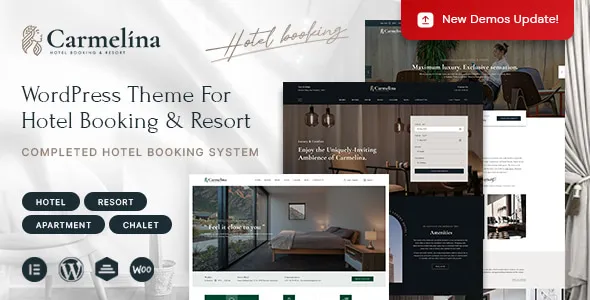
Carmelina – Hotel Booking WordPress Theme
Carmelina – Hotel Booking WordPress Theme is a stylish website solution designed for hotels, boutique accommodations, resorts, guesthouses, bed and breakfast properties, and hospitality businesses that want to establish a professional online presence. With a focus on hotel presentation, accommodation information, and guest reservations, Carmelina provides a foundation for creating a welcoming website where visitors can explore rooms, discover amenities, learn about available services, and plan their next stay. Built for the WordPress ecosystem, this theme can help hospitality businesses organize their online information and present their property in a way that reflects its atmosphere, service quality, and unique identity.
In the competitive hospitality industry, a well-designed website can play an important role in attracting guests and encouraging booking inquiries. Travelers often compare several properties before making a decision, considering factors such as room comfort, location, facilities, pricing, photographs, and reservation convenience. A clear and visually appealing website helps visitors evaluate these details while developing confidence in the accommodation provider. Carmelina – Hotel Booking WordPress Theme offers a starting point for presenting these essential details in an organized and professional digital environment.
Whether you operate a luxury hotel, a charming countryside retreat, a contemporary city property, or a small family-run guesthouse, Carmelina can be considered for building a hospitality website tailored to your business. By combining thoughtful content organization with suitable accommodation imagery and clear calls to action, you can create an online experience that helps potential guests understand your property and take the next step toward planning their visit. Actual booking functionality, payment processing, and available design options depend on the theme’s current version, its included features, and any compatible plugins you choose to install.
Modern Design for Hotels and Hospitality Businesses
A hotel’s website is often the first introduction travelers have to the property. Before contacting the front desk or completing a reservation, visitors want to understand what the accommodation looks like, what services are available, and whether the experience matches their expectations. Carmelina is intended for hotel and hospitality websites that need a polished presentation capable of communicating comfort, convenience, and professionalism.
A modern hotel website should balance visual appeal with practical information. Attractive room photography can create an emotional connection, while clear descriptions help visitors understand the accommodation options. Information about check-in procedures, amenities, location, dining, and guest services can further support the decision-making process.
Carmelina can serve as a foundation for organizing these elements into a cohesive website. Hotels can adapt the visual presentation to match their brand identity, whether they prefer a sophisticated luxury atmosphere, a relaxed boutique style, or a welcoming family-friendly appearance. Carefully selected colors, readable typography, high-quality images, and consistent page layouts can help establish a recognizable hospitality brand.
The website should also make important actions easy to find. Visitors may want to explore available rooms, review facilities, check location information, or submit a booking inquiry. Placing clear navigation and appropriate calls to action throughout the website can help guests find what they need without unnecessary confusion.
By combining visual storytelling with useful information, hotel businesses can create a website that introduces their property and supports a smoother guest journey.
Hotel Booking Website Structure
An effective hotel booking website needs to provide more than a homepage with attractive photographs. It should guide visitors through the information required to evaluate a stay and understand how to make a reservation. Carmelina can be used as a starting point for creating a structured hospitality website with dedicated sections for accommodation, amenities, property information, and guest inquiries.
A typical hotel website may include a homepage, room listings, individual room details, facilities, dining information, a gallery, location details, frequently asked questions, and a contact page. Depending on the hotel’s requirements and the theme’s available layouts, additional pages may cover spa services, event spaces, wedding facilities, conference rooms, or local experiences.
The homepage introduces the property and highlights the most important information. Room pages provide details about individual accommodation types, while amenity sections explain the facilities guests can enjoy during their stay. A gallery helps visitors visualize the property, and the contact page provides a straightforward way to ask questions or request assistance.
For websites that require online reservations, the booking process should be evaluated separately from the visual theme design. Confirm whether the version of Carmelina you intend to use includes a booking engine or requires a compatible reservation plugin. Availability calendars, seasonal rates, payment gateways, confirmation emails, and reservation management may depend on the selected booking solution and its configuration.
Planning the website structure before installation helps ensure that visitors can move naturally from discovering the property to evaluating rooms and understanding how to reserve their stay.
Accommodation and Room Showcase
Room presentation is one of the most important elements of a hotel website. Guests want to know what type of accommodation they can choose, how much space is available, which amenities are included, and whether the room suits their travel requirements.
Carmelina can provide a foundation for presenting accommodation options through organized room pages or listing sections, depending on the layouts available in the installed version. Hotels can use these sections to introduce standard rooms, superior rooms, deluxe accommodations, suites, family rooms, or other categories relevant to their property.
Each room description should communicate the features that matter to guests. Useful details may include bed configuration, maximum occupancy, room size, bathroom facilities, available views, air conditioning, workspace, connectivity, and other amenities that are genuinely provided by the property.
High-quality photographs can make room listings more informative and appealing. Include images that accurately represent the accommodation, and consider showing different angles so visitors can understand the layout. If a room includes a balcony, seating area, or distinctive architectural feature, a dedicated photograph can help highlight that benefit.
Clear room descriptions also reduce uncertainty before arrival. Explain any important limitations, accessibility considerations, extra-bed policies, or occupancy restrictions where relevant. Accurate information helps guests choose suitable accommodation and creates more realistic expectations.
When supported by a compatible booking system, room pages may be connected to availability information and reservation actions. Always confirm that the booking integration supports the room types, occupancy rules, and rate structures required by your hotel.
Online Reservation and Booking Experience
Convenient reservations are a key consideration for hotels that want to manage guest inquiries and bookings through their own websites. Travelers appreciate being able to review available options and understand the steps required to secure a room.
Carmelina – Hotel Booking WordPress Theme is intended for hotel website projects where reservation-related information is important. However, a theme designed for booking websites does not automatically guarantee a complete reservation engine. Before purchasing or installing it, check the current documentation to determine whether online booking is built in or whether a compatible third-party plugin is required.
A complete hotel reservation workflow may include arrival and departure date selection, guest counts, room availability, rate calculation, booking details, payment processing, confirmation messages, and reservation management. More advanced setups may also support discount codes, seasonal pricing, cancellation policies, and automated communication.
If the website will accept direct bookings, test the entire guest journey before launch. Make sure the availability calendar reflects the correct inventory, the pricing rules are accurate, and guests receive the expected confirmation after submitting a reservation. Payment processing should be tested in a safe environment before accepting live transactions.
The reservation process should remain straightforward on desktop and mobile devices. Avoid requesting unnecessary information during the initial booking steps, and explain important policies before guests confirm their reservation.
A reliable booking experience depends on the theme, booking plugin, hosting environment, payment provider, and configuration working together. Selecting compatible tools and testing them carefully can help create a more dependable reservation process.
Designed for Boutique Hotels
Boutique hotels often compete through personality, design, location, and personalized service. Their websites need to communicate these qualities rather than relying on generic accommodation descriptions.
Carmelina can be adapted for boutique properties that want to highlight their individual character. A historic hotel may emphasize architectural details and heritage, while a contemporary boutique property might focus on modern interiors, curated amenities, and distinctive guest experiences.
Use the homepage to communicate what makes the property different. This may include a unique location, individually designed rooms, personalized guest services, a restaurant, a rooftop terrace, or proximity to cultural attractions. Focus on the features that are genuinely important to your audience.
Room pages can reinforce the property’s identity through carefully chosen photography and detailed descriptions. Instead of repeating the same wording across every accommodation category, explain the differences between room types and help visitors identify the option that best suits their preferences.
Boutique hotels can also use editorial content to introduce the surrounding neighborhood, recommend local experiences, or explain the inspiration behind the property’s design. These details create a richer impression of the destination and can help visitors imagine their stay.
Consistent visual presentation is particularly important for boutique hospitality brands. A coordinated color palette, suitable typography, authentic photography, and carefully edited content can help create a memorable digital experience that reflects the atmosphere of the property.
Suitable for Resorts and Holiday Retreats
Resorts and holiday retreats often offer a broader range of facilities and experiences than conventional city hotels. Their websites may need to present accommodation, dining, recreation, wellness services, outdoor activities, and event facilities in one organized location.
Carmelina can serve as a starting point for resorts that want to introduce their accommodation options and communicate the overall guest experience. The website’s content can be tailored to emphasize the property’s most relevant attractions, whether that means peaceful surroundings, family activities, beach access, wellness experiences, or proximity to outdoor destinations.
A resort homepage should quickly communicate the location, atmosphere, and main reasons to visit. Supporting sections can describe rooms and suites, restaurants, recreational facilities, spa services, swimming pools, gardens, or event spaces where these are available.
Photography is especially valuable for holiday properties because travelers often choose a destination based on the experience they imagine enjoying. Use genuine images of the property, its facilities, and its surroundings. Provide captions or descriptions where they help visitors understand what is shown.
For seasonal resorts, keep information about operating periods, special packages, weather-related restrictions, and facility availability up to date. If online booking is enabled, ensure that the reservation system accurately reflects seasonal availability and applicable rate changes.
By presenting both accommodation and experiences clearly, a resort website can help visitors evaluate the property as a complete holiday destination.
Ideal for Guesthouses and Bed and Breakfast Properties
Small accommodation businesses need websites that communicate warmth, trust, and practical information without requiring complicated navigation. Guesthouses and bed and breakfast properties often attract travelers who value personalized service, a comfortable environment, and a more intimate alternative to larger hotels.
Carmelina can be considered for these businesses when they want to create a dedicated WordPress website for presenting their rooms, breakfast arrangements, facilities, house policies, and local recommendations.
A welcoming homepage can introduce the hosts, explain the property’s character, and highlight its location. Room descriptions should outline the available sleeping arrangements, bathroom facilities, included amenities, and any important differences between accommodation options.
For bed and breakfast properties, explain what breakfast includes, when it is served, and whether guests need to request special arrangements in advance. If meals, parking, accessibility features, or other services are subject to restrictions, make those details clear.
Guesthouses can also benefit from an informative local guide. Explain how visitors can reach nearby attractions, transport connections, restaurants, or points of interest. Accurate directions and practical travel information help guests prepare for their visit.
If the property accepts direct reservations, make the inquiry or booking process easy to understand. Smaller accommodation providers may use a dedicated booking plugin, a reservation request form, or another suitable system, depending on their operating model.
A carefully organized website can help smaller hospitality businesses present themselves professionally while retaining the personal character that distinguishes them.
Hotel Facilities and Guest Amenities
Guests frequently compare hotels based on their available facilities and services. A dedicated amenities section helps visitors understand what is included in a stay and whether the property meets their needs.
Depending on the actual facilities offered, Carmelina can be used to present information about Wi-Fi, parking, restaurants, room service, fitness areas, swimming pools, spa facilities, meeting rooms, laundry services, airport transfers, and concierge assistance.
Organize amenities into meaningful categories rather than placing every detail in one long paragraph. Accommodation-related features can be described alongside room information, while property-wide facilities can appear in a dedicated section. Business hotels may emphasize meeting spaces and work facilities, whereas leisure properties may focus on recreation and relaxation.
Be precise about availability and additional charges. If parking is limited, spa treatments require appointments, or certain facilities operate only during specific hours, explain these conditions clearly. This helps prevent misunderstandings and gives visitors a more accurate impression of the property.
Icons and photographs may be used to make amenity information easier to scan, provided they accurately represent the facilities. Important accessibility information should be presented in clear text rather than relying exclusively on decorative symbols.
A well-organized amenities section supports informed booking decisions and helps guests understand the services they can expect during their stay.
Visual Storytelling Through Hotel Photography
Photography is a central part of hospitality marketing because travelers often want to visualize a property before making a reservation. Images can communicate atmosphere, comfort, design, and location more quickly than lengthy descriptions alone.
Carmelina can be customized with suitable photography to create a visual presentation aligned with the hotel’s identity. The best images depend on the type of property and the experience it wants to communicate.
Room photography should show the actual accommodation clearly, including important details such as beds, seating areas, bathrooms, windows, and views. Property images can introduce reception areas, restaurants, outdoor spaces, wellness facilities, or other amenities. Destination photography may also help visitors understand the surroundings when location is an important part of the hotel’s appeal.
Use consistent image quality and avoid misleading edits that substantially misrepresent the property. If photographs show a specific room category or seasonal arrangement, make sure the accompanying text is accurate.
Image optimization is important for maintaining a smooth browsing experience. Resize photographs to appropriate dimensions, compress them without unacceptable quality loss, and use suitable image formats supported by your website setup. Descriptive alternative text should be provided for informative images where appropriate.
A well-planned gallery helps potential guests explore the property before arrival and provides a more complete understanding of the accommodation experience.
Responsive Design for Mobile Travelers
Travelers increasingly use smartphones and tablets to research destinations, compare accommodation, and manage reservations. A hotel website should therefore be convenient to use across different screen sizes.
Carmelina is intended for modern hospitality website projects, but the actual responsive behavior should be verified using the current theme demo and installed version. Test navigation menus, room listings, galleries, booking forms, and other important elements on mobile devices before publishing the website.
A mobile-friendly experience should make essential information easy to locate. Guests should be able to view room details, read policies, find contact information, and understand how to reserve accommodation without repeatedly zooming or scrolling through poorly arranged content.
Buttons and form fields should be comfortable to use with touch input. Avoid overly small text, crowded layouts, and image sections that push essential information too far down the page. Where a booking plugin is involved, verify that its calendar and guest-selection controls work correctly on smaller screens.
Responsive presentation can also influence the quality of a hotel’s first impression. A smooth mobile experience communicates attention to detail and makes it easier for travelers to interact with the business while on the move.
Remember that responsive behavior depends on the theme, plugins, custom styles, and device browser. Testing is necessary to confirm that the complete website works consistently.
WordPress Content Management and Customization
WordPress provides a content management environment that allows website owners to maintain pages, publish articles, organize media, and update business information. Carmelina is designed for use within this ecosystem, making it an option for hospitality businesses that want to manage their online presence through WordPress.
Once the website has been configured, authorized users can update room descriptions, replace photographs, publish announcements, revise contact details, and maintain information about hotel services. The exact editing experience depends on the theme’s implementation, its supported page-building tools, and any plugins installed.
Customization may include adjusting the site’s visual identity, selecting appropriate imagery, organizing page content, and refining navigation. Review the current documentation to understand which design controls and layouts are included rather than assuming every element can be modified through the same interface.
For hotel owners, a manageable content workflow is especially useful when information changes regularly. Room details, seasonal offers, opening hours, policies, and local recommendations should remain accurate throughout the year.
Before making substantial changes, maintain a backup and consider using a staging website to test the results. This helps reduce the risk of disrupting the live booking experience.
By combining a hotel-focused design foundation with WordPress content management, Carmelina can support a website that evolves alongside the property’s services and business needs.
Search Engine Optimization for Hotel Websites
Search engine optimization helps travelers discover accommodation websites when they search for hotels, destinations, and specific travel requirements. A clear website structure and useful content can support a broader SEO strategy, although no WordPress theme can guarantee search rankings.
Carmelina can be used as part of an SEO-focused hospitality website when its pages are supported by relevant content, appropriate metadata, descriptive headings, and sound technical configuration.
Start by identifying the search terms that accurately reflect your property. These may include the hotel’s name, accommodation category, location, and genuine amenities. A hotel in a particular destination could create useful pages describing its rooms, facilities, location, and nearby attractions, provided each page offers distinct value.
Write unique page titles and meta descriptions that accurately summarize the content. Use headings to organize room details and hotel information, and link related pages where it helps visitors discover additional information.
Local search visibility is especially relevant for accommodation providers. Keep the property’s name, address, phone number, and other business details consistent across appropriate online listings. Where relevant, maintain an accurate Google Business Profile and encourage genuine guest reviews without offering misleading incentives or publishing fabricated feedback.
Technical considerations also matter. Use a secure website connection, optimize images, maintain sensible URL structures, and monitor important pages for loading problems. Structured data may help search engines interpret certain business details when implemented correctly, but eligibility and display are determined by the search engine.
A sustainable hotel SEO strategy focuses on helpful, accurate information that matches traveler intent rather than excessive repetition of the same keywords.
Local SEO and Destination Information
Location plays a major role in accommodation decisions. Travelers may search for a hotel near an airport, business district, beach, event venue, transport station, or tourist attraction. Clear location information helps visitors understand whether a property suits their itinerary.
Carmelina can be used to present practical destination details alongside the hotel’s accommodation and facilities. A dedicated location page may include the property’s address, directions, transport options, parking information, and nearby attractions.
Explain distances and travel times carefully, using accurate information and identifying the relevant mode of transport where necessary. Avoid making vague claims such as being close to every major attraction when that is not true.
A useful destination guide can also recommend local restaurants, cultural sites, shopping areas, and outdoor activities that are relevant to your guests. Keep recommendations current and disclose any business relationships where required.
For properties serving visitors from different regions, consider providing essential travel information in the languages most relevant to the audience, if your business can maintain those translations accurately. Multilingual functionality may require compatible plugins or additional configuration.
Location content should offer genuine value instead of repeating the same destination keyword throughout every page. When it helps visitors plan their stay, it can support both the user experience and the hotel’s broader online visibility.
Hotel Offers, Packages, and Seasonal Promotions
Special offers can help hospitality businesses communicate relevant options to travelers planning different types of stays. Depending on the hotel’s business model, these offers might include weekend packages, extended-stay arrangements, family accommodation, honeymoon experiences, business travel rates, or seasonal promotions.
Carmelina can serve as a starting point for presenting promotional content through suitable website pages or sections. The exact layouts available should be confirmed in the current theme documentation.
Each offer should clearly explain what is included, who is eligible, the applicable dates, and any restrictions. If a package includes breakfast, a spa treatment, transport, or another service, describe those inclusions accurately. State whether taxes, fees, or additional charges apply when relevant.
Promotional pages should also make the next step clear. Visitors may need to submit an inquiry, view availability, or complete a reservation through a compatible booking system. Confirm that the booking process applies the advertised terms correctly.
Remove or update expired offers promptly. Outdated promotional content can confuse guests and damage confidence in the accuracy of the website.
When managed carefully, a dedicated offers section can help travelers discover suitable packages while allowing hotels to communicate seasonal opportunities in a clear and organized manner.
Guest Reviews and Testimonials
Guest feedback can influence how travelers evaluate a hotel. Reviews help potential visitors understand other people’s experiences and identify aspects of the property that may matter to them.
A hotel website built with Carmelina can include guest testimonials or links to appropriate review platforms if the available design and configuration support these elements. Publish only genuine feedback and obtain any necessary permission when reproducing reviews directly.
Keep testimonials readable and relevant. A short comment about room comfort, staff service, location, or breakfast may be more helpful than a generic statement that offers little information. Where possible, include appropriate context without exposing guests’ private details.
Hotels should also respond professionally to feedback on external review platforms. Thoughtful responses to concerns demonstrate that the business takes guest experience seriously and is willing to address legitimate problems.
Do not invent reviews, fabricate customer identities, or selectively alter quotations in a way that changes their meaning. Trust is easier to build when visitors can evaluate authentic feedback.
Reviews can complement detailed accommodation information, but they should not replace clear descriptions of rooms, facilities, policies, and booking conditions.
Accessibility and Inclusive Hospitality Information
A hospitality website should help visitors determine whether the property meets their individual needs. Clear information about accessibility, room facilities, transportation, and available assistance can make travel planning easier for a wider range of guests.
When customizing Carmelina, use readable typography, logical heading structures, and clear navigation. Important information should not rely exclusively on color or decorative icons, and informative images should have appropriate alternative text.
Hotels should also publish accurate details about physical accessibility where relevant. This might include step-free access, lift availability, accessible bathrooms, entrance arrangements, parking, and other features that guests may need to evaluate before booking. Avoid broad accessibility claims unless they can be substantiated.
Booking forms should have clear labels and provide useful feedback if required information is missing. Test interactive elements using keyboard navigation and review how the website behaves on different devices.
Accessibility depends on the complete implementation, including theme layouts, plugins, content, and customizations. Testing important pages and addressing identified problems is an important part of maintaining an inclusive website.
Providing transparent accessibility information supports informed decisions and helps guests determine whether the property is suitable for their requirements.
Website Performance and Reliable Operation
Website performance can influence whether visitors remain engaged long enough to explore rooms and consider making a reservation. Slow-loading images, excessive scripts, or unreliable hosting may interfere with the booking journey.
The performance of Carmelina on a live website will depend on the theme implementation, hosting provider, image sizes, active plugins, caching, external services, and custom code. For that reason, evaluate the complete installation rather than assuming that the theme alone determines speed.
Optimize room photographs and gallery images before uploading them. Use appropriate dimensions, avoid unnecessarily large media files, and remove unused plugins when they are no longer required. A suitable caching setup may improve loading performance, provided it is compatible with the booking system and the website’s dynamic content.
Be particularly careful when configuring caching for reservation pages. Availability information, customer sessions, and checkout processes may require specific exclusions or settings so that guests do not see stale information or encounter unexpected booking behavior.
Monitor the website after updates and test the pages that are most important to business operations. Confirm that room details load correctly, contact forms work, and the booking workflow remains functional.
Reliable hosting, regular backups, security updates, and ongoing performance checks help support a dependable online presence for hospitality businesses.
Security and Guest Information Protection
Hotel websites may collect personal information through inquiry forms, reservation systems, newsletter subscriptions, and payment integrations. Responsible handling of this information should be a priority when creating a booking website.
Obtain Carmelina from a legitimate source and review its documentation, licensing terms, update policy, and compatibility requirements. Use reputable plugins for reservation and payment functions, and install only the tools necessary for your website.
Maintain strong administrator passwords, use appropriate account permissions, and keep WordPress, the theme, and plugins updated. Make regular backups and consider testing important updates on a staging website before applying them to the live property website.
If the website accepts payments, use a reputable payment provider and follow its recommended integration and security procedures. Avoid collecting or storing sensitive payment details directly unless your systems and compliance arrangements are specifically designed to handle them.
Publish a privacy policy that explains how guest information is collected and used, and ensure that forms request only the information necessary for their purpose. Follow the privacy and consumer protection requirements that apply to your business and its guests.
Security cannot be guaranteed by a theme alone. Hosting quality, plugin selection, account management, payment integration, and ongoing maintenance all contribute to the protection of the website and its users.
Who Should Choose Carmelina – Hotel Booking WordPress Theme?
Carmelina may be worth considering for hospitality businesses that need a dedicated WordPress website to present accommodation, property information, guest amenities, and reservation-related details.
Hotels: City hotels and independent accommodation providers can use a hotel-focused website to introduce room categories, describe facilities, and provide essential visitor information.
Boutique hotels: Design-led properties can emphasize their unique atmosphere, distinctive rooms, and personalized service through carefully selected imagery and content.
Resorts: Holiday properties can organize information about accommodation, recreation, dining, wellness, and other experiences offered to guests.
Guesthouses and bed and breakfast properties: Smaller operators can create a welcoming website that explains room options, breakfast arrangements, house policies, and local attractions.
Luxury accommodation providers: Premium properties can focus on refined photography, detailed room descriptions, concierge information, and other services that genuinely distinguish their guest experience.
Holiday retreats: Countryside lodges, nature retreats, and leisure properties can present their surroundings, accommodation options, and available activities.
Serviced accommodation businesses: Operators of furnished accommodation may adapt the website to explain facilities, stay options, location, and inquiry procedures, depending on the theme’s suitability for their specific business model.
Hospitality startups: New accommodation businesses can use a theme-based website as a starting point for building their online presence and expanding it as their services develop.
Before choosing Carmelina, review the live demo, current feature list, documentation, licensing conditions, support arrangements, and compatibility requirements. Pay particular attention to the reservation functionality your business needs, since a complete booking system may require separate software or a compatible plugin.
Best Practices for Building a Successful Hotel Website
A hotel website should combine appealing presentation with accurate information and a convenient path toward reservation. The following practices can help you make the most of a hospitality-focused WordPress theme.
Begin by defining your audience and property positioning. Consider whether you primarily serve business travelers, couples, families, international visitors, or guests looking for a specific experience. This helps determine which room details, amenities, and location information deserve the most attention.
Use authentic photographs that accurately represent the property. Keep room descriptions clear, distinguish accommodation categories carefully, and publish current details about policies, services, and additional charges.
Organize navigation around the information visitors need most. Make it easy to find accommodation, facilities, location details, contact information, and booking instructions. Avoid hiding important policies or adding unnecessary steps to the reservation process.
Review your website on mobile devices and test the entire booking journey. Confirm that forms, calendars, payment integrations, and confirmation messages work as expected. If the booking system is provided by a separate plugin, ensure it remains compatible with the theme and WordPress installation.
Invest in useful content rather than repeating the same search terms. Detailed room pages, accurate local guides, and practical travel information can provide value to potential guests while supporting organic search visibility.
Finally, maintain the website regularly. Update seasonal offers, check contact details, monitor performance, keep software current, and review guest feedback for opportunities to improve the online experience.
Conclusion
Carmelina – Hotel Booking WordPress Theme is a hospitality-focused option for businesses that want to establish a professional accommodation website using WordPress. It can provide a foundation for presenting rooms, describing hotel facilities, showcasing property photography, sharing location information, and guiding potential guests toward inquiries or reservations.
From boutique hotels and guesthouses to resorts and holiday retreats, hospitality businesses can adapt their website content to communicate their distinctive atmosphere and services. A well-organized structure, accurate accommodation details, attractive imagery, and clear navigation can help visitors evaluate the property and plan their stay with greater confidence.
For businesses that require direct online reservations, it is important to verify the theme’s current booking capabilities and determine whether a compatible reservation plugin is needed. Availability calendars, seasonal pricing, payment processing, automated confirmations, and reservation management should all be tested before the website goes live.
By combining suitable customization with search optimization, responsive testing, performance improvements, and responsible website maintenance, Carmelina can serve as a starting point for a hotel website that supports guest communication and the property’s wider digital strategy. Review the current theme documentation and requirements before installation to ensure that the available features match your business needs.