My Account
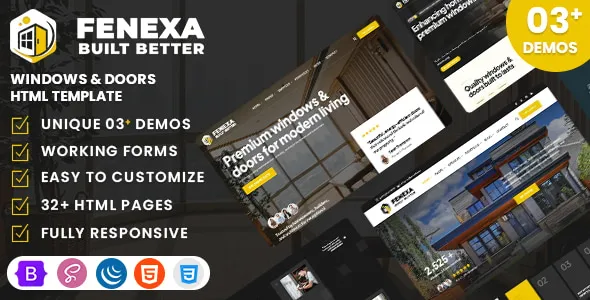
Fenexa – Windows & Doors HTML Template
Fenexa – Windows & Doors HTML Template is a modern and professional website template designed for businesses specializing in windows, doors, glass installations, home improvement products, architectural solutions, and building materials. Created for companies that want to establish a strong online presence, Fenexa provides a foundation for presenting product collections, showcasing completed projects, explaining installation services, and connecting with potential customers. Whether you operate a window manufacturing company, a door supplier business, a residential renovation service, or a commercial glazing company, this HTML template can help you build a website that communicates your products and services in a clear, organized, and professional manner.
The windows and doors industry serves homeowners, architects, contractors, property developers, builders, and commercial organizations that require reliable products and installation services. A well-designed website helps these customers understand available options, explore design possibilities, review previous work, and request information before making a purchasing decision. Fenexa is intended to provide a suitable starting point for businesses that want to present their expertise, highlight their product offerings, and communicate the value of their solutions through a dedicated industry-focused website.
With its specialized business purpose, Fenexa can be customized for companies offering aluminum windows, uPVC windows, wooden doors, sliding doors, glass partitions, entrance doors, modern window systems, and other related building products. Developers can adapt the HTML structure, visual presentation, and website content to match the requirements of an individual business. The exact pages, components, and features available depend on the purchased version, so reviewing the live preview and product documentation is recommended before implementation.
A Professional Website for Windows and Doors Businesses
A professional website plays an important role in helping windows and doors companies present their products and establish credibility. Customers often compare product styles, materials, installation options, and service providers before deciding which business to contact. A clear online presentation can help visitors understand what a company offers and determine whether its products are suitable for their projects.
Fenexa provides a starting point for creating a business website focused on window and door products. Companies can customize the content to introduce their business, explain their expertise, present their product categories, and highlight services for residential and commercial properties.
The website can also be adapted to communicate the company’s approach to product selection, measurement, installation, replacement, maintenance, and customer support. By organizing these details into understandable sections, businesses can help visitors find relevant information without navigating through confusing or unrelated content.
For manufacturers and suppliers, the template can support a product-focused presentation. For installation companies, it can be adapted to emphasize workmanship, service areas, project experience, and consultation requests. This flexibility makes Fenexa a potential starting point for a variety of businesses within the windows and doors industry.
Modern Design for Architectural Products
Windows and doors contribute to the appearance, functionality, comfort, and usability of residential and commercial buildings. Customers may evaluate products based on their visual design, material, dimensions, opening style, security requirements, maintenance needs, and suitability for a particular building.
A website for this industry should present products in a way that allows customers to understand their characteristics and visualize how they may fit into different spaces. Fenexa can be customized with product photography, architectural imagery, descriptive content, and brand-specific design elements to create a cohesive online experience.
Businesses can use high-quality images to demonstrate window profiles, door finishes, entrance designs, sliding systems, and completed installations. Consistent typography, appropriate spacing, and clear navigation can further support the professional presentation of these products.
When customizing the website, companies should select visuals that accurately represent the products they supply. Authentic photographs and precise descriptions help customers develop realistic expectations and distinguish between different product options.
Ideal for Window Manufacturing Companies
Window manufacturers need websites that communicate their product range, production capabilities, material options, and intended applications. A well-organized website can help customers, architects, builders, and contractors understand the available window systems before requesting specifications or quotations.
Fenexa can serve as a starting point for a window manufacturing website featuring different product categories and their applications. Depending on the business, these categories may include aluminum windows, uPVC windows, wooden windows, casement windows, sliding windows, fixed windows, tilt-and-turn systems, and other suitable designs.
Each product section can explain the available materials, typical uses, design considerations, and customization options. Manufacturers may also include information about frame finishes, glazing choices, opening mechanisms, and available dimensions when these details are confirmed by their product specifications.
For businesses supplying windows to residential and commercial construction projects, dedicated content can explain how the products support different architectural styles and building requirements. This helps visitors identify relevant solutions and prepare more informed inquiries.
Suitable for Door Suppliers and Manufacturers
Doors are an important element of a building’s entrance, interior layout, privacy, accessibility, and overall design. Door manufacturers and suppliers often serve different customer groups, from homeowners replacing an existing entrance door to contractors sourcing products for large developments.
Fenexa can be adapted to showcase a wide variety of door products and styles. Possible categories include main entrance doors, interior doors, sliding doors, folding doors, glass doors, wooden doors, aluminum doors, and modern contemporary designs.
A dedicated product presentation can include images, descriptions, material options, finish choices, available sizes, and other relevant specifications. Manufacturers can also explain the intended application of each door type, helping customers distinguish between products designed for interior spaces, exterior entrances, commercial properties, and specialized projects.
The content should reflect the company’s actual product inventory and capabilities. Product specifications, security ratings, fire ratings, weather resistance, and other technical claims should be included only when supported by reliable manufacturer documentation.
Showcase Window and Door Collections
A product showcase allows customers to explore available designs without immediately contacting a salesperson. For businesses with a broad inventory, organizing products into clear categories can improve browsing and help visitors identify suitable options.
Fenexa can be customized to present window and door collections through image-based sections, product cards, descriptive blocks, or dedicated product pages, depending on the included layout and the changes made by the developer.
A window collection might be organized by frame material, opening style, architectural application, or design preference. Door collections could be grouped by location, material, finish, or intended use. This organization makes the website easier to understand and helps customers compare options more efficiently.
For each product, businesses can provide a concise overview and direct visitors toward additional information or a quotation request. If a product has several configurations, the page can explain how customers can inquire about the available options.
A carefully arranged product showcase can also help sales teams communicate consistently with customers and provide a useful destination for links shared through advertising, social media, and business communications.
Highlight Aluminum Window Solutions
Aluminum windows are widely used in residential, commercial, and architectural projects where their appearance, frame design, and suitability for different building styles are important considerations. Businesses that manufacture or supply aluminum window systems can use a dedicated website section to explain their available products.
Fenexa can be customized to present aluminum window designs with suitable product photographs, descriptive text, and relevant specifications. Companies may highlight different frame profiles, finishes, opening configurations, and glazing options according to their actual offerings.
For commercial projects, content may focus on the available systems and their intended applications in offices, retail properties, apartment buildings, and other developments. Residential suppliers may emphasize design flexibility, available colors, and options that complement different home styles.
Technical statements concerning structural performance, insulation, corrosion resistance, or weather protection should be based on the relevant product documentation. Accurate descriptions help customers understand the product’s real capabilities rather than relying on generalized marketing claims.
Present uPVC Window Products
uPVC windows are another important category for companies serving residential construction, renovation, and replacement markets. Customers may want information about frame styles, available colors, opening configurations, glazing options, and the suitability of particular products for their homes.
Fenexa can provide a starting point for presenting uPVC window collections in a structured and visually appealing format. Businesses can use dedicated content areas to describe the products they offer, explain the available configurations, and show examples of completed installations.
A useful product page may cover frame construction, available dimensions, compatible glazing options, care instructions, and the process for requesting a quotation. Where the manufacturer provides verified thermal or acoustic performance information, the business can present those specifications to help customers evaluate their choices.
As with other window types, actual performance depends on the complete system, glazing, installation quality, building conditions, and relevant product specifications. Website content should accurately reflect the products being supplied.
Residential and Commercial Door Solutions
Residential and commercial customers may have different priorities when selecting doors. Homeowners may focus on appearance, convenience, privacy, and compatibility with their interior design. Commercial buyers may also need to consider building usage, access requirements, durability, maintenance, and relevant safety standards.
Fenexa can be customized to separate these applications and explain the available solutions for each customer group. Residential sections might feature entrance doors, bedroom doors, patio doors, and modern interior designs. Commercial sections could focus on office entrances, retail properties, business premises, and other applications supported by the supplier’s product range.
This approach helps customers navigate the website according to their project requirements. It also enables the business to present different products and services without overcrowding a single page with unrelated information.
Any claims about accessibility compliance, fire performance, security certification, or suitability for specific commercial applications should be confirmed against the product’s documentation and applicable requirements.
Promote Window and Door Installation Services
Many windows and doors companies provide installation in addition to manufacturing or product supply. A service-focused website should explain what the installation process involves, which property types the company serves, and how customers can request an assessment or quotation.
Fenexa can be adapted to present installation services for new construction, home renovations, window replacements, door replacements, and other relevant projects. Businesses can describe the steps involved, from initial consultation and measurements to product selection, installation, and final inspection.
A service page may also explain the geographic areas served, the types of properties accepted, and any information customers should prepare before requesting an estimate. If the company offers maintenance, repairs, or adjustments, these services can be presented separately.
The website should make it easy for visitors to understand the next step. A clearly labeled contact link or quotation request can guide interested customers toward the company’s preferred communication channel.
Actual booking systems, quotation calculators, and service scheduling features require appropriate functionality and should not be assumed to exist in the standard HTML template.
Build Trust Through Project Portfolios
A portfolio is a valuable way for windows and doors companies to demonstrate their experience. Photographs of completed installations can help prospective customers understand the company’s workmanship, product selection, and ability to serve different project types.
Fenexa can be customized to showcase completed residential installations, commercial developments, renovation projects, custom entrance systems, and other relevant work. Each portfolio entry can include photographs, a short description, the project type, and details about the products or services provided.
Where permission is available, businesses may also describe the project requirements and the approach taken to address them. For example, a portfolio entry could explain how a particular window style complemented a modern home or how a replacement door updated the appearance of a property entrance.
Genuine project examples are more useful than generic claims about experience. Companies should publish only accurate information and obtain appropriate permission before sharing customer names, private property details, or other potentially sensitive material.
Support Architects, Builders, and Contractors
Architects, builders, contractors, and property developers often need detailed product information when selecting windows and doors for a project. A professional website can help these audiences discover the supplier’s capabilities and determine whether its products meet their project requirements.
Fenexa can be adapted to include content specifically for trade and commercial customers. This may cover available product categories, technical documentation, customization options, quotation procedures, and the company’s approach to supporting construction projects.
Manufacturers may also provide downloadable brochures, specification sheets, installation guides, or other resources where these documents are available and approved for distribution. These resources can help professional buyers gather information before contacting the company.
If the business serves both retail customers and trade professionals, separating the information by audience can make the website more relevant to each group. The exact structure can be tailored to the supplier’s sales process and product range.
A Clear and User-Friendly Website Structure
A website’s navigation should help visitors move between product categories, services, project examples, company information, and contact details. Clear navigation is particularly important for companies that sell several types of windows and doors.
Fenexa can be customized to establish a logical hierarchy for these sections. The main navigation might prioritize products and services, while supporting links provide access to project galleries, company information, frequently asked questions, and quotation requests.
Product categories should use descriptive names that customers can easily understand. Related products can be grouped together, while specialized offerings may benefit from their own pages.
Consistent headings, readable paragraphs, and clear calls to action can also improve the browsing experience. A visitor who wants a replacement window should be able to identify the relevant service without navigating through unrelated product information.
The final navigation structure should reflect the website’s actual content and be tested after customization to ensure that all links lead to the correct destinations.
Flexible HTML Structure for Developers
Fenexa is an HTML website template, making it a potential starting point for developers who need to create a website for a windows and doors business. The included source structure can be customized according to the technologies, files, and dependencies supplied with the purchased version.
Developers can adapt HTML markup, adjust CSS styling, replace images, update content, and modify page layouts to reflect the company’s brand identity. They may also extend the website with additional pages or integrate compatible third-party services where required.
This approach can be useful for freelancers, web development agencies, and businesses that prefer a customizable front-end foundation instead of creating every visual component from scratch.
Before beginning implementation, developers should inspect the package, review the documentation, identify any dependencies, and confirm the intended setup process. The amount of work needed will depend on the existing code and the extent of the requested customization.
Responsive Design for Different Devices
Customers may explore windows and doors websites using desktop computers, laptops, tablets, and smartphones. A responsive design helps make product information accessible across different screen sizes.
Fenexa can be evaluated and customized to support a comfortable browsing experience on the devices used by the target audience. Product images, category sections, text blocks, navigation menus, and inquiry forms should remain understandable and usable as the viewport changes.
Mobile usability is particularly important for customers who discover a business through search engines, social media, advertisements, or shared links. They should be able to view product examples, find service information, and contact the company without unnecessary difficulty.
Developers should test the actual pages across representative screen sizes after changing images, content lengths, spacing, or layout components. Responsive behavior depends on the implementation and should be verified rather than assumed.
Search Engine Optimization for Windows and Doors Websites
Search engine optimization can help businesses attract visitors who are actively researching window products, door styles, installation services, and home improvement solutions. Fenexa can serve as a foundation for an SEO strategy, but the template itself does not guarantee rankings, indexing, or website traffic.
Businesses can customize page titles, meta descriptions, headings, image alternative text, descriptive URLs, and internal links according to the content and capabilities of the implementation. Each important product or service should have useful, original information that answers relevant customer questions.
For example, a company may develop separate pages for aluminum windows, uPVC window installation, modern entrance doors, replacement windows, and commercial glazing services. Each page should focus on its own topic rather than repeating the same generic text.
Local businesses may also benefit from accurate service-area information, consistent business details, genuine project examples, and clear contact information. These elements can help visitors understand where the company operates and which services it provides.
SEO results depend on multiple factors, including content quality, technical implementation, competition, website performance, and ongoing maintenance. A thoughtful content strategy is more valuable than excessive repetition of search keywords.
Showcase Materials, Finishes, and Customization Options
Customers frequently compare windows and doors based on materials, finishes, colors, dimensions, and design details. Providing clear information about these choices can make the website more useful and help customers prepare for a consultation.
Fenexa can be adapted to present available customization options for the products a company actually supplies. A manufacturer might describe different frame finishes, handle styles, glazing configurations, panel designs, or opening systems.
Product imagery can support these descriptions by showing the appearance of different options. Where multiple finishes or configurations are available, a structured presentation can help visitors understand the range without overwhelming them with unnecessary technical information.
If the business offers made-to-measure products, the website can explain the measurement and quotation process. Customers should be informed about any limitations, availability conditions, or technical requirements that affect the final selection.
Accurate product details help reduce misunderstandings and support more productive conversations between customers and sales representatives.
Communicate Energy Efficiency and Comfort
Energy efficiency and indoor comfort are important considerations for many property owners choosing windows and doors. Depending on the building and product specifications, these features may influence heat transfer, air leakage, daylight, ventilation, and overall comfort.
Fenexa can be customized to explain the relevant performance characteristics of the company’s products. Businesses may discuss glazing configurations, frame materials, sealing systems, and other factors where accurate technical information is available.
Rather than making broad claims that every product saves a particular amount of energy, companies should use verified performance data and explain the conditions under which the information applies. Actual results can depend on installation quality, climate, building design, existing insulation, and other factors.
Providing clear, evidence-based information helps customers compare available products and understand the potential advantages of different solutions.
Product Information for Better Customer Decisions
Choosing the right windows and doors can involve several considerations, including opening direction, available space, material preferences, building style, maintenance requirements, and installation constraints. A website can help customers understand these factors before making a purchase.
Fenexa can be adapted to include educational content, product descriptions, and frequently asked questions that explain common selection considerations. For example, a page may compare sliding windows with casement designs or describe the differences between interior and exterior door applications.
Useful product information can also explain the importance of accurate measurements and professional installation where relevant. Customers should be encouraged to confirm dimensions, compatibility, and technical specifications with the supplier before placing an order.
This educational approach can improve the customer experience and help the business receive more informed inquiries.
Contact Forms and Quotation Requests
For many windows and doors businesses, the main goal of the website is to generate inquiries from prospective customers. A straightforward contact process allows visitors to ask about product availability, request an estimate, or discuss a planned installation.
Fenexa can be customized with suitable contact sections or quotation-request forms, depending on the available layout and the implementation. A business may ask for basic information such as the customer’s name, contact method, property type, required product, and a brief description of the project.
Forms should remain simple and collect only the information necessary to respond to the inquiry. Clear labels and helpful validation messages can reduce confusion and improve usability.
An HTML form does not automatically store or deliver submitted information. A working form requires an appropriate back-end handler, email service, or compatible form integration. Developers should test submission, validation, error handling, and privacy practices before the website goes live.
Website Customization for Different Business Types
The windows and doors sector includes manufacturers, retailers, wholesalers, installers, renovation contractors, and architectural product specialists. Although these businesses may serve similar markets, their website requirements can differ considerably.
Fenexa can be customized to suit these different business models. A manufacturer may emphasize production capabilities and product specifications, while a retailer may focus on browsing product categories and requesting prices. An installation contractor may prioritize service information, project photographs, and consultation requests.
A company serving commercial construction projects may need more detailed technical content and dedicated information for professional buyers. A residential renovation business may focus more heavily on home improvement projects, replacement services, and customer-friendly explanations.
The template’s value comes from how effectively the developer adapts the structure and content to the intended audience. Replacing generic content with relevant information is essential for creating a website that feels specific to the business.
Visual Branding and Business Identity
A consistent brand identity helps customers recognize a company and understand its position in the market. Windows and doors businesses can use their website to communicate whether they focus on contemporary architectural products, traditional designs, premium materials, affordable replacement solutions, or specialized installation services.
Fenexa can be personalized through brand colors, typography, logos, product photography, icons, and custom written content. These elements should work together to create a consistent appearance across the homepage, product pages, service sections, and project gallery.
Businesses should choose imagery that reflects their real products and the types of projects they undertake. Clear and authentic visuals can communicate quality more effectively than unrelated stock images or exaggerated marketing statements.
A coherent brand presentation can also make the business’s website more recognizable when customers encounter its content through search results, advertisements, and other marketing channels.
Performance and Technical Optimization
Website performance contributes to a smooth browsing experience, particularly on pages that contain large product photographs and project galleries. The performance of a Fenexa-based website depends on the supplied code, image sizes, scripts, hosting environment, and any modifications made during development.
Developers should optimize image dimensions and file sizes, remove unnecessary resources where appropriate, and test the website after customization. They should also review navigation behavior, page loading, layout stability, and the performance of any external integrations.
Product photography can be important for this industry, but large unoptimized images may slow down the website. Using suitable formats and dimensions can help balance image quality with loading efficiency.
Performance should be measured on the actual deployed website. The existence of an HTML template alone does not guarantee a specific loading time or performance score.
Accessibility and Readability
An accessible website helps a wider range of visitors understand product information and navigate the available services. Accessibility considerations are especially important when customers need to compare product specifications, complete forms, or access contact information.
Developers can review text contrast, heading hierarchy, keyboard navigation, visible focus states, image alternative text, and form labels when customizing Fenexa. Interactive controls should have clear names, and important information should not rely exclusively on color or imagery.
Readable typography and logically organized content also make the website easier to scan. Product pages should present essential information in a clear order, with descriptive headings and concise explanations where appropriate.
The accessibility of the final website depends on the included implementation and subsequent changes. Testing the customized pages can help identify issues before publication.
Useful for Freelancers and Web Development Agencies
Freelancers and web development agencies often build websites for manufacturers, suppliers, contractors, and home improvement businesses. Fenexa offers a specialized starting point for projects that need a windows and doors industry focus.
Developers can use the template as a foundation and adapt its content, page structure, branding, and imagery to meet a client’s requirements. This can reduce the need to create every front-end element from the beginning while leaving room for project-specific design decisions.
Before delivering the website, developers should replace all placeholder text, confirm that product details are accurate, check image licenses, test links, and verify the behavior of forms and navigation elements. They should also review the final layout on desktop and mobile devices.
The template does not replace project planning or business-specific development, but it can provide a useful basis for creating a tailored website for the building products sector.
Long-Term Website Growth and Maintenance
A windows and doors business may expand its product range, introduce new finishes, enter additional service areas, or begin serving new customer groups. A website should be capable of reflecting these changes through regular content updates and suitable technical maintenance.
Fenexa can be extended with additional product pages, project galleries, service information, educational articles, and other content where the implementation allows. Businesses can update their photographs, revise specifications, add new service information, and refine navigation as their needs change.
Long-term maintainability depends on how the site is customized and managed. Developers should keep track of modified files, review external dependencies, maintain appropriate backups, and test significant changes before publishing them.
Regular content reviews are also important. Outdated prices, discontinued products, inaccurate service areas, and obsolete technical information can create confusion and reduce customer confidence.
How to Get Started With Fenexa
Before using Fenexa for a live project, review the product preview and download package to confirm the available pages, HTML files, stylesheets, scripts, images, and dependencies. Follow the supplied documentation for setup and customization.
Start by identifying the business’s primary audience and website goals. Decide whether the website should focus on product discovery, installation services, project portfolios, trade inquiries, or a combination of these objectives.
Replace demonstration content with accurate business information and suitable product imagery. Organize the main navigation around the most important pages, then check that each section communicates a clear purpose.
If the project requires working contact forms, online payments, product filtering, customer accounts, or other dynamic functionality, determine which additional services or back-end components are necessary. Test all interactive elements and verify that submitted information reaches the intended destination.
Finally, review the website’s responsive behavior, accessibility, performance, SEO settings, and browser compatibility. Confirm that the published website accurately reflects the company’s products and services.
Final Thoughts on Fenexa – Windows & Doors HTML Template
Fenexa – Windows & Doors HTML Template is a specialized website foundation for businesses working with windows, doors, architectural products, glass installations, building materials, and home improvement services. Its industry focus makes it relevant to manufacturers, suppliers, installers, renovation contractors, and web developers building websites for this market.
With appropriate customization, Fenexa can help businesses introduce their company, organize product collections, showcase completed projects, explain installation services, and encourage potential customers to request more information. Developers can adapt the HTML structure and visual identity to match a company’s actual offerings while adding compatible functionality when required.
For businesses seeking a dedicated windows and doors website template, Fenexa provides a starting point to evaluate against their branding, content, and technical requirements. Review the live preview, included files, documentation, and compatibility details before purchase to determine whether it is suitable for your intended project.