My Account
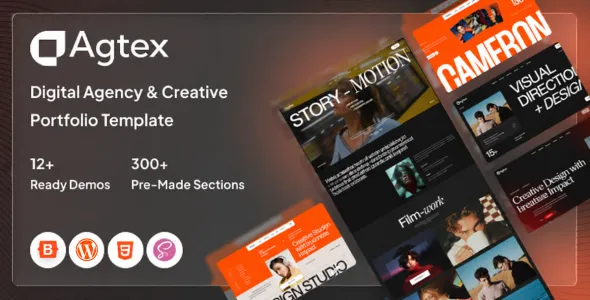
Agtex – Digital Agency & Portfolio WordPress Theme
Agtex – Digital Agency & Portfolio WordPress Theme is a professional website theme designed for digital marketing agencies, creative studios, web design companies, branding specialists, freelancers, and businesses that want to establish a strong online presence. With its digital agency and portfolio-focused concept, Agtex provides a starting point for creating a website that showcases services, highlights completed projects, introduces team members, and communicates a brand’s professional identity. Whether you manage a digital marketing company, operate a creative design studio, offer website development services, or work as an independent professional, this WordPress theme can be customized to reflect your business goals and visual style.
A modern business website is an important part of building credibility and attracting potential customers. It gives visitors a central place to learn about your services, review your work, understand your expertise, and contact your team. Agtex is intended to support this process by providing a design foundation for presenting business information and creative projects in an organized way. Through appropriate customization, you can adapt its visual presentation to match your brand identity, target audience, and service offerings.
As a WordPress theme, Agtex can serve as a foundation for a website built within the WordPress content management system. Its digital agency and portfolio positioning makes it relevant to businesses that want to combine service promotion with professional project presentation. The exact page layouts, customization options, included features, and plugin compatibility depend on the version supplied with the product, so reviewing the current demo and documentation before purchase is recommended.
Introduction to Agtex WordPress Theme
Digital agencies operate in a competitive environment where potential clients often compare several providers before making a decision. A well-structured website helps an agency communicate its strengths, explain its services, and demonstrate the quality of its work. Agtex provides a starting point for creating this type of professional online presence.
The theme can be adapted for different agency business models, including digital marketing, website design, graphic design, branding, advertising, search engine optimization, social media management, and creative consulting. Freelancers can also use a portfolio-oriented website to introduce their skills, present selected projects, and explain how they help clients achieve their objectives.
Instead of creating every page design from scratch, developers can begin with the theme’s available layouts and customize the presentation to suit the project. This approach can help establish a consistent visual direction while leaving room for adjustments to colors, typography, images, content, and navigation.
A successful website should communicate its purpose quickly. Visitors should be able to understand what the business does, who it serves, and how to take the next step. Agtex can be adapted around these priorities to create a website that supports both brand presentation and business communication.
Digital Agency Website Design
A digital agency website needs to balance creativity with clarity. Visual design can communicate the agency’s personality, while well-organized content helps prospective customers understand its services and capabilities.
Agtex offers a digital agency-oriented starting point that can be customized for marketing companies, technology agencies, design studios, and other professional service providers. Businesses can use their websites to explain their approach, introduce their services, highlight selected projects, and provide clear contact options.
A digital agency homepage might include an introduction to the business, a summary of its main services, featured projects, client feedback, and a call to action. Supporting pages can provide more detailed information about individual services, company experience, and the process of working with the team.
The visual presentation should reflect the agency’s actual brand. A technology-focused company may prefer a clean, structured design, while a creative studio may choose expressive imagery and distinctive typography. Customizing the website helps ensure that its appearance supports the business’s positioning rather than relying on generic design elements.
Portfolio Presentation for Creative Professionals
A portfolio is one of the most important parts of a creative professional’s website. It provides evidence of experience, demonstrates design capabilities, and helps potential clients evaluate whether the professional is suitable for a project.
Agtex can serve as a foundation for displaying portfolio items in a professional online environment. Depending on the available layouts and customization options, a portfolio website can organize projects into categories and provide supporting descriptions for individual pieces of work.
Graphic designers may showcase visual identities, marketing materials, illustrations, and editorial designs. Web designers can present website layouts, user interface concepts, and completed digital projects. Developers may highlight websites, applications, and technical solutions, while marketing specialists can present campaign examples and relevant outcomes.
Each portfolio entry should provide meaningful context. Descriptions can explain the client’s objectives, the professional’s role, the work performed, and the final deliverables. Any performance figures or client results should be accurate and used with appropriate permission.
A carefully selected collection of relevant projects can communicate expertise more effectively than a large gallery of unrelated work.
Suitable for Digital Marketing Agencies
Digital marketing agencies need to explain how their services help businesses improve their online presence and reach relevant audiences. Agtex can be customized for agencies offering search engine optimization, paid advertising, content marketing, social media management, email campaigns, and digital strategy.
A marketing agency website can organize each service into a dedicated section or page. This gives visitors a clearer understanding of what is offered, how the service works, and which business needs it addresses.
For example, an SEO agency may explain its approach to keyword research, technical optimization, content planning, and website performance. A social media agency might focus on content creation, campaign management, audience engagement, and reporting. An advertising agency can present its approach to campaign planning, creative development, and performance measurement.
Case studies can help demonstrate how an agency approaches real projects. They should explain the objectives, methods, and verified outcomes without overstating results or disclosing confidential information.
With appropriate content and branding, Agtex can provide a foundation for a digital marketing website that communicates services clearly and encourages qualified enquiries.
Website Design and Development Agency Websites
Web design and development companies need a website that demonstrates their technical capabilities and creative approach. Agtex can be adapted for businesses that build corporate websites, ecommerce stores, landing pages, web applications, and other digital experiences.
A development agency website may include service descriptions, technology expertise, project examples, development processes, and information about the team. Portfolio pages can help potential clients review the types of websites the company creates and understand its experience with different industries.
Businesses can also use their websites to explain the stages of a project, from initial consultation and planning to design, development, testing, and deployment. This information helps visitors understand how the agency works and what to expect when starting a project.
For technical credibility, service descriptions should reflect the team’s actual capabilities. Technologies, frameworks, integrations, and development methods should be presented accurately instead of being listed only to attract search traffic.
Branding and Creative Studio Websites
Branding studios help organizations communicate their identity through visual design, messaging, and brand systems. A professional website gives these studios an opportunity to demonstrate their creative approach and show how their work supports different businesses.
Agtex can be customized for studios that provide logo design, brand strategy, visual identity systems, packaging design, marketing collateral, and related creative services. Portfolio pages can present selected projects alongside information about the creative challenge and the solution developed.
The website’s typography, color palette, imagery, and layout should work together to reflect the studio’s personality. A minimalist branding agency may favor a restrained presentation, while an experimental creative studio may use more expressive visual elements.
The final website should still prioritize usability. Visitors need to navigate the portfolio, understand the available services, and find contact details without unnecessary effort.
Business Consulting and Professional Services
Agtex can also be considered for consultants and professional service providers who want to present their expertise through a structured business website. Consultants often need to explain their specialization, establish credibility, describe their process, and provide a way for prospective clients to request information.
A consulting website can include an introduction to the business, a summary of services, professional experience, case studies, testimonials, and contact details. The content should communicate the problems the consultant helps solve and explain the value of the services offered.
For example, a digital transformation consultant may focus on technology planning and operational improvement, while a business strategy consultant may emphasize growth planning, organizational development, or market research.
Agtex’s portfolio-oriented positioning can also support the presentation of previous projects or engagements where disclosure is permitted. Clear and accurate content helps visitors evaluate the business and determine whether its expertise aligns with their needs.
WordPress Content Management and Customization
WordPress provides a flexible environment for managing website pages, blog posts, images, and other content. Agtex can be used as the visual foundation for a business website within this ecosystem.
A typical WordPress workflow allows website owners to update company information, publish articles, replace images, and maintain service content through the administrative interface. Additional functionality may be introduced through compatible plugins or custom development when the project requires it.
The available editing experience depends on the theme’s implementation and included tools. Before planning a workflow around a particular page builder, theme options panel, or specialized plugin, confirm that the required component is included and supported by the current version.
Developers should also review the installation instructions, supported WordPress and PHP versions, dependencies, and any recommended configuration settings. These checks can help ensure that the theme fits the intended hosting environment and development process.
Recommended Website Structure
A clear website structure helps visitors find information quickly and understand how the business can assist them. For a digital agency or portfolio website, Agtex can be adapted around the pages most relevant to the organization’s services and audience.
Suggested sections may include:
- Home: Introduce the agency, communicate its main value proposition, and guide visitors toward important content.
- About Us: Explain the company’s background, values, experience, and approach.
- Services: Describe individual offerings and the business needs they address.
- Portfolio: Showcase selected projects, creative work, and professional achievements.
- Project Details: Provide additional context about specific projects, objectives, and deliverables.
- Our Team: Introduce team members, specialists, and their roles.
- Testimonials: Present genuine client feedback when permission has been obtained.
- Blog or Insights: Publish helpful articles, company news, and industry information.
- Contact: Provide business details and a clear way to submit enquiries.
These are suggested content categories, not a guarantee that every page is included in the theme package. The final structure should be based on the layouts supplied with Agtex and the requirements of the project.
Brand Identity and Visual Customization
A professional website should feel consistent with the brand it represents. Agtex can be customized to reflect a business’s visual identity through carefully selected colors, typography, images, graphics, and content.
A technology agency might use a clean interface and product-focused visuals, while a creative studio may prioritize large portfolio images and distinctive typography. A consultant could prefer a more restrained layout that emphasizes expertise and service information.
Consistency should extend across the homepage, service pages, portfolio entries, blog, and contact section. Buttons, navigation elements, headings, and imagery should share a coherent design language.
Developers should replace demo content with original material, remove irrelevant sections, and test the final design on different screen sizes. The available customization methods depend on the supplied theme version and any supported editing tools.
Responsive Design and Mobile Usability
Visitors may access an agency website from desktops, laptops, tablets, and smartphones. Responsive behavior helps ensure that content remains usable across different screen sizes and devices.
When evaluating Agtex, check how its navigation, images, headings, buttons, and portfolio layouts adapt to smaller screens. Menus should be easy to operate, text should remain readable, and important calls to action should be accessible without awkward scrolling.
Mobile usability matters because potential clients may discover an agency through search engines, professional directories, or social platforms. They should be able to understand the business, review relevant work, and contact the team from their preferred device.
Developers should test the customized website across common screen sizes after changing layouts, typography, or interactive elements. Responsive behavior can be affected by custom code and third-party plugins, so testing is necessary even when the original theme provides responsive layouts.
Search Engine Optimization for Digital Agencies
Search engine optimization can help prospective customers discover an agency or professional through relevant searches. An Agtex-based website can be prepared for SEO by publishing useful content, organizing headings logically, creating descriptive page titles, and providing relevant metadata.
The most effective keywords depend on the agency’s services, target market, specialization, and location. Examples may include digital marketing agency, creative design studio, website development company, branding services, SEO consultant, and freelance web designer.
Each major service should have a clear page that explains the offering and its relevance to potential customers. Portfolio pages should contain descriptive text rather than relying only on images, while blog articles can answer common questions related to the agency’s expertise.
Technical SEO should include crawlable navigation, logical URL structures, appropriate image alternative text, mobile usability, and attention to page performance. An SEO plugin may help manage certain settings, but plugin compatibility and configuration should be checked separately.
A WordPress theme alone cannot guarantee search rankings. SEO performance depends on content quality, technical implementation, competition, website authority, and ongoing optimization.
Content Marketing and Business Blogging
A blog can help digital agencies demonstrate their knowledge, share useful resources, and maintain an informative online presence. WordPress provides content publishing capabilities that can support this strategy when configured appropriately.
An agency might publish articles about website design, search optimization, branding, social media, online advertising, or business growth. A creative studio may share design insights, portfolio breakdowns, and explanations of its creative process. A consulting firm can publish practical guidance related to its professional specialization.
Content should address real questions and provide genuine value to readers. Articles should be organized with meaningful headings, clear explanations, and relevant examples. Repeating keywords excessively or publishing generic content solely for search engines can reduce the usefulness of the website.
A consistent content strategy can provide more ways for visitors to discover the business and understand its expertise. The results depend on the relevance, accuracy, and quality of the content rather than publication frequency alone.
Lead Generation and Client Enquiries
For many agencies, the primary purpose of a business website is to generate relevant enquiries and begin conversations with potential customers. The website should make it easy for visitors to understand the services and determine the next step.
An Agtex-based website can be organized to guide visitors toward actions such as requesting a proposal, discussing a project, arranging a consultation, or contacting the team. Calls to action should be specific and placed where they support the visitor’s decision-making process.
Service pages should explain what the agency offers, while portfolio entries can provide evidence of relevant experience. Clear contact details and a functional enquiry process help visitors move from exploring the website to starting a conversation.
If the website uses contact forms, developers should test validation, spam protection, email delivery, and mobile usability. Any statements about response times, availability, or service guarantees should reflect the business’s actual operating practices.
Building Trust Through Portfolio Projects
Potential clients often want evidence that an agency can deliver the type of work they need. A well-organized portfolio can help demonstrate relevant experience and explain the value of the agency’s services.
Each project entry can describe the challenge, the work performed, the technologies or creative methods used, and the resulting deliverables. Where reliable data is available, case studies may include measurable outcomes, provided that the figures are accurate and approved for publication.
For a web design company, projects might include screenshots, descriptions of the website’s purpose, and explanations of the design approach. A marketing agency could present campaign examples and verified performance information. A branding studio might show how visual identity elements were applied across different materials.
Authentic project information helps visitors understand the agency’s capabilities. Client logos, images, and testimonials should only be used when appropriate permissions are in place.
Performance Optimization and Loading Speed
Website performance affects how easily visitors can browse service pages and review portfolio projects. Creative websites often use high-resolution images, animations, embedded media, and third-party scripts, so optimization should be considered during development.
Developers can optimize image dimensions, compress assets, use suitable image formats, remove unnecessary plugins, and review scripts that are not required for the site’s core functionality. Appropriate caching and server configuration may also improve the loading experience.
The actual performance of an Agtex website depends on its supplied code, hosting environment, WordPress configuration, media assets, and installed extensions. A theme should not be assumed to guarantee a particular loading time or performance score.
Testing the completed site with appropriate performance tools can help identify large images, unnecessary requests, layout shifts, and other issues. Improvements should be based on actual results and the needs of the website’s visitors.
Plugin Compatibility and Website Extensibility
WordPress plugins allow website owners to add functionality that extends beyond the theme’s basic presentation. Depending on the project’s requirements, an agency website may use plugins for contact forms, SEO, analytics, caching, backups, security, or multilingual content.
Agtex can be evaluated as the design foundation for a website that uses compatible extensions. However, the availability and compatibility of particular plugins should be confirmed before development begins.
Adding too many unnecessary plugins can increase maintenance work and may affect performance or compatibility. Developers should choose reliable extensions, review their update history, and test important features after installation.
Advanced requirements such as appointment booking, membership access, customer portals, or ecommerce may require dedicated plugins or custom development if they are not included in the theme package.
Security and Ongoing Maintenance
A WordPress website requires regular maintenance to remain reliable and secure. After launching an Agtex-based website, administrators should maintain backups, apply updates carefully, review access permissions, and monitor important functionality.
Themes and plugins should be obtained from trusted sources and maintained according to their documentation. Updates should be tested before being applied to a live website, especially if the project includes custom code or important business integrations.
Administrators should use strong passwords and restrict unnecessary access to the WordPress dashboard. Contact forms and other features that collect personal information should be configured appropriately, and the site’s privacy information should reflect its actual data-handling practices.
Security depends on the complete website setup and ongoing management. Using a theme does not remove the need for maintenance, backups, or appropriate security practices.
Who Should Use Agtex – Digital Agency & Portfolio WordPress Theme?
Agtex may be suitable for several types of businesses and professionals, including:
- Digital marketing agencies: For presenting marketing services, campaign examples, and business expertise.
- Creative agencies: For showcasing creative capabilities, project work, and team information.
- Web design companies: For presenting website design services and completed digital projects.
- Branding studios: For displaying visual identity work, branding services, and creative processes.
- SEO agencies: For explaining search optimization services and relevant case studies.
- Freelancers: For creating a professional portfolio and promoting independent services.
- Graphic designers: For displaying design projects, illustrations, and branding materials.
- Technology service providers: For introducing digital solutions and technical capabilities.
- Business consultants: For communicating expertise, professional services, and consultation options.
- Startups and small businesses: For establishing a branded online presence with customized content.
The theme’s suitability depends on its actual layouts, included functionality, compatibility, and the customization required for the intended website.
Benefits of Choosing Agtex for a Business Website
Agtex provides a digital agency and portfolio-oriented design foundation for businesses that want to create a professional website with WordPress. Starting with an existing theme can help establish the visual direction and page structure before development begins.
Potential benefits include a relevant starting point for agency branding, opportunities to present services and project work, flexibility to customize content, and access to WordPress content management capabilities. The theme may also help developers establish a consistent design framework for client websites without creating every visual element from scratch.
The practical value depends on the features included in the supplied version and the amount of customization required. Reviewing the demo and documentation before purchase can help determine whether the theme fits the project and whether additional tools are necessary.
Important Considerations Before Purchasing
Before choosing Agtex, review the current product demo and documentation to confirm that the available design and functionality meet your requirements. Check the supported WordPress and PHP versions, installation process, included layouts, required plugins, and any third-party dependencies.
If your project requires advanced portfolio filtering, animation effects, multilingual support, booking functionality, or ecommerce features, verify whether these are included or require additional extensions.
You should also review the licensing terms for commercial use and client projects. Check whether bundled fonts, images, icons, and premium plugins have separate licensing conditions. Understanding these requirements before development can help prevent unexpected costs and compatibility problems.
The final website’s capabilities depend on the supplied theme package, WordPress configuration, selected plugins, hosting environment, and development work.
Conclusion
Agtex – Digital Agency & Portfolio WordPress Theme is a potential starting point for businesses and professionals who want to establish a polished online presence with WordPress. Its digital agency and portfolio focus makes it relevant to marketing companies, creative studios, web development agencies, branding specialists, consultants, and freelancers who need to present their services and demonstrate their work.
With thoughtful customization, authentic project examples, useful service descriptions, and a clear navigation structure, an Agtex-based website can communicate a professional identity and help visitors understand the value of the business. Attention to responsive design, search engine optimization, website performance, security, and ongoing maintenance can further support the quality of the finished website.
For anyone looking for a digital agency and portfolio WordPress theme, Agtex is worth evaluating as a foundation for a customized business website. Review the current demo, included features, documentation, compatibility requirements, and licensing terms before purchasing to ensure that the theme aligns with your business objectives.