My Account
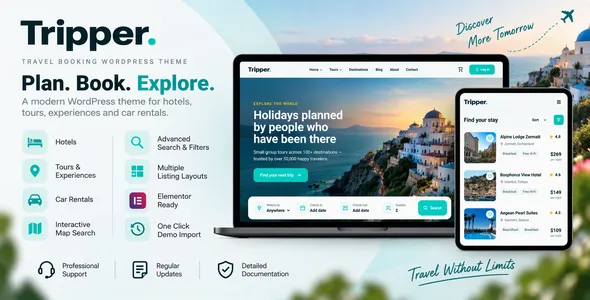
Tripper | Travel & Tour Booking WordPress Theme
Tripper | Travel & Tour Booking WordPress Theme is a travel-focused website solution designed for travel agencies, tour operators, holiday planners, destination management companies, and tourism businesses looking to establish a professional online presence. With a focus on destination presentation, tour promotion, travel information, and customer engagement, Tripper provides a foundation for creating a website that introduces travel experiences and helps visitors explore available holiday options. Whether you manage guided tours, organize adventure trips, promote international holidays, or provide customized travel packages, this WordPress theme can help you present your services in an organized and visually appealing way.
In the modern travel industry, a professional website is an important part of building customer confidence and attracting travelers. Visitors often want to explore destinations, compare tour options, understand package details, review itineraries, and contact a travel provider before making a decision. Tripper is designed around the travel and tour booking niche, making it a relevant option for businesses that want to bring these elements together in one digital destination.
Using WordPress as its foundation, Tripper offers a starting point for developing a travel website that reflects your brand and communicates your services clearly. You can build pages around popular destinations, travel packages, tour experiences, company information, and customer inquiries. Depending on the theme’s included features, compatible plugins, and configuration, your website may also be extended with additional booking, payment, and travel management functionality.
From weekend getaways and family vacations to cultural tours, wildlife experiences, beach holidays, and international adventures, Tripper can be adapted to different travel business models. With relevant content, high-quality destination photography, and clear navigation, you can create an online experience that inspires visitors to discover new places and take the next step toward planning their journey.
Travel-Focused Website Design
A travel website should make visitors feel excited about exploring new destinations while providing the practical information they need to make informed decisions. Tripper is designed for the travel and tour booking sector, giving travel businesses a suitable starting point for presenting destinations, experiences, packages, and services.
Instead of treating travel products like ordinary retail items, a dedicated travel website can organize information around destinations, trip duration, activities, accommodation options, transportation, and other details that matter to travelers. This structure helps visitors understand what an experience includes and whether it matches their interests, schedule, and budget.
Travel agencies can use Tripper to introduce their business, showcase selected holiday packages, and direct customers toward detailed tour information. Independent tour operators can focus on their specialized experiences, while destination-focused businesses can build pages around specific regions, cities, islands, or attractions.
The final design can be tailored to the personality of your travel brand. An adventure travel company may emphasize outdoor photography and active experiences, while a luxury holiday provider may prefer refined visuals and exclusive destination content. A family travel agency might highlight convenience, suitable activities, and flexible package options.
The precise layouts and customization options depend on the theme version and its supported features, so reviewing the current demo and documentation is recommended before building your website.
Attractive Destination Showcases
Destination presentation is a major part of travel marketing. Travelers often begin their search with a place they want to visit, an experience they want to enjoy, or a type of holiday they want to plan. Tripper can serve as a foundation for organizing destination-focused content that helps visitors discover suitable travel opportunities.
You can create pages for destinations such as mountain regions, tropical islands, historic cities, wildlife reserves, coastal towns, cultural centers, and popular international locations. Each destination page can introduce the location, explain what makes it special, and highlight tours or packages associated with the area.
High-quality photography can help visitors visualize their potential trip. Images of landscapes, architecture, local markets, beaches, historical landmarks, and cultural experiences provide context and create a stronger emotional connection with the destination.
Useful destination content should go beyond attractive images. Include practical details such as the best time to visit, typical trip duration, popular activities, transportation considerations, and any important travel requirements that your business can verify. This information helps visitors understand the destination and plan their next steps.
Organizing destination pages consistently also makes your website easier to maintain. When each page follows a clear structure, you can add new locations, update information, and connect destinations with relevant tours without redesigning the entire website.
Tour Packages and Travel Experiences
Tour packages are central to many travel businesses. Customers want to understand what they will experience, how long the trip will last, what services are included, and how they can request a reservation. Tripper can be used to build a website that presents these details in an organized format.
You can create tour pages for city sightseeing, cultural excursions, mountain adventures, beach holidays, family vacations, honeymoon packages, wildlife tours, road trips, and multi-day guided journeys. Each package can include a descriptive title, destination, summary, itinerary, duration, and other relevant information.
A clear package description helps travelers evaluate the experience before contacting your company. For example, a mountain tour could describe the route, planned activities, accommodation arrangements, and fitness considerations. A cultural tour might explain the main attractions, local experiences, guided visits, and approximate schedule.
You can also separate tours into categories that reflect how customers search for holidays. Categories such as adventure travel, family holidays, luxury tours, weekend trips, and cultural experiences can help visitors narrow down their options.
When describing prices, inclusions, exclusions, and availability, use accurate and up-to-date information. If a tour’s price varies according to season, group size, or accommodation choice, explain those conditions clearly. The specific tour listing and booking features available in Tripper should be confirmed through the current theme documentation.
Travel Booking Website Foundation
A travel booking website should make it easy for visitors to move from discovering a destination to understanding the reservation process. Tripper’s travel and tour booking focus makes it a relevant starting point for businesses that want to present their offerings online and guide customers toward making inquiries or booking requests.
Depending on the features supplied with the theme, your WordPress configuration, and any compatible booking plugins, you may be able to develop a workflow for selecting a tour, reviewing trip information, submitting travel details, and requesting a reservation.
A booking process should collect only the information necessary to manage the inquiry or reservation. Depending on the business model, this might include travel dates, the number of travelers, preferred destinations, contact information, and special requirements.
For agencies that handle reservations manually, an inquiry-based system may be sufficient. Visitors can review a package and send a request, allowing the travel team to confirm availability and provide a personalized quotation. Businesses that require automated reservations may need a dedicated booking plugin or third-party travel management integration.
Before presenting a booking system as fully operational, test the complete process, including availability information, confirmation messages, payment handling where applicable, and administrative notifications. A theme’s travel-focused design does not automatically guarantee that every booking or payment function is included.
Detailed Tour Information Pages
A well-structured tour page helps customers understand the experience before making a booking decision. Tripper can be used as a starting point for presenting detailed travel information in a format that visitors can explore at their own pace.
Each tour page can include an introduction, destination overview, itinerary, duration, available activities, accommodation details, transportation information, and relevant terms. Where appropriate, you can also provide information about group sizes, departure arrangements, seasonal considerations, and accessibility.
An itinerary is particularly valuable for multi-day tours. Breaking the journey into individual days helps visitors understand how the trip is organized and what they can expect at each stage. A city tour might outline the major attractions included, while a nature expedition could explain the planned activities and travel between locations.
It is also helpful to explain what is included in the package price and what travelers must arrange separately. For example, meals, entrance fees, international flights, travel insurance, and optional excursions may have different arrangements depending on the tour.
Clear tour details reduce uncertainty and support more productive customer inquiries. They also help establish realistic expectations before a traveler commits to a trip.
Responsive Design for Modern Travelers
Travelers frequently browse holiday options using smartphones, tablets, laptops, and desktop computers. A travel website should therefore provide a consistent experience across different screen sizes.
Responsive presentation is an important consideration when evaluating Tripper. Before publishing your website, inspect the current theme demo and test your customized installation on mobile and desktop devices to confirm that navigation, text, forms, images, and tour information display correctly.
On smaller screens, destination images should remain visually effective without making pages unnecessarily slow. Tour details should be easy to scan, navigation should be simple to operate, and important actions such as submitting an inquiry should remain accessible.
A well-tested mobile experience is particularly valuable for travelers who discover a tour through a social media post, a search result, or a shared destination page. They should be able to explore the offering without needing to switch immediately to a computer.
Responsive behavior depends on the theme’s implementation, selected layouts, content, and any additional plugins. Testing real pages before launch helps you identify issues that may not be visible in the desktop preview.
Customization for Your Travel Brand
Every travel business has a distinct identity. A luxury travel company may focus on exclusivity and personalized service, while an adventure operator may emphasize exploration and outdoor activities. A family holiday agency may prioritize comfort, convenience, and carefully planned itineraries.
Tripper can be considered as a starting point for developing a website that reflects your business identity. Depending on its available customization options, you may be able to adapt logos, colors, typography, images, page content, and other visual elements.
For a premium travel brand, carefully selected imagery, a restrained color palette, and concise service descriptions can help create an elegant presentation. For an adventure company, bold destination photography and clear descriptions of outdoor activities may be more appropriate.
A cultural tourism business could emphasize heritage sites, local traditions, guided experiences, and regional knowledge. A general travel agency may need a broader layout that accommodates several holiday categories without making the website feel crowded.
Consistent branding across the homepage, destination pages, tour listings, and contact information helps customers recognize your business. Review the available theme settings and documentation to understand which elements can be customized directly and which changes may require additional development.
Travel Agency Homepage
The homepage provides an important introduction to your travel business. It should communicate what you offer, give visitors a reason to explore, and direct them toward useful destinations or travel packages.
With Tripper, you can plan a homepage around your primary services and the experiences that define your brand. Depending on the available layouts, the page might introduce the business, feature selected destinations, highlight popular tours, explain key services, and provide links to inquiry or booking pages.
A clear headline can communicate your specialization, such as adventure holidays, customized international travel, cultural experiences, or family tour packages. Featured destination imagery can then reinforce the message and encourage visitors to explore relevant offerings.
Popular tour packages can help customers quickly discover your main products. You can also introduce the benefits of working with your agency, explain your planning process, and include a clear path to contact your team.
Avoid placing too much information on the homepage. Use concise summaries and relevant links to guide visitors to dedicated pages where they can find complete details. The best homepage structure will depend on your business goals and the layouts provided by the current version of Tripper.
Travel Services and Agency Information
A professional travel website should explain the services available to customers. Tripper can provide a starting point for creating service pages that describe your business offerings and help visitors understand how your agency can assist them.
Depending on your operations, services might include holiday package planning, customized itineraries, group tours, honeymoon travel, corporate travel arrangements, guided sightseeing, adventure excursions, or destination-specific experiences.
Each service page should explain what the service involves, who it is designed for, and how customers can get started. If your business specializes in personalized holidays, you could describe how you learn about a customer’s interests, preferred travel dates, and budget before preparing an itinerary.
For group travel, explain how the booking process works, whether minimum group sizes apply, and which arrangements are included. For guided tours, describe the nature of the experience and the information travelers should know before departure.
Accurate service descriptions help customers understand what they can expect from your company. They also allow you to distinguish between services that are available immediately and those that require a consultation or customized quotation.
Travel Gallery and Destination Photography
Photography is a powerful communication tool for travel websites. Images can help visitors imagine themselves exploring a new destination, enjoying a memorable experience, or discovering a different culture.
Tripper can be used as a foundation for presenting travel photographs throughout destination pages, tour descriptions, and promotional sections. The actual gallery options will depend on the theme’s included layouts and compatible WordPress tools.
Choose images that accurately represent the destinations and experiences you sell. A beach holiday page should feature relevant coastal scenery, while a heritage tour might include historical buildings, museums, traditional neighborhoods, and cultural landmarks.
Use a consistent approach to image selection so your website feels organized. A smaller collection of relevant, high-quality photographs can be more effective than a large gallery filled with repetitive images.
Before uploading photographs, optimize their dimensions and file sizes for web use. Descriptive filenames and meaningful alternative text can improve media organization and support accessibility. Ensure that you have the appropriate rights to use all photographs and that images do not misrepresent the actual travel experience.
Travel Blog and Destination Guides
A travel blog can help your business provide useful information while giving visitors more reasons to explore your website. It can also support search engine optimization by addressing questions travelers ask when planning a holiday.
Using WordPress publishing capabilities, you can create articles about destination highlights, seasonal travel ideas, packing advice, local customs, suggested itineraries, travel budgeting, and trip preparation. These articles can link to related tours and destinations where the connection is genuinely useful.
For example, a guide to exploring a historic city could explain major attractions, transportation options, cultural considerations, and recommended trip duration. A family travel article might discuss planning around children’s needs, selecting suitable activities, and organizing travel documents.
Destination guides should provide practical and accurate information. Verify details that may change, such as entry requirements, transport schedules, local regulations, and opening hours. Avoid making guarantees about travel conditions or prices that your business cannot control.
Organize articles into clear categories so visitors can find content relevant to their interests. A useful travel blog can complement your tour listings and help position your business as a resource for people researching their next journey.
Search Engine Optimization for Travel Websites
Search engine optimization helps make your website easier for search engines to understand and can improve its potential to attract relevant visitors. For a travel business, this means creating pages that answer the questions travelers ask when researching destinations, comparing tours, and planning holidays.
Tripper can be used as part of an SEO-focused WordPress website, but search visibility depends on more than the theme itself. Content quality, technical configuration, competition, backlinks, website performance, and the relevance of your pages all influence results.
Start by giving each important page a clear topic. Destination pages should explain the location and its attractions, while individual tour pages should describe the actual experience and include useful planning details. Service pages should clearly communicate what your business provides.
Use descriptive page titles, relevant headings, concise meta descriptions, and readable URLs. Incorporate target search terms naturally into the content rather than repeating the same phrases excessively.
For example, a company offering guided tours in a particular region can create useful pages for relevant destinations and experiences. These pages should contain original information rather than simply changing location names in otherwise identical descriptions.
Travel blogs can answer common planning questions and direct readers to suitable tours. Meaningful internal links between related articles, destinations, and packages help visitors navigate the website and understand how the content connects.
An SEO plugin may help manage metadata, XML sitemaps, and other optimization tasks. Check compatibility and configure the website carefully. No theme or plugin can guarantee a particular search ranking or indexing result.
Performance and Image Optimization
Travel websites often contain large destination photographs, promotional banners, maps, and gallery images. Although these elements can improve the visual experience, they may also increase page-loading times when they are not optimized.
Prepare images for their intended display dimensions and compress them while maintaining acceptable quality. Use modern image formats where supported by your WordPress setup, and avoid loading unnecessarily large files for small image areas.
Consider the number of images displayed on each page. A destination page with a clear selection of photographs may be easier to use than one containing dozens of oversized images. Where appropriate, use lazy loading and other performance techniques supported by WordPress or compatible plugins.
Caching, reliable hosting, database maintenance, and minimizing unnecessary extensions can also contribute to a smoother experience. However, actual performance depends on the theme implementation, hosting environment, plugins, image assets, and external services.
Test your completed website on mobile connections as well as desktop internet connections. Use performance testing tools to identify the largest contributors to slow loading and address them systematically.
Contact Forms and Customer Inquiries
A travel website should make it easy for visitors to ask questions about destinations, tour packages, prices, and availability. Tripper can provide the design foundation for placing contact details and inquiry links where customers are likely to need them.
Depending on the theme’s setup, you may use a compatible contact-form plugin to collect information from potential travelers. A simple inquiry form can request a name, email address, preferred destination, approximate travel dates, group size, and a short message.
Keep the form focused on information that helps your team respond. If you offer customized itineraries, you may also ask about budget range, travel preferences, or the type of holiday the customer wants to plan.
Display accurate contact information, including your business email and telephone number where appropriate. If you have an office address, provide clear details so customers know how to reach you.
Test every form before launch. Confirm that submissions arrive at the correct inbox, that validation works, and that users receive a clear confirmation after sending a request. Explain how submitted information will be handled in your privacy policy.
Booking Integrations and Payment Options
Some travel businesses need only an inquiry form, while others require a more advanced reservation system. The appropriate solution depends on whether you sell fixed-date tours, customized packages, accommodation, guided activities, or other travel services.
Tripper may be extended with compatible booking plugins or third-party services if the required integration is supported by your chosen configuration. Before implementing a booking workflow, confirm that the software supports your business model and the functions you need.
A booking system may need to manage departure dates, capacity, traveler information, prices, confirmation messages, cancellations, and reservation records. If customers are expected to pay online, the payment provider must support your business location, currency, and transaction requirements.
Test the complete booking journey before accepting real reservations. Check the availability information, pricing rules, confirmation emails, payment status, and administrative workflow. Make sure customers understand cancellation policies, refund conditions, and any other relevant terms before they submit a booking.
Do not assume that a travel-focused WordPress theme automatically includes every booking or payment feature. Review the current Tripper documentation and the documentation of any required plugins to identify additional costs, compatibility requirements, and configuration steps.
Trust and Customer Confidence
Travelers are often committing money, time, and personal information when planning a holiday. A professional website should help them feel informed and confident about contacting your business.
Use accurate descriptions, clear pricing information, transparent terms, and reliable contact details. Explain what is included in a package and identify any additional expenses that travelers should expect.
If you display customer reviews or testimonials, ensure that they are genuine and used with appropriate permission. Similarly, list awards, professional memberships, certifications, or partnerships only when they are accurate and relevant.
Your About page can introduce the people behind the business and explain your experience in travel planning. Detailed itineraries and practical destination information can also demonstrate that your agency understands the trips it offers.
A clear privacy policy is important when collecting customer inquiries or reservation details. If your website accepts bookings or payments, provide the terms and security information relevant to that process.
Trust is built through consistency and accurate communication rather than visual design alone. A carefully maintained website can support the reputation of your travel business and encourage better customer relationships.
Suitable for Different Travel Businesses
Tripper’s travel and tour booking focus makes it a potential starting point for a variety of tourism-related businesses.
Travel agencies: Present holiday packages, destination options, travel planning services, and inquiry information in one organized website.
Tour operators: Showcase guided experiences, day trips, multi-day itineraries, group tours, and activity-based travel packages.
Adventure travel companies: Promote hiking trips, trekking experiences, outdoor excursions, and nature-focused holidays with relevant photographs and practical descriptions.
Luxury travel planners: Build destination-focused pages for premium holidays, personalized itineraries, exclusive experiences, and tailored travel services.
Family holiday agencies: Organize family-friendly packages, sightseeing options, resort holidays, and practical information for planning trips with children.
Cultural tourism businesses: Highlight heritage locations, guided cultural experiences, historic attractions, local traditions, and regional travel opportunities.
Destination management companies: Present regional travel services, local experiences, customized itineraries, and destination-specific expertise.
Independent tour guides: Introduce guided tours, explain meeting arrangements, provide essential visitor information, and offer convenient ways to request a reservation.
The best configuration depends on your specific requirements. Review the available page layouts, booking integrations, and customization options before deciding whether Tripper is suitable for your business.
Easy Content Management with WordPress
WordPress gives businesses a content management environment for maintaining pages, publishing articles, and updating website information. This is useful for travel companies because tour details, destinations, and seasonal offers may change throughout the year.
With Tripper installed, you can manage the types of content supported by the theme and your chosen plugins. This may include destination pages, tour listings, service information, blog articles, and contact details, depending on the available functionality.
A consistent content management process helps keep your website accurate. Review tour prices, departure dates, destination information, and package inclusions regularly. Remove outdated offers and update details when travel arrangements change.
WordPress also provides access to plugins for SEO, backups, security, analytics, contact forms, and other website functions. Choose extensions based on actual needs rather than installing unnecessary tools that may complicate maintenance.
Before updating the theme or its supporting plugins, create a backup and review compatibility information. Test important pages and reservation workflows after major updates to make sure the website remains functional.
Getting Started with Tripper
Before installing Tripper, review the current product documentation, included files, minimum requirements, and compatibility information. Confirm that the theme supports your intended WordPress environment and identify whether any additional plugins are required.
Install the theme using the recommended WordPress installation process. If the package includes demo content or starter layouts, follow the official instructions and understand how the import process affects existing content. Back up an established website before importing a large demo package.
Next, establish your travel brand by adding your logo, selecting suitable colors, preparing destination images, and writing an introduction to your business. Create the essential pages for your website, including the homepage, destinations, tours, services, About, blog, and contact sections as needed.
Add original content to each destination and tour page. Include accurate itineraries, package details, terms, and inquiry instructions. Avoid publishing placeholder information or unverified travel claims.
If you plan to accept reservations, configure the necessary booking tools and test them thoroughly. If online payments are part of your business, verify the payment gateway and refund workflow before opening the website to customers.
Finally, check the website across devices, test all links and forms, optimize images, review page metadata, and confirm that your contact details are correct. These steps help prepare your travel website for a more reliable public launch.
Why Choose Tripper | Travel & Tour Booking WordPress Theme?
Choosing a niche-focused WordPress theme can make it easier to organize a website around the information your customers need. For a travel business, that often means presenting destinations, tour packages, itineraries, service details, and reservation instructions in a coherent structure.
Tripper provides a travel-oriented starting point for developing this type of website. Its intended niche makes it relevant for businesses that want to focus their online presence on holiday experiences and tour offerings rather than adapt an unrelated design from scratch.
WordPress offers flexibility for maintaining content and expanding the website over time. You can develop additional destination pages, publish travel guides, update package information, and explore compatible plugins as your business requirements evolve.
However, the suitability of the theme depends on its actual features, layout quality, documentation, compatibility, and the booking workflow your business needs. Review the current live demo and official product information before purchasing, particularly if you require automated availability management, online payments, customer accounts, or advanced tour administration.
Final Thoughts
Tripper | Travel & Tour Booking WordPress Theme is a travel-focused option for agencies, tour operators, and tourism businesses looking to build a professional website with WordPress. It provides a starting point for presenting destinations, showcasing tour packages, communicating services, and helping visitors discover travel experiences that match their interests.
Whether you promote cultural excursions, adventure holidays, family vacations, luxury travel, or customized itineraries, a carefully planned website can help communicate your offerings and make it easier for potential customers to contact your business.
For the best results, combine the theme with original destination content, accurate tour information, optimized photographs, clear navigation, and appropriate SEO practices. If your business requires a complete online reservation and payment system, verify the supported integrations and additional requirements before launch. With thoughtful customization and regular maintenance, Tripper can serve as the foundation for a travel website designed around your brand and customers’ planning needs.