My Account
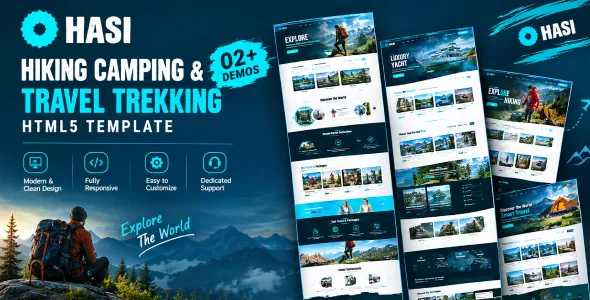
Hasi – Hiking Camping & Travel Tour HTML5 Template
Hasi – Hiking Camping & Travel Tour HTML5 Template is a modern website template designed for travel agencies, hiking organizers, camping businesses, adventure tour operators, outdoor recreation companies, and nature-focused tourism providers that want to establish a professional online presence. Created for adventure-oriented websites, Hasi offers a starting point for presenting travel experiences, showcasing outdoor destinations, introducing tour packages, sharing useful travel information, and encouraging visitors to explore their next adventure. Its HTML5 foundation makes it suitable for developers and website creators who want a customizable frontend for an outdoor tourism or travel-related business.
Travelers often visit adventure websites to discover destinations, compare tour options, understand activity requirements, and learn what to expect before making a booking. A well-organized travel website should present this information clearly while using engaging photography and straightforward navigation to inspire visitors. Whether a business specializes in mountain hiking, wilderness camping, guided trekking, nature excursions, weekend getaways, or multi-day adventure holidays, its website can help communicate the experience and guide potential customers toward relevant services.
Hasi can be customized to suit different adventure tourism businesses by combining destination information, tour descriptions, activity highlights, travel guidance, and contact opportunities. Its final capabilities depend on the supplied template version, included pages, styling, and any additional integrations added during development. With original content, suitable imagery, and a clear website structure, Hasi can provide a foundation for presenting outdoor experiences and helping travelers discover adventure opportunities.
What Is Hasi Hiking Camping & Travel Tour HTML5 Template?
Hasi is an HTML5 website template focused on hiking, camping, adventure travel, and tour-related businesses. It can serve as a frontend starting point for creating a website that introduces outdoor activities, highlights destinations, presents tour packages, and provides practical information for prospective travelers.
HTML5 provides the structural foundation for web pages, while supporting technologies such as CSS and JavaScript can be used to create layouts, visual effects, responsive behavior, and interactive interface elements. Developers can customize the supplied files to reflect a company’s branding, services, content, and intended audience.
An adventure travel website has different communication needs from a general corporate website. Visitors may want to know the difficulty of a hiking trail, the duration of a camping trip, the type of accommodation available, the equipment required, the group size, and the arrangements for transportation or guides.
Hasi can be evaluated for these requirements based on its included layouts and components. Before using the template for a production website, review the available demo, documentation, source files, dependencies, and responsive behavior to understand which features are included and which require additional development.
Modern Website Design for Adventure Travel Businesses
Adventure travel businesses need a website that communicates the character of their experiences while providing useful information for planning a trip. Strong imagery can introduce the beauty of outdoor destinations, while organized content helps visitors understand the activities and services available.
Hasi can be customized for travel companies that offer hiking expeditions, camping trips, guided treks, mountain adventures, nature walks, outdoor excursions, and organized holidays. The homepage can introduce the business, highlight popular experiences, present selected destinations, and guide visitors toward tour details.
A clear headline should communicate the type of adventure the company offers. Supporting content can explain the intended audience, the destinations covered, and the main activities available.
Featured tour sections can introduce selected packages, while destination cards can direct visitors to pages containing more detailed travel information. A company introduction can explain the team’s experience, guiding approach, and commitment to responsible outdoor activities.
The website should balance attractive presentation with practical details. Visitors need enough information to evaluate whether a trip suits their interests, schedule, physical ability, and budget.
Website Solutions for Hiking and Trekking Companies
Hiking and trekking businesses organize outdoor experiences that range from short nature walks to challenging multi-day expeditions. Their websites need to explain the routes, difficulty levels, expected conditions, and practical arrangements for each trip.
Hasi can provide a starting point for a hiking company website that presents available trails, guided walks, trekking packages, and mountain destinations. Dedicated tour pages can explain the duration of each experience, the route, the approximate activity level, and the services provided.
A hiking tour page may include:
- Destination and trail information
- Trip duration and itinerary
- Difficulty rating and fitness expectations
- Group size and guide arrangements
- Recommended clothing and equipment
- Seasonal conditions and preparation advice
- Meeting points and transportation details
- Pricing information and booking instructions
These details help travelers compare options and make informed decisions before contacting the operator.
For challenging routes, safety information should be accurate and appropriate to the destination. Explain relevant physical requirements, weather considerations, and any restrictions that travelers should understand before participating.
A well-organized hiking website can help reduce uncertainty, answer common questions, and make it easier for visitors to identify suitable outdoor experiences.
Website Solutions for Camping Businesses
Camping businesses provide opportunities for visitors to spend time outdoors, experience natural environments, and enjoy activities away from urban settings. Their websites should communicate the available facilities, location, accommodation options, and practical requirements for each camping experience.
Hasi can be adapted for campgrounds, guided camping trips, wilderness retreats, family camping businesses, and outdoor recreation providers. Depending on the services offered, a camping website may feature tent camping, organized group camps, guided wilderness experiences, glamping options, or multi-day nature trips.
A dedicated camping page can describe the campsite’s setting, available facilities, nearby attractions, access arrangements, and activities. Visitors may also need information about drinking water, restrooms, food arrangements, weather conditions, equipment rental, and restrictions concerning campfires or wildlife.
Photographs can help potential guests understand the atmosphere and surroundings of a campsite. Use authentic images that accurately represent the facilities and environment rather than visuals that create unrealistic expectations.
If the business offers different camping packages, organize them by duration, location, accommodation type, or intended audience. Clear package descriptions make it easier for travelers to compare options.
Travel Tour Packages and Adventure Experiences
Tour packages are an important part of an adventure travel website. Visitors need to understand what each package includes, how long it lasts, what activities are planned, and which services are provided by the operator.
Hasi can be customized to display different types of travel experiences, depending on the included layouts. These might include weekend hiking trips, guided mountain treks, camping holidays, forest excursions, nature photography trips, and outdoor group adventures.
Each package should provide a clear title, destination, short introduction, duration, and relevant highlights. A detailed page can then explain the itinerary, accommodation arrangements, transportation, meals, equipment, and other included services.
If a package has specific requirements, such as a minimum age, particular fitness level, or specialized equipment, these should be communicated before booking.
Businesses should distinguish between services included in the package and optional extras. Transparent descriptions help visitors understand the offer and avoid misunderstandings.
Where tour availability changes by season or group capacity, the website should display accurate information and explain how travelers can confirm availability.
Destination Pages for Outdoor Tourism
Destination pages help travelers discover places that match their interests. An adventure tourism website can use these pages to introduce hiking regions, mountain ranges, national parks, forests, lakes, camping areas, and other outdoor locations.
Hasi can be adapted to present destinations through image sections, introductory descriptions, activity highlights, and links to relevant tours. The precise presentation depends on the template’s available components and the developer’s customization.
A useful destination page should explain what makes the location interesting and what visitors can do there. It may include details about the landscape, typical activities, seasonal considerations, accessibility, and nearby attractions.
For example, a mountain destination might focus on trekking routes, panoramic views, and multi-day hiking opportunities. A forest destination could highlight nature walks, wildlife observation, and guided outdoor experiences. A lakeside location may be suitable for camping, photography, and other permitted recreational activities.
Travel information should be checked against reliable local sources. Conditions, access restrictions, permits, and seasonal closures can change, so avoid publishing outdated information.
Destination pages can also link to relevant tours, helping visitors move from general travel inspiration to specific experiences.
Responsive Design for Desktop and Mobile Devices
Travelers frequently use smartphones to research destinations, compare tours, and access travel information while on the move. A responsive website helps ensure that important content remains readable and usable across different screen sizes.
Hasi should be tested on desktop computers, laptops, tablets, and mobile devices to confirm that its actual layouts behave as expected. The responsive quality of the finished website depends on the supplied files, CSS implementation, images, and any customizations.
On mobile screens, navigation should be straightforward, text should remain readable, and calls to action should be easy to select. Tour cards and destination images should adapt to narrower layouts without awkward cropping or horizontal scrolling.
Travel websites often include image galleries, maps, itineraries, and booking forms. Each of these elements should be tested separately because complex content may need specific adjustments for smaller screens.
Buttons for tour inquiries, contact information, and booking links should remain accessible without overwhelming the page. Essential details such as departure dates, trip duration, and tour prices should be presented clearly.
Responsive testing should cover the homepage, destination pages, tour details, blog articles, and contact pages. Regular checks after design changes help preserve a consistent experience.
Homepage Design and Content Organization
The homepage should introduce the adventure travel business and help visitors discover relevant experiences quickly. It needs to combine inspiration with practical information rather than relying on images alone.
A Hasi-based homepage can be organized around a hero section, a brief business introduction, featured tours, destination highlights, activity categories, customer feedback where available, travel articles, and contact opportunities.
The hero section should communicate the business’s main focus. A hiking company might emphasize guided trekking, while a camping provider may highlight outdoor retreats and nature experiences.
Featured tours can showcase selected packages with useful information such as the destination, duration, and main activity. Destination highlights can help visitors explore locations before choosing a specific tour.
An About section can introduce the team, explain the business’s experience, and communicate its approach to guest service and responsible travel. Genuine testimonials may provide additional context when they are published with appropriate permission.
The homepage should avoid unnecessary clutter. Prioritize sections that help visitors understand the business, discover suitable tours, and take a clear next step.
Adventure Activities and Outdoor Experiences
Adventure travel companies often offer several activities, and visitors may prefer to explore options according to their interests. A website can organize these experiences into clear categories.
Hasi can be customized to present activities such as hiking, trekking, camping, mountain exploration, nature walks, scenic excursions, outdoor photography, and other experiences that the business genuinely provides.
Each activity page should describe the experience, the expected level of exertion, the approximate duration, and any preparation requirements. Where appropriate, include age guidance, equipment recommendations, and seasonal information.
A beginner-friendly hiking tour should be distinguished from a demanding expedition. Similarly, a family camping package may require different facilities and arrangements from a remote wilderness trip.
Activity categories can help visitors narrow their choices without reading every tour page. Use concise descriptions and relevant photographs to communicate the character of each experience.
The website should not imply that an activity is suitable for everyone. Explain relevant limitations and encourage travelers to review the details before participating.
Tour Itineraries and Trip Information
A clear itinerary helps travelers understand how a trip is organized. It can reduce uncertainty by explaining the expected sequence of activities and the arrangements involved.
Hasi can be adapted to present itineraries for day trips, weekend camping experiences, multi-day hikes, and longer adventure holidays. The available presentation options depend on the supplied template and any additional development.
An itinerary may describe daily activities, departure arrangements, planned stops, walking distances, rest periods, accommodation, and return times. Where timings are approximate, label them accordingly.
For outdoor trips, itineraries should account for the possibility of changing weather, trail conditions, and other factors that may affect the schedule. Explain whether the operator may modify the route for safety or operational reasons.
Visitors should also understand what is included and excluded from the package. Transportation, meals, permits, accommodation, equipment, and guide services may vary by tour.
Keep itinerary details accurate and update them when routes or operating arrangements change. A clear and realistic itinerary helps travelers prepare appropriately.
Tour Booking and Inquiry Functionality
Many travel businesses use their websites to generate inquiries or accept reservations. Visitors may want to ask about available dates, confirm group capacity, request customized tours, or reserve a place on a package.
Hasi can provide a frontend foundation for presenting tour details and directing visitors toward a booking or inquiry process. However, a working booking system should not be assumed to be included in a static HTML5 template unless it is explicitly documented.
A simple inquiry form may collect a visitor’s name, email address, preferred tour, travel dates, group size, and message. Request only the information needed to respond to the inquiry.
If real-time reservations are required, the website may need a backend, database, availability management system, payment gateway, or third-party booking platform. These integrations should be selected according to the business’s operational requirements.
Booking pages should explain important terms, including cancellation policies, deposits, refunds, and any requirements for confirming a reservation.
Every form and booking link should be tested before launch. Confirm that submissions reach the correct destination and that visitors receive understandable feedback after submitting a request.
Travel Photography and Visual Storytelling
Photography plays a major role in adventure tourism because visitors often want to see the landscapes, activities, and environments associated with a trip before deciding to participate.
Hasi can be customized to feature photographs of mountain trails, forest landscapes, campsites, lakes, outdoor equipment, and guided activities. The final gallery structure depends on the included components and design options.
Use high-quality images that accurately represent the destinations and experiences offered. Authentic photographs can help visitors understand the environment and the nature of the activities.
Images should support the content rather than replace important information. A beautiful photograph may inspire interest, but travelers still need details about trip duration, difficulty, facilities, pricing, and preparation.
Optimize image dimensions and file sizes to balance visual quality with loading performance. Large image galleries can affect speed, particularly for visitors using mobile connections.
Where photographs include recognizable people, obtain appropriate permission before publishing them. Ensure that image rights and licensing terms are respected.
About Us and Building Traveler Confidence
An About page gives visitors an opportunity to learn about the travel business, its team, and its approach to organizing outdoor experiences.
Hasi can be customized to introduce the company’s background, guiding experience, service philosophy, destination knowledge, and commitment to responsible travel. The content should reflect the organization’s actual history and capabilities.
For adventure operators, trust is particularly important because trips may involve unfamiliar locations, outdoor conditions, and specialized activities. Clear information about guide qualifications, safety procedures, equipment arrangements, and emergency planning can help visitors understand how trips are managed.
Only publish credentials and safety claims that can be verified. If the business works with licensed guides, recognized organizations, or approved local partners, provide accurate details where appropriate.
An About page may also explain the company’s approach to environmental responsibility and respectful engagement with local communities. Avoid broad sustainability claims that are not supported by the business’s actual practices.
A transparent presentation helps visitors evaluate the operator and decide whether its experiences suit their expectations.
SEO-Friendly Website Structure
Search engine optimization helps search engines understand website content and can support the discovery of relevant travel pages. A template provides a starting point, but SEO results also depend on content quality, technical setup, competition, and ongoing maintenance.
Hasi can be developed with descriptive page titles, logical headings, relevant tour descriptions, and internal links between related content.
A travel business may create separate pages for important destinations, hiking packages, camping experiences, and specialized activities. Each page should provide genuinely useful information rather than repeating the same generic description.
Use descriptive URLs that reflect the page topic. For example, a dedicated trekking page should have a clear address that makes sense to visitors and search engines.
Images should have meaningful alternative text when they convey important information. Optimize image sizes and use descriptive captions where they improve understanding.
A travel blog can provide practical guidance about packing, trail preparation, camping essentials, seasonal travel, and destination planning. Articles should answer real questions and link naturally to relevant tours.
Technical SEO requires additional attention to metadata, page indexing, mobile usability, performance, and broken links. Depending on the implementation, structured data may also be appropriate for eligible pages.
No template guarantees specific rankings or traffic. Sustainable SEO requires useful content, sound technical implementation, and regular review.
Website Performance and Loading Speed
Website performance affects how quickly travelers can browse tours and access practical information. Adventure websites often use large photographs, galleries, and destination imagery, so image optimization is particularly important.
The performance of a Hasi website depends on its HTML, CSS, JavaScript, image assets, hosting environment, and any third-party integrations added during development.
Start by resizing images for their intended display dimensions and compressing them appropriately. Modern image formats may reduce file sizes while preserving visual quality.
Avoid loading unnecessary scripts, large animations, or external widgets that provide little practical value. Review fonts and other resources to identify opportunities to reduce loading overhead.
Use responsive image techniques where appropriate so mobile visitors do not download unnecessarily large files. Lazy loading can help defer off-screen images, provided it is implemented in a way that does not delay important above-the-fold content.
Test the homepage, destination pages, tour details, and image galleries individually. A page with several large photographs may perform differently from a simpler information page.
Use performance testing tools to identify actual bottlenecks before introducing additional optimization services. Ongoing monitoring helps maintain a smooth experience as the website grows.
Accessibility and User-Friendly Navigation
An adventure travel website should be easy to use for visitors with different devices, abilities, and levels of technical experience. Clear navigation helps people find destinations, compare tours, and access important travel details.
When customizing Hasi, use readable typography, appropriate color contrast, descriptive link labels, and a logical heading structure. Buttons should communicate their purpose clearly, and forms should include suitable labels and instructions.
Important information should not be communicated through color alone. Tour difficulty, availability, or booking status should be identified with text as well as visual indicators where applicable.
Images that communicate useful information should have meaningful alternative text. Decorative images can be handled appropriately so they do not create unnecessary interruptions for assistive technology users.
Navigation menus should be usable on touchscreens and, where applicable, through keyboard controls. Avoid relying exclusively on hover effects to reveal essential information.
Accessibility should be tested across the completed website, including forms, galleries, menus, and interactive components. Automated tools can help identify issues, but practical testing remains important.
Blog and Travel Content Marketing
Travel articles can help adventure businesses share useful information, answer visitor questions, and introduce destinations that match their services. A blog can support the main website by providing educational content alongside tour listings.
Hasi can be extended with travel articles or a blog section if the supplied layout supports it or developers add the necessary pages.
Useful topics may include hiking preparation, camping equipment, outdoor clothing, route planning, responsible travel, seasonal destination guides, and advice for first-time adventure travelers.
Articles should provide accurate, practical information. For example, a packing guide can distinguish between essentials and optional equipment, while a destination guide can explain seasonal conditions and access requirements.
Where relevant, link articles to related tours or destination pages. This creates a natural path from learning about an activity to exploring an available experience.
A consistent publishing schedule is often more useful than producing a large number of shallow articles. Review content periodically to correct outdated information and ensure that recommendations remain appropriate.
Integrations and Additional Website Features
A travel website may need additional tools for reservations, payment processing, maps, contact forms, email newsletters, analytics, or customer support. The appropriate integrations depend on the business’s operating model and the features included in the supplied template.
Hasi should be evaluated as a frontend starting point unless its documentation confirms that additional systems are included. A visual tour card or booking button does not automatically provide a working reservation workflow.
A map integration can help visitors locate meeting points or destinations. Contact forms may require a backend or third-party form service. Online payments require a compatible payment provider and appropriate transaction handling.
If the business needs to manage tour availability, customer records, or booking changes, it may require a database-backed system or external booking platform. Review how data will be stored, updated, and protected before selecting an integration.
Avoid adding unnecessary tools that duplicate existing functionality. Each integration should have a clear purpose and be compatible with the website’s code and hosting environment.
After implementation, test every important interaction, including inquiries, booking links, maps, and payment-related workflows.
Security and Ongoing Website Maintenance
A professional travel website requires regular maintenance to remain reliable, accurate, and secure. Even a well-designed template can develop problems if dependencies, content, forms, and external integrations are not reviewed.
Keep the source files organized and maintain backups before making significant changes. If the website uses a content management system, database, or booking platform, ensure that the relevant data is included in an appropriate backup and recovery plan.
Use reputable hosting and enable HTTPS. Review third-party scripts and plugins before integrating them, and keep dependencies updated according to their documentation.
Contact forms should include appropriate validation and spam prevention. Any system that stores customer details or processes payments requires suitable security controls and careful handling of personal information.
Regular content reviews are equally important. Confirm that tour dates, prices, routes, accommodation details, contact information, and booking instructions remain accurate.
For outdoor experiences, review safety guidance and seasonal information before each operating period. Outdated details may cause confusion and affect travelers’ preparation.
A planned maintenance routine helps preserve website performance and supports a dependable experience for visitors.
Who Should Use Hasi Hiking Camping & Travel Tour HTML5 Template?
Hasi may be suitable for several types of travel and outdoor recreation businesses, depending on the included layouts and customization requirements.
Hiking companies: Present guided hikes, trail information, walking tours, and mountain adventures.
Camping businesses: Showcase campgrounds, wilderness stays, organized camping trips, and outdoor accommodation options.
Adventure travel agencies: Promote multi-day excursions, outdoor holidays, nature trips, and customized travel experiences.
Trekking organizers: Explain routes, difficulty levels, itineraries, guide services, and preparation requirements.
Outdoor recreation providers: Introduce nature walks, outdoor activities, and suitable guided experiences.
Tour operators: Organize destination pages, travel packages, visitor information, and tour inquiries.
Nature tourism businesses: Highlight landscapes, wildlife experiences, environmental education, and responsible outdoor activities.
Travel startups: Establish a digital presence for a new adventure travel service or destination-focused business.
Group trip organizers: Share schedules, package details, participant guidance, and contact information.
Before selecting Hasi for a production project, review the supplied demo, available page layouts, documentation, source code, and responsive behavior to confirm that it meets the business’s needs.
Tips for Building a Successful Adventure Travel Website with Hasi
Begin by identifying the main purpose of the website. Determine whether the business focuses on hiking, camping, guided trekking, destination tours, or a combination of outdoor experiences.
Understand the target audience. Beginners may need more preparation guidance, while experienced hikers may want detailed route information, difficulty ratings, and technical requirements.
Prepare accurate content for each tour before finalizing the page design. Include the destination, duration, itinerary, included services, pricing, equipment requirements, and any relevant safety information.
Use original or properly licensed photography that represents the actual experiences. Optimize images so the website remains visually engaging without becoming unnecessarily slow.
Organize tours into understandable categories and keep navigation simple. Visitors should be able to find destinations, compare packages, learn about the operator, and submit inquiries without confusion.
Test the website on different screen sizes. Review image display, menus, contact forms, booking links, page loading, and accessibility.
If reservations or online payments are required, choose a suitable integration and test the complete process before accepting real bookings. Make policies and booking conditions easy to locate.
Finally, maintain the website through regular updates, backups, performance checks, and content reviews. A travel website should remain accurate as destinations, seasons, prices, and operating arrangements change.
Final Thoughts on Hasi Hiking Camping & Travel Tour HTML5 Template
Hasi – Hiking Camping & Travel Tour HTML5 Template is a potential option for adventure travel businesses, hiking organizers, camping operators, tour agencies, and outdoor recreation providers looking to build a professional website. Its travel-focused concept makes it relevant to projects that need to showcase destinations, explain outdoor experiences, present tour packages, and provide useful information for prospective travelers.
With thoughtful customization, the website can combine engaging destination imagery with clear tour descriptions, practical itineraries, activity information, and convenient contact opportunities. Businesses can tailor the content to their specific services while maintaining a consistent visual presentation.
The final capabilities depend on the supplied template version, included files, responsive implementation, and additional integrations. Developers should review the documentation and test the actual source code before relying on particular features.
A successful adventure travel website also requires accurate information, accessible navigation, optimized images, responsible safety communication, effective SEO, and ongoing maintenance. The template alone cannot guarantee search rankings, bookings, or customer growth, but it can provide a useful starting point for a well-organized online presence.
For travel businesses that want to help visitors discover outdoor experiences and plan their next trip, Hasi can be evaluated as part of a broader website development strategy. Combining an engaging presentation with transparent tour details and reliable functionality can help create a useful digital experience for adventure travelers.