My Account
Flyhali – Private Helicopter Rental Laravel Template
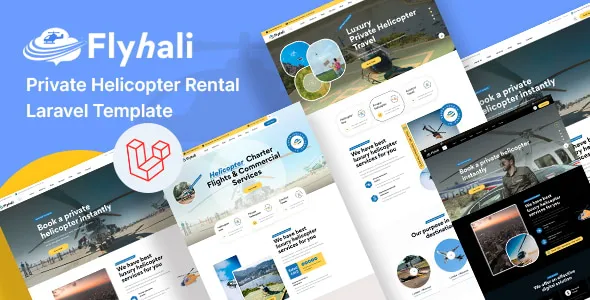
Flyhali – Private Helicopter Rental Laravel Template is a website template designed for private helicopter rental companies, aviation service providers, charter operators, luxury travel businesses, and specialized transportation services. It provides a potential foundation for creating a professional online presence where businesses can introduce helicopter charter services, present available travel options, showcase aircraft, explain booking procedures, and connect with customers seeking premium air transportation. With suitable customization, Flyhali can help aviation businesses communicate their services through an organized website that reflects professionalism, convenience, and the distinctive experience of private helicopter travel.
Private helicopter rental services often serve customers who value flexibility, privacy, efficient transportation, and access to destinations that may be difficult to reach by conventional travel. These customers may include corporate executives, leisure travelers, event organizers, tourism operators, and individuals planning private journeys or special occasions. A well-designed website helps potential customers understand the available services, review relevant information, and contact the provider to discuss their requirements.
Built around the Laravel development framework, Flyhali can be considered by developers who want a website foundation associated with a PHP-based development environment. Laravel can support structured application development, server-side functionality, routing, and integration with suitable data-management systems when implemented appropriately. The exact functionality available in Flyhali depends on the included source files, configured components, and documented requirements. Businesses should review the current demo and documentation to confirm the available pages, booking-related components, dependencies, and customization options before implementation.
What Is Flyhali Private Helicopter Rental Laravel Template?
Flyhali is a specialized website template intended for private helicopter rental and aviation-related businesses. Rather than relying on a generic transportation website structure, a helicopter rental website can focus on aircraft presentation, charter services, travel experiences, customer inquiries, and the information required to plan a private flight.
The template can serve as a starting point for businesses that want to introduce their aviation services and communicate with potential customers through a professional website. Depending on the available layouts and customization requirements, the website may be organized around a homepage, company introduction, helicopter fleet, charter services, destination information, travel experiences, frequently asked questions, and contact details.
A private aviation business may use the website to explain scenic helicopter tours, point-to-point charter services, corporate transportation, special-event travel, or customized flight arrangements. The final service categories should reflect the operator’s actual offerings, operational permissions, and service area.
The Laravel foundation can be useful for developers who need a PHP-based environment for adapting the website and connecting it to appropriate server-side services. However, a template should not automatically be treated as a complete aviation booking platform. Features such as live aircraft availability, payment processing, customer accounts, automated booking confirmations, or operational scheduling require appropriate implementation unless they are explicitly included in the supplied package.
Professional Website Design for Private Aviation
Private aviation customers often expect a high standard of communication and presentation. The website should make the service easy to understand while conveying the professionalism required in a specialized transportation industry.
Flyhali can be customized to establish a visual identity suited to private helicopter rental. Large aircraft photographs, carefully organized service sections, clear headings, and well-positioned contact links can help visitors understand the business and explore its offerings.
A private charter company may choose a sophisticated visual style with restrained colors, high-quality aircraft imagery, and concise descriptions. A sightseeing operator might emphasize scenic destinations, memorable travel experiences, and tour information. A corporate aviation provider may prefer a more business-focused presentation that prioritizes service reliability, route planning, and direct communication.
Visual consistency helps reinforce the brand. Typography, spacing, image treatments, buttons, and background colors should follow a coherent design system throughout the website. Avoid overcrowding pages with unnecessary effects or excessive promotional messages, especially when customers need clear and practical information before making an inquiry.
The goal is to create a website that looks professional and makes essential information easy to locate. Good presentation should support the customer journey rather than distract from it.
Ideal for Private Helicopter Charter Companies
Private helicopter charter operators need to explain their services to customers with different travel objectives. Some visitors may want a scenic flight, while others may need transportation for a business trip, an event, or a customized journey.
Flyhali can be evaluated for several aviation-related business models, including:
- Private helicopter rental and charter services.
- Scenic helicopter tours and sightseeing experiences.
- Luxury travel and premium transportation providers.
- Corporate helicopter transportation services.
- Destination-based aviation and tourism businesses.
- Helicopter transfers offered through authorized operators.
- Special-event transportation providers.
- Aviation companies serving private clients and organizations.
- Travel agencies coordinating helicopter experiences with licensed operators.
- Charter businesses offering customized flight arrangements.
Each business has different operational requirements. A sightseeing company may need to explain tour duration, departure points, passenger restrictions, and the scenery customers can expect to experience. A corporate charter provider may need to collect travel dates, departure and arrival locations, passenger numbers, and scheduling preferences.
The website should accurately communicate what the operator can provide. Aviation services depend on aircraft availability, weather, regulations, operational permissions, landing facilities, and other conditions. Clear explanations help customers understand the process before submitting a request.
Showcase Helicopter Fleet and Aircraft Information
A helicopter fleet section can help customers understand the aircraft options offered by a charter company. Visitors may want to learn about passenger capacity, luggage considerations, cabin configuration, and the types of journeys an aircraft is suitable for.
Flyhali can be customized to present fleet information using the layouts and components available in the template. Each aircraft entry may include a photograph, model name, a short description, passenger capacity, and other verified specifications relevant to prospective customers.
For example, a fleet listing might distinguish aircraft used for scenic flights from those configured for particular charter requirements. Any such distinctions must reflect the operator’s actual fleet and approved use of each aircraft.
Aircraft specifications should be checked carefully before publication. Passenger capacity, baggage allowances, range, operating limitations, and other details can vary by aircraft model and configuration. Avoid publishing generalized specifications that may not apply to the actual aircraft being offered.
High-quality photographs can make fleet pages more informative, but images should accurately represent the aircraft or clearly be identified as illustrative. If aircraft are operated by partner companies, describe that arrangement transparently.
A well-organized fleet presentation helps customers compare available options and provides useful context for subsequent booking inquiries.
Private Helicopter Rental and Charter Services
A dedicated services section can explain the different ways customers may use private helicopter transportation. This information should be organized around the actual services provided by the business.
Depending on the operator’s offerings, Flyhali may be customized to present services such as private charter flights, scenic tours, corporate transportation, special-event travel, or customized sightseeing experiences.
Each service page should describe what the service involves, who it is intended for, and how customers can request further information. A scenic tour page might explain the available route, approximate flight duration, departure location, and factors that can affect the experience. A private charter page may describe the inquiry process and the details needed to prepare a quotation.
Corporate transportation pages can focus on business travel requirements, schedule coordination, and communication with the charter operator. Event-related pages may explain how transportation requests are assessed and what information customers should provide.
Service descriptions should avoid making promises that the operator cannot guarantee. Flight times, routes, departure schedules, and landing locations may be affected by weather, airspace restrictions, airport permissions, and operational decisions.
Providing accurate service information helps customers determine whether the offering matches their requirements before contacting the business.
Helicopter Booking and Rental Inquiry Experience
A convenient inquiry process is important for a private helicopter rental website. Unlike ordinary online retail purchases, charter requests may require individual assessment based on passenger numbers, route details, aircraft availability, operating conditions, and customer preferences.
Flyhali can be considered as a starting point for a booking inquiry experience, depending on the components included in the template. A customized form may collect the information needed for an operator to assess a request and respond with suitable options.
Common inquiry fields may include:
- Customer name and contact details.
- Preferred flight date and approximate departure time.
- Departure and destination locations.
- Number of passengers.
- Type of charter or travel experience.
- Special requirements or additional information.
The exact fields should be chosen according to the business’s booking process. Avoid requesting unnecessary personal information, and explain how submitted details will be used.
It is important to distinguish a booking request from a confirmed reservation. A form that collects customer details does not necessarily verify aircraft availability or guarantee a flight. If the business offers actual online reservations, the system needs suitable availability management, booking validation, and confirmation procedures.
A well-designed inquiry process should acknowledge submissions clearly and provide an appropriate next step. The business should also test form validation, email delivery, error handling, and the secure processing of customer information.
Laravel Framework and Development Flexibility
Laravel is a PHP framework used to develop web applications with structured routing, server-side processing, and support for common application-development tasks. A Laravel-based template can provide a foundation for developers who want to customize a website within this ecosystem.
Flyhali’s actual development structure depends on the supplied project files and the version of Laravel it supports. Before starting development, review the package documentation, installation instructions, PHP requirements, dependencies, database configuration, and any build or asset-compilation steps.
Depending on the implementation, developers may be able to adapt page layouts, routes, reusable view components, styles, and server-side functionality. They may also connect the website to a suitable database or external services when the project requires additional functionality.
A Laravel template is not necessarily a complete reservation management system. Features such as customer registration, administrator dashboards, automated quotations, booking calendars, payment gateways, and live availability management require verification in the supplied package or additional development.
Developers should use a compatible environment and follow recommended deployment practices. Configuration settings, environment variables, database credentials, and other sensitive values should be handled securely rather than exposed in public-facing files.
Maintaining a clear project structure makes future modifications easier and helps reduce unnecessary duplication as the website evolves.
Responsive Design for Desktop, Tablet, and Mobile
Customers may explore a helicopter rental website from a desktop computer while planning a corporate trip or from a smartphone while researching a sightseeing experience. Responsive design helps keep information accessible across these different devices.
Flyhali’s actual responsive behavior should be verified using its current demo and documentation. Developers should test the included pages and components across a range of screen sizes and make adjustments where necessary.
Important elements include navigation menus, aircraft photographs, service cards, pricing or quotation information, forms, and contact buttons. Images should scale appropriately, text should remain readable, and interactive elements should be easy to use on touchscreens.
Mobile visitors should be able to locate the main services and contact options without excessive scrolling or complicated navigation. Forms should fit the available screen width, and input fields should remain practical to complete on a phone.
Responsive testing should cover more than the homepage. Fleet listings, destination pages, service descriptions, inquiry forms, and other content-heavy sections may require different adjustments.
Custom CSS, JavaScript interactions, embedded maps, and external widgets can affect the mobile experience. Test the website after significant design changes to ensure that the layout remains usable.
Destination Pages and Scenic Helicopter Tours
Destination information can be valuable for operators that provide scenic flights or tourism-related helicopter experiences. Customers often want to understand what they may see during a flight, where the journey begins, and which locations are included in a tour.
Flyhali can be customized to present destination-focused content where the available page structures support it. Each destination page might describe the general area, the intended experience, relevant departure information, and the process for requesting a flight.
A scenic tour website could feature city skylines, coastlines, mountains, landmarks, or other destinations relevant to the operator’s authorized routes. The descriptions should reflect the actual tour offering and avoid implying that a particular route or landing is guaranteed.
Where useful, destination pages can include maps or route illustrations to help visitors understand the general geography of an experience. Such visual material should be accurate and should not replace operational information provided by the operator.
Tour descriptions can also explain important practical considerations, including approximate duration, passenger restrictions, weather dependencies, and departure instructions. Any restrictions should be confirmed with the operating company before being published.
Clear destination information helps customers evaluate available experiences and prepare more informed inquiries.
Luxury Travel and Premium Brand Positioning
Private helicopter services are often associated with personalized travel, privacy, and premium experiences. A website can communicate these qualities through consistent branding, useful service information, and professional customer communication.
Flyhali can be adapted for a luxury aviation brand by using high-quality imagery, restrained typography, organized layouts, and concise copy. The design should reflect the company’s actual positioning rather than relying entirely on generic luxury language.
A premium travel provider may emphasize private arrangements, tailored itineraries, scenic experiences, or coordination with other travel services where those offerings are genuinely available. A corporate charter operator may focus more heavily on business requirements and communication with its customers.
Visual quality should be supported by practical details. Visitors need to know how to inquire, which locations are served, what information they should provide, and how the company handles requests.
Avoid exaggerated claims about aircraft, service availability, safety, or exclusivity. Statements about certifications, operating standards, and service credentials should be accurate and verifiable.
A well-presented website can reinforce a premium brand when the visual experience and the company’s real service standards are consistent.
Search Engine Optimization for Helicopter Rental Websites
Search engine optimization can help potential customers discover helicopter rental services when researching private charters, scenic flights, or specialized transportation. The template provides only part of the foundation; effective SEO also depends on content, technical implementation, local relevance, and competition.
When customizing Flyhali, create descriptive page titles, useful headings, readable URLs, and original content for each important service. Pages should address the needs of specific audiences instead of repeating the same general description throughout the website.
A helicopter operator may create separate pages for private charter services, scenic tours, corporate travel, fleet information, and destinations actually served. Each page should provide useful details and accurately describe the company’s offering.
Local SEO may be relevant to operators serving particular cities, airports, or tourism regions. Business contact details should remain consistent, and location pages should contain genuine information about the services available in each area.
Images should be compressed appropriately and include meaningful alternative text when they communicate important information. Internal links can connect service pages, destination information, fleet details, and frequently asked questions.
Depending on the website’s setup, developers may also configure XML sitemaps, canonical URLs, structured data, redirects, and other technical SEO elements. These features may require additional configuration or compatible tools.
Avoid excessive keyword repetition. Write primarily for customers, use relevant terminology naturally, and keep service information accurate. No template can guarantee search rankings, traffic, or a specific number of booking inquiries.
Website Speed and Performance Optimization
Website performance affects how quickly visitors can view aircraft images, explore services, and complete inquiry forms. A fast and responsive experience can make the website more convenient to use, especially on mobile connections.
The performance of a Flyhali website depends on its implementation, hosting environment, image sizes, CSS, JavaScript, external resources, and any custom features added during development.
Start by optimizing aircraft and destination photographs. Large images can have a substantial impact on loading time, so use appropriate dimensions and compression while maintaining acceptable visual quality.
Review scripts and stylesheets to identify unnecessary resources. Where suitable, developers may use browser caching, compression, efficient asset loading, and other optimization techniques supported by the deployment environment.
Avoid adding unnecessary animations or third-party widgets that do not improve the customer experience. External services can introduce additional requests and maintenance requirements.
Performance testing should cover the homepage, service pages, fleet listings, destination pages, and contact forms. Use appropriate testing tools to identify slow-loading assets, layout shifts, and other issues.
After adding new content or integrations, repeat the tests to ensure that the website continues to perform well.
User-Friendly Navigation and Accessibility
A professional helicopter rental website should help customers find information without unnecessary effort. Clear navigation is especially useful when visitors need to compare services, review aircraft information, or submit a travel inquiry.
When customizing Flyhali, organize the navigation around the most important customer tasks. Depending on the business, primary sections might include Home, About, Services, Fleet, Destinations, Frequently Asked Questions, and Contact.
Use descriptive link labels and maintain a logical heading structure. Text should be readable, color contrast should be sufficient, and forms should include clear labels and understandable validation messages.
Interactive elements should be accessible using appropriate input methods, including keyboard navigation where applicable. Buttons should have clear purposes, and important information should not be communicated by color alone.
Provide meaningful alternative text for informative aircraft and destination images. Decorative images should not introduce unnecessary noise for users of assistive technologies.
Accessibility depends on the actual implementation rather than the template name alone. Test the website manually, review keyboard behavior, and evaluate the experience across common devices and screen sizes.
Contact Forms and Customer Communication
A contact page provides a direct way for potential customers to ask questions, request quotations, or discuss private flight arrangements. For charter businesses, a well-designed inquiry form can help gather the information needed to assess a request.
Flyhali can be customized to provide contact options that match the business’s workflow. These may include a general inquiry form, a charter request form, an email link, or a telephone contact option.
Keep forms focused on information that is genuinely required. For example, a charter inquiry may ask for the preferred travel date, departure location, destination, passenger count, and a way to contact the customer.
The website should explain what happens after the form is submitted. If an operator needs to confirm availability manually, say so clearly rather than implying that the customer has secured a reservation.
Developers should test required-field validation, successful submissions, error messages, spam protection, and email delivery. If customer details are stored, access should be limited appropriately and data should be handled according to applicable privacy requirements.
Reliable communication helps customers understand the next step and reduces confusion during the inquiry process.
Security and Website Maintenance
Security and ongoing maintenance are important for any business website built with a server-side framework. A private aviation website may handle customer contact details and travel requests, so its implementation should protect information appropriately.
For a Laravel-based project, follow the requirements and recommendations for the specific framework version. Keep dependencies updated, protect environment configuration, and ensure that sensitive credentials are not exposed through public files or source control.
Use HTTPS and secure hosting configuration. If the website accepts customer submissions, validate input on the server and apply appropriate protection against common web vulnerabilities. Additional security requirements depend on whether the site stores data, processes payments, or connects to external services.
Regular backups should include the relevant application files and database content, where applicable. Test the recovery process so that the business can restore its website if an update or deployment causes a problem.
Maintenance should also cover broken links, outdated aircraft information, incorrect contact details, and changes to available services. A visually polished website can still create a poor impression if the information is inaccurate.
After updating dependencies or changing application code, test important pages and forms before deploying the changes to the live environment.
Who Should Use Flyhali Private Helicopter Rental Laravel Template?
Flyhali may be appropriate for businesses and developers looking for a website foundation in the private aviation and helicopter charter sector.
Private helicopter charter companies: Operators can present charter services, explain the inquiry process, and provide essential business information.
Scenic flight operators: Tourism businesses can introduce available sightseeing experiences and provide relevant destination information.
Luxury travel providers: Companies offering premium travel arrangements can communicate their services and coordinate customer inquiries.
Corporate aviation services: Businesses serving corporate clients can describe transportation options and collect travel requirements.
Aviation tourism agencies: Agencies working with authorized operators can present helicopter experiences and explain how customers can request details.
Special-event transportation providers: Businesses offering approved helicopter transportation for events can explain their services and inquiry procedures.
Web development agencies: Developers can evaluate the Laravel-based template as a starting point for a client project, subject to licensing and technical compatibility.
Aviation startups: New businesses can assess the template as part of their website planning, while ensuring that all operational services and credentials are represented accurately.
Before choosing the template, confirm that its actual pages, source structure, Laravel version, dependencies, and licensing terms meet the requirements of the intended project.
Tips for Building a Successful Website with Flyhali
Start by identifying the website’s main objective. Determine whether the business needs to promote scenic flights, generate charter inquiries, present a helicopter fleet, explain corporate transportation, or support several related services.
Prepare accurate content before finalizing the layout. This may include the company introduction, service descriptions, aircraft specifications, destinations served, operational limitations, contact information, and frequently asked questions.
Use authentic, high-quality imagery that reflects the services offered. Confirm that images are properly licensed and that any aircraft shown are represented accurately.
Keep the customer journey simple. Visitors should be able to understand the main services, find relevant information, and submit an inquiry without navigating through unnecessary steps.
If the website includes booking-related functionality, clearly distinguish between an inquiry, a provisional request, and a confirmed reservation. Confirmed flights may depend on operator approval, aircraft availability, weather, regulations, and other operational considerations.
Test the complete website on desktop and mobile devices. Review loading speed, form behavior, navigation, accessibility, and the accuracy of all published information.
Finally, create a maintenance plan that includes backups, dependency updates, content reviews, security checks, and performance testing. Regular maintenance helps preserve the quality of the website as the business develops.
Final Thoughts on Flyhali – Private Helicopter Rental Laravel Template
Flyhali – Private Helicopter Rental Laravel Template is a potential starting point for private helicopter charter companies, scenic flight operators, luxury travel businesses, aviation service providers, and developers creating websites for this specialized industry.
The template’s intended focus makes it relevant to projects that need to introduce helicopter rental services, present aircraft information, explain travel experiences, and provide convenient ways for customers to make inquiries. With suitable customization, businesses can adapt the presentation to their branding, service model, and target audience.
The final website’s capabilities depend on the actual files included with Flyhali, its supported Laravel version, the documented components, and any additional development required. Booking management, payment processing, live availability, and other advanced functions should be verified rather than assumed to be included.
A successful aviation website also requires accurate service information, responsive design, clear navigation, search optimization, suitable security measures, and ongoing maintenance. A template alone cannot guarantee reservations, search rankings, or business growth, but it can provide a foundation for communicating services professionally.
For businesses planning a private helicopter rental website, Flyhali can be evaluated as part of a broader web development strategy. Combining an appropriate design with accurate aviation information, a straightforward inquiry process, and reliable technical implementation can help create a useful online presence for customers exploring private helicopter travel.