My Account
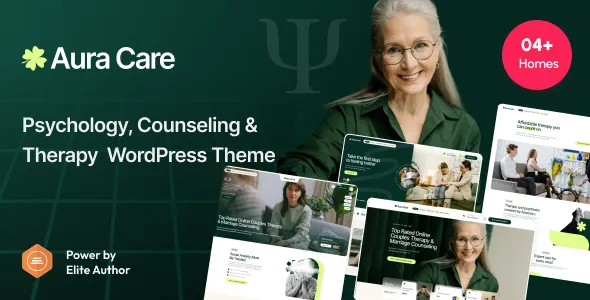
AuraCare – Psychology, Counseling and Therapy WordPress Theme
AuraCare – Psychology, Counseling and Therapy WordPress Theme is a professional website solution designed for psychologists, therapists, counselors, mental wellness professionals, and counseling centers that want to establish a welcoming online presence. With a focus on clear communication, professional presentation, and accessible service information, AuraCare provides a starting point for introducing practitioners, explaining therapy services, sharing educational resources, and helping visitors learn how to contact a practice. Built for WordPress websites, AuraCare can be adapted to different professional identities, service offerings, and communication goals. Whether you operate an independent counseling practice, manage a psychology clinic, provide therapy sessions, or run a wellness organization, AuraCare offers a foundation for presenting your services online while helping visitors understand your approach, explore available information, and take the next step when they feel ready.
Create a Professional Online Presence for Mental Health Services
A professional website is an important communication channel for psychologists, counselors, therapists, and mental wellness organizations. Before contacting a practice, visitors often want to understand the services offered, learn about the professionals involved, review appointment information, and discover whether the practice aligns with their needs. AuraCare is designed around this type of website objective, helping professionals plan a digital presence that communicates essential information in a structured and approachable way.
For an independent psychologist, AuraCare can provide a starting point for presenting a professional biography, areas of practice, consultation details, and contact information. A counseling center may need additional sections for multiple practitioners, different service categories, and frequently asked questions. A wellness organization might use AuraCare to introduce its programs, publish educational content, and explain how people can participate in its services.
The value of a therapy website extends beyond visual appearance. Visitors need accurate information that helps them understand what a practice offers and how to proceed. Clear navigation, descriptive page titles, readable content, and a consistent presentation can make it easier to explore the website without unnecessary confusion.
AuraCare can be customized to reflect the identity and communication style of a practice, subject to the options available in the supplied theme. Professionals can develop content around their qualifications, service descriptions, consultation formats, and administrative procedures. This helps the website represent the real practice rather than relying on generic marketing language.
A thoughtfully developed AuraCare website can become a useful central destination for prospective clients seeking information about a mental health professional. By combining professional design with responsible communication, the website can help visitors make informed decisions about contacting the practice.
Design a Welcoming Experience for Website Visitors
The first impression of a psychology or counseling website can influence how visitors interact with its content. People exploring therapy services may have questions about the process or may be uncertain about contacting a professional. A confusing layout, excessive promotional messaging, or missing practical information can make that initial experience more difficult.
AuraCare offers a psychology-focused starting point for developing a website that feels organized, approachable, and professional. The visual presentation should support the information rather than distract from it. Readable typography, balanced spacing, appropriate imagery, and clear navigation can help visitors move between pages comfortably.
A homepage built around AuraCare might introduce the practice, explain its general purpose, highlight the main services, and direct visitors toward practitioner information or contact details. Supporting pages can provide more specific information for people who want to understand a service before making an inquiry.
The language used throughout the website should also feel welcoming. Instead of pressuring visitors to book an appointment, AuraCare content can explain available options and invite people to learn more. This approach respects the fact that choosing a therapist or counselor can be a personal decision that requires time and consideration.
Photography should be selected carefully. Professional portraits can help visitors recognize practitioners, while relevant images can support the visual identity of the practice. Images should not make unrealistic promises or imply that every person will have the same experience. The overall presentation should communicate professionalism, respect, and clarity.
When developing AuraCare, website owners should also test how the design appears on different devices. Visitors may use desktop computers, tablets, or mobile phones to explore services and locate contact information. A consistent experience across devices can make the website more accessible and practical to use.
Present Psychology and Counseling Services Clearly
Visitors often arrive at a therapy website with specific questions about the services available. They may want to understand the difference between individual counseling, couples sessions, family support, psychological assessment, or other professional offerings. AuraCare can provide a foundation for presenting these services in a structured and informative way.
Each service description should explain its purpose, identify the intended audience where appropriate, and outline the general process. This information helps visitors understand what a service involves without requiring them to contact the practice just to obtain basic details.
For example, a page about individual counseling could explain the general consultation process and the professional’s approach to working with clients. A couples counseling page might describe the service’s focus on relationship communication and shared concerns. A family counseling page could outline how family participation is arranged, depending on the service provided.
AuraCare can be used to organize these descriptions into separate pages or clearly defined sections, depending on the theme’s available layouts. Keeping services distinct helps visitors locate information relevant to their questions and reduces the risk of combining offerings that have different purposes.
Professional accuracy is essential when describing mental health services. Website owners should ensure that all information reflects their actual qualifications, scope of practice, and current availability. Services should not be presented as universally suitable, and descriptions should avoid guaranteeing particular clinical outcomes.
Practical details can make service pages more useful. Depending on the practice, these details may include session length, consultation format, location, fees, cancellation arrangements, and appointment procedures. If requirements differ by service or practitioner, the website should explain those differences clearly.
With carefully written content, AuraCare can help transform a basic service listing into a useful source of information for people considering professional support.
Introduce Therapists and Psychology Professionals
Choosing a therapist or counselor often involves learning about the person who may provide the service. Visitors may want to understand a professional’s qualifications, experience, areas of practice, and general approach before deciding whether to make contact. AuraCare can provide a starting point for presenting these details through practitioner profiles or team sections, depending on the supplied theme features.
A useful profile should include accurate professional information. This may cover recognized qualifications, relevant training, professional experience, and the services provided. Practitioners can also describe their approach in clear language that helps visitors understand what working with them may involve.
AuraCare websites should avoid exaggerated claims about professional expertise or guaranteed results. Qualifications and certifications must be represented accurately, and professional titles should reflect the practitioner’s actual credentials and applicable requirements.
For independent professionals, a biography can introduce the practice’s purpose and explain the practitioner’s areas of work. For a counseling center, individual profiles can help visitors distinguish between team members and understand which services each professional provides.
Consistency is particularly useful when several practitioners are presented on the same AuraCare website. Using a similar structure for each profile makes it easier for visitors to compare relevant information. Profiles can include a professional photograph, a concise biography, service details, and an appropriate contact option.
The writing should remain natural and informative rather than sounding like a collection of advertising claims. Visitors benefit from understanding the professional’s training and working approach more than reading broad statements about being the best or achieving guaranteed results.
By presenting verified information in an organized format, AuraCare can help professionals introduce their expertise while maintaining the trust and professional boundaries expected in mental health services.
Make Appointment Inquiries Easier to Understand
A clear contact process is an important part of a successful therapy website. Visitors may be ready to ask a question but unsure how to proceed, what information to provide, or what happens after submitting an inquiry. AuraCare can serve as the foundation for a straightforward contact experience that explains these steps.
The contact page should identify the available communication methods and provide accurate details. Depending on the practice, this may include a professional email address, telephone number, office location, or inquiry form. If appointments are handled through an external booking platform, the website can direct visitors to the appropriate service.
AuraCare content should distinguish between an inquiry and a confirmed appointment. If a visitor submits a request that must be reviewed by the practice, the page should explain that the request does not automatically confirm a booking. Clear expectations can prevent confusion and unnecessary follow-up.
Contact forms should collect only the information necessary for the intended purpose. An initial inquiry may require basic contact details and a brief message, depending on the practice’s process. Sensitive health information should not be collected through an ordinary form unless the practice has established an appropriate, secure method for handling it.
The website should also explain what visitors can expect after making contact. For example, the practice may state its normal response timeframe or provide its administrative hours. These details should reflect actual operating procedures rather than unsupported promises.
When setting up AuraCare, website owners should test all forms, links, and contact details before launch. A form that fails to submit or an outdated email address can prevent visitors from reaching the practice.
A simple, transparent inquiry process can make the website more useful while helping prospective clients understand their options.
Build Trust Through Responsible Mental Health Content
Mental health websites require careful communication because visitors may be seeking information about personal or emotionally challenging circumstances. AuraCare should be developed with an emphasis on accuracy, respect, privacy, and clear explanations of professional services.
Website content should not promise guaranteed outcomes or imply that one therapeutic approach is appropriate for every individual. Therapy experiences vary, and results depend on many factors. Service pages should explain what a practitioner offers without making unrealistic claims about what clients will experience.
AuraCare can support a professional presentation of service information, but the responsibility for accurate content rests with the practice. Qualifications, professional affiliations, service availability, and descriptions of clinical work should be verified before publication.
Educational material should distinguish general information from individualized professional guidance. A blog article can explain a mental health concept or describe a commonly used approach, but it should not suggest that a general article can replace an appropriate professional assessment.
Privacy deserves particular attention. Client stories, photographs, testimonials, and personal information should only be used when appropriate authorization has been obtained and relevant professional obligations have been considered. Even with permission, publishing sensitive information may require additional care.
The website should also explain how personal information submitted through inquiries is handled. Visitors should be able to find the relevant privacy notice and understand the basic purpose of data collection.
If a practice serves people who may need urgent assistance, the website should explain the limitations of routine appointments and direct visitors toward appropriate emergency or crisis resources. Any such information should be accurate for the locations served.
By prioritizing responsible communication, AuraCare can help professionals develop an online presence that respects visitors and supports informed choices.
Create an Educational Mental Wellness Blog
A blog can help psychologists, therapists, and counselors publish educational resources that answer common questions and explain aspects of their professional work. AuraCare can be used as the foundation for a website that combines service information with articles, provided the selected WordPress setup supports the required blog presentation.
Useful topics may include preparing for a first counseling appointment, understanding the general therapy process, communicating personal boundaries, managing everyday stress, improving relationship communication, or learning about different approaches to psychological support.
Content should be selected according to the professional’s actual expertise. Articles should use clear language and avoid presenting complex mental health experiences as simple problems with universal solutions. When discussing research or clinical concepts, authors should rely on credible sources and explain the information in context.
AuraCare blog content should also avoid turning every educational article into a sales pitch. Readers should receive useful information even if they are not ready to contact the practice. Where a service page is genuinely relevant, a contextual internal link can help readers explore further.
For search visibility, article titles should accurately describe their subject. A page about preparing for a first session should focus on practical preparation rather than use a vague headline that fails to communicate its purpose.
Content maintenance is equally important. Mental health information can become outdated, and older articles may need review when professional guidance or relevant research changes. Authors should update information when necessary and remove claims that cannot be adequately supported.
With a consistent editorial approach, an AuraCare website can become a useful educational resource that complements its professional service pages.
Organize Frequently Asked Questions
Prospective clients often have practical questions before they contact a therapist or counseling center. They may want to know how to request an appointment, what happens during an initial session, which consultation formats are available, or how fees and cancellations are handled.
An FAQ section can make this information easier to locate. AuraCare can provide a foundation for presenting frequently asked questions, although the exact FAQ layout or interactive features should be verified in the official theme documentation.
The questions should reflect real visitor concerns. A practice may include information about session duration, location, remote consultations, age groups served, appointment procedures, payment arrangements, and the process for selecting a practitioner.
Answers should be direct and specific. If a service is available only under certain conditions, those conditions should be explained. If fees vary between practitioners, the website should identify how visitors can obtain current information.
Confidentiality questions require careful wording. The practice should describe its privacy procedures and relevant professional obligations accurately rather than make absolute promises that may not apply in every circumstance.
FAQ content should also clarify the limits of general website information. A public page cannot determine which treatment or counseling service is suitable for an individual. Visitors with personal questions should have an appropriate way to contact a qualified professional.
As services change, the FAQ section should be reviewed to ensure that the information remains accurate. Outdated answers can create unnecessary confusion and increase the number of routine inquiries received by the practice.
A well-maintained FAQ section can make AuraCare more informative and help visitors understand the practical details involved in contacting a mental health professional.
Present Online and In-Person Consultation Options
Many psychology and counseling practices provide consultations in different formats, depending on professional requirements, location, technology, and the needs of the people they serve. AuraCare can help present these options through appropriate website content and supporting pages.
For in-person consultations, the website can provide the practice address, directions, accessibility information, and any relevant instructions for arriving at the location. Accurate information helps visitors prepare for their appointment and reduces uncertainty about where to go.
For remote consultations, the website can explain how sessions are arranged, what technology may be required, and how joining instructions are provided. It should also describe relevant privacy considerations and identify any location-based limitations that apply to the service.
AuraCare should not be assumed to include a complete booking or telehealth system unless those capabilities are explicitly listed in the supplied product documentation. Appointment scheduling, payment processing, and secure video consultations may require separate services or compatible plugins.
Before integrating an external booking platform, website owners should review its data handling, privacy controls, accessibility, and compatibility with the chosen WordPress setup. The full appointment process should be tested so visitors receive accurate confirmation and understand how to request changes.
Practitioners should also explain whether a consultation request is provisional or confirmed. This distinction is especially important when availability must be reviewed before an appointment can be finalized.
By presenting consultation options clearly, AuraCare can help visitors understand how a practice operates and identify the most appropriate way to make an inquiry.
Support Independent Therapists and Counseling Centers
Independent professionals and larger counseling organizations often have different website requirements. An individual therapist may need a compact website, while a clinic may require several service categories, practitioner profiles, location pages, and administrative resources.
AuraCare can be evaluated as a starting point for both types of websites, depending on its actual layouts, customization options, and compatibility with required extensions.
An independent counselor might organize the website around an introduction, professional biography, service descriptions, frequently asked questions, contact information, and privacy policy. This structure can provide the essential information visitors need without creating unnecessary complexity.
A counseling center may require additional sections for its team, different service offerings, multiple locations, and appointment procedures. Each service page should connect to the relevant practitioner information when appropriate, helping visitors understand who provides the service.
AuraCare can also be considered for wellness organizations that publish educational resources or provide workshops and community programs. In these cases, the website may need separate sections explaining program objectives, participation requirements, and registration procedures.
Before building a larger website, the organization should identify which features are essential. A visual theme may provide the design foundation, while advanced scheduling, restricted content, staff management, or secure communications may require additional tools.
Starting with the most important pages can make implementation easier. Once the core website is working well, the practice can add further resources as its needs become clearer.
This gradual approach helps keep the website organized and makes ongoing maintenance more manageable.
Customize the Website to Reflect Your Professional Identity
A professional website should communicate the identity of the practice rather than feel like an unrelated template. AuraCare can provide a starting point for establishing a visual presentation that reflects the organization’s services, audience, and communication style.
The available customization options should be confirmed against the official product documentation before planning specific design changes. Depending on the supplied theme, website owners may be able to adjust supported styling, page layouts, content sections, and other presentation elements.
A consistent visual identity can include a logo, suitable typography, a considered color palette, and relevant photography. These elements should support readability and help visitors recognize the practice across different pages.
Content should be customized just as carefully as the design. Generic descriptions should be replaced with accurate information about the practitioner’s qualifications, services, consultation formats, and policies. The language should reflect the practice’s real approach and avoid claims that cannot be substantiated.
An AuraCare website for a family counseling center may require different introductory content from one designed for an independent psychologist. A wellness organization may focus more on educational resources and programs, while a specialist clinic may need more detailed practitioner and service information.
Before publication, website owners should replace all placeholder content, verify links, check contact details, and review the appearance on different screen sizes. They should also confirm that the selected WordPress version and required plugins work correctly with the theme.
Thoughtful customization helps turn AuraCare into a more relevant website foundation for a particular professional practice.
Manage Website Content with WordPress
WordPress provides a content management environment for publishing pages, managing navigation, updating articles, and maintaining a website as its requirements change. For mental health professionals, this can be useful when practitioner information, service details, and educational resources need regular updates.
As a WordPress theme, AuraCare can be evaluated as part of a website setup that uses WordPress to manage its content. The exact editing tools, included plugins, supported page builders, and theme-specific settings should be verified before installation.
A practice may use WordPress to maintain its homepage, services, team, contact page, FAQ section, and blog. Additional extensions can be considered for contact forms, analytics, backups, security, or appointment requests where necessary.
Plugin selection should be especially careful when the website may receive sensitive personal information. A basic form plugin should not automatically be treated as suitable for collecting confidential health details. Practices should assess the security, privacy, access controls, and data retention arrangements of any service they use.
Website administrators should maintain the WordPress installation and its extensions according to appropriate update and security practices. Regular backups and a sensible update process can help reduce the risk of disruption.
Content guidelines are useful when several people contribute to the website. The practice can establish consistent standards for service descriptions, professional biographies, educational articles, and policy updates.
With a suitable configuration and ongoing maintenance, WordPress can provide a flexible foundation for a professional AuraCare website that grows alongside the practice.
Improve SEO with Relevant and Helpful Content
Search engines can help people discover psychologists, therapists, and counseling practices when they look for services or seek information about mental wellness. AuraCare can provide the website foundation for this work, but a theme alone cannot guarantee search rankings or increased traffic.
Search visibility depends on content quality, technical accessibility, competition, location, website performance, and many other factors. The most useful starting point is to publish accurate information that matches the needs and questions of the intended audience.
Each service page should focus on a clearly defined subject. A page about counseling services should explain the actual service, the general process, and relevant practical details. Practitioner pages should present verifiable qualifications and relevant experience, while contact pages should make it easy to find accurate business information.
An AuraCare website can also include educational articles that answer common questions. These articles should provide useful explanations and rely on reliable sources when discussing psychological or clinical topics. Content should not be written simply to repeat keywords or make unsupported claims.
Local information may be important for practices that provide in-person services. Business details should be consistent, and the website should accurately describe its location and consultation availability. Remote services should be described in line with the professional requirements that apply to the regions served.
Technical SEO should also be reviewed. Important pages should be accessible to search engine crawlers, page titles should be descriptive, internal links should connect relevant resources, and indexing settings should be configured correctly.
By focusing on useful content and sound technical practices, website owners can build an AuraCare website that supports discoverability without sacrificing accuracy or professional responsibility.
Protect Privacy and Maintain Website Security
Privacy is essential for websites that represent psychology, counseling, and therapy practices. Visitors may share personal information when asking about services, so the website should collect and handle that information carefully.
AuraCare provides a website design foundation, but privacy and security depend on the complete WordPress setup, selected integrations, hosting environment, and organizational procedures. The theme should not be assumed to provide specialized healthcare compliance or secure clinical record management unless the official documentation explicitly confirms those capabilities.
Contact forms should collect only the information necessary to respond to an inquiry. Visitors should not be encouraged to submit detailed clinical histories, diagnoses, or other sensitive information through an ordinary website form unless the practice has a suitable secure process.
An appropriate privacy notice should explain what information is collected, how it is used, how long it is retained, and how visitors can contact the organization with privacy questions. The policy should accurately reflect the practice’s real procedures and applicable obligations.
Security practices may include keeping WordPress and its plugins updated, using strong authentication, limiting administrative access, maintaining backups, and selecting reputable service providers. Any third-party appointment or form platform should be assessed for its data handling and security controls.
Website owners should also consider analytics tools, embedded media, and other integrations that may collect information about visitors. These tools should be configured and disclosed appropriately.
A privacy-conscious AuraCare website can demonstrate that the practice takes the protection of visitor information seriously while providing a clear way to learn about services.
Make the Website Accessible on Different Devices
A professional counseling website should be practical to use on desktop computers, tablets, and mobile phones. Visitors may access service information from different devices, and the website should make important details easy to locate regardless of screen size.
AuraCare’s responsive behavior and accessibility should be tested using the supplied theme and the final website configuration. A theme’s intended design category does not automatically guarantee that every page, plugin, or interactive component meets accessibility requirements.
Readable text, sufficient color contrast, descriptive headings, and meaningful link labels can improve the experience for many visitors. Forms should have clear labels, and interactive controls should be usable without relying exclusively on a mouse.
Images that communicate important information should have suitable alternative text. Videos or other media may require captions or equivalent alternatives. The content should not rely exclusively on color, position, or visual appearance to communicate essential instructions.
Mobile testing should include the tasks visitors are most likely to perform. Check whether users can locate services, read practitioner biographies, find contact information, and complete an inquiry without unnecessary difficulty.
An AuraCare website should also be tested after major changes to its theme settings, plugins, or content structure. A layout that works well on one page may not behave as expected when a form or other embedded component is introduced.
Accessibility and usability improvements help make the website more inclusive and allow visitors to focus on the information they came to find.
Keep Service Information Accurate and Current
A practice website should reflect the services that are actually available. Outdated office hours, incorrect contact information, old practitioner biographies, or inaccurate service descriptions can create confusion and reduce trust.
AuraCare can serve as a central location for maintaining professional information, but the practice should establish a routine for reviewing important pages. This is particularly important when practitioners join or leave the organization, appointment formats change, or services are introduced or discontinued.
Practitioner profiles should be reviewed for accurate qualifications, current experience, and relevant areas of practice. Service pages should be checked to ensure they match current offerings and do not imply that a service is available when it is not.
Contact information deserves regular testing. Email addresses, telephone numbers, location details, and inquiry forms should all work as expected. If appointment requests are handled through an external platform, the full process should be checked periodically.
Educational articles may require a separate review schedule. Mental health information should be evaluated for accuracy, and unsupported or outdated claims should be corrected. References should be checked when articles discuss research or professional guidance.
An editorial process can make these reviews easier to manage. The practice can assign responsibility for different sections and review them whenever important business or service changes occur.
Maintaining accurate information helps an AuraCare website remain a dependable source for prospective clients and existing visitors.
Why Choose AuraCare for a Psychology Website?
Selecting a website theme involves finding a foundation that aligns with the practice’s goals and the information visitors need. A suitable theme should support the intended content structure and allow the organization to develop a recognizable professional presence.
AuraCare – Psychology, Counseling and Therapy WordPress Theme is positioned for mental health professionals and organizations that want a dedicated website for presenting their services. It can be considered for introducing practitioners, organizing service information, publishing educational resources, and providing clear contact details.
The WordPress foundation may suit professionals who want to manage their website content and expand it over time. However, the actual page templates, customization controls, included plugins, supported integrations, and installation requirements should be verified against the official product documentation before deployment.
A successful website also depends on content quality. Professional credentials should be accurate, service descriptions should be clear, and visitors should understand how to contact the practice. Privacy, accessibility, and security should be treated as important parts of the complete website setup.
AuraCare should be configured according to the actual needs of the organization rather than relying on assumptions about included functionality. If advanced booking, remote consultation, or secure data collection is required, the practice should confirm that suitable compatible solutions are available.
For independent psychologists, counselors, therapists, and counseling centers looking for a dedicated starting point, AuraCare offers a website concept focused on the communication needs of mental health services.
Develop a Professional Online Presence with AuraCare
A useful therapy website does more than list services. It helps visitors understand the practice, learn about the professionals involved, find answers to practical questions, and identify a suitable way to make contact.
AuraCare – Psychology, Counseling and Therapy WordPress Theme provides a starting point for creating this experience within WordPress. Its focus on psychology and counseling websites makes it relevant to independent professionals, group practices, psychology clinics, and organizations offering mental wellness services.
To develop an effective AuraCare website, begin by identifying the information prospective clients need most. Organize service pages around real offerings, introduce practitioners with accurate biographies, and make the appointment inquiry process straightforward. Use clear language, consistent terminology, and a professional visual identity that reflects the practice.
Pay attention to privacy, accessibility, and the technical setup as well. Test forms and links, verify contact details, review mobile usability, and confirm that any required plugins or booking integrations work as intended. If the website will collect sensitive information, select an appropriate secure process rather than relying on a basic form without evaluating its suitability.
The content should be reviewed regularly as services and professional details change. Updated biographies, accurate service descriptions, and reliable educational resources help visitors receive information they can use when deciding whether to contact the practice.
With careful planning and responsible maintenance, AuraCare can become a professional online destination that communicates the identity of a mental health practice, presents its services clearly, and helps visitors understand the available options. The result is a more organized digital presence built around the needs of the practice and the people it serves.