My Account
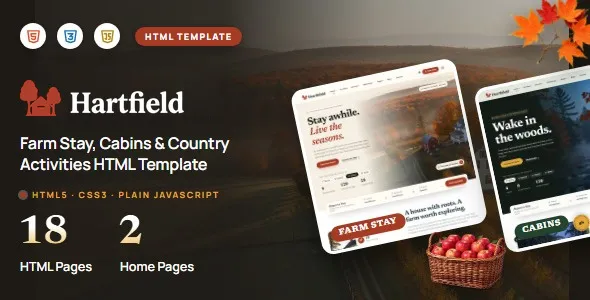
Hartfield – Farm Stay, Cabins & Country Activities HTML Template
Hartfield – Farm Stay, Cabins & Country Activities HTML Template is a website template designed for farm stays, countryside accommodations, cabin rentals, rural retreats, agritourism businesses, and outdoor activity providers looking to establish a welcoming online presence. With a focus on presenting accommodation options, country experiences, natural surroundings, and hospitality services, Hartfield offers a potential frontend foundation for building an attractive website that connects visitors with peaceful rural destinations. Its HTML-based structure gives developers a starting point for customizing page layouts, typography, colors, images, and content to match the character of a countryside hospitality business.
Travelers increasingly look for experiences that combine comfortable accommodation with opportunities to relax, explore nature, and discover local culture. Farm stays and countryside retreats can appeal to families, couples, solo travelers, and groups seeking an alternative to busy urban destinations. A well-organized website helps these visitors understand the accommodation options, explore available activities, review essential information, and contact the property before planning their stay.
Hartfield can be evaluated for websites promoting rural cottages, private cabins, working farms that welcome guests, countryside holiday homes, camping experiences, and outdoor recreation services. Developers can adapt the template to highlight property features, accommodation details, photo galleries, guest experiences, and local attractions. The precise pages, components, and layouts depend on the template version, so reviewing the current demo and documentation is recommended before implementation.
What Is Hartfield Farm Stay & Cabins HTML Template?
Hartfield is an HTML website template intended for hospitality businesses that provide rural accommodation and country-based experiences. It offers a starting point for presenting a destination through structured website pages rather than creating every interface element from scratch.
A farm stay or cabin rental website needs to communicate more than the availability of a place to sleep. Potential guests often want to learn about the location, accommodation types, available facilities, surrounding landscape, outdoor activities, arrival arrangements, and booking procedures before making a decision.
Hartfield can provide a visual framework for organizing these details into a coherent online experience. Developers can customize the supplied HTML, CSS, JavaScript, and other included assets, depending on the package, to reflect the property’s identity and services.
The template may be suitable for a small countryside retreat with a few cabins or a larger rural destination offering multiple accommodation types and organized activities. Its practical suitability depends on the layouts and components included in the selected release.
As an HTML template, Hartfield primarily provides frontend presentation. Functional availability calendars, booking confirmations, payment processing, guest accounts, and reservation management generally require a backend system or third-party integration unless specifically included in the package.
Nature-Inspired Design for Countryside Hospitality
A countryside accommodation website should communicate the atmosphere of the destination. Natural photography, balanced layouts, readable typography, and carefully selected colors can help visitors understand the character of the property before they arrive.
Hartfield can be customized to reflect different rural hospitality styles. A traditional farmhouse may benefit from warm, earthy colors and rustic photography, while a contemporary cabin retreat might use minimalist layouts, spacious imagery, and a restrained color palette.
Visual presentation should support the property’s actual identity. Photographs of cabins, gardens, farm landscapes, walking trails, outdoor seating areas, and shared facilities can help visitors imagine the experience being offered.
A welcoming design also needs to remain practical. Accommodation information, pricing where available, location details, amenities, and contact options should be easy to locate. Decorative elements should not make essential information difficult to read.
Consistency across the homepage, accommodation pages, activity sections, and contact page helps establish a recognizable brand. The overall design should feel inviting without making unsupported promises about luxury, privacy, facilities, or the surrounding environment.
Homepage Design for Farm Stays and Rural Retreats
The homepage is often the first place visitors learn about a countryside property. It should introduce the destination, communicate its main appeal, and guide visitors toward accommodation details and available experiences.
A Hartfield-based homepage can be organized around a prominent destination image, a short introduction, featured accommodation options, country activities, property highlights, and contact or reservation information, depending on the layouts available in the template.
The introductory section should explain what makes the property relevant to its intended audience. A farm stay might emphasize rural surroundings and farm-based experiences, while a cabin retreat could focus on accommodation features, outdoor recreation, and opportunities to relax.
Featured accommodation cards can direct visitors to individual cabin or room descriptions. An activities section can introduce experiences such as guided farm tours, nature walks, gardening workshops, or other services the property genuinely offers.
Additional homepage content may include guest testimonials, location information, frequently asked questions, and seasonal announcements. Testimonials should come from genuine guests and be published with appropriate permission.
Every section should help visitors make an informed decision. A focused homepage with useful information is generally more effective than a crowded layout filled with repetitive promotional statements.
Accommodation Pages for Cabins, Cottages, and Farmhouse Stays
Accommodation pages help visitors compare available lodging options and understand what each stay includes. These pages should provide clear descriptions of the property’s rooms, cabins, cottages, or other accommodation types.
Hartfield can be adapted to showcase different accommodation categories, subject to the layouts and components included in the selected version. Each listing can introduce the property’s actual features, sleeping arrangements, facilities, and intended guest capacity.
A cabin page might describe its interior layout, beds, bathroom arrangements, kitchen facilities, outdoor seating, heating or cooling options, and accessibility information where applicable. A farmhouse room may require a different presentation that explains shared spaces, dining arrangements, and the services available to guests.
Photographs should accurately represent each accommodation option. Images of bedrooms, living areas, bathrooms, balconies, and outdoor spaces can help visitors understand the layout and condition of the property.
Useful accommodation pages should also clarify practical details, including check-in and check-out times, included amenities, applicable house rules, and any additional charges. Information should be kept current so that visitors can compare options without relying on assumptions.
If the property offers multiple cabin types, consistent page structures make it easier for visitors to review their differences and select an option that suits their travel plans.
Farm Stay Experiences and Rural Activities
A farm stay can offer visitors an opportunity to experience rural life alongside their accommodation. Depending on the property, this may include farm walks, gardening activities, animal observation, seasonal harvesting, cooking demonstrations, or opportunities to learn about local agricultural practices.
Hartfield can provide a starting point for presenting these experiences through dedicated activity sections or individual service pages, depending on the available design.
Each activity description should explain what visitors can expect, how long the experience typically lasts, whether advance arrangements are required, and whether any age or participation restrictions apply.
For example, a guided farm tour may introduce visitors to the property’s agricultural activities, while a gardening workshop could explain seasonal planting or basic cultivation techniques. Families may be interested in supervised outdoor activities, while couples may prefer quieter experiences such as scenic walks or evenings in designated outdoor areas.
Activities should be described accurately and responsibly. Animal interactions, farm access, and outdoor experiences may involve specific safety requirements, seasonal availability, or supervision arrangements.
The website should make it clear which activities are included with accommodation and which require separate payment or advance booking. This helps guests understand the available options before arrival.
Outdoor Adventures and Country Activities
Rural destinations often attract travelers who want to spend more time outdoors. Depending on the property’s location and facilities, outdoor activities may include walking, cycling, birdwatching, photography, picnics, fishing, or exploring nearby countryside attractions.
Hartfield can be customized to highlight the outdoor experiences genuinely available at the property or through local activity providers.
A walking section might describe nearby trails, terrain, estimated distances, and practical preparation advice where reliable information is available. A cycling page could explain whether bicycles are provided, whether routes begin at the property, and what guests should know before setting out.
Nature-focused content can help visitors understand the landscape and plan their time. Seasonal photographs and descriptions may also show how the destination changes throughout the year.
Outdoor activities require accurate information about accessibility, equipment, supervision, and safety. If an activity depends on weather conditions or seasonal access, the website should explain those limitations rather than imply that it is always available.
A clearly organized activity section helps guests discover experiences beyond their accommodation while setting realistic expectations about what the property provides.
Photo Galleries and Visual Storytelling
Photography is especially important for farm stays, cabins, and countryside retreats because visitors often choose these destinations based on their visual appeal and atmosphere.
Hartfield can be adapted to present property photography through galleries, featured images, accommodation previews, and activity sections, depending on the components included in the template.
A useful gallery should represent the property from different perspectives. Images may include exterior views, interior spaces, gardens, surrounding landscapes, shared facilities, and genuine activities offered to guests.
The order of images can influence how visitors understand the destination. A wide landscape image may introduce the setting, while detailed photographs can explain accommodation features and practical amenities.
Image quality should be balanced with website performance. Large photographs can make a page visually appealing, but oversized files may increase loading times, particularly on mobile connections. Developers should optimize image dimensions and compression while preserving sufficient visual detail.
Images must also be accurate and appropriately licensed. If photographs show guest spaces, identifiable visitors, or private areas, suitable permission should be obtained before publication.
Descriptive alternative text can improve accessibility when images communicate meaningful information. With careful selection and organization, a gallery can provide a more informative picture of the property than generic promotional imagery.
Booking Information and Reservation Enquiries
Visitors planning a rural getaway often need to check availability, compare accommodation options, understand pricing, and determine how to reserve their stay.
Hartfield can provide the frontend structure for presenting reservation information and directing visitors toward an appropriate booking process. The exact functionality depends on the template package and any integrations added during development.
A reservation page may explain accommodation types, minimum-stay requirements, check-in arrangements, cancellation policies, and additional charges. If seasonal pricing applies, the information should be presented clearly and updated when rates change.
An inquiry form might collect a visitor’s name, contact details, preferred arrival and departure dates, number of guests, accommodation preference, and a short message. Only the information necessary to respond should be requested.
A static HTML form does not automatically verify availability or create a confirmed reservation. Real booking functionality generally requires a suitable reservation platform, backend processing, or third-party booking service.
Before publishing a reservation workflow, developers should test form submissions, validation, confirmation messages, email delivery, and error handling. If payments are accepted online, the payment provider and implementation should be selected and configured securely.
Clear communication about the difference between an inquiry and a confirmed reservation helps prevent misunderstandings and creates a more reliable booking experience.
Seasonal Offers and Special Stay Packages
Seasonal packages can help rural hospitality businesses present relevant experiences throughout the year. A farm stay might offer a harvest-season visit, a weekend cabin package, a family countryside break, or an experience built around a local festival.
Hartfield can be adapted to showcase special offers through promotional sections, package cards, or dedicated pages, depending on the available layouts.
Each offer should describe what is included, its valid dates, any restrictions, and how visitors can enquire or reserve. If an activity depends on weather or seasonal conditions, that information should be explained in advance.
A weekend package might combine accommodation with a locally prepared breakfast, while a farm experience could include a scheduled tour if the property actually provides it. These examples should be adapted to the real services and policies of the business.
Promotional content should avoid misleading discounts, artificial urgency, or unclear additional charges. Visitors should be able to understand the value and conditions of an offer without having to interpret vague marketing language.
A regularly reviewed offers section can help keep the website relevant while giving returning visitors a reason to explore available experiences.
Location Information and Nearby Attractions
Location is an important factor when visitors choose countryside accommodation. Travelers may need to understand how to reach the property, what transport options are available, and which attractions or services are nearby.
Hartfield can be customized to include location details, directions, maps, and descriptions of nearby points of interest where suitable components or integrations are available.
A location page should provide an accurate address or arrival instructions, relevant transport information, and practical guidance for visitors who may be unfamiliar with the area.
Nearby attractions could include nature reserves, walking routes, historic villages, local markets, cultural sites, or other activities, depending on the actual location. Distances and travel times should be verified before publication.
If the property is in a remote area, guests may need information about road conditions, mobile connectivity, parking, nearby shops, or access to essential services. Such details can help visitors prepare appropriately.
An embedded map may make directions easier to understand, but it should be tested on mobile devices and should not replace clear written arrival information.
Accurate location content can reduce confusion before arrival and help visitors plan a more enjoyable stay.
Customization and Brand Identity
A rural hospitality website should reflect the character of the property rather than look like an unchanged template. Customization allows businesses to create a recognizable visual identity that supports their accommodation style and guest experience.
Because Hartfield is an HTML template, developers can work with the supplied markup and styling files to adjust the design, subject to the package structure and license. Depending on the implementation, customization may include colors, typography, page sections, navigation, image treatments, icons, and reusable content blocks.
A traditional farmhouse may use warm neutrals, natural textures, and documentary-style photography. A contemporary cabin business might prefer clean layouts, generous spacing, and large images of the surrounding landscape.
The brand identity should remain consistent across the homepage, accommodation pages, activity listings, booking information, and contact details. Consistency makes the website easier to recognize and gives visitors a coherent impression of the business.
Developers should keep custom styles organized and test changes across the complete website. Shared components and responsive layouts can be affected by modifications made to common stylesheets.
Before extensive customization, review the template’s structure, dependencies, responsive rules, and documentation.
SEO-Friendly Structure for Rural Hospitality Websites
Search engine optimization can help travelers discover farm stays, cabins, countryside retreats, and rural activities when researching accommodation options.
Hartfield offers a potential frontend starting point, but search visibility depends on content quality, technical implementation, competition, location relevance, and other factors beyond the template itself.
Each important page should have a clear topic, descriptive title, logical headings, and useful original content. Separate pages for accommodation options, activities, and guest information can help visitors find the details most relevant to their plans.
Location-specific content should be accurate and natural. A business can explain its actual setting, nearby attractions, accommodation options, and local experiences without repeating the same search phrases unnecessarily.
Images should use suitable dimensions and meaningful alternative text when appropriate. Internal links can connect accommodation pages with activity descriptions, location information, and reservation details.
Compatible SEO tools or additional development may be needed to manage metadata, XML sitemaps, redirects, structured data, and canonical URLs. Any structured information about accommodation or local business details should reflect verified facts.
No template guarantees search rankings, bookings, or traffic. Consistent content maintenance and a useful visitor experience are important parts of a broader SEO strategy.
Website Performance and Image Optimization
Website performance matters for travelers who browse accommodation options on mobile devices or slower internet connections. Pages that load efficiently make it easier to compare properties and find practical information.
Hartfield’s actual performance depends on the supplied assets, code, hosting environment, external scripts, and customizations. Developers should measure the completed website rather than assume that the template is automatically optimized for every use case.
Photographs are often among the largest assets on hospitality websites. Images should be resized for their intended display areas and compressed without losing the visual detail needed to represent the property accurately.
Unnecessary scripts, unused assets, and external integrations should also be reviewed. Depending on the implementation, techniques such as browser caching, efficient font loading, and lazy loading for below-the-fold images may improve the experience.
Testing should include the homepage, accommodation listings, photo galleries, activity pages, and reservation forms. Large galleries and embedded maps may require particular attention.
Performance optimization should preserve the quality of the visitor experience. A visually appealing website is most effective when it also loads reliably and allows guests to reach important information quickly.
Accessibility and User-Friendly Navigation
A countryside accommodation website should be usable by visitors with different abilities, devices, and browsing preferences. Clear navigation and accessible design make essential information easier to locate.
When customizing Hartfield, developers should use readable typography, adequate color contrast, descriptive links, and meaningful form labels. Important information should not rely on color alone.
Navigation should use familiar labels such as Stay, Cabins, Activities, Location, FAQs, and Contact when these sections are relevant to the business. Visitors should be able to identify their current page and move between related sections without confusion.
Image galleries, dropdown menus, booking forms, and other interactive elements should support appropriate keyboard interaction. Focus indicators should remain visible, and form errors should be explained clearly.
Accommodation images that communicate important details should have meaningful alternative text, while decorative images can be handled to avoid unnecessary screen-reader output.
Accessibility testing should combine automated checks with keyboard navigation and manual reviews. These practices help create a more inclusive website for a wider range of potential guests.
HTML Structure and Third-Party Integrations
Hartfield is an HTML website template, making it a potential choice for developers who want direct control over the frontend structure and styling of a rural hospitality website.
Depending on the package, the supplied files may include HTML pages, CSS stylesheets, JavaScript, fonts, icons, and image assets. Developers should inspect the downloaded package and documentation to confirm the actual contents and dependencies.
The template can be incorporated into a broader website project where the licensing terms and technical requirements permit. Additional work may be needed to integrate it with a content management system, booking platform, property management system, or other external service.
For example, an accommodation page can display room details using static HTML, but live availability requires a connection to a suitable reservation system. A contact form may display correctly in the browser but still need server-side processing to deliver inquiries.
Developers should test links, interactive elements, responsive layouts, form behavior, and third-party scripts before deployment. Integrations should be documented so future maintenance does not depend on undocumented changes.
A clear distinction between the supplied frontend and additional functionality helps businesses plan realistic development timelines and budgets.
Security, Privacy, and Website Maintenance
Hospitality websites may collect personal information through reservation inquiries, contact forms, newsletter subscriptions, and guest communication tools. This information should be handled carefully.
Developers should use HTTPS, request only necessary information, and send form submissions to a suitable destination. If personal details are stored in a backend system, access controls and appropriate security practices should be implemented.
Payment information should be handled through a suitable payment provider rather than stored casually in frontend files. Any external booking service should be reviewed for compatibility, privacy practices, and operational requirements.
Routine maintenance should include checking links, reviewing third-party dependencies, testing forms, updating accommodation details, and confirming that contact information remains accurate.
Seasonal pricing, opening dates, activity availability, and property policies should be reviewed regularly. Outdated details can create confusion and lead to avoidable guest complaints.
Backups and a documented deployment process can help developers recover from accidental changes or technical issues. A maintenance schedule supports a more reliable online presence as the business grows.
Who Should Use Hartfield Farm Stay & Cabins HTML Template?
Hartfield can be evaluated by businesses and developers working on websites for rural accommodation and country-based experiences.
Farm stay businesses: Present accommodation options, rural surroundings, farm activities, and visitor information.
Cabin rental providers: Showcase individual cabins, amenities, nearby outdoor experiences, and reservation instructions.
Country cottages and holiday homes: Introduce property features, guest facilities, house rules, and local attractions.
Agritourism operators: Explain agricultural experiences, seasonal activities, and opportunities for visitors to learn about rural life.
Rural retreat owners: Promote quiet getaways, outdoor spaces, accommodation details, and the character of the destination.
Camping and glamping businesses: Present available lodging types, shared facilities, outdoor activities, and practical arrival information.
Outdoor activity providers: Introduce guided walks, nature-based experiences, and other services that complement countryside accommodation.
Web development agencies: Use the template as a potential frontend starting point for hospitality clients, subject to the applicable license.
The best fit depends on the property’s services, the layouts available in the selected version, and the additional functionality needed. Reviewing the current demo and documentation can help determine whether Hartfield meets the project’s requirements.
Tips for Building a Successful Countryside Accommodation Website
Start by identifying the information visitors need before deciding to stay. This usually includes accommodation types, facilities, location, activities, prices where applicable, arrival arrangements, and reservation procedures.
Use authentic photographs that accurately represent the property. Organize images so visitors can understand the accommodation, outdoor spaces, and surrounding environment without having to search through unrelated content.
Keep descriptions practical and specific. Explain what is included, which services require an additional fee, and whether any activities depend on seasonal or weather conditions.
Make the reservation process clear. If the website supports inquiries rather than direct bookings, state that distinction and explain what happens after a visitor submits a request.
Test the website on mobile devices and desktop browsers. Check image loading, navigation, form submissions, map integrations, and all links that lead to external booking services.
Finally, maintain accurate content and review the website regularly. Updated availability information, clear policies, reliable contact details, and careful handling of visitor information can contribute to a more dependable guest experience.
Final Thoughts on Hartfield Farm Stay, Cabins & Country Activities HTML Template
Hartfield – Farm Stay, Cabins & Country Activities HTML Template is a potential frontend solution for farm stays, cabin rental businesses, countryside retreats, agritourism destinations, and outdoor activity providers seeking a welcoming website.
Its intended focus makes it relevant to projects that need to present accommodation options, showcase rural surroundings, explain country experiences, and help visitors access important travel information. With suitable customization, developers can create a consistent presentation that reflects the property’s identity while making practical details easy to find.
The final capabilities depend on the specific template version, included assets, and additional integrations. Features such as live availability, online reservations, payment processing, guest accounts, and property management should be verified or implemented separately where necessary.
For businesses planning a countryside hospitality website, Hartfield can be considered as part of a broader web development strategy. Clear accommodation descriptions, authentic photography, responsive layouts, accessible navigation, reliable booking integrations, and ongoing maintenance can help turn the template into a useful digital presence for connecting travelers with rural stays and outdoor experiences.