My Account
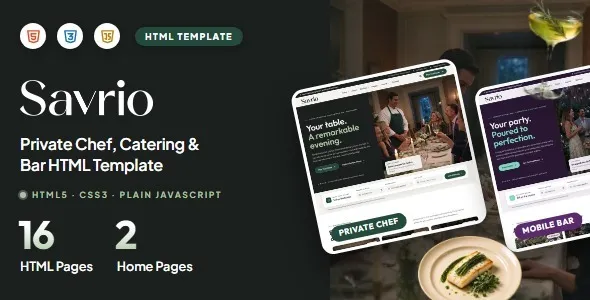
Savrio – Private Chef, Catering & Bar HTML Template
Savrio – Private Chef, Catering & Bar HTML Template is a modern website template designed for private chefs, catering companies, mobile bartenders, event catering businesses, and professional culinary service providers looking to establish a polished online presence. With a focus on food presentation, hospitality, and event services, Savrio offers a starting point for creating a website that showcases culinary offerings, introduces professional chefs, presents catering packages, and helps potential customers inquire about private dining or event services. Its HTML-based structure allows developers to customize the design and content according to the specific needs of a culinary business.
Today’s customers often look for personalized dining experiences, convenient catering arrangements, and professional beverage services for their events. Whether a business provides private dinners, wedding catering, corporate meals, cocktail services, birthday celebrations, or customized menus, a well-organized website can communicate its offerings and help customers understand the available options.
Savrio can be adapted for independent chefs, luxury catering providers, private dining specialists, event bartenders, and hospitality businesses serving different occasions. By combining attractive food photography, clear service descriptions, menu highlights, event galleries, and convenient contact options, businesses can create a digital presence that supports customer engagement and business growth. The precise pages and functionality depend on the template version and its included files, so reviewing the current demo and documentation is recommended before implementation.
What Is Savrio Private Chef, Catering & Bar HTML Template?
Savrio is an HTML website template intended for culinary professionals and hospitality businesses that provide personalized dining, catering, and bar services. It offers a foundation for presenting a brand, describing service packages, displaying food and beverage offerings, and encouraging customers to discuss their event requirements.
Private chefs and catering providers often serve customers with different preferences, budgets, guest counts, and event formats. Some clients may need an intimate dinner prepared at home, while others may require catering for a wedding reception, business gathering, birthday celebration, or private party. A dedicated website can organize these services so visitors can find relevant information and understand how to make an inquiry.
As an HTML template, Savrio provides frontend website files that can be customized using HTML, CSS, JavaScript, and the supporting assets included in the package. Developers can adapt its layouts, imagery, typography, and content to suit the identity of a culinary business.
However, an HTML template does not automatically provide a complete reservation system, catering order manager, payment gateway, or customer database. Features that require server-side processing or external services may need additional development or integration.
Elegant Website Design for Culinary and Hospitality Businesses
Visual presentation is especially important for businesses that sell food experiences and hospitality services. Customers often want to see the style of the cuisine, the quality of the presentation, and the atmosphere the business can create before making a booking inquiry.
Savrio can be customized to communicate a professional and welcoming brand identity. Carefully selected food photography, balanced typography, consistent colors, and organized content can help create an appealing experience for visitors.
A private chef business may benefit from an elegant design that emphasizes personalized menus, chef introductions, and intimate dining experiences. A catering company may prefer a layout that highlights event packages, buffet presentations, and photographs of previous celebrations. A mobile bar service might focus on cocktail photography, beverage menus, and event styling.
The design should support the business’s positioning and audience. A premium culinary brand may choose a refined visual style, while a casual catering company might prefer a brighter and more approachable presentation.
Relevant imagery and clear messaging should remain the priority. Decorative elements can enhance the experience, but they should not distract visitors from essential information such as service options, event suitability, and contact details.
Showcase Private Chef Services
Private chefs provide personalized culinary experiences for individuals, families, and groups. Their services may include meal preparation in a client’s home, special-occasion dining, vacation property cooking, tasting menus, and customized food experiences.
Savrio can be adapted to introduce these services and explain how customers can work with the chef. A dedicated service section might describe private dinners, family meals, special celebrations, and customized dining experiences according to the business’s actual offerings.
Each service description should explain the intended occasion, the general approach, and any relevant arrangements. For example, a private dinner service may involve menu planning, ingredient selection, preparation, presentation, and kitchen cleanup, depending on the provider’s package.
Chef profiles can introduce culinary experience, areas of expertise, preferred cuisines, and professional qualifications. Genuine photographs of the chef and completed dishes can help visitors understand the business’s style.
Customers may also want information about dietary requirements, ingredient preferences, guest numbers, and available menu customization. Explaining the inquiry process helps set expectations before a customer requests a quote.
Only advertise services that the business can reliably deliver. Accurate descriptions help customers determine whether a particular chef or dining experience matches their needs.
Catering Services for Weddings and Special Events
Catering businesses support a wide range of occasions, from intimate celebrations to large gatherings. Their websites should explain available service styles, event types, menu options, and the process for discussing a catering requirement.
Savrio can be customized to present catering services for weddings, engagement celebrations, birthdays, anniversaries, corporate functions, private parties, and community events.
A wedding catering section may highlight reception meals, plated dining, buffet service, canapés, and customized menus where available. Corporate catering content could focus on business lunches, conferences, networking events, and professional gatherings. Private party catering might emphasize flexible menus and service arrangements suited to the occasion.
Each service page should communicate important details such as the type of event supported, the approximate guest range, menu customization options, and what the service includes. If staffing, table setup, serving equipment, or cleanup are available, those details can be explained clearly.
Customers should also understand how to request a catering quotation. The business may need information about the event date, venue, guest count, preferred cuisine, dietary needs, and budget.
The HTML template can provide the presentation layer for these services, while advanced quotation calculations or event management features may require additional functionality.
Professional Bar and Bartending Services
Professional bar services can enhance private parties, weddings, corporate events, and other celebrations. Businesses offering mobile bartending or event beverage services need a website that explains their packages, available drinks, and service arrangements.
Savrio can be adapted to present mobile bar setups, cocktail preparation, mocktail menus, beverage service, and event bartending where these services are offered.
A dedicated bar section may showcase signature cocktails, non-alcoholic drinks, presentation styles, and examples of previous event setups. High-quality photographs can help visitors understand the atmosphere and visual style of the service.
Package descriptions should clarify what is included. Depending on the provider, packages may cover bartending staff, bar equipment, glassware, mixers, garnishes, or setup and cleanup. Beverage supply and venue requirements should be explained separately when relevant.
Customers may need to know whether the service is suitable for their venue, expected guest count, event duration, and local requirements. The website can guide visitors toward a conversation about these details.
Any alcohol-related service should comply with applicable licensing, age restrictions, venue policies, and local regulations. The website should accurately represent the services the business is authorized to provide.
Homepage Design and Content Organization
The homepage introduces the culinary business and helps visitors explore the services that match their needs. It should communicate the main offering quickly and provide clear navigation to menus, catering packages, chef information, event galleries, and contact options.
A Savrio-based homepage can be organized around several useful sections, depending on the available layouts and business objectives.
Hero section: Introduce the brand with a clear headline, a short description, and a relevant call to action. A strong food or event photograph can reinforce the business’s style.
Service overview: Present private chef experiences, catering packages, and bar services using concise descriptions and relevant imagery.
Menu highlights: Showcase selected dishes, cuisine styles, or sample menus that reflect the business’s actual offerings.
About the chef or team: Introduce the professionals behind the service, including their experience and culinary approach.
Event gallery: Display genuine photographs of prepared dishes, catered events, private dinners, and bar setups.
Testimonials: Include authentic customer feedback when permission and reliable sources are available.
Inquiry section: Encourage visitors to discuss an event, request a catering quotation, or learn more about a private dining experience.
Not every homepage requires every section. A solo chef may prioritize personal experience and private dining, while a catering company may need more space for event types, packages, and operational details.
Menu Presentation and Culinary Portfolio
Menus and food photography help customers understand the culinary style of a private chef or catering business. A well-organized presentation can communicate the range of dishes available and provide inspiration for customized event menus.
Savrio can serve as a starting point for displaying sample menus, signature dishes, seasonal offerings, and catering selections, depending on the available page layouts.
A private chef might showcase tasting menus, family-style meals, or cuisine-specific experiences. A catering company could organize menu examples around weddings, corporate events, cocktail receptions, and private celebrations. A bar service may feature signature drinks and non-alcoholic alternatives.
Each menu item can include a descriptive name and a short explanation of the dish. Relevant ingredient information may be included where useful, especially when customers need to communicate dietary preferences or allergies.
If prices are displayed, they should be accurate and accompanied by any necessary context. Catering costs may depend on guest count, menu choices, event location, staffing, and service duration.
Menus should be updated when seasonal ingredients, availability, or business offerings change. If the final menu is customized for each customer, make that clear rather than presenting sample dishes as guaranteed options.
Customization and Brand Identity
A culinary business should have a website that reflects its unique identity, whether it specializes in luxury private dining, family-style catering, creative cocktail service, or corporate hospitality.
Savrio can be customized to match different brand personalities. A premium private chef may prefer refined typography, subtle colors, and close-up food photography. A wedding caterer might emphasize elegant table settings and event galleries, while a modern mobile bar business could use a more energetic visual style.
Developers can adjust colors, fonts, images, section layouts, navigation, buttons, and other visual elements according to the template’s structure and included assets.
Consistency across pages is essential. The logo, typography, image treatment, and button styles should work together to create a recognizable brand. Food photography should also reflect the actual service quality and culinary style of the business.
Before making substantial modifications, review the template’s file structure, stylesheets, JavaScript dependencies, and setup instructions. Organized customization makes future updates easier and helps preserve the website’s intended behavior.
HTML, CSS, and JavaScript Customization
Savrio is an HTML template, making it suitable for developers who work with standard frontend web technologies. HTML defines the page structure, CSS controls the visual appearance, and JavaScript can add interactive behavior where required.
Developers can modify service descriptions, menu sections, gallery images, navigation links, and contact details by editing the appropriate files. Stylesheets can be adjusted to match the business’s colors, typography, spacing, and responsive layout requirements.
JavaScript may support interface features such as mobile navigation, image galleries, tabs, accordions, or interactive forms, depending on the included implementation. Any changes should be tested across supported browsers and devices.
A static HTML template does not automatically manage customer reservations, process catering orders, store inquiry records, or send appointment confirmations. These functions require server-side development or suitable third-party services.
Before modifying existing scripts or dependencies, review the documentation and test the changes carefully. This helps preserve the intended behavior of interactive elements and reduces the risk of introducing errors.
Event Galleries and Customer Testimonials
Event galleries can help culinary businesses demonstrate the quality and atmosphere of their work. Customers often want to see how dishes are presented, how a buffet is arranged, or how a bar setup looks in a real venue.
Savrio can be adapted to display photographs from private dinners, weddings, corporate events, birthday celebrations, and other occasions. Images can be organized by event type, service category, or culinary style.
A gallery should use genuine photographs that accurately represent the business’s capabilities. Where client privacy matters, obtain permission before publishing identifiable people, private venues, or event details.
Testimonials can provide additional context about the customer experience. Genuine feedback may discuss food quality, communication, presentation, professionalism, or the provider’s ability to accommodate event requirements.
Avoid fabricated reviews or unsupported claims. Authentic project examples and honest descriptions provide a stronger foundation for customer confidence than exaggerated marketing statements.
Optimize images for web use while retaining enough visual detail to showcase the food and event atmosphere. A well-managed gallery should remain attractive without slowing down the website unnecessarily.
Inquiry Forms and Event Quotation Requests
Private chef and catering services often require a discussion before a final price or menu can be confirmed. A convenient inquiry process helps businesses gather the information needed to prepare an appropriate response.
Savrio can be adapted to include contact forms or event inquiry sections, depending on the supplied components. A useful form might request the customer’s name, email address, event type, preferred date, venue or location, expected guest count, and a short description of the requirements.
Additional fields can ask about cuisine preferences, dietary requirements, desired service style, or approximate budget where relevant. Keep the form focused on information that genuinely helps the business assess the inquiry.
The website should explain what happens after submission. For example, the business may review the details and contact the customer to discuss menu options, availability, and pricing.
An HTML form does not automatically send messages or store information. Developers must configure appropriate form processing, validation, spam protection, and email or database handling.
Test the complete inquiry workflow before launch, including required fields, error messages, successful submissions, and email delivery. Customer information should be handled securely and in accordance with applicable privacy requirements.
Reservations and Booking Functionality
Some culinary businesses benefit from allowing customers to request private dining dates, catering appointments, or event consultations through their websites. A clear booking pathway can reduce communication friction and help organize customer inquiries.
Savrio can provide a visual starting point for booking-related interfaces if the necessary layouts are available or added during customization. Visitors may be able to submit their preferred date, event type, guest count, and contact details.
However, an HTML template does not automatically include real-time availability, a reservation database, calendar synchronization, automated reminders, or confirmed booking management. These features require additional development or integration with a suitable booking platform.
The booking process should explain whether a request is provisional or confirmed. For catering events, the final arrangement may depend on menu selection, venue access, staffing, and agreement on pricing.
If deposits or online payments are required, a suitable payment provider and secure integration may be needed. The business should also communicate its cancellation policy, payment terms, and other relevant conditions.
Test the full customer journey before launch to ensure that requests are recorded and handled reliably.
Responsive Design for Mobile and Desktop
Customers may explore catering services on smartphones while planning an event, browse menus on tablets, or review detailed service information on desktop computers. Responsive design helps keep the website usable across these environments.
When customizing Savrio, developers should check that navigation, menu cards, photographs, forms, and calls to action adapt to different screen sizes. Text should remain readable, images should fit their containers, and interactive elements should be easy to select on touchscreens.
Mobile visitors should be able to find service details, event inquiry options, and contact information without unnecessary scrolling or confusing navigation.
Responsive behavior should be tested across the entire website, not just the homepage. Menu layouts, gallery grids, pricing tables, and inquiry forms may need specific adjustments based on their content.
The final mobile experience depends on the template’s implementation, custom CSS, JavaScript, and any third-party components. Testing after major design changes helps maintain consistency.
SEO-Friendly Website Structure
Search engine optimization can help private chefs, catering businesses, and event bartenders reach people searching for relevant services. A well-organized website provides a useful foundation, but search visibility depends on content quality, technical implementation, competition, and ongoing work.
Each important page should focus on a clear topic. A business may create separate pages for private dining, wedding catering, corporate catering, event bartending, or customized menus when those services are available.
Use descriptive page titles, logical heading structures, natural keyword placement, and original content that explains the business’s offerings. Service descriptions should answer practical customer questions rather than repeat the same phrases unnecessarily.
Internal links can connect service pages, menu examples, event galleries, and inquiry forms. This helps visitors navigate the website and discover relevant information.
Images should use appropriate file sizes and meaningful alternative text when they communicate useful information. Developers should also review metadata, broken links, canonical URLs, and indexing settings as appropriate.
If the business serves a defined geographic area, accurate location information and useful local service pages may support local discovery. No template can guarantee a specific ranking position or a particular amount of website traffic.
Local SEO for Catering and Private Chef Services
Many private chefs, catering providers, and mobile bartenders serve customers within particular cities or regions. Local search visibility can help people discover services that are relevant to their location and event requirements.
A Savrio-based website can include accurate contact details, service areas, operating information, and event coverage where relevant. If the business serves several locations, each page should provide genuinely useful information rather than duplicate content with only the place name changed.
Content can answer common questions about event sizes, catering arrangements, menu customization, and the booking process. Authentic reviews and genuine event photographs can also help potential customers evaluate the service.
Businesses should keep their contact details consistent across their website and relevant business listings. Location information should reflect the areas they can actually serve.
Local SEO depends on factors beyond the website design, including the relevance of the business, customer feedback, competition, and the accuracy of business information. A well-structured website can support local marketing efforts but cannot guarantee a particular result.
Website Performance and Image Optimization
A culinary website often relies on photography to communicate its services, making image optimization especially important. Large food images and event galleries can slow down pages if they are not prepared for web delivery.
Use appropriately sized images and modern formats where supported. Each photograph should retain sufficient detail to show the dish or event clearly without using unnecessarily large files.
Review animations, external fonts, scripts, and third-party widgets to ensure that they provide meaningful value. Remove unused assets where appropriate and avoid adding unnecessary dependencies.
Website performance also depends on hosting quality, caching, and the implementation of interactive features. An HTML template can provide a frontend foundation, but the finished website’s speed depends on how it is customized and delivered.
Test the homepage, service pages, menus, galleries, and inquiry forms on desktop and mobile devices. Recheck performance after adding new photographs or integrations.
Regular monitoring helps identify issues and supports a smoother experience for visitors planning private dining or event catering.
Accessibility and User-Friendly Navigation
An effective hospitality website should make information easy to find and understand. Clear navigation, readable typography, sufficient color contrast, and descriptive links improve usability for a broad range of visitors.
Organize service categories logically and use familiar navigation labels. Customers should be able to find menu information, service descriptions, event examples, and inquiry options without confusion.
Use logical heading levels and meaningful alternative text for informative images. Forms should include clear labels, useful instructions, and understandable error messages.
Interactive elements should be usable with appropriate input methods, including keyboard navigation where applicable. Focus indicators should remain visible, and decorative animations should not interfere with essential information.
Accessibility should be reviewed throughout development. Automated checks can identify some problems, while keyboard testing and manual usability reviews help reveal additional issues.
Integration with Business and Marketing Tools
Culinary businesses may benefit from connecting their websites to tools that support customer communication, marketing, and event management.
Depending on the requirements, Savrio can be adapted to work alongside contact management systems, email marketing platforms, analytics services, calendar tools, or third-party booking solutions.
For example, inquiry forms could send requests to a business email address or a customer management system, allowing staff to follow up on event details. Analytics tools may help the business understand which service pages attract interest, subject to applicable privacy requirements.
A business accepting deposits or online payments may require a suitable payment provider. Appointment reminders, calendar synchronization, and automated booking confirmations also require appropriate integrations or custom development.
These capabilities should not be assumed to be included in the HTML template. Developers should verify compatibility, configure each integration securely, and test the full workflow before launch.
Security and Website Maintenance
Regular maintenance helps keep a culinary business website reliable, accurate, and secure. Even a relatively simple HTML website may require updates when scripts, assets, hosting configurations, or external services change.
Developers should review included dependencies, remove unused components, and obtain updates from trustworthy sources. HTTPS should be enabled, particularly if the website collects personal information through inquiry forms.
If server-side processing is added for bookings, file uploads, or customer records, it should include appropriate validation, secure data handling, and access controls.
Routine maintenance should include backups, link checks, performance reviews, and content updates. Menu offerings, service areas, event packages, contact details, and business hours should remain accurate.
Before making major changes, maintain a backup and test updates in a suitable development environment. A consistent maintenance routine helps preserve the quality of the website as the business grows.
Who Should Use Savrio Private Chef, Catering & Bar HTML Template?
Savrio can be evaluated by a variety of culinary and hospitality businesses seeking a professional online presence.
- Private chefs: Present personalized dining experiences, sample menus, and culinary expertise.
- Catering companies: Showcase event packages, food options, service arrangements, and previous events.
- Wedding caterers: Introduce reception catering, menu styles, and examples of wedding presentations.
- Corporate catering providers: Promote business lunches, conference meals, and professional event services.
- Mobile bartenders: Display bar setups, cocktail menus, and beverage service packages.
- Private dining specialists: Present tailored dining experiences for intimate gatherings and celebrations.
- Event hospitality businesses: Explain food and beverage services for private and professional occasions.
- Culinary entrepreneurs: Establish a digital presence for a new chef, catering, or hospitality business.
The best choice depends on the business’s branding, service offerings, technical requirements, and customer journey. Reviewing the current demo and documentation helps determine whether the template is appropriate for the intended project.
Tips for Building a Successful Website with Savrio
Start by defining the primary objective of the website. Determine whether the business mainly wants to attract private dining inquiries, promote catering packages, showcase bar services, or support several related offerings.
Prepare accurate service descriptions, sample menus, pricing information, chef profiles, and genuine event photographs before making extensive design changes. Real content helps visitors understand the business and sets realistic expectations.
Keep the navigation simple and make inquiry options easy to find. Each service page should explain what is offered, which occasions it suits, and how customers can discuss their requirements.
Customize the visual identity to match the business. Consistent typography, colors, photography, and calls to action help create a professional and recognizable presentation.
Before launch, test the website across multiple devices and browsers. Check navigation, image loading, forms, contact details, responsive layouts, and any external integrations.
Finally, maintain the website with regular backups, dependency reviews, content updates, and performance testing. A consistent maintenance process helps the website remain useful as the business develops new services and serves different events.
Final Thoughts on Savrio Private Chef, Catering & Bar HTML Template
Savrio – Private Chef, Catering & Bar HTML Template is a potential starting point for private chefs, catering companies, event bartenders, and hospitality professionals seeking a polished online presence. Its culinary focus makes it relevant to businesses that need to showcase menus, introduce their services, display event photography, and encourage customers to discuss private dining or catering requirements.
A successful website should combine attractive food imagery, clear service descriptions, organized menus, responsive layouts, and convenient inquiry options. Private chefs can emphasize personalized dining experiences, catering companies can highlight event packages, and bar providers can present their beverage services and event arrangements.
The final capabilities depend on the supplied template files, current version, and any additional integrations. Features such as real-time reservations, catering order management, online payments, and automated confirmations should be verified or implemented separately when needed.
With thoughtful customization, accurate content, appropriate technical implementation, and ongoing maintenance, Savrio can form part of an effective website strategy for a culinary business. A well-organized online presence helps communicate service value, establish customer confidence, and make it easier for people to plan memorable dining experiences and events.