My Account
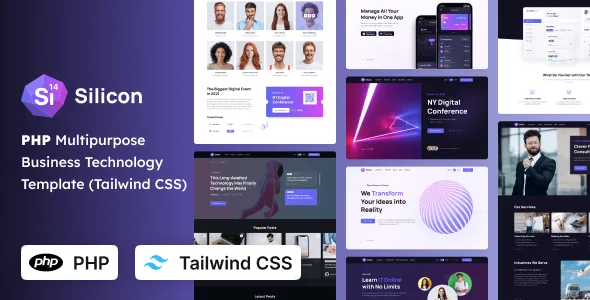
Silicon – Multipurpose Business, SaaS & Technology Tailwind CSS PHP Template
Silicon – Multipurpose Business, SaaS & Technology Tailwind CSS PHP Template is a versatile website development solution for businesses, technology companies, SaaS startups, digital agencies, and entrepreneurs looking to establish a professional online presence. Combining a multipurpose website concept with Tailwind CSS styling and PHP-based development, this template provides a starting point for building modern business websites, software product pages, technology service platforms, and startup landing pages. Its flexible positioning makes it suitable for projects that require a polished visual presentation, structured content, and clear communication of products or services.
Businesses operating in competitive digital markets need websites that explain their offerings, demonstrate their expertise, and guide visitors toward meaningful actions. A software company may need to introduce its platform and highlight product benefits, while a technology agency may focus on services, case studies, and client inquiries. Silicon can be evaluated for these different requirements, allowing developers to adapt the available layouts and content to the project’s objectives.
Tailwind CSS supports a utility-based approach to styling, while PHP can be used within a suitable application structure to handle server-side functionality. Together, these technologies can provide a flexible foundation for website customization and integration. However, the actual features available depend on the template package, its implementation, and the additional development required. Reviewing the current demo and documentation helps confirm which layouts, scripts, and PHP components are included.
What Is Silicon Multipurpose Business, SaaS & Technology PHP Template?
Silicon is a website template designed for business-oriented, SaaS, and technology-related projects. It provides a frontend foundation that developers can customize to present company information, software products, service offerings, and other business content through a structured website.
A multipurpose template can be useful when a project requires a design that adapts to different industries instead of following a single narrow layout. Silicon can be considered for corporate websites, software product presentations, digital agencies, IT service providers, SaaS landing pages, consulting businesses, and technology startups.
The template’s Tailwind CSS styling approach can help developers adjust layouts, spacing, typography, colors, and other visual elements. PHP can support server-side development where the included structure and project requirements allow it.
It is important to distinguish a PHP website template from a complete SaaS application. Subscription management, user authentication, billing, database operations, and product dashboards require appropriate application logic and integrations unless explicitly provided in the package.
Modern Design for Business and Technology Websites
A professional business website should communicate its value clearly and help visitors understand what the company offers. Its design needs to balance visual appeal with usability, readable content, and a logical page structure.
Silicon can provide a starting point for a contemporary website presentation, depending on the available layouts and components. Developers can customize the visual hierarchy to suit a technology startup, consulting company, software vendor, or digital service provider.
A SaaS business may prioritize product benefits, feature explanations, interface previews, and calls to action. A corporate website might focus on company information, services, expertise, and customer relationships. A technology agency may place greater emphasis on case studies, technical capabilities, and project inquiries.
Consistent typography, appropriate spacing, clear headings, and well-organized content can help visitors navigate the website. Visual elements should support the main message rather than distract from it.
A good design also considers the needs of different audiences. Prospective customers may want to understand the product quickly, while business partners may look for company information, experience, and contact details.
Tailwind CSS for Flexible Website Customization
Tailwind CSS is a utility-first CSS framework that allows developers to style interfaces using predefined utility classes. This approach can support rapid customization of layouts and visual elements without requiring every style to be written as a separate custom CSS rule.
In a Silicon-based project, developers can use the available Tailwind CSS structure to adapt spacing, colors, typography, alignment, borders, and responsive layouts according to the design requirements and the version included in the package.
A software startup might choose a clean layout with prominent product messaging, while a corporate website could use more structured content sections and restrained colors. A creative technology agency may prefer a more expressive presentation with large visuals and project showcases.
Tailwind CSS also provides responsive utilities that can help control how components behave at different screen sizes. The actual configuration depends on the template’s Tailwind version and build setup.
Developers should review the included configuration files, build scripts, dependencies, and customization instructions before making changes. Understanding the existing styling system helps maintain consistency and reduces unnecessary duplication.
PHP Integration and Server-Side Development
PHP is widely used for server-side web development and can support dynamic website functionality when configured appropriately. A PHP-based template may provide a useful starting point for projects that need server-rendered pages or integration with an existing PHP application.
Silicon can be evaluated for websites that combine a customized frontend with PHP-based processing, subject to the included files and implementation details. Developers may adapt the project to work with server-side routing, reusable page sections, form processing, or other application requirements.
For example, a business website may need a contact form that submits inquiries to a server. A SaaS marketing website could require dynamic pricing information or content managed through a backend system. These features need appropriate implementation rather than relying on static presentation alone.
Developers should validate incoming data, handle errors carefully, and use secure methods for database operations and sensitive information. PHP functionality should be tested in the intended hosting environment before deployment.
The exact PHP version, supported libraries, and available backend features should be confirmed through the current product documentation.
SaaS Landing Pages and Software Product Websites
Software-as-a-Service businesses need websites that explain their products, communicate benefits, and encourage visitors to explore the offering or start a trial. A well-structured SaaS website can help potential customers understand how a product addresses their needs.
Silicon can be considered for SaaS landing pages that present a product overview, feature highlights, benefits, screenshots, pricing information, testimonials, and frequently asked questions where the relevant layouts are available.
A project management platform might emphasize collaboration and workflow organization. An analytics product may focus on reporting and data visibility, while a customer relationship management solution could highlight contact organization and sales processes.
Product messaging should be specific and easy to understand. Instead of relying on broad claims, explain the problems the software addresses, the audience it serves, and the practical value it provides.
Calls to action should match the actual product experience. A Start Free Trial button, for example, should lead to a working registration or trial process once the required application functionality has been implemented.
A PHP template does not automatically include subscription management, user accounts, or recurring payments. These features generally require a backend application and appropriate integrations.
Business Websites for Corporate Companies
Corporate websites provide a central place for communicating company information, services, expertise, and business goals. They help customers, partners, and prospective employees understand the organization and its capabilities.
Silicon can serve as a foundation for a corporate website with pages such as Home, About Us, Services, Industries, Projects, Blog, and Contact, depending on the available page structures.
The homepage should explain what the company does and who it serves. Dedicated service pages can provide more detailed information about individual offerings, while company pages can introduce the team, experience, and working approach.
A corporate website may also include case studies, client feedback, frequently asked questions, and useful resources. These sections should be relevant to the audience and supported by accurate information.
A consistent visual identity helps establish recognition across the website. The company logo, typography, colors, and imagery should work together to create a coherent presentation.
Regular content reviews are important for keeping service descriptions, team information, contact details, and company announcements accurate.
Digital Agencies and IT Service Providers
Digital agencies and IT companies often need websites that demonstrate expertise, communicate service offerings, and generate business inquiries.
Silicon can be adapted for agencies offering website development, software engineering, digital marketing, cloud consulting, cybersecurity, technical support, or technology strategy, depending on the project’s focus.
A clear services section helps visitors understand the available solutions. Each service page can explain the challenges addressed, the approach taken, and the types of outcomes clients may expect.
Portfolio projects and case studies can provide additional context. A useful case study describes the client’s objective, the work completed, and the results achieved where reliable evidence is available.
Agency websites should avoid unsupported claims and exaggerated promises. Specific service descriptions, relevant examples, and transparent communication provide a stronger foundation for trust.
Contact opportunities should be easy to locate. A project inquiry form can help potential clients describe their requirements, while clear contact information provides an alternative way to begin a conversation.
Responsive Design for Desktop, Tablet, and Mobile
Visitors may access a business website through desktop computers, tablets, and smartphones. Responsive design helps ensure that content remains readable and usable across different screen sizes.
Silicon’s responsive behavior should be evaluated using the layouts and Tailwind CSS utilities included in the selected version. Developers can adjust page structures, spacing, typography, navigation, and component arrangements where required.
On mobile devices, headings should remain readable, buttons should be easy to tap, and navigation should be straightforward. Content sections that appear side by side on a desktop may need to stack vertically on smaller screens.
Technology websites may include screenshots, diagrams, pricing tables, and feature comparisons that require special attention on mobile. Wide tables and complex visual elements should remain accessible without forcing unnecessary horizontal scrolling.
Testing should cover all major page types rather than only the homepage. Developers should check service pages, pricing sections, forms, and other important interactions across common browsers and devices.
Custom CSS, JavaScript, and third-party integrations can affect responsive behavior, so the completed website should be tested after major changes.
Customization and Brand Identity
A business website should reflect the company’s identity rather than look like an unchanged template. Customization helps align the design with the organization’s audience, market position, and communication goals.
Depending on the included files and configuration, Silicon can be customized through Tailwind CSS classes, HTML structure, PHP templates, images, and supporting scripts.
A SaaS startup may use a clean visual style that emphasizes product screenshots and concise messaging. A corporate company may prefer a more formal presentation, while a digital agency could focus on creative visuals and project examples.
Consistency is essential across headings, buttons, cards, navigation, and content sections. Establishing a clear design system can help developers maintain the same visual language throughout the website.
Use original branding assets and relevant images wherever possible. Replace placeholder text and sample content with accurate information that reflects the real business.
Before making substantial changes, review the template’s file structure and build process. Keeping customizations organized makes the website easier to maintain and update.
SEO-Friendly Website Structure
Search engine optimization can help businesses attract visitors who are looking for relevant products, services, and information. A template provides a starting point for page structure, but SEO performance depends on content quality, technical implementation, competition, and ongoing optimization.
Each important page should have a descriptive title, a clear heading hierarchy, and useful content that matches its purpose. Separate service pages can explain individual offerings in greater detail than a single general overview.
A SaaS company may publish product feature pages, use-case pages, and educational resources. An IT agency could create detailed service pages and project case studies. Corporate websites may benefit from clear company information and relevant industry content.
Descriptive URLs and internal links help visitors navigate between related pages. Images should be optimized and include meaningful alternative text where appropriate.
Developers can also configure metadata, canonical URLs, XML sitemaps, and other technical SEO elements as required. The exact implementation depends on the template structure and website architecture.
If the website includes PHP-generated pages, developers should ensure that important content is accessible to search engines and that page titles and metadata are handled correctly.
No template can guarantee a particular ranking position or traffic level. Useful content, reliable technical implementation, and regular maintenance remain important.
Contact Forms and Lead Generation
For many business websites, generating qualified inquiries is a primary goal. Visitors should be able to request information, discuss a project, or learn more about a service without navigating through a complicated process.
Silicon can be customized to include contact forms, inquiry sections, and calls to action where supported by the available layouts. A form may collect a name, email address, company name, service interest, and a brief description of the visitor’s requirements.
Keep forms focused on the information needed to begin a conversation. Clear labels and helpful validation messages can make the process easier for visitors.
A functional form requires more than HTML markup. Developers must connect it to a suitable PHP handler, email service, form-processing tool, or backend application. Input validation, spam protection, error handling, and successful submission feedback should be implemented and tested.
Contact details should remain consistent across the website. If the business provides multiple contact methods, make the preferred options clear.
Privacy notices should explain how submitted information is handled where required. A reliable inquiry process helps ensure that prospective customers can reach the business successfully.
Performance and Website Speed
Website performance affects usability and can influence whether visitors continue exploring a business website. Pages that load slowly may frustrate users, especially on mobile devices or slower connections.
The performance of a Silicon-based website depends on the implementation, hosting environment, images, scripts, stylesheets, and third-party integrations.
Start by optimizing images and delivering appropriate dimensions for different screen sizes. Review unnecessary scripts and external resources that may increase page loading time.
Tailwind CSS projects should use the appropriate build process for the included version so that the deployed styles contain the utilities required by the website without unnecessary overhead. The exact configuration depends on the template’s setup.
Caching, asset compression, and reliable hosting may also improve performance when configured appropriately. Developers should test the homepage, service pages, pricing sections, and contact forms separately.
Performance testing tools can help identify oversized images, slow requests, and inefficient scripts. Improvements should be based on measured results rather than assumptions.
Regular checks help maintain a responsive user experience as the website grows.
Accessibility and User-Friendly Navigation
An effective business website should be easy to understand and navigate for visitors with different needs and abilities. Clear headings, readable text, sufficient color contrast, and well-labeled controls can improve usability.
When customizing Silicon, developers should use logical heading structures, descriptive links, meaningful image alternative text, and accessible labels for forms.
Interactive elements should be keyboard accessible, with visible focus indicators. Color should not be the only way to communicate important information, and error messages should explain how users can correct a problem.
Navigation should prioritize important sections and use familiar wording. Calls to action should clearly communicate what will happen when visitors select them.
Accessibility testing should include keyboard navigation, mobile layouts, form submission, and common user journeys. Automated tools can identify some issues, but manual testing remains valuable.
A website that prioritizes accessibility can provide a more consistent experience while making its information easier to access.
Security and Ongoing Maintenance
A professional website requires regular maintenance to remain reliable and secure. This is particularly important when PHP is used to process form submissions, access databases, or handle other server-side operations.
Developers should use supported PHP versions, keep dependencies updated, and validate all user-submitted data. Database queries should use appropriate safe methods, and sensitive credentials should be stored securely on the server rather than exposed in frontend files.
Production websites should use HTTPS and suitable server configuration. Forms and administrative functions should be protected against abuse, and errors should be handled without revealing sensitive system details.
Backups provide a recovery option when a deployment or configuration change causes problems. It is also important to test the restoration process and maintain appropriate access permissions.
Regular maintenance should include reviewing content, checking links, testing contact forms, and confirming that the website works correctly after dependency or hosting updates.
The specific security requirements depend on whether Silicon is used as a static marketing website or integrated into a larger PHP application.
Who Should Use Silicon Multipurpose Business, SaaS & Technology PHP Template?
Silicon may be suitable for a variety of website projects that require a modern business-oriented design.
SaaS startups: Present software products, explain features, introduce pricing, and guide visitors toward registration or product inquiries.
Technology companies: Communicate technical services, company expertise, product offerings, and business information.
Digital agencies: Showcase web development, digital marketing, software projects, and consulting services.
Corporate businesses: Build a structured website for company information, services, industry expertise, and customer communication.
IT service providers: Explain technical support, software implementation, infrastructure services, and other professional offerings.
Consulting firms: Present advisory services, business expertise, case studies, and consultation opportunities.
Entrepreneurs and startups: Establish an online presence for a new business, product, or digital service.
PHP developers: Use the available PHP structure as a starting point for server-side customization where it matches the project’s technical requirements.
Web development agencies: Adapt the template for client projects that need a consistent interface and a customizable frontend foundation.
The suitability of Silicon depends on the required pages, framework and PHP compatibility, included components, and any additional functionality needed.
Tips for Building a Successful Website with Silicon
Begin by defining the website’s purpose and target audience. Decide whether the primary objective is to introduce a SaaS product, promote business services, generate leads, or communicate company information.
Review the current demo, documentation, included files, and licensing requirements before customizing the project. Confirm the supported PHP and Tailwind CSS versions and understand the required build process.
Prepare original content before finalizing the page layouts. Write clear service descriptions, product explanations, company information, and calls to action that reflect the real business.
Maintain a consistent visual identity across the website. Use suitable colors, typography, imagery, and spacing to create a professional presentation without overcrowding the pages.
Test navigation links, contact forms, responsive layouts, and other interactive elements before launch. Verify that server-side form processing works correctly and that errors are handled clearly.
Review page speed, accessibility, metadata, and image optimization. Test the website on different devices and browsers to identify issues that may not appear during desktop development.
Finally, establish a maintenance routine that includes backups, software updates, performance checks, and regular content reviews.
Final Thoughts on Silicon – Multipurpose Business, SaaS & Technology Tailwind CSS PHP Template
Silicon – Multipurpose Business, SaaS & Technology Tailwind CSS PHP Template is a potential option for businesses, software startups, digital agencies, and developers seeking a customizable foundation for a professional website. Its multipurpose positioning makes it relevant to projects that need to communicate business services, present software products, showcase technology expertise, and generate customer inquiries.
Tailwind CSS provides a utility-based approach to visual customization, while PHP can support server-side functionality when implemented appropriately. Together, these technologies can provide a useful starting point for projects that need both a flexible frontend design and the potential for backend integration.
The actual capabilities depend on the included template version, its documented components, and the development work required. Features such as subscription billing, customer accounts, database-driven content, authentication, and advanced application workflows should not be assumed to be included unless explicitly stated in the product documentation.
Before implementation, review the current demo, compatibility requirements, and licensing terms. Test the finished website for responsiveness, accessibility, performance, and reliable form processing.
For businesses looking to establish a modern online presence, Silicon can be evaluated as part of a broader website development strategy. With thoughtful customization, useful content, secure implementation, and ongoing maintenance, it can provide a foundation for presenting products and services professionally and supporting long-term digital growth.