My Account
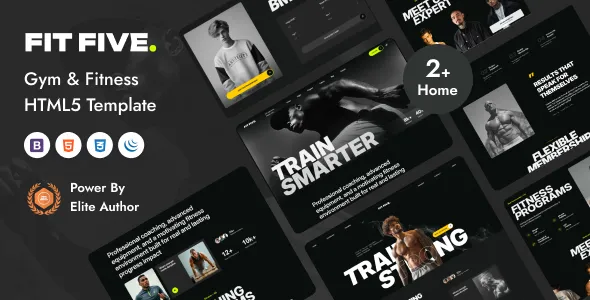
FitFive – Gym & Fitness HTML Template
FitFive – Gym & Fitness HTML Template is a modern website design solution created for gyms, fitness centers, personal trainers, sports studios, and wellness businesses that want to establish a professional online presence. Designed for fitness-focused websites, FitFive provides a potential starting point for presenting training programs, gym facilities, membership options, fitness services, trainer profiles, and contact information through an organized and visually engaging interface.
A professional fitness website helps potential members understand what a gym offers before they visit or make an inquiry. Visitors may want to explore available workouts, compare membership plans, learn about trainers, review class schedules, or discover facilities. A well-structured website makes this information easy to find while communicating the business’s brand identity and approach to fitness.
FitFive can be considered for projects that need a dedicated fitness website design built with HTML and related frontend technologies. Developers can adapt the layout, typography, colors, imagery, and content to reflect the needs of a particular fitness business. The exact pages, components, and interactive elements depend on the supplied template version, so reviewing the current demo and documentation is recommended before implementation.
What Is FitFive Gym & Fitness HTML Template?
FitFive is an HTML website template intended for creating websites centered on fitness, exercise, gym services, and physical training. It provides a frontend foundation that developers can customize for businesses looking to communicate their services and attract potential customers online.
A gym website often needs to present several types of information, including training programs, trainer qualifications, membership packages, facilities, opening hours, and contact details. Organizing these sections clearly helps visitors understand the available services and decide which option best suits their goals.
FitFive can be evaluated for a range of fitness-related projects, from independent personal trainers to established fitness centers and specialized training studios. Depending on the supplied layouts, it may be adapted for different business models and branding requirements.
As an HTML template, it primarily provides frontend structure and presentation. Features such as member registration, online payments, class reservations, recurring memberships, and personalized workout tracking require appropriate backend development or third-party integrations unless explicitly included in the package.
Modern Design for Fitness Websites
Visual presentation plays an important role in the fitness industry. Potential members often want a website that communicates energy, motivation, professionalism, and the atmosphere of the training environment.
FitFive can provide a starting point for creating a visually consistent fitness website with prominent headings, structured content areas, relevant imagery, and clear navigation. Developers can customize the design to match the identity of a gym, personal training business, or sports studio.
A strength-training gym might emphasize equipment, workout areas, and coaching services. A boutique fitness studio may focus on class experiences and instructor profiles, while a personal trainer could prioritize individual coaching and training packages.
Consistency is essential when building the final website. Colors, typography, buttons, image styles, and spacing should work together to support the brand rather than distract visitors from the main information.
Use genuine gym photography, authentic trainer profiles, and accurate service descriptions whenever possible. A clear visual identity helps the website feel more relevant to the business and the audience it serves.
Homepage Layout and Business Introduction
The homepage is often the first page potential members visit. It should communicate what the fitness business offers and help visitors find the information they need without unnecessary navigation.
A FitFive-based website can be organized around an introductory banner, a short business overview, featured training programs, trainer information, membership details, and contact opportunities, depending on the available layouts.
The opening section should explain the gym’s primary offering in a concise and engaging way. Supporting content can introduce the available facilities, training approach, or types of members the business serves.
Featured services can help visitors compare different options, while trainer profiles and facility images provide additional context. Membership information should be easy to locate, particularly for users who are ready to compare plans or ask about pricing.
Not every homepage needs every possible section. A small personal training business may benefit from a simple, focused layout, while a larger fitness center may require more extensive navigation and service information.
The most effective homepage structure is one that supports the visitor’s needs and makes the next step clear.
Training Programs and Fitness Services
Training programs are central to many gym and fitness websites. Visitors may be interested in strength training, cardiovascular exercise, functional fitness, personal coaching, group workouts, or specialized training sessions.
FitFive can serve as a foundation for presenting these services in an organized format, depending on the components included in the template. Each program section should explain what the service involves, who it is intended for, and how interested visitors can learn more.
A strength-training program might highlight resistance exercises and equipment access. A functional fitness service could explain its focus on movement and practical exercise patterns. A personal training page may describe one-to-one coaching and the process of discussing individual goals.
Clear service descriptions help potential members determine whether a program fits their interests. Avoid making unsupported claims about guaranteed physical results or suggesting that the same training approach is appropriate for everyone.
If the business offers multiple programs, consider giving each major service a dedicated page. This allows visitors to explore details without overwhelming the homepage with lengthy descriptions.
Gym Facilities and Equipment Showcase
Facility information can help prospective members understand the training environment before visiting a gym. Clear images and descriptions can communicate the types of spaces, equipment, and amenities available.
Depending on the template’s layout options, FitFive can be adapted to showcase weight-training areas, cardio equipment, functional training spaces, group exercise studios, or other facilities offered by the business.
Use accurate descriptions that reflect the actual location. If the gym provides lockers, showers, parking, changing areas, or other amenities, include those details where relevant. Avoid displaying facilities or equipment that are not available to members.
Photography should be clear, well-composed, and representative of the real environment. Images of training spaces can help visitors understand the atmosphere and layout of the gym.
For businesses with several locations, consider providing separate facility information for each branch. This can help potential members find the services and amenities available at their preferred location.
A well-presented facilities section builds confidence by answering practical questions before a visitor decides to make contact.
Personal Trainers and Coaching Profiles
Trainer profiles help visitors learn about the people responsible for coaching and fitness instruction. They can also give a gym website a more personal and approachable character.
FitFive can be evaluated for presenting trainer photographs, biographies, areas of specialization, qualifications, and other relevant professional information, depending on its supplied layouts.
A trainer who specializes in strength training may highlight relevant experience and certifications. A group fitness instructor might explain the classes they lead, while a personal coach may describe their approach to working with clients.
Profiles should be accurate and informative. Include relevant qualifications and experience where they can be verified, and obtain permission before publishing personal information or photographs.
If the business has several trainers, maintain a consistent profile format so visitors can compare their backgrounds and areas of expertise. Clear descriptions help potential members identify a trainer whose experience aligns with their interests.
A contact link or inquiry call to action can provide a convenient next step for visitors who want to learn more about a specific coaching service.
Membership Plans and Pricing Presentation
Membership information is often one of the most important sections of a fitness website. Prospective members may want to compare available plans, understand what each option includes, and determine whether a gym fits their budget.
FitFive can be adapted to present membership options in a structured layout if suitable pricing or service components are available in the template. Each plan should clearly identify its price, billing period, included services, and any relevant conditions.
A gym might offer monthly memberships, longer-term plans, student options, or access packages for different facilities. A personal training business may instead present coaching packages or session-based services.
Pricing should be transparent and current. If initiation fees, cancellation conditions, or additional charges apply, provide the relevant information before visitors commit to a plan.
A frontend pricing table does not automatically process payments or create memberships. Online enrollment, recurring billing, account management, and payment confirmation require suitable backend functionality or a compatible service integration.
A clear membership presentation makes it easier for visitors to compare options and contact the business when they need additional information.
Responsive Design for Mobile and Desktop
Many people research gyms and fitness programs using their smartphones. A responsive website helps ensure that visitors can explore services, review pricing, and find contact information across different screen sizes.
FitFive should be evaluated for its responsive behavior using the current demo. Depending on the implementation, developers may be able to adapt navigation, image sizes, content columns, typography, buttons, and other elements for tablets and mobile devices.
Desktop layouts may provide space for broad banners, multiple content columns, and detailed program sections. Mobile layouts should prioritize readability, straightforward navigation, and convenient access to important actions.
Responsive testing should include more than the homepage. Membership tables, trainer profiles, class schedules, galleries, and contact forms may each require specific adjustments.
Check that text remains readable, buttons are easy to tap, images fit the available screen, and navigation menus behave consistently. Large images should be optimized so they do not unnecessarily slow down mobile loading.
A well-tested responsive website helps potential members access essential information wherever they are.
HTML Structure and Frontend Customization
HTML provides the structural foundation for a website, defining the content and elements that browsers display. A fitness HTML template can help developers start with an existing page structure rather than creating every element from scratch.
FitFive can be customized to match different business requirements through changes to its content, layout, images, styles, and frontend components. The exact customization process depends on the files and technologies included in the package.
Developers may adjust the color palette, heading styles, button appearance, content widths, and image presentation to reflect the gym’s brand. They can also reorganize sections to prioritize the services most relevant to the target audience.
Maintain a consistent structure across pages so visitors can recognize navigation elements and understand how the website is organized. Reusable components and shared styling rules can make future updates more manageable.
Before making extensive changes, review the source files and documentation to understand how the template handles page layouts, stylesheets, scripts, and external dependencies.
Organized frontend code makes it easier to customize the website, resolve layout issues, and maintain the design as the business grows.
Class Schedules and Fitness Activities
Class schedules help visitors understand when group workouts and training sessions are available. They can be especially useful for fitness studios that offer yoga, indoor cycling, circuit training, group strength sessions, or other scheduled activities.
FitFive can be considered for presenting class information in a clear and accessible format if the supplied layouts support schedule-style content. A schedule might include class names, instructors, session times, locations, and relevant participation requirements.
Visitors should be able to identify the classes that match their interests and determine when they can attend. Keep schedule information current and make changes easy to communicate.
A static schedule is different from a live booking system. Features such as class reservations, available-seat tracking, waiting lists, cancellation management, and automated reminders require additional functionality unless the template explicitly includes them.
For businesses with multiple instructors or locations, organize schedule information so visitors can quickly distinguish between sessions. Clear presentation reduces confusion and helps members plan their training activities.
Contact Forms and Lead Generation
A fitness website should make it easy for interested visitors to ask questions, request membership information, or arrange a gym visit. Convenient contact options can help turn website traffic into genuine inquiries.
FitFive can be adapted to include contact sections, inquiry forms, buttons, and business information, depending on the components included in the template.
A simple inquiry form may request a name, email address, preferred service, and a short message. Collect only the information needed to respond effectively, and clearly label each field.
Calls to action should match the surrounding content. A membership page might invite visitors to ask about available plans, while a personal training page could encourage them to discuss coaching options.
Contact forms require working submission handling before they can deliver messages. Developers should configure the appropriate backend or form service and test validation, email delivery, error messages, and spam protection.
Keep phone numbers, email addresses, opening hours, and location details accurate. Clear contact information gives visitors several ways to connect with the business.
SEO-Friendly Structure for Fitness Websites
Search engine optimization can help gyms, personal trainers, and fitness studios become more discoverable to people searching for relevant services. A clear website structure makes it easier for visitors and search engines to understand the available offerings.
FitFive can provide a frontend foundation for organizing pages around services such as personal training, group fitness classes, gym memberships, and specialized workout programs. Search visibility depends on the quality of the content and the overall technical implementation, not the template alone.
Each page should have a descriptive title, a clear main heading, and content focused on a particular service or visitor need. A local gym can provide accurate location details, contact information, and service-area information where appropriate.
Use descriptive URLs and relevant internal links to connect related pages. Image alternative text should describe meaningful visual content, while image files should be optimized for efficient loading.
An HTML template does not automatically guarantee high search rankings. Developers should also consider mobile usability, page speed, indexing requirements, metadata, and the quality of the published content.
Create original descriptions that explain the actual services available rather than repeating generic fitness phrases across every page.
Website Performance and Loading Speed
Website performance affects how easily visitors can access information and interact with the business. Large banners, high-resolution gym photography, unnecessary scripts, and poorly optimized assets can slow down a fitness website.
The performance of FitFive depends on its implementation, hosting environment, images, fonts, JavaScript, CSS, and any third-party integrations. Developers should test actual page performance instead of assuming that a template is automatically optimized.
Begin by resizing images to suit their display areas and compressing them without sacrificing important visual details. Avoid loading unnecessary assets on pages that do not use them.
Review third-party scripts and visual effects to determine whether they improve the user experience enough to justify their performance cost. Minimize unnecessary duplication in stylesheets and scripts when appropriate.
Test key pages on desktop and mobile devices, including the homepage, service pages, pricing sections, and galleries. Performance tools can help identify large assets and other issues that affect loading times.
Regular performance reviews are useful as new images, sections, and integrations are added to the website.
Accessibility and User-Friendly Navigation
A professional fitness website should be easy to navigate and understand for visitors with different abilities and browsing preferences. Clear content and accessible controls can improve usability across the entire audience.
When customizing FitFive, use logical heading structures, descriptive link text, readable typography, and sufficient color contrast. Buttons should communicate their purpose, and form fields should have clear labels.
Navigation menus should use familiar wording and prioritize important destinations such as programs, trainers, membership information, and contact details. Interactive elements should remain usable with a keyboard where applicable.
Images that communicate meaningful information should have appropriate alternative text. Do not rely exclusively on color to communicate membership differences, form errors, or other important information.
Accessibility depends on the final HTML, CSS, JavaScript, and content. Test the finished website using keyboard navigation and suitable accessibility tools, and address issues that could prevent visitors from accessing essential information.
Integration with Booking, Payment, and Business Tools
A fitness business may eventually need tools for online membership purchases, class bookings, customer management, email marketing, analytics, or other operational tasks.
FitFive can provide the frontend presentation for selected workflows, but the required integrations depend on the business model and the functionality supplied with the template.
An online booking system may allow members to select sessions, while a payment integration can support eligible membership transactions. A customer management platform may help staff organize inquiries and maintain customer records.
These capabilities require appropriate backend development or third-party services. A booking button or pricing card does not automatically create reservations, process transactions, or store customer information.
Choose integrations that match the actual requirements of the business and review their compatibility, costs, privacy implications, and maintenance needs. Test the complete user journey before making a feature available to customers.
Avoid adding unnecessary tools that overlap in functionality or introduce complexity without providing clear value.
Security and Ongoing Website Maintenance
A fitness website should remain reliable, secure, and accurate after launch. Even a frontend-focused HTML template requires ongoing review as content, dependencies, and business information change.
Use reputable hosting and HTTPS, keep dependencies updated, and remove unused scripts or plugins when appropriate. If the website includes forms, accounts, payments, or booking integrations, ensure that the supporting systems follow suitable security practices.
Sensitive customer information should be handled carefully. Collect only necessary details, restrict access to private records, and use trusted services for any payment processing.
Create backups of important website files and configuration data. Test significant updates in a staging environment when possible, especially when changes affect forms, navigation, or third-party integrations.
Maintenance should also include reviewing membership prices, trainer profiles, class schedules, opening hours, and contact details. Outdated information can create unnecessary confusion for prospective and existing members.
A consistent maintenance process helps the website continue to represent the business accurately.
Who Should Use FitFive Gym & Fitness HTML Template?
FitFive may be suitable for different businesses and professionals operating in the fitness and wellness industry.
Gyms and fitness centers: Present facilities, memberships, training services, opening hours, and contact information.
Personal trainers: Showcase coaching services, qualifications, training approaches, and inquiry options.
Fitness studios: Introduce group exercise programs, class schedules, instructors, and studio facilities.
Strength and conditioning centers: Organize information about training programs, equipment, and coaching services.
Sports training businesses: Present coaching options, training facilities, and information about specialized programs.
Yoga and group fitness studios: Adapt the layout to explain classes, instructor backgrounds, and session details.
Online fitness brands: Create a promotional website for digital fitness services, subject to the additional functionality required for subscriptions or member access.
Fitness entrepreneurs: Use a customizable frontend foundation to establish a new fitness business website.
The best fit depends on the available template pages, design preferences, licensing, and technical requirements. Reviewing the current demo helps determine whether the supplied layouts match the intended project.
Tips for Building a Successful Fitness Website with FitFive
Start by defining the primary goal of the website. Decide whether the business needs to generate membership inquiries, promote personal training, explain group classes, showcase facilities, or support several related services.
Prepare accurate content before making extensive design changes. This may include service descriptions, trainer biographies, membership prices, class schedules, facility photographs, and contact details.
Create a consistent brand identity using a suitable color palette, typography, image style, and button design. Use real photography where possible and ensure that all information accurately represents the business.
Keep navigation straightforward and make important information easy to find. Visitors should be able to understand the available services and determine how to ask questions or take the next step.
Test the website across desktop, tablet, and mobile devices. Review forms, navigation links, image loading, responsive layouts, and any third-party integrations. Check spelling and confirm that published prices and schedules are current.
Finally, plan for ongoing maintenance. Update content regularly, monitor performance, keep dependencies in good condition, and test important user journeys after making changes.
Final Thoughts on FitFive Gym & Fitness HTML Template
FitFive – Gym & Fitness HTML Template can be considered for gyms, personal trainers, fitness studios, sports training centers, and wellness businesses that need a professional frontend website foundation. Its fitness-oriented purpose makes it relevant to projects that aim to present training services, membership options, facilities, instructors, and business information through an organized digital experience.
A successful fitness website combines an engaging visual identity with clear service descriptions, accessible navigation, responsive layouts, and convenient contact opportunities. Potential members should be able to understand the business, explore relevant programs, and find the information they need without unnecessary effort.
The final capabilities of a FitFive website depend on the supplied HTML files, available components, customization options, and any additional integrations. Features such as membership management, online payments, class booking, and customer accounts require appropriate functionality beyond a static frontend unless explicitly included.
With thoughtful customization, accurate content, performance testing, and regular maintenance, FitFive can serve as a useful starting point for a fitness-focused website that reflects the business and supports its online presence.