My Account
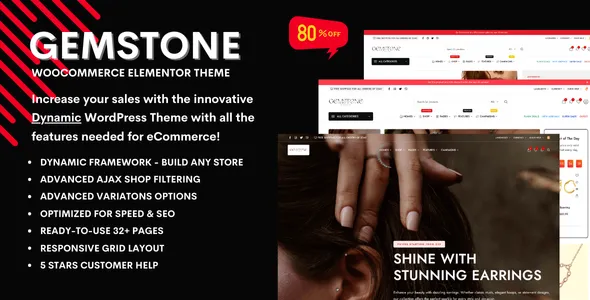
Gemstone – Jewellery Store eCommerce WooCommerce Theme
Gemstone – Jewellery Store eCommerce WooCommerce Theme is a website design solution for businesses looking to build an elegant online jewellery store with WordPress and WooCommerce. Designed around the needs of jewellery retailers and accessories brands, this theme can serve as a foundation for presenting jewellery collections, organizing product categories, sharing product details, and creating a convenient online shopping experience. Whether you sell gold jewellery, silver ornaments, diamond rings, gemstones, necklaces, earrings, bracelets, or fashion accessories, a jewellery-focused WooCommerce theme can help you establish a consistent digital storefront that reflects your brand identity and product range.
In the competitive jewellery market, presentation plays an important role in attracting shoppers and communicating product value. Customers often want to examine product photographs, compare designs, review available materials, understand sizing, and check pricing before making a purchase. An attractive online store should therefore combine refined visual design with clear product information, straightforward navigation, and a reliable shopping journey. Gemstone can be considered for businesses seeking a specialized storefront that brings their jewellery products and brand story together in one place.
Built for the WordPress and WooCommerce ecosystem, Gemstone provides a starting point for developing an eCommerce website around jewellery and related products. WooCommerce supports essential online store functionality, while the theme determines how product listings, shopping pages, and other website sections are presented. The final capabilities and appearance depend on the theme version, available customization options, installed plugins, and store configuration. By combining an appropriate design with high-quality product photography, accurate descriptions, secure checkout configuration, and useful customer information, jewellery businesses can create an online shopping destination suited to their goals.
What Is Gemstone Jewellery Store eCommerce WooCommerce Theme?
Gemstone is a jewellery-store-oriented WordPress theme intended for businesses that want to present and sell products online through a WooCommerce-powered website. Its purpose is to provide a design foundation that can be adapted to the visual identity and commercial requirements of a jewellery retailer.
Unlike a generic business website, a jewellery eCommerce store needs to prioritize product discovery, visual presentation, product variations, pricing information, and purchase-related details. Visitors may browse by jewellery type, collection, material, occasion, or style before selecting a product. An organized storefront helps customers navigate these choices without making the shopping process unnecessarily complicated.
With Gemstone, store owners can plan pages for featured collections, new arrivals, popular products, promotional offers, brand information, and customer support. Product pages can be organized to communicate essential details, including product names, prices, descriptions, images, and available variations supported by the WooCommerce setup.
The exact layouts, templates, demo content, and built-in features should be confirmed against the current theme demonstration and documentation. Store owners should also review compatibility with their WordPress installation, WooCommerce version, payment methods, shipping requirements, and any additional plugins needed for their business.
Elegant Design for Jewellery and Luxury Accessories
Jewellery is often associated with craftsmanship, personal expression, celebrations, and meaningful gifts. A store’s visual presentation should complement these qualities while allowing shoppers to focus on the products themselves.
A refined website design can help establish a consistent brand experience through coordinated colors, readable typography, balanced spacing, and carefully selected photography. Jewellery retailers may prefer a minimalist presentation that gives product images room to stand out, while other brands may choose richer colors and decorative details to communicate a distinctive style.
Gemstone can be evaluated as a design foundation for creating an online jewellery store with a polished and product-focused appearance. Depending on the available customization settings, businesses may be able to adapt visual elements to match their branding and merchandising strategy.
Product imagery deserves particular attention. Clear photographs showing the design, finish, shape, and important details of each item help customers make more informed decisions. Where appropriate, multiple product images can show different angles, close-up details, or the jewellery being worn.
A consistent visual style across the homepage, category pages, product listings, and individual product pages helps the store feel cohesive. The objective is not simply to create an attractive website, but to make product discovery comfortable and help visitors understand what each item offers.
WooCommerce Integration for Online Jewellery Sales
WooCommerce is an eCommerce platform for WordPress that provides tools for managing products, orders, and online transactions. A compatible theme can determine how these store elements appear to customers and how the shopping experience fits the brand’s visual identity.
Gemstone is positioned for WooCommerce-based jewellery retail, making it a potential starting point for businesses that want to sell products through their own website. Depending on the store configuration and enabled WooCommerce features, a retailer can organize product catalogs, maintain prices, manage inventory, configure shipping, and process orders.
A typical jewellery eCommerce website may include:
- A homepage introducing the brand and its featured collections.
- Shop and category pages for browsing different jewellery types.
- Individual product pages with descriptions, images, and pricing.
- Shopping cart and checkout pages.
- Customer account features supported by WooCommerce.
- Contact and customer support information.
- Policies covering shipping, returns, exchanges, and privacy.
These elements should be configured and tested before the website is launched. Payment gateways, taxes, shipping rules, order emails, and inventory settings may require separate setup. The availability of specific layouts or additional shopping features depends on the theme and the plugins installed alongside it.
A well-configured WooCommerce store gives jewellery businesses greater control over product presentation and online sales while providing customers with a clear route from browsing to checkout.
Showcase Gold, Silver, Diamond, and Gemstone Collections
A jewellery store may carry several product types, each with different characteristics and customer expectations. Organizing products into clear categories makes it easier for shoppers to locate relevant items and compare similar designs.
Gemstone can be used as a starting point for a store featuring a range of jewellery collections. The categories should reflect the actual products available rather than introducing unnecessary sections that make the catalog difficult to navigate.
Possible categories include:
Gold Jewellery: Present gold rings, chains, necklaces, earrings, pendants, and bracelets. Where applicable, include accurate information about purity, weight, finish, and other relevant specifications.
Silver Jewellery: Organize silver accessories by product type, style, or collection. Clearly explain the material and finish so customers understand what they are purchasing.
Diamond Jewellery: Showcase diamond rings, pendants, earrings, and other pieces with suitable product photography and verified information about stone characteristics when relevant.
Gemstone Jewellery: Feature pieces containing precious or semi-precious stones, with clear details about the stone, setting, and material where those details are known.
Fashion Jewellery: Create a collection for contemporary accessories, statement pieces, and everyday designs that complement different styles.
Wedding and Occasion Jewellery: Highlight products intended for weddings, anniversaries, festivals, and other special occasions.
The category structure should be adapted to the store’s inventory and target customers. Clear category names, useful product filters where supported, and consistent product images help visitors move through the catalog more efficiently.
Product Pages That Help Customers Make Decisions
The product page is one of the most important parts of an eCommerce website. It provides the information customers need to understand an item, compare options, and decide whether to purchase it.
A jewellery product page should combine attractive images with accurate, practical details. Customers may want to know the type of metal, dimensions, available sizes, stone information, finish, care instructions, and packaging details before ordering.
A well-prepared product listing can include:
- A descriptive product name.
- Clear images from relevant angles.
- The current price and any applicable sale price.
- A detailed but readable product description.
- Available sizes, colors, or other variations.
- Material and gemstone information, where applicable.
- Stock availability when supported by the store configuration.
- Delivery, exchange, and return information.
- Care instructions and relevant product specifications.
WooCommerce supports different product types and variations, subject to the store setup. This can be useful for products available in multiple sizes, finishes, or other selectable options.
Avoid using vague or exaggerated product claims. For precious metals, diamonds, and gemstones, publish only information that can be substantiated. Accurate specifications help customers make informed choices and support trust in the retailer.
Before launch, review product pages on both desktop and mobile devices. Images should display clearly, important information should be easy to find, and purchase controls should be straightforward to use.
Responsive Jewellery Store for Mobile Shoppers
Many shoppers discover products on smartphones and return later to complete their purchases. A responsive website helps maintain usability across mobile phones, tablets, laptops, and desktop computers.
Gemstone is described as an eCommerce WooCommerce theme for jewellery retail, but the exact responsive behavior should be checked using its current demo and documentation. Store owners should test the complete shopping experience rather than relying only on a homepage preview.
On smaller screens, navigation should remain manageable, product images should fit the available space, and text should be easy to read. Buttons and form fields should be large enough to interact with comfortably. Product variations, cart controls, and checkout fields should work without requiring awkward horizontal scrolling.
Mobile usability is particularly important for jewellery stores because product images and specifications can influence purchase decisions. Visitors should be able to inspect the available images, read key details, choose the correct options, and understand the next step in the purchasing process.
Responsive testing should cover category pages, product details, search results, the cart, checkout, and contact forms. Any custom layouts or additional plugins should also be reviewed at different screen sizes.
A smooth mobile experience can reduce friction during shopping and help the website serve customers regardless of the device they use.
Homepage Layout for Jewellery Retailers
The homepage introduces the brand and helps visitors discover the most relevant products. A thoughtfully organized homepage can communicate the store’s identity, highlight selected collections, and guide shoppers toward the catalog.
A Gemstone-based website can be planned around several useful sections, depending on the layouts supported by the theme.
Hero Section: Introduce the jewellery brand with a clear headline, suitable imagery, and a link to the main collection or shop page.
Featured Categories: Help visitors browse popular product types, such as rings, necklaces, earrings, bracelets, and gemstone jewellery.
New Arrivals: Highlight recently added products to encourage returning customers to explore new designs.
Best-Selling Products: Present popular items when reliable sales data is available and the relevant products are in stock.
Seasonal Collections: Promote products suited to weddings, festivals, anniversaries, gifting occasions, or other relevant campaigns.
Brand Introduction: Explain the retailer’s identity, product approach, or craftsmanship standards using accurate information.
Customer Support Links: Make shipping information, returns policies, contact details, and frequently asked questions easy to locate.
Not every homepage needs all these sections. A small boutique may benefit from a simple layout with a few carefully selected collections, while a larger retailer may need more extensive product discovery options.
The most effective homepage prioritizes the needs of the customer. It should make it clear what the store sells and provide straightforward paths to browse products or find important information.
Product Categories, Search, and Navigation
Clear navigation helps customers find products without unnecessary effort. This is especially important when a jewellery store contains many designs, materials, collections, and price ranges.
A practical menu might include Home, Shop, Collections, About Us, Contact, and other pages relevant to the business. Product categories can then organize the catalog into understandable groups.
WooCommerce and compatible extensions may provide options for product search, filtering, and sorting. Depending on the theme and configuration, these tools can help customers narrow their choices by criteria such as price, category, size, color, or availability.
For example, a customer looking for a silver bracelet should be able to reach the relevant category quickly instead of browsing unrelated products. Someone shopping for a gift may prefer to explore curated collections or occasion-based categories.
Keep menu labels familiar and avoid adding too many top-level options. Important policies and support pages should be accessible without overwhelming the main navigation.
Search and filtering features should be tested with realistic product data. Incorrect category assignments, inconsistent product attributes, and missing images can make an otherwise well-designed catalog difficult to use.
A logical information structure supports a more convenient shopping experience and helps customers explore the store with confidence.
Jewellery Branding and Visual Customization
A strong brand identity helps a jewellery retailer distinguish its products and create a recognizable shopping experience. The website should reflect the brand’s positioning, whether it focuses on premium pieces, contemporary fashion jewellery, handcrafted designs, bridal collections, or affordable accessories.
Depending on the customization options available in Gemstone, store owners may be able to adjust colors, typography, imagery, layout details, and other visual elements. The precise controls should be confirmed in the current theme documentation.
Luxury-oriented brands may prefer understated colors, spacious layouts, and close-up product photography. Contemporary brands may use brighter accents, bold typography, and lifestyle images. Traditional jewellery businesses may choose visual elements that reflect their heritage and target audience.
Consistency matters across all pages. The logo, color palette, heading styles, buttons, banners, and product photography should feel like parts of the same brand experience.
Use original brand assets where possible and make sure promotional images match the products and offers shown on the website. Avoid misleading visuals or imagery that could create incorrect expectations about the item’s size, material, or appearance.
Before making substantial changes, back up the website and test the updated design. Custom CSS, page-building tools, and third-party plugins can affect the appearance of theme components, so changes should be reviewed across the main store pages.
Shopping Cart and Checkout Experience
A convenient checkout process is essential for an online jewellery business. Customers who have selected a product should be able to review their order, understand the total cost, provide delivery information, and complete payment through a supported method.
WooCommerce provides cart and checkout functionality, while the theme and store configuration influence how these pages look and how customers interact with them. Payment gateways and additional checkout features may require separate configuration or compatible plugins.
A clear checkout process should display the selected products, quantities, applicable discounts, shipping charges, taxes where relevant, and final order total. Customers should be able to correct mistakes before confirming their purchase.
For jewellery retailers, shipping and return information may be particularly important because some products have higher values or specific handling requirements. Publish clear policies and make them available before customers reach the final checkout step.
Payment options should be selected according to the retailer’s market, currency, business requirements, and gateway availability. Test successful transactions, failed payments, order confirmations, and customer email notifications before accepting live orders.
Avoid unnecessary form fields and confusing instructions. A straightforward checkout can make the purchasing process easier to understand and reduce preventable errors.
SEO-Friendly Structure for a Jewellery eCommerce Website
Search engine optimization can help prospective customers discover jewellery products through relevant searches. A theme provides part of the website’s design foundation, but search visibility also depends on content quality, technical configuration, competition, site performance, and other factors.
Start by giving every important category and product page a clear purpose. Use descriptive page titles, helpful headings, readable URLs, and original content that accurately describes the products.
For example, a retailer may organize separate pages for gold necklaces, silver earrings, diamond rings, gemstone pendants, and bridal jewellery. These pages can provide relevant information for customers searching for specific product types.
Product descriptions should explain meaningful details rather than repeat the same keyword excessively. Include accurate materials, dimensions, available options, care guidance, and other information that helps shoppers understand the item.
Useful SEO practices include:
- Writing unique titles and meta descriptions for important pages.
- Using descriptive product names and category headings.
- Adding meaningful alternative text to informative images.
- Linking related products and collections where appropriate.
- Maintaining a logical internal linking structure.
- Checking for broken links and indexing problems.
- Using suitable image sizes and compressed files.
- Keeping product availability and pricing information accurate.
Compatible SEO plugins may assist with metadata, sitemaps, canonical settings, and other supported functions. Review plugin compatibility and avoid overlapping tools that create conflicting metadata.
No WordPress theme can guarantee specific search rankings or sales. Sustainable SEO depends on useful content, technical quality, accurate product information, and a website that serves the needs of its visitors.
Product Photography and Image Optimization
Jewellery products are highly visual, making image quality an important part of the online shopping experience. Customers often rely on photographs to evaluate a design’s shape, finish, proportions, and overall appearance.
Use clear images with consistent lighting and backgrounds. Where relevant, provide several views so shoppers can examine details such as settings, clasps, engravings, stone placement, or the shape of the jewellery.
Lifestyle photographs can help customers understand how a piece looks when worn, while close-up images can communicate details that may not be visible in a standard product shot. Ensure that images accurately represent the actual product.
Large image files can slow down a website, especially on mobile connections. Compress photographs, use appropriate dimensions, and select modern image formats when supported by the website’s setup. Avoid uploading unnecessarily large files when a smaller version provides sufficient detail.
Image alternative text should describe the important content of an image naturally. Do not fill every image description with repetitive keywords. Decorative images may require different treatment from product photographs that convey useful information.
Review image quality on desktop and mobile devices. Product details should remain visible, and images should load without causing significant layout problems. Good image management supports usability and helps create a polished storefront.
Customer Trust, Policies, and Support
Trust is essential when customers purchase jewellery online. Visitors need to understand who operates the store, what the products are made of, how orders are delivered, and what happens if they need assistance.
A jewellery website should provide accurate business information and clearly written policies. Depending on the business, useful pages may include About Us, Contact, Shipping, Returns and Exchanges, Privacy Policy, Terms and Conditions, and Jewellery Care.
Product claims should be specific and verifiable. If a product is described as gold, silver, diamond, or a particular gemstone, the description should reflect the actual item and available supporting documentation. Any certificates, guarantees, or authenticity claims should be mentioned only when they genuinely apply.
Contact information should be easy to locate. A support page can explain how customers can ask about sizing, materials, order status, delivery, or returns.
WooCommerce and compatible extensions may support customer accounts, order notifications, and other store functions, depending on configuration. Test these features to ensure that customers receive appropriate information after placing an order.
A professional design can support trust, but it cannot replace accurate product information, reliable service, clear policies, and secure store management.
Performance, Security, and Website Maintenance
A jewellery eCommerce website should remain reliable as products, visitors, and orders increase. Performance and security therefore need attention throughout the life of the store.
Website speed depends on hosting, image sizes, scripts, plugins, theme implementation, and other technical factors. Use performance testing to identify problems rather than assuming that a theme automatically guarantees fast loading.
Optimize product images, remove unnecessary extensions, and configure suitable caching tools where appropriate. Review important pages after adding new plugins or changing the design, since these changes can affect performance.
Security measures should include HTTPS, strong passwords, appropriate user permissions, reputable extensions, and regular software updates. Obtain themes and plugins from trustworthy sources, and review compatibility before installing updates on a live store.
Create regular backups and verify that they can be restored. Consider testing substantial design or configuration changes in a staging environment before applying them to the production website.
Maintenance should also include reviewing product prices, stock status, broken links, order notifications, payment settings, and policy pages. Periodic checks help ensure that customers receive accurate information and can complete purchases without unnecessary obstacles.
Who Should Use Gemstone Jewellery Store eCommerce WooCommerce Theme?
Gemstone may be worth evaluating for a range of jewellery and accessory businesses that want to build a WooCommerce-based online store.
Jewellery Boutiques: Small retailers can establish an online catalog for their selected collections and make products available to customers beyond their physical location.
Gold and Silver Retailers: Businesses can organize metal jewellery by product type, collection, and relevant material specifications.
Diamond Jewellery Stores: Retailers can present rings, earrings, pendants, and other products with accurate details and clear product photography.
Gemstone Sellers: Businesses selling gemstone jewellery can create dedicated categories and explain the relevant characteristics of their products.
Fashion Jewellery Brands: Online sellers can showcase contemporary accessories, seasonal collections, and everyday jewellery.
Bridal Jewellery Businesses: Retailers can organize products for weddings, engagements, and other special occasions.
Gift Shops: Stores offering jewellery and related accessories can highlight gift collections for birthdays, anniversaries, festivals, and celebrations.
Growing eCommerce Businesses: Established retailers can evaluate a dedicated WooCommerce theme as part of an effort to improve product presentation and online shopping usability.
The suitability of Gemstone depends on the required features, current theme capabilities, product catalog size, and store configuration. Review the live demo, documentation, responsive behavior, and compatibility details before selecting it for a production website.
Tips for Building a Successful Jewellery Store with Gemstone
Start by defining the target customer and the type of jewellery the business sells. A premium jewellery brand may need a different presentation from a store specializing in affordable fashion accessories.
Organize the product catalog before customizing the website. Decide which categories are essential, how products should be grouped, and which attributes customers need to compare.
Prepare accurate product descriptions and high-quality images. Include meaningful details about materials, sizes, care, and variations where relevant. Ensure that all claims about precious metals and gemstones are supported by reliable information.
Create a consistent visual identity. Select a suitable logo, color palette, typography, and image style, then apply them across the homepage, product pages, and supporting content.
Configure WooCommerce carefully. Review payment gateways, taxes, shipping zones, inventory, customer notifications, and checkout settings. Test the complete order journey before launch.
Make customer support information easy to find. Publish clear shipping and return policies, provide working contact details, and ensure that customers can understand how to request assistance.
Finally, test the website across devices and maintain it regularly. Review page speed, accessibility, product information, security, backups, and software compatibility. These steps help create a more dependable store as the business grows.
Final Thoughts on Gemstone Jewellery Store eCommerce WooCommerce Theme
Gemstone – Jewellery Store eCommerce WooCommerce Theme is a potential starting point for retailers seeking to build a jewellery-focused online store with WordPress and WooCommerce. Its specialized positioning makes it relevant to businesses selling gold jewellery, silver accessories, diamond pieces, gemstone designs, fashion jewellery, and occasion-based collections.
A successful jewellery website needs more than an attractive appearance. It should combine organized product categories, detailed product information, clear photographs, responsive layouts, convenient navigation, and a straightforward checkout experience. Customers should also have access to accurate policies, reliable support information, and trustworthy product descriptions.
WooCommerce provides the core eCommerce foundation, while the selected theme, plugins, and configuration determine the overall store experience. Before launching, verify the current features of Gemstone, test its compatibility with your WordPress and WooCommerce setup, and confirm that the available layouts meet your business requirements.
Long-term success depends on product quality, customer service, useful content, technical maintenance, and a consistent brand experience. Although a theme cannot guarantee search rankings or sales, it can provide a useful design foundation for presenting products and supporting online shopping.
For jewellery retailers looking to develop a professional WooCommerce storefront, Gemstone is worth assessing against their branding, catalog, and operational needs. With thoughtful customization, accurate product information, optimized imagery, and careful store management, a jewellery business can build an online presence that makes its collections easier to discover and shop.