My Account
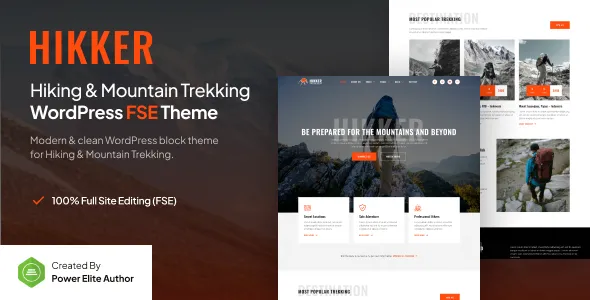
Hikker – Hiking & Mountain Trekking Gutenverse FSE WordPress Block Theme
Hikker – Hiking & Mountain Trekking Gutenverse FSE WordPress Block Theme is a website design solution for hiking clubs, mountain trekking organizers, outdoor adventure companies, camping businesses, nature guides, and travel professionals who want to establish a compelling online presence with WordPress. Designed around the outdoor adventure niche, Hikker can serve as a starting point for creating a website that introduces trekking experiences, highlights scenic destinations, presents outdoor activities, and helps visitors discover information about upcoming adventures. Its Gutenverse FSE and WordPress block theme positioning makes it relevant to website owners who want to build and customize page layouts through a block-based editing workflow.
Outdoor adventure websites need more than attractive mountain photography. Visitors often want to understand the destination, explore available activities, learn about the difficulty of a trail, review trip information, and find out how to contact an organizer before making a decision. A well-structured website can bring these details together in an accessible format while communicating the excitement of hiking and mountain trekking. Hikker provides a potential foundation for presenting this information through a visually engaging and organized WordPress website.
Whether you manage a local hiking club, operate a trekking agency, organize camping trips, guide visitors through mountain trails, or publish outdoor travel content, a dedicated website can help communicate your services and connect with people who enjoy exploring nature. With appropriate customization, original content, suitable imagery, and compatible WordPress tools, Hikker can be adapted to match your brand identity and outdoor adventure goals.
What Is Hikker – Hiking & Mountain Trekking Gutenverse FSE WordPress Block Theme?
Hikker is a WordPress theme positioned for hiking, mountain trekking, and outdoor adventure websites. Its niche-specific purpose makes it a potential choice for businesses and organizations that want to present nature-based activities through a website designed around outdoor experiences.
A hiking website may need to explain local trails, introduce guided walks, present mountain destinations, and share preparation advice. A trekking company may require dedicated pages for multi-day expeditions, group adventures, travel arrangements, and inquiries. A hiking club might focus on membership information, community activities, and scheduled outdoor events.
Hikker can be considered as a design foundation for organizing these different types of content. Website owners can develop pages around their services, destinations, trip information, photographs, and contact details, depending on the theme’s available templates and customization options.
The theme’s Gutenverse FSE positioning is also relevant for users who prefer a block-based WordPress editing experience. Full Site Editing allows supported WordPress themes to use the Site Editor for managing compatible parts of a website, including templates and global design elements. The exact editing controls and available layouts depend on the installed theme version, WordPress environment, and supported Gutenverse features.
Before installation, review the current product demo and documentation to confirm the available patterns, templates, required plugins, and customization options.
Designed for Hiking and Mountain Trekking Businesses
Hiking and trekking businesses need to communicate their experiences clearly while helping visitors find practical information. A specialized website can make it easier to introduce services, explain trip options, and present the landscapes and activities that distinguish a business.
Hikker may be suitable for several outdoor-focused projects, including:
- Hiking and trekking tour operators
- Mountain adventure companies
- Guided walking and nature tour providers
- Camping and outdoor recreation businesses
- Hiking clubs and adventure communities
- Mountain travel organizers
- Outdoor education and wilderness programs
- Nature photography and adventure blogs
- Regional tourism and trail information websites
Each type of organization has different communication needs. A guided trekking company may prioritize destinations and trip details, while a hiking club may emphasize community participation and upcoming outings. An outdoor travel blog may focus on trail guides, destination articles, and practical advice for beginners.
A flexible website structure helps accommodate these different goals. By arranging information into clearly defined pages, website owners can provide a useful experience for visitors without forcing every type of content into a single layout.
Build an Engaging Outdoor Adventure Homepage
The homepage is often the first place visitors use to understand an outdoor business. It should communicate the website’s purpose quickly, establish a recognizable visual identity, and guide visitors toward relevant information.
For a Hikker-based website, the homepage could introduce the organization with a prominent mountain landscape, a concise headline, and supporting text that explains the available hiking or trekking experiences. A clear introductory section helps visitors understand whether the website offers guided trips, group adventures, camping experiences, or trail information.
Additional homepage sections can introduce popular destinations, highlight outdoor activities, explain the organization’s approach, and provide links to detailed service pages. A selection of authentic photographs can help visitors understand the environments they may explore.
A well-organized homepage might include:
- An introductory section featuring the main adventure offering
- A summary of hiking and trekking services
- Featured mountain destinations or trail experiences
- Information about guided tours and outdoor activities
- An introduction to the team or organization
- Testimonials from genuine customers, where available
- Recent hiking guides or travel articles
- A contact section or inquiry call to action
These sections are suggestions rather than a guarantee of included theme layouts. Their availability and appearance depend on the theme’s templates and the customization tools used.
The goal is to create a homepage that feels adventurous while remaining practical. Visitors should be able to move naturally from discovering the business to exploring relevant activities and finding the information they need.
Showcase Hiking Trails and Mountain Destinations
Destinations are central to many hiking and trekking websites. Visitors often want to know where a trip takes place, what makes the location interesting, and what they should expect before planning an outing.
Hikker can be evaluated as a foundation for presenting destination information through dedicated pages or organized content sections. Each destination page can introduce the landscape, describe the type of experience available, and provide relevant planning details.
For example, a trekking operator could feature forest trails, mountain viewpoints, lakeside walks, high-altitude routes, or guided nature excursions. A regional hiking club could publish information about nearby trails and suitable activities for different experience levels.
Useful destination pages may include:
- Destination name and geographic location
- Trail length and estimated duration
- Elevation gain and terrain information
- Difficulty rating and recommended experience level
- Seasonal considerations and weather guidance
- Required equipment and preparation advice
- Availability of guides or group outings
- Important safety information and local regulations
Only publish details that have been checked against reliable and current information. Trail conditions, access restrictions, weather, and route difficulty can change. Accurate information helps visitors make better decisions and supports a more trustworthy outdoor adventure website.
High-quality landscape photographs can strengthen destination pages, but they should complement rather than replace essential planning information.
Present Trekking Packages and Guided Adventures
Trekking companies often offer several experiences for visitors with different interests, schedules, and levels of experience. A website can make these options easier to understand by presenting each trip with consistent information and clear navigation.
A Hikker-based website could organize adventure offerings into individual pages for day hikes, weekend treks, multi-day mountain expeditions, guided nature walks, and camping experiences. The exact structure should reflect the services the business genuinely provides.
Each trip page can explain the destination, duration, difficulty, recommended preparation, and main activities. Where relevant, organizers can also provide group-size information, meeting arrangements, equipment requirements, accommodation details, and a clear explanation of what is included in the price.
A useful package page should answer common visitor questions without overwhelming readers. Short summaries can introduce the experience, while detailed sections provide practical information for people who want to learn more.
If the business accepts trip requests online, a compatible contact form or booking plugin may be used to collect inquiries. Online payments, live availability, automated confirmations, and booking management should not be assumed to be included with the theme itself. These functions may require additional software and configuration.
By presenting trip information consistently, an outdoor business can help visitors compare available experiences and identify the adventure that best matches their needs.
Create a Website for Hiking Clubs and Outdoor Communities
Hiking clubs bring together people who enjoy walking, exploring nature, and participating in outdoor activities. A website can support that community by explaining its purpose, introducing membership opportunities, and communicating upcoming events.
Hikker may provide a starting point for a club website that includes an introduction, activity information, group photographs, trail resources, and contact details. The design can be customized to reflect the club’s identity and the types of outdoor experiences it organizes.
Potential website sections include membership information, event announcements, hiking guidelines, frequently asked questions, and reports from previous outings. A gallery of genuine club activities can help prospective members understand the group’s atmosphere and interests.
Clubs that organize regular events may also need a calendar, registration forms, member-only resources, or email notifications. These capabilities depend on compatible plugins or external services rather than the theme’s visual design alone.
A clear website can make it easier for newcomers to understand how the club operates and how they can participate. It can also give existing members a convenient place to find updates, event details, and important safety information.
Outdoor Photography and Visual Storytelling
Outdoor adventures are naturally visual. Mountain peaks, forest paths, rocky landscapes, rivers, campsites, and scenic viewpoints can help visitors understand the atmosphere of an experience before deciding whether to learn more.
Hikker’s hiking and trekking focus makes outdoor photography an important consideration when developing the website’s visual identity. Relevant images can introduce destinations, illustrate trail conditions, and provide context for the activities offered.
Website owners should select photographs that represent their actual destinations and services. If a business promotes a specific route, images should accurately reflect the environment visitors can expect to encounter.
A gallery may be useful for presenting past expeditions, outdoor events, mountain landscapes, and group experiences. Individual trip pages can include a smaller selection of relevant images, allowing visitors to connect the visual presentation with practical details.
Image selection should also consider page performance. Large, uncompressed photographs can slow down loading, particularly on mobile connections. Using appropriately sized and compressed images helps maintain a balance between visual quality and usability.
Alternative text should describe meaningful images where appropriate, and decorative images should not distract from important page content. A thoughtful photography strategy can help create an engaging website without compromising accessibility or performance.
Customize Your Website with Gutenverse and Full Site Editing
A consistent design helps an outdoor business build recognition and present information professionally. The Gutenverse FSE positioning of Hikker makes the WordPress block-editing workflow an important part of its intended use.
WordPress Full Site Editing supports customization of compatible site elements through the Site Editor. Depending on the theme and installed features, users may be able to manage templates, template parts, navigation, typography, colors, and other global design settings through block-based controls.
This approach can be useful for website owners who want to adjust their presentation without relying exclusively on traditional theme settings. A business can develop a consistent visual identity while organizing pages around its destinations, activities, and services.
For a hiking and trekking website, the visual style might combine natural colors, strong landscape photography, readable typography, and clear calls to action. Earthy greens, muted browns, sky blues, and neutral backgrounds can complement outdoor imagery, although the final palette should reflect the brand’s own identity.
Consistent spacing, heading styles, buttons, and image treatments can help visitors move between pages without encountering an inconsistent visual experience.
The precise controls available depend on the current Hikker release, the installed version of WordPress, and the supported Gutenverse features. Consult the product documentation before planning advanced customization.
Responsive Design for Mobile and Desktop Visitors
Outdoor websites should be accessible across different devices. A visitor may research a trekking destination on a desktop computer, check trip information on a tablet, or open a trail guide on a smartphone while preparing for an excursion.
Hikker is positioned as a responsive WordPress block theme, so responsive presentation is an important consideration for the finished website. The actual experience should still be tested after installation and customization.
On smaller screens, headings should remain readable, navigation should be easy to operate, and photographs should fit the available space. Important trip details and contact options should be accessible without excessive scrolling or awkward horizontal movement.
Responsive testing should cover the entire website rather than only the homepage. Destination pages, galleries, service descriptions, blog articles, menus, and forms may behave differently depending on their content and layout.
Custom blocks, embedded maps, third-party booking tools, and additional plugins can also affect mobile usability. Testing these components at different screen sizes helps identify layout problems before the website goes live.
A mobile-friendly presentation is especially valuable for adventure businesses because visitors may access information while traveling or preparing for an outdoor activity.
SEO-Friendly Content for Hiking and Trekking Websites
Search engine optimization can help potential customers discover an outdoor adventure business through relevant search queries. A well-structured WordPress theme provides a useful foundation, but search visibility also depends on content quality, technical implementation, competition, and ongoing optimization.
A hiking website can develop dedicated pages for important services, destinations, and outdoor activities. For example, a company offering guided mountain treks may create separate pages for specific routes, trip types, and regions rather than placing all its information on a single general page.
Each page should have a descriptive title, a clear heading structure, useful text, and relevant internal links. Content should answer real visitor questions instead of repeating keywords without adding meaningful information.
Potential keyword themes include hiking tours, mountain trekking, guided hiking trips, outdoor adventure experiences, camping trips, and destination-specific trail information. The most suitable phrases depend on the organization’s actual services and target locations.
Useful SEO practices include:
- Write descriptive page titles and meta descriptions.
- Use clear and logically structured headings.
- Create original content for each important destination and service.
- Add relevant internal links between related pages.
- Optimize image dimensions and file sizes.
- Use descriptive alternative text for meaningful images.
- Maintain readable URLs.
- Review indexing and technical SEO issues regularly.
- Keep destination information accurate and current.
Compatible SEO plugins may assist with metadata, XML sitemaps, redirects, and other supported settings. No theme can guarantee specific rankings or a particular volume of website traffic. Sustainable SEO requires useful content, a sound technical setup, and regular improvement.
Content Marketing and Hiking Blog Management
A blog can help hiking and trekking businesses provide useful information before visitors contact them or book an experience. Educational content can answer common questions, introduce destinations, and demonstrate the organization’s knowledge of outdoor activities.
Hikker can be considered for a website that combines service pages with a hiking or travel blog. WordPress provides content publishing tools for creating articles and organizing them with categories and tags.
Possible article topics include beginner hiking preparation, essential trekking equipment, choosing suitable footwear, planning a mountain trip, understanding trail difficulty, camping preparation, and responsible outdoor recreation.
A trekking operator might publish destination guides that explain the best time to visit, expected terrain, and preparation requirements. A hiking club could share event reports, route summaries, and practical advice for new members.
Articles should provide accurate information and clearly distinguish general guidance from route-specific requirements. Weather conditions, trail access, permits, and local regulations may change, so relevant details should be checked before publication.
Internal links can connect educational articles to related destination pages, services, or contact information. This gives readers a natural path from learning about an outdoor activity to exploring the experiences offered by the organization.
A manageable publishing schedule and a focus on helpful, original content can make a blog more useful than a large collection of repetitive articles.
Contact Forms and Adventure Inquiries
A website should make it easy for visitors to ask questions about trips, destinations, equipment requirements, group arrangements, or available services. A clear contact process helps turn interest into a useful conversation.
A Hikker-based website can include contact information and, where supported through compatible tools, inquiry forms. Businesses may create separate inquiry pathways for guided trekking, private groups, school or corporate outings, and general questions.
A simple form might request a name, email address, preferred trip, group size, and a short message. Only collect information that is genuinely needed to respond to the inquiry.
Contact pages should clearly explain how visitors can reach the organization and what they should expect after submitting a request. Businesses should test form validation, confirmation messages, spam protection, and email delivery before launching the website.
If the business accepts reservations, additional booking functionality may be necessary. A compatible booking plugin or external booking platform may support schedules, availability, payments, and confirmation messages, depending on the provider and configuration.
Clear calls to action can help visitors identify the next step without making the website feel overly promotional.
Performance Optimization for Image-Rich Websites
Outdoor websites often rely on large photographs and visually rich page sections. While these elements can strengthen the presentation, they can also affect loading speed if they are not optimized.
The performance of a Hikker website depends on its implementation, hosting, theme configuration, image assets, scripts, plugins, and external services. A responsive theme does not automatically guarantee fast performance.
Start by resizing images to appropriate dimensions and compressing them while maintaining sufficient quality. Avoid uploading unnecessarily large files when smaller versions can provide the same visual result.
Review third-party widgets, animations, embedded maps, and other interactive elements to determine whether they contribute enough value to justify their performance cost. Caching and other optimization tools may help when selected and configured appropriately.
Test the homepage, destination pages, blog articles, and galleries separately. Image-heavy pages may behave differently from pages containing mostly text.
Regular monitoring helps identify performance issues as the website grows. A well-optimized site can make it easier for visitors to explore destinations and read trip information, including when they are using slower mobile connections.
Accessibility and Easy Website Navigation
A hiking website should make essential information easy to find and understand. Clear navigation is particularly important when visitors are comparing trips, checking preparation requirements, or searching for safety information.
Use familiar menu labels such as About, Hiking Tours, Destinations, Blog, FAQs, and Contact where appropriate. The exact navigation structure should reflect the services offered and the information visitors need most.
Readable typography, suitable color contrast, meaningful link text, and descriptive form labels can improve usability. Important information should not rely on color alone, and interactive elements should be distinguishable from ordinary text.
Images that communicate meaningful information should include suitable alternative text. Headings should follow a logical structure so that visitors can understand the organization of each page.
Accessibility should be reviewed across the complete website, including navigation menus, forms, galleries, and any third-party integrations. Automated testing can identify some issues, while keyboard testing and manual reviews help uncover others.
A straightforward and accessible website provides a more dependable experience for visitors with different devices, abilities, and browsing preferences.
Integrations and Additional WordPress Functionality
An outdoor adventure website may need additional functionality beyond its theme design. Depending on the organization’s goals, compatible WordPress plugins can support contact forms, SEO, analytics, performance optimization, security, backups, event listings, or booking workflows.
Hikker’s exact compatibility and included features should be checked in its current documentation before selecting additional tools. Avoid assuming that a particular plugin or integration is included unless the product information confirms it.
A hiking club may benefit from event registration tools, while a trekking company may need a booking system. A travel blog might prioritize SEO and analytics, whereas a local adventure business may focus on contact forms and location information.
Install only the tools required for the website’s intended purpose. Several plugins with overlapping functions can increase maintenance work and may introduce compatibility or performance problems.
After installing or updating a plugin, test the relevant pages and user journeys. Pay particular attention to mobile layouts, form submissions, navigation, and any functions that visitors rely on to request information or register for an activity.
Security and Ongoing Website Maintenance
A professional WordPress website needs regular maintenance to remain reliable. Security and maintenance practices are especially important for businesses that collect customer inquiries or depend on their website to communicate trip information.
Keep WordPress, the theme, and compatible plugins updated according to their documentation. Create backups before significant changes and ensure that the restoration process is understood and tested.
Use strong administrator passwords, enable HTTPS, and provide user accounts with only the permissions they require. Obtain themes and plugins from trustworthy sources, and remove unused components when appropriate.
Review contact forms, navigation links, destination pages, and important service information regularly. Old trip dates, outdated prices, incorrect contact details, and broken links can confuse visitors.
Adventure businesses should also review route descriptions and safety guidance periodically. Seasonal conditions, access rules, and trail information may change, so published content should not be treated as permanently accurate.
A consistent maintenance routine helps preserve the website’s usability and supports a more trustworthy experience for prospective customers.
Who Should Use Hikker – Hiking & Mountain Trekking Gutenverse FSE WordPress Block Theme?
Hikker may be worth evaluating for several types of outdoor and nature-focused projects.
Hiking and trekking companies: Businesses can organize information about guided hikes, mountain adventures, trip options, and destinations.
Outdoor adventure agencies: Adventure operators can introduce activities, explain their services, and provide contact opportunities for interested visitors.
Hiking clubs: Clubs can publish membership information, group activities, event details, and community updates.
Camping businesses: Campsite operators and outdoor recreation providers can present their facilities, experiences, and relevant visitor information.
Nature guides: Professional guides can explain their services, introduce locations, and help prospective customers understand available experiences.
Travel bloggers: Outdoor writers can publish hiking guides, destination articles, equipment advice, and travel stories.
Tourism organizations: Regional tourism websites can introduce nature-based attractions and provide practical information for visitors.
Outdoor education providers: Organizations can communicate educational activities, guided walks, and relevant program information.
The suitability of the theme depends on the required website structure and functionality. Before choosing it, review the current demo, documentation, supported WordPress version, available block patterns, and any required plugins.
Tips for Building a Successful Hiking Website with Hikker
A successful outdoor website combines relevant content, a clear structure, accurate information, and a consistent visual identity. The theme provides a starting point, but the finished website should be planned around the needs of its intended visitors.
Begin by defining the primary objective. Decide whether the website should promote guided trips, introduce a hiking club, present destinations, publish outdoor advice, or support several related activities.
Organize the main pages around that purpose. Prepare original descriptions for services and destinations, and provide practical details that visitors need before contacting the organization.
Use authentic photography that represents the actual experiences offered. Maintain consistent typography, colors, spacing, and button styles so that the website feels coherent across different pages.
Prioritize clarity over unnecessary decoration. Visitors should be able to find important trip details, preparation advice, contact information, and relevant safety guidance without difficulty.
Before launch, test the website across desktop and mobile devices. Check navigation, forms, image loading, links, headings, and any third-party tools. Review the accuracy of all published content.
After launch, monitor performance, review search visibility, update important information, and maintain backups. These practices help the website remain useful as the business or outdoor community develops.
Final Thoughts on Hikker – Hiking & Mountain Trekking Gutenverse FSE WordPress Block Theme
Hikker – Hiking & Mountain Trekking Gutenverse FSE WordPress Block Theme is a potential WordPress design foundation for hiking businesses, trekking operators, outdoor adventure companies, nature guides, camping providers, and hiking communities. Its outdoor-focused positioning makes it relevant to projects that need to present destinations, activities, travel information, and nature-related content in a structured online environment.
With suitable customization, a Hikker-based website can introduce adventure services, showcase mountain landscapes, organize destination information, publish hiking guides, and provide convenient ways for visitors to get in touch. Its Gutenverse FSE and block theme approach may also suit users who want to customize supported site elements through WordPress’s block-based editing tools.
The final capabilities depend on the current theme version, available templates, WordPress configuration, and compatible plugins. Booking systems, event registrations, online payments, and other advanced features may require separate integrations.
Long-term results depend on more than theme selection. Original content, accurate destination details, responsive testing, accessibility, SEO practices, security, and ongoing maintenance all contribute to the quality of the finished website.
For businesses and organizations looking to establish an online presence around hiking and mountain trekking, Hikker can be evaluated as part of a broader website development plan. With clear content and thoughtful customization, it can help create a professional digital home for outdoor experiences and adventure-focused communication.