My Account
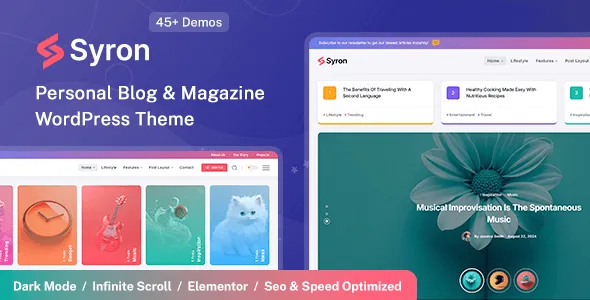
Syron | Personal Blog & Magazine WordPress Theme
Syron | Personal Blog & Magazine WordPress Theme is a WordPress website design solution for bloggers, writers, journalists, content creators, publishers, and digital magazines looking to build a professional online presence. A well-designed blog website provides a platform for sharing ideas, publishing articles, presenting editorial content, and connecting with readers through an organized browsing experience. Syron offers a starting point for creating a content-focused website that can be customized to reflect a personal brand, editorial identity, publication style, or specific content niche.
Personal blogs and online magazines play an important role in digital publishing. They allow individuals and organizations to share knowledge, discuss current interests, publish stories, and develop a recognizable voice within their chosen subject area. A suitable WordPress blog theme helps organize articles, categories, images, and navigation so readers can discover relevant content without unnecessary effort. With thoughtful customization, Syron can be considered for lifestyle blogs, travel journals, fashion publications, technology articles, food websites, personal journals, and other editorial projects.
WordPress provides a flexible content management system for publishing posts, creating pages, managing media, and organizing articles into categories and tags. By combining the theme with original content, suitable visuals, a clear navigation structure, and compatible plugins where needed, website owners can develop a blog or magazine that supports their publishing goals. The exact features, layouts, and customization options available with Syron should be verified through the current product demo and official documentation before installation.
What Is Syron Personal Blog & Magazine WordPress Theme?
Syron is a WordPress theme positioned for personal blogging and magazine-style publishing. It can be evaluated by website owners who want a content-driven design for sharing articles, presenting editorial stories, and building a recognizable online publication.
A personal blog typically reflects the author’s interests, experiences, knowledge, or professional perspective. A digital magazine may cover several related topics and publish content for a broader audience. Although their publishing goals can differ, both benefit from a clear structure, readable typography, organized categories, and layouts that make articles easy to explore.
Syron provides a potential foundation for organizing these elements into a cohesive website. Depending on the available templates and configuration, a website owner may create a homepage that introduces recent posts, dedicated category pages, individual article pages, author information, and essential supporting pages.
The final website should be designed around the intended audience and publishing strategy. A personal lifestyle blog may emphasize storytelling and photography, while a technology magazine may prioritize article organization and subject categories. A fashion publication may focus on visual presentation, whereas a business blog may emphasize practical advice and professional insights.
The theme’s exact layouts, editing tools, and supported integrations depend on its current release. Reviewing the official documentation and available demo helps confirm whether the theme suits the website’s requirements.
Personal Blogging with WordPress
Personal blogging gives writers and creators a space to publish their thoughts, experiences, opinions, and expertise. Unlike social media posts that can quickly disappear from a feed, blog articles can remain accessible through categories, archives, internal links, and search engine results.
Syron can be considered for a personal blog that needs a consistent visual identity and an organized place to publish regular content. Writers can develop articles around their interests, introduce their background, share useful resources, and build a collection of content that reflects their knowledge and perspective.
A personal blog may cover travel experiences, daily life, books, technology, wellness, photography, food, fashion, hobbies, or professional development. The best subject depends on the author’s interests, expertise, and intended readers.
A successful blog should have a clear purpose. Readers should understand what the website covers and why its content may be useful or interesting to them. A concise About page can introduce the author, while a well-organized homepage can help visitors discover recent posts and important topics.
Consistency is also important. A manageable publishing schedule, original writing, and accurate information help create a more dependable reading experience. Syron can provide a design starting point, but the quality and usefulness of the published content remain central to the blog’s long-term value.
Magazine-Style Layout for Digital Publishing
A digital magazine often publishes content across multiple categories, allowing readers to explore different topics from a single website. Its design needs to balance visual interest with clear organization so visitors can identify stories that match their interests.
Syron’s magazine-oriented positioning makes it worth evaluating for publications that require an editorial presentation. Depending on the theme’s available layouts, website owners may organize the homepage around featured articles, recent posts, topic categories, and other editorial sections.
For example, a lifestyle magazine could highlight articles about travel, home design, personal style, and everyday living. A technology publication might organize its content around software, gadgets, industry developments, and tutorials. A business magazine could feature entrepreneurship, management, marketing, and professional insights.
The homepage should prioritize the content that matters most to the audience. Featured stories can introduce important articles, while category sections help readers explore related subjects. Avoid displaying too many competing elements at once, as a crowded layout can make the publication difficult to navigate.
A clear editorial hierarchy gives the website a more coherent identity. Consistent image treatments, headline styles, spacing, and category labels can help readers understand the relationship between different sections.
Homepage Design and Article Discovery
The homepage is often the first point of contact between readers and an online publication. It should communicate the website’s subject, introduce relevant content, and provide straightforward paths to individual articles.
When configuring Syron, website owners can plan a homepage around the needs of their audience and the layout options available in the theme. Potential sections may include an introductory area, selected articles, recent posts, category highlights, popular content, and an author or publication introduction.
A personal blog may benefit from a simple homepage that emphasizes the latest articles and a short author introduction. A magazine with several categories may require a more detailed structure that directs readers toward different editorial sections.
Featured articles should be selected thoughtfully. They may introduce important topics, explain the publication’s purpose, or showcase especially useful resources. However, featured content should be reviewed periodically so the homepage remains relevant.
Article titles should be descriptive and easy to understand. Supporting summaries can help readers decide whether an article matches their interests before opening it. Images should complement the subject rather than serve as unrelated decoration.
The goal is to make article discovery convenient. Readers should be able to move from the homepage to relevant content without navigating through unnecessary steps.
Responsive Design for Modern Readers
Readers access blogs and digital magazines through a variety of devices, including desktop computers, laptops, tablets, and smartphones. A responsive website adapts its presentation to different screen sizes so content remains accessible and comfortable to read.
Syron should be evaluated for responsive behavior through its current demo and installed version. Website owners should confirm that the layout remains usable on smaller screens rather than assuming that every component automatically adapts correctly.
Mobile readers need readable text, clear headings, practical navigation, and appropriately sized interactive elements. Images should fit the available screen space, and article content should not require unnecessary horizontal scrolling.
Long-form articles deserve particular attention. Paragraph spacing, heading hierarchy, image placement, and line length can all influence readability. A layout that looks attractive on a desktop may require additional adjustments on a smartphone.
Responsive testing should cover the entire website, including the homepage, category archives, individual posts, search results, author pages, and contact forms. Custom CSS, embedded media, and third-party plugins can affect the presentation of individual sections.
Testing the site after theme updates and major design changes helps identify layout issues before they disrupt the reader experience.
Suitable for Multiple Blogging Niches
A personal blog and magazine theme can be adapted to different subject areas when its available layouts and customization options match the project’s needs. Syron may be worth considering for a range of content-focused websites.
Lifestyle blogs: Publish articles about everyday experiences, personal interests, home living, hobbies, and practical tips.
Travel blogs: Share destination guides, travel stories, itineraries, photography, and useful planning information.
Fashion publications: Present style inspiration, clothing guides, seasonal trends, fashion commentary, and personal styling articles.
Food and recipe blogs: Publish recipes, cooking tutorials, ingredient guides, restaurant experiences, and food-related stories.
Technology blogs: Explain software, digital tools, gadgets, technology developments, and practical troubleshooting topics.
Business blogs: Share professional insights, entrepreneurship guidance, marketing strategies, and industry commentary.
Personal journals: Create a digital space for reflective writing, life experiences, creative projects, and personal storytelling.
Photography blogs: Present photographic collections alongside descriptions, project notes, location information, and creative insights.
Entertainment magazines: Publish articles about films, television, books, music, culture, and other entertainment subjects.
These examples describe potential website applications rather than guaranteed built-in demos or specialized features. The final design depends on the theme’s current capabilities, the content strategy, and any compatible tools used during customization.
Typography and Readability for Long-Form Content
Typography is a fundamental part of blog and magazine design because readers often spend considerable time reading articles. Clear text styling helps communicate the relationship between headlines, summaries, body content, quotations, and supporting information.
When customizing Syron, choose a readable body font and a heading style that suits the publication’s identity. Headings should create a clear hierarchy without overwhelming the article. Body text should remain comfortable to read across desktop and mobile screens.
Paragraphs should be organized into manageable sections. Long articles benefit from descriptive subheadings, lists where appropriate, and short introductory passages that help readers understand the topic. Excessive decorative effects can distract from the content.
Line spacing and text width also influence readability. Very wide text columns can make it difficult to follow a line from beginning to end, while narrow columns may cause excessive scrolling. Test article layouts on different devices to find a practical balance.
Use bold text selectively to emphasize important information, and make links visually distinguishable from ordinary text. Consistent typography across articles, category pages, and supporting pages helps establish a recognizable editorial style.
Category Organization and Website Navigation
Categories and navigation menus help readers understand how a blog is organized. They are particularly important for digital magazines that publish articles across several subjects.
A website using Syron can be planned around a small number of meaningful categories that reflect its actual content. For example, a travel publication might organize articles by destination or travel style, while a technology blog might use categories such as software, hardware, tutorials, and industry news.
Categories should be specific enough to help readers find relevant content without becoming unnecessarily complicated. Creating too many overlapping categories can make the website harder to navigate and maintain.
WordPress also supports tags, which can help describe specific subjects within articles. Tags should be used consistently and only when they provide a meaningful way to connect related content.
The primary navigation menu should prioritize important sections. A personal blog may need only a few links, while a magazine may require more structured navigation. If the publication covers many topics, dropdown menus or dedicated category pages may help organize the information, depending on the theme’s supported options.
A useful navigation structure benefits both readers and search engines by making relationships between pages easier to understand.
WordPress Content Management and Publishing Workflow
WordPress gives website owners tools for creating and maintaining posts, pages, categories, tags, and media. This makes it suitable for personal bloggers, independent publishers, and content teams that need a manageable publishing workflow.
Syron can serve as the design foundation for a WordPress publishing website, while WordPress handles the core content management functions. The editing experience and available layout controls depend on the theme’s compatibility with the installed WordPress version and the editing tools it supports.
A consistent publishing workflow can improve quality and reduce unnecessary work. Before publishing an article, review the headline, introduction, body content, images, internal links, and category selection.
Use a clear article structure so readers can follow the topic from beginning to end. Check spelling and factual accuracy, add descriptive image alternative text where appropriate, and verify that links lead to the intended destinations.
For publications with multiple contributors, define editorial guidelines covering writing style, formatting, sourcing, image use, and review procedures. This helps maintain a consistent experience even when several authors contribute content.
WordPress user roles can help assign appropriate permissions to writers, editors, and administrators. More complex editorial approval workflows may require additional tools, depending on the publication’s requirements.
SEO-Friendly Structure for Blogs and Magazines
Search engine optimization can help readers discover useful blog posts and magazine articles through search engines. A well-organized WordPress website provides a foundation for SEO, but search visibility depends on content quality, technical setup, competition, and other factors beyond the theme itself.
Begin by giving each article a clear subject and purpose. Write descriptive titles that accurately reflect the content and use headings to organize major points. Avoid repeating the same keyword excessively or creating articles that provide little value beyond a search phrase.
A blog may publish detailed tutorials, personal experiences, product explainers, interviews, opinion pieces, or practical guides. A magazine may create topic-focused articles that answer common questions or explain relevant developments. Original content that meets readers’ needs is more useful than generic text written solely to include keywords.
Descriptive URLs and internal links help readers explore related content. For example, a tutorial can link to a related guide, while a category page can group articles around a consistent subject.
Image optimization also matters. Use appropriate dimensions, compress large files, and provide meaningful alternative text for informative images. SEO plugins may assist with metadata, XML sitemaps, canonical settings, and other supported technical tasks.
A theme cannot guarantee rankings, traffic, or indexing. Website owners should monitor their site’s technical health and focus on publishing useful, original content that deserves to be discovered.
Content Marketing and Audience Development
A blog or digital magazine can support audience development by providing information that readers find useful, entertaining, or thought-provoking. Publishing alone does not guarantee a loyal audience, so content should be planned around the interests and needs of the intended readership.
Syron can provide a visual foundation for a publication that shares articles consistently and presents related topics in an organized format. The website owner can develop an editorial calendar based on seasonal subjects, recurring themes, reader questions, and areas of expertise.
For example, a travel blog may publish destination guides and practical planning articles. A business publication may explain common professional challenges, while a lifestyle blog may share personal experiences and actionable recommendations.
Each article should have a clear purpose. Some posts can answer specific questions, others can offer detailed guidance, and some can share original perspectives or experiences. Combining different content formats can make a publication more useful without sacrificing its central identity.
Internal links can connect related articles and encourage readers to explore additional resources. A newsletter signup may also help a publication maintain contact with interested readers, although email collection requires an appropriate form integration and privacy practices.
Review website analytics where available to understand which subjects attract interest and where readers may be having difficulty navigating the site. Use these insights to improve future content rather than relying solely on short-term traffic changes.
Image Management and Visual Storytelling
Images can make a blog or magazine more engaging by adding context, demonstrating a process, and supporting the article’s central message. Travel photography, product images, illustrations, and editorial photographs can all contribute to a publication’s identity when selected appropriately.
When configuring Syron, consider how images appear on the homepage, category pages, article pages, and mobile layouts. The precise image treatments and layout options should be checked in the current theme demo.
Use images that are relevant to the article and that you have permission to publish. Original photography and properly licensed visual assets can help a website develop a distinctive appearance while reducing copyright risks.
Image dimensions should suit the intended display area. Uploading excessively large files can increase page loading time, while images that are too small may appear blurry. Compression and responsive image handling can help balance visual quality and performance.
Alternative text should describe meaningful information conveyed by an image. Decorative images can be handled differently according to accessibility best practices. Captions may provide useful context when an image requires attribution or explanation.
Consistent image choices help establish a visual identity. A photography blog may emphasize large images, while a text-focused publication may use more restrained visuals to keep the emphasis on the article itself.
Social Media Integration and Content Sharing
Social media can help bloggers and publishers introduce their articles to readers who may not discover the website through search engines. Sharing content can support audience development, but it should complement rather than replace a well-organized website.
A Syron-based publication may use compatible plugins or supported theme features to provide social sharing links, display selected social content, or connect articles with relevant social profiles. The exact integrations should be verified before installation.
Sharing links should be easy to recognize and should not interrupt reading. Excessive popups, repeated prompts, or oversized social widgets can distract visitors from the article.
When publishing an article, prepare a concise summary and a suitable image for the platforms where the content will be shared. Keep descriptions accurate and avoid headlines that promise information the article does not deliver.
Social sharing buttons are different from automated publishing. If a website owner wants new articles to be distributed automatically to social channels, a compatible third-party integration may be required.
Review plugin permissions, privacy implications, and compatibility before connecting external services. Maintain a clear distinction between content hosted on the website and content displayed from other platforms.
Website Speed and Performance Optimization
Website performance is important for both reader experience and long-term website maintenance. Slow-loading pages can make it harder for visitors to explore articles, especially when browsing on mobile devices or slower internet connections.
The actual speed of a Syron website depends on the theme implementation, hosting environment, image sizes, scripts, plugins, fonts, and external services. A theme alone cannot guarantee a particular performance score.
Start by optimizing images and avoiding unnecessarily large media files. Use suitable dimensions for featured images and article content, and remove assets that do not contribute meaningfully to the page.
Review installed plugins and third-party integrations for unnecessary duplication. Caching tools, image optimization plugins, and other performance solutions may help when chosen and configured correctly.
Test the homepage, category archives, individual articles, and search results rather than measuring only one page. Different templates may behave differently, especially when they contain large image collections or embedded media.
After updates or major customizations, repeat performance checks to identify new issues. Regular monitoring can help maintain a comfortable browsing experience as the publication grows.
Accessibility and User-Friendly Reading Experience
An accessible blog helps a broader range of readers navigate and understand its content. Readable typography, clear navigation, meaningful links, sufficient contrast, and properly labeled forms all contribute to usability.
When configuring Syron, use a logical heading structure and avoid skipping heading levels simply to achieve a particular font size. Link text should communicate its destination, while images that convey important information should include appropriate alternative text.
Interactive elements should be distinguishable and usable through supported input methods. Menus should be straightforward to operate, and search or subscription forms should have clear labels and understandable instructions.
Article layouts should not rely exclusively on color to communicate meaning. Text should remain readable against its background, and links should be identifiable without requiring visitors to guess which text is clickable.
Accessibility depends on the theme, the content, and the way additional components are configured. Automated checks can identify some problems, but manual keyboard testing and reviews on different devices remain valuable.
A user-friendly reading experience makes it easier for visitors to focus on the content and navigate to related resources.
Plugins and Additional WordPress Features
WordPress plugins can extend a blog or magazine website with features that may not be included in the theme itself. The appropriate tools depend on the publication’s goals and the capabilities already available in Syron.
A website owner may consider compatible plugins for SEO, contact forms, email subscriptions, analytics, caching, security, backups, and spam prevention. More specialized features may require additional extensions or custom development.
A newsletter signup form can help collect email subscriptions when supported by an appropriate service. A search enhancement plugin may be useful for a large publication, while social sharing tools can make it easier for readers to share articles.
Before installing a plugin, review its compatibility with the current WordPress version, update history, documentation, licensing, support arrangements, and privacy practices. Avoid adding multiple plugins that perform the same task without a clear reason.
Test the website after installing or updating integrations. This is particularly important for navigation, article layouts, forms, responsive behavior, and page performance.
Keep the website’s primary purpose in mind when selecting additional features. A personal blog may need only a small set of reliable tools, while a larger digital magazine may require more extensive publishing and audience management functionality.
Website Security and Regular Maintenance
A WordPress blog needs ongoing maintenance to remain reliable, secure, and easy to manage. As content grows and plugins are added, routine checks become increasingly important.
Use reputable hosting, enable HTTPS, maintain strong administrator credentials, and assign user permissions according to each person’s responsibilities. Keep WordPress, the theme, and compatible plugins updated, while creating backups before significant changes.
Obtain themes and plugins from trustworthy sources, and remove unused components when appropriate. Review administrator accounts periodically and ensure that contributors have only the access they need.
Regular backups provide a recovery option if an update, configuration change, or technical issue disrupts the website. A backup strategy should include a tested restoration process rather than simply storing copies without checking whether they can be recovered.
Maintenance should also include reviewing published content. Correct outdated information, repair broken links, update important articles, and check that author biographies and contact details remain accurate.
For websites that collect email addresses or other personal information, review privacy notices, consent mechanisms, and data handling practices. A consistent maintenance routine helps protect the website and preserve a reliable experience for readers.
Who Should Consider Syron Personal Blog & Magazine WordPress Theme?
Syron may be worth evaluating for individuals and organizations that need a WordPress website focused on publishing articles and editorial content.
Personal bloggers: Create a website for sharing experiences, interests, ideas, and personal expertise.
Lifestyle creators: Publish content about everyday living, hobbies, home inspiration, and personal interests.
Travel writers: Present destination guides, travel journals, photography, and practical travel information.
Fashion bloggers: Share styling ideas, fashion commentary, trend analysis, and outfit inspiration.
Food writers: Publish recipes, cooking guides, ingredient information, and food-related stories.
Technology publishers: Organize articles about digital products, software, devices, tutorials, and technology developments.
Independent journalists: Publish commentary, interviews, explainers, and subject-focused editorial content, subject to applicable legal and professional requirements.
Digital magazines: Build a content-focused publication with several categories and a consistent editorial identity.
Creative professionals: Share insights, project stories, and professional knowledge while developing a personal brand.
Business writers: Publish practical articles, industry perspectives, and professional resources for a defined audience.
The suitability of Syron depends on the project’s actual needs. Before choosing it, review the current theme demo, available layouts, responsive behavior, editing options, plugin compatibility, licensing terms, and documentation.
Tips for Building a Successful Website with Syron
A successful blog or magazine depends on more than visual design. The website needs a clear purpose, useful content, practical navigation, and a publishing process that can be maintained over time.
Start by defining the intended audience and the main subjects the website will cover. This makes it easier to choose categories, plan the homepage, and create a consistent editorial identity.
Prepare essential pages such as About, Contact, Privacy Policy, and any other information relevant to the website. Replace placeholder text and images with original content that accurately reflects the publication.
Establish a consistent visual style through typography, colors, image treatments, and heading formats. Make sure that design choices support readability rather than distracting from the content.
Create a manageable publishing schedule. Focus on producing useful articles that answer questions, share knowledge, or offer an original perspective. Review articles before publishing to check accuracy, grammar, formatting, links, and image permissions.
Test the website on different devices and browsers. Check the homepage, category pages, individual posts, navigation menus, search tools, and forms. Review loading speed and accessibility, then make adjustments where needed.
Finally, maintain the website with regular updates, backups, performance checks, and content reviews. A consistent approach helps the publication remain relevant as its audience and content library develop.
Final Thoughts on Syron Personal Blog & Magazine WordPress Theme
Syron | Personal Blog & Magazine WordPress Theme is a potential option for bloggers, writers, content creators, and digital publishers looking to build a content-driven website with WordPress. Its personal blog and magazine positioning makes it relevant to projects that need to present articles, organize categories, and develop a consistent editorial identity.
A well-planned website can combine readable article layouts, clear navigation, useful category pages, relevant imagery, and a practical publishing workflow. Personal bloggers can focus on their experiences and expertise, while digital magazines can organize several content categories for readers with different interests.
The actual capabilities depend on the current theme release, available templates, customization controls, WordPress compatibility, and any additional plugins used. Features such as email marketing, advanced search, social integrations, or specialized publishing workflows should be verified separately when they are essential to the project.
Long-term success also depends on original content, appropriate SEO practices, website performance, accessibility, security, and regular maintenance. A WordPress theme cannot guarantee traffic or search rankings, but it can provide a useful design foundation for an organized and reader-focused publication.
For website owners seeking a flexible starting point for personal blogging or digital publishing, Syron is worth assessing against their content strategy, visual preferences, and technical requirements. With suitable customization and a commitment to useful content, a well-maintained website can support a recognizable online presence and provide readers with a convenient place to discover and explore articles.