My Account
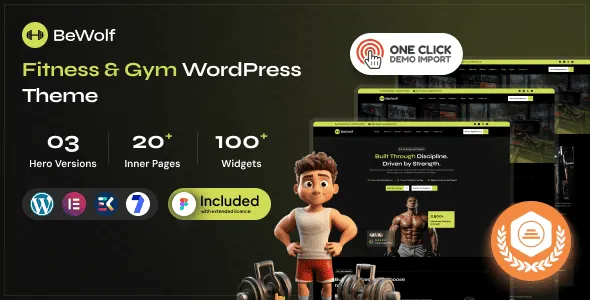
BeWolf | Fitness & Gym WordPress Theme
BeWolf | Fitness & Gym WordPress Theme is a website design solution for fitness centers, gyms, personal trainers, bodybuilding studios, strength training facilities, and wellness professionals who want to establish a professional online presence with WordPress. A well-designed fitness website helps businesses introduce their training programs, showcase their facilities, present trainer profiles, communicate membership information, and encourage prospective members to get in touch. BeWolf provides a potential starting point for creating a fitness-focused website that reflects a gym’s identity and helps visitors explore its services through an organized digital experience.
The fitness industry depends on strong communication, community engagement, and a clear presentation of available services. People searching for a gym often want to understand its training options, facilities, membership plans, class schedules, and location before deciding whether to visit. A suitable gym WordPress theme can help organize this information into dedicated sections that are easy to navigate on desktop and mobile devices. With appropriate customization, BeWolf can be considered for commercial gyms, boutique fitness studios, personal training businesses, bodybuilding clubs, functional training centers, and other fitness-related organizations.
WordPress provides a flexible content management system for creating pages, publishing articles, managing images, and maintaining website navigation. By combining the theme with original content, professional fitness photography, clear service descriptions, and compatible plugins where necessary, gym owners can develop a website that supports their business objectives. The exact layouts, customization tools, and available features should be verified through the current BeWolf demo and official documentation before installation.
What Is BeWolf Fitness & Gym WordPress Theme?
BeWolf is a WordPress theme positioned for fitness, gym, and exercise-related websites. It can be evaluated by businesses and professionals who need a website to introduce their training services, communicate their fitness philosophy, and make essential information accessible to potential members.
A fitness website has several important responsibilities. It should explain what the facility offers, help visitors understand the available training options, introduce relevant instructors, and provide convenient ways to ask questions or inquire about membership. A dedicated fitness website design can make these elements easier to organize than a generic layout that does not reflect the needs of the industry.
BeWolf offers a potential design foundation for presenting these details through a consistent visual identity. Depending on the available templates and configuration, a website may include a homepage, training program pages, trainer profiles, gym information, membership details, blog articles, and contact information.
The theme’s suitability depends on its actual capabilities and the requirements of the business. Before installation, review its current layouts, editing controls, responsive behavior, supported plugins, and documentation. Advanced functions such as class reservations, membership payments, automated scheduling, and customer account management may require separate plugins or external services.
Create a Professional Gym Website
A professional gym website should communicate the facility’s identity and make it easy for visitors to understand what makes the business relevant to their fitness goals. Clear content, strong imagery, consistent branding, and practical navigation can help establish a recognizable online presence.
BeWolf can be considered for a gym website that introduces its training environment, summarizes its services, highlights its instructors, and explains how prospective members can make contact. The final layout should reflect the facility’s size, audience, available equipment, training philosophy, and membership model.
A strength training gym may emphasize weightlifting equipment, coaching expertise, and resistance training programs. A boutique fitness studio might focus on group classes, personalized attention, and a welcoming community. A larger fitness center may need dedicated sections for cardio facilities, strength equipment, personal training, and group exercise options.
Professional presentation also depends on accuracy. Membership information, opening hours, facility photographs, instructor credentials, and contact details should reflect the real business. Replace placeholder content with relevant information before publishing the website.
A consistent design helps visitors move from learning about the gym to understanding its services and deciding whether to inquire. Each page should have a clear purpose and support the visitor’s next step.
Homepage Design for Fitness Businesses
The homepage is often the first introduction a potential member receives from a gym’s website. It should communicate the facility’s identity quickly and direct visitors toward useful information.
When configuring BeWolf, website owners can plan a homepage around the sections supported by the theme and the needs of their audience. Potential content areas include an introductory banner, training program summaries, facility highlights, trainer profiles, membership information, testimonials, and contact details.
The opening section should explain what the gym offers and whom it serves. A concise headline can communicate the main value of the facility, while supporting text introduces its approach to fitness and training.
Training summaries help visitors discover relevant services without reading every page. A gym offering several programs might feature strength training, personal coaching, functional fitness, and group exercise, provided these services are genuinely available.
Photographs can help visitors understand the facility’s atmosphere and equipment. Genuine images of the gym and its trainers are generally more informative than unrelated stock photography.
The homepage should not attempt to display every detail at once. Prioritize the most important information and provide links to dedicated pages for visitors who want to explore programs, trainers, membership options, or contact information.
Training Programs and Fitness Services
Dedicated training pages help gyms explain their services in greater detail. Rather than presenting every offering in one long section, a website can organize programs according to the goals, interests, and experience levels of its intended members.
BeWolf can be evaluated for a fitness website that presents services such as the following, depending on what the business actually provides:
- Strength training: Introduce resistance training facilities, available equipment, and coaching options.
- Personal training: Explain individual coaching services, session formats, and the process for making an inquiry.
- Bodybuilding: Present training facilities and coaching services intended for people interested in bodybuilding.
- Functional fitness: Describe exercises and training formats designed around practical movement and physical conditioning.
- Group fitness classes: Introduce instructor-led sessions and explain how visitors can learn about class availability.
- Cardio training: Highlight available cardiovascular equipment and relevant training facilities.
- Weight management support: Describe appropriate fitness services and professional guidance offered by qualified staff.
- Mobility and flexibility training: Explain relevant classes or coaching services where available.
- Athletic conditioning: Present sport-related conditioning programs offered by qualified trainers.
- Beginner fitness programs: Help new members understand how to get started and what support the facility provides.
These are examples of possible service categories rather than a list of guaranteed built-in theme features. Gym owners should publish only the programs they actually provide and ensure that health-related claims are accurate and appropriately qualified.
Each program page should explain the service, identify its intended audience, describe the available format, and provide a convenient way to ask questions. Clear information helps visitors determine whether a program matches their interests.
Personal Trainer Profiles and Coaching Expertise
Personal trainers play an important role in many fitness businesses. A dedicated trainer profile can help prospective members understand the instructor’s background, areas of expertise, qualifications, and coaching approach.
BeWolf can be considered for a website that introduces individual trainers through profile pages or suitable content sections, depending on the available layouts. Each profile may include a professional photograph, biography, relevant certifications, areas of focus, and a description of the services offered.
A trainer who specializes in strength training may highlight relevant experience and coaching methods. Another instructor may focus on beginner fitness, mobility, athletic conditioning, or group exercise. Profiles should reflect genuine qualifications and the services each professional is prepared to deliver.
Accurate trainer information helps visitors make informed decisions. Avoid exaggerated claims, unsupported performance guarantees, or credentials that cannot be verified.
For gyms with several instructors, consistent profile formatting can make the website easier to navigate. Visitors can compare relevant experience and identify a trainer whose approach suits their preferences.
If the business offers trainer bookings or recurring appointments, the website may need a compatible scheduling plugin or an external booking service. Confirm the required functionality before assuming it is included with the theme.
Responsive Design for Mobile Fitness Visitors
Many people search for gyms, training programs, and fitness services using smartphones. A responsive website helps visitors access essential information across mobile devices, tablets, laptops, and desktop computers.
BeWolf should be evaluated for responsive behavior using its current demo and installed version. Website owners should confirm that navigation, images, text, and interactive elements remain usable at different screen sizes.
Mobile visitors should be able to locate the gym’s address, phone number, opening hours, training options, and membership inquiry information without unnecessary effort. Buttons and form fields should be large enough to use comfortably, and text should remain readable without excessive zooming.
Responsive testing should cover more than the homepage. Program pages, trainer profiles, pricing information, blog articles, contact forms, and any embedded maps should also be reviewed.
Custom CSS, external widgets, and installed plugins can affect the layout. A design that appears correct on a desktop may need adjustments on a smaller screen, particularly when it contains large images or complex page sections.
Test the website after major changes and theme updates. Consistent mobile usability helps ensure that prospective members can explore the facility regardless of the device they use.
Membership Information and Pricing Pages
Membership information is often one of the most important parts of a gym website. Visitors may want to compare available plans, understand the services included, review opening hours, and determine how to join.
BeWolf can be evaluated for presenting membership information through dedicated pages or pricing sections, depending on its available templates. A gym might explain monthly memberships, longer-term packages, student options, day passes, or personal training packages if these are part of its actual business model.
Each plan should state its price, duration, eligibility requirements, and included services accurately. If taxes, joining fees, cancellation conditions, or other charges apply, explain them clearly where appropriate.
Avoid publishing pricing information that is outdated or incomplete. If rates vary by location, membership type, or promotional period, make those conditions understandable.
A clear call to action can invite visitors to request more information, schedule a facility visit, or contact the membership team. If the website needs online subscriptions or recurring payments, a compatible membership or e-commerce plugin may be required.
The theme should be assessed separately from any payment functionality. Confirm that the selected integrations support the required payment methods, security practices, and membership workflow before relying on them.
Class Schedules and Appointment Booking
Gyms that offer group classes or individual coaching may benefit from publishing a schedule that helps members understand when sessions are available.
A BeWolf-based website can provide a starting point for communicating class information, subject to the theme’s layout options and the functionality available through compatible integrations. Schedule details might include the class name, instructor, session time, duration, intended experience level, and booking instructions.
Clear scheduling information helps visitors plan their visits and understand the variety of sessions offered. If classes require advance registration, explain how members can reserve a place and what cancellation rules apply.
A static schedule can be sufficient for a small facility with a limited number of sessions. A busier gym may need a dedicated booking system that supports availability, registrations, cancellations, notifications, and instructor schedules.
Such functionality should not be assumed to be included with the theme. It may require a compatible scheduling plugin or external service, along with additional configuration.
Before publishing a booking workflow, test it from the visitor’s perspective. Check that session details are accurate, forms work properly, confirmation messages are delivered, and changes to class availability are reflected correctly.
Fitness Branding and Visual Customization
A recognizable brand helps a gym communicate its identity and distinguish its services from those of other fitness businesses. Website customization should create a consistent presentation that reflects the facility’s atmosphere and audience.
Depending on the theme’s available settings and supported editing tools, BeWolf may provide options for adjusting colors, typography, page layouts, imagery, and other design elements. Review the current documentation to confirm which customization controls are available.
A strength-focused gym may prefer bold typography and energetic photography, while a wellness-oriented fitness studio may choose a calmer visual style. A premium training facility may prioritize spacious layouts and carefully selected imagery, whereas a community gym may emphasize group activities and accessibility.
Consistency is more important than using numerous decorative effects. Select a practical color palette, establish heading and body text styles, and apply a recognizable approach to buttons and links.
Use photographs that accurately represent the facility, equipment, and training environment. Genuine images can help prospective members understand what to expect before visiting.
Before making major design changes, identify which options belong to the theme, the WordPress editor, or additional plugins. Keep a backup and consider testing extensive modifications in a staging environment.
SEO-Friendly Structure for Gym Websites
Search engine optimization can help people discover a gym website when looking for relevant fitness services. A suitable WordPress theme provides a foundation for organizing pages, but search visibility depends on content quality, technical configuration, competition, location, and other factors.
Start by creating clear pages for the gym’s main services. Each page should have a descriptive title, a logical heading structure, and useful information that addresses the needs of its audience.
For example, a gym offering personal training can create a dedicated page explaining its coaching services, training process, and inquiry options. A facility offering group exercise can provide accurate information about the classes it runs and how visitors can participate.
Use relevant search terms naturally within titles, headings, and body content. Avoid repeating the same phrase excessively or creating pages that provide little value beyond a keyword.
Descriptive URLs and internal links can connect related pages. A blog article about strength training may link to a relevant training program page when the connection is genuinely useful.
Image optimization also supports website performance. Use suitable file dimensions, compress large images, and add meaningful alternative text to informative visuals.
Compatible SEO plugins may assist with metadata, XML sitemaps, redirects, and other supported technical tasks. No theme can guarantee search rankings or a particular number of new members, so SEO should be treated as an ongoing process rather than a one-time installation task.
Local SEO for Gyms and Fitness Centers
Many gyms depend on people who live, work, or study within a practical distance of the facility. Local SEO can help prospective members discover a nearby fitness center and find the information they need before visiting.
A BeWolf website can include accurate business details such as the gym’s name, address, phone number, opening hours, and service information. Location-specific content should reflect the areas the business genuinely serves.
Keep the business information consistent across the website and relevant online listings. If the gym maintains a Google Business Profile, review its address, contact details, hours, photographs, and other information regularly.
Useful local content may describe the facility, available equipment, training programs, parking arrangements, or public transport access where applicable. These details help visitors determine whether the gym is convenient for their routine.
Avoid creating multiple near-identical location pages when the business does not have separate facilities or genuinely distinct local services. Every page should provide useful information rather than simply repeating geographic keywords.
Reviews and testimonials can contribute to a more informative online presence when they are genuine and published with appropriate permission. Do not fabricate customer experiences or make unsupported promises about fitness outcomes.
Fitness Blog and Content Marketing
A fitness blog can help gyms share useful information, explain training concepts, introduce programs, and maintain a connection with their audience. WordPress provides tools for publishing articles and organizing them into categories, making it possible to combine educational content with business pages.
BeWolf can be considered for a gym website that includes a blog, depending on the available templates and configuration. Articles may cover workout planning, exercise technique, training consistency, recovery, gym etiquette, and general fitness education.
For example, a gym might publish a beginner’s guide to using resistance equipment, explain how to prepare for a first training session, or introduce the differences between common workout formats. Content should remain accurate, practical, and appropriate for the intended audience.
Health and exercise information should be reviewed carefully. Avoid universal claims about weight loss, muscle growth, injury prevention, or medical outcomes. Individual needs vary, and content involving medical conditions or rehabilitation should be handled by appropriately qualified professionals.
A consistent publishing schedule is often more manageable than producing a large volume of low-quality articles. Focus on answering real questions and providing useful explanations.
Internal links can connect educational articles with relevant training pages, class information, and contact details. This gives readers a natural way to explore the gym’s services after reading an article.
Website Speed and Performance Optimization
Website performance affects how easily visitors can explore a gym’s services, especially when browsing on mobile devices. Large images, unnecessary scripts, and poorly configured plugins can slow down a website and create a frustrating experience.
The actual performance of a BeWolf website depends on the theme implementation, hosting environment, images, fonts, scripts, plugins, and external integrations. A theme alone cannot guarantee a specific loading speed.
Start by optimizing photographs and other media. Gym websites often use large images to showcase equipment, training spaces, and fitness activities, so selecting appropriate dimensions and compression settings is important.
Review installed plugins and remove unnecessary tools that duplicate existing functionality. Caching and image optimization solutions may help when selected and configured according to the website’s needs.
Test the homepage, program pages, membership information, trainer profiles, and contact forms. Different templates may perform differently, particularly when they contain large image sections or interactive components.
Repeat performance checks after major changes and updates. Regular monitoring can help identify oversized files, inefficient integrations, and other issues as the website grows.
Accessibility and User-Friendly Navigation
An accessible website helps visitors with different abilities and browsing preferences find and understand information. Clear headings, readable text, sufficient contrast, descriptive links, and well-labeled forms contribute to a better user experience.
When configuring BeWolf, use a logical heading hierarchy and ensure that text remains readable against its background. Important information should not be communicated through color alone.
Navigation menus should make essential pages easy to locate, including training programs, trainers, membership details, schedules, and contact information where applicable. Avoid unnecessarily complex menus that make the site difficult to explore.
Forms should provide clear labels and understandable error messages. Phone numbers and email addresses should be presented in a way that visitors can easily recognize and use.
Images that communicate important information should have suitable alternative text. Decorative visuals should not introduce unnecessary distractions for people using assistive technologies.
Accessibility depends on the theme, the website content, and the configuration of additional components. Automated checks can help identify issues, but manual keyboard testing and reviews across devices are also valuable.
Compatible Plugins and Additional Functionality
WordPress plugins can extend a gym website with features that may not be included in the theme itself. The right combination depends on the facility’s requirements and the capabilities already available in BeWolf.
A website owner may consider compatible plugins for contact forms, SEO, analytics, caching, security, backups, email subscriptions, or membership management. Class scheduling, appointment booking, and online payments may require additional extensions or external services.
Before installing a plugin, review its compatibility with the current WordPress version and theme, documentation, update history, support arrangements, licensing, and privacy practices.
Avoid installing several tools that perform the same function unless there is a clear reason. Too many overlapping plugins can increase maintenance work and create compatibility or performance issues.
After adding or updating an integration, test the relevant pages and user journeys. This is particularly important for membership inquiries, booking forms, payment workflows, navigation, and responsive layouts.
Choose integrations based on genuine business needs. A small gym may require only a straightforward website and contact form, while a larger fitness center may need a more extensive membership and scheduling system.
Security, Privacy, and Website Maintenance
A WordPress website requires ongoing maintenance to remain reliable and secure. Fitness businesses that collect membership inquiries, contact information, or other personal details should pay particular attention to data handling and access controls.
Use reputable hosting, enable HTTPS, maintain strong administrator credentials, and assign user permissions according to each person’s responsibilities. Keep WordPress, the theme, and compatible plugins updated, creating backups before significant changes.
Obtain themes and plugins from trustworthy sources, and remove unused components when appropriate. Review administrator accounts periodically and ensure that staff members have only the access they need.
If the website collects personal information through contact forms, membership inquiries, or booking integrations, publish an appropriate privacy notice and explain relevant data collection practices. Avoid requesting unnecessary sensitive information through general-purpose forms.
Regular backups provide a recovery option if an update or configuration change causes a problem. The restoration process should also be tested so the business understands how to recover the website if needed.
Maintenance should include checking forms, links, opening hours, membership information, class schedules, and trainer profiles. Keeping these details accurate helps prevent confusion and supports a dependable experience for prospective members.
Who Should Consider BeWolf Fitness & Gym WordPress Theme?
BeWolf may be worth evaluating for different businesses and professionals operating in the fitness industry.
Commercial gyms: Present the facility, equipment, training programs, membership information, and contact details.
Personal trainers: Introduce coaching services, professional qualifications, training approaches, and inquiry options.
Bodybuilding studios: Create a website focused on strength training, available facilities, and bodybuilding-related services.
Boutique fitness studios: Communicate a distinctive brand identity and introduce specialized exercise programs.
Functional fitness centers: Explain available training formats, instructor information, and class arrangements.
Sports conditioning facilities: Present relevant conditioning programs and coaching services for athletes where offered.
Group fitness providers: Share information about classes, instructors, schedules, and participation requirements.
Fitness entrepreneurs: Establish an online presence for a new gym, training business, or fitness-related service.
Multi-location fitness businesses: Organize information about individual facilities, subject to the theme’s capabilities and any required custom development.
The best choice depends on the project’s requirements. Before purchasing or installing the theme, review the current demo, available layouts, responsive behavior, customization options, plugin compatibility, licensing terms, and official documentation.
Tips for Building a Successful Gym Website with BeWolf
A successful gym website begins with a clear understanding of its audience and business objectives. Determine whether the main goal is to attract new members, explain training programs, introduce personal trainers, publish educational content, or support several related activities.
Prepare essential information before customizing every page. This may include the gym’s introduction, available services, membership details, trainer profiles, opening hours, location, and contact information.
Use genuine photographs that represent the facility and its training environment. Ensure that published images are appropriate for the business and that you have the necessary rights or permissions to use them.
Keep navigation straightforward and make important information easy to find. Each page should have a clear purpose and guide visitors toward a relevant next step, such as exploring a training program or contacting the gym.
Establish a consistent visual identity through colors, typography, imagery, and button styles. Replace all placeholder content with accurate information and review spelling, grammar, and contact details before launch.
Test the website across different devices and screen sizes. Check page speed, accessibility, navigation, inquiry forms, and any booking or payment integrations. If advanced functionality is required, confirm that the selected plugins work correctly with the theme.
Finally, create a maintenance plan that includes backups, software updates, performance monitoring, and periodic content reviews. A well-maintained website can continue to support the gym as its services and membership needs evolve.
Final Thoughts on BeWolf Fitness & Gym WordPress Theme
BeWolf | Fitness & Gym WordPress Theme is a potential starting point for gyms, fitness centers, personal trainers, bodybuilding studios, and other exercise-related businesses looking to establish a professional website with WordPress. Its fitness-focused positioning makes it relevant to projects that need to communicate training services, present facilities, introduce instructors, and provide convenient contact options.
A thoughtfully designed fitness website can combine clear service pages, consistent branding, responsive layouts, informative membership details, and useful educational content. Gym owners can organize the website around their actual offerings and help prospective members understand what to expect before contacting the business.
The final capabilities depend on the current theme release, its available templates, customization controls, WordPress compatibility, and any additional plugins used. Functions such as online membership payments, class booking, trainer scheduling, and automated membership management should be verified separately rather than assumed to be included.
Long-term success also depends on original content, local SEO, website performance, accessibility, security, and regular maintenance. A theme cannot guarantee search rankings, new memberships, or business growth, but it can provide a useful design foundation for a well-organized online presence.
For fitness businesses seeking a WordPress website solution, BeWolf is worth assessing against their branding preferences, service requirements, and technical needs. With appropriate customization and accurate information, a well-maintained website can support brand recognition, improve communication with prospective members, and make fitness services easier to explore online.