My Account
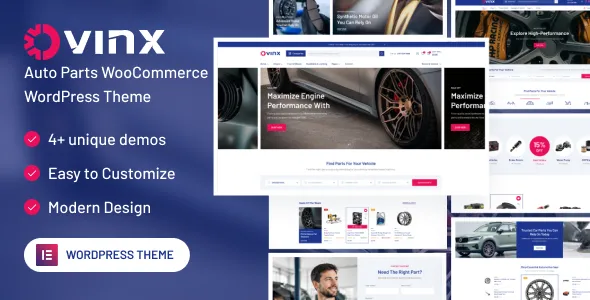
Ovinx – Auto Parts WooCommerce Theme
Ovinx – Auto Parts WooCommerce Theme is a website design solution for automotive retailers, spare parts dealers, vehicle accessory stores, and businesses looking to sell automotive products online through WordPress and WooCommerce. As online shopping continues to expand, automotive businesses need an eCommerce website that makes it easy for customers to discover products, compare options, understand compatibility, and complete purchases conveniently. Ovinx can be considered as a starting point for building an online auto parts store with a professional storefront and an organized shopping experience.
An automotive eCommerce website must do more than display product photographs and prices. Customers often need detailed specifications, vehicle compatibility information, brand details, and clear purchasing instructions before choosing a spare part. Whether your business sells car accessories, engine components, filters, brake parts, lighting products, batteries, tools, or maintenance supplies, a well-structured online store can help customers find relevant products and make informed buying decisions.
WooCommerce provides eCommerce functionality within WordPress, allowing store owners to manage products, categories, orders, and other aspects of an online shop. With suitable customization, Ovinx can serve as a foundation for presenting automotive inventory, organizing product listings, and supporting online sales. The final capabilities depend on the theme version, its documented features, the WooCommerce configuration, and compatible plugins.
What Is Ovinx – Auto Parts WooCommerce Theme?
Ovinx is an auto parts WooCommerce theme intended for automotive retailers and businesses that want to establish an online store for vehicle components and accessories. Its automotive eCommerce focus makes it relevant to stores selling products for cars, motorcycles, commercial vehicles, and other vehicle categories, depending on the business’s inventory.
A specialized automotive store benefits from a structure that helps customers browse products efficiently. Instead of presenting every item in a single list, a store can organize inventory into categories such as engine parts, braking systems, suspension components, electrical accessories, filters, tires, tools, and vehicle care products.
With an appropriate configuration, an Ovinx-based store can combine product listings with product details, pricing, shopping cart functionality, and checkout features supported by WooCommerce. Additional functionality may be available through compatible extensions, depending on the requirements and setup.
Before choosing the theme, review its current demo and documentation to verify its available layouts, product presentation options, supported WooCommerce version, and compatibility with any required plugins. This helps ensure that the theme suits your inventory and the purchasing experience you want to provide.
Build a Professional Online Auto Parts Store
An online auto parts store should make product discovery simple and provide the information customers need before placing an order. Buyers may search by product category, manufacturer, part number, vehicle type, or specific component, depending on how the store organizes its catalog.
Ovinx can be evaluated as a foundation for a professional automotive eCommerce website. The storefront can be planned around a homepage, product categories, individual product pages, shopping cart, checkout, customer information pages, and contact details, subject to the available theme layouts and WooCommerce configuration.
The homepage should introduce the store’s main product range and guide visitors toward relevant categories. Featured products, new arrivals, popular items, and promotional sections may help customers discover inventory when these elements are supported by the chosen setup.
A clear navigation structure is especially important for stores with large catalogs. Customers should be able to move from broad categories to specific product types without unnecessary steps.
The website should also provide accurate information about prices, availability, shipping, returns, and customer support. Clear purchasing information helps set expectations and creates a more dependable shopping experience.
Automotive Product Categories and Catalog Organization
An organized product catalog helps customers find relevant auto parts quickly. Automotive retailers may carry hundreds or thousands of items, so thoughtful categorization can improve usability and make inventory easier to maintain.
An Ovinx-based store can be planned around product categories that reflect the actual inventory. Depending on the products sold, categories may include:
- Engine components: Engine parts, gaskets, belts, and related replacement components.
- Brake system products: Brake pads, discs, related hardware, and selected braking accessories.
- Filters and fluids: Oil filters, air filters, cabin filters, and compatible vehicle maintenance supplies.
- Electrical components: Batteries, fuses, sensors, bulbs, and other automotive electrical products.
- Lighting and visibility: Headlights, tail lights, indicators, mirrors, and related accessories.
- Suspension and steering: Selected suspension components, steering parts, and replacement hardware.
- Exterior accessories: Wipers, protective accessories, trims, and other vehicle exterior products.
- Interior accessories: Seat covers, mats, organizers, and selected interior upgrades.
- Tools and maintenance equipment: Automotive tools and workshop supplies.
- Cleaning and care products: Vehicle cleaning products and detailing accessories.
The exact categories should match the products the business actually sells. Avoid creating unnecessary categories that contain few or no products, and use clear names that customers can understand.
Consistent categorization makes it easier to maintain the catalog as new products and brands are added.
Product Pages with Useful Automotive Information
Product pages play a major role in automotive eCommerce because buyers often need detailed information before selecting a replacement part or accessory. A useful product page should explain what the item is, which vehicles or applications it supports, and what customers should check before purchasing.
With WooCommerce and a suitable theme configuration, an Ovinx store can present product names, images, descriptions, prices, and other supported product information. Additional fields may be available through compatible plugins or custom development.
A product description should include relevant details such as the manufacturer, part number, material, dimensions, package contents, installation considerations, and other specifications where applicable. Not every product requires every field, so the information should reflect the item being sold.
Vehicle compatibility is particularly important. If a component fits only certain makes, models, engine variants, or production years, that information should be displayed accurately. Customers should not have to guess whether a part is suitable for their vehicle.
For products with safety implications, such as braking or steering components, provide precise specifications and refer customers to qualified installation guidance when appropriate. Clear product information can reduce confusion and help buyers make better purchasing decisions.
Vehicle Compatibility and Parts Search
Vehicle compatibility is one of the most important considerations for many auto parts stores. A component that fits one vehicle may not fit another, even when the vehicles share a manufacturer or model name.
An automotive store should make compatibility information easy to locate. Depending on the catalog and available integrations, the website may use vehicle make, model, year, engine type, trim, or part number to help customers identify suitable products.
Ovinx should be assessed alongside the current theme documentation to determine whether the required compatibility search or filtering tools are included or need to be added through a compatible extension.
A vehicle selection system may be particularly useful for stores selling large inventories of replacement parts. Customers can select their vehicle details and then browse products associated with that selection, provided the catalog contains reliable compatibility data.
Where a dedicated vehicle finder is not available, store owners can still improve usability through accurate product attributes, category filters, part numbers, and detailed descriptions.
Compatibility information must be maintained carefully. Incorrect fitment data can lead to returns, customer frustration, and potentially unsafe installations. Review manufacturer information and reliable supplier specifications before publishing fitment claims.
WooCommerce Shopping Cart and Checkout
WooCommerce provides the core eCommerce functions used to operate a WordPress online store. These functions can support product browsing, cart management, checkout, order processing, and related purchasing activities.
With a compatible configuration, Ovinx can be used to present an automotive catalog connected to WooCommerce’s shopping workflow. Customers can browse products, add eligible items to their cart, review their selections, and proceed through checkout using the payment methods configured by the store owner.
A clear checkout experience should show product names, quantities, prices, applicable shipping charges, taxes, and the final order total before the customer completes the purchase. Instructions should be easy to understand, and unnecessary steps should be avoided where possible.
Store owners should configure payment gateways according to their target market and business requirements. Available options depend on the country, provider, currency, and installed WooCommerce extensions.
Before launching the store, test the complete purchasing process, including successful payments, unsuccessful transactions, order confirmation messages, and inventory updates. The exact checkout presentation depends on the selected theme and WooCommerce configuration.
Product Filters and Store Navigation
Product filters can help customers narrow a large automotive catalog to items that match their requirements. Useful filtering options depend on the product type and the information maintained in the catalog.
An Ovinx store can be evaluated for the filtering and navigation features available in the current theme version. Additional filters may require compatible WooCommerce extensions.
Potential filters for an auto parts store include:
- Product category and subcategory.
- Manufacturer or brand.
- Price range.
- Product availability.
- Vehicle make and model, where reliable fitment data is available.
- Part type or product attributes.
- Product rating, when reviews are enabled.
- Technical specifications relevant to the product category.
Filters should be useful rather than excessive. For example, a cleaning product may need category, brand, and price filters, while a replacement component may require more specific compatibility information.
Clear category navigation and descriptive product labels also help customers understand the catalog. Regularly review filter options as inventory changes to avoid presenting irrelevant choices.
Homepage Design for Automotive Retailers
The homepage introduces the business and guides visitors toward products and important store information. For an automotive retailer, it should quickly communicate the product range and make common shopping tasks convenient.
An Ovinx-based homepage can be planned around sections that match the store’s needs and the theme’s supported components. Possible sections include:
- Main banner: Introduce the auto parts store and its primary product range.
- Product categories: Direct customers toward important automotive departments.
- Featured products: Highlight selected inventory or relevant promotions.
- New arrivals: Introduce recently added products when this section is supported.
- Popular products: Help customers discover frequently purchased items when reliable sales data is available.
- Brand selection: Present manufacturers or automotive brands carried by the store.
- Store benefits: Explain genuine policies such as shipping options, returns, or customer assistance.
- Maintenance and buying guides: Link to useful articles about selecting and caring for automotive products.
- Customer support: Provide clear access to contact information and purchasing assistance.
Not every store needs all these sections. A small retailer may benefit from a concise homepage focused on categories and product discovery, while a larger supplier may need additional navigation for different vehicle types or product departments.
The most effective homepage helps customers find what they need without distracting them with unnecessary promotional content.
Customization and Automotive Brand Identity
A professional auto parts store should have a consistent visual identity that reflects the business and its audience. Colors, typography, imagery, and layout choices influence how customers perceive the brand and navigate the store.
Depending on the available theme settings and compatible tools, Ovinx may be adaptable to different automotive retail styles. Review the current documentation to confirm which design elements can be customized directly and which may require additional tools or development.
A specialist performance parts store may use a different visual approach from a general replacement parts retailer. A commercial vehicle supplier may prioritize product categories and technical specifications, while an accessories store may emphasize product photography and lifestyle imagery.
Consistency is important across the homepage, category pages, product details, and checkout experience. Use readable typography, clear buttons, and relevant product photographs to make shopping straightforward.
Brand assets should be accurate and appropriately licensed. Avoid using manufacturer logos, product images, or promotional materials without the necessary rights. Original photography and reliable supplier assets can help present inventory clearly.
Before making major design changes, create a backup and consider testing adjustments in a staging environment.
Mobile-Friendly Automotive Shopping Experience
Many customers browse and purchase automotive products from smartphones. A mobile-friendly store should allow visitors to search the catalog, review product details, check compatibility, and complete purchases without unnecessary difficulty.
Ovinx should be evaluated for responsive behavior using its current demo and documentation. The installed website should also be tested on different screen sizes because product images, custom styling, plugins, and checkout extensions can affect the final experience.
Check that navigation menus remain usable, product images scale appropriately, text is readable, and buttons are easy to select. Product specifications should be organized so that customers can review essential information without struggling through an overcrowded layout.
The shopping cart and checkout process deserve particular attention. Form fields should be convenient to complete on mobile devices, and important order information should remain visible.
Responsive testing should cover the homepage, product categories, individual product pages, search results, cart, and checkout. Recheck the store after significant updates to maintain a consistent shopping experience.
Search Engine Optimization for Auto Parts eCommerce
Search engine optimization can help customers discover automotive products through relevant searches. A WooCommerce theme provides the storefront foundation, but search visibility also depends on content quality, product data, technical performance, competition, and other factors.
For an Ovinx store, each important product should have a unique and descriptive title, accurate specifications, and useful original content. Product category pages should explain the types of items they contain rather than relying exclusively on product thumbnails.
Useful SEO practices include:
- Writing descriptive product titles and meta descriptions.
- Creating unique product descriptions where practical.
- Organizing categories and subcategories logically.
- Using clear, descriptive URLs.
- Adding internal links between related products and categories.
- Providing suitable alternative text for informative images.
- Optimizing product image sizes and page loading performance.
- Checking indexing, canonical settings, and XML sitemaps.
- Reviewing broken links and duplicate product pages.
- Using a compatible SEO plugin when additional controls are needed.
Product descriptions should naturally include relevant terms such as the component type, manufacturer, part number, or vehicle application when these details are accurate. Avoid repeating keywords excessively or adding compatibility claims that have not been verified.
No theme can guarantee a particular search ranking or sales volume. Sustainable eCommerce SEO combines technical quality, accurate product data, useful content, and a dependable customer experience.
Content Marketing for Automotive Stores
Content marketing can help auto parts retailers answer customer questions, explain product differences, and provide useful maintenance information. WordPress blogging tools can support articles alongside WooCommerce product and category pages.
A retailer might publish buying guides that explain how to select a compatible replacement part, compare product specifications, or understand common maintenance requirements. Articles can also explain the differences between product categories and describe what customers should check before ordering.
For example, a guide about choosing an oil filter could explain why vehicle specifications and manufacturer recommendations matter. A brake component guide could discuss the importance of correct fitment and qualified installation. These articles should provide general information and encourage customers to verify vehicle-specific requirements.
Content should be accurate, original, and relevant to the store’s inventory. Avoid presenting general guidance as a substitute for professional automotive inspection or manufacturer instructions.
Internal links can connect articles to relevant product categories and compatible items. This gives readers a convenient path from learning about a product to exploring the store’s inventory.
A manageable publishing schedule and regular content reviews help keep the information useful as products and recommendations change.
Product Images, Specifications, and Inventory Management
Accurate product data is essential for a successful automotive eCommerce store. Customers need to know what they are buying, whether the product fits their requirements, and what is included in the package.
WooCommerce supports product management through the WordPress administration area. Depending on the store’s configuration and installed extensions, products can be organized with categories, attributes, variations, stock information, pricing, and other relevant fields.
Product images should clearly represent the actual item. Use appropriate angles and provide additional images when they help customers understand dimensions, connectors, mounting points, finishes, or other important details.
Descriptions should include reliable specifications, part numbers, manufacturer information, package contents, and compatibility details where relevant. If products have different sizes, variants, or vehicle applications, make those distinctions clear.
Inventory information should be maintained regularly. Incorrect stock status or outdated product information can lead to order cancellations and customer dissatisfaction.
For larger catalogs, store owners may benefit from a consistent product import and update process. Any automated inventory integration should be tested carefully to ensure that product names, prices, stock quantities, and specifications remain accurate.
Shipping, Returns, and Customer Support
Automotive products vary considerably in size, weight, packaging requirements, and delivery considerations. A dependable store should explain shipping policies and customer support procedures before customers place an order.
An Ovinx-based store can present these details through dedicated information pages, product notes, checkout messages, and other supported content areas. The exact implementation depends on the theme and WooCommerce setup.
Shipping information should explain the service areas, estimated delivery timeframes, applicable charges, and any restrictions that affect the products being sold. Heavy components, fragile items, and products with special handling requirements may need specific arrangements.
A clear returns policy should describe the conditions under which products can be returned, the information customers need to provide, and how incorrect or damaged orders are handled. Policies should comply with applicable laws and accurately reflect the business’s actual practices.
Customer support information should be easy to locate. A contact page can explain how customers can ask questions about product specifications, compatibility, delivery, and orders.
Clear policies help establish realistic expectations and can reduce avoidable confusion after a purchase.
Payment Options and Customer Trust
A trustworthy checkout experience is essential for an automotive eCommerce business. Customers should understand the payment methods available and feel confident that their order details are being handled appropriately.
WooCommerce supports payment integrations through compatible gateways. The appropriate options depend on the store’s country, currency, business requirements, and selected provider.
Before enabling a payment method, review its transaction fees, supported markets, settlement process, documentation, and security requirements. Clearly display the accepted payment options and any relevant checkout conditions.
The website should use HTTPS and follow appropriate security practices. Store owners should avoid collecting or storing sensitive payment information outside approved systems.
Trust can also be supported through accurate product information, transparent shipping and return policies, reliable contact details, and clear order confirmations. Genuine customer reviews may provide additional context when review functionality is enabled and feedback is collected appropriately.
Test the checkout process thoroughly before launch, including successful and unsuccessful transactions, order notifications, and refunds where applicable.
Website Performance and Speed Optimization
An auto parts store may contain extensive product catalogs, multiple images per product, filtering tools, and additional eCommerce scripts. These elements can affect loading performance if they are not managed carefully.
The performance of an Ovinx website depends on the theme implementation, hosting environment, product images, plugins, scripts, and WooCommerce configuration. A responsive design does not automatically guarantee fast loading.
Start by optimizing product images and using appropriate dimensions. Large images should retain sufficient detail without using unnecessarily large files. Review unnecessary scripts, widgets, and integrations that may delay page rendering.
Caching and other performance tools may help depending on the store’s setup, but they should be configured carefully to avoid interfering with cart, checkout, stock, or customer-specific information.
Test the homepage, category pages, search results, product details, cart, and checkout. Large catalogs and complex filtering tools may require additional attention.
Regular monitoring helps identify performance problems introduced by new products, plugins, or design changes. A faster and more reliable store makes it easier for customers to browse inventory and complete purchases.
Security and Ongoing Store Maintenance
An automotive eCommerce website handles product information, customer details, and order records, so regular maintenance is important. A professional storefront needs both a reliable shopping experience and appropriate technical safeguards.
Use reputable hosting, enable HTTPS, choose strong administrator passwords, and assign user roles according to each person’s responsibilities. Keep WordPress, WooCommerce, the theme, and compatible plugins updated after checking compatibility and creating backups.
Install extensions from trustworthy sources and remove unused components when appropriate. Backups should be stored securely, and the store owner should understand how to restore them if an update or technical problem causes disruption.
Regularly review stock information, prices, product descriptions, shipping settings, payment integrations, and order notifications. Test the checkout process after significant updates to ensure that customers can still place orders successfully.
Monitor for broken links, outdated policies, and incorrect product information. A consistent maintenance routine helps protect the store’s reliability and supports customer confidence.
Who Should Use Ovinx – Auto Parts WooCommerce Theme?
Ovinx can be evaluated by businesses that want to sell automotive products through a WordPress and WooCommerce storefront.
Auto parts retailers: Organize replacement components and automotive accessories into a searchable online catalog.
Car accessory stores: Present interior accessories, exterior products, lighting, and other vehicle additions.
Spare parts dealers: Display manufacturer information, part numbers, product specifications, and available inventory.
Automotive tool suppliers: Sell selected workshop tools, maintenance equipment, and related supplies.
Motorcycle parts stores: Organize motorcycle components and accessories where the product catalog and theme configuration support the intended use.
Vehicle maintenance suppliers: Offer filters, fluids, cleaning products, and other maintenance-related items.
Performance parts businesses: Present compatible upgrades and specialist automotive components with accurate technical information.
Automotive eCommerce startups: Establish an online storefront for a focused range of automotive products.
Multi-brand auto parts shops: Organize inventory by manufacturer, category, and other useful product attributes.
The suitability of the theme depends on the business’s catalog, required integrations, and purchasing workflow. Before selecting Ovinx, review its current demo, documentation, available layouts, WooCommerce compatibility, and support for any required vehicle compatibility or product filtering tools.
Tips for Building a Successful Online Auto Parts Store with Ovinx
A successful auto parts store begins with a clear product strategy. Identify the vehicle types, customer groups, and product categories the business intends to serve. This helps determine how the catalog should be organized and which product information customers will need.
Prepare accurate product data before uploading inventory. Use consistent titles, manufacturer details, part numbers, images, prices, stock information, and compatibility specifications. Verify fitment details against reliable sources rather than relying on assumptions.
Organize the navigation around customer needs. Product categories should use familiar terms, while search and filtering options should help buyers narrow the catalog efficiently. If the store serves multiple vehicle types, make those distinctions clear.
Create transparent shipping, returns, and customer support policies. Test payment methods, order confirmations, inventory updates, and the complete checkout process before accepting live orders.
Optimize product images, test the website on mobile devices, and review page speed. Make sure customers can read important specifications and find compatibility information without difficulty.
Finally, maintain the store regularly. Update prices and stock quantities, review product information, install compatible updates carefully, and keep backups available. A well-maintained catalog and dependable purchasing process help support a better customer experience.
Final Thoughts on Ovinx – Auto Parts WooCommerce Theme
Ovinx – Auto Parts WooCommerce Theme is a potential option for automotive retailers, spare parts dealers, vehicle accessory stores, and businesses looking to establish an online automotive shop with WordPress and WooCommerce. Its intended focus makes it relevant to projects that need an organized product catalog, clear automotive product presentation, and an eCommerce purchasing workflow.
A well-planned store can combine product categories, detailed descriptions, accurate vehicle compatibility information, shopping cart functionality, payment options, and customer support resources. These elements help customers discover relevant products and understand important purchasing details before completing an order.
The final capabilities depend on the theme version, its documented features, the WooCommerce configuration, and compatible plugins. Reviewing the current demo and documentation before installation is important, particularly if the store requires advanced product filters, vehicle selection tools, or inventory integrations.
Long-term store performance also depends on accurate product data, search optimization, mobile usability, page speed, secure transactions, and regular maintenance. A theme alone cannot guarantee search rankings or sales, but it can provide a useful foundation for building a professional automotive eCommerce website.
For businesses planning to sell car parts and accessories online, Ovinx is worth evaluating as part of a broader WooCommerce strategy. With reliable product information, clear navigation, transparent policies, and a convenient checkout experience, an auto parts store can better serve customers and support sustainable online business growth.