My Account
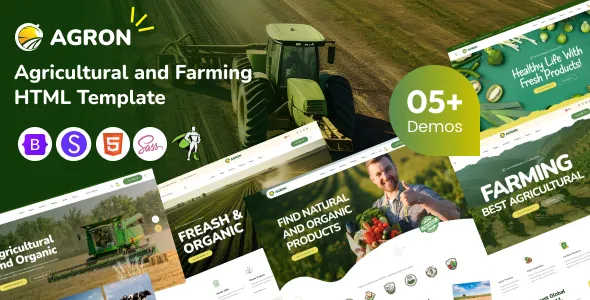
Agron – Agriculture & Organic Farm HTML Template
Agron – Agriculture & Organic Farm HTML Template is a website design solution for agricultural businesses, organic farms, farming communities, food producers, and companies working in the agriculture industry. Designed as a starting point for creating an online presence, an agriculture HTML template helps businesses present their services, introduce their products, share information about farming practices, and communicate with customers through a structured website. Agron can be considered for projects that need an agriculture-focused visual identity and a professional way to showcase farming activities, organic products, and agricultural services.
The agriculture industry includes a wide range of businesses, from small family-owned farms and organic food producers to agricultural suppliers, horticultural businesses, and commercial farming operations. A well-organized website can help these organizations explain what they offer, communicate their values, present their products, and make it easier for potential customers to contact them. With a suitable page structure and relevant content, a farm website can also share information about cultivation methods, seasonal produce, sustainable agriculture, and the importance of responsible food production.
Agron – Agriculture & Organic Farm HTML Template provides a front-end foundation that developers and website owners can evaluate for agriculture-related projects. As an HTML template, it can be customized through its available HTML, CSS, JavaScript, and other included assets, depending on the product’s actual structure. Businesses can adapt the design to their branding, content, and objectives while integrating any additional functionality required for their website. Before implementation, users should review the current demo and documentation to confirm the included layouts, features, dependencies, and compatibility requirements.
What Is Agron – Agriculture & Organic Farm HTML Template?
Agron – Agriculture & Organic Farm HTML Template is an agriculture-oriented website template intended for creating websites associated with farming, organic food, agricultural services, and related industries. HTML templates provide the visual and structural elements of a website, allowing developers to customize page layouts and content without building the entire front-end design from scratch.
An agriculture website needs to communicate practical information clearly. Visitors may want to learn about a farm’s products, understand its cultivation practices, discover available services, explore its background, or find contact details. A suitable template can help organize this information into dedicated pages and visually consistent sections.
Agron can be evaluated for websites belonging to organic farms, agricultural businesses, food producers, nurseries, gardening services, horticulture companies, and farming cooperatives. The final result depends on the layouts and components available in the selected version, together with the content and customizations applied during development.
Unlike a complete content management system, a standard HTML template does not automatically provide a dashboard for managing content, a database, or a server-side product management system. If the website requires frequently updated product listings, customer accounts, online payments, or dynamic inventory, developers will need to connect suitable backend services or integrate an appropriate content management system.
Website Design for Modern Agriculture Businesses
Agriculture businesses need websites that reflect their identity while making information accessible to different audiences. A farm website may serve local customers, wholesale buyers, restaurants, retailers, distributors, or people interested in organic food and sustainable farming.
Agron can serve as a design foundation for presenting an agriculture business in a structured and visually coherent way. Developers can adapt its available sections to introduce the organization, highlight agricultural services, showcase farm products, and explain the business’s approach to cultivation and food production.
A strong website begins with a clear message. Visitors should quickly understand what the farm produces, which services it provides, and how they can make an inquiry. Relevant photographs, concise descriptions, and logical navigation can support this goal.
For example, an organic vegetable farm may prioritize seasonal produce, cultivation practices, and purchasing information. An agricultural supplier may focus on its product categories, service coverage, and business contact details. A horticulture company could emphasize plant varieties, gardening services, and landscape-related projects.
The design should support the needs of the intended audience rather than simply reproduce a generic farming layout. By replacing demonstration content with accurate business information, Agron can be adapted to create a website that communicates a farm’s unique identity.
Ideal for Organic Farms and Natural Food Producers
Organic farming businesses often need to explain how they grow, source, or handle their products. Customers may be interested in the farm’s growing methods, product availability, seasonal harvests, and approach to environmental responsibility.
Agron can be considered for an organic farm website that presents its produce, describes its agricultural practices, and introduces the people behind the business. Dedicated pages can help explain the farm’s background, cultivation methods, available products, and purchasing options.
An organic vegetable producer could use its website to showcase leafy greens, seasonal vegetables, fruits, herbs, and other produce. A natural food business might introduce its product range and explain how customers can place orders or locate retail partners.
Content should remain accurate and specific. Businesses should only claim organic certification when they hold the relevant certification and should describe production methods honestly. Clear information about product availability, sourcing, and handling can help customers make informed decisions.
A well-organized organic farm website can also publish educational articles about soil health, crop rotation, composting, seasonal planting, and responsible resource use. These resources may help visitors understand the farm’s work while providing useful content for search engine discovery.
Agriculture Company and Farming Business Websites
Agricultural companies often provide more than farm produce. Their activities may include crop cultivation, seed distribution, agricultural consulting, irrigation services, farm equipment, crop management, and other industry-related solutions.
Agron can be evaluated for businesses that need to present multiple agriculture-related services through a single website. The available page layouts can be customized to introduce the organization, explain its services, present project information, and provide convenient contact options.
A commercial farm may need pages explaining its crop varieties, production capabilities, and supply arrangements. An agricultural consultancy could focus on its areas of expertise, professional experience, and consultation process. A farm services company may need to explain the work it performs and the locations it serves.
Each service should have a clear description that explains its purpose and intended audience. If the company provides specialized services, supporting photographs, process explanations, and relevant qualifications can help visitors understand its capabilities.
Businesses should avoid making unsupported claims about crop yields, productivity improvements, or environmental outcomes. Accurate descriptions and verifiable information provide a stronger foundation for a credible agricultural website.
Responsive Layout for Desktop and Mobile Users
Visitors may discover an agriculture business through a mobile search, browse its website on a tablet, or review detailed service information from a desktop computer. A responsive design helps maintain usability across different screen sizes.
Agron’s responsive behavior should be verified through its current demo and documentation. Developers should confirm how the included layouts adapt to mobile devices and whether navigation, images, text, and interactive elements remain usable at different viewport sizes.
For mobile visitors, the most important information should be easy to find. Headings need to remain readable, buttons should be comfortable to tap, and contact details should not be hidden behind unnecessarily complicated navigation. Images should fit the available screen space without creating excessive horizontal scrolling.
Agricultural websites often use large photographs of fields, crops, machinery, produce, and farming activities. These visuals can strengthen the website’s presentation, but they should be optimized to avoid slowing down page loading.
Testing should cover the homepage, service pages, product sections, galleries, blog articles, and contact forms. A page that appears attractive on a desktop may require adjustments when viewed on a smaller device. Developers should also retest responsive behavior after adding custom styles or third-party components.
Homepage Design and Agriculture Content Presentation
The homepage is often the first point of contact between a farm and its potential customers. It should explain the business’s primary offering and help visitors navigate to the most relevant information.
Agron can be adapted to present an introductory banner, an overview of the farm, featured agricultural products, service summaries, farming information, and contact opportunities, depending on the components included in the template.
A strong introductory section should communicate what the business does and why visitors may be interested. For an organic farm, this could mean introducing its produce and cultivation approach. For an agricultural service provider, the opening message could explain its main services and target customers.
Supporting sections can provide more detail. Product highlights may introduce available produce, while service summaries can direct visitors to dedicated pages. An about section can explain the farm’s history and working practices, and a contact section can help visitors make inquiries.
The homepage should remain focused on the audience’s needs. Adding too many unrelated sections can make the website harder to navigate. A small farm may need a simple presentation of its products and contact information, while a larger agricultural organization may require more extensive navigation and service descriptions.
Showcase Farm Products and Seasonal Produce
Product presentation is an important part of many agriculture websites. Visitors may want to learn about the fruits, vegetables, grains, herbs, plants, seeds, or other agricultural products available from a business.
Agron can be considered for creating visually organized product sections that introduce different categories of farm produce. The actual product layouts and available components should be checked in the current template demo.
Each product description should include relevant information, such as the product name, variety, season, availability, packaging, or purchasing method where applicable. Good-quality photographs can help visitors understand what the business offers and make the website more informative.
Seasonal availability is especially important for farms that sell fresh produce. Instead of displaying outdated product information, website owners should update their listings according to harvest schedules and current stock.
If customers need to purchase products online, the website will require a suitable e-commerce solution or custom integration. A static HTML product section does not automatically process orders, maintain inventory, or accept payments. Developers should choose a secure solution that matches the business’s sales model.
Sustainable Agriculture and Eco-Friendly Farming
Sustainable agriculture is an important topic for farms and agricultural businesses seeking to communicate their approach to land management, resource use, and production practices. A website can explain these activities and help visitors understand how the organization operates.
Agron can be adapted to present information about relevant farming practices, such as crop rotation, composting, soil conservation, efficient irrigation, responsible fertilizer use, and biodiversity management, when these practices genuinely apply to the business.
A farm may use educational sections to explain how it manages soil, reduces unnecessary waste, or approaches water conservation. Photographs and detailed descriptions can provide context and help visitors understand the processes involved.
Environmental claims should be specific and supportable. Terms such as sustainable, eco-friendly, and chemical-free can have different meanings depending on the context, so businesses should avoid using them as vague promotional statements without explaining the underlying practices.
An informative agriculture website can also publish articles about soil health, seasonal cultivation, water-efficient farming, and responsible land management. These topics may help educate customers while giving the business additional opportunities to answer questions relevant to its audience.
Farming Services and Agricultural Solutions
Agricultural service providers need a clear way to explain their expertise and help potential customers determine whether a service meets their needs.
Agron can be evaluated for businesses offering farm management, crop consulting, irrigation installation, soil testing, horticulture, agricultural machinery services, nursery operations, or other related activities. Dedicated service pages can describe each offering and explain how interested customers can make contact.
A soil testing company might explain its testing process and the types of information its reports provide. An irrigation provider could describe system installation, maintenance, and water management services. A crop consultancy may outline its advisory process and the information farmers should prepare before a consultation.
Each page should answer practical questions: Who is the service intended for? What problem does it address? What does the process involve? Which locations are served? What information is needed to request assistance?
Clear service descriptions help visitors understand the business without relying on broad or exaggerated claims. Genuine project photographs, relevant qualifications, and accurate descriptions can provide additional context.
About Us, Farm Story, and Company Information
An about page gives an agricultural business an opportunity to explain its background, values, experience, and operations. Visitors may want to know who manages the farm, what it produces, how long it has operated, and what makes its approach distinctive.
Agron can be customized to include an about section or dedicated company page, depending on the available layouts. Businesses can use this space to describe their history, introduce team members, explain their agricultural activities, and present their mission.
For a family-owned farm, the page might explain how the business developed and how its operations have changed over time. A commercial agricultural company could introduce its facilities, service areas, production capabilities, and professional team.
Authentic content is more useful than generic promotional statements. Specific information about the business’s work, experience, and operating practices helps visitors understand what it actually does.
If the company uses certifications, professional memberships, or quality standards to demonstrate its credentials, those details should be accurate and current. Photographs should represent the actual business whenever possible rather than create a misleading impression of its facilities or activities.
Agriculture Blog and Educational Content
A blog can help agricultural businesses share knowledge, answer customer questions, and publish timely updates. WordPress is not required for every blog; an HTML template can also be used as the front-end foundation for blog pages, provided the developer creates or integrates the necessary content management process.
Agron can be considered for an agriculture website that includes educational articles, farm updates, seasonal announcements, and information about farming practices. The exact blog layouts and article components depend on the supplied version.
Potential article topics include seasonal planting guides, soil preparation, crop rotation, organic gardening, irrigation planning, composting, pest management, and post-harvest handling. Businesses can also publish updates about new products, harvesting schedules, farm events, and agricultural services.
Useful articles should answer specific questions and provide information that is relevant to the intended audience. A farming business serving local customers may focus on regional crops, seasonal conditions, and local purchasing options.
Consistent publishing can support a broader content strategy, but quality should take priority over article volume. Content should be original, accurate, well organized, and easy to understand. Where technical agricultural advice is involved, claims should be reviewed carefully and supported by reliable expertise.
SEO-Friendly Structure for Agriculture Websites
Search engine optimization helps search engines understand website content and helps potential customers discover relevant pages. An agriculture HTML template can provide a visual starting point, but search performance also depends on content quality, technical implementation, competition, and the website’s overall reputation.
A useful SEO strategy begins with a clear page structure. The homepage should explain the business, while dedicated pages can target individual services, product categories, or agricultural topics. Each page should have a descriptive title, a logical heading hierarchy, and content that answers the needs of its intended audience.
For example, an organic vegetable farm may create pages for seasonal produce, farm delivery, and cultivation practices. An agricultural supplier could organize its website around the different products and services it provides.
Relevant internal links can connect related pages. A blog article about crop management might link to a relevant agricultural service, while a product page can direct visitors to purchasing information or contact details.
Image optimization is also important. Use descriptive file names, suitable image dimensions, compressed formats, and meaningful alternative text where appropriate. Avoid adding keywords to image descriptions when they do not accurately describe the image.
Developers should also check page speed, mobile usability, indexing accessibility, metadata, canonical URLs where needed, and broken links. An HTML template does not guarantee rankings, so SEO work should focus on delivering useful content and maintaining a technically sound website.
Local SEO for Farms and Agricultural Businesses
Local search visibility can be valuable for farms, nurseries, agricultural suppliers, and service providers that work within a defined geographic area. Potential customers may search for local produce, nearby farms, plant nurseries, irrigation services, or agricultural consultants.
Agron can be customized to communicate the business’s service area and local identity. Relevant pages can include the business address where appropriate, operating hours, contact information, delivery coverage, and directions for visiting the farm or office.
Local content should reflect the business’s actual location and services. An agricultural supplier that serves several districts can explain its coverage area, while a farm selling directly to consumers can provide accurate collection or delivery details.
Businesses should maintain consistent contact information across their website and relevant business listings. A properly maintained business profile, genuine customer reviews, and accurate location details can complement the website’s local SEO strategy.
Avoid creating repetitive location pages that provide no meaningful information. Each page should help visitors understand the services available in that area and how to contact the business.
Performance and Image Optimization
Agriculture websites often rely on photography to communicate the quality of produce, the appearance of farmland, and the nature of agricultural services. However, large image files can increase loading time and create a poor experience for visitors using slower connections.
The performance of an Agron-based website will depend on the supplied assets, hosting environment, CSS, JavaScript, external resources, and any additional functionality installed during development. The template itself does not guarantee a particular performance score.
Developers should resize images to suit their display dimensions and use efficient formats where supported. Compression can reduce file sizes while preserving sufficient visual quality. Images that appear far below the initial viewport may benefit from lazy loading when implemented appropriately.
Unused scripts, unnecessary animations, and external widgets should be reviewed for their impact on loading performance. Developers should also avoid loading multiple libraries that perform the same function without a clear reason.
Testing should include the homepage, product pages, galleries, articles, and contact forms. Tools that measure page performance can help identify oversized images, render-blocking resources, and other potential problems.
Customization and Brand Identity
Every agriculture business has its own identity. A family farm, a commercial agricultural supplier, and an organic food brand may require different visual styles and messaging, even when they operate in the same industry.
Agron can be customized according to the styling options and source files included with the selected version. Developers should review the template’s structure before changing colors, typography, spacing, imagery, and page layouts.
A farm focused on fresh produce may use natural photography and a clean presentation. An agricultural technology company may prefer a more structured layout that emphasizes equipment, services, and technical information. A nursery could prioritize plant imagery and product categories.
Brand consistency should extend across the website. Headings, buttons, navigation, colors, and image treatments should follow a coherent visual system. Content should also use a consistent tone that reflects the business’s audience and professional identity.
Before extensive customization, keep a backup of the original files and document significant changes. Test the website after modifications to make sure that the responsive layout and interactive components continue to work correctly.
HTML Template Flexibility and Integration
An HTML template provides front-end files that developers can adapt to different website projects. Agron can be evaluated for use as a standalone static website or as a starting point for integration with a suitable content management system or backend application, depending on its structure and license.
For a simple farm website, developers may be able to edit HTML pages and publish them on compatible web hosting. For a website that requires frequent product updates, news publishing, or staff-managed content, integrating a content management system may provide a more practical workflow.
A business that needs online ordering may require an e-commerce platform, payment gateway, order management, and inventory functionality. These features should be added through appropriate integrations rather than assumed to be part of the HTML template.
Developers should review the included file structure, dependencies, license terms, and documentation before choosing an implementation approach. Any external libraries should be checked for compatibility and maintenance requirements.
The best solution depends on the site’s expected complexity, update frequency, budget, and technical resources. A simple static implementation may be sufficient for a small informational website, while a larger agricultural business may need a more comprehensive system.
Accessibility and User-Friendly Navigation
A successful agriculture website should make important information easy to locate and understand. Visitors may have different levels of technical experience and may access the website using different devices or assistive technologies.
When customizing Agron, use logical heading structures, descriptive link text, readable font sizes, and sufficient color contrast. Form fields should have clear labels, while interactive elements should be identifiable and usable through appropriate keyboard controls.
Navigation should prioritize the pages visitors need most. A farm website might include Home, About, Products, Services, Blog, and Contact, while an agricultural service provider may need more detailed service categories.
Images should include meaningful alternative text when they communicate important information. Decorative images should be handled appropriately so they do not create unnecessary noise for assistive technology.
Contact forms should provide clear instructions and understandable error messages. Developers should test the website with keyboard navigation and review important pages manually, rather than relying exclusively on automated accessibility tools.
Who Should Use Agron – Agriculture & Organic Farm HTML Template?
Agron may be suitable for different types of agriculture-related projects, depending on the available layouts, customization options, and technical requirements.
Organic farms: Present produce, describe growing practices, and provide information about product availability.
Agricultural companies: Introduce company services, production capabilities, and business information through a structured website.
Fruit and vegetable farms: Showcase seasonal harvests and explain purchasing, collection, or delivery options.
Nurseries and horticulture businesses: Present plants, gardening products, cultivation services, and related information.
Agricultural suppliers: Organize product categories and provide clear pathways for business inquiries.
Farm consultants: Explain advisory services, areas of expertise, and consultation procedures.
Sustainable farming organizations: Share educational content about soil management, water conservation, and responsible agricultural practices.
Food producers: Introduce farm-based food products and communicate relevant sourcing or production information.
Gardening and landscaping businesses: Present services, project photographs, and contact information.
Agricultural startups: Establish an online presence that introduces their business model, services, or products.
The final suitability of Agron depends on the actual requirements of the project. Review the demo, documentation, responsive behavior, and available components before making a purchase or beginning development.
Best Practices for Building a Website with Agron
A successful agricultural website begins with a clear understanding of the business and its audience. Before customizing the template, identify the main purpose of the website and determine which information visitors need most.
Prepare accurate content for the homepage, about page, product or service pages, and contact section. Use genuine photographs where possible and make sure that all product descriptions, availability details, and business information are current.
Keep navigation simple and group related information logically. Make the most important actions easy to find, whether that means requesting a quotation, asking about produce, booking a service, or contacting the farm.
Review the website on mobile devices and desktop screens. Check page speed, image sizes, links, form behavior, and readability. If additional plugins or scripts are installed, test the affected pages to identify possible compatibility issues.
Create an SEO plan based on relevant agricultural topics and the questions potential customers ask. Write descriptive page titles, organize headings logically, connect related pages through internal links, and publish helpful original content.
Finally, maintain the website after launch. Update seasonal product information, verify contact details, monitor performance, review security requirements, and keep the underlying software and dependencies maintained where applicable.
Final Thoughts on Agron – Agriculture & Organic Farm HTML Template
Agron – Agriculture & Organic Farm HTML Template is a potential website design foundation for farms, organic food producers, agricultural companies, nurseries, horticulture businesses, and other organizations working in the agriculture industry. Its agriculture-focused positioning makes it worth evaluating for projects that need to introduce products, explain services, present farming information, and establish a professional online presence.
A well-planned agriculture website can combine clear navigation, responsive layouts, useful product information, authentic photography, educational content, and accessible contact options. These elements can help visitors understand the business and find the information they need.
The final capabilities of an Agron-based website depend on the selected template version, its documented components, the customizations made during development, and any additional integrations. Online ordering, dynamic content management, user accounts, and other advanced features may require a separate platform or custom development.
Before using the template, review its current demo, documentation, licensing terms, and compatibility requirements. With accurate content, thoughtful customization, appropriate SEO practices, responsive testing, and ongoing maintenance, Agron can serve as a useful starting point for creating an informative and professional agriculture website.