My Account
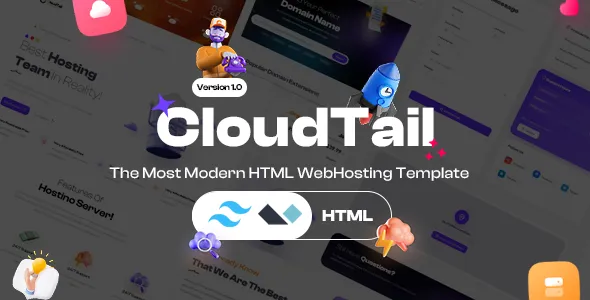
CloudTail | Tailwind Modern Complete Web Hosting Template
CloudTail | Tailwind Modern Complete Web Hosting Template is a modern website template designed for web hosting companies, cloud service providers, domain registration businesses, server management providers, and technology companies that want to establish a professional online presence. Built around a contemporary web design approach using Tailwind CSS, CloudTail offers a potential foundation for creating a visually consistent website that presents hosting plans, explains technical services, communicates business information, and guides visitors toward relevant actions. Its suitability for a particular project depends on the included layouts, components, documentation, and customization options available in the version being used.
The web hosting industry serves individuals, developers, startups, agencies, and established organizations that require dependable infrastructure for their websites and online applications. These customers often compare hosting plans, server resources, pricing structures, technical support, and available features before choosing a provider. A well-organized website helps hosting businesses explain these options clearly and make the selection process easier for potential customers.
CloudTail can be considered for projects that need to present shared hosting, cloud hosting, VPS hosting, dedicated servers, domain services, or related technology offerings. With appropriate customization, businesses can organize their plans, explain service benefits, introduce their technical capabilities, and provide clear contact or purchase pathways. The final website experience depends on how the template is implemented and whether additional integrations are required for billing, account management, hosting provisioning, or customer support.
What Is CloudTail | Tailwind Modern Complete Web Hosting Template?
CloudTail is a web hosting website template intended for businesses operating in the hosting, cloud computing, server infrastructure, and domain services industries. It provides a starting point for developing a website that communicates hosting products and technical services through structured page layouts and reusable design elements.
Rather than designing every section from the beginning, developers can use an existing template as a foundation and customize it according to their business requirements. This can help organize important website content, including hosting plans, service comparisons, company information, frequently asked questions, and customer contact details.
Tailwind CSS is a utility-first CSS framework that allows developers to style interfaces using utility classes. This approach supports flexible design customization and can help maintain consistency across different website sections. Developers familiar with Tailwind CSS can adjust spacing, typography, colors, responsive behavior, and other presentation details according to the project’s requirements.
The precise pages, interactive elements, and functionality included with CloudTail should be confirmed through its current demo and product documentation. A website template provides a design foundation, but services such as domain registration, automated hosting setup, payment processing, and server provisioning generally require suitable backend systems or third-party integrations.
Modern Website Design for Hosting Businesses
A hosting company’s website needs to communicate technical information without making the experience unnecessarily complicated. Customers may be experienced developers comparing server resources, or beginners searching for a straightforward way to publish their first website. The design should help both groups understand the available services and identify the options relevant to their needs.
CloudTail can serve as a foundation for a hosting website that presents services through clearly organized sections. A homepage may introduce the company, highlight its primary hosting solutions, and direct visitors toward pricing details or service descriptions.
Visual hierarchy is particularly important for hosting websites because they often contain specifications, pricing information, technical terminology, and several service categories. Clear headings, readable text, organized feature lists, and consistent spacing help visitors compare options more comfortably.
A professional design should also establish trust through accurate business information, transparent service descriptions, accessible support channels, and clearly explained terms. Hosting providers should avoid unsupported claims about uptime, security, speed, or server availability.
With suitable customization, CloudTail can be adapted to reflect a hosting company’s branding, audience, and service portfolio while maintaining a consistent presentation across the website.
Tailwind CSS for Flexible Website Customization
Tailwind CSS provides a utility-based approach to styling web interfaces. Instead of requiring developers to create separate CSS rules for every design adjustment, it allows many presentation decisions to be expressed through predefined utility classes.
For a CloudTail-based website, this approach may support customization of colors, typography, spacing, alignment, layouts, borders, and responsive behavior, depending on the supplied source code and implementation. Developers can use these styling tools to align the website with a company’s branding and design guidelines.
A hosting business may prefer a clean visual style with clearly defined pricing sections and restrained colors. A cloud infrastructure provider may choose a more technical appearance, while a domain services company may prioritize simplicity and straightforward navigation.
Consistent design patterns can make a website easier to maintain as new pages and services are added. Reusable components, where provided or implemented by the developer, can also help maintain consistency across pricing cards, buttons, navigation elements, and informational sections.
Developers should review CloudTail’s source structure and Tailwind configuration before making substantial changes. The exact customization process depends on the build setup, dependencies, supported tools, and documentation supplied with the template.
Hosting Plans and Pricing Presentation
Pricing is one of the most important parts of a web hosting website. Visitors usually want to understand what each plan includes, how much it costs, which resources are available, and whether the service meets their technical requirements.
CloudTail can be evaluated for presenting hosting plans in a structured format. Pricing sections may be customized to display plan names, billing periods, storage limits, bandwidth allowances, website limits, account features, or other specifications that accurately describe the provider’s offerings.
A comparison layout can help customers distinguish entry-level hosting from more advanced options. For example, a provider may offer separate plans for personal websites, small businesses, growing e-commerce stores, and resource-intensive applications.
Pricing information should be transparent and easy to understand. If introductory prices differ from renewal rates, the website should explain that distinction clearly. Additional costs, billing conditions, and service limitations should also be disclosed where relevant.
A visually appealing pricing card does not automatically provide subscription management or payment functionality. If customers need to purchase hosting plans directly from the website, developers may need to connect the interface to a billing platform, payment gateway, or hosting management system.
The final pricing structure should reflect the company’s actual products and commercial terms rather than placeholder information included in a demo.
Suitable for Shared Web Hosting Providers
Shared hosting is often used by individuals, bloggers, small businesses, and website owners who need an accessible hosting solution without managing an entire server. Providers offering this service need a website that explains the available plans and helps customers understand the main differences between them.
CloudTail can provide a potential starting point for a shared hosting website that presents introductory plans, included resources, supported technologies, and customer support options.
A provider may explain whether its plans support content management systems, email accounts, databases, SSL certificates, backups, or other hosting features. These details should be accurate for the provider’s actual infrastructure and service agreements.
A dedicated shared hosting page can also answer common customer questions about setup, migration, website management, and renewal terms. This information can help beginners evaluate the service before making a purchase.
Where supported by the business’s platform, calls to action can guide visitors toward plan selection, account creation, or a purchase page. Automated account provisioning and hosting activation require an appropriate backend or hosting management integration.
Website Solutions for Cloud Hosting Companies
Cloud hosting businesses provide infrastructure and resources for websites, applications, and other online services. Their customers may include developers, startups, digital agencies, and companies that require scalable computing resources.
CloudTail can be customized for a cloud hosting provider that wants to explain its infrastructure services, resource options, pricing approach, and intended customer use cases. Clear page organization can help visitors understand the difference between available solutions.
A cloud hosting website may describe compute resources, storage options, network capabilities, backup arrangements, and supported deployment environments, provided those services are genuinely available.
Technical information should be presented in language appropriate to the intended audience. Developers may appreciate detailed specifications, while less technical customers may benefit from straightforward explanations of how the service supports their websites or applications.
If a provider offers scalable resources, monitoring dashboards, automated deployments, or infrastructure management tools, the website should distinguish between documented service capabilities and features that require separate products or integrations.
A clear presentation helps potential customers evaluate the offering without relying on exaggerated technical claims.
VPS Hosting and Dedicated Server Services
Virtual private servers and dedicated servers are important options for customers who need more control over their hosting environment. These services may appeal to developers, agencies, businesses with growing traffic, and organizations running specialized applications.
CloudTail may be adapted to present VPS hosting and dedicated server packages through dedicated service pages or plan comparison sections, depending on its available layouts.
A VPS hosting page can explain the resources allocated to each plan, such as processor capacity, memory, storage, network allowances, and supported operating systems. A dedicated server page may describe hardware configurations, management options, security arrangements, and intended workloads.
Technical specifications should be accurate and comparable across plans. Customers need to understand the resources they are purchasing and whether server management is included.
Some providers offer managed hosting, while others expect customers to configure and maintain their own environments. This distinction should be communicated clearly because it affects the customer’s responsibilities.
CloudTail can help organize the information visually, but server creation, operating system installation, resource allocation, and account provisioning require suitable infrastructure and backend systems when these functions are offered.
Domain Registration and Website Services
Domain registration is closely related to the web hosting industry. Customers often need to register a domain, connect it to a hosting account, configure DNS records, and publish their website.
CloudTail can be considered for a hosting business that provides domain-related services alongside its hosting products. A website may include sections explaining domain registration, renewal, transfers, DNS management, and the relationship between domains and hosting accounts.
If the business offers domain search, a domain availability checker may help visitors explore potential domain names. However, a functional checker requires access to an appropriate registrar or domain availability service. A decorative search field alone does not perform a real registration lookup.
Likewise, domain purchases, renewals, transfers, and DNS updates require the relevant backend integrations and account management capabilities.
Clear explanations can help customers understand the steps involved in establishing an online presence. Businesses should also communicate pricing, renewal conditions, supported domain extensions, and any applicable registration requirements.
Homepage Layout and Content Organization
The homepage is often the first point of contact between a hosting business and a prospective customer. It should explain the company’s main offering and help visitors reach relevant information without unnecessary navigation.
A CloudTail-based website can be organized around a clear introductory section, hosting service summaries, featured plans, technical benefits, customer support information, and contact options, depending on the available layouts.
The introductory section should explain the company’s primary service and intended audience. A concise message can help visitors understand whether the provider focuses on beginner-friendly hosting, business websites, cloud infrastructure, or developer-oriented solutions.
Service summaries can direct visitors toward dedicated pages where they can review specifications and terms. Pricing previews can provide a quick overview, while frequently asked questions can address common concerns about setup, migration, billing, and support.
Not every homepage needs every possible section. A small hosting business may benefit from a focused page with a few core services, while a larger provider may need more extensive navigation and product categories.
The most effective homepage structure is the one that supports the customer’s decision-making process and makes essential information easy to find.
Responsive Design for Desktop and Mobile Devices
Hosting websites are accessed through different devices, including desktop computers, laptops, tablets, and smartphones. A responsive layout helps content adapt to the available screen size and supports a consistent user experience.
CloudTail should be evaluated for responsive behavior using the current product demo and the actual implementation. Developers should test the pages on different viewport sizes instead of assuming that every component works perfectly on all devices.
Pricing cards should remain readable on smaller screens, navigation menus should be easy to use, and buttons should be accessible without excessive zooming. Tables containing technical specifications may require careful treatment so that users can compare plans without losing important information.
Responsive design is also important for contact forms, domain search interfaces, account links, and other interactive sections that customers may use from mobile devices.
Custom styling, third-party widgets, and embedded services can affect how a page behaves at different screen sizes. Testing should therefore include all major page types and any additional components introduced during customization.
A well-tested responsive website makes it easier for customers to research services and contact the hosting provider from their preferred device.
SEO-Friendly Structure for Hosting Websites
Search engine optimization can help hosting businesses attract visitors searching for relevant services. A well-organized template can provide a useful foundation, but search visibility depends on technical implementation, content quality, competition, and the relevance of the website to the user’s search intent.
Each important service should have a clear purpose and a descriptive page title. Hosting providers may create separate pages for shared hosting, VPS hosting, cloud hosting, dedicated servers, domain services, and business hosting solutions when those services are genuinely available.
Useful headings, descriptive URLs, relevant internal links, and original content can help visitors and search engines understand each page. A service page should explain the offering rather than repeat the same keyword phrase throughout the content.
For example, a page about VPS hosting can describe the available configurations, intended use cases, management options, and technical requirements. A shared hosting page may focus on the needs of bloggers, small businesses, and website owners who prefer a simpler hosting environment.
Image optimization, sensible heading structure, accessible navigation, and efficient page loading can support the overall website experience.
Depending on how CloudTail is implemented, developers may need to configure metadata, canonical URLs, XML sitemaps, redirects, structured data, and other technical SEO elements. These features should be verified and tested rather than assumed to be included automatically.
No template can guarantee search rankings or a specific volume of traffic. Sustainable SEO depends on useful content, technical quality, a clear website structure, and ongoing improvements.
Website Performance and Loading Speed
Website performance is important for hosting companies because visitors often expect technical service providers to deliver a reliable online experience. Slow pages can make it harder to compare plans, read specifications, or complete inquiries.
CloudTail’s actual performance depends on its source code, image assets, scripts, hosting environment, third-party integrations, and implementation choices. Tailwind CSS does not by itself guarantee that every page will load quickly.
Developers should optimize images, remove unused assets where appropriate, review JavaScript dependencies, and ensure that the production build is configured correctly. Excessive animation, unnecessary scripts, and large media files should be evaluated for their impact on performance.
Hosting plan pages, pricing comparisons, and homepage sections should be tested individually because their content and components may differ. Mobile performance should also be reviewed to identify issues affecting visitors on slower connections.
Caching, compression, and other optimization techniques may be useful depending on the deployment architecture. Performance improvements should be based on testing rather than assumptions.
A regular review process can help identify bottlenecks as the website grows and new content or integrations are added.
Integrations for Billing, Payments, and Customer Support
Many hosting companies rely on additional software to manage subscriptions, process payments, provision hosting accounts, and support customers. The website template is only one part of this broader service infrastructure.
CloudTail can be considered as a presentation layer for a hosting business that uses a compatible billing or hosting management platform. Depending on the project’s requirements, developers may connect pricing buttons, account links, support resources, or checkout pathways to external systems.
A billing platform may manage recurring subscriptions, invoices, account details, and service renewals. Payment gateway integrations can help process transactions, while a hosting control panel may handle account provisioning and service management.
Customer support can be provided through email, a ticketing system, a knowledge base, or a dedicated support portal. Links and forms should guide customers to the appropriate channel.
These integrations are not automatically guaranteed by a website template. Developers should verify compatibility, documentation, API requirements, licensing, and security considerations before connecting external services.
Testing is essential to ensure that buttons lead to the correct destinations, payment flows work as intended, and customer information is handled appropriately.
Customization and Brand Identity
A hosting website should reflect the company’s identity and position in the market. Customization helps distinguish the business from competitors and creates a consistent experience across the website.
Depending on the available source code and configuration, CloudTail may be customized through changes to colors, typography, spacing, imagery, layouts, and other interface elements.
A hosting provider serving beginners may choose simple language, straightforward pricing cards, and prominent support information. A cloud infrastructure company may prefer a more technical design with detailed specifications and structured service comparisons.
Consistency matters across the homepage, pricing sections, service pages, company information, and contact areas. A defined visual system helps ensure that headings, buttons, cards, and navigation elements follow the same design language.
Use the company’s actual logo and relevant imagery wherever possible. Replace placeholder copy with accurate service descriptions, clear pricing information, and genuine business details.
Before making significant changes, review the project’s source structure and build instructions. Keep backups and test major modifications in a development environment before deploying them to the live website.
Accessibility and User-Friendly Navigation
A hosting website should make technical information easy to read and navigate. Visitors may have different levels of technical experience, so clear communication and accessible interface design are important.
Use descriptive navigation labels, logical heading structures, readable text, and sufficient contrast between text and background colors. Interactive elements should be recognizable, and links should communicate their purpose clearly.
Pricing information should be organized so that users can compare plans without relying entirely on color or visual position. Forms should include understandable labels and clear instructions, while error messages should explain how to correct missing or invalid information.
Navigation should prioritize important pages such as hosting plans, service details, support information, company information, and contact options.
Accessibility should be tested in the actual implementation. Keyboard navigation, focus visibility, form usability, and responsive behavior are all worth reviewing before launch.
These practices can improve usability for a broad range of visitors and help customers access the information they need.
Security and Ongoing Website Maintenance
A professional website requires ongoing maintenance to remain reliable and secure. Even a well-designed template can develop issues if dependencies, content, configuration, or integrations are not reviewed regularly.
Developers should keep the source code and dependencies up to date according to the project’s documentation. Unnecessary packages and unused assets should be reviewed, and environment-specific configuration should be handled securely.
If the website includes account access, customer data, payment flows, or contact forms, those features require appropriate security controls. Sensitive information should not be exposed in frontend code, and external integrations should follow their providers’ security guidance.
Backups can help protect important content and configuration files. Changes should be tested before being applied to a production website, especially when they affect navigation, forms, checkout processes, or account links.
Regular content reviews are also important. Pricing, service descriptions, support details, and product availability should reflect the hosting company’s current offerings.
A planned maintenance routine helps ensure that the website remains accurate, usable, and aligned with the business’s evolving needs.
Who Should Use CloudTail | Tailwind Modern Complete Web Hosting Template?
CloudTail may be suitable for several types of technology businesses that need a website focused on hosting and online infrastructure services.
Web hosting companies: Present hosting packages, service information, technical specifications, and customer inquiry options.
Cloud service providers: Explain cloud infrastructure offerings, available resources, and relevant technical solutions.
VPS hosting businesses: Organize virtual server plans, resource specifications, and management options.
Dedicated server providers: Present server configurations and related hosting services based on actual availability.
Domain registration businesses: Explain domain services and guide visitors toward supported registration or transfer processes.
Technology startups: Establish a professional online presence for a hosting-related product or infrastructure service.
Digital agencies: Present hosting services alongside website development, maintenance, or related technical offerings.
Reseller hosting providers: Explain available reseller packages and provide information for prospective hosting partners.
Developers and web service businesses: Use the template as a starting point for a hosting-focused project that requires additional customization.
The suitability of CloudTail depends on its included layouts, technical requirements, source structure, and compatibility with the intended project. Businesses that need complete hosting management, automated provisioning, customer billing, or domain registration should evaluate those systems separately.
Tips for Building a Successful Website with CloudTail
Begin by defining the website’s primary audience. Determine whether the business serves beginners, small businesses, developers, digital agencies, or enterprise customers. This decision should influence the content, navigation, pricing presentation, and level of technical detail.
Prepare accurate service information before customizing the template. Hosting plans should include clear specifications, billing conditions, renewal details, and relevant limitations. Technical claims should match the infrastructure and service agreements.
Organize the website around the information customers need most. Create dedicated pages for important services and provide clear pathways to pricing, support, account access, or contact options.
Customize the visual design to match the brand. Use consistent typography, colors, spacing, and imagery while maintaining readable content and accessible interface elements.
Review the template’s documentation and dependencies before installation. Follow the recommended setup and production build process, and test changes in a development environment.
Before launching, check the website on different devices, verify all navigation links, test forms and integrations, and review page performance. Confirm that the pricing information is accurate and that any purchase or account links lead to the correct destination.
Finally, maintain the website with regular content updates, dependency reviews, backups, security checks, and performance testing. These practices can help the website remain dependable as the business expands its services.
Final Thoughts on CloudTail | Tailwind Modern Complete Web Hosting Template
CloudTail | Tailwind Modern Complete Web Hosting Template is a potential option for web hosting companies, cloud infrastructure providers, domain service businesses, VPS providers, and technology startups seeking a professional website foundation.
Its focus on web hosting makes it relevant to projects that need to explain service offerings, organize pricing information, present technical specifications, and guide visitors toward useful next steps. Tailwind CSS provides a utility-based styling approach that developers can use to customize the interface according to the project’s requirements.
The finished website’s capabilities depend on the specific template version, included components, implementation, and external integrations. Functional features such as recurring billing, payment processing, domain availability checks, hosting provisioning, and customer dashboards should be verified or developed separately where needed.
Before choosing CloudTail, review its current demo, documentation, source structure, dependencies, and licensing conditions. Confirm that its design and technical requirements match the intended project.
With thoughtful customization, accurate service information, responsive testing, accessible navigation, suitable SEO practices, and ongoing maintenance, CloudTail can provide a useful starting point for building a professional web hosting website that communicates a business’s offerings and supports its online presence.