My Account
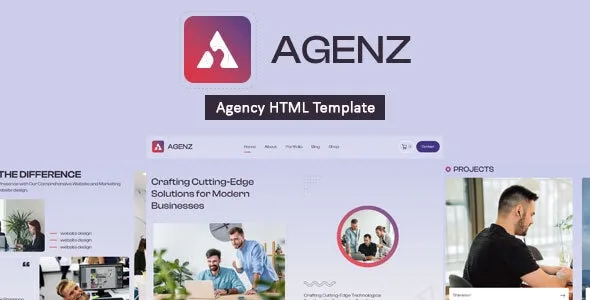
Agenz – Agency HTML Template
Agenz – Agency HTML Template is a modern website template designed for digital agencies, creative studios, marketing companies, branding professionals, web development businesses, and independent consultants who want to establish a professional online presence. An agency website needs to communicate expertise, showcase completed projects, explain available services, and help potential clients understand why they should choose a particular business. Agenz provides a starting point for creating an agency-focused website that brings these important elements together in a structured and visually consistent presentation. Whether you are launching a creative agency, promoting digital marketing services, presenting a web design portfolio, or building a website for a business consultancy, this HTML template can be customized to suit different professional requirements.
In a competitive digital environment, a business website often serves as the first point of contact between an agency and a prospective client. Visitors want to understand what the agency does, which industries it serves, what experience it offers, and how they can discuss a potential project. Agenz can be used as a foundation for presenting this information through organized page sections, service descriptions, portfolio content, company information, and contact opportunities. Its agency-oriented purpose makes it relevant to businesses that want a dedicated website for their creative and professional services. The final design and functionality depend on the included template files, available layouts, and any customizations or integrations added during development.
What Is Agenz Agency HTML Template?
Agenz is an HTML website template intended for agency websites and professional service businesses. It provides a front-end foundation that developers can customize to present a company’s identity, services, work examples, and business information. Rather than creating every page structure from the beginning, developers can use the supplied layouts and components as a starting point for a customized agency website.
Digital agencies often need several types of content to communicate their capabilities. A homepage can introduce the agency and its main value proposition, while dedicated service pages explain individual offerings in greater detail. Portfolio pages can present completed projects, and an About page can describe the team, experience, and working approach.
Agenz can be evaluated for different agency models, including branding studios, creative agencies, digital marketing companies, web development teams, advertising businesses, and design consultancies. The exact suitability depends on the current template version and the layouts included in its package.
HTML provides the structure of web pages, CSS controls their visual presentation, and JavaScript can support interactive behavior when included. These technologies give developers the flexibility to adapt page content, visual styles, navigation, and supported interface elements to a business’s needs.
Before using Agenz for a commercial project, review its official demo, source files, documentation, and license terms. Confirm the available pages, responsive behavior, dependencies, and customization requirements to ensure the template is appropriate for the intended website.
Modern Website Design for Digital Agencies
A digital agency website should communicate its capabilities clearly while reflecting the quality of its work. Potential clients may be looking for website development, search engine optimization, paid advertising, social media management, branding, graphic design, or digital strategy. The website should help them identify the services that match their objectives.
Agenz can serve as a starting point for creating a professional digital agency website with a clear introduction, service summaries, selected projects, company information, and contact opportunities. The precise layout depends on the components and page designs supplied with the template.
A strong homepage can begin with a concise headline explaining the agency’s main offering. Supporting text can describe the audience it serves and the problems it helps solve. Featured services can then introduce the agency’s capabilities, while portfolio examples demonstrate how those capabilities are applied in practice.
The visual presentation should support the agency’s positioning. A branding studio may emphasize typography, visual identity, and creative work, while a technology agency may focus on digital products, website interfaces, and development expertise. A marketing company might highlight campaign strategy, content production, and measurable outcomes when reliable data is available.
The most effective agency websites combine attractive design with useful information. Every major section should help visitors understand the business, evaluate its services, or take a relevant next step.
Multipurpose Layouts for Different Agency Types
Agencies work across different industries and provide services with varying requirements. A multipurpose HTML template can help developers adapt the website structure to a specific business without restricting the presentation to one narrow category.
Agenz can be considered for creative agencies, advertising companies, digital marketing businesses, branding studios, design consultancies, software development teams, and independent professionals. The final result depends on the template’s available layouts and the customizations made for the project.
A creative agency may need a visually focused homepage and an extensive portfolio. A marketing agency may prioritize service pages, campaign examples, and lead generation. A web development company could emphasize technical expertise, project delivery, and examples of completed websites.
Consultants may require a more information-focused layout that communicates their experience, approach, and professional services. A startup agency might use a concise structure that introduces its team, describes its offering, and makes it easy for potential clients to get in touch.
Before selecting a layout, identify the primary audience and the website’s main objective. Remove irrelevant sections and prioritize information that supports the agency’s actual services. A focused presentation is generally more useful than trying to include every possible feature on one page.
Professional Homepage and Brand Introduction
The homepage is often the first page visitors see, so it should introduce the agency quickly and direct users toward relevant information. A clear opening message can help potential clients understand the agency’s purpose without requiring them to explore multiple pages.
Agenz can be customized to present a homepage with an introductory section, service summaries, selected projects, company information, client feedback, and a contact call to action, depending on the included design.
The main headline should explain the agency’s value in straightforward language. Instead of relying on vague statements, describe what the business does and whom it helps. Supporting text can add context about the agency’s approach, areas of expertise, or typical project types.
Service summaries should direct visitors to more detailed information. Featured projects can demonstrate the quality and relevance of the agency’s work, while an About section can introduce the people and principles behind the business.
Not every agency needs an extensive homepage. A small studio may benefit from a concise design that emphasizes its best work and main services, while a larger company may require additional sections to communicate its full range of capabilities.
The goal is to create a logical journey from the agency’s introduction to the information visitors need to make an informed decision.
Service Pages for Agency Businesses
Dedicated service pages help explain an agency’s offerings in detail. They give potential clients an opportunity to understand the scope of a service, the process involved, and how it relates to their business needs.
Agenz can be adapted to present individual services through organized descriptions, visual elements, process explanations, and contact opportunities, depending on the layouts available in the template.
A web design agency might create separate pages for website design, user interface design, and website maintenance. A digital marketing business could describe SEO, paid advertising, content marketing, and social media services. A branding studio may explain brand strategy, visual identity, packaging design, and brand guidelines.
Each service page should answer practical questions. What does the service include? Who is it intended for? What problem does it address? How does the agency approach the work? What information should a prospective client provide before requesting a quotation?
Clear explanations help visitors determine whether a service matches their requirements. Where appropriate, include genuine project examples, relevant experience, and realistic descriptions of the expected deliverables.
Avoid unsupported guarantees about rankings, traffic, revenue, or project outcomes. Transparent service information helps establish realistic expectations and encourages more productive conversations with potential clients.
Creative Portfolio and Project Showcase
A portfolio is an important asset for many agencies because it demonstrates the practical application of their skills. Prospective clients often want to see examples of completed work before deciding whether to contact a business.
Agenz can be considered for a portfolio-focused website where selected projects receive prominent presentation. The exact portfolio layouts, filters, and project detail components depend on the supplied template package.
A strong portfolio should prioritize relevant projects rather than display every completed task without context. Each project can include a title, client or industry information where disclosure is permitted, a short summary, and images that accurately represent the work.
Case studies can provide additional value by explaining the client’s objective, the challenge addressed, the agency’s contribution, and the deliverables produced. If measurable results are available, present them accurately and explain the context behind the figures.
A branding agency might showcase identity systems, packaging, and campaign visuals. A web design business could present website interfaces and responsive layouts. A marketing company may describe campaign strategy, content development, and documented performance improvements.
Use high-quality project images while optimizing their file sizes. Portfolio pages should load efficiently, remain readable on mobile devices, and provide clear navigation between examples.
About Page and Agency Story
An About page helps visitors understand the people, experience, and principles behind an agency. While service pages explain what the business offers, the About page provides context about how the agency works and what informs its approach.
Agenz can be customized to introduce the agency’s background, mission, values, team, and professional experience. The precise sections depend on the available layouts and components.
A useful agency introduction should explain the business’s focus, the types of clients it serves, and the problems it aims to solve. The content can describe the agency’s working philosophy, collaboration process, and approach to delivering projects.
Team profiles can introduce key members and their areas of responsibility. Relevant qualifications, genuine professional experience, and authentic photographs may help visitors understand the people involved in the business.
Avoid generic claims that do not distinguish the agency from competitors. Specific information about expertise, working methods, and project experience gives visitors a more meaningful understanding of the organization.
Keep the About page consistent with the rest of the website. The same tone, visual identity, and messaging should appear across service pages, portfolio content, and contact information.
Responsive Design for Desktop, Tablet, and Mobile
An agency website should remain easy to use across different devices. Potential clients may discover a business through a mobile search, review portfolio examples on a tablet, or return later using a desktop computer.
Agenz should be evaluated for its responsive behavior using the current demo and source files. Developers should test the actual implementation after customization because changes to content, images, CSS, and interactive components can affect how pages behave at different screen sizes.
On smaller screens, headings should remain readable, images should fit the available width, and navigation should be straightforward. Buttons and contact forms should be comfortable to use, while important information should remain accessible without awkward horizontal scrolling.
Responsive testing should include the homepage, service pages, portfolio galleries, project details, team sections, and contact forms. Image-heavy portfolio layouts may require additional attention to spacing and loading behavior.
Custom CSS, embedded media, third-party widgets, and additional scripts can introduce layout problems. Test the completed website at several viewport widths and resolve issues before launch.
A consistent cross-device experience helps visitors explore the agency’s services and work regardless of how they access the website.
Customization and Visual Brand Identity
A professional agency website should reflect the business’s identity rather than appear like an unmodified template. Consistent visual branding helps communicate the agency’s character and creates a recognizable experience across pages.
Depending on the supplied source files, Agenz may be customized through HTML, CSS, JavaScript, typography, colors, spacing, images, navigation, and supported page components. The precise customization process depends on the template’s structure and implementation.
A creative studio may choose a distinctive visual style with expressive typography and prominent project images. A corporate consultancy might prefer a more restrained design with clear service descriptions and structured layouts. A technology agency may focus on digital interfaces, product visuals, and technical capabilities.
Begin by establishing a simple design system. Choose brand colors, heading and body text styles, spacing rules, button treatments, and image guidelines. Reusing these decisions across the website helps maintain a consistent appearance.
Replace placeholder text and imagery with original content that accurately represents the agency. Review each page to ensure that visual elements support the message rather than distract from it.
Before making extensive changes, review the template’s file organization and identify how its styles and components are managed. Maintain clean, understandable code so future updates remain easier to implement.
SEO-Friendly Structure for Agency Websites
Search engine optimization helps potential clients discover an agency through relevant search queries. A well-organized HTML template can provide the front-end foundation for an SEO-friendly website, but rankings also depend on content quality, technical implementation, competition, and ongoing optimization.
When customizing Agenz, give each page a clear purpose and topic. Use descriptive page titles, logical heading structures, readable URLs, relevant internal links, and original content that answers the questions prospective clients may have.
An agency offering several services can create dedicated pages for important offerings instead of describing everything in a single block of text. A portfolio page can provide context about selected projects, while an article section may answer common questions related to the agency’s expertise.
For example, a web development business might publish useful information about website planning, responsive design, and website maintenance. A marketing agency could create educational articles about search optimization, content strategy, or campaign measurement.
Use keywords naturally and focus on providing useful information. Repeating the same phrase excessively can make content difficult to read and does not guarantee improved rankings.
Optimize images with suitable dimensions and file sizes, and provide meaningful alternative text for informative visuals. Check internal links, page loading performance, indexing accessibility, and other technical requirements.
Depending on the implementation, additional configuration may be required for metadata, XML sitemaps, canonical URLs, redirects, and structured data. Verify these elements rather than assuming they are automatically included in the HTML template.
Lead Generation and Contact Forms
For many agencies, the website’s primary business objective is to generate relevant inquiries. Visitors should be able to ask questions, request quotations, discuss projects, or arrange an initial consultation without unnecessary difficulty.
Agenz can be customized to provide contact sections, inquiry buttons, and form layouts if these are available in the template. A visual form alone does not guarantee that submissions will be delivered or stored; functional processing may require JavaScript, a backend, or a compatible form service.
A project inquiry form may request a name, email address, company name, service of interest, and a short project description. Collect only the information necessary to understand and respond to the inquiry.
Clear field labels and helpful validation messages make forms easier to complete. The website should also communicate what happens after submission and provide alternative contact details when appropriate.
Calls to action should match the page’s purpose. A portfolio page might invite visitors to discuss a similar project, while a service page could encourage them to request a quotation or consultation.
Before launch, test form validation, submission handling, confirmation messages, email delivery, and spam protection. Make sure the form works on mobile devices as well as desktop computers.
Website Performance and Page Loading Speed
Website performance affects how quickly visitors can access information and explore an agency’s work. A slow website can make a business appear less dependable and may discourage visitors from reviewing additional pages.
The actual performance of an Agenz website depends on the template implementation, hosting environment, images, fonts, scripts, and additional integrations. Performance should be measured after customization rather than assumed from the template’s appearance.
Start by optimizing large portfolio images and promotional banners. Use appropriate image dimensions and compression while retaining enough detail to present the agency’s work effectively.
Review external fonts, animations, scripts, and embedded widgets. Remove unnecessary resources where appropriate and avoid adding effects that do not provide meaningful value.
Depending on the hosting environment and implementation, browser caching, compression, efficient asset delivery, and suitable loading strategies may improve performance. Test important pages individually because portfolio galleries and complex sections may behave differently from simpler layouts.
Check performance on mobile connections and review the website after major content or design changes. Regular monitoring helps identify oversized assets and other issues as the site grows.
User Experience and Website Navigation
Clear navigation helps visitors find information without unnecessary effort. An agency website often needs to guide users toward services, portfolio examples, company information, articles, and contact options.
Agenz can be adapted to suit the navigation needs of the business. A small studio may need only a few main menu items, while a larger agency with multiple service categories may require a more detailed structure.
Use familiar labels that communicate what each page contains. Group related services logically and avoid making the navigation unnecessarily complicated.
The website should also provide consistent ways to move between related content. A portfolio project can link to a relevant service page, while an article may direct readers toward additional information about a related offering.
Interactive elements should be easy to recognize. Buttons, navigation links, forms, and other controls should behave consistently and remain usable on different devices.
Test the complete visitor journey, including opening the navigation menu, exploring services, viewing a project, and contacting the agency. Clear navigation makes the website more useful and helps potential clients understand the business more efficiently.
Integrations and Supporting Website Tools
Agency websites may require additional tools for analytics, contact forms, scheduling, customer relationship management, newsletter subscriptions, and other business processes. The appropriate integrations depend on the agency’s needs and the functionality already supplied with the template.
Agenz can be evaluated as a front-end starting point for a website that connects to suitable external services or custom backend functionality. The exact integration method depends on the source code and the chosen provider.
A contact form service may help process inquiries, while an analytics platform can provide information about website traffic and visitor behavior. A scheduling tool may allow prospective clients to request meetings, and a newsletter service can support ongoing communication with interested audiences.
Before adding a tool, review its documentation, compatibility, privacy requirements, and ongoing maintenance needs. Avoid adding several services that perform the same function unless there is a clear reason.
Test integrations after configuration and verify that important workflows operate correctly. Forms should deliver submissions, scheduling links should open the intended destination, and analytics should be implemented according to applicable privacy requirements.
Remember that an HTML template primarily provides front-end structure. Features such as customer accounts, project portals, payments, or automated client management may require separate applications or backend development.
Accessibility and Readable Content
Accessibility helps make a website usable by people with different abilities, devices, and interaction preferences. It also encourages clear content, logical navigation, and more consistent interface design.
When customizing Agenz, use a meaningful heading hierarchy, descriptive link text, and clear form labels. Informative images should have appropriate alternative text, while decorative visuals should not introduce unnecessary content for assistive technologies.
Ensure that text and background colors provide sufficient contrast. Do not rely on color alone to communicate important information, and make interactive elements visually distinguishable.
Navigation menus and forms should be tested with keyboard input where appropriate. Interactive components should provide clear focus indicators, and error messages should explain how visitors can correct a problem.
Accessibility should be reviewed across the complete website rather than only the homepage. Automated testing tools can help identify some issues, but manual keyboard checks and practical usability reviews are also important.
A readable, accessible agency website helps a wider range of visitors understand the business and interact with its content.
Security and Ongoing Website Maintenance
A professional website requires ongoing maintenance to remain dependable. Even a well-designed agency template can develop issues if its dependencies, content, hosting, and integrations are not reviewed periodically.
Before deployment, review the source files and any third-party libraries used by the template. Keep dependencies updated when appropriate, test significant changes, and maintain a clear record of customizations.
Use secure hosting and HTTPS, and ensure that forms and external integrations are configured appropriately. Sensitive credentials should not be exposed in client-side source code. Any functionality involving protected information, authentication, or privileged operations should use an appropriate backend or trusted service.
Regularly check page links, contact forms, responsive layouts, images, and third-party integrations. Outdated portfolio information, broken links, and incorrect contact details can reduce visitor confidence.
Maintain backups of the project files and any associated data according to the website’s architecture. Test important workflows after updates so that new changes do not disrupt the visitor experience.
A simple maintenance routine helps keep the agency website accurate, secure, and aligned with the business’s current services.
Who Should Use Agenz Agency HTML Template?
Agenz can be considered by a variety of businesses and professionals looking for an agency-focused website foundation.
Digital marketing agencies: Businesses offering SEO, paid advertising, social media marketing, and content strategy can present their services and relevant project examples.
Creative agencies: Creative teams can introduce their approach, showcase selected work, and explain their capabilities to prospective clients.
Branding studios: Branding professionals can highlight identity design, brand strategy, packaging, and related creative services.
Web design companies: Web design businesses can present website projects, explain their design process, and communicate their service offerings.
Software and development agencies: Development teams can introduce their technical expertise, project experience, and software services.
Advertising agencies: Advertising businesses can explain their campaign services, creative process, and industry experience.
Business consultants: Consultants can use a suitable layout to introduce their expertise, professional services, and consultation opportunities.
Freelancers and independent professionals: Individual designers, marketers, and developers can adapt the template to create a portfolio and professional business website.
The best choice depends on the project requirements, the available template layouts, the desired functionality, and the amount of customization needed. Review the current demo and documentation before deciding whether Agenz fits the intended use case.
Tips for Building a Successful Agency Website with Agenz
Begin by defining the website’s main objective. Decide whether the priority is to generate leads, present a portfolio, explain services, establish a brand identity, or support several related business goals.
Prepare the essential content before making extensive design changes. This may include a company introduction, service descriptions, selected projects, team information, contact details, and frequently asked questions.
Use authentic project examples and relevant visuals to communicate the agency’s capabilities. Each portfolio item should provide enough context for visitors to understand the work and the agency’s contribution.
Create a consistent visual identity with a suitable color palette, typography, spacing, and button styles. Replace placeholder content with accurate information and remove sections that do not support the website’s purpose.
Keep the navigation simple and ensure that important pages are easy to find. Every major page should have a clear purpose and a relevant next step for visitors.
Before launch, test the website across desktop, tablet, and mobile devices. Check links, forms, responsive layouts, accessibility basics, and page performance. Verify that any third-party integrations work correctly.
Finally, maintain the website with regular content reviews, technical checks, dependency updates, and backups. A clear maintenance process helps the website remain useful as the agency’s services and portfolio develop.
Final Thoughts on Agenz Agency HTML Template
Agenz – Agency HTML Template is a potential starting point for digital agencies, creative studios, marketing companies, branding professionals, consultants, and development businesses that want to establish a professional online presence. Its agency-focused purpose makes it relevant to websites that need to communicate services, showcase project work, introduce a team, and provide clear contact opportunities.
A well-customized implementation can combine an engaging homepage, organized service pages, a relevant portfolio, consistent branding, and straightforward navigation. The exact result depends on the included source files, the available page layouts, and the customizations made for the intended business.
An HTML template should not be assumed to provide a complete content management system, contact-processing backend, client portal, or automated business workflow unless these features are explicitly included or connected through additional development. Reviewing the current demo, documentation, technical requirements, and licensing terms helps establish whether the template is suitable for the project.
For the best results, focus on original content, authentic project examples, responsive layouts, accessible navigation, efficient assets, and reliable contact functionality. Review SEO requirements and performance after customization, and maintain the website as the agency’s services evolve.
With thoughtful planning and consistent maintenance, Agenz can provide a useful foundation for presenting an agency’s identity, demonstrating its capabilities, and helping potential clients discover and explore its services.