My Account
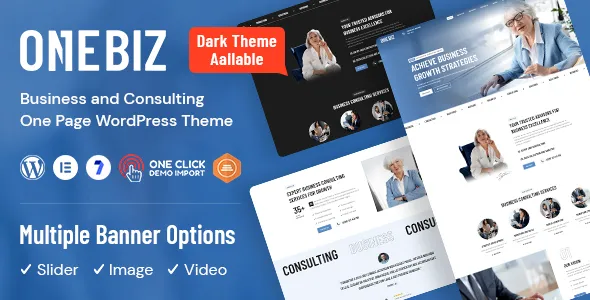
Onebiz – Business One Page WordPress Theme
Onebiz – Business One Page WordPress Theme is a website design solution for businesses, startups, consultants, freelancers, agencies, and professional service providers looking to establish a clear and professional online presence with WordPress. A one-page WordPress theme offers a streamlined way to present essential business information within a single, organized webpage, allowing visitors to explore services, company details, projects, and contact information without navigating through numerous separate pages. Onebiz can be considered by businesses that want a focused website experience designed to communicate their brand identity, introduce their offerings, and encourage potential customers to take action.
Modern businesses need websites that make information easy to understand. Visitors often want to know what a company does, which services it provides, what makes it relevant to their needs, and how to get in touch. A carefully structured one-page website can bring these elements together through clearly defined sections and straightforward navigation. With appropriate customization, Onebiz can provide a foundation for presenting a business introduction, service highlights, company background, portfolio examples, client feedback, and contact details in a cohesive format.
WordPress provides a flexible content management system for publishing and maintaining website content. A one-page theme helps organize that content into a continuous browsing experience, where visitors can move between sections using navigation links or scrolling. The final design and capabilities of a Onebiz website depend on the installed theme version, its documented features, available customization settings, and compatible plugins. By combining a suitable layout with original content, consistent branding, and clear calls to action, businesses can develop a professional website that supports their communication and marketing objectives.
What Is Onebiz – Business One Page WordPress Theme?
Onebiz is a business-oriented WordPress theme designed around the concept of a one-page website. Instead of distributing every important piece of information across separate pages, a one-page layout presents the main business details in a single, connected structure. This approach can be useful for organizations that need a concise online introduction without managing a large website.
A typical business one-page website may include an introductory banner, company overview, service descriptions, selected projects, testimonials, team information, and a contact section. Visitors can explore these sections in sequence or use navigation links to move directly to a particular area, depending on the available theme functionality.
Onebiz can be evaluated for small businesses, professional consultants, digital agencies, independent service providers, startups, and companies launching a focused promotional website. Its suitability depends on the content requirements of the project and the layouts available in the current release.
A one-page structure is not ideal for every organization. Businesses with extensive product catalogs, multiple service categories, detailed documentation, or large editorial libraries may benefit from a multipage website. However, for a company that needs to communicate a focused message and make contact information readily accessible, a one-page approach can provide a practical starting point.
Before choosing Onebiz, review the current product demo and documentation to confirm its layouts, customization options, compatibility, and any required plugins.
Designed for Small Businesses and Professional Services
Small businesses often need a website that explains their services and builds confidence without requiring a complicated content structure. A one-page business website can provide an efficient way to introduce the company and guide visitors toward the information they need.
Onebiz can be considered by local businesses, independent professionals, consulting firms, marketing agencies, technology service providers, and other organizations that want a concise digital presence. The website can begin with a clear introduction and continue with sections that explain the business’s services, experience, approach, and contact options.
For example, a consulting business might introduce its expertise, summarize its main services, present relevant case studies, and provide a consultation inquiry option. A local service provider could explain its offerings, identify its service area, answer common questions, and display accurate contact details.
Each section should serve a specific purpose. The company introduction should explain what the business does, while the service section should describe how its offerings help the intended audience. Supporting information can provide context without overwhelming visitors with unnecessary details.
A focused website is particularly useful when visitors need to understand the business quickly. Clear headings, concise explanations, and relevant calls to action help create a straightforward browsing experience.
Create a Professional Business Landing Page
A business landing page introduces a company and communicates its primary value proposition. It can be used as a central destination for visitors arriving from search engines, social media, online directories, advertisements, or direct links.
Onebiz can be evaluated for creating a business landing page that introduces a company’s services and encourages visitors to explore its offerings. Depending on the available layouts, the page may include a prominent headline, supporting text, a visual element, and a call to action.
The headline should communicate the company’s primary service or purpose. Supporting text can explain the intended audience and the type of problem the business addresses. A suitable call to action might invite visitors to request information, arrange a consultation, explore services, or contact the team.
Avoid using generic statements that could describe almost any business. A specific, accurate introduction helps visitors understand what makes the company relevant to their needs.
The page should also maintain consistency between its headline, service descriptions, and calls to action. If the introduction promises a particular service, the rest of the website should provide useful information about that offering.
A well-planned landing page helps visitors move from initial awareness to a clearer understanding of the business and its next steps.
One-Page Website Structure and Navigation
The organization of a one-page website has a direct impact on how easily visitors can find information. Since most content appears on a single page, sections should follow a logical order and remain easy to distinguish.
A Onebiz website can be planned around a sequence such as:
- Introduction: Explain the business and its primary offering.
- About the company: Provide background, experience, and professional context.
- Services: Describe the main products or services offered.
- Portfolio or projects: Present relevant examples of previous work.
- Why choose the business: Explain genuine strengths and working methods.
- Testimonials: Share authorized and authentic customer feedback.
- Team: Introduce relevant team members where appropriate.
- Contact: Provide clear contact information and inquiry options.
These are suggested content sections rather than a guarantee that every section is included as a ready-made theme feature. The final structure should reflect the layouts and customization controls available in the installed version.
Navigation links can help visitors move directly to important sections, where supported. Section labels should be descriptive and familiar, avoiding complicated wording that makes navigation harder to understand.
Not every business needs every section. A freelancer may benefit from a short portfolio and contact area, while a consulting firm may need more space for its services and professional experience.
The best one-page structure is concise, purposeful, and aligned with the needs of the intended audience.
Present Your Business Services Clearly
Service descriptions help visitors understand what a company offers and whether its expertise matches their requirements. On a one-page website, this information should be easy to scan without sacrificing important details.
Onebiz can be considered for presenting business services in organized sections. Depending on the website’s purpose, these sections may describe consulting, digital marketing, web development, design, technology support, management services, or other professional offerings.
Each service should have a descriptive title and a short explanation of its purpose. Explain the type of customer it serves, the problem it addresses, and what the customer can expect from the service. Avoid relying on vague phrases that do not communicate practical value.
For businesses with several distinct offerings, a brief overview can introduce each service while providing links to more detailed pages if the website later expands. This allows the initial one-page website to remain concise without preventing future growth.
Use accurate descriptions and avoid unsupported promises about results, revenue, performance, or customer outcomes. If a service requires a consultation or an initial assessment, explain that process clearly.
Organized service information helps visitors understand the business more quickly and supports better-quality inquiries from people whose needs match the company’s capabilities.
Build a Strong Brand Identity
A professional website should reflect the identity of the business it represents. Branding helps visitors recognize the company and creates a consistent experience across its website and other communication channels.
Depending on the available customization options, Onebiz may be adapted to use suitable colors, typography, images, spacing, and page elements that align with the business’s visual identity. The precise settings should be confirmed in the current theme documentation.
A consulting company may prefer a clean and restrained presentation, while a creative agency might use more expressive typography and visual elements. A technology startup may emphasize a contemporary style, whereas an established professional firm may prioritize clarity and familiarity.
Consistency matters more than decorative complexity. Use a defined color palette, a readable type system, and a consistent approach to headings, buttons, and links. The logo should be displayed appropriately, and the same visual conventions should be maintained across the website.
Choose images that relate to the company’s services and audience. Genuine team photographs, project examples, workplace images, or relevant illustrations can make the website more distinctive than generic imagery.
The design should support the message rather than compete with it. A clear brand presentation helps visitors focus on the business, understand its offering, and remember its identity.
Showcase Projects and Professional Experience
A portfolio or project section can provide evidence of a business’s experience and capabilities. It helps visitors understand the type of work the company performs and whether its approach is relevant to their needs.
Onebiz can be evaluated for websites that need to present selected projects or examples of completed work within a one-page structure. The available gallery and portfolio layouts depend on the current theme version and its documented features.
A project entry can include a title, relevant image, short description, and explanation of the work performed. Where appropriate, include the project’s objectives, the company’s role, the challenge addressed, and the deliverables produced.
A digital agency might present website design or marketing projects. A consultant could summarize a business improvement engagement, while a freelancer may highlight selected professional assignments.
Use genuine project examples and ensure that any client names, photographs, or confidential details are shared with appropriate permission. Do not present another organization’s work as your own or claim results that cannot be substantiated.
A small number of relevant projects can be more effective than a large collection of unrelated examples. Select work that demonstrates the services the business wants to promote and provides meaningful context for prospective customers.
Responsive Design for Different Devices
Visitors may discover a business on a smartphone, review its services on a tablet, or return later using a desktop computer. A responsive website helps maintain an accessible and consistent experience across these different screen sizes.
Onebiz should be evaluated for responsive behavior using the current product demo. Review the navigation, section spacing, typography, images, buttons, and contact forms on different devices before launching the website.
On mobile screens, headings should remain readable, service sections should be easy to scan, and interactive elements should be convenient to tap. A long one-page layout should avoid unnecessarily large gaps or excessive scrolling between closely related sections.
Images should fit the available screen space without obscuring important content. Buttons and forms should remain usable without requiring visitors to zoom in or struggle with small controls.
Responsive behavior can be affected by custom CSS, page-building tools, embedded content, and additional plugins. Test the actual website after making significant changes rather than assuming that the theme’s default layout will remain suitable.
Responsive design supports usability, but it does not automatically guarantee accessibility or fast performance. These aspects should also be tested during development.
Website Customization and Content Management
WordPress allows website owners to manage content through an administrative interface, making it possible to update text, replace images, revise service information, and maintain business details without rebuilding the entire website.
Onebiz can be evaluated as a starting point for a customizable business website, with the exact editing experience depending on the theme’s available controls and compatibility with the tools used. Before installation, confirm which settings are provided by the theme and whether additional page-building plugins are required.
Customization should begin with the website’s purpose rather than visual effects alone. Determine which sections are essential, what visitors need to learn, and what action they should take after exploring the page.
Prepare the main content before finalizing the layout. This includes the business introduction, service descriptions, project examples, company details, and contact information. Real content makes it easier to choose suitable section lengths and visual arrangements.
Keep the website manageable by removing unnecessary sections and replacing placeholder content with accurate information. If the business expands and requires more detailed pages later, plan how the website structure can evolve.
A well-maintained WordPress setup allows the company to keep its information current while preserving a consistent presentation.
Lead Generation and Calls to Action
For many businesses, the main purpose of a website is to generate inquiries, consultations, project discussions, or other relevant actions. A one-page structure can make these actions easier to find when they are integrated naturally into the content.
A Onebiz website can be planned with clear calls to action throughout the page, depending on the available layouts and supported functionality. These may direct visitors to a contact section, an inquiry form, a telephone number, or another suitable communication channel.
The introductory section can provide an initial invitation to learn more about the business, while service descriptions can guide visitors toward a relevant inquiry. After reviewing the company’s experience or project examples, visitors may benefit from another opportunity to make contact.
Contact forms should collect only the information needed for an initial response. Common fields include a name, email address, service of interest, and a short message. More detailed information can be requested later when necessary.
Test form submission, required fields, error messages, spam protection, and email delivery before publishing the website. Make sure that messages reach the correct recipient and that visitors receive a clear confirmation after submission.
Calls to action should be specific and accurate. Avoid promising an immediate response or a guaranteed result unless the business can consistently deliver it.
SEO-Friendly Structure for One-Page Websites
Search engine optimization helps potential customers discover a business through relevant search queries. A one-page theme can provide a useful starting point, but search visibility depends on content quality, technical setup, competition, relevance, and other factors.
A Onebiz website should have a clear page title, a descriptive main heading, logical section headings, readable content, and appropriate metadata. Each section should explain a meaningful aspect of the business rather than repeat the same keyword or phrase.
Use natural language to describe services, expertise, and the audience served. For example, a consulting business can explain its areas of specialization, while a design agency can describe its capabilities and the types of projects it handles.
A one-page structure has limitations for businesses targeting many unrelated services or topics. If individual offerings require extensive explanations, separate pages may provide a better way to address distinct search intents. Onebiz can be evaluated for the initial website, with a broader structure considered if the business’s content needs grow.
Image files should be optimized for performance, and informative images should have appropriate alternative text. Compatible SEO tools may help manage metadata, sitemaps, and other supported technical settings.
No theme can guarantee search rankings, organic traffic, or lead generation. Useful content, good usability, technical maintenance, and an appropriate website structure remain essential.
Local SEO for Service-Based Businesses
Local SEO can be useful for businesses that serve customers within a defined geographic area. Accurate business information helps potential customers understand where the company operates and how to contact it.
A Onebiz website can include the company’s location, telephone number, opening hours, email address, and genuine service area where relevant. Keep these details consistent across the website and other business listings.
If the business serves multiple locations, decide whether each location needs a separate, detailed page rather than trying to fit all information into one section. A one-page website works best when the amount of information remains manageable.
Local content should provide useful information for customers in the areas actually served. Avoid creating repetitive location descriptions that offer no meaningful value.
Businesses can also maintain eligible business profiles on relevant platforms and encourage genuine customer reviews in accordance with the platforms’ policies. Contact information and opening hours should be reviewed regularly.
Local SEO works best when the website accurately represents the business and provides practical information. A theme alone cannot ensure local visibility, but a clear presentation can support broader search optimization efforts.
Content Marketing and Future Website Growth
Content marketing helps businesses explain their expertise, answer customer questions, and build an informative online presence. WordPress supports publishing articles and additional pages, allowing a website to expand beyond its initial structure when necessary.
Onebiz can be considered for businesses that begin with a concise one-page website and later want to add educational articles, case studies, company updates, or dedicated service pages. The available expansion options depend on the theme’s architecture and compatibility with the chosen WordPress tools.
A consulting firm might publish practical business guidance, while a design agency could share project insights or explain its working process. A technology company may create articles that answer common questions about its services.
Content should address genuine audience needs and provide accurate explanations. Avoid publishing shallow articles solely to repeat keywords. Helpful information is more likely to support a meaningful relationship with potential customers.
Internal links can connect new articles to relevant service pages and contact options. This gives visitors a natural way to move from learning about a topic to exploring the business.
A one-page website is a useful starting point for some projects, but it should not restrict future development. Review the content structure periodically and add dedicated pages when the volume or complexity of information makes them beneficial.
Performance and Website Loading Speed
Website performance affects how easily visitors can explore business information. A slow page can make navigation frustrating, especially for mobile users or people using slower internet connections.
The performance of a Onebiz website depends on the theme implementation, hosting environment, images, scripts, plugins, and external integrations. Actual performance should be tested rather than assumed from the theme’s design.
Optimize images before uploading them, use appropriate dimensions, and avoid adding unnecessarily large media files. Review decorative animations, embedded content, and third-party scripts to determine whether they contribute enough value to justify their impact.
Suitable hosting and carefully configured caching tools may improve performance depending on the website’s technical environment. Avoid installing overlapping plugins that add complexity without solving a specific problem.
Test the full page, including its images, forms, navigation, and interactive sections. Long one-page websites can accumulate many assets, so performance should be checked after additional sections or integrations are introduced.
Regular monitoring helps identify slow resources and other issues. A well-maintained website provides a smoother browsing experience and supports overall site quality.
Accessibility and User-Friendly Navigation
An effective business website should make information easy to find and understand. Clear navigation, readable text, suitable contrast, and accessible interactive elements can improve usability for a wide range of visitors.
When configuring Onebiz, use descriptive navigation labels, a logical heading hierarchy, and consistent section titles. Visitors should be able to understand where they are on the page and how to reach the information they need.
Buttons and links should be recognizable, and contact forms should include clear labels and useful error messages. Avoid relying on color alone to communicate important information.
Images that convey business information should have appropriate alternative text, while decorative images should not create unnecessary distractions. Test the page with keyboard navigation where supported and review how interactive elements behave on mobile devices.
One-page websites require particular attention to navigation because the page may contain several long sections. Visitors should be able to move between important sections without losing their place or encountering confusing menu behavior.
Accessibility depends on the theme, content, and implementation. Regular usability reviews help identify problems and make the website easier to use.
WordPress Plugins and Integrations
A business website may need additional tools for contact forms, search optimization, analytics, security, backups, and performance. The appropriate combination depends on the website’s requirements and the functionality already available in Onebiz.
Before installing a plugin, check its compatibility with the current WordPress version and the theme’s documented requirements. Review its update history, licensing, support arrangements, and security practices.
A contact form plugin may help collect inquiries, while an SEO plugin can assist with metadata and sitemap settings. Analytics tools can provide information about website traffic and visitor behavior, subject to applicable privacy and consent requirements.
Backup and security tools can support routine maintenance. Performance plugins may also be useful when configured correctly for the hosting environment.
Avoid installing several plugins that perform the same task unless there is a specific reason. After adding or updating an integration, test the entire one-page layout, including navigation, forms, and mobile behavior.
Confirm which integrations are supported before relying on a specific feature. This helps avoid compatibility problems and unnecessary development work.
Security and Ongoing Website Maintenance
A business website should remain accurate, accessible, and dependable after launch. Ongoing maintenance helps reduce technical problems and ensures that visitors can continue to use the website effectively.
Use reputable hosting, enable HTTPS, protect administrator accounts with strong passwords, and assign permissions according to each person’s responsibilities. Update WordPress, the theme, and compatible plugins carefully.
Create backups before major updates or substantial design changes, and verify that recovery procedures work. Obtain themes and plugins from trustworthy sources and remove unused components when appropriate.
Review the website periodically for broken links, outdated service descriptions, incorrect contact information, and missing images. Test inquiry forms and check that email notifications reach the correct destination.
Content maintenance is also important. If the company changes its services, operating hours, team members, or contact details, update the relevant sections promptly.
A regular maintenance routine helps preserve the quality of the website and supports the business’s ongoing communication needs.
Who Should Use Onebiz – Business One Page WordPress Theme?
Onebiz can be evaluated by a range of businesses and professionals that need a concise website focused on their core services and identity.
Small businesses: Introduce services, company information, and contact options in a clear, compact layout.
Startups: Establish an initial digital presence that explains the business idea, offering, and next steps.
Consultants: Present professional expertise, service areas, relevant experience, and consultation options.
Digital agencies: Introduce creative or technical services, showcase selected projects, and guide potential clients toward inquiries.
Freelancers: Create a focused portfolio that combines a professional introduction, work samples, and contact information.
Professional service providers: Explain service offerings, provide business details, and make it easier for customers to get in touch.
Personal brands: Present a professional biography, selected achievements, services, and relevant links.
Business landing pages: Promote a focused service or business initiative with a clear message and a relevant call to action.
Local service companies: Provide essential information about services, business location, operating hours, and inquiries.
The suitability of the theme depends on the amount of information the business needs to present and the features available in the current release. Businesses with complex service catalogs or extensive content may need additional pages or a different site structure.
Tips for Building a Successful Website With Onebiz
A successful one-page website starts with a clear objective. Decide whether the main purpose is to introduce the company, attract inquiries, promote a particular service, showcase a portfolio, or support a new business launch.
Prepare the essential content before finalizing the design. This may include the company introduction, service descriptions, project examples, team information, testimonials, and contact details. Use accurate information rather than placeholder text.
Organize sections according to the visitor’s likely journey. Start by explaining the business, then introduce services and supporting evidence, and finish with a clear way to make contact. Remove sections that do not serve a useful purpose.
Maintain a consistent visual identity through typography, colors, images, and button styles. Use genuine photographs and relevant examples that accurately represent the business.
Test the website on desktop and mobile devices. Review navigation, section spacing, page speed, accessibility, contact forms, and the accuracy of all published information.
Finally, establish a maintenance routine that includes backups, updates, performance checks, and content reviews. As the business grows, reassess whether a one-page structure continues to meet its needs or whether additional pages would provide a better experience.
Final Thoughts on Onebiz – Business One Page WordPress Theme
Onebiz – Business One Page WordPress Theme is a potential option for small businesses, startups, consultants, freelancers, agencies, and professional service providers looking to establish a focused online presence with WordPress. Its one-page concept makes it relevant to projects that need to communicate essential business information through a continuous and organized browsing experience.
A well-planned one-page website can bring together a business introduction, service descriptions, portfolio examples, company information, and contact opportunities. By organizing content logically and using consistent branding, businesses can help visitors understand their offerings without navigating through a large collection of pages.
The final capabilities of a Onebiz website depend on the theme’s current version, documented features, customization controls, and compatible plugins. Reviewing the official product demo and documentation before installation helps ensure that the chosen setup meets the project’s requirements.
Long-term effectiveness also depends on original content, responsive design, accessibility, search optimization, performance, security, and regular maintenance. A one-page theme cannot guarantee search rankings or business growth, but it can provide a practical foundation for a focused website when paired with a clear content strategy.
For businesses that want to communicate their core offering in a concise and professional format, Onebiz can be evaluated as part of a broader digital presence strategy. With relevant content, straightforward navigation, and a clear contact process, a well-maintained one-page website can help strengthen brand communication and support potential customer relationships.