My Account
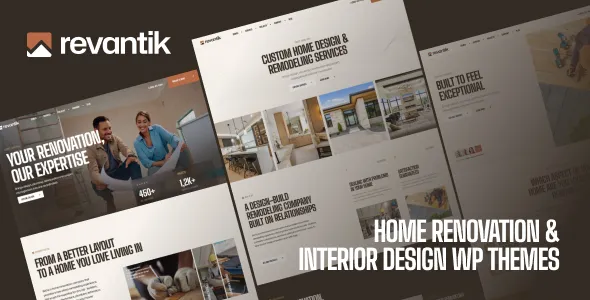
Revantik – Home Renovation & Interior Design WordPress Themes
Revantik – Home Renovation & Interior Design WordPress Themes is a website design solution for businesses and professionals working in home renovation, interior design, remodeling, architecture, and residential improvement. A professional online presence is important for companies that want to showcase their projects, explain their services, introduce their design approach, and connect with homeowners looking for reliable renovation specialists. Revantik provides a WordPress theme foundation that can be considered for creating a visually appealing website focused on interior spaces, property improvements, and home transformation services.
Homeowners often explore several businesses before choosing a renovation contractor, interior designer, or remodeling company. They want to understand the services available, review completed projects, learn about the team’s experience, and find clear contact information. A well-organized website helps communicate these details while presenting the business in a professional and consistent way. With suitable customization, Revantik can support a website structure that introduces a company’s identity, highlights its expertise, displays project photography, and guides visitors toward making an inquiry.
WordPress offers a flexible content management system for creating and maintaining business websites. It allows website owners to publish service information, update project galleries, share articles, and organize important pages without rebuilding the entire website whenever content changes. Revantik can be evaluated as a starting point for renovation companies, interior design studios, remodeling specialists, and related service providers that need a dedicated digital presence. The final appearance and functionality depend on the installed theme version, its available customization options, and compatible plugins or integrations.
What Is Revantik – Home Renovation & Interior Design WordPress Themes?
Revantik is a WordPress theme intended for websites connected with home renovation and interior design. Its purpose is to provide a visual foundation for businesses that want to present residential improvement services, interior design expertise, renovation projects, and related professional information.
A renovation company may use this type of website to explain its remodeling services, introduce its working process, and showcase before-and-after project photographs. An interior design studio can focus on room concepts, material selections, furniture arrangements, and completed interiors. Contractors and home improvement professionals may organize their websites around individual services, project examples, customer information, and contact opportunities.
A dedicated website can also help a business communicate the type of projects it handles. Some companies specialize in complete home renovations, while others focus on kitchens, bathrooms, living rooms, bedrooms, flooring, painting, or structural improvements. Organizing these offerings into clear sections makes it easier for visitors to find relevant information.
The specific layouts, design controls, page templates, and supported integrations available with Revantik should be checked against its current product documentation and live demo. This helps website owners understand which elements are included and which may require additional plugins or customization.
Designed for Home Renovation Businesses
Home renovation companies need to communicate a wide range of services and demonstrate the quality of their work. Their websites should help potential customers understand what the business does, which types of properties it serves, and how to begin discussing a project.
Revantik can be considered for renovation businesses that provide services such as home remodeling, room upgrades, interior improvements, property refurbishment, and general residential renovation. A clear homepage can introduce the company and summarize its primary offerings. Dedicated service pages can then explain individual renovation solutions in greater detail.
For example, a renovation contractor may create separate sections for kitchen remodeling, bathroom renovation, flooring installation, wall finishing, painting, and complete home improvement. Each page can describe the work involved, explain the general process, and show relevant project photographs.
Businesses can also use their websites to communicate practical information about project planning. Visitors may want to know how an initial consultation works, what details are needed for an estimate, and which stages are involved in a renovation project. Clear explanations help establish expectations before a customer makes contact.
A professional presentation should be supported by accurate service descriptions and genuine project examples. Businesses should avoid publishing unsupported claims about qualifications, guarantees, or project results.
A Website Foundation for Interior Design Studios
Interior design is a visual profession, so the presentation of completed spaces plays an important role in attracting potential clients. Visitors often want to explore a designer’s style, review different room concepts, and understand how the studio approaches individual projects.
Revantik can provide a starting point for an interior design website featuring residential interiors, design services, project galleries, and studio information. A designer may organize the website around living room design, bedroom interiors, kitchen planning, bathroom concepts, home offices, and complete residential design projects.
Project pages can explain the design objectives and the decisions made during the process. For instance, a living room project might describe the intended atmosphere, furniture arrangement, lighting approach, color selection, and use of available space. Photographs can help visitors understand how those choices work together in the completed room.
Interior design studios can also introduce their design philosophy. Some focus on modern minimalism, while others work with traditional interiors, contemporary spaces, luxury residences, or practical family homes. Explaining this approach helps visitors determine whether the studio’s work matches their preferences.
A carefully organized portfolio is more useful than a collection of unrelated images. Each project should provide enough context for visitors to understand the designer’s contribution and the purpose of the finished space.
Showcase Renovation Projects and Before-and-After Results
Project presentation is an important part of a renovation or interior design website. Homeowners want to see examples of completed work before deciding which professional to contact. A portfolio can demonstrate the company’s experience, design approach, attention to detail, and range of services.
A Revantik-based website can be organized to present project photographs and supporting descriptions, depending on the layouts and gallery options available in the installed theme version. Renovation businesses may create categories for kitchens, bathrooms, living spaces, bedrooms, full-property renovations, and commercial interiors.
Before-and-after images can be particularly useful because they show how a space changed during a project. A short explanation can describe the original challenge, the improvements completed, and the design or construction decisions that shaped the final result.
A detailed project entry may include:
- Project type and general location, where appropriate.
- The homeowner’s objectives and requirements.
- The renovation or design work completed.
- Materials, finishes, and design choices.
- Selected photographs of the finished space.
- Relevant project details and outcomes.
Businesses should publish only photographs and project information they have permission to use. Accurate descriptions help visitors understand the work without creating unrealistic expectations.
Home Remodeling and Complete Renovation Services
Home remodeling can involve several connected activities, from planning and design to construction, finishing, and final inspection. A business website should explain these services in a way that helps homeowners understand the available options.
Revantik can be used as a foundation for a website that introduces different remodeling services through dedicated content sections. A company offering complete renovations may explain how it approaches property assessment, design planning, material selection, construction coordination, and finishing work.
A complete home renovation page can describe the types of improvements the company handles, such as updating room layouts, replacing old finishes, improving storage, modernizing interiors, or coordinating multiple renovation activities.
Smaller projects can also receive dedicated attention. Some homeowners may only need a bathroom upgrade or a kitchen redesign, while others may want to improve several rooms over time. Service pages can explain the scope of each offering and provide visitors with a clear way to request additional information.
Detailed descriptions help reduce uncertainty and make the website more useful. The business should clearly distinguish between services it provides directly and work that may involve external specialists or contractors.
Kitchen Renovation and Interior Design
The kitchen is one of the most frequently used areas of a home, and its design needs to balance appearance, storage, lighting, and everyday functionality. A kitchen renovation service page can explain how the business approaches these requirements.
A Revantik website can present kitchen renovation examples through project photographs, design descriptions, and information about available services. Content may cover cabinet layouts, countertop choices, storage planning, flooring, backsplashes, lighting, and other design considerations.
Visitors may also be interested in understanding how a kitchen project progresses. A useful page can outline the general stages, including discussing requirements, assessing the existing space, preparing a design concept, selecting materials, coordinating installation, and completing finishing work.
Project galleries can show different kitchen styles, from contemporary and minimalist spaces to traditional and family-oriented layouts. Descriptive captions help visitors understand the features shown in each project.
A clear call to action can encourage homeowners to discuss their kitchen requirements or request an initial consultation.
Bathroom Remodeling and Modern Interior Solutions
Bathroom renovation requires careful attention to layout, water-related requirements, ventilation, lighting, surfaces, and storage. Homeowners may want to replace outdated fittings, improve usability, modernize finishes, or redesign the room completely.
A dedicated bathroom remodeling page can explain the services offered by a renovation company and display relevant examples. Project descriptions may discuss tile selection, vanity installation, shower arrangements, lighting improvements, storage solutions, and other work completed as part of the renovation.
The website can also explain that bathroom projects need to consider practical requirements alongside visual design. Appropriate materials, suitable installation methods, and qualified professionals are important when dealing with plumbing, electrical work, and waterproofing.
A well-presented gallery helps visitors compare different design approaches. Images of completed bathrooms can demonstrate how color, surfaces, fixtures, and lighting contribute to the overall appearance of a space.
Businesses should keep technical statements accurate and avoid presenting general design suggestions as a substitute for professional assessment.
Residential Architecture and Space Planning
Residential renovation projects sometimes involve changes to room arrangements, circulation, storage, and the use of available space. Architecture and space planning services can help homeowners consider how different areas of a property work together.
Revantik may be suitable for businesses that combine interior design with residential planning or architectural services. A website can introduce the company’s approach and explain the types of planning or design work it offers.
For example, a studio might describe how it evaluates natural light, room proportions, movement between spaces, storage needs, and the relationship between shared and private areas. These details can help visitors understand the thinking behind a design proposal.
Project pages can present floor plans, design concepts, interior photographs, and explanations of important decisions where the business has permission to publish them. This creates a more informative portfolio than relying on finished photographs alone.
If the company offers regulated architectural or engineering services, the website should accurately represent its qualifications and professional responsibilities.
Build a Strong Professional Brand
A renovation or interior design business needs a recognizable identity that communicates reliability, creativity, and professional experience. The website is an important part of that identity because it may be the first detailed introduction a potential customer receives.
Revantik can be customized to reflect a company’s branding, subject to the settings supported by the theme and its compatible tools. Website owners may be able to configure visual elements such as colors, typography, images, page layouts, and other design details depending on the installed version.
A contemporary renovation company may prefer a clean visual style with structured sections and practical service information. A premium interior design studio might emphasize large photographs, refined typography, and a restrained color palette. A contractor may prioritize clear navigation, project examples, and prominent contact details.
Consistency across the website helps visitors recognize the business. The logo, color palette, heading styles, buttons, photography, and written tone should work together rather than appearing as unrelated design elements.
Original project photography and accurate business information are especially valuable. Generic visuals may help with initial layout planning, but real work examples make the finished website more meaningful.
Homepage Design and Content Structure
The homepage introduces the business and helps visitors decide where to go next. It should communicate the company’s main services and make important information easy to find.
A Revantik website can be organized around sections such as:
- A clear introductory headline and supporting message.
- A short overview of renovation and design services.
- Featured residential or interior design projects.
- Information about the company and its experience.
- A summary of the working process.
- Genuine customer testimonials, where available.
- Recent articles or renovation advice.
- Contact details and inquiry opportunities.
The opening section should quickly explain what the business offers. A headline such as “Thoughtful Renovation and Interior Design for Modern Homes” can introduce the subject, while supporting text explains the company’s services and target customers.
Featured projects can provide visual evidence of the company’s work. Service summaries help visitors explore specific offerings, while company information introduces the people and approach behind the business.
The homepage should not become overloaded with every available detail. Its purpose is to guide visitors toward the most relevant pages and provide a clear path to contact the company.
Service Pages That Explain the Customer Journey
Dedicated service pages help businesses provide useful information about individual offerings. Instead of placing every service into one general paragraph, a company can create separate pages for renovation, remodeling, interior design, kitchen upgrades, bathroom improvements, and other relevant services.
Each page should answer practical questions. What does the service include? Who is it intended for? What kind of problems can it address? How does the process begin? What information should a homeowner provide when making an inquiry?
A renovation company can also explain its general customer journey. This may include an initial discussion, site assessment, requirement gathering, planning, quotation, project scheduling, renovation work, and final review. The actual process should reflect the company’s operations rather than a generic promise.
Clear service pages can improve both user experience and search visibility by giving each topic a relevant place on the website. They also make it easier to link related project examples and educational articles.
Responsive Design for Mobile and Desktop Visitors
Many homeowners search for renovation and interior design services using smartphones. They may discover a company through a search engine, open its portfolio while discussing ideas with family members, or revisit a service page before making contact.
A responsive WordPress theme is intended to adapt its presentation to different screen sizes. Revantik is positioned for modern WordPress website projects where mobile accessibility is an important consideration.
On smaller screens, navigation should remain straightforward, text should be readable, and images should fit the available space. Buttons and contact links should be easy to select, while important service information should remain accessible.
Responsive behavior should be reviewed across the entire website. A homepage may display correctly while a large project gallery, long service page, or contact form may need additional adjustments.
Custom CSS, embedded media, third-party widgets, and plugins can influence the mobile experience. Testing the complete website on different devices and screen sizes helps identify problems before launch.
SEO-Friendly Website Structure for Renovation Businesses
Search engine optimization helps search engines understand website content and connect it with relevant search queries. A theme can provide a design foundation, but strong SEO performance also depends on useful content, technical configuration, website speed, competition, and other factors.
A renovation company can organize its website around the services and locations it genuinely serves. Separate pages may cover home renovation, kitchen remodeling, bathroom renovation, interior design, and other relevant offerings.
Each page should have a descriptive title, a clear heading structure, original information, and useful internal links. For example, a kitchen renovation article can link to the company’s kitchen remodeling service page and relevant project examples.
Local businesses may also benefit from accurate contact information and consistent business details across their online presence. Location-specific pages should contain meaningful information about the areas served rather than simply repeating city names.
Image optimization is important for image-heavy renovation websites. Descriptive file names and suitable alternative text can help explain the content of photographs, while compressed image files can support faster loading.
Compatible SEO plugins may assist with metadata, XML sitemaps, redirects, and other technical settings. No WordPress theme can guarantee search rankings or a particular amount of organic traffic.
Content Marketing for Interior Design and Home Improvement
A blog can help renovation businesses answer common homeowner questions and demonstrate practical knowledge. WordPress provides publishing tools that make it possible to create articles alongside service pages and project galleries.
A Revantik-based website can include educational content related to home improvement, interior design, renovation planning, and property maintenance, depending on the available blog layouts.
Possible article topics include:
- How to plan a home renovation project.
- Important considerations before remodeling a kitchen.
- Choosing suitable colors for a living room.
- Practical storage ideas for smaller homes.
- Understanding common bathroom renovation stages.
- How lighting influences interior spaces.
- Questions to ask before hiring a renovation contractor.
- Ways to prepare a property for renovation work.
Articles should provide useful, accurate information rather than simply repeating keywords. A well-written guide can help readers understand a topic and naturally introduce the company’s related services.
Internal links can connect educational articles with project galleries and service pages. This gives visitors a path from learning about a renovation topic to exploring the company’s professional offerings.
Lead Generation and Customer Inquiries
A business website should make it easy for interested homeowners to contact the company. Visitors may want to request a quotation, discuss a design idea, ask about available services, or arrange an initial consultation.
Revantik can be configured with suitable contact sections and compatible form tools, depending on the features included in the theme and the plugins selected. A renovation inquiry form might collect a visitor’s name, email address, phone number, project type, property details, and a short description of the work required.
Forms should request only the information needed for an initial response. Long forms can discourage visitors, so additional project details can be collected during a later discussion.
Clear calls to action can be placed on service pages and project entries. For example, a kitchen renovation page might invite visitors to discuss their kitchen requirements, while a portfolio page could encourage them to contact the studio about a similar project.
Before launch, test form validation, email delivery, confirmation messages, and spam protection. Also check that phone numbers, email links, and other contact details work correctly.
Image Presentation and Visual Storytelling
Photography is central to the way renovation and interior design businesses communicate their work. Images can show materials, finishes, room arrangements, lighting, and the overall atmosphere of a completed space.
A professional website should use photographs that are relevant to the services being promoted. A kitchen renovation page should feature kitchen projects, while a bathroom design section should display appropriate bathroom examples.
Images should be selected and organized carefully. Consistent presentation can make a portfolio easier to explore and help visitors compare different projects. Captions and short descriptions provide context that photographs alone may not communicate.
Large image files can affect page performance, particularly on mobile devices. Compressing photographs and using suitable dimensions can help reduce unnecessary loading time while preserving sufficient visual quality.
Businesses should use original photographs or properly licensed images. Permission should be obtained before publishing customer property photographs, private interiors, or identifiable personal information.
Website Performance and Loading Speed
Website performance affects how easily visitors can browse service information and project galleries. Slow-loading pages can interrupt the experience, especially for people using mobile connections.
The actual speed of a Revantik website depends on several factors, including hosting quality, theme implementation, image sizes, scripts, plugins, fonts, and external integrations. A responsive layout does not automatically guarantee fast performance.
Image optimization is a useful starting point for renovation websites because project galleries often contain many photographs. Use suitable image dimensions and compression settings rather than uploading unnecessarily large files.
Review plugins and third-party integrations to identify components that are not needed. Caching and other performance tools may help when selected and configured according to the website’s requirements.
Performance should be tested on important pages, including the homepage, service pages, project galleries, blog articles, and contact forms. Regular reviews help identify issues as the website grows.
Accessibility and Easy Website Navigation
A professional website should make information easy to locate and understand. Clear navigation, readable typography, suitable contrast, and descriptive labels can improve the experience for a wide range of visitors.
When customizing Revantik, website owners should use meaningful heading structures, descriptive link text, and suitable alternative text for informative images. Contact forms should include clear labels and understandable validation messages.
Navigation menus should use familiar terms such as Home, About, Services, Projects, Blog, and Contact. The exact menu should reflect the business’s size and service range.
Interactive elements should be easy to identify and operate. Buttons should communicate their purpose, and important contact information should not be hidden inside decorative sections.
Accessibility depends on the theme, the content, and the way individual components are configured. Automated checks can help identify some issues, while keyboard testing and manual reviews provide additional insight.
WordPress Plugins and Useful Integrations
A renovation or interior design website may require additional tools for contact forms, SEO, analytics, security, backups, image optimization, and performance management.
Revantik should be used with plugins that are compatible with the installed WordPress version and the theme’s documented requirements. Before installing a plugin, review its compatibility information, update history, documentation, and support arrangements.
A contact form plugin may help collect project inquiries. An SEO plugin can assist with metadata and sitemap settings, while analytics tools can provide information about website traffic and visitor behavior, subject to relevant privacy requirements.
Backup and security tools can support routine maintenance. Image optimization and caching plugins may also be useful when testing identifies performance improvements that are needed.
Avoid installing multiple plugins that perform the same function without a clear reason. Overlapping extensions can increase maintenance requirements and create compatibility problems.
After adding or updating a plugin, test the pages and functions that depend on it. This is particularly important for forms, navigation, galleries, and mobile layouts.
Security and Ongoing Website Maintenance
A WordPress website needs regular maintenance to remain dependable. Even a well-designed renovation website can develop problems if its software, plugins, content, and user permissions are not reviewed.
Website owners should use reputable hosting, enable HTTPS, protect administrator accounts with strong passwords, and assign user roles according to each person’s responsibilities.
WordPress, the theme, and compatible plugins should be updated carefully. Creating a backup before significant updates provides a recovery option if an update causes an issue. Businesses should also understand how to restore backups rather than assuming that backup creation alone is sufficient.
Unused plugins and themes should be removed when appropriate. Components should be obtained from trustworthy sources and checked for compatibility before installation.
Maintenance should include content reviews. Service details, project photographs, contact information, business hours, and team profiles should remain accurate. Regular checks of forms, navigation, and important links help ensure that visitors can continue using the website without unnecessary problems.
Who Should Consider Revantik?
Revantik may be worth evaluating for different businesses and professionals involved in home renovation, remodeling, and interior design.
Home renovation companies: Businesses offering residential upgrades, property refurbishment, and complete renovation services can use a dedicated website to introduce their work and services.
Interior design studios: Designers can present room concepts, completed interiors, design services, and information about their creative approach.
Remodeling contractors: Contractors can explain their renovation capabilities, show project examples, and provide convenient contact opportunities.
Kitchen renovation specialists: Businesses focused on kitchen remodeling can highlight cabinetry, layouts, surfaces, storage, and completed projects.
Bathroom renovation professionals: Specialists can introduce bathroom improvement services and display examples of completed work.
Architecture and design firms: Firms involved in residential planning and interior architecture can present their expertise, design approach, and selected projects.
Property improvement businesses: Companies providing painting, flooring, finishing, and other home improvement services can organize their offerings into dedicated website sections.
Independent interior designers: Freelancers can create a professional portfolio that introduces their experience, design style, and contact information.
The suitability of the theme depends on the website’s requirements. Before choosing it, review the current demo, documentation, included layouts, customization options, and compatibility information.
Tips for Creating a Successful Website with Revantik
A WordPress theme provides a starting point, but a useful business website requires careful planning and original content.
Begin by identifying the website’s primary purpose. Decide whether the main goal is to attract renovation inquiries, present interior design projects, explain individual services, or introduce a combination of related offerings.
Prepare the essential content before making extensive design changes. This may include the company introduction, service descriptions, project photographs, team information, working process, contact details, and frequently asked questions.
Organize the website around the needs of potential customers. Homeowners should be able to find information about relevant services, review completed projects, understand the general process, and contact the business without unnecessary steps.
Use consistent branding across the website. Select a suitable color palette, typography, photography style, and button treatment. Replace placeholder content with accurate information and relevant visuals.
Before publishing, test the website on different devices. Review navigation, image loading, contact forms, page layouts, spelling, and mobile usability. Check that every important link works and that contact information is correct.
Finally, establish a maintenance routine for backups, software updates, security checks, performance reviews, and content improvements. Regular maintenance helps keep the website useful as the business develops.
Final Thoughts on Revantik – Home Renovation & Interior Design WordPress Themes
Revantik – Home Renovation & Interior Design WordPress Themes is a WordPress design option to consider for renovation companies, interior designers, remodeling contractors, and residential improvement professionals looking to establish a dedicated online presence. Its home renovation and interior design positioning makes it relevant to businesses that need to communicate services, display completed projects, and introduce their professional approach.
A well-planned website can bring together service information, project galleries, company details, educational articles, and convenient contact opportunities. Renovation businesses can explain their capabilities, while interior design studios can focus on visual portfolios and design concepts. Specialists can create dedicated pages that help homeowners understand individual services and decide how to make an inquiry.
The final capabilities of a Revantik website depend on the current theme release, its documented features, available customization settings, and compatible WordPress plugins. Reviewing the live demo and documentation before installation is important for confirming that the theme meets the project’s technical and design requirements.
Long-term website quality also depends on original content, responsive testing, accessibility, performance, security, and regular maintenance. A theme cannot guarantee search rankings or business growth, but it can provide a useful foundation for a clear and professional digital presence.
For businesses looking to present home renovation and interior design services through WordPress, Revantik can be evaluated as part of a broader website development plan. With thoughtful customization, genuine project photography, useful service information, and consistent maintenance, a well-organized website can support brand presentation and customer communication.