My Account
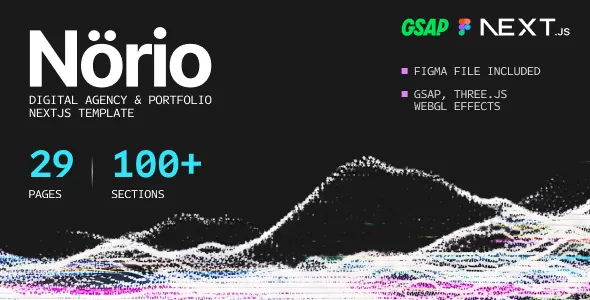
Norio – Creative Agency Next.js Template
Norio – Creative Agency Next.js Template is a website development solution for creative agencies, digital studios, branding companies, design professionals, marketing teams, and independent creative businesses looking to establish a modern online presence. In a competitive digital environment, agencies need websites that communicate their identity, showcase completed projects, explain their services, and encourage potential clients to start a conversation. Norio provides a template foundation for building a professional agency website that brings together creative presentation, business information, portfolio content, and contact opportunities.
A creative agency website is more than an online introduction. It acts as a digital portfolio where visitors can explore the company’s capabilities, review selected work, understand its approach, and evaluate whether its services match their requirements. Agencies working in branding, graphic design, web development, advertising, digital marketing, content creation, and creative strategy need a flexible way to present different types of projects. With suitable customization, Norio can help organize these elements into a consistent website experience.
Next.js is a React-based framework used to develop modern web applications and websites. It provides development capabilities for building structured interfaces, managing routes, and implementing different rendering and performance approaches. Norio is positioned as a creative agency Next.js template for developers and businesses interested in using this technology to create an agency-focused website. Its final layouts, components, integrations, and technical requirements depend on the supplied template version and documentation.
What Is Norio Creative Agency Next.js Template?
Norio is a website template intended for creative agencies and businesses that want to present their services, projects, and professional identity through a modern web interface. It offers a starting point for creating an agency website with sections dedicated to company information, creative services, portfolio projects, and client inquiries.
A branding agency may use this type of website to highlight visual identity projects, logo design, packaging, and brand strategy. A digital studio can focus on website development, user interface design, and digital experiences. A marketing agency may organize its content around campaign strategy, content creation, social media, and advertising services.
A dedicated agency website should make it easy for visitors to understand what the business offers. Clear service descriptions, relevant project examples, and accessible contact information help potential clients explore the company without unnecessary confusion.
Norio can be evaluated by developers looking for a Next.js-based starting point for an agency website. Before implementation, review the current demo and documentation to confirm the available page layouts, components, dependencies, setup process, and supported features.
Designed for Creative Agencies and Digital Studios
Creative agencies work across different industries and deliver a variety of services. Their websites need to communicate both visual quality and professional capability. Potential clients may be searching for branding support, website design, digital marketing, creative campaigns, or complete digital solutions.
Norio can serve as a foundation for a creative agency website that introduces the business and highlights its main areas of expertise. The homepage can present the agency’s identity, summarize its services, and direct visitors toward selected projects. Dedicated pages can provide additional information about the company’s capabilities and working approach.
For example, a design studio may organize its website around brand identity, graphic design, digital design, and creative direction. A development agency could focus on website creation, frontend development, web applications, and user experience. A marketing company might highlight campaign planning, content strategy, advertising, and audience engagement.
The most effective agency websites communicate services in straightforward language. Visitors should understand what each service involves, who it is intended for, and how the agency can be contacted.
Next.js Technology for Modern Website Development
Next.js is a framework built on React that supports the development of modern websites and web applications. It provides tools for organizing application routes, building reusable interface components, and implementing different rendering strategies according to project requirements.
As a Next.js template, Norio can be considered by developers who prefer a React-based development environment for creating agency websites. Developers can work with the supplied project structure and customize the interface to match the agency’s branding, content, and business objectives.
Depending on the template implementation and Next.js version, the project may use features such as file-based routing, reusable components, and framework-supported rendering approaches. The exact implementation should be checked in the supplied source code and documentation rather than assumed from the framework name alone.
Developers should review the required Node.js version, package manager, dependencies, configuration files, and installation instructions before beginning customization. Keeping the development environment aligned with the template’s documented requirements can help reduce setup and compatibility issues.
Showcase Creative Work Through a Professional Portfolio
A portfolio is one of the most important parts of a creative agency website. It gives potential clients an opportunity to review completed work and understand the agency’s design style, experience, and approach to different challenges.
Norio can be customized to present selected projects through visual sections and individual portfolio pages, depending on the layouts included in the template. Agencies can organize their work by service category, industry, project type, or creative discipline.
A branding studio might showcase logo systems, brand guidelines, packaging designs, and visual identity projects. A digital agency could display website interfaces, landing pages, application designs, and online campaigns. A creative production company may focus on photography, advertising visuals, and multimedia work.
Each portfolio entry should provide useful context. Instead of displaying images without explanation, agencies can describe the client’s objective, the challenge addressed, the services delivered, and the final outcome. Measurable results can be included when reliable information is available.
A carefully selected portfolio helps visitors understand the agency’s strengths and makes it easier to identify relevant examples.
Branding and Visual Identity Services
Brand identity helps businesses communicate their personality, values, and positioning through consistent visual and written elements. Creative agencies often support clients with logo design, brand guidelines, typography, color systems, packaging, and other identity-related work.
Norio can be used as a starting point for an agency website that presents branding services and related case studies. A dedicated service page can explain the agency’s approach to developing visual identities and maintaining consistency across different communication materials.
A branding project may involve understanding the client’s business, researching its audience, exploring creative directions, developing visual concepts, and preparing final brand assets. The actual process depends on the agency’s working methods and service scope.
Portfolio examples can demonstrate how branding decisions are applied across websites, printed materials, packaging, social media, and other business assets. These examples help potential clients understand the practical value of a consistent identity.
Agencies should describe their services accurately and avoid presenting a standard process as a guaranteed result for every client.
Website Design and Digital Experience Services
Website design is an important service for agencies working with businesses that need a professional digital presence. Clients may require corporate websites, landing pages, eCommerce experiences, portfolios, or custom digital interfaces.
A Norio-based website can introduce these services through dedicated sections that explain the agency’s design and development capabilities. A service page might describe website planning, interface design, responsive layouts, content organization, and implementation.
Agencies can also showcase website projects through screenshots and case studies. These examples should explain the purpose of each website and the agency’s contribution to the final experience.
For digital projects, visual presentation should be supported by practical information. Visitors may want to understand the types of websites the agency develops, the technologies it works with, and how a project typically progresses.
A clear service description helps potential clients determine whether the agency’s capabilities match their requirements.
Digital Marketing and Creative Campaigns
Digital marketing agencies need websites that communicate their ability to plan and deliver campaigns across relevant online channels. Their services may include content strategy, search engine optimization, social media marketing, paid advertising, email campaigns, and creative production.
Norio can be adapted to present these offerings through organized service pages and project examples. A marketing agency may explain how it approaches audience research, campaign planning, content development, creative production, and performance evaluation.
Case studies can help demonstrate how the agency has approached previous campaigns. They may include the client’s objectives, target audience, campaign activities, and documented outcomes. Any performance figures should be accurate and supported by reliable records.
Clear descriptions are particularly important because digital marketing covers many different activities. Visitors should understand which services are available and how the agency can support their business goals.
Homepage Design and Content Organization
The homepage is often the first introduction to a creative agency. It should communicate the company’s identity quickly and guide visitors toward its most relevant information.
A Norio-based website can be organized around sections such as:
- An introductory headline and agency overview.
- A summary of creative and digital services.
- Selected portfolio projects.
- Information about the agency’s approach.
- Company background and team details.
- Client testimonials, where genuine and authorized.
- Recent articles or agency updates.
- Contact information and inquiry opportunities.
The introductory section should explain what the agency does and identify the audience it serves. Supporting content can then introduce its main services and provide links to detailed pages.
Featured projects help demonstrate the agency’s capabilities, while company information gives visitors a better understanding of the people behind the work. A clear contact section makes it easier for interested businesses to begin a discussion.
Not every homepage needs every possible section. The layout should reflect the agency’s actual services, portfolio, and communication priorities.
Responsive Design for Different Devices
Visitors may discover an agency through a smartphone, explore its portfolio on a tablet, or review service information using a desktop computer. A responsive website should adapt its layout to different screen sizes while keeping important information accessible.
Norio can be customized for a range of screen sizes according to the responsive behavior implemented in the supplied template. Developers should review how navigation, typography, images, project galleries, and interactive elements behave across different devices.
On smaller screens, headings should remain readable, navigation should be convenient, and images should fit the available space. Buttons and contact links should be easy to select, while important information should not become hidden or difficult to access.
Responsive testing should cover the entire website rather than only the homepage. Portfolio pages, service descriptions, blog articles, and contact forms may each need additional adjustments.
Custom CSS, external libraries, embedded content, and third-party components can influence the final mobile experience. Testing after significant design changes helps maintain a consistent presentation.
Customization and Agency Brand Identity
A creative agency website should reflect the business’s visual identity rather than look like an unmodified template. Customization helps align the website with the agency’s positioning, target audience, and creative style.
Developers can adapt Norio according to the structure and styling options available in the supplied project. This may involve modifying colors, typography, images, spacing, page sections, navigation, and reusable interface components.
A branding studio may choose an expressive visual presentation, while a corporate digital agency might prefer a clean and structured design. A photography-focused creative company may prioritize large images, whereas a development studio may emphasize project details and technical capabilities.
Consistency is essential across the complete website. The logo, color palette, typography, buttons, image treatments, and written content should work together.
Before making extensive modifications, developers should identify how the template organizes its components, styles, and assets. Maintaining a clear structure makes future updates easier and reduces the risk of introducing unnecessary inconsistencies.
Reusable Components and Maintainable Development
Reusable components are a common part of React-based development. They allow developers to create interface elements that can be used across multiple pages instead of repeatedly writing the same code.
Depending on its source structure, Norio may include reusable sections or components for elements such as navigation, buttons, project cards, service blocks, and content layouts. Developers should inspect the supplied code to understand which components are already available and how they are intended to be used.
A consistent component structure can help maintain the website as the agency adds new services, portfolio projects, and articles. For example, a shared project card component can keep portfolio previews visually consistent across different sections.
Developers can also organize content and styling into manageable files. Clear naming conventions and a logical folder structure make it easier to locate assets and update individual elements.
The actual component architecture depends on the supplied template. It should be reviewed before extending the project or introducing additional development patterns.
SEO-Friendly Structure for Creative Agency Websites
Search engine optimization helps search engines understand website content and connect it with relevant search queries. A Next.js template can provide a development foundation, but SEO performance depends on content quality, technical implementation, competition, website performance, and ongoing optimization.
Creative agencies can create dedicated pages for important services such as branding, website design, digital marketing, graphic design, and creative strategy. Each page should have a descriptive title, clear headings, useful information, and relevant internal links.
Portfolio case studies can also contribute to the website’s content. Each project should explain the work completed and provide context that helps visitors understand its relevance.
Descriptive URLs and logical navigation make it easier for visitors to explore related pages. For example, a branding article can link to the branding service page and relevant portfolio examples.
Image optimization is important for creative websites because portfolio pages often contain large visual assets. Descriptive file names, appropriate alternative text, and optimized image dimensions can support accessibility and page performance.
Next.js provides framework capabilities that developers can use when implementing metadata and rendering strategies. The exact SEO configuration depends on the version and implementation used by the template. A theme or template alone cannot guarantee search rankings or organic traffic.
Content Marketing and Agency Blogging
A blog can help creative agencies share their expertise, answer client questions, and publish information about their services and projects. Regularly updated articles can also provide additional opportunities for visitors to discover the agency.
Norio can be extended with blog content according to the routing and page structures included in the project. Useful categories may include branding, web design, digital marketing, creative strategy, design inspiration, and agency news.
Possible article topics include:
- How to develop a consistent brand identity.
- Important considerations when planning a business website.
- Understanding the role of user experience in web design.
- How creative agencies approach project planning.
- Preparing a business for a website redesign.
- The value of professional portfolio presentation.
- Common considerations in digital campaign planning.
- How visual consistency supports brand recognition.
Articles should provide original and practical information rather than simply repeating search phrases. Internal links can connect educational content with relevant services and portfolio projects, giving readers a natural way to explore the agency.
A manageable publishing schedule is generally more sustainable than producing large quantities of shallow content.
Portfolio Case Studies and Client Testimonials
Case studies provide a structured way to explain the agency’s work. They help potential clients understand how the team approaches challenges, makes creative decisions, and delivers project outcomes.
A case study can begin with the client’s requirements and explain the problem the project needed to address. It can then describe the agency’s contribution, creative approach, important deliverables, and final result.
For example, a website design case study might discuss the client’s existing website challenges, the intended audience, the design direction, and the final interface. A branding case study could explain the business’s identity requirements and the visual system developed for the project.
Testimonials can add another perspective when they are genuine and published with appropriate permission. They should represent actual client feedback and should not be presented as invented endorsements.
Combining case studies with clear service descriptions gives visitors a more complete understanding of the agency’s experience.
Lead Generation and Contact Opportunities
A creative agency website should provide a convenient way for potential clients to make contact. Visitors may want to request a proposal, discuss a new project, ask about services, or arrange an introductory conversation.
Norio can be customized with contact sections and suitable form integrations according to the requirements of the project. A basic inquiry form may collect a name, email address, company name, requested service, budget range where appropriate, and a short project description.
Forms should request enough information to support an initial response without making the process unnecessarily complicated. Clear field labels and helpful instructions make it easier for visitors to complete the form.
Calls to action should match the surrounding content. A branding service page might invite visitors to discuss a new identity project, while a portfolio page could encourage them to contact the agency about similar work.
Before launch, test form validation, email delivery, confirmation messages, and spam protection. Also provide alternative contact details so visitors have another way to reach the business.
Performance and Website Optimization
Website performance affects how easily visitors can browse an agency’s services and portfolio. Creative websites often contain high-resolution images, animations, and external media, so performance should be considered during development.
The actual speed of a Norio website depends on its implementation, hosting environment, image sizes, scripts, dependencies, fonts, and external integrations. Next.js provides tools that developers can use to build optimized experiences, but the final result depends on how those tools are applied.
Start by optimizing portfolio images and selecting suitable dimensions for each display area. Large photographs should be compressed while retaining enough detail to communicate the quality of the work.
Review scripts, animations, and third-party integrations to identify unnecessary components. Use performance testing to understand which pages or assets require attention.
Testing should cover the homepage, service pages, portfolio entries, blog content, and contact forms. Regular monitoring helps identify issues as the website grows.
Accessibility and User-Friendly Navigation
An effective agency website should make information easy to locate and understand. Clear navigation, readable typography, suitable contrast, and descriptive labels help create a more accessible experience.
When customizing Norio, developers should maintain logical heading structures, use descriptive link text, and provide suitable alternative text for informative images. Interactive elements should be recognizable and usable with appropriate input methods.
Navigation should prioritize important pages such as Home, About, Services, Work, Blog, and Contact. The exact structure should reflect the agency’s business model and content requirements.
Forms should include clear labels and understandable validation messages. Important information should not rely entirely on color, animation, or visual effects to communicate its meaning.
Accessibility depends on the implementation and content of the website. Automated checks can help identify some issues, while keyboard testing and manual reviews provide additional insight.
Integrations and Supporting Development Tools
A creative agency website may require integrations for contact forms, analytics, content management, email communication, project inquiries, and other business functions.
Because Norio is a Next.js template, integrations may involve compatible React packages, external APIs, or third-party services rather than traditional WordPress plugins. Developers should review each service’s documentation and confirm compatibility with the project’s Next.js version.
Analytics tools can help agencies understand website traffic and visitor behavior, subject to applicable privacy and consent requirements. Contact services can support inquiry collection, while suitable content systems may help manage articles and portfolio information.
Additional libraries should be selected carefully. Every dependency introduces maintenance considerations, so developers should review its documentation, update history, licensing, and compatibility.
Avoid adding unnecessary packages that duplicate existing functionality. Keeping integrations focused can make the project easier to maintain and troubleshoot.
Security and Ongoing Website Maintenance
A professional website needs regular maintenance to remain reliable. Creative agencies may frequently add portfolio projects, update service descriptions, and publish new content, making ongoing management important.
Developers should keep the framework, dependencies, and supporting packages updated according to their compatibility requirements. Updates should be reviewed and tested before being applied to a production website.
Sensitive information should be handled securely. API keys, private credentials, and environment-specific configuration values should not be exposed in publicly accessible frontend code. Any server-side integrations should follow the security practices recommended by the relevant services and framework documentation.
Regular backups and version control can help protect project files and support recovery after unexpected changes. Developers should also review broken links, outdated content, form functionality, and external integrations.
Maintenance should include periodic performance and accessibility checks. A website that is reviewed regularly is easier to improve as the agency’s services and portfolio develop.
Who Should Consider Norio Next.js Template?
Norio may be worth evaluating for different businesses and professionals working in creative and digital industries.
Creative agencies: Companies can introduce their services, showcase creative projects, and provide business contact opportunities.
Digital marketing agencies: Marketing teams can present campaign services, content strategies, and selected client work.
Branding studios: Design professionals can display identity projects, logo systems, brand guidelines, and visual communication work.
Web design agencies: Teams can showcase website interfaces, digital experiences, and development projects.
Graphic design studios: Creative professionals can organize illustrations, print designs, marketing visuals, and other portfolio work.
Advertising agencies: Businesses can introduce campaign planning, creative production, and advertising services.
Independent designers: Freelancers can build professional portfolios featuring selected projects, skills, and contact information.
Technology and development studios: Companies can present digital capabilities, development services, and case studies.
Creative startups: New businesses can establish a professional online presence and introduce their brand and services.
The suitability of Norio depends on the project’s technical and design requirements. Before implementation, review the live demo, source structure, documentation, dependencies, and supported framework version.
Tips for Building a Successful Website with Norio
A template provides a development foundation, but the success of an agency website depends on its content, visual identity, project presentation, and technical implementation.
Begin by defining the website’s main objective. Decide whether the primary goal is to attract client inquiries, showcase creative projects, introduce services, build brand awareness, or support several related activities.
Prepare essential content before customizing the design. This may include an agency introduction, service descriptions, selected case studies, project photographs, team information, and contact details.
Organize the portfolio around relevant work. Each project should include enough context for visitors to understand the agency’s role and contribution. Replace generic images with original visuals or properly licensed assets.
Maintain a consistent visual identity through colors, typography, spacing, photography, and written content. Keep navigation simple and make important information easy to find.
During development, review the project structure and understand how its components, routes, styles, and dependencies work. Avoid making unnecessary changes to core files when a reusable component or styling adjustment can achieve the same result.
Before launch, test the website across different devices and browsers. Review loading performance, navigation, metadata, images, contact forms, and interactive elements. Check spelling, grammar, and the accuracy of all published information.
Finally, establish a maintenance routine that includes dependency updates, backups, security reviews, performance testing, and content improvements. These practices help keep the website useful as the agency grows.
Final Thoughts on Norio – Creative Agency Next.js Template
Norio – Creative Agency Next.js Template is a website development option to consider for creative agencies, digital studios, branding companies, design professionals, and businesses working in digital services. Its agency-focused positioning makes it relevant to projects that need to introduce professional capabilities, showcase completed work, explain creative services, and encourage potential clients to make contact.
A well-planned agency website can combine service descriptions, portfolio case studies, company information, blog articles, and inquiry opportunities. Branding studios can focus on visual identity projects, while digital agencies can highlight website development, marketing, and creative campaigns. Independent professionals can use a portfolio structure to communicate their skills and experience.
The Next.js foundation can be useful for developers who prefer a React-based approach to building modern websites. However, the final functionality, page structure, components, and technical requirements depend on the supplied template version and its documentation. Reviewing the source code and setup instructions before implementation helps confirm whether the project matches the intended development environment.
Long-term website quality also depends on original content, responsive testing, accessibility, performance optimization, security, and regular maintenance. A template alone cannot guarantee search rankings, website traffic, or new clients, but it can provide a useful starting point for a professional digital presence.
For creative businesses looking to build an agency website with Next.js, Norio can be evaluated as part of a broader development strategy. With thoughtful customization, genuine portfolio content, clear service information, and consistent maintenance, a well-structured website can support brand recognition, project discovery, and client communication.