My Account
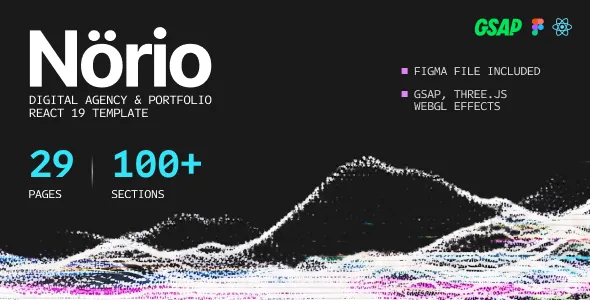
Norio – Creative Agency React Template
Norio – Creative Agency React Template is a modern website development solution designed for creative agencies, digital studios, branding companies, marketing professionals, design teams, and independent creative specialists who want to establish a professional online presence. Built around the React development ecosystem, this template provides a starting point for creating an engaging agency website with a structured layout, visually appealing sections, and content focused on presenting services, showcasing creative work, and attracting potential clients. It can be considered for businesses that need a flexible website foundation to communicate their brand identity, introduce their expertise, and highlight the value of their creative services.
A successful agency website should do more than display attractive visuals. It needs to explain what the agency offers, demonstrate its capabilities, establish credibility, and make it easy for visitors to explore projects or start a business conversation. Norio is intended to support these goals through a creative website presentation that can be adapted to different agency identities and project requirements. With suitable customization, developers can use the template to build pages for company introductions, creative services, portfolio presentations, project details, team information, testimonials, and contact opportunities.
React provides a component-based approach to frontend development, making it possible to organize website interfaces into reusable sections and elements. This can help developers maintain a consistent design while adapting individual parts of the website to different content needs. The final functionality, supported libraries, available components, and customization options depend on the template package and its supplied documentation. By combining the template with original content, suitable imagery, and a clear website strategy, agencies can create a professional digital experience that represents their work and business objectives.
What Is Norio Creative Agency React Template?
Norio is a React-based website template intended for creative agency and professional service website projects. It provides a frontend starting point for developers who want to create an agency-focused website without designing every interface element from the beginning.
Creative agencies often need to present several types of information. They may introduce their company, explain their services, display completed projects, describe their creative process, and provide contact details for prospective clients. A purpose-oriented template can help organize these elements into a consistent website structure.
Norio can be evaluated for digital agencies, branding studios, advertising companies, graphic design teams, web development agencies, creative consultants, and independent professionals. Its final suitability depends on the layouts and components included in the current package and the extent of customization required.
React-based templates are generally intended for developers who are comfortable working with frontend technologies. They can be customized by editing components, styling, content, and project configuration according to the supplied source code. Developers should review the documentation to understand the installation process, dependencies, supported versions, and available page structures before beginning a project.
Built for Creative Agencies and Digital Studios
Creative agencies need websites that communicate their identity while demonstrating the quality of their work. Potential clients often compare multiple service providers before deciding whom to contact. A well-organized website can help an agency explain its strengths and make its services easier to understand.
Norio can provide a foundation for presenting a creative business through dedicated website sections. An agency can introduce its positioning, describe its core capabilities, highlight selected projects, and provide information about its team or working approach.
A branding studio may focus on visual identity projects, logo development, packaging, and brand strategy. A digital marketing agency may highlight campaign planning, content development, social media services, and digital advertising. A web development company could showcase website projects, user interface design, and technical implementation.
The content should reflect the actual services offered by the business. Instead of relying on generic promotional statements, agencies can explain their approach, describe the challenges they solve, and present relevant examples of their work. This makes the website more informative and helps visitors understand whether the agency is suitable for their requirements.
Modern React-Based Frontend Structure
React is a widely used JavaScript library for building user interfaces. Its component-based architecture allows developers to divide an interface into smaller, reusable parts. This approach can make it easier to maintain consistent design elements across multiple pages and sections.
As a React website template, Norio offers a starting point for developers who want to work within this frontend environment. Depending on the supplied project structure, developers may be able to customize navigation elements, content sections, buttons, cards, portfolio layouts, and other interface components.
Reusable components can be particularly useful for agency websites because many pages share common design elements. A navigation header, footer, service card, or project preview may appear in multiple locations. Maintaining these elements through reusable code can help reduce unnecessary duplication.
The exact React version, build tooling, package dependencies, routing approach, and project organization should be verified in the included documentation. Developers should also check whether the template uses additional libraries or styling systems before making significant changes.
Professional Homepage Presentation
The homepage plays an important role in introducing a creative agency. Visitors should quickly understand the company’s purpose, the services it provides, and the type of clients it works with.
Norio can be used as a starting point for a homepage that introduces the agency through a clear headline, supporting description, and relevant visual content. A strong opening section should communicate the business’s main offering without forcing visitors to search through multiple pages.
Supporting sections can introduce the agency’s services, selected projects, experience, team, and client feedback. Each section should contribute useful information and guide visitors toward the next relevant part of the website.
A creative agency may use its homepage to highlight a distinctive visual identity, while a professional digital studio may focus on service descriptions and completed projects. The best structure depends on the audience and the agency’s primary business objectives.
Avoid filling the homepage with unnecessary content. A focused presentation with clear headings, meaningful visuals, and direct navigation can create a more useful experience than a page containing too many unrelated sections.
Portfolio and Project Showcase
A portfolio is one of the most important elements of many creative agency websites. It allows visitors to review previous work and understand the agency’s visual style, capabilities, and experience.
Norio can be adapted for a portfolio presentation featuring selected projects and relevant descriptions. Depending on the available components, developers can organize project previews into a structured gallery or create dedicated project pages.
A strong portfolio should explain more than what a finished design looks like. Each project can include information about the client’s requirements, the challenge involved, the agency’s contribution, and the final outcome. Where verified performance information is available, agencies can also include measurable results with appropriate context.
For example, a branding agency may showcase a complete identity system, including logos, colors, typography, and packaging. A web design studio might present website interfaces and responsive layouts. A marketing agency could describe campaign objectives, creative direction, and documented results.
Selecting relevant projects is more effective than displaying every completed assignment. A carefully organized portfolio helps prospective clients identify the agency’s strengths and understand the kind of work it can deliver.
Dedicated Creative Services Sections
A professional agency website should make its services easy to discover. Visitors may arrive with a particular requirement, such as website development, brand identity design, digital marketing, or creative consulting. Clear service information helps them determine whether the agency offers an appropriate solution.
Norio can serve as a starting point for organizing services into separate sections or dedicated pages. Depending on the supplied layouts, developers can customize service cards, descriptions, visual elements, and calls to action.
Possible service categories include:
- Brand Identity Design: Present logo creation, brand guidelines, visual systems, and related identity services.
- Website Design: Explain website planning, interface design, responsive layouts, and user experience services.
- Web Development: Introduce frontend development, website implementation, and relevant technical capabilities.
- Digital Marketing: Describe campaign planning, content strategy, search marketing, and digital promotion.
- Graphic Design: Showcase creative materials such as brochures, advertisements, presentations, and digital graphics.
- Creative Strategy: Explain research, creative planning, brand positioning, and communication approaches.
Agencies should only publish services they genuinely provide. Clear descriptions of deliverables, processes, and intended audiences can help visitors understand the scope of each offering.
Responsive Website Development
Visitors may access an agency website through desktop computers, laptops, tablets, and smartphones. Responsive presentation is therefore an important part of modern website development.
Norio can be customized for different screen sizes according to the responsive behavior supported by its layouts and styles. Developers should review how navigation, text, images, portfolio sections, and interactive elements behave across different viewport widths.
On smaller screens, headings should remain readable, buttons should be easy to select, and navigation should be straightforward. Images should fit their containers without unnecessary cropping, while important content should remain accessible.
Responsive testing should cover the complete website rather than only the homepage. A portfolio gallery, service page, project detail layout, and contact form may each require different adjustments.
Developers should also consider how custom CSS, third-party components, embedded media, and additional scripts affect mobile presentation. Testing after major changes can help identify layout issues before the website is published.
Customization and Brand Identity
Every creative agency has its own visual identity, target audience, and communication style. A template should be customized to reflect these differences rather than published with unchanged placeholder content.
Depending on the supplied source code and styling approach, Norio can be adapted through changes to typography, colors, spacing, images, text, layouts, and reusable interface components. Developers can use these adjustments to create a website that reflects the agency’s branding.
A branding studio may prefer expressive typography and strong visual compositions. A corporate creative agency might choose a more restrained design with clear service information. A photography or design portfolio may prioritize large project images, while a marketing consultancy may focus on readable content and case studies.
Consistency is essential across the website. The same color palette, typography hierarchy, button treatments, and spacing principles should be used throughout the main pages.
Before making extensive changes, developers should understand how the template organizes its styles and components. Keeping customizations organized makes future updates and maintenance easier.
User-Friendly Navigation and Page Organization
Navigation helps visitors move through a website and locate relevant information. For a creative agency, important destinations may include the homepage, services, portfolio, about page, blog, and contact section.
Norio can be configured around a navigation structure that reflects the agency’s content and priorities. The exact navigation components and routing behavior should be checked in the supplied project files.
Menu labels should be short and understandable. Visitors should not have to guess where to find project examples or how to contact the business. Important pages should be accessible without unnecessary navigation steps.
A larger agency may require additional pages for individual services, team members, industry expertise, and project case studies. A smaller studio may benefit from a simpler structure that focuses on its main offerings and selected work.
Clear navigation improves the overall browsing experience and helps visitors understand how the different sections of the website relate to one another.
About Page and Agency Introduction
The About page gives visitors an opportunity to learn more about the people and ideas behind a creative business. It can explain the agency’s background, working philosophy, experience, and approach to client projects.
Norio can be adapted to include company information and supporting content that introduces the agency. Depending on the available layouts, developers can create sections for the company story, team members, professional experience, and business values.
An effective About page should be specific and informative. Instead of relying on broad statements about creativity or excellence, agencies can describe the problems they solve, the industries they serve, and the methods they use to approach projects.
Team profiles can introduce key professionals and their responsibilities. Genuine photographs and accurate descriptions can make the agency feel more approachable and help prospective clients understand who they may work with.
The About page should support the agency’s broader message and connect naturally with service descriptions and portfolio examples.
Testimonials and Client Trust
Trust is an important factor when a potential client evaluates a creative agency. Visitors may want to know whether the business has experience handling similar projects and whether previous clients were satisfied with the collaboration.
A testimonial section can provide useful context when it contains genuine feedback shared with permission. Norio may be adapted to present client comments, project feedback, or other approved forms of social proof, depending on the available components.
Testimonials should include accurate information and should not be fabricated. If client names, company details, or photographs are displayed, agencies should have the necessary permission to publish them.
Case studies can provide additional credibility by explaining the project’s objectives, process, and outcome. Together, authentic testimonials and detailed project examples can help visitors make a more informed decision.
Contact Forms and Lead Generation
A creative agency website should provide a convenient way for potential clients to make contact. Visitors may want to request a quotation, discuss a project, ask about services, or arrange an introductory conversation.
Norio can be customized to include contact information and suitable inquiry pathways. Depending on the project requirements and available components, developers may integrate a contact form or connect an external form service.
A useful inquiry form should collect only the information needed to begin a conversation. Common fields may include a name, email address, company name, service requirement, and a short project description.
Form labels should be clear, and required fields should be identified appropriately. Visitors should receive understandable confirmation after submitting their details.
Developers should test form validation, submission handling, email delivery, and spam protection before launch. A form that appears correctly but fails to deliver inquiries can undermine the purpose of the website.
SEO-Friendly Website Structure
Search engine optimization helps make website content easier for search engines and visitors to understand. A React template can provide a frontend foundation, but successful SEO depends on several additional factors, including content quality, technical implementation, page structure, performance, and competition.
A well-organized website should give each important page a clear purpose. Service pages should explain individual offerings, portfolio pages should describe completed work, and blog articles should answer relevant questions from the agency’s audience.
Developers should review page titles, meta descriptions, heading hierarchy, descriptive URLs, internal links, and image alternative text. The appropriate implementation depends on the template’s architecture and whether additional SEO tools or libraries are used.
For React projects, developers should also review how page content is rendered and made available to search engines. If the project requires server-side rendering, static generation, or other rendering strategies, these should be evaluated according to the actual project setup rather than assumed to be included.
No template can guarantee search rankings or organic traffic. Useful content, technically sound implementation, and ongoing optimization are essential parts of a sustainable SEO strategy.
Content Marketing and Blog Integration
A blog can help a creative agency publish useful information, explain its expertise, and answer questions from potential clients. It can also provide additional opportunities to connect educational content with relevant service pages.
Norio may be extended with blog-related pages or content sections depending on its included layouts and the development work required. Developers should verify whether blog components are supplied or whether they need to build or integrate them separately.
A branding agency could publish articles about visual identity and brand consistency. A web design studio might explain website usability, responsive design, or interface trends. A marketing consultancy could share practical guidance about campaign planning and content strategy.
Blog posts should provide genuine value rather than repeat keywords without useful information. Descriptive headings, original examples, relevant images, and internal links can make articles easier to read and navigate.
A manageable publishing schedule is often more effective than publishing large quantities of shallow content. Focus on accuracy, relevance, and practical information that supports the agency’s audience.
Performance and Loading Optimization
Website performance influences how visitors experience an agency’s online presence. Large images, unnecessary scripts, inefficient components, and external integrations can affect loading behavior.
The performance of a Norio-based website depends on its implementation, hosting environment, asset sizes, dependencies, and optimization practices. A React-based structure does not automatically guarantee fast loading.
Developers can begin by optimizing image dimensions and compression. Portfolio images should retain sufficient visual quality while avoiding unnecessarily large files. Unused dependencies and scripts should be reviewed, and third-party integrations should be evaluated for their impact on loading performance.
Where supported by the project setup, developers may consider code splitting, lazy loading, caching, and other optimization techniques. The appropriate methods depend on the build system and application architecture.
Performance testing should cover important pages and different device conditions. Regular reviews can help identify issues as new content, images, and integrations are added.
Accessibility and Usability Considerations
An agency website should be understandable and usable by visitors with different needs and browsing preferences. Accessibility should be considered during both customization and development.
Developers working with Norio should use semantic HTML elements, logical heading structures, descriptive link labels, and suitable alternative text for meaningful images. Text and background combinations should provide sufficient contrast, while interactive elements should be usable through appropriate keyboard controls.
Forms should have clear labels and understandable validation messages. Navigation should remain consistent, and important information should not rely on color alone.
Accessibility should be checked across the complete website. Automated testing tools can identify some issues, but manual keyboard testing and practical usability reviews are also important.
A thoughtful approach to accessibility can make the website easier to navigate and improve the overall experience for a broader audience.
React Template Customization for Developers
Norio is intended as a development starting point rather than a complete business website that requires no technical work. Developers can review the source files and adapt the project according to the requirements of the final website.
A typical customization process may include reviewing the project structure, installing the documented dependencies, configuring the development environment, updating content, modifying reusable components, and adjusting styles.
Developers should check the supplied documentation for the correct installation commands and supported runtime versions. The package manager, scripts, build process, and dependencies should be confirmed from the actual project files.
Before modifying shared components, identify where they are used throughout the website. A change to a common navigation or footer component may affect several pages. Organizing custom code and maintaining clear naming conventions can make the project easier to update.
It is also useful to keep a backup or version-controlled copy of the original project before making substantial modifications.
Who Can Use Norio Creative Agency React Template?
Norio may be considered by different professionals and businesses that need a creative agency website built with React.
Creative agencies: Present services, introduce the company, and showcase selected client projects.
Digital marketing companies: Explain marketing services, display campaign examples, and provide inquiry opportunities.
Branding studios: Highlight brand identity work, visual systems, and creative strategy.
Web design agencies: Showcase website interfaces, responsive design projects, and user experience work.
Development studios: Introduce frontend development capabilities, technical services, and completed digital projects.
Graphic designers: Create an online portfolio that highlights selected designs and professional experience.
Freelancers: Establish a personal business presence with service descriptions, project examples, and contact information.
Creative consultants: Explain their expertise, introduce consulting services, and publish useful industry content.
The suitability of the template depends on the actual project requirements, supplied components, and customization effort. Reviewing the live demo, documentation, and included source files before implementation is recommended.
Tips for Building a Successful Website with Norio
A professional website requires more than an attractive starting layout. The content, visual identity, navigation, and technical implementation should work together to support the agency’s objectives.
Start by defining the main purpose of the website. Decide whether the priority is to attract project inquiries, showcase a portfolio, introduce agency services, publish educational content, or support several related goals.
Prepare the essential content before making extensive design changes. This may include the agency introduction, service descriptions, project details, team information, testimonials, and contact information. Real content makes it easier to select appropriate layouts and remove unnecessary sections.
Use original project images and accurate business information. Replace all placeholder text and visuals before publishing the website. Establish a consistent visual identity through colors, typography, spacing, and image selection.
Keep navigation straightforward and ensure that important pages are easy to locate. Each page should provide useful information and guide visitors toward an appropriate next step.
Before launch, test the website across different screen sizes and browsers. Review navigation, links, forms, image presentation, page loading, accessibility, and SEO-related settings. Check that all published information is accurate.
Finally, maintain the project through regular content reviews, dependency updates, backups, and performance testing. A planned maintenance process helps keep the website dependable as the agency grows.
Final Thoughts on Norio – Creative Agency React Template
Norio – Creative Agency React Template is a potential starting point for developers and creative businesses looking to build a modern agency website using React. Its intended application makes it relevant to digital studios, branding companies, marketing agencies, design professionals, and independent creatives who want to present their services and completed work through a professional online presence.
A well-customized agency website can combine an engaging homepage, organized service information, portfolio presentations, company details, and clear contact opportunities. Developers can adapt the supplied components and styling to match the agency’s visual identity, content strategy, and business objectives.
The final capabilities depend on the included source code, project configuration, React version, dependencies, and available documentation. Reviewing these details before installation helps developers understand the implementation requirements and determine whether the template matches their project.
Long-term website quality also depends on responsive testing, performance optimization, accessibility, SEO practices, original content, and regular maintenance. A template alone cannot guarantee search rankings, client inquiries, or business growth, but it can provide a useful foundation for a carefully planned website.
For creative businesses seeking a React-based website development starting point, Norio can be evaluated as part of a broader digital strategy. With thoughtful customization and relevant content, it can help establish a consistent online presentation, communicate professional capabilities, and make it easier for prospective clients to explore the agency’s work.