My Account
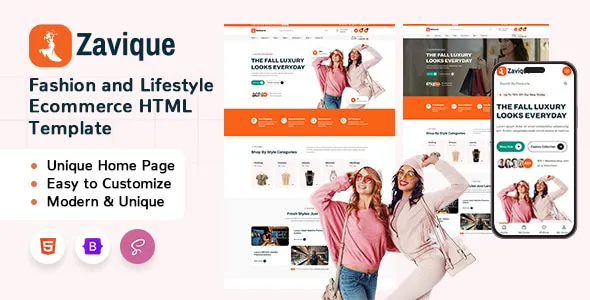
Zavique – Fashion and Lifestyle Ecommerce HTML Template
Zavique – Fashion and Lifestyle Ecommerce HTML Template is a modern website development solution designed for fashion retailers, clothing brands, lifestyle stores, online boutiques, and businesses looking to establish a professional ecommerce presence. Created as an HTML template, Zavique provides a frontend foundation for building an attractive online shopping experience where products, collections, promotional content, and brand information can be presented in an organized way. It can be considered for ecommerce projects that need a stylish digital storefront with a focus on product discovery, visual presentation, and convenient navigation.
A successful fashion ecommerce website needs to combine attractive design with practical shopping functionality. Customers should be able to explore product categories, view product details, compare available options, and find relevant shopping information without unnecessary steps. Zavique is intended to support this type of online store presentation through a fashion-oriented website structure that can be customized to suit different brands and retail concepts. With appropriate development and integration, businesses can use the template as a starting point for showcasing clothing, footwear, accessories, beauty products, and lifestyle collections.
HTML templates offer developers a flexible foundation for creating and customizing website interfaces. They provide the structure and styling that can be adapted using HTML, CSS, JavaScript, and other technologies included in the project. Zavique can be customized with brand-specific colors, typography, product images, promotional banners, and website content. The actual layouts, components, scripts, and supported integrations depend on the files supplied with the template. By combining the template with suitable ecommerce functionality and original product content, businesses can develop a storefront that reflects their identity and supports their online retail objectives.
What Is Zavique Fashion and Lifestyle Ecommerce HTML Template?
Zavique is an HTML ecommerce template designed for fashion and lifestyle-related online shopping websites. It provides a starting point for developers who want to create a visually consistent storefront without building every interface element from scratch.
Fashion and lifestyle businesses often need to display a wide variety of products and collections. A clothing retailer may organize its inventory by gender, season, product type, or style. An accessories store may focus on bags, watches, jewelry, and other fashion essentials. A lifestyle brand might combine clothing, home accessories, personal care products, and everyday essentials.
A suitable ecommerce website should make these collections easy to explore. Visitors should be able to understand the brand, discover featured products, review product information, and locate important shopping details. Zavique can be evaluated as a frontend foundation for organizing these elements into a professional shopping interface.
Because it is an HTML template, Zavique should not be confused with a complete ecommerce platform or a ready-to-use store management system. Product databases, payment processing, order management, customer accounts, inventory tracking, and other backend operations generally require an ecommerce platform, custom development, or suitable third-party integrations. Developers should review the supplied documentation to understand what is included.
Designed for Fashion and Lifestyle Online Stores
Fashion ecommerce websites depend heavily on presentation. Customers often make purchasing decisions after considering product appearance, available colors, sizing, materials, pricing, and styling possibilities. A well-organized storefront helps shoppers discover products and understand the available collections.
Zavique can be considered for several types of fashion and lifestyle businesses, including:
- Clothing Stores: Present everyday clothing, seasonal collections, casual wear, formal outfits, and fashion essentials.
- Fashion Boutiques: Showcase selected collections, exclusive designs, and boutique product ranges.
- Footwear Retailers: Organize sneakers, formal shoes, sandals, boots, and other footwear categories.
- Accessories Shops: Display bags, belts, wallets, watches, jewelry, and other fashion accessories.
- Lifestyle Brands: Introduce products that support fashion, personal style, and everyday living.
- Beauty and Personal Care Stores: Present cosmetics, skincare, grooming products, and beauty accessories when suitable for the store’s product range.
- Multi-Category Retailers: Organize different lifestyle product collections within one ecommerce storefront.
The final website should reflect the actual products and audience of the business. Using relevant product photographs, clear category names, accurate descriptions, and consistent branding helps create a more recognizable shopping experience.
Modern Ecommerce Homepage Presentation
The homepage is an important part of an online store because it introduces the brand and guides visitors toward relevant products. Customers should be able to understand what the business sells and discover its main collections without having to search through complicated navigation.
Zavique can serve as a foundation for a fashion ecommerce homepage with sections for promotional content, featured collections, new arrivals, popular products, and brand information, depending on the layouts provided in the template.
A strong introductory banner can communicate a seasonal offer, new collection, or important brand message. Supporting content can direct visitors toward specific categories or featured products. Product sections can then help shoppers explore the store’s selection.
A fashion retailer may use its homepage to promote a new seasonal collection, while a lifestyle store may highlight different product categories. A boutique can emphasize exclusive products or carefully selected designs.
The homepage should not become overloaded with promotional messages. Each section should have a clear purpose and help visitors move naturally from discovering the brand to exploring its products.
Product Categories and Collection Organization
Product categories make it easier for customers to navigate an ecommerce website. A fashion store may sell many different products, and clear organization helps shoppers locate the items they want.
Zavique can be customized to present category-based shopping sections according to the structure supported by its HTML layouts. Developers can organize the storefront around product types, collections, brands, seasons, or customer preferences.
Common fashion ecommerce categories may include:
- Men’s Clothing
- Women’s Clothing
- Kids’ Fashion
- T-Shirts and Shirts
- Jeans and Trousers
- Dresses and Skirts
- Jackets and Outerwear
- Shoes and Sneakers
- Bags and Accessories
- Watches and Jewelry
- Lifestyle Products
- New Arrivals and Sale Items
Category names should be straightforward and familiar to customers. Avoid creating too many overlapping categories, as this can make navigation confusing. A well-planned structure helps visitors understand the store’s product range and locate relevant collections more efficiently.
For larger stores, additional filters and subcategories may be useful. These can be implemented through suitable frontend scripts and connected ecommerce functionality, depending on the project requirements.
Product Listing and Shopping Experience
Product listing pages allow customers to browse multiple items within a particular category or collection. These pages are important because they help visitors compare products and decide which items they want to explore in greater detail.
Zavique can be adapted to present product listings with relevant information such as product images, names, prices, and other details supported by the supplied design. Developers can customize product cards to match the store’s visual identity and product requirements.
A clear product card should make the item easy to recognize. Product images should be consistent in quality and proportion, while product names and prices should remain readable. If supported by the implementation, additional information such as discount labels, color choices, or availability indicators can help shoppers understand the available options.
Product listings should also provide a convenient way to access individual product pages. Customers should not have to navigate through several unnecessary steps to learn more about an item.
For stores with larger inventories, developers may implement sorting and filtering features through JavaScript or connect the interface to a suitable ecommerce backend. The availability of these functions should be confirmed from the included files and documentation.
Detailed Product Pages
Product detail pages provide the information customers need before making a purchasing decision. For fashion and lifestyle products, this information may include images, descriptions, sizes, colors, materials, prices, care instructions, and delivery details.
Zavique can be used as a starting point for presenting individual products through a structured layout. Depending on the included design components, developers can customize product images, descriptions, pricing information, and purchasing interface elements.
A useful product page should include:
- A clear product name and accurate description.
- High-quality images showing the product from relevant angles.
- Available sizes, colors, or variations where applicable.
- Correct pricing and discount information.
- Material, fabric, or product specifications.
- Relevant care or usage instructions.
- Delivery, return, and exchange information.
- A clear purchase or inquiry pathway.
Fashion businesses should provide accurate sizing and product information to help customers choose suitable items. Images should represent the actual product as closely as possible, and product variations should be described clearly.
A detailed product page can improve the shopping experience by answering common customer questions before they need to contact the store.
Fashion Collection and Promotional Banners
Promotional banners are useful for introducing new collections, seasonal campaigns, and special offers. Fashion brands often use visual storytelling to communicate their identity and create interest in featured products.
Zavique can be customized with brand-specific banners and promotional graphics according to the available layout structure. Developers can replace placeholder images and text with original campaign content that matches the store’s marketing strategy.
Possible banner themes include:
- New season fashion collections.
- Summer and winter clothing launches.
- Casual and formal fashion ranges.
- Footwear and accessories promotions.
- Limited-time discounts.
- Festival and holiday collections.
- Lifestyle product highlights.
- Exclusive boutique selections.
A good promotional banner should have a clear message and relevant visual content. The headline should be easy to understand, and any call to action should direct visitors toward the appropriate collection or product page.
Avoid using banners that make unsupported claims or display expired offers. Keeping promotional content current helps maintain a reliable shopping experience.
Responsive Design for Desktop and Mobile Shopping
Customers use different devices to browse and shop online. Some may discover products through a smartphone, while others may prefer browsing on a tablet or desktop computer. A modern ecommerce website should provide a consistent experience across these screen sizes.
Zavique can be customized for responsive presentation according to the behavior supported by its supplied styles and layouts. Developers should test the website across different viewport widths to ensure that product images, navigation, text, and interactive elements remain usable.
Mobile shopping requires particular attention to navigation and product presentation. Menus should be easy to access, product images should fit the available screen space, and important buttons should be convenient to select. Product descriptions and pricing information should remain readable without excessive scrolling or horizontal movement.
Responsive testing should include the homepage, category pages, product listings, product detail pages, and contact or checkout-related screens where applicable.
Additional scripts, custom styling, and third-party components may affect mobile behavior. Developers should review the complete shopping journey after making significant changes.
Shopping Cart and Ecommerce Integration
A shopping cart is an important part of the online purchasing journey. It allows customers to review selected products before continuing toward checkout.
As an HTML template, Zavique provides a frontend starting point for an ecommerce interface. A working cart that stores customer selections, calculates totals, and maintains order information requires suitable JavaScript logic or connection to an ecommerce platform or backend service.
Depending on the project setup, developers may connect the frontend with an ecommerce solution that supports product management, cart functionality, customer information, and order processing.
Before launch, important shopping actions should be tested carefully. Customers should be able to review selected products, understand the displayed prices, update quantities where supported, and proceed through the intended purchase process.
The exact shopping cart features available in Zavique depend on the supplied source files. Developers should check whether the template includes a visual cart interface, working frontend interactions, or only static design elements.
Checkout and Payment Processing
The checkout process is one of the most important stages of an ecommerce website. Customers need a clear and dependable way to provide their information, review their order, and complete a purchase.
Zavique can be evaluated as a frontend foundation for checkout-related interface design. However, secure payment processing, order creation, customer data handling, and transaction management require an appropriate backend or ecommerce platform.
Businesses may connect their storefront to a supported payment gateway through the selected ecommerce system. The available payment methods depend on the platform, provider, location, and business requirements.
A checkout experience should clearly display product information, quantities, prices, delivery charges, applicable taxes, and the final amount payable. Customers should also receive appropriate order confirmation after a successful transaction.
Security is essential when handling customer and payment information. Developers should use trusted payment providers and follow the security requirements of the selected ecommerce platform rather than attempting to process sensitive payment details directly through static HTML pages.
Search, Filters, and Product Discovery
Customers should be able to locate products quickly, particularly when an online store contains a large inventory. Search and filtering tools can make product discovery more convenient.
Zavique can be extended with product search and filtering interfaces according to the requirements of the final website. Depending on the supplied code, these interactions may require JavaScript functionality or integration with an ecommerce backend.
Useful product filters for fashion stores may include:
- Product category.
- Brand or collection.
- Price range.
- Size.
- Color.
- Material.
- Customer rating, where genuine ratings are available.
- Product availability.
Sorting options may help customers organize products by price, popularity, newest arrivals, or other relevant criteria.
Search tools should return useful results and provide understandable feedback when no matching products are available. The functionality should be tested with realistic product data before the store is published.
Brand Identity and Visual Customization
A fashion website should reflect the personality of its brand. Colors, typography, imagery, spacing, and page layouts all contribute to how customers perceive an online store.
Zavique can be customized to match different brand identities using the styling and components included in the template. Developers can adapt the visual presentation to suit a premium fashion label, a casual clothing retailer, a minimalist boutique, or a multi-category lifestyle store.
A luxury fashion brand may prefer restrained colors, elegant typography, and spacious product presentation. A streetwear retailer may use stronger visual elements and bold campaign graphics. A lifestyle boutique may choose a friendly design with natural product photography.
Consistency should be maintained across the entire website. Buttons, headings, product cards, navigation elements, and promotional sections should follow a recognizable design system.
Original product photography is particularly important for fashion ecommerce. High-quality images can help visitors understand fabric details, colors, shapes, and styling possibilities. Replacing generic placeholder images with genuine product visuals makes the website more relevant to the business.
About Page and Brand Storytelling
An About page provides information about the business and helps customers understand the brand behind the products. It can introduce the company’s background, product philosophy, design approach, and commitment to customer service.
Zavique can be adapted to include an About section or dedicated company page, depending on the layouts included in the template.
A clothing brand might explain its design inspiration, product selection, or approach to fashion. A lifestyle retailer could describe its collections and the types of products it offers. A boutique may introduce the people behind the business and explain how its product range is selected.
Brand storytelling should remain accurate and relevant. Avoid making unsupported claims about product origins, manufacturing methods, sustainability, or certifications. Customers benefit more from clear and truthful information than from exaggerated promotional language.
Customer Support and Contact Information
A professional ecommerce website should make it easy for customers to find assistance. Visitors may have questions about product sizes, availability, payment methods, shipping, returns, or order status.
Zavique can be customized to include contact details, inquiry forms, and customer support information according to the available components. The final functionality depends on the integrations and backend services used.
A contact page may include the business email address, telephone number, operating hours, and other relevant support details. A contact form can collect basic information and help customers explain their questions.
Online retailers should also provide clear information about shipping, returns, exchanges, and order support. These details help customers understand the store’s policies before purchasing.
All contact pathways should be tested before launch. Form submissions, email delivery, and any connected support tools should work as expected.
SEO-Friendly HTML Structure
Search engine optimization helps online stores make their pages easier to understand and discover. A well-structured HTML template can provide a useful frontend foundation, but SEO performance depends on content quality, technical implementation, competition, and ongoing optimization.
Each important page should have a clear topic and descriptive title. Product pages should use accurate product names, useful descriptions, and relevant information that helps customers make purchasing decisions.
Developers should review the following SEO elements:
- Descriptive page titles and meta descriptions.
- Logical heading hierarchy.
- Clean and understandable URLs.
- Descriptive product names and descriptions.
- Relevant internal links between categories and products.
- Meaningful alternative text for product images.
- Optimized image sizes and formats.
- Mobile usability and loading performance.
- Appropriate structured data where supported.
Fashion stores should create original descriptions rather than copying manufacturer text across multiple product pages. Unique information about materials, fit, design, sizing, and usage can make product pages more useful.
If the website is connected to a dynamic ecommerce platform, developers should also review how product URLs, metadata, canonical settings, and indexing behavior are managed.
A template cannot guarantee search rankings or sales. SEO requires useful content, technical accuracy, a well-organized product catalog, and consistent maintenance.
Image Optimization and Website Performance
Product imagery is essential to fashion ecommerce, but large image files can affect loading performance. Customers may browse many products during a single visit, so efficient image delivery is important.
The performance of a Zavique-based website depends on its implementation, hosting environment, image sizes, scripts, stylesheets, and external integrations.
Developers should prepare product images at suitable dimensions and compress them while retaining sufficient visual quality. Using unnecessarily large images can increase loading time, especially for visitors using mobile networks.
Other optimization practices may include reviewing unused scripts, reducing unnecessary external requests, using suitable caching, and applying lazy loading where appropriate. The best methods depend on the website architecture and hosting configuration.
Performance testing should cover the homepage, category pages, product listings, and individual product pages. A website should be checked after adding new products or making substantial design changes.
Accessibility and User-Friendly Navigation
An ecommerce website should be easy to understand and navigate. Clear labels, readable typography, suitable contrast, and consistent navigation help visitors explore products more comfortably.
When customizing Zavique, developers should use semantic HTML elements and logical heading structures. Product images should have meaningful alternative text where appropriate, and navigation links should clearly describe their destinations.
Buttons and form fields should be easy to identify and operate. Forms should include clear labels and understandable error messages. Interactive elements should also be tested for keyboard accessibility.
Color should not be the only way important product information is communicated. For example, available product colors should be identified through text labels or other suitable indicators rather than relying entirely on colored visual samples.
Accessibility should be reviewed across the complete shopping experience, including menus, product listings, product details, forms, and checkout interfaces.
HTML Template Customization for Developers
Zavique is an HTML development template intended to be customized and integrated into a suitable website environment. Developers can work with the supplied source files to adjust the design, update content, and connect the frontend to the required ecommerce functionality.
A typical implementation process may involve reviewing the project structure, identifying the included stylesheets and scripts, replacing demo content, updating product images, and customizing page layouts.
Developers should confirm the actual technologies and dependencies included in the package. The exact HTML structure, CSS framework, JavaScript libraries, plugins, and browser requirements should be checked in the documentation rather than assumed.
For a dynamic online store, the frontend may need to be connected to an ecommerce platform, content management system, or custom backend. This integration can provide access to product data, inventory, customer accounts, order management, and payment services.
Keeping custom code organized and maintaining a backup of the original project can make future modifications easier. Developers should also test important pages after changing shared components or styles.
Who Should Use Zavique Fashion and Lifestyle Ecommerce HTML Template?
Zavique may be suitable for different businesses and developers planning a fashion or lifestyle ecommerce website.
Fashion retailers: Create an online storefront for clothing, seasonal collections, and fashion essentials.
Clothing brands: Present branded apparel, new releases, product categories, and promotional collections.
Online boutiques: Showcase carefully selected fashion products through a visually consistent shopping interface.
Footwear stores: Organize shoes, sneakers, sandals, boots, and related product collections.
Accessories retailers: Present bags, watches, jewelry, wallets, belts, and other fashion accessories.
Lifestyle stores: Build a frontend for a range of lifestyle-related products and everyday essentials.
Ecommerce developers: Use an HTML foundation to create a customized online store interface for a client or business.
Web design agencies: Develop fashion and retail website projects with a customizable frontend starting point.
Startups: Establish an initial online retail presentation that can later be connected to appropriate ecommerce services.
The right choice depends on the required pages, product catalog, technical environment, and backend functionality. Reviewing the live demo, source files, and documentation before implementation is recommended.
Tips for Building a Successful Online Store with Zavique
A successful ecommerce website needs a clear business strategy, accurate product information, and a convenient shopping experience. The template provides a starting point, but the final quality depends on how it is customized and implemented.
Begin by defining the store’s target audience and product categories. Decide whether the business will focus on clothing, footwear, accessories, lifestyle products, or a combination of categories.
Prepare product information before customizing the website. This may include product names, descriptions, prices, sizes, colors, materials, photographs, and availability details. Accurate information helps customers make better purchasing decisions.
Create a consistent brand identity through colors, typography, product photography, and promotional graphics. Replace all placeholder content with genuine business information and relevant product visuals.
Keep category navigation straightforward and make important shopping information easy to find. Customers should be able to locate product details, shipping information, return policies, and contact options without unnecessary effort.
Before launch, test the website across desktop and mobile devices. Review product links, navigation, search, filters, cart interactions, forms, and checkout integrations where applicable. Check that pricing and product information are accurate.
Finally, plan for ongoing maintenance. Update product information, review promotional banners, monitor website performance, maintain backups, and keep connected software and integrations up to date.
Final Thoughts on Zavique – Fashion and Lifestyle Ecommerce HTML Template
Zavique – Fashion and Lifestyle Ecommerce HTML Template is a potential frontend starting point for businesses and developers planning to build a fashion-focused or lifestyle-oriented online store. Its intended ecommerce application makes it relevant to clothing retailers, fashion boutiques, accessories shops, lifestyle brands, and web development professionals.
A well-customized storefront can combine organized product categories, attractive promotional banners, detailed product presentations, responsive layouts, and clear shopping navigation. These elements can help businesses present their collections and create a consistent online brand experience.
The final capabilities depend on the included HTML files, stylesheets, JavaScript components, and available documentation. Since an HTML template does not automatically provide a complete ecommerce backend, businesses should plan for suitable integrations or development to support product management, shopping carts, payments, inventory, and order processing.
Long-term website quality also depends on original product content, image optimization, responsive testing, accessibility, SEO, security, and regular maintenance. A template alone cannot guarantee sales or search rankings, but it can provide a useful foundation for a carefully developed online store.
For businesses seeking a customizable HTML starting point for fashion and lifestyle ecommerce, Zavique can be evaluated as part of a broader online retail strategy. With accurate product information, consistent branding, suitable ecommerce integrations, and thoughtful development, it can help establish a professional storefront that supports product discovery and customer engagement.