My Account
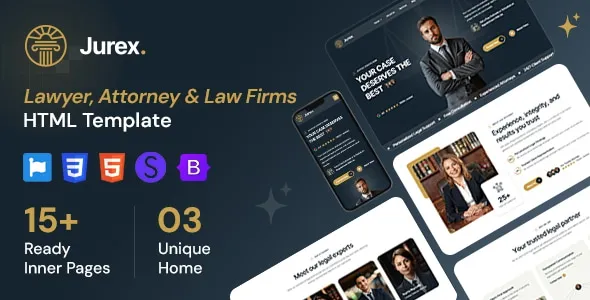
Jurex – Lawyer, Attorney and Law Firms HTML Template
Jurex – Lawyer, Attorney and Law Firms HTML Template is a professional website design solution for lawyers, attorneys, legal consultants, law firms, legal advisors, and other professionals working in the legal services industry. Designed as an HTML website template, Jurex provides a frontend foundation for building a structured online presence that communicates legal expertise, introduces professional services, presents attorney profiles, and helps potential clients find relevant contact information. A well-organized legal website can make it easier for visitors to understand a firm’s practice areas, learn about its professional team, and take the next step toward requesting legal assistance.
In today’s digital environment, people often search online before choosing a lawyer or contacting a law firm. They may want information about available legal services, professional experience, areas of specialization, office locations, or consultation procedures. A professional website helps organize this information in one accessible place. Jurex can be considered for legal practices that want to introduce their services through a clear and business-focused presentation, whether they specialize in corporate law, family law, criminal defense, property matters, immigration, employment law, or other legal areas.
As an HTML template, Jurex offers a customizable frontend structure that developers can adapt using the technologies and source files supplied with the product. Text, images, colors, page sections, navigation, and other visual elements can be adjusted to match a firm’s branding and communication requirements. Its suitability for a specific project should be evaluated by reviewing the available layouts, included components, responsive behavior, documentation, and current product demo.
What Is Jurex Lawyer, Attorney and Law Firms HTML Template?
Jurex is an HTML website template intended for legal professionals and organizations that need a dedicated website to present their services and professional information. Rather than starting a legal website from an empty project, developers can use the supplied frontend structure as a foundation and customize it according to the firm’s requirements.
A legal website typically needs to communicate several important details. Visitors should be able to understand what type of legal assistance is offered, identify relevant practice areas, learn about the attorneys, and find a convenient way to contact the firm. Jurex can be evaluated for organizing these details through its supplied page layouts and design components.
Law firms may use a website of this type to introduce their organization, explain legal services, highlight professional experience, and publish useful informational content. Independent attorneys can adapt the presentation to focus on their qualifications, practice areas, and consultation information. Legal consultants can use relevant sections to explain their professional services and provide contact details.
The HTML foundation gives developers direct access to the frontend code. They can update content, replace images, modify styles, and customize supported interactions. Dynamic functions such as appointment management, client portals, case tracking, payment processing, and database-driven content require backend development or compatible integrations unless explicitly included in the supplied package.
Professional Website Design for Legal Services
A legal website should communicate professionalism, clarity, and trust. Visitors may be dealing with important personal, financial, property, or business matters, so the website should make essential information easy to understand.
Jurex can serve as a starting point for a legal services website where information is arranged into meaningful sections. A firm can introduce its practice, describe its legal services, present attorney profiles, and provide clear contact pathways.
The overall presentation should support the firm’s professional identity. Consistent typography, suitable colors, relevant imagery, and organized content can create a coherent experience. Important information should be easy to locate without forcing visitors to navigate through unnecessary sections.
Legal websites should also use accurate and responsible language. Descriptions of professional experience, qualifications, services, and case outcomes should be verified before publication. Avoiding exaggerated promises helps maintain a credible presentation.
Suitable for Law Firms and Legal Practices
Law firms often provide services across several legal areas and need a website that explains their capabilities to different audiences. A structured online presence can introduce the organization, present its practice areas, and help prospective clients understand how to make an inquiry.
Jurex can be considered for small, medium-sized, and independent legal practices, depending on the layouts and customization options included with the template. A firm can use its pages to communicate its professional background, introduce its attorneys, explain available services, and share relevant updates.
A corporate law firm may focus on business agreements, company matters, compliance, and commercial disputes. A family law practice may prioritize divorce, child custody, and related legal services. A property law firm might explain its work involving transactions, documentation, ownership disputes, and property-related advice.
The website structure should reflect the firm’s actual services rather than presenting every possible legal category. Clear descriptions help visitors identify whether the practice is relevant to their requirements.
Website for Independent Lawyers and Attorneys
Independent lawyers and attorneys need a professional platform to introduce their expertise and explain the legal services they provide. A personal legal website can help potential clients understand an attorney’s practice areas, professional background, and contact options.
Jurex can be adapted for an individual attorney’s website by emphasizing a professional introduction, qualifications, experience, selected practice areas, and consultation information. The homepage can communicate the attorney’s primary focus, while supporting sections provide more detailed explanations.
An attorney specializing in criminal law may highlight defense services and relevant legal experience. A family lawyer may explain services related to family disputes and legal proceedings. A business attorney could focus on contracts, commercial matters, and company-related legal services.
Professional profiles should be accurate and updated regularly. Qualifications, bar registrations, memberships, professional achievements, and experience should only be published when they can be verified. A clear and informative profile helps visitors understand the attorney’s professional background.
Practice Area Pages for Different Legal Specializations
Practice area pages are important for helping visitors identify the type of legal assistance a firm provides. Instead of placing every service into a single general description, a law firm can organize its website around individual legal categories.
Depending on the available page structures, Jurex can be customized to present practice areas such as:
- Corporate and Business Law: Information about business agreements, company matters, commercial transactions, and legal advisory services.
- Family Law: Services involving divorce, child custody, family disputes, and related legal matters.
- Criminal Defense: Information about criminal defense representation and relevant legal procedures.
- Property and Real Estate Law: Services related to property transactions, documentation, ownership matters, and disputes.
- Employment and Labour Law: Information about workplace rights, employment agreements, and labour-related disputes.
- Immigration Law: Guidance and legal services involving immigration procedures and applicable requirements.
- Civil Litigation: Information about civil disputes, legal representation, and court-related processes.
- Intellectual Property Law: Services involving trademarks, copyrights, patents, and intellectual property matters.
Each practice area should have a clear description of the services offered, the types of matters handled, and how visitors can contact the firm. Legal information should be reviewed by qualified professionals to ensure accuracy and relevance to the applicable jurisdiction.
Attorney Profiles and Professional Team Presentation
An attorney profile gives visitors an opportunity to learn about the professionals working within a law firm. It can communicate qualifications, areas of specialization, professional experience, and relevant achievements.
Jurex can be evaluated for presenting attorney and team information through the layouts included in the supplied version. A firm may use these sections to introduce partners, associates, legal consultants, and other relevant team members.
A useful attorney profile may include a professional photograph, name, designation, educational background, practice areas, and a concise biography. It can also mention verified professional memberships or publications where relevant.
For larger firms, team profiles can help visitors identify the appropriate professional for their legal requirements. For independent attorneys, a focused profile can communicate experience and the type of work they undertake.
Keep profiles consistent in structure and update them when professional responsibilities or contact information change. Accurate information helps maintain a dependable presentation.
Build Trust Through Clear Legal Information
Trust is an important consideration when people choose legal representation. Visitors may be unfamiliar with legal terminology or unsure about the process involved in their situation. A useful website should provide clear, accessible information that helps them understand the firm’s services.
Jurex can provide a frontend starting point for presenting firm information, practice descriptions, professional profiles, and other relevant content. The actual content should be written specifically for the firm’s audience and reviewed for accuracy.
A law firm can explain its general approach to client communication, consultation procedures, and the types of legal matters it handles. Frequently asked questions may address common process-related concerns without offering misleading guarantees.
Testimonials and case studies should be used only when they are genuine, properly authorized, and permitted under applicable professional rules. Legal advertising and client confidentiality requirements vary by jurisdiction, so firms should review relevant professional obligations before publishing promotional material.
Homepage Layout and Content Organization
The homepage is often the first page a visitor sees. It should introduce the legal practice and make it easy to find important information.
A Jurex-based website can be organized around a professional introduction, a summary of practice areas, attorney profiles, firm information, useful content, and contact details, depending on the supplied layouts.
The opening section should explain the firm’s identity and the type of legal services it provides. A concise headline and supporting description can help visitors understand whether the firm handles their type of matter.
Practice area summaries can direct visitors toward more detailed service pages. Attorney introductions can provide information about the professionals behind the firm, while a firm overview can explain its background and working approach.
The homepage should not attempt to explain every legal issue in detail. Its purpose is to guide visitors toward the sections most relevant to their needs. A clear structure and focused content can make the browsing experience more convenient.
Responsive Design for Desktop, Tablet, and Mobile
Visitors may access a law firm’s website from desktop computers, laptops, tablets, and smartphones. Responsive presentation helps keep information accessible across different screen sizes.
Jurex should be evaluated for its responsive behavior using the current product demo and supplied source files. Developers should check whether navigation, text, images, service sections, attorney profiles, and contact elements adapt appropriately to different viewport widths.
On mobile devices, headings should remain readable, navigation should be easy to use, and important contact information should be accessible without unnecessary scrolling. Buttons and form controls should also be comfortable to select.
Responsive testing should cover all important pages rather than focusing only on the homepage. Practice area pages, team profiles, blog articles, and contact sections may have different layout requirements.
Custom CSS, third-party scripts, and additional components can affect the final responsive experience. Developers should test the completed website after customization and resolve any layout issues before launch.
Customization and Law Firm Branding
A professional legal website should reflect the identity of the organization it represents. Branding helps create a consistent experience and makes the website feel connected to the firm’s wider communication.
Jurex’s HTML structure can be customized according to the options and source files supplied with the template. Developers can update the firm’s logo, color palette, typography, photographs, page content, navigation, and other frontend elements.
A corporate legal practice may prefer a restrained visual identity with clear typography and structured layouts. An independent attorney may choose a more personal presentation that emphasizes professional experience and direct communication.
Consistency is important across all pages. Heading styles, body text, buttons, image treatments, and navigation elements should follow a recognizable design system.
Use relevant and professional photographs rather than unrelated stock images. Attorney portraits, office images, and other visual materials should accurately represent the firm. Before making major changes, review the file structure and documentation to understand how the supplied styles and scripts are organized.
HTML, CSS, and JavaScript Development Foundation
Jurex is an HTML template, providing a frontend foundation for developers who want to build a customized legal services website. The supplied code can be reviewed and adapted according to the project requirements.
HTML defines the structure and content of the pages. CSS controls visual presentation, including colors, spacing, typography, and responsive behavior. JavaScript can support frontend interactions included in the template or added during customization.
This approach gives developers direct control over the website’s presentation. They can replace sample content, modify page sections, connect the frontend to a suitable backend, and integrate additional services where required.
The exact frameworks, libraries, plugins, and dependencies should be confirmed from the current product package and documentation. Developers should check setup instructions, supported browsers, asset references, and any build requirements before beginning implementation.
An HTML template does not automatically provide a complete content management system or backend application. Features such as user authentication, client accounts, document uploads, case databases, online payments, and appointment management require additional development or suitable third-party integrations unless explicitly included.
Contact Forms and Consultation Inquiries
A legal website should provide visitors with a convenient way to contact the firm. People may want to ask about available services, request an initial consultation, or share general details about a legal matter.
Jurex can be customized with contact information and inquiry pathways based on the available frontend components. A contact section may include an office address, telephone number, email address, office hours, and a form where supported by the supplied design.
A basic inquiry form may collect a visitor’s name, email address, telephone number, and a brief description of the reason for contacting the firm. Keep the form simple and request only the information needed for an initial response.
Legal inquiries can contain confidential or sensitive information. A website should explain how submitted information is handled and should not encourage visitors to share detailed confidential documents through an unsecured form. Appropriate privacy notices, secure communication channels, and data-handling procedures should be established.
An HTML form requires backend processing or a compatible form service to send and store submissions. Developers should configure and test the complete submission process, including validation, confirmation messages, email delivery, and spam protection.
SEO-Friendly Structure for Law Firm Websites
Search engine optimization can help a legal practice improve its visibility when people search for relevant legal services. A well-structured HTML website can provide a foundation for SEO implementation, although rankings depend on content quality, competition, technical factors, and other considerations.
Each important page should have a descriptive title, a clear heading hierarchy, and useful content focused on its subject. Separate practice area pages can help explain individual services in greater detail and provide relevant information for visitors.
For example, a law firm may create dedicated pages for corporate law, family law, property disputes, or employment matters. These pages should describe the firm’s actual services and the relevant legal context rather than repeating generic keyword-focused text.
Local SEO may also be important for firms serving clients in specific cities or regions. Accurate business details, consistent contact information, useful location pages, and an appropriately maintained business profile can support local discoverability.
Image optimization, descriptive URLs, internal links, metadata, and a logical site structure are additional considerations. Developers may configure XML sitemaps, canonical URLs, and structured data where appropriate.
Legal content should be reviewed by qualified professionals. Search visibility should never take priority over accuracy, and no template can guarantee particular search rankings or client inquiries.
Legal Blog and Informational Content
A legal blog can help a law firm publish useful information about legal topics, explain general procedures, and communicate relevant updates. WordPress is not required for every blog; an HTML website can also include article pages, although content publishing and management may require additional development.
Jurex can be evaluated for presenting informational content through the page layouts included in the package. A firm may publish articles about changes in relevant legislation, general legal processes, business compliance, property documentation, family law topics, or other areas connected to its services.
Useful legal articles should be accurate, clearly written, and appropriate for the intended audience. Complex terminology can be explained in plain language while retaining the correct legal meaning.
Articles should identify their publication or review dates where relevant. Legal rules can change, so older content should be reviewed periodically. Where appropriate, include a clear notice explaining that general website information does not replace advice based on an individual’s circumstances.
A consistent publishing approach can help maintain the website’s usefulness without sacrificing quality. Focus on answering genuine questions rather than publishing repetitive articles designed only to include search phrases.
Website Performance and Loading Speed
Website performance influences how quickly visitors can access important legal information. A website that loads efficiently can make it easier for users to explore services, read articles, and find contact details.
The performance of a Jurex website depends on the supplied code, hosting environment, image sizes, scripts, fonts, third-party integrations, and customization choices. A template should therefore be tested after implementation rather than assumed to be fast in every configuration.
Start by optimizing photographs and other visual assets. Use appropriate dimensions and compression settings to reduce file sizes while maintaining sufficient quality. Review unnecessary scripts, external widgets, and unused styles that may affect loading time.
Reliable hosting, browser caching, and suitable performance techniques may further improve the website depending on its implementation. Developers should measure performance and address identified problems rather than adding unnecessary tools.
Test the homepage, practice area pages, attorney profiles, articles, and contact sections. Regular performance reviews can help maintain a convenient experience as the website grows.
Accessibility and User-Friendly Navigation
A legal website should make information accessible to a broad range of visitors. Clear navigation, readable typography, suitable contrast, and understandable page structures help users locate relevant information.
When customizing Jurex, developers should use descriptive navigation labels and a logical heading hierarchy. Informative images should have meaningful alternative text, while decorative images should be handled appropriately.
Forms should include clear labels and useful validation messages. Interactive elements should be distinguishable and, where applicable, usable with a keyboard. Important information should not depend only on color or decorative effects.
A simple navigation structure may include Home, About, Practice Areas, Attorneys, Blog, and Contact. The final menu should reflect the firm’s actual content and avoid unnecessary complexity.
Accessibility should be reviewed across the complete website. Automated testing can identify common issues, but manual keyboard testing and practical usability checks are also important.
Security, Privacy, and Ongoing Maintenance
Legal websites may collect contact details and other information from prospective clients, making privacy and security important considerations. A professional website should be maintained carefully to reduce avoidable technical and data-handling risks.
Use reliable hosting, HTTPS, secure administrative access, and appropriate protections for any backend services. If the website includes forms or third-party integrations, review how submitted information is transmitted, stored, and accessed.
Developers should keep the website’s code and dependencies maintained. Unused scripts and integrations should be reviewed, and updates should be tested before being deployed to a live environment.
Regular backups are useful when the website includes custom code, databases, or uploaded content. The backup and restoration process should be tested so that the firm has a practical recovery option.
Maintenance should also include reviewing attorney profiles, practice descriptions, contact information, office hours, legal articles, and privacy notices. Accurate and current information helps visitors rely on the website as a professional source of firm information.
Who Should Use Jurex Lawyer, Attorney and Law Firms HTML Template?
Jurex may be suitable for a variety of legal professionals and organizations that need a dedicated website.
Law firms: Introduce the firm, organize practice areas, present attorneys, and provide contact information.
Independent lawyers: Build a professional website highlighting qualifications, legal services, and experience.
Attorneys: Create an online profile that communicates professional background and areas of specialization.
Legal consultants: Explain consulting services and provide relevant business information for prospective clients.
Corporate law practices: Present services related to commercial matters, business agreements, and corporate legal support.
Family law practices: Organize information about family-related legal services and consultation procedures.
Criminal defense lawyers: Introduce defense services and provide relevant professional information.
Property law firms: Present services involving property matters, transactions, documentation, and disputes.
Immigration law practices: Explain relevant immigration services and provide contact pathways for inquiries.
The best choice depends on the firm’s requirements and the actual features included in the template. Review the current demo, documentation, available page layouts, dependencies, and licensing conditions before selecting it for a project.
Tips for Building a Successful Legal Website with Jurex
A successful legal website should combine a professional presentation with accurate information and convenient navigation. The following practices can help developers and law firms make better use of the template.
Begin by identifying the website’s main audience and purpose. Determine whether the firm wants to attract local inquiries, introduce multiple legal departments, present individual attorneys, or communicate a specialized practice.
Prepare accurate content before customizing the pages. This may include the firm’s introduction, practice area descriptions, attorney biographies, office details, consultation procedures, and frequently asked questions.
Use a consistent brand identity. Select appropriate typography, colors, photography, and page layouts that reflect the firm’s professional image. Replace all demonstration content with original and verified information.
Keep practice area pages focused. Explain the services actually provided and use language that visitors can understand. Have legal content reviewed by qualified professionals before publication.
Make contact information easy to find. Test forms and other inquiry methods to confirm that submissions reach the intended destination. Establish suitable privacy and security practices for any information collected.
Before launch, test the website across different devices and browsers. Review navigation, page loading, links, responsive layouts, accessibility, and form behavior.
Finally, maintain the website regularly. Update professional profiles, review legal articles, check contact details, monitor performance, and keep the implementation secure.
Final Thoughts on Jurex Lawyer, Attorney and Law Firms HTML Template
Jurex – Lawyer, Attorney and Law Firms HTML Template is a potential frontend starting point for legal professionals and organizations looking to establish a professional online presence. Its intended legal services focus makes it relevant to law firms, independent attorneys, legal consultants, and specialized legal practices that need to communicate their services and professional information.
A well-planned website can organize practice areas, introduce attorneys, explain legal services, publish useful information, and provide convenient contact options. With suitable customization, developers can adapt the frontend presentation to match a firm’s brand identity, audience, and communication requirements.
As an HTML template, Jurex should be treated as a customizable frontend foundation rather than a complete legal management platform. Dynamic features such as client portals, appointment scheduling, document management, case tracking, and online payments require appropriate backend development or integrations unless specifically included in the product package.
Before implementation, review the current demo, documentation, included source files, dependencies, responsive behavior, and licensing terms. By combining accurate legal content, thoughtful customization, accessibility, SEO practices, security, and regular maintenance, a law firm can build a useful website that supports professional communication and helps prospective clients find relevant legal information.