My Account
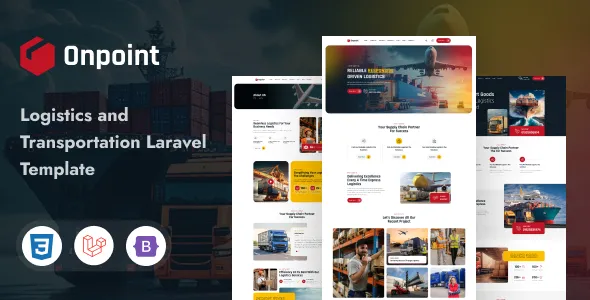
Onpoint – Logistics and Transportation Laravel Template
Onpoint – Logistics and Transportation Laravel Template is a modern and professionally designed website template developed for logistics companies, transportation businesses, freight forwarding agencies, cargo services, shipping companies, supply chain management providers, and delivery service organizations. Designed to support a strong digital presence, Onpoint offers a structured foundation for businesses that want to showcase their transportation services, communicate operational capabilities, present company information, and connect with potential customers through an attractive and user-friendly website. With its Laravel-based development structure, this template is suitable for developers and businesses looking for a customizable starting point for creating logistics and transportation websites.
In today’s competitive logistics industry, a professional website plays an important role in building credibility and communicating business value. Customers often search online for transportation providers, freight services, cargo handling, warehouse solutions, and reliable delivery partners before making business decisions. A well-organized website helps visitors understand available services, explore company expertise, and find relevant contact information without unnecessary complexity. Onpoint provides a design-oriented foundation for presenting these details in a consistent and professional manner.
Whether you are developing a website for a logistics startup, an established transportation company, a freight forwarding agency, or a supply chain management business, Onpoint can be adapted to different branding requirements and business objectives. Its Laravel framework foundation makes it relevant for developers who prefer working within a PHP-based development environment. The final functionality and customization possibilities depend on the package contents, installed dependencies, and the implementation requirements of the project.
What Is Onpoint Logistics and Transportation Laravel Template?
Onpoint is a Laravel website template created for businesses operating in logistics, transportation, freight management, cargo delivery, and related industries. It provides a visual and development foundation for creating a business website that communicates services, introduces the company, and presents important information to potential clients.
A logistics website needs to explain complex services in a straightforward way. Businesses may provide road transportation, international freight forwarding, warehouse management, distribution, cargo handling, or specialized shipping solutions. Organizing these services into clear website sections helps visitors identify the offerings that match their requirements.
Onpoint can be used as a starting point for developing pages such as Home, About Us, Services, Service Details, Projects, Blog, and Contact, depending on the layouts included in the template. These sections can be customized with original content, company branding, business information, and relevant visuals.
Laravel is a PHP framework that supports structured web application development. A Laravel template can help developers organize website components and integrate them into a broader application. However, the presence of Laravel does not automatically mean that every business function is fully implemented. Features such as shipment tracking, booking management, customer accounts, payment processing, and database connectivity should be verified against the actual package documentation.
Modern Website Design for Logistics Businesses
A professional design is essential for transportation and logistics companies that want to establish trust with customers and business partners. The website should communicate reliability, operational expertise, service quality, and organizational professionalism.
Onpoint provides a design foundation for building a visually consistent logistics website. Businesses can customize the presentation according to their brand identity, target audience, and service categories. A structured layout helps visitors navigate the website and locate important business information efficiently.
A logistics company can use its homepage to introduce its main services, explain its business advantages, and highlight relevant transportation solutions. Supporting sections can present company experience, service capabilities, operational information, and contact opportunities.
Visual elements should support the company’s message rather than distract from it. Transportation-related photographs, warehouse imagery, freight visuals, and carefully selected illustrations can help communicate the nature of the business.
A consistent combination of typography, colors, spacing, and content hierarchy contributes to a professional appearance. Businesses should replace demo content with accurate information and appropriate images before publishing the website.
Laravel Framework for Website Development
Laravel is a widely used PHP framework designed to support organized and maintainable web application development. Its development structure makes it suitable for projects that require customization, integration, and ongoing improvements.
Onpoint is positioned as a Laravel template, making it a relevant starting point for developers working with PHP-based websites. Depending on the package structure, developers may be able to customize existing page layouts, modify reusable components, and adapt the template to their project’s requirements.
Laravel-based development can also support integration with additional application functionality when implemented appropriately. For example, a transportation company may eventually require customer inquiry management, shipment information, service request handling, or administrative functionality.
These capabilities should not be assumed to be included as ready-made features. Developers should review the template documentation, Laravel version, PHP requirements, package dependencies, and included source files before beginning implementation.
A properly configured development environment and a clear customization plan can help streamline the process of building a website that meets specific business requirements.
Logistics and Transportation Service Presentation
Transportation businesses often provide multiple services that need to be communicated clearly. A dedicated service section helps customers understand the company’s capabilities and determine whether it can meet their transportation requirements.
Onpoint can serve as a foundation for organizing different logistics services into individual sections or pages, depending on its available layouts.
Road Transportation Services
Road transportation is an important part of domestic freight movement and regional distribution. Companies offering truck transportation, commercial freight delivery, and long-distance cargo movement can use a dedicated section to describe their services.
Businesses can explain the types of goods transported, operational coverage, service procedures, and relevant delivery options. Accurate descriptions help potential customers understand the scope of transportation services.
Freight Forwarding Solutions
Freight forwarding businesses coordinate the movement of goods through different transportation networks. A website can explain freight forwarding services, documentation assistance, cargo coordination, and logistics planning.
Onpoint can be customized to present these services through organized content sections that communicate the company’s expertise and business capabilities.
Cargo and Shipping Services
Cargo businesses may handle domestic shipments, international freight, commercial goods, and specialized transportation requirements.
Dedicated service pages can describe available shipping solutions, transportation methods, cargo handling procedures, and the company’s areas of operation. Businesses should ensure that all service details reflect their actual operational capabilities.
Warehouse and Storage Solutions
Warehousing and storage services are important for businesses that need inventory management, distribution support, and organized storage facilities.
A logistics website can introduce warehouse facilities, storage services, inventory-related solutions, and distribution capabilities. Relevant photographs and clear descriptions can help customers understand the services offered.
Supply Chain Management
Supply chain management involves coordinating transportation, inventory, storage, and distribution processes. Companies offering supply chain solutions can use their website to explain their operational approach and professional expertise.
Organized service descriptions can help business customers identify relevant solutions and understand how the company supports their supply chain requirements.
Responsive Website Experience Across Devices
A responsive website is important for logistics businesses because customers, suppliers, and business partners may access company information using different devices. Visitors may browse transportation services on desktop computers, tablets, or smartphones while searching for potential logistics providers.
Onpoint is presented as a modern website template, and responsive behavior should be evaluated across the included layouts and components before deployment.
For mobile users, content should remain readable, navigation should be convenient, and important contact information should be easy to locate. Buttons, links, and interactive elements should provide an accessible browsing experience.
Developers should test the homepage, service pages, blog articles, contact sections, and other important layouts across different screen sizes. Responsive behavior may require additional adjustments depending on custom content, images, and third-party components.
A consistent experience across devices can make it easier for customers to explore services and contact the business.
Build a Professional Logistics Company Website
A logistics company website should provide a clear introduction to the business while helping visitors understand its services, capabilities, and operational focus.
Onpoint can be customized to create a professional website for freight companies, transportation providers, cargo businesses, shipping agencies, and distribution organizations.
Company Introduction
The About Us page can introduce the company, explain its background, and communicate its approach to transportation and logistics services.
Businesses can highlight their experience, operational focus, service philosophy, and organizational capabilities using accurate and original content.
Services and Solutions
Dedicated service pages can provide detailed information about transportation solutions, freight forwarding, cargo delivery, and warehouse services.
Each page should focus on a specific offering and explain the relevant information that potential customers need before making an inquiry.
Business Advantages
Companies can communicate genuine advantages such as service specialization, operational experience, industry expertise, or geographic coverage.
Statements should be accurate and supported by the company’s actual capabilities rather than relying on exaggerated marketing claims.
Contact and Inquiry Information
A clearly organized contact section allows potential customers to find business contact details and request further information.
Depending on the implementation, additional contact forms or inquiry functionality may require compatible Laravel components, backend processing, and email configuration.
Homepage Structure and Content Organization
The homepage is an important part of a business website because it introduces the company and establishes the overall browsing experience.
Onpoint can be adapted to create a homepage that communicates the primary services of a logistics and transportation business. The exact sections available depend on the template’s included layouts and components.
A practical homepage structure may include:
- Hero section: Introduce the logistics company and its main transportation services.
- Company overview: Provide a concise introduction to the business and its expertise.
- Service highlights: Present important logistics, freight, and transportation offerings.
- Business advantages: Explain genuine strengths and operational capabilities.
- Featured projects: Showcase relevant work or documented transportation projects, when appropriate.
- Customer testimonials: Include authentic feedback from clients with permission.
- Latest articles: Display relevant logistics insights and company updates.
- Contact section: Provide clear contact information and inquiry opportunities.
Not every business needs all these sections. Smaller transportation companies may benefit from a simpler homepage, while larger organizations may require more detailed service information and additional navigation options.
The primary objective should be to make the website informative, easy to navigate, and relevant to its intended audience.
Customization and Brand Identity
A logistics website should reflect the company’s identity and communicate a consistent professional image. Customization allows businesses to adapt the template’s appearance to their branding and communication requirements.
Onpoint can be customized according to the design settings and development options available within the package. Developers may adapt colors, typography, page content, images, spacing, and other visual elements according to the included structure.
Transportation businesses often benefit from a professional visual identity that emphasizes clarity and reliability. A consistent color palette and typography system can help establish a recognizable brand across the website.
Company logos, transportation photographs, warehouse visuals, and other relevant assets should be selected carefully. Images should represent the actual business or the services it provides whenever possible.
Before making significant modifications, developers should review the source structure and documentation. Maintaining a clear customization approach can make future updates and improvements easier to manage.
SEO-Friendly Structure for Logistics Websites
Search engine optimization can help logistics companies improve their online visibility and attract visitors searching for transportation-related services.
Onpoint provides a website development foundation, but SEO performance depends on content quality, technical configuration, competition, website structure, and other factors.
A useful SEO strategy begins with organizing the website around specific services. Businesses can create dedicated pages for freight forwarding, cargo transportation, road logistics, warehouse management, and supply chain solutions according to their actual offerings.
Each page should have a descriptive title, a clear heading structure, relevant content, and appropriate internal links. This helps visitors understand the subject of the page while supporting search engines in interpreting the website’s content.
Blog articles can provide additional opportunities to discuss logistics industry topics, transportation processes, supply chain planning, cargo management, and business-related questions.
Image optimization, descriptive URLs, suitable metadata, and a logical navigation structure also contribute to an organized website.
Laravel-based websites may require appropriate SEO configuration and implementation depending on the source structure. Developers should review routing, metadata handling, page rendering, sitemap generation, and other technical considerations.
SEO should focus on providing original, accurate, and useful information rather than repeating keywords excessively. No template can guarantee specific rankings or traffic results.
Content Marketing and Logistics Industry Blogging
Content marketing can help transportation and logistics companies communicate their knowledge, answer customer questions, and establish a stronger online presence.
Onpoint can be used as a foundation for a business website that includes blog articles and industry-related content, depending on the available layouts and implementation.
A logistics company might publish articles about freight transportation, warehouse management, supply chain optimization, cargo handling, delivery planning, and industry developments.
Educational content can help potential customers understand different transportation services and make informed decisions when selecting logistics providers.
Blog articles should be organized into relevant categories and connected to related service pages through internal links. This structure can help readers explore additional information while improving the overall website experience.
A consistent publishing strategy focused on original and relevant content is more useful than publishing large amounts of repetitive material.
Lead Generation and Customer Inquiries
Generating qualified business inquiries is an important objective for many logistics websites. Potential customers may want to discuss transportation requirements, request freight information, inquire about storage services, or obtain details about available logistics solutions.
Onpoint can be adapted to include contact opportunities through its page layouts and supported components. Depending on the package, additional form functionality may require implementation or integration.
A transportation inquiry form may collect information such as a contact name, email address, company name, requested service, and a brief description of the transportation requirement.
The form should be straightforward and easy to complete. Businesses should avoid collecting unnecessary information during the initial inquiry process.
Developers should verify form validation, email delivery, error handling, and confirmation messages. If forms are connected to a database or external service, the relevant configuration and security measures should also be tested.
Clear calls to action can encourage visitors to request information without creating a confusing or overly promotional experience.
Website Performance and Loading Speed
Website performance contributes to a better user experience. Visitors should be able to access important company information and transportation services without unnecessary loading delays.
The actual performance of an Onpoint-based website depends on its implementation, hosting environment, images, scripts, dependencies, and third-party integrations.
Image optimization is an important starting point. Large transportation photographs and background visuals should be compressed appropriately while maintaining sufficient quality.
Developers should also review unnecessary scripts, external resources, and components that may affect loading performance. Appropriate caching and hosting configurations may provide additional improvements depending on the website’s requirements.
Performance testing should cover important pages rather than focusing only on the homepage. Service details, contact pages, blog articles, and image-heavy sections may require separate optimization.
Regular performance reviews can help identify issues and maintain a smooth browsing experience as the website develops.
Laravel Development and Technical Considerations
Since Onpoint is a Laravel template, developers should review its technical requirements before integrating it into a project.
Important considerations include:
- Laravel framework version and compatibility
- Required PHP version and extensions
- Composer dependencies and package configuration
- Installation and setup documentation
- Source file organization and reusable components
- Routing and page structure
- Database requirements, if applicable
- Environment configuration and deployment instructions
- Compatibility with existing development workflows
The included package should be reviewed to determine whether it provides frontend layouts only or includes additional application components.
A Laravel template should not automatically be considered a fully operational logistics management platform. Features such as live shipment tracking, freight booking, customer portals, fleet management, inventory management, and automated notifications require suitable backend functionality, APIs, database integration, or third-party services unless explicitly included.
Careful technical evaluation helps developers understand the scope of customization and plan the implementation process more effectively.
Security and Website Maintenance
Maintaining a secure and reliable website is important for logistics businesses that depend on digital communication with customers and business partners.
Developers should follow appropriate Laravel security practices and maintain the project’s dependencies. Environment credentials and sensitive configuration values should be protected and excluded from public source files.
If the website includes contact forms, customer information, or database functionality, appropriate validation, access control, and data protection measures should be implemented.
Regular maintenance should include reviewing dependencies, monitoring errors, testing important website functionality, and keeping the development environment properly configured.
Backup procedures should be established for any website that stores important content or application data. Businesses should also verify that their backup and recovery processes work as expected.
A planned maintenance routine helps keep the website dependable and supports long-term business operations.
Who Can Use Onpoint Logistics and Transportation Laravel Template?
Onpoint can be considered for different types of businesses and development projects within the logistics and transportation industry.
Logistics companies: Businesses providing transportation coordination, freight services, and supply chain solutions can use the template as a website foundation.
Transportation providers: Road freight companies and commercial transportation businesses can present their services and operational information.
Freight forwarding agencies: Companies coordinating cargo movement and freight services can organize their service descriptions and business information.
Shipping companies: Businesses involved in cargo transportation and shipping services can develop a professional website to introduce their operations.
Cargo service providers: Cargo businesses can present transportation options, service categories, and contact details.
Warehouse businesses: Storage and distribution providers can communicate their warehouse services and business capabilities.
Supply chain companies: Organizations offering supply chain coordination and logistics consulting can create dedicated pages explaining their services.
Logistics startups: New businesses can establish an online presence and introduce their brand, services, and business objectives.
The suitability of the template depends on the project’s technical requirements, available layouts, package documentation, and desired customization.
Best Practices for Building a Website with Onpoint
Creating an effective logistics website requires planning, accurate information, and a consistent development approach.
Begin by identifying the company’s primary services and target audience. Determine whether the website needs to emphasize road transportation, cargo services, freight forwarding, warehousing, shipping, or supply chain management.
Prepare the essential content before customizing the website. This includes the company introduction, service descriptions, contact information, business details, and relevant visual assets.
Establish a consistent brand identity using appropriate colors, typography, and imagery. Replace placeholder text and demo images with original content that reflects the company’s actual services.
Organize the website navigation around the information visitors need most. Each service page should have a clear purpose and provide useful information without unnecessary repetition.
Test the website across different screen sizes and browsers. Review page loading speed, navigation, contact forms, links, and any integrated functionality.
Finally, establish a maintenance routine that includes security reviews, dependency updates, backups, content improvements, and performance monitoring.
Final Thoughts on Onpoint Logistics and Transportation Laravel Template
Onpoint – Logistics and Transportation Laravel Template is a development-oriented website solution for businesses operating in logistics, freight forwarding, cargo transportation, shipping, warehousing, and supply chain services. Its Laravel foundation provides a starting point for developers who want to create a professional transportation website using a PHP-based development environment.
The template can be customized to present company information, introduce logistics services, organize business content, and create contact opportunities for potential customers. Its design-oriented structure can support different transportation business models while allowing developers to adapt the presentation according to project requirements.
The actual capabilities depend on the included package, Laravel version, available components, documentation, and implementation. Advanced features such as shipment tracking, online freight booking, customer accounts, fleet management, and automated logistics operations should be verified before purchase or development.
With appropriate customization, original content, responsive testing, SEO planning, and ongoing maintenance, Onpoint can provide a useful starting point for developing a professional digital presence in the logistics and transportation industry.