My Account
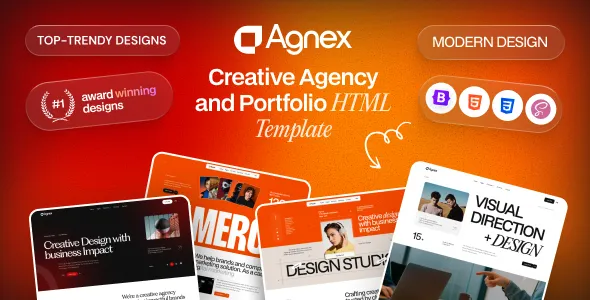
Agnex – Creative Agency Portfolio HTML Template
Agnex – Creative Agency Portfolio HTML Template is a modern website template designed for creative agencies, digital studios, branding professionals, web designers, developers, marketing consultants, freelancers, and creative businesses looking to build a distinctive online presence. With a focus on creative presentation and portfolio showcases, Agnex provides a foundation for introducing services, displaying completed projects, communicating professional expertise, and attracting potential clients. Built around HTML-based website development, this template can be customized to reflect different creative styles, business objectives, and brand identities.
In the modern digital landscape, a professional website is one of the most valuable tools for creative businesses. Potential clients often evaluate an agency by reviewing its portfolio, understanding its services, and exploring how its creative approach aligns with their business needs. A thoughtfully designed website can help communicate expertise, establish credibility, and encourage visitors to begin a conversation about their projects.
Agnex offers a starting point for creating a creative agency website that combines visual storytelling, organized service information, portfolio content, and contact opportunities. Whether you operate a branding studio, a web design agency, a digital marketing company, a creative consultancy, or an independent design business, this template can be adapted to support your online goals. By customizing the layouts, imagery, typography, colors, and written content, you can create a professional website that communicates your strengths and presents your work to the right audience.
Modern Creative Agency Website Design
A creative agency website should do more than provide basic business information. It should communicate the agency’s personality, demonstrate its creative capabilities, and make it easy for visitors to understand the value of its services. Agnex is positioned for creative agency and portfolio projects, making it a potential starting point for businesses that want to present their work through a professional digital experience.
A well-organized creative website typically combines a compelling introduction, a clear overview of services, selected portfolio projects, company information, and accessible contact options. Each section should support the visitor’s journey from discovering the agency to understanding its expertise and deciding whether to make an inquiry.
Agnex can be customized to support different visual directions, including minimalist creative studios, contemporary digital agencies, corporate design consultancies, and independent creative professionals. Developers can adapt the visual presentation to match the business’s brand guidelines and target audience.
The most effective agency websites balance visual impact with usability. Strong imagery can capture attention, but clear navigation, readable content, and meaningful calls to action help visitors understand the business and move through the website comfortably.
Designed for Creative Agencies and Digital Studios
Creative agencies work across a variety of disciplines, including visual communication, branding, web design, digital campaigns, and content creation. Their websites need to communicate the range of their capabilities while maintaining a recognizable and consistent identity.
Agnex can be adapted for agencies that want to introduce their team, explain their services, present selected projects, and describe their creative process. The content can be customized to reflect the agency’s specialties, preferred industries, and approach to solving client challenges.
A digital studio may use its homepage to communicate a central value proposition, followed by service highlights and selected work. Additional pages can provide deeper information about individual services, project case studies, company experience, and contact options.
This structure helps prospective clients understand what the agency offers without having to search through unrelated content. It also gives the business a flexible foundation for presenting different types of creative work within a consistent visual system.
Creative Portfolio and Project Showcase
A strong portfolio is essential for agencies and professionals whose work demonstrates their capabilities. Visitors want to see real examples of design quality, creative thinking, technical execution, and project experience before choosing a service provider.
Agnex can serve as a starting point for organizing portfolio projects into an engaging and accessible presentation. Depending on the supplied layouts, developers can customize project cards, image sections, category groupings, or dedicated project pages to suit the needs of the business.
Each portfolio item can include a project title, a concise overview, relevant imagery, the services provided, and a description of the creative challenge. Where appropriate, a case study can explain the approach taken and present verified outcomes.
Projects can be grouped into categories such as website design, brand identity, digital marketing, graphic design, user interface design, and creative campaigns. This organization helps visitors find examples that relate to their specific requirements.
When publishing portfolio work, ensure that the images, client names, logos, and project details are authorized for public use. Genuine examples presented with useful context can make the portfolio more informative and credible.
Website Design and Development Services
Professional website design helps businesses communicate their brand, present their offerings, and support their online objectives. Creative agencies often provide services ranging from visual design and user experience planning to frontend development and ongoing website improvements.
Agnex can be customized to promote website design, landing page creation, responsive interface development, corporate website projects, e-commerce design, website redesign, and other services offered by the agency.
A dedicated service page can explain the agency’s approach to understanding client requirements, planning the website structure, developing the visual direction, implementing the design, and testing the final result. This information helps potential clients understand what the process involves.
Agencies may also use project examples to demonstrate their experience with different industries, website types, or design challenges. Technology information should reflect the team’s actual capabilities and the services it can reliably provide.
By presenting website development services clearly, the business can help visitors identify the right offering and understand how to initiate a project discussion.
Branding and Visual Identity Design
Branding helps businesses establish a recognizable identity and communicate their values to customers. A creative agency website can showcase the strategic and visual work involved in developing consistent brand experiences.
Agnex can be adapted for branding studios that provide logo design, visual identity development, typography selection, color systems, brand guidelines, packaging design, and marketing collateral. Each service can be explained through concise descriptions and relevant project examples.
A portfolio focused on branding may include logo applications, identity systems, digital graphics, printed materials, and other visual assets. Presenting these materials in context helps visitors understand how the brand identity works across different communication channels.
Project descriptions can explain the client’s objectives, the creative direction, and the deliverables produced. This provides more meaningful information than simply displaying a collection of attractive images.
A consistent website design also reinforces the agency’s own identity. By applying a clear visual system throughout the site, creative professionals can demonstrate attention to detail and present a coherent brand experience.
Digital Marketing and Online Promotion
Digital marketing agencies help businesses connect with audiences through online channels. Their websites need to explain their capabilities, demonstrate their approach, and communicate how their services relate to broader business goals.
Agnex can be customized for agencies offering search engine optimization, social media marketing, paid advertising, content strategy, email marketing, digital campaign management, and conversion optimization.
Individual service sections can explain the purpose of each offering, the types of businesses it may suit, and the process involved in delivering the work. Relevant campaign examples or case studies can provide additional context when reliable data is available.
Agencies should present performance information accurately and avoid guaranteeing rankings, traffic, leads, or revenue. Digital marketing outcomes depend on numerous factors, including competition, budget, audience, market conditions, and implementation quality.
A clear marketing services presentation helps potential clients understand the agency’s capabilities and decide whether its approach fits their objectives.
Suitable for Freelancers and Independent Designers
Freelancers need a website that introduces their expertise, presents their work, and makes it easy for potential clients to request information. A focused portfolio can help independent professionals establish credibility beyond third-party marketplaces and social media profiles.
Agnex can be customized for freelance web designers, graphic designers, developers, illustrators, branding consultants, digital marketers, and other creative professionals. The portfolio-oriented direction can provide a foundation for showcasing selected projects and explaining available services.
A freelancer’s homepage can feature a brief introduction, a clear description of professional specialties, a selection of relevant projects, and a visible contact option. Additional sections can introduce work experience, tools, qualifications, client feedback, and the preferred project process.
Freelancers should prioritize the work and services most relevant to the clients they want to attract. A focused presentation often communicates professional strengths more effectively than a long list of unrelated capabilities.
With suitable customization, Agnex can reflect an individual’s personality and creative style while maintaining a professional structure that supports direct client inquiries.
HTML-Based Website Development
Agnex is an HTML template, making it a potential option for developers who prefer direct control over website markup and styling. HTML provides the content structure, CSS controls the visual presentation, and JavaScript can support interactive behavior where implemented.
This approach can suit developers, freelancers, and agencies that want to customize a website without relying entirely on a visual website builder. The supplied files can be reviewed and modified to match the project’s branding, page structure, and content requirements.
Developers can update headings, paragraphs, links, images, and page sections while adapting styles and scripts as needed. Additional pages or functionality may also be introduced, depending on the technical requirements and the existing codebase.
Before beginning customization, review the template documentation to confirm the exact file structure, available layouts, CSS framework if any, JavaScript dependencies, included assets, and installation requirements. Features can vary by version, so the package documentation should be used to verify what is actually included.
Responsive Design for Desktop, Tablet, and Mobile
Visitors may discover a creative agency through desktop search results, mobile browsers, social media, professional networks, or links shared by colleagues. A website should remain easy to use across different devices and screen sizes.
Agnex can provide a starting point for building a responsive agency website, depending on the implementation included in the package. Developers should test the supplied layouts on desktop monitors, laptops, tablets, and smartphones.
Important elements to review include navigation menus, portfolio grids, project images, service cards, text sections, buttons, forms, and footers. Content should remain readable, images should scale appropriately, and interactive elements should work comfortably with touch input.
A mobile-friendly experience is particularly valuable for creative agencies because potential clients may review project examples or contact the business while away from their computers.
Responsive behavior should be verified through device testing or suitable browser tools. Custom layouts and third-party components should also be tested after integration to prevent unexpected display or interaction problems.
Service Pages for Different Creative Specialties
Creative agencies often provide several services that appeal to different types of customers. Separate service pages can help visitors understand each offering and find the information most relevant to their needs.
Agnex can be customized to present pages for website design, brand development, creative direction, digital marketing, graphic design, content production, and other services the agency actually offers.
Each page should describe the service, explain its purpose, and outline the main deliverables or stages of the process. Relevant portfolio examples can help visitors understand the type of work involved.
Service pages can also include answers to common questions about project scope, timelines, collaboration, and required client materials. The details should reflect the agency’s actual working practices rather than generic promises.
A clear service structure makes the website easier to navigate and helps potential clients identify the most appropriate starting point for an inquiry.
Case Studies That Demonstrate Expertise
Case studies help agencies explain how they approach client challenges and turn creative ideas into practical outcomes. While a portfolio gallery shows the final work, a case study provides context about the project, the decisions involved, and the deliverables produced.
Agnex can be adapted to present detailed case studies for website redesigns, brand identity projects, digital campaigns, user interface design, and other creative engagements. Depending on the available layouts, developers can build dedicated project pages with images and supporting descriptions.
A useful case study may include the client’s goals, the initial challenge, the agency’s approach, the work completed, and the outcome. Where numerical results are available, they should be supported by accurate information and presented with appropriate context.
For example, a website project may explain how the agency reorganized content to improve usability. A branding case study may describe the creation of a consistent identity system. A marketing project may discuss verified campaign performance.
Detailed case studies can help prospective clients understand how the agency works and whether its expertise matches their needs.
Lead Generation and Contact Opportunities
A creative agency website should make it easy for visitors to begin a conversation. Prospective clients may want to discuss a project, request a proposal, ask about service availability, or clarify the agency’s capabilities.
Agnex can be customized with clear calls to action and contact sections that guide visitors toward these next steps. Depending on the included implementation, developers may adapt contact forms, email links, telephone links, or project inquiry sections.
An inquiry form can request basic details such as a visitor’s name, business email, required service, project overview, and other information necessary for an initial discussion. Avoid collecting unnecessary personal information.
Contact forms must be connected to a working submission system before they can process inquiries. Developers should implement appropriate validation, spam protection, error handling, and secure data processing. An HTML template by itself does not guarantee that submitted messages will be delivered.
Clear contact options can reduce friction for potential clients and help agencies receive inquiries that are relevant to their services.
Testimonials and Social Proof
Client feedback can help prospective customers understand the experience of working with a creative agency. Genuine testimonials may provide insight into communication, collaboration, reliability, and the quality of delivered work.
Agnex can be customized to include testimonials or client feedback sections where supported by the supplied design or through additional development. Agencies can use these sections to present authentic comments from clients who have agreed to share their experiences.
Social proof can also include authorized client logos, published case studies, professional credentials, and other verifiable indicators of experience. The content should accurately reflect the agency’s relationships and achievements.
Avoid fabricated testimonials, misleading endorsements, or unsupported claims about client satisfaction. Authentic feedback presented with appropriate context can strengthen credibility and complement the portfolio.
A trustworthy website gives visitors enough information to assess the business without relying on exaggerated marketing language.
Customizable Branding and Creative Direction
A creative agency’s website should reflect its brand personality and the audience it wants to attract. A design studio may prefer expressive typography and bold visual elements, while a corporate consultancy may need a more restrained and structured appearance.
Agnex can be customized to match an existing brand identity or support the creation of a new visual direction. Developers can adjust colors, typography, imagery, spacing, logos, and supported layout elements according to the supplied implementation.
Consistency across the homepage, service pages, portfolio, and contact sections helps create a cohesive experience. Carefully chosen images can communicate the agency’s style, while a clear typographic hierarchy makes content easier to scan.
Customization should take into account the intended audience, the nature of the services, and the type of projects the agency wants to attract. A visually distinctive website is most effective when its design reinforces the business message and remains accessible to visitors.
Search Engine Optimization for Creative Agencies
Search engine optimization can help agencies attract visitors who are searching for relevant services. A clear page structure, useful content, descriptive metadata, and meaningful internal links provide a foundation for a well-organized SEO strategy.
Agnex can be customized with content targeting services such as creative agency solutions, web design, branding, digital marketing, graphic design, and portfolio development where these offerings are relevant to the business.
Each page should focus on a specific topic and answer the questions visitors may have. A branding page can explain the identity development process, while a website design page can describe planning, design, implementation, and maintenance services.
Developers should review page titles, meta descriptions, heading hierarchy, image alternative text, canonical URLs, indexation settings, and sitemap configuration as appropriate. Internal links should help visitors discover related services and projects.
An HTML template does not guarantee search rankings. SEO performance depends on content quality, technical implementation, competition, website authority, and how effectively the pages meet user needs.
Content Marketing and Creative Insights
Publishing useful content can help agencies demonstrate expertise and attract visitors interested in creative and digital services. Articles, guides, and insights can answer common questions while introducing the agency’s approach to its work.
Agnex can be adapted to include a blog or insights section if the supplied package supports it or if additional pages are developed. Suitable topics may include website planning, branding principles, digital marketing strategy, design trends, user experience, and creative project management.
Content should provide genuine value rather than simply repeat keywords. Articles can link to relevant services or portfolio projects when the connection helps readers understand a topic or explore a solution.
For example, a guide to planning a business website can link to web design services, while an article about visual identity can introduce relevant branding projects. This creates a useful relationship between educational content and the agency’s offerings.
A consistent content strategy should reflect the agency’s real expertise and the questions its target audience is likely to ask.
Performance and Website Loading Speed
Website performance influences how quickly visitors can access content and interact with the interface. Creative agency websites often rely on large images, animations, and portfolio galleries, so performance deserves particular attention.
Agnex can be optimized by using appropriately sized images, compressing assets, removing unnecessary scripts, and loading resources efficiently. The available optimization opportunities depend on the template’s code and any modifications made during development.
Portfolio images should be prepared for their intended display sizes rather than uploaded at unnecessarily large resolutions. Modern image formats can reduce file sizes where supported, while careful use of animation can help avoid excessive processing demands.
Developers should test key pages with performance analysis tools and review the results across different devices and network conditions. Additional testing is useful after integrating analytics tools, third-party embeds, or other external scripts.
A performance-conscious website makes it easier for visitors to browse project examples and explore the agency’s services without unnecessary delays.
Accessibility and User-Friendly Navigation
An accessible website helps visitors with different abilities navigate information and use its interactive elements. Good accessibility practices can also improve usability for people browsing on different devices or using alternative input methods.
When customizing Agnex, developers should use semantic HTML, logical heading levels, readable text sizes, sufficient color contrast, descriptive link text, and appropriate alternative text for meaningful images. Forms should include clear labels and understandable error messages.
Interactive components should support keyboard navigation and display visible focus indicators. Menus, buttons, galleries, and custom controls should be tested to ensure that visitors can use them without relying exclusively on a mouse.
Navigation should use clear labels that reflect the content of each page. Visitors should be able to identify the main services, browse selected projects, learn about the agency, and locate contact details without confusion.
Accessibility should be considered throughout development and checked before launch using a combination of automated tools and manual testing.
Easy Website Updates and Maintenance
Creative agencies often need to update their websites as projects are completed, services evolve, team members change, or new business opportunities emerge. A maintainable website structure makes these updates easier to manage.
Because Agnex is an HTML template, developers can update the relevant markup, stylesheets, images, and links using a suitable code editor. The exact process depends on the supplied file structure and any additional technologies included in the package.
For larger websites, it is useful to keep assets organized, maintain consistent coding conventions, document customizations, and use version control to track changes. These practices can make future revisions more manageable.
Agencies that want nontechnical team members to publish projects or edit service content frequently may consider integrating a content management system. Such functionality requires additional implementation unless it is explicitly included in the purchased package.
Regular maintenance should include checking links, reviewing dependencies where applicable, monitoring performance, updating business information, and ensuring that important pages remain accessible.
Suitable for Startups and Technology Businesses
Technology startups and digital product companies often need websites that explain their services, introduce their teams, showcase projects, and communicate their value propositions. A creative agency-style design may be adaptable for businesses that want to emphasize digital expertise and modern presentation.
Agnex can be considered for technology consultancies, software development studios, product design teams, and digital service startups when its layouts suit their requirements. Developers can customize the content to explain product capabilities, introduce services, display case studies, and guide visitors toward appropriate calls to action.
However, a creative portfolio template should not automatically be treated as a complete software product website. Features such as customer accounts, application dashboards, payment processing, subscription management, and interactive product functionality require additional implementation unless the package documentation explicitly confirms that they are included.
Before adapting the template to a technology business, evaluate the supplied design and confirm that the website structure supports the intended audience and business model.
Who Should Choose Agnex?
Agnex – Creative Agency Portfolio HTML Template may be suitable for several types of professionals and businesses.
Creative agencies: Teams that provide design, branding, creative direction, and visual communication services.
Digital marketing companies: Agencies offering SEO, social media management, advertising, content marketing, and digital strategy.
Web design studios: Businesses specializing in website design, landing pages, user experience, and digital interfaces.
Freelance designers: Independent creatives who want to present selected work and attract direct client inquiries.
Web developers: Professionals looking for an HTML foundation for portfolio websites or creative client projects.
Branding consultants: Specialists who develop brand identities, logos, visual systems, and marketing materials.
Technology consultancies: Businesses offering digital solutions, development services, or creative technology expertise.
Creative startups: New businesses that need a customizable website to introduce their services and build an online presence.
The best fit depends on the actual template features, included page layouts, licensing conditions, and the technical requirements of the project.
Benefits of Using a Creative Agency HTML Template
An industry-focused template can simplify the initial stages of website development by providing an existing design direction and page structure. Developers can build on that foundation instead of creating every interface element from scratch.
Agnex offers a creative agency and portfolio-oriented approach that can help businesses organize their services, present their work, and maintain a consistent visual identity. Its HTML foundation can be suitable for developers who prefer direct access to page markup and styling.
A template can also help establish a prototype, communicate a design concept to stakeholders, and create a baseline for future customization. The time saved depends on the quality of the supplied code and the amount of work needed to meet the project’s requirements.
The template should still be reviewed for code quality, compatibility, accessibility, and maintainability. Advanced functionality, content management, and third-party integrations may require additional development or external services.
Tips for Getting the Best Results with Agnex
Start by defining your target audience and identifying the services you want to promote. Use this information to determine the most important pages and the content visitors need to make informed decisions.
Replace generic demonstration content with accurate business information, genuine portfolio projects, and clear service descriptions. Provide context for your work so that visitors understand the challenge, creative approach, and deliverables involved in each project.
Customize the colors, typography, imagery, and layouts to reflect your brand. Maintain consistency across the website and ensure that the main contact options are easy to find.
Test all pages on different devices and browsers. Review navigation, forms, internal links, metadata, image loading, and accessibility. If the website requires additional integrations, confirm that they are implemented and tested before launch.
Finally, keep the portfolio and service information up to date. Adding relevant projects and useful insights can help the website continue to represent the agency’s capabilities as the business grows.
Why Choose Agnex – Creative Agency Portfolio HTML Template?
Agnex provides a potential starting point for creative agencies and professionals who want to establish a polished online presence. Its creative agency and portfolio focus makes it relevant to businesses that need to explain their services, showcase their work, and make it easy for prospective clients to get in touch.
The HTML-based structure can appeal to developers who want flexibility when customizing page content, visual presentation, and website organization. With suitable branding and content, the template can be adapted to different creative specialties and business objectives.
For agencies, the priorities should include a clear value proposition, authentic project examples, useful service descriptions, and accessible contact options. For developers, it is important to assess the supplied code, responsive behavior, documentation, browser compatibility, licensing, and the effort required to implement additional features.
Before purchasing or deploying Agnex, review the live preview, package contents, documentation, licensing terms, and supported functionality to confirm that it matches your requirements.
Conclusion
Agnex – Creative Agency Portfolio HTML Template is a potential choice for creative agencies, digital studios, branding professionals, web designers, freelancers, and technology consultancies seeking a customizable website foundation. Its portfolio-oriented design direction provides a starting point for presenting services, showcasing creative projects, introducing a business, and encouraging prospective clients to make contact.
By combining clear messaging, authentic portfolio examples, consistent branding, responsive layouts, accessible navigation, and thoughtful search engine optimization, businesses can create a website that communicates their expertise and supports their digital presence.
Whether you are launching a creative studio, building a freelance portfolio, promoting branding services, or developing a website for a digital agency, Agnex can be adapted to reflect your goals. Review the included features, customize the website to match your brand, and test the finished project carefully to deliver a professional experience for your visitors.