My Account
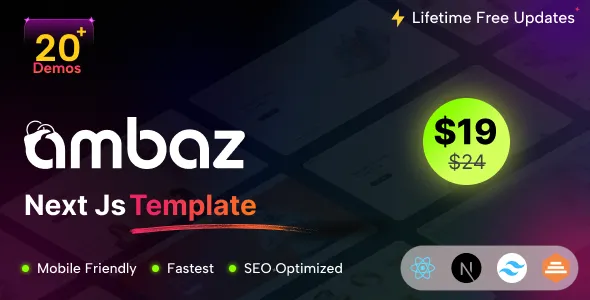
Ambaz – Multipurpose eCommerce NextJs Template
Ambaz – Multipurpose eCommerce NextJs Template is a versatile website template designed for businesses, entrepreneurs, online retailers, and developers who want to build a modern eCommerce website using Next.js. Created for a variety of online shopping applications, Ambaz provides a starting point for presenting products, organizing shopping categories, highlighting featured collections, and creating a professional storefront experience. Whether you are launching a fashion store, developing an electronics shop, building a beauty and cosmetics website, or creating a multipurpose online retail platform, this template can be customized to support your brand identity and business requirements.
A successful eCommerce website needs more than attractive product images. Customers should be able to explore categories, understand product details, compare available options, and move through the shopping journey with minimal confusion. Ambaz is intended to help developers establish the front-end foundation for these experiences while providing flexibility for different product niches and retail business models. Its multipurpose positioning makes it a potential choice for projects that need a reusable storefront design rather than a layout limited to one specific industry.
Built around the Next.js development ecosystem, Ambaz can be considered by developers who want to create a modern web storefront using a React-based framework. Depending on the included implementation and project configuration, the template can be adapted with custom branding, product content, category layouts, and integrations with suitable commerce services. Buyers should review the current product demo and documentation to confirm the exact pages, components, dependencies, and functionality included in the version they intend to purchase.
A Modern Solution for Online Shopping Websites
Online retail continues to provide businesses with opportunities to reach customers through digital storefronts. From independent brands and small businesses to established retailers, companies need websites that make their products easy to discover and present important purchasing information clearly.
Ambaz offers a starting point for creating an eCommerce website with a contemporary presentation. Businesses can customize the layout to introduce their brand, feature selected products, display categories, and guide visitors toward relevant shopping sections. Developers can adapt the visual style and content to match different audiences, product ranges, and marketing goals.
A well-organized storefront should help visitors understand what a business sells as soon as they arrive. Featured collections, category navigation, promotional content, and informative product pages can all contribute to a clearer shopping experience when implemented appropriately.
Ambaz can be used as the foundation for such a storefront, with the final structure shaped around the business’s inventory, customer expectations, and technical requirements.
Multipurpose eCommerce Website Design
Different online stores have different needs. A fashion retailer may prioritize product photography and style collections, while an electronics shop may require detailed specifications and comparison information. A beauty brand might focus on product ingredients, benefits, and routines, whereas a home decor business may emphasize room settings and coordinated collections.
Ambaz is intended for multipurpose eCommerce projects, allowing developers to adapt the website presentation to a range of retail categories. This flexibility can help businesses develop a storefront that reflects their own products rather than forcing their inventory into an unsuitable industry-specific design.
Potential applications include:
- Fashion and clothing stores.
- Shoes, bags, and accessories websites.
- Electronics and technology shops.
- Beauty and cosmetics storefronts.
- Furniture and home decor stores.
- Jewelry and lifestyle product shops.
- Sportswear and fitness product retailers.
- Grocery and everyday essentials websites.
- Gift shops and specialty product stores.
- General merchandise eCommerce websites.
- Small business online stores.
- Brand-specific direct-to-consumer storefronts.
The suitability of the template for each category depends on the available layouts and the customizations required. Developers should confirm the included design variations before selecting Ambaz for a particular project.
Built With the Next.js Ecosystem
Next.js is a React-based framework used to develop web applications and websites. It offers a structured environment for building component-based interfaces and supports different rendering and routing approaches depending on the version and project configuration.
Ambaz provides a Next.js-oriented starting point for developers who prefer working within this ecosystem. Rather than creating every front-end component from scratch, developers can use the supplied implementation as a foundation and adapt it to the intended storefront.
This approach can be useful for teams that already work with React and want to customize an existing eCommerce design. Developers familiar with JavaScript, React components, and the relevant Next.js conventions may find it easier to organize and extend the project.
The exact Next.js version, rendering approach, styling technology, and supporting dependencies should be confirmed in the product documentation. Buyers should also check whether the supplied code matches their existing development environment and deployment requirements.
Professional Storefront Presentation
The visual presentation of an online store can influence how customers perceive a brand and interact with its products. A professional storefront should balance attractive imagery with clear navigation, readable content, and useful product information.
Ambaz can be customized with brand colors, typography, logos, product photography, promotional graphics, and other visual assets. Businesses can use these elements to create a consistent appearance across the homepage, category pages, product listings, and supporting content.
A fashion brand might choose lifestyle photography and collection-focused messaging, while an electronics retailer may prefer product-focused imagery and specification highlights. A home accessories store could use contextual images to show how products fit into different living spaces.
The objective is to make the storefront feel relevant to its audience while keeping the shopping experience easy to understand. Consistent styling across pages can also reinforce brand recognition as customers move through the website.
Homepage Design for eCommerce Businesses
The homepage is often the first major introduction visitors receive to an online store. It should explain the brand’s offering, feature relevant products, and provide straightforward routes to the main shopping categories.
Ambaz can be adapted to support a homepage that introduces the store through prominent messaging, product collections, category links, promotional content, and other relevant sections where supported by the included layout.
A well-planned homepage might include:
- A clear introduction to the store and its products.
- Navigation to major shopping categories.
- Featured or newly added products.
- Selected collections or seasonal merchandise.
- Promotional banners for current campaigns.
- Brand information and customer benefits.
- Links to customer support and essential policies.
These are suggested content possibilities, not a guarantee that every element is included in the template. The final homepage should reflect the business’s priorities and avoid overwhelming visitors with too many competing messages.
Product Listings and Category Organization
Product categories help customers navigate an online store and discover items that match their interests. A logical category structure is especially important when a business sells multiple product types or maintains a large inventory.
Ambaz can be customized to organize products into meaningful categories and subcategories according to the needs of the business. A clothing store might group items by clothing type, collection, or audience. An electronics retailer could organize products by device category, while a home decor store might group merchandise by room or product type.
Product listing pages can present items using consistent images, names, brief descriptions, and relevant purchasing information. Depending on the supplied components and custom development, these pages may also be extended with sorting, filtering, pagination, or search features.
A useful category structure should reflect how customers naturally think about the products. Clear labels and sensible grouping can reduce browsing friction and help visitors locate suitable items more efficiently.
Product Detail Pages
Product detail pages provide the information customers need to evaluate an item before making a purchasing decision. They should clearly communicate what the product is, what makes it relevant, and which options are available.
Ambaz can be adapted to present product descriptions, images, prices, available variations, and other relevant information supported by the final implementation. Businesses can tailor these pages to match the information customers typically need for their product category.
For clothing, a product page might include available sizes, colors, material information, and care instructions. An electronics product may require technical specifications, compatibility information, and included accessories. Furniture listings might benefit from dimensions, materials, assembly details, and maintenance guidance.
Developers should make sure that product information is accurate and consistent with the actual inventory. If a storefront connects to a commerce platform or database, product details should be retrieved and updated through that system rather than relying on static demonstration content.
Shopping Cart and Checkout Integration
The shopping cart and checkout process are central parts of a functional eCommerce application. Customers need a clear way to review selected items, adjust quantities, understand applicable costs, and complete their purchases securely.
Ambaz can serve as a front-end starting point for a shopping experience, but the actual availability of cart and checkout functionality depends on the included implementation and any connected commerce services. A visual storefront does not automatically provide payment processing, order management, inventory synchronization, or secure transaction handling.
To build a complete shopping journey, developers may need to integrate a compatible eCommerce back end, commerce API, payment provider, or other services. The final implementation should account for product pricing, available variations, shipping costs, applicable taxes, order confirmation, and payment status.
Checkout should be tested carefully before launch. Developers should verify successful and unsuccessful payment scenarios, cart updates, validation messages, and the handling of customer information.
Product Search and Shopping Navigation
Customers often arrive at an online store with a specific product or category in mind. Search and navigation tools can help them locate relevant items without browsing every available page.
Ambaz can be extended with suitable search functionality, category navigation, and other product discovery tools when supported by the project architecture. Depending on the inventory size and the chosen back end, search may use product names, category labels, descriptions, identifiers, or other relevant attributes.
Additional discovery options might include filtering by price, size, color, brand, rating, or product type. These features should be implemented according to the information available in the product catalog and the needs of the intended audience.
For stores with large inventories, efficient server-side search and filtering may be more appropriate than processing the entire catalog in the browser. Developers should evaluate performance and ensure that the search results accurately reflect the current product data.
Flexible Product Catalog Management
A growing online store may need to update products, revise prices, introduce new collections, discontinue items, and adjust product availability. A reliable product catalog system helps keep this information consistent throughout the shopping experience.
Ambaz provides a front-end foundation that can be connected to an appropriate catalog or commerce platform. Depending on the selected architecture, product information may be managed through an external commerce service, content management system, database, or custom administration interface.
A complete catalog workflow should support accurate product titles, descriptions, images, prices, variations, stock information, and category assignments. Developers should also determine how product updates are reflected in listings, detail pages, and cart operations.
The HTML or Next.js template itself should not be assumed to include a fully featured inventory management system. The required catalog administration capabilities depend on the back-end solution and integrations selected for the project.
Responsive Design for Multiple Devices
Customers shop through smartphones, tablets, laptops, and desktop computers. A responsive storefront helps ensure that product information, navigation, and purchasing controls remain accessible across different screen sizes.
Ambaz can be evaluated and customized for a multi-device shopping experience. Developers should test category layouts, product cards, image galleries, navigation menus, product variations, and cart interactions on representative screen sizes.
On smaller devices, product images should remain clear, text should be readable, and important actions should be easy to locate. Navigation should not occupy excessive space, and forms should remain practical to complete on a touchscreen.
Responsive behavior depends on the included styling and the changes made during development. Testing the actual implementation is essential because new product content, additional components, or custom styling can affect how the website behaves on mobile devices.
Branding and Store Customization
An online store should communicate a consistent brand identity from the first page to the final purchasing step. Colors, typography, product photography, written content, and interface styling all contribute to how customers recognize and understand a business.
Ambaz can be customized to reflect a store’s preferred visual identity. Developers can update the logo, color palette, typography, promotional imagery, navigation labels, and other presentation elements according to the supplied structure.
A premium fashion store might use restrained typography and editorial photography, while a colorful lifestyle shop may prefer brighter imagery and more expressive visual elements. A technology retailer could emphasize product clarity and specification-focused content.
Brand customization should extend beyond appearance. Product descriptions, category names, promotional messaging, and customer support information should also reflect the business’s actual offering and tone of voice.
Promotional Banners and Featured Collections
Promotional content can help online retailers draw attention to selected products, seasonal collections, new arrivals, and special campaigns. When used thoughtfully, banners and featured sections can direct customers toward relevant shopping opportunities.
Ambaz can be adapted to present promotional messages and featured collections where the available layout supports these elements. Businesses may use such sections to introduce a new collection, highlight selected merchandise, or communicate a genuine offer.
Promotional banners should have clear messaging and a relevant destination. For example, a banner introducing a new footwear collection should direct visitors to the corresponding products rather than to an unrelated page.
Businesses should keep promotional content current and avoid displaying expired offers or misleading discounts. If banners are managed dynamically, the connected content system should provide a reliable way to update their text, images, and destination links.
Customer Account and Personalization Possibilities
Some eCommerce businesses benefit from customer accounts that allow users to review orders, manage saved addresses, or access other account-related services. Other stores may prefer a simpler shopping experience with fewer barriers to purchase.
Ambaz can be considered as a front-end foundation for projects that require customer account interfaces, provided the necessary functionality is included or developed separately. Authentication, account management, order history, saved addresses, and personalized recommendations require an appropriate back-end or external commerce platform.
Any customer account implementation should be designed with security and privacy in mind. Password handling, session management, account recovery, and access to personal information should follow appropriate security practices.
Personalized product recommendations may also require additional data processing or third-party services. These capabilities should be evaluated according to the business’s needs and the information it is permitted to collect and use.
Integration With eCommerce Platforms and APIs
A modern storefront may need to connect to external systems for product data, inventory, orders, payments, shipping, analytics, and customer communication. A Next.js-based project can be adapted to integrate with compatible services when the required APIs and implementation are available.
Depending on the chosen architecture, Ambaz may be extended to use a commerce back end or headless eCommerce service. This approach can separate the storefront’s presentation from the system responsible for managing products, orders, and transactions.
Potential integration areas include product catalog APIs, payment gateways, shipping providers, customer relationship tools, marketing platforms, and analytics services. The specific services available will depend on their APIs, compatibility, and the development work required.
Developers should review authentication requirements, data formats, rate limits, error handling, and security implications before integrating external systems. Private API credentials should be handled securely and should not be exposed in public client-side code.
Next.js Development Workflow
Next.js provides a framework for organizing React-based websites and applications. Its capabilities can support different approaches to routing, rendering, asset management, and deployment depending on the version and configuration used.
Ambaz can provide developers with a starting project structure for customizing an eCommerce front end. Developers familiar with React can adapt components, organize page content, and integrate the storefront with data sources suitable for the project.
Before making changes, it is useful to review the existing file structure and identify how routes, shared components, styling, and assets are organized. Understanding these details can make customization more efficient and reduce the risk of breaking existing layouts.
Developers should follow the package’s setup instructions and verify compatibility with the required Node.js version, package manager, framework version, and dependencies. These requirements should be checked against the actual purchased files rather than assumed from the template name alone.
Performance and Loading Experience
Performance is an important consideration for eCommerce websites because customers expect product pages and shopping interfaces to respond smoothly. Slow loading, unstable layouts, or unresponsive controls can make browsing less convenient.
Ambaz’s final performance depends on the included implementation, product image sizes, scripts, external services, hosting environment, and development choices. Developers should optimize images, remove unnecessary resources where appropriate, and test the website after customization.
For Next.js projects, the chosen rendering strategy and data-fetching approach can also affect how pages load and how quickly product information becomes available. Developers should select an implementation appropriate to the store’s content, inventory, and deployment environment.
Testing should cover both the front end and connected services. A storefront may load quickly with static demonstration data but behave differently when retrieving a large catalog or communicating with external APIs.
No particular speed score or performance result should be assumed without testing the deployed website.
SEO-Friendly eCommerce Structure
Search engine optimization can help online stores reach customers who are actively searching for products and related information. A Next.js template can provide a starting point for building a search-friendly storefront, but SEO performance depends on implementation, content quality, site structure, and other factors.
Businesses can customize page titles, meta descriptions, canonical URLs, headings, image alternative text, and internal links where supported by the implementation. Product and category pages should contain accurate, original information that helps customers understand the items being offered.
A clothing store, for example, may create distinct category pages for shirts, jeans, dresses, and accessories. An electronics retailer may organize content around product types and relevant specifications. Each page should have a clear purpose and avoid duplicating generic text across the catalog.
Developers should also review how product pages are rendered and discovered by search engines. Depending on the project, structured data, XML sitemaps, robots directives, canonicalization, and pagination may require additional configuration.
Using Ambaz does not automatically guarantee indexing, rankings, or organic traffic. Effective SEO requires a technically sound implementation, useful product content, and ongoing evaluation.
Product Photography and Visual Storytelling
Product photography helps customers evaluate appearance, design, materials, and details that may influence purchasing decisions. A strong visual presentation is especially important for fashion, furniture, beauty, accessories, and lifestyle products.
Ambaz can be customized with suitable product images, collection photography, promotional graphics, and supporting visuals. Consistent image proportions and appropriate cropping can help product listings look organized and make it easier for customers to compare items.
Businesses should use accurate images that represent the products actually being sold. Where a product is available in multiple colors or variations, the website should display the correct images and ensure that any variation selector corresponds to the selected product option.
Images should also be optimized for appropriate file size and display quality. Alternative text should describe meaningful product images clearly, while purely decorative images can be handled appropriately for accessibility.
Build Trust With Clear Product Information
Customers are more likely to make informed purchasing decisions when a store provides transparent and consistent information. Product descriptions should explain relevant features, dimensions, materials, usage instructions, compatibility, and other details appropriate to the product category.
Ambaz can be customized to present this information in a clear and readable format. Businesses can also provide shipping policies, return and refund terms, contact information, privacy notices, and other important store policies.
Trust-building content should be accurate and reflect the actual practices of the business. Unsupported guarantees, fabricated reviews, unclear pricing, or outdated policies can create confusion and undermine customer confidence.
For stores that sell products requiring specific instructions or compatibility checks, detailed information can help customers select the right item before checkout. Clear content also reduces avoidable questions and helps customer support teams respond more efficiently.
Support Different Retail Business Models
The multipurpose nature of Ambaz makes it a potential starting point for different online retail models. A business selling its own products may use a conventional product catalog and checkout workflow, while a brand managing several collections may need a more campaign-oriented storefront.
Depending on the project’s requirements, the template can be adapted for direct-to-consumer sales, niche product stores, specialty retailers, or general merchandise websites. Developers can organize categories and page content around the business’s inventory and intended customer journey.
More complex business models may require additional functionality. For example, a multi-vendor marketplace generally needs seller accounts, product ownership rules, commission calculations, order allocation, and vendor administration. A subscription-based store may require recurring billing and subscription management.
These capabilities require suitable commerce services or custom development and should not be assumed to be included in a multipurpose front-end template.
Accessibility and User Experience
An accessible eCommerce website helps more customers browse products, understand product information, and interact with shopping controls. Accessibility should be considered during design and development rather than added only after the storefront is complete.
Developers working with Ambaz can review heading structure, color contrast, keyboard navigation, focus indicators, form labels, alternative text, and the accessibility of interactive components. Buttons should have clear labels, and product variations should be understandable without relying only on visual color differences.
Forms should communicate validation errors clearly, while navigation and checkout controls should remain predictable. Readable text and consistent layouts can also improve the experience for users browsing on different devices.
The final accessibility level depends on the original code and subsequent customizations. Testing the actual storefront is necessary to identify and correct issues before launch.
Suitable for Freelancers and Web Development Agencies
Freelancers and web development agencies often need to deliver storefronts for clients with different products, brand identities, and business requirements. Ambaz can provide a Next.js-oriented foundation for projects where a multipurpose eCommerce design is appropriate.
Developers can adapt the supplied layout, customize product categories, incorporate the client’s branding, and connect the storefront to suitable commerce services. This can help establish the front-end structure while leaving room for project-specific development.
Before handing over a website, developers should verify page navigation, product data, image loading, responsive behavior, form submissions, cart operations, and checkout integration where applicable. They should also remove sample content and ensure that the completed website reflects the client’s actual products and policies.
The total development effort depends on the complexity of the store, the capabilities included in the purchased template, and the requirements of the selected back-end system.
Long-Term Customization and Store Growth
Online stores often evolve as new products are introduced, collections change, and customer expectations develop. A maintainable storefront should allow the business to update content and extend its functionality as requirements change.
Ambaz can be customized with additional product pages, category sections, campaign landing pages, brand information, and other content where supported by the project structure. A connected commerce platform can provide the data management and transaction processing needed for a more complete store.
Long-term maintenance may include dependency updates, security reviews, performance checks, accessibility improvements, and compatibility testing. Developers should document significant customizations and test changes before deploying them to the live website.
A well-planned implementation can make it easier to adapt the storefront as the business grows, but future flexibility depends on code quality, the selected technology stack, and the architecture of the connected commerce services.
How to Get Started With Ambaz
Before using Ambaz for a live eCommerce project, review the product demo and download package to confirm the included pages, source files, components, assets, framework version, and dependencies. Follow the vendor’s setup instructions and verify that the project runs in the intended development environment.
Next, identify the products the store will sell and organize them into a logical category structure. Customize the brand identity, homepage content, product imagery, and navigation so that visitors can understand the business and find relevant products.
Determine which additional services are required for the final store. If the project needs dynamic product data, shopping cart persistence, payment processing, shipping calculations, inventory management, or customer accounts, plan the necessary integrations and back-end functionality.
Test the shopping journey carefully, from product discovery through checkout. Verify product variations, prices, availability, form validation, order handling, and relevant error states. Review responsive layouts, performance, accessibility, and SEO configuration before deploying the website.
The current product documentation and live preview should be used to confirm which features are included and which require additional development.
Final Thoughts on Ambaz – Multipurpose eCommerce NextJs Template
Ambaz – Multipurpose eCommerce NextJs Template is a potential starting point for developers and businesses that want to create a modern online storefront using the Next.js ecosystem. Its multipurpose positioning makes it relevant to a range of retail projects, including fashion stores, electronics shops, beauty websites, home decor businesses, and specialty product retailers.
With appropriate customization, the template can provide a foundation for presenting product collections, organizing category pages, communicating brand identity, and guiding customers through a shopping experience. Developers can adapt its front-end structure to suit different business models and connect suitable commerce services to support the functionality required for a production store.
For entrepreneurs, retailers, freelancers, and development agencies evaluating an eCommerce template, Ambaz offers a starting point to compare against their design preferences and technical requirements. Reviewing the live preview, included source files, documentation, and compatibility details before purchase will help determine whether it is suitable for the intended online store.