
 My Account
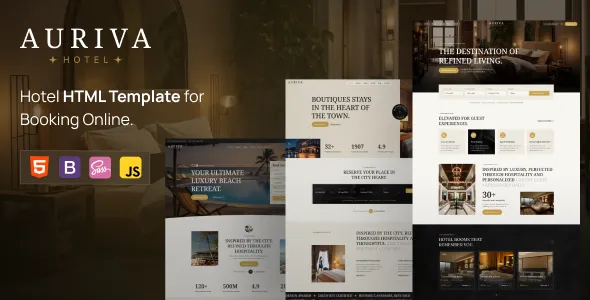
Auriva – Hotel Booking HTML Template
Auriva – Hotel Booking HTML Template is a modern website template designed for hotels, resorts, boutique accommodations, guesthouses, and hospitality businesses that want to establish a professional online presence. Created for hotel booking and accommodation-related websites, Auriva can serve as a frontend foundation for presenting rooms, showcasing property amenities, highlighting special offers, and helping visitors explore their accommodation options. Its hospitality-focused purpose makes it suitable for businesses that want to communicate their services clearly and provide prospective guests with an organized browsing experience.
A well-designed hotel website plays an important role in the guest journey. Visitors often want to compare room options, review photographs, understand available facilities, check location details, and learn about booking policies before making a reservation. Auriva can be evaluated as a starting point for organizing this information into a visually consistent website. Depending on the included layouts and components, developers may customize the template to suit a luxury hotel, a boutique property, a family resort, a business hotel, or a vacation accommodation provider.
As an HTML template, Auriva provides a frontend design foundation that developers can adapt using HTML, CSS, JavaScript, and any compatible libraries included in the product package. Its exact layouts, interactive elements, responsive behavior, and dependencies should be confirmed through the current product demo and documentation. A working reservation system, live room availability, online payments, and booking management generally require backend development or integration with a suitable hotel booking platform unless these capabilities are explicitly included.
Whether you are creating a website for a newly opened hotel or updating the digital presence of an established hospitality business, Auriva can be considered for building a structured and guest-focused online experience.
What Is Auriva Hotel Booking HTML Template?
Auriva is a hotel booking HTML template intended for accommodation websites that need an organized presentation of property information and guest services. An HTML template provides the structural and visual elements of a website, allowing developers to customize the content, layout, styling, and interactive behavior according to a project’s requirements.
A hotel website typically includes several important sections, such as a homepage, room listings, individual room details, facilities, gallery, location information, special offers, and contact details. A booking-focused template can help establish a consistent design for these sections so visitors can navigate the website and understand the available accommodation options.
Auriva may be suitable for different hospitality projects, depending on the page layouts and features included in the selected version. A boutique hotel might emphasize unique interiors and personalized service, while a resort could focus on leisure facilities, dining options, and guest experiences. A business hotel may prioritize convenient location information, meeting facilities, and room amenities.
The template should be viewed as a design and frontend development resource rather than automatically assuming it includes a complete booking engine. Developers should review the supplied files, documented functionality, and compatibility requirements before implementation.
Modern Website Design for Hotels and Resorts
A hotel website should communicate the character of the property while making essential information easy to find. Guests may make decisions based on room photographs, accommodation descriptions, location, amenities, and the overall quality of the online experience.
Auriva can be evaluated as a foundation for presenting hospitality services in a clean and organized layout. Depending on the included design components, developers can arrange property introductions, featured accommodation, facility highlights, promotional content, and contact information into a coherent browsing experience.
Visual consistency is particularly important for hotels because the website often serves as the first introduction to the property. Typography, colors, photography, spacing, and navigation should work together to reflect the intended brand identity.
A luxury property may use elegant imagery and restrained styling, while a family resort may benefit from a welcoming presentation that emphasizes recreational facilities and guest convenience. A small boutique hotel could highlight its architecture, room interiors, and distinctive local character.
The design should also prioritize clarity. Guests should not have to search through several unrelated sections to discover room options, check-in information, or contact details. A thoughtfully organized interface helps visitors move from discovering the property to evaluating whether it suits their travel needs.
Responsive HTML Template for Mobile and Desktop
Travelers browse hotel websites using a variety of devices, including smartphones, tablets, laptops, and desktop computers. Responsive design helps ensure that the website remains accessible and readable across different screen sizes.
Auriva should be evaluated for responsive behavior using its current demo and supported documentation. Developers should test the actual page layouts rather than assume that every component automatically adapts perfectly to all devices.
On smaller screens, navigation may need to collapse into a mobile menu, while room cards and promotional sections may need to stack vertically. Images should fit within the available width, text should remain readable, and interactive controls should be easy to select.
Booking-related interfaces deserve particular attention. Date selectors, guest-count controls, room filters, and inquiry forms can become difficult to use when their layouts are not optimized for touchscreens. If these components are included or added during development, they should be tested carefully on mobile devices.
Responsive behavior may also be affected by custom CSS, external libraries, image dimensions, and third-party booking widgets. Testing the homepage, room pages, gallery, contact forms, and any booking-related screens helps identify problems before launch.
A consistent mobile experience makes it easier for prospective guests to explore accommodation options whenever they are planning a trip.
Hotel Homepage and Property Introduction
The homepage is often the first page visitors encounter, so it should quickly explain what the property offers and help guests find relevant information.
An Auriva-based hotel website can be organized around a property introduction, featured rooms, accommodation highlights, facilities, location information, and contact or booking opportunities, depending on the available layouts.
The opening section should communicate the hotel’s identity and create a clear starting point for visitors. Supporting content can then introduce the property, highlight its strongest features, and direct guests toward detailed room information.
A featured accommodation section can present selected rooms with concise descriptions and relevant photographs. A facilities section can summarize amenities such as dining, parking, recreational areas, or meeting spaces when these are available at the property.
Promotional content can introduce seasonal packages or special accommodation offers, provided that the information is accurate and current. Location information can help travelers understand nearby attractions, transportation options, and the property’s general setting.
Not every hotel needs an extensive homepage. A small guesthouse may benefit from a straightforward design focused on rooms, essential amenities, and contact details, while a larger resort may require more detailed sections.
The most effective homepage structure reflects the property and its target guests rather than including every possible section without a clear purpose.
Room Listings and Accommodation Details
Room information is one of the most important parts of a hotel booking website. Guests need to understand the differences between available accommodation types before deciding which option best fits their trip.
Auriva can be considered for organizing room listings and individual accommodation pages, depending on the templates included in the product package. Developers can adapt these pages to present room photographs, descriptions, occupancy information, amenities, and relevant policies.
A room listing should communicate the essential details without overwhelming visitors. Useful information may include the room type, approximate size, bed configuration, maximum occupancy, included facilities, and any important restrictions.
Individual room pages can provide additional details about the accommodation. High-quality photographs may show the sleeping area, bathroom, view, seating space, and other features that guests may want to evaluate before making a reservation.
Descriptions should be accurate and specific. Rather than relying on vague claims, explain the practical features of the room and what guests can expect from their stay. If room rates or availability are displayed, the information should be connected to a reliable data source or updated through a clearly defined process.
A clear room presentation helps visitors compare accommodation options and reduces uncertainty during the decision-making process.
Hotel Booking Interface and Reservation Journey
A hotel booking website should make the reservation journey understandable and convenient. Guests typically need to select travel dates, specify the number of guests, compare available rooms, review pricing, and provide the information required to complete a reservation.
Auriva’s suitability for a booking workflow depends on the components included in the template and the integrations implemented by the developer. A visual booking form does not automatically provide live room availability or process a confirmed reservation.
A functional booking system may need to connect to a hotel reservation platform, property management system, or custom backend. The system must check availability, calculate prices according to the applicable rules, validate guest details, and create reservation records.
The interface should clearly communicate the selected dates, occupancy, room details, applicable charges, and cancellation conditions. Guests should be able to review their choices before confirming a booking.
Error handling is also important. If a room becomes unavailable or a request cannot be processed, the website should explain the problem and provide a clear next step rather than leaving visitors uncertain.
If online payments are supported through an integration, the payment process should use a suitable payment provider and follow appropriate security requirements. Reservation confirmation messages should reflect the actual status of the booking.
A well-designed booking journey can help guests move from exploring accommodation to submitting a reservation with greater confidence.
Hotel Amenities and Facilities Presentation
Hotel amenities can influence a guest’s decision when comparing accommodation options. Visitors may want to know whether the property offers dining, parking, Wi-Fi, room service, a swimming pool, fitness facilities, meeting rooms, or other services relevant to their stay.
Auriva can be evaluated for presenting property facilities in a structured and visually consistent format. Depending on the included layouts, developers may use cards, icon-based sections, photographs, or descriptive content blocks to explain the available amenities.
The information should match the actual property. A hotel should not advertise facilities that are unavailable, temporarily closed, or offered only under specific conditions without explaining those limitations.
Facilities can be grouped according to their purpose. Room amenities may be presented separately from dining, wellness, business services, transportation, or family facilities. This makes the information easier to scan, especially for guests with specific requirements.
Where necessary, supporting details can clarify opening hours, additional charges, reservation requirements, or access restrictions. For example, a meeting facility may require advance booking, while certain leisure services may operate seasonally.
A clear facilities section helps guests understand what is included in their stay and determine whether the property matches their expectations.
Hotel Gallery and Visual Storytelling
Photography is an important part of hotel marketing because it allows potential guests to explore the property before arriving. Clear and accurate images can communicate the atmosphere of the accommodation and help visitors evaluate the available spaces.
An Auriva-based website can be considered for a hotel gallery featuring room interiors, common areas, dining spaces, exterior views, gardens, recreational facilities, and other relevant property features. The available gallery layouts depend on the template version.
Images should be selected carefully to reflect the real guest experience. Room photographs should correspond to the accommodation being described, while facility images should represent amenities that guests can actually access.
A gallery can be organized into categories to help visitors find specific information. For example, separate groupings may show rooms, dining, outdoor areas, and event spaces. Image captions can provide useful context when a photograph alone does not explain what is being shown.
Image optimization is also important. Large photographs can increase loading times, particularly on mobile devices. Developers should use suitable image dimensions and compression while retaining enough detail to present the property accurately.
A well-organized gallery supports the written accommodation descriptions and helps prospective guests build a clearer understanding of the property.
Hotel Location and Nearby Attractions
Location information helps travelers decide whether a hotel is suitable for their itinerary. Guests may consider proximity to transport links, business districts, tourist attractions, restaurants, event venues, or natural destinations.
Auriva can be adapted to present the property’s address, directions, surrounding area, and relevant local information, depending on the available layouts. Developers may also integrate a suitable mapping service where needed.
A useful location section should provide accurate details about the hotel’s address and nearby points of interest. Distances and travel times should be checked rather than estimated without a reliable basis.
Hotels serving business travelers may highlight access to offices, conference venues, or transportation hubs. Leisure properties can focus on nearby attractions, cultural sites, beaches, parks, or other destinations that genuinely relate to the property.
Transportation information can explain available parking, public transit options, airport transfer arrangements, or other services when offered. Any additional charges or booking requirements should be stated clearly.
A map can help visitors understand the property’s location, but it should complement rather than replace written directions and address information. The location section should remain usable on smaller screens and avoid unnecessary visual clutter.
Accurate location information helps guests plan their journey and understand the practical advantages of staying at the property.
Special Offers and Hotel Packages
Special offers and accommodation packages can help hotels communicate seasonal promotions and services that combine different aspects of a guest’s stay.
Auriva may be considered for presenting promotional sections, package cards, and offer details, depending on the layouts supplied with the template. Developers can adapt these sections to highlight relevant offers without making the website difficult to navigate.
A hotel might promote a weekend package, a longer-stay rate, a family accommodation offer, or a package that includes dining or another available service. Each promotion should explain what is included and identify any important conditions.
Offer pages should provide accurate dates, eligibility requirements, applicable restrictions, and pricing details. If a promotion is available only for selected room types or travel periods, that limitation should be clear.
When special prices are displayed dynamically, the website should retrieve them from a reliable booking system or another appropriate data source. Static promotional content should be updated when an offer expires.
Calls to action can guide visitors toward the relevant room details or reservation process. The goal is to help guests understand the offer and make an informed decision rather than rely on unclear discounts or exaggerated claims.
Hotel Website Branding and Customization
A hotel website should reflect the property’s identity, target audience, and service style. Customization helps establish a recognizable visual presentation and makes the website feel connected to the actual guest experience.
Depending on the available source files and configuration options, Auriva may provide a foundation for adjusting colors, typography, spacing, image treatments, navigation, and other design elements. Developers should consult the current documentation to determine which customizations are supported.
A luxury hotel may choose understated colors, elegant typography, and spacious layouts. A family resort may prefer a brighter presentation that emphasizes activities and convenience, while a boutique accommodation provider may highlight distinctive architecture and local character.
Branding should remain consistent across the homepage, room listings, gallery, facilities, offers, and contact pages. Repeated button styles, heading patterns, and spacing rules help create a cohesive experience.
Photography should also support the hotel’s identity. Images should be relevant to the property and selected to communicate the atmosphere and facilities accurately.
Developers should keep custom styles organized and test the website after substantial changes. This is particularly important when modifying navigation, responsive layouts, or interactive booking elements.
A consistent design helps visitors recognize the property and makes the overall website experience more professional.
HTML, CSS, and JavaScript Development
As an HTML template, Auriva provides a frontend foundation that developers can customize using web technologies. HTML defines the page structure, CSS controls presentation, and JavaScript can support interactive behavior where appropriate.
This structure can be useful for developers who want direct access to the website markup and styling rather than working entirely within a content management system. The actual files, scripts, libraries, and setup process should be confirmed in the supplied product documentation.
Developers can adapt page sections, update text and images, customize navigation, and modify layouts to match the hotel’s branding. JavaScript may be used for supported interface interactions, such as menus, tabs, sliders, or form behavior, depending on the template implementation.
More advanced functionality may require additional libraries or custom development. A live booking workflow, for example, needs reliable availability checks, reservation storage, price calculations, and appropriate confirmation handling.
The codebase should be reviewed before integration so that developers understand the relationship between the HTML files, stylesheets, scripts, and external dependencies.
Keeping the code organized can make future updates easier. Project-specific modifications should be documented, and the website should be tested after changes to ensure that existing components continue to work correctly.
SEO-Friendly Structure for Hotel Websites
Search engine optimization helps hotel websites make their pages easier for search engines to discover and understand. A well-structured HTML template can provide a useful foundation, but search visibility also depends on content quality, technical configuration, competition, and other factors.
An Auriva-based website should use descriptive page titles, clear headings, meaningful URLs, and original content that answers visitors’ questions. Separate pages can be created for important room types, property facilities, location information, and other relevant topics where appropriate.
A hotel website can also benefit from descriptive image alternative text, optimized image files, internal links, and a logical navigation structure. These practices improve accessibility and help search engines interpret the website’s content.
Location-related content should be accurate and genuinely useful. Information about the property’s area, available services, and nearby destinations can help prospective guests understand what the hotel offers.
Structured data may be appropriate for certain hotel and accommodation details, provided it follows the relevant guidelines and accurately reflects visible page content. Any technical SEO configuration should be reviewed before deployment.
A responsive layout and efficient loading behavior can support a better user experience, but no template can guarantee specific search rankings or a particular volume of organic traffic.
The strongest SEO strategy combines a sound technical foundation with accurate property information, original content, useful page structures, and regular maintenance.
Website Speed and Image Optimization
Website performance is important for hotel websites because visitors often browse image-rich pages while using mobile connections. Slow-loading room photographs, unnecessary scripts, and oversized assets can make it harder to explore the property.
The performance of an Auriva-based website depends on its implementation, hosting environment, image files, scripts, external integrations, and any custom changes made by the developer.
Image optimization is a practical starting point. Photographs should use appropriate dimensions and compression for their display area. Modern image formats may be suitable where supported, and responsive image techniques can help deliver appropriately sized assets.
Developers should also review unnecessary scripts, external widgets, and libraries that are not required for the intended experience. Caching and other performance techniques may help depending on the hosting setup and website architecture.
Testing should include the homepage, room details, gallery, offers, and any booking-related pages. These sections may have different performance characteristics, particularly when they contain large photographs or third-party tools.
Performance checks should be repeated after major content or design changes. A hotel website often grows over time as new room types, offers, and gallery images are added.
A well-optimized website makes it easier for visitors to explore accommodation options without unnecessary waiting.
Contact Forms and Guest Inquiries
Not every visitor is ready to make an immediate reservation. Some guests may want to ask about room availability, group accommodation, event facilities, accessibility, or special requirements before booking.
Auriva can be considered for a contact page or inquiry interface, depending on the supplied layouts. Developers may adapt these sections to collect relevant guest questions and provide clear contact information.
A useful inquiry form should request only the information necessary to respond. Common fields may include a name, email address, subject, message, and optional stay details when relevant.
Form labels should be clear, and validation messages should explain how to correct missing or invalid information. Visitors should receive appropriate feedback after submitting a request.
The form’s appearance does not automatically guarantee that messages will be delivered. Email handling, spam protection, server-side validation, and any storage of submitted inquiries must be implemented and tested.
Hotels should also provide alternative contact details where appropriate, such as a telephone number or business email address. If inquiries are handled by a team, the website should help visitors understand what information to provide.
A reliable contact process helps guests obtain answers and supports communication between the property and prospective customers.
Accessibility and Guest-Friendly Navigation
A hotel website should make essential information accessible to a wide range of visitors. Clear navigation, readable text, suitable color contrast, descriptive links, and well-labeled forms can improve usability.
When customizing Auriva, developers should use meaningful heading structures and appropriate alternative text for informative images. Decorative images should not create unnecessary noise for assistive technologies.
Navigation labels should be familiar and concise. Visitors should be able to locate rooms, facilities, location information, contact details, and booking opportunities without confusion.
Interactive elements such as menus, sliders, dialogs, and booking controls should be tested for keyboard accessibility and predictable behavior. Focus states should remain visible, and forms should provide understandable instructions and error messages.
Accessibility should be considered alongside responsive design because visitors may use different devices and input methods. Automated testing can identify some problems, but manual checks and usability reviews are also valuable.
A clear and accessible website makes it easier for guests to understand the property and complete the actions they need.
Integration with Booking Engines and Hotel Management Systems
Some hotel websites require more than a static presentation of accommodation options. They may need to connect with reservation platforms, property management systems, payment providers, or channel management services.
Auriva can be evaluated as a frontend foundation for such integrations, but compatibility and implementation requirements should be verified before development. An HTML template should not be assumed to include these systems automatically.
A booking engine may provide room availability, pricing rules, reservation creation, guest details, and confirmation messages. A property management system may support room inventory, booking records, and operational processes, while a channel manager may synchronize information across supported booking platforms.
The integration approach depends on the chosen service, available APIs, authentication methods, and technical documentation. Developers should use supported integration methods and handle errors carefully.
Booking information must remain consistent between the website and the connected system. If a room becomes unavailable during the reservation process, the interface should communicate the change clearly and offer suitable next steps.
Payment processing should use a reputable provider and follow appropriate security practices. The website should also explain relevant booking conditions, cancellation rules, and charges before a guest confirms a reservation.
A properly integrated booking workflow can help transform a hotel website from an informational destination into a practical reservation channel.
Who Should Use Auriva Hotel Booking HTML Template?
Auriva may be worth evaluating for several types of hospitality businesses and web development projects.
Hotels: Establish a website that introduces the property, presents accommodation options, and provides access to essential guest information.
Luxury resorts: Highlight rooms, facilities, dining, recreational services, and the overall character of the property.
Boutique hotels: Present distinctive interiors, personalized services, and the property’s unique identity through organized content and photography.
Guesthouses and inns: Create a straightforward online presence focused on accommodation details, amenities, directions, and contact information.
Business hotels: Communicate room features, location details, meeting facilities, and services relevant to business travelers.
Vacation accommodation providers: Organize accommodation information and guest inquiries for suitable holiday properties.
Hospitality agencies: Evaluate the template as a frontend starting point for client projects involving hotel or resort websites.
Web developers and freelancers: Customize the supplied HTML, CSS, and JavaScript resources for hospitality websites that match the template’s capabilities and licensing terms.
The right choice depends on the available page layouts, responsive behavior, documentation, compatibility requirements, and the functionality needed for the final website.
Tips for Building a Hotel Website with Auriva
A successful hotel website begins with a clear understanding of the property and its guests. Before customizing the template, identify the main information visitors need and the actions the website should support.
Start by reviewing the current demo, documentation, and supplied files. Confirm which layouts and interactive elements are included, then identify any additional requirements such as a booking engine, payment integration, or property management connection.
Prepare accurate content for the property introduction, room descriptions, amenities, location, policies, and contact information. Use genuine photographs that reflect the accommodation and available facilities.
Customize the visual presentation to match the hotel’s brand. Establish consistent typography, colors, image treatments, and button styles across the website.
Organize navigation so guests can find room information, facilities, location details, and contact opportunities easily. Keep important policies visible and make sure pricing or promotional details remain accurate.
Test the website on different screen sizes. Review image loading, navigation, forms, gallery behavior, and booking-related interactions. If an external reservation system is connected, test availability checks, confirmation messages, and error scenarios.
Before launch, review accessibility, search engine settings, broken links, loading performance, and the accuracy of published content. Establish a maintenance routine to keep room details, offers, contact information, and software dependencies up to date.
These practices help turn an HTML template into a professional website that supports the needs of both the hotel and its guests.
Final Thoughts on Auriva – Hotel Booking HTML Template
Auriva – Hotel Booking HTML Template is a potential frontend solution for hotels, resorts, guesthouses, boutique accommodations, and other hospitality businesses that need a structured online presence. Its hotel-focused purpose makes it relevant to projects that require accommodation presentations, property information, visual galleries, and guest contact opportunities.
A well-planned hotel website should combine attractive property photography with accurate room descriptions, clear amenity information, useful location details, and straightforward navigation. These elements help visitors understand the property and determine whether it matches their travel requirements.
Developers should evaluate the template’s actual capabilities before implementation. Responsive layouts, page designs, interactive components, and dependencies depend on the supplied version, while live availability, reservation management, and payment processing may require separate services or custom development.
Reviewing the current demo, documentation, and licensing terms can help establish whether Auriva matches the project’s technical needs. Testing the completed website across devices and reviewing its performance, accessibility, and content quality are also important before launch.
With thoughtful customization, accurate information, optimized imagery, and reliable booking integrations where required, Auriva can provide a useful starting point for a professional hotel website designed to inform prospective guests and support the property’s online presence.


