My Account
Auriva – Hotel Booking WordPress Theme
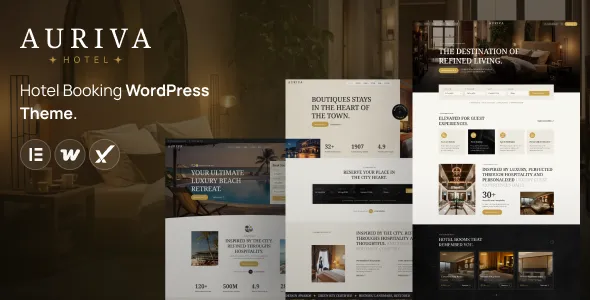
Auriva – Hotel Booking WordPress Theme is a website design solution for hotels, resorts, boutique accommodations, guesthouses, vacation properties, and hospitality businesses that want to build a professional online presence with WordPress. A well-designed hotel website helps travelers explore accommodation options, discover available amenities, review property information, and plan their stays with greater confidence. Auriva provides a starting point for developing a hospitality-focused website that presents rooms, facilities, services, and booking-related information in an organized and visually appealing format.
The hospitality industry depends on clear communication, convenient access to information, and a welcoming digital experience. Before choosing a property, travelers often want to compare room options, understand accommodation policies, view photographs, check available facilities, and learn about the surrounding destination. A hotel website should make these details easy to find while helping visitors move naturally from browsing to making an inquiry or reservation. Auriva can be considered for businesses that want to organize these essential elements within a WordPress-based website.
WordPress offers a flexible content management system for maintaining room descriptions, publishing travel articles, updating property information, and presenting hotel services. Depending on the theme version, configuration, and compatible booking integrations, a hotel website can also support reservation-related workflows and other hospitality features. Before installation, website owners should review the current Auriva demo and documentation to confirm the included layouts, booking capabilities, supported plugins, and technical requirements.
What Is Auriva Hotel Booking WordPress Theme?
Auriva is a hotel-focused WordPress theme intended for accommodation businesses that want to present their properties and hospitality services through a dedicated website. It can be evaluated by hotels, resorts, boutique stays, holiday rentals, bed-and-breakfast establishments, serviced apartments, and other lodging providers.
A hotel website has several important responsibilities. It introduces the property, presents available room categories, explains amenities, communicates policies, and provides information that helps travelers decide whether the accommodation suits their needs. Depending on the business, the website may also include dining options, wellness facilities, event spaces, destination guides, guest reviews, and contact details.
Auriva can serve as a visual foundation for organizing these different content areas. With WordPress, administrators can update pages, upload property photographs, publish articles, and manage navigation through the website dashboard. The exact editing tools and layouts depend on the installed theme version and the supported customization options.
Hotel owners should distinguish between a booking-oriented website design and a complete reservation management system. Online reservations, live room availability, payment processing, cancellation management, and automated booking confirmations generally require suitable booking functionality or compatible integrations. Confirm which capabilities are included before relying on the theme for reservation operations.
Professional Website Design for Hotels and Resorts
A hotel’s website often creates the first impression of its property. Visitors may be deciding between several accommodations, so the website should communicate the hotel’s atmosphere, location, facilities, and accommodation options clearly.
Auriva can be considered for a professional hospitality website that combines property imagery with practical information. A well-organized homepage can introduce the hotel, highlight selected rooms, present important facilities, and guide visitors toward room details or booking information.
Visual consistency is particularly important for hospitality brands. A luxury resort may prefer spacious layouts and elegant typography, while a boutique hotel may use distinctive photography and a more intimate visual style. A family-oriented property might prioritize practical facilities, room configurations, and convenient access to local attractions.
Images should represent the actual property as accurately as possible. High-quality photographs of guest rooms, common areas, dining spaces, outdoor facilities, and surrounding scenery can help travelers understand what to expect. Descriptive captions and organized galleries can provide useful context.
The website should also communicate essential details such as check-in and check-out policies, available amenities, property location, and contact information. Combining attractive presentation with practical information helps create a more useful experience for prospective guests.
Room Listings and Accommodation Details
Room information is one of the most important parts of a hotel website. Travelers need to understand the available accommodation types, their features, occupancy limits, and other details before deciding which option best fits their trip.
An Auriva-based website can be structured to present room categories through dedicated pages or room listing sections, depending on the layouts and functionality available in the theme. Each room description should explain the accommodation clearly and provide enough information for visitors to compare options.
Useful room details may include:
- Room name and accommodation category.
- Maximum guest capacity and bed configuration.
- Room size, where relevant.
- Available amenities and furnishings.
- Window, balcony, or view information when applicable.
- Accessibility features, where available.
- Applicable booking conditions and policies.
- Current rates and availability, when supported by a connected booking system.
Photographs should accurately reflect the room being described. If several room categories have different layouts or facilities, provide separate images and descriptions to avoid confusing visitors.
Clear room information can reduce repetitive inquiries and help guests select accommodation that matches their requirements. It is also important to update details whenever facilities, policies, or room configurations change.
Online Booking and Reservation Experience
A convenient reservation process can help hotel websites turn visitor interest into confirmed stays. Travelers generally want to understand the available dates, accommodation options, pricing, and booking conditions before completing a reservation.
Auriva is positioned as a hotel booking WordPress theme, making reservation-related presentation an important consideration when evaluating it. However, the actual booking workflow depends on the theme’s included functionality and the booking plugin or external reservation system used.
A complete booking setup may require date selection, guest counts, room availability, pricing rules, booking forms, payment processing, and confirmation messages. Some properties may also need seasonal rates, minimum-stay rules, discount codes, taxes, extra guest charges, and cancellation policies.
Before launch, test the full reservation process using the intended booking configuration. Confirm that selected dates, room details, prices, taxes, and policies are displayed accurately throughout the process. If online payments are supported, check payment gateway compatibility and ensure the website uses secure payment handling.
Hotels that rely on an external booking engine should provide a clear path from the website to that system. Avoid presenting availability or prices as live unless the connected service actually supplies current information.
A simple and transparent reservation experience helps travelers understand their options and reduces the risk of booking misunderstandings.
Suitable for Luxury Hotels and Boutique Properties
Luxury hotels and boutique accommodations often compete through atmosphere, service quality, location, and distinctive guest experiences. Their websites need to communicate these qualities while presenting the information required to plan a stay.
Auriva can be evaluated for boutique hotels, premium guesthouses, design-led accommodations, and upscale hospitality businesses that want to develop a tailored WordPress website. The visual identity can be adjusted to reflect the property’s character, subject to the available theme customization options.
A luxury property may emphasize spacious room photography, fine dining, spa facilities, concierge services, and carefully presented accommodation details. A boutique hotel may focus on distinctive interiors, local character, personalized hospitality, and nearby cultural experiences.
Property descriptions should remain accurate and specific. Instead of relying entirely on broad claims about luxury or exclusivity, explain the actual features that make the accommodation distinctive. This might include a particular room style, a documented service offering, a location advantage, or a genuine guest experience.
Dedicated pages for suites, dining, wellness, events, and special packages can help visitors explore the property’s services in greater detail. Clear contact and reservation options then allow interested travelers to take the next step.
Website Solutions for Resorts and Holiday Destinations
Resorts often offer more than accommodation alone. Guests may be interested in restaurants, swimming pools, spa treatments, recreational activities, event facilities, family services, or nearby attractions.
An Auriva-based website can be organized to introduce these offerings alongside room information, depending on the theme’s available page layouts and customization tools. A resort homepage may feature its setting and main facilities, while supporting pages provide more detailed descriptions of individual experiences.
A beach resort might highlight beach access, dining, water activities, and family amenities. A mountain retreat may focus on scenic views, outdoor activities, wellness services, and seasonal experiences. A countryside property could emphasize relaxation, local food, nature, and access to nearby destinations.
Travelers benefit from accurate information about opening hours, availability, age restrictions, additional charges, and reservation requirements for optional services. These details should be reviewed regularly so visitors can plan realistically.
Destination information can also improve the usefulness of a resort website. Practical guidance about transport, local attractions, travel seasons, and nearby points of interest helps prospective guests understand what their stay may involve.
Ideal for Guesthouses, Homestays, and Vacation Rentals
Smaller accommodation businesses need websites that communicate their property details without requiring visitors to navigate a complicated structure. Guesthouses, homestays, serviced apartments, and vacation rentals often benefit from straightforward pages that emphasize accommodation, amenities, location, and booking information.
Auriva may be considered for these businesses if its current layouts and booking integrations match their requirements. A smaller property can organize its website around an introduction, accommodation details, a photo gallery, house rules, location information, frequently asked questions, and contact options.
Vacation rental pages should specify guest capacity, bedroom and bathroom arrangements, kitchen facilities, parking, internet access, accessibility information, and other relevant amenities. If the property has restrictions concerning pets, parties, smoking, or minimum stays, those policies should be clearly stated.
For homestays, information about the host experience, shared facilities, meals, and neighborhood can help guests understand the accommodation style. Guesthouses may prefer to highlight room options, included services, and access to local transport.
Smaller properties should avoid presenting unverified availability or pricing. If reservations are handled manually, provide a clear inquiry process and explain when a booking becomes confirmed. If a booking system is connected, test its availability and confirmation behavior before publishing the website.
Responsive Design for Mobile Travelers
Travelers frequently research accommodations using smartphones and tablets. A hotel website should make it easy to browse room photographs, review facilities, find location details, and access booking information on smaller screens.
Responsive behavior is an important consideration when evaluating Auriva. The actual mobile experience depends on the installed theme version, its configuration, the page layouts used, and any additional plugins or custom code.
On mobile devices, navigation should be straightforward, text should remain readable, and buttons should be easy to select. Room galleries should fit the screen, while forms should use appropriate field sizes and clear labels. Important contact information and reservation links should not be difficult to locate.
Booking forms require particular attention because they may contain date selectors, guest fields, room choices, and payment steps. Test these elements on different screen sizes to ensure that visitors can complete the intended actions without unnecessary difficulty.
Custom scripts, third-party booking engines, embedded maps, and large images can affect mobile usability. Testing the complete website on real devices or suitable browser emulation helps identify layout issues before launch.
A well-tested mobile experience allows guests to research and plan their stays with greater convenience.
Customization and Hotel Brand Identity
A hotel website should reflect the property’s brand, atmosphere, and target audience. Consistent visual design helps communicate the accommodation’s personality and creates a recognizable presentation across pages.
Depending on the available settings and supported tools, Auriva may allow customization of visual elements such as colors, typography, imagery, spacing, and page arrangements. The precise controls should be confirmed in the theme documentation before development begins.
A luxury property may use a restrained color palette and refined typography. A family resort might choose warmer imagery and clear, accessible navigation. A boutique hotel could emphasize its interior design and local character, while a business hotel may prioritize practical information, location, and services for professional travelers.
Use consistent styling for headings, buttons, links, and content sections. This helps guests understand the structure of the website and recognize interactive elements.
Photography is particularly influential in hospitality. Use genuine property images wherever possible, and ensure that photographs accurately represent rooms, amenities, and shared spaces. Avoid misleading images that could create unrealistic expectations.
Before making major design changes, determine whether each setting is controlled by the theme, the WordPress editor, a page builder, or a plugin. Backups and staging environments can help reduce risks when customizing a live website.
Hotel Amenities and Hospitality Services
Amenities can influence a traveler’s accommodation decision, particularly when guests have specific requirements for work, relaxation, accessibility, or family travel.
An Auriva-based website can organize hotel facilities into clear sections or dedicated pages, depending on the available layouts. These sections may describe dining, parking, Wi-Fi, fitness facilities, meeting rooms, spa services, pools, airport transfers, or other amenities actually offered by the property.
Each facility description should explain what is available and any relevant conditions. For example, clarify whether parking is complimentary or chargeable, whether breakfast is included, and whether wellness facilities require advance reservations.
Hotels serving business travelers may highlight meeting rooms, workspace options, transport links, and business services. Family-oriented properties may provide details about children’s facilities, room capacity, meal arrangements, and family activities.
Accessibility information should be accurate and specific. Where possible, explain relevant features such as step-free access, lift availability, accessible bathrooms, or other accommodations rather than relying on vague statements.
Clear amenity information helps visitors compare properties and reduces the chance of misunderstandings after arrival. Review these details whenever the hotel’s facilities or service policies change.
Hotel Photography and Visual Storytelling
Visual content plays an important role in hospitality websites because travelers often want to understand the atmosphere and physical environment of a property before booking.
Auriva can be evaluated for presenting property photographs and visual content through the layouts available in the current theme version. Effective imagery should help visitors explore rooms, common areas, dining spaces, facilities, and surrounding locations.
A well-organized gallery can group photographs by category so visitors can find the information they need. Room galleries should show the relevant accommodation category, while amenity galleries should accurately represent the facilities available to guests.
Image quality should be balanced with loading performance. Large photographs can affect page speed, so use suitable dimensions and compression while preserving enough detail for visitors to evaluate the property.
Descriptive alternative text should be added to informative images to support accessibility. Captions can provide context about a room type, facility, or location when necessary.
Visual storytelling should complement accurate written information. A beautiful gallery may attract attention, but guests also need practical details about room configurations, policies, facilities, and reservation conditions.
Search Engine Optimization for Hotel Websites
Search engine optimization can help travelers discover a hotel’s website when searching for accommodation, destinations, facilities, or specific travel needs. A WordPress theme provides a design foundation, but search visibility depends on content quality, technical implementation, competition, and other factors.
An Auriva website can support an SEO strategy built around clearly organized pages for rooms, facilities, location information, and hospitality services. Each page should have a descriptive title, a logical heading hierarchy, useful content, and a clear purpose.
Hotels can create informative pages that answer common questions about accommodation options, amenities, check-in procedures, transportation, and nearby attractions. Where relevant, destination pages can explain local experiences and provide practical travel information.
Use natural language when describing room types and services. Avoid repeating the same keywords excessively or creating many nearly identical pages that offer little additional value. Each page should provide genuinely useful information for the intended visitor.
Descriptive URLs and internal links help connect related content. For example, a destination guide can link to relevant accommodation pages, while a room page can direct visitors to booking information and applicable policies.
Image optimization, mobile usability, and loading performance are also important. Compatible SEO plugins may assist with metadata, sitemaps, redirects, and supported structured data. Verify that any structured information reflects the actual property and is implemented correctly.
No theme can guarantee specific search rankings or booking volumes. Consistent technical maintenance and useful, accurate content provide a more reliable foundation for long-term search visibility.
Local SEO for Hotels and Accommodation Businesses
Local search visibility is particularly relevant for hotels because travelers often search by city, destination, neighborhood, or nearby attraction. Accurate business information can help potential guests identify the property and understand its location.
An Auriva-based hotel website can include a dedicated location page that presents the property’s address, contact details, transport information, and relevant nearby destinations. The page should describe the location accurately and avoid unsupported claims about distance or travel time.
Hotels should maintain consistent business information across their website and relevant online listings. Where appropriate, a verified business profile can help travelers find directions, opening information, contact details, and other property information.
Maps may be useful for helping guests understand the location, provided that the embedded service is configured correctly. Include written directions for important arrival routes when they help visitors plan their journey.
Reviews can also influence accommodation decisions. Encourage genuine guest feedback through appropriate channels and respond professionally to questions or concerns. Do not publish fabricated reviews or misleading claims about guest satisfaction.
Local SEO should be supported by accurate information and a useful visitor experience rather than repetitive location keywords. A clear location page helps guests make informed travel decisions and can strengthen the website’s overall usefulness.
Content Marketing and Travel Blogging
A hotel blog can provide travelers with practical information while helping the property communicate its local knowledge and hospitality offerings. WordPress makes it possible to publish articles, organize them into categories, and link them with relevant website pages.
Depending on the theme’s blog layouts and configuration, Auriva can be considered for hotels that want to publish travel guides, destination articles, hospitality updates, and accommodation advice.
Potential topics include local attractions, seasonal travel recommendations, cultural experiences, food guides, transport information, family activities, and suggested itineraries. Hotels can also publish practical articles about choosing room types, preparing for a stay, or understanding local customs.
Content should be accurate, current, and relevant to the intended audience. Check attraction details, opening information, transport options, and other time-sensitive facts before publication.
Internal links can guide readers from destination articles to accommodation information or booking pages when relevant. This creates a natural connection between helpful travel content and the hotel’s services.
A consistent publishing schedule is generally more manageable than producing a large quantity of shallow articles. Prioritize practical value, original writing, and accurate information to build a useful travel resource over time.
Booking Policies, Payments, and Guest Communication
Clear policies help travelers understand the conditions associated with their reservations. They also help hotel teams manage expectations and reduce avoidable disputes.
A hotel website using Auriva should present relevant policies in accessible locations. These may include check-in and check-out times, cancellation conditions, refund rules, deposits, payment methods, additional charges, occupancy limits, and identification requirements where applicable.
The exact reservation and payment capabilities depend on the booking system or compatible plugin used. If online payments are accepted, confirm that the selected payment gateway supports the required transaction types and currencies and that payment processing is handled securely.
Booking confirmation messages should provide accurate reservation details, including dates, accommodation type, guest count, payment status, and relevant policies. If the system supports automated messages, test their delivery and content before launch.
Hotels should explain how guests can request changes or contact the property about special requirements. Communication channels should be monitored so that inquiries receive timely responses.
Privacy notices should explain how personal information is collected and used, subject to applicable legal requirements. Collect only the information needed for the booking and service process, and ensure that any connected tools are configured appropriately.
Website Performance and Loading Speed
Website speed can influence the experience of travelers who want to compare accommodations or complete a reservation quickly. Slow pages may discourage visitors, especially when browsing on mobile connections.
The performance of an Auriva website depends on the theme implementation, hosting environment, image sizes, scripts, plugins, fonts, and booking integrations. Performance should therefore be tested after the website has been configured.
Start by optimizing large room photographs and gallery images. Use appropriate dimensions and compression, and avoid loading unnecessary assets on pages where they provide little value.
Review animations, external widgets, map embeds, and third-party scripts for their impact on loading time. Caching tools and other performance plugins may help when selected and configured according to the site’s requirements.
Test the homepage, room pages, galleries, location page, blog articles, and booking workflow. A page with a reservation engine or many images may perform differently from a simple informational page.
Regular performance checks can help identify oversized files, inefficient integrations, and other issues as the website grows. A well-maintained website makes it easier for travelers to explore the property and access important information.
Accessibility and User-Friendly Navigation
An accessible hotel website helps a broad range of visitors understand accommodation information and use important features. Clear navigation, readable text, suitable color contrast, and understandable forms contribute to a better user experience.
When configuring Auriva, organize navigation around the information guests need most. Depending on the property, important sections may include Rooms, Facilities, Dining, Location, Offers, About, and Contact.
Use logical heading structures and descriptive link text. Informative images should have meaningful alternative text, while form fields should include clear labels and instructions.
Booking forms require particular attention because they may involve date selection, guest counts, room options, and payment information. Test whether these controls are understandable and usable on different devices and with appropriate input methods.
Avoid relying on color alone to communicate booking status, errors, or required fields. Provide clear feedback when information is missing or a form cannot be submitted.
Accessibility depends on the theme, the content, and the components used. Automated tools can help identify certain issues, but manual keyboard testing and practical usability reviews remain valuable.
WordPress Plugins and Hospitality Integrations
A hotel website may require plugins or external services for reservations, payment processing, SEO, analytics, contact forms, backups, security, and performance. The appropriate setup depends on the property’s operational needs and the functionality already available in the theme.
Before integrating a booking tool with Auriva, verify compatibility with the installed WordPress version and the theme’s documented requirements. Confirm whether the tool supports the hotel’s room inventory, rate structure, booking policies, and required payment methods.
Some properties may need only a simple inquiry form, while others require live availability, multiple room types, seasonal pricing, automated confirmations, and connections to other reservation systems. Choose tools according to actual requirements rather than installing unnecessary functionality.
Review plugin documentation, update history, support arrangements, and licensing terms before installation. Avoid using several plugins that perform the same task unless there is a clear reason.
After configuring an integration, test the full guest journey. Confirm that room information, dates, prices, taxes, and reservation details remain consistent throughout the process. Check mobile behavior and email notifications as well.
A carefully selected integration setup can help support the hotel’s workflow while keeping the website easier to maintain.
Security and Ongoing Website Maintenance
A hotel website may handle guest inquiries, reservation details, and payment-related workflows, making routine maintenance important. A reliable setup helps protect information and reduce avoidable disruptions.
Website owners using Auriva should use reputable hosting, enable HTTPS, maintain strong administrator credentials, and assign WordPress user roles according to actual responsibilities. Administrative access should be limited to people who need it.
Keep WordPress, the theme, and compatible plugins updated carefully. Before significant changes, create a backup and consider testing updates in a staging environment. After updates, verify that room pages, navigation, contact forms, and booking functions continue to work.
Obtain themes and plugins from trustworthy sources, and remove unused components when appropriate. If the website processes personal information or uses third-party booking services, review relevant privacy and security responsibilities.
Backups should be stored securely, and the restoration process should be tested. A backup is useful only if the website can be restored successfully when needed.
Maintenance should also include regular content reviews. Check room details, rates, policies, facilities, photographs, contact information, and destination articles so visitors receive current and accurate information.
Who Should Use Auriva Hotel Booking WordPress Theme?
Auriva may be suitable for a range of hospitality website projects, depending on its current features and compatibility with the property’s requirements.
Hotels: Accommodation businesses can create a website that introduces rooms, facilities, location information, and reservation options.
Luxury resorts: Premium properties can present accommodation categories, dining, wellness services, and guest experiences through a consistent brand identity.
Boutique hotels: Smaller design-led properties can highlight distinctive rooms, interiors, personalized services, and local character.
Guesthouses and homestays: Independent accommodation providers can explain room arrangements, amenities, house rules, and booking procedures.
Vacation rentals: Property owners and rental operators can organize accommodation information, guest policies, photographs, and inquiry options.
Serviced apartments: Businesses can present apartment categories, facilities, location details, and stay-related policies.
Bed-and-breakfast businesses: Hosts can introduce available rooms, meal arrangements, local attractions, and contact information.
Hospitality groups: Businesses operating multiple accommodation properties can evaluate whether the theme and available integrations support their desired website structure.
The best choice depends on the property’s operational needs. Review the current demo, documentation, booking capabilities, responsive behavior, and compatibility requirements before using the theme for a live website.
Tips for Building a Successful Hotel Website with Auriva
A successful hotel website combines attractive presentation with accurate information and a convenient visitor journey. The theme provides a starting point, but the quality of the finished website depends on how effectively it serves prospective guests.
Begin by identifying the property’s primary audience. A business hotel, family resort, boutique accommodation, and vacation rental may need different page structures and content priorities.
Prepare the essential information before customizing the design. This includes room descriptions, photographs, amenities, policies, location details, contact information, and booking instructions. Accurate content makes it easier to select appropriate layouts and avoid unnecessary sections.
Use high-quality images that represent the actual property. Organize photographs by room type and facility, and ensure that the images are optimized for efficient loading.
Make room information and reservation options easy to find. Visitors should be able to understand accommodation choices, guest capacity, prices where available, and applicable policies without navigating through unrelated pages.
Test the entire website on desktop and mobile devices. Review room galleries, date selectors, booking forms, payment steps, confirmation messages, and contact details. Correct any layout or workflow issues before launch.
Finally, establish a maintenance routine for software updates, backups, security checks, content reviews, and performance monitoring. Regular maintenance helps keep the website accurate, functional, and useful as the property develops.
Final Thoughts on Auriva – Hotel Booking WordPress Theme
Auriva – Hotel Booking WordPress Theme is a potential option for hotels, resorts, boutique properties, guesthouses, vacation rentals, and other hospitality businesses looking to establish a WordPress-based online presence. Its hotel-focused positioning makes it relevant to websites that need to present accommodation details, property facilities, location information, and booking-related content in a structured format.
A thoughtfully developed hotel website can combine professional branding, room galleries, clear amenity descriptions, destination information, responsive layouts, and convenient reservation pathways. WordPress provides a flexible content management foundation for updating this information as the property’s services and operational needs change.
The final capabilities of an Auriva website depend on the specific theme version, its documented features, the available customization settings, and the booking plugins or external services used. Reviewing the current demo and documentation before installation helps determine whether the theme supports the required layouts and reservation workflow.
Long-term success also depends on accurate property information, search optimization, mobile usability, performance, security, and consistent maintenance. A theme alone cannot guarantee higher rankings or more reservations, but it can provide a useful foundation for a well-organized hospitality website.
For accommodation businesses seeking a professional WordPress website, Auriva can be evaluated as part of a broader digital strategy. With accurate room information, genuine photography, a clear booking process, and ongoing maintenance, a hotel website can help travelers explore the property, understand its offerings, and plan their stay with greater confidence.