My Account
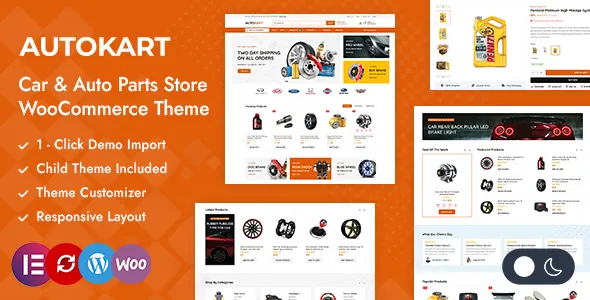
Autokart – Auto Parts and Car Accessories Store WooCommerce Theme
Autokart – Auto Parts and Car Accessories Store WooCommerce Theme is a specialized eCommerce website solution designed for businesses selling automotive spare parts, car accessories, vehicle maintenance products, replacement components, and other automobile-related merchandise online. Built around the WordPress and WooCommerce ecosystem, Autokart provides a foundation for creating an online automotive store where customers can explore products, compare available options, learn about product specifications, and purchase items through a structured shopping experience. Whether you operate an auto parts shop, manage an automotive accessories business, distribute replacement components, or want to establish an online car care store, this WooCommerce theme can help you develop a professional digital storefront tailored to the automotive market.
The automotive eCommerce industry requires a practical approach to product organization, customer information, and purchasing convenience. Customers may search for specific replacement parts, vehicle accessories, maintenance supplies, interior upgrades, exterior styling products, or tools for routine vehicle care. A successful online store should make it easy to browse these categories, understand product details, review compatibility information, and complete purchases confidently. Autokart offers a starting point for building an automotive shopping website that brings product presentation, store content, and eCommerce functionality together in one manageable platform.
Modern Design for Automotive eCommerce Stores
An automotive online store needs a design that supports efficient product discovery while communicating professionalism and reliability. Customers visiting an auto parts website may already know the component they need, or they may be exploring products to improve their vehicle’s appearance, comfort, or functionality. A well-organized storefront helps both types of visitors navigate the available inventory.
Autokart is intended for automotive retailers who want to present their products through a dedicated online store. A thoughtfully arranged homepage can introduce the business, highlight selected products, organize popular categories, and guide visitors toward relevant shopping sections. This structure helps customers understand the store’s offerings without navigating through unrelated information.
An automotive business can adapt its website content to reflect its market position. A spare parts distributor may emphasize product availability and compatibility information, while a car accessories retailer may focus on styling, convenience, and vehicle personalization. A car care store may prioritize cleaning products, maintenance supplies, and detailing equipment.
By combining consistent branding with clear product organization, store owners can create a shopping experience that reflects their business and serves their customers’ needs.
Built for Auto Parts and Spare Parts Businesses
Automotive spare parts stores often manage products that vary according to vehicle make, model, year, engine type, and component specifications. Customers may need filters, brake components, suspension parts, electrical components, belts, hoses, or other replacement items.
Autokart can serve as a foundation for presenting these products through a WooCommerce-powered catalog. Store owners can organize merchandise into categories, create individual product pages, add descriptions, and display relevant product images and pricing information according to the available WooCommerce features and theme configuration.
A well-structured parts catalog helps customers move from broad categories to more specific products. For example, an online store could organize products into engine components, braking systems, suspension and steering, electrical parts, cooling systems, and general maintenance supplies.
Product descriptions should explain the intended use, important specifications, included components, and compatibility requirements. Because incorrect automotive parts can lead to installation problems or safety concerns, sellers should provide accurate fitment information and encourage customers to verify compatibility before ordering.
Car Accessories for Every Driving Need
Car accessories help vehicle owners improve comfort, convenience, appearance, organization, and everyday usability. An automotive accessories store may sell phone holders, seat covers, floor mats, storage organizers, sunshades, charging accessories, protective covers, and other useful products.
Autokart can be adapted to showcase these product categories in an organized online shopping environment. A dedicated accessories section allows customers to browse items according to their purpose and discover products relevant to their vehicles and preferences.
Product pages can include clear photographs, descriptions, dimensions, material details, available colors, and other relevant specifications. These details help customers understand what they are purchasing and determine whether a particular accessory suits their requirements.
Store owners can also highlight selected products, seasonal offers, or popular categories to improve product discovery. Any promotional claims should accurately reflect the products and offers available in the store.
WooCommerce-Powered Online Shopping
WooCommerce is the eCommerce platform that provides the core online shopping functionality for a WordPress store. It supports product management, cart operations, checkout, order administration, and other essential store processes through its core features and compatible extensions.
Autokart is designed for use within this WordPress and WooCommerce environment, giving automotive retailers a starting point for building an online sales channel. Once the store is configured appropriately, customers can browse products, add eligible items to their cart, provide the required checkout information, and place orders using the payment methods enabled by the merchant.
Store administrators can manage product information and order details through the relevant WordPress and WooCommerce administration tools. Additional business requirements, such as advanced shipping rules, specialized tax calculations, loyalty programs, or complex inventory integrations, may require separate configuration or compatible extensions.
Before launching the store, test the complete purchasing process to ensure that products, cart behavior, checkout fields, shipping options, and payment methods work as intended.
Organized Product Categories for Easy Navigation
An automotive catalog can contain hundreds or thousands of products, making category organization especially important. A confusing product structure can make it difficult for customers to find the correct component or compare related accessories.
Autokart can provide the foundation for organizing an automotive store into meaningful product categories and subcategories. Depending on the inventory, these might include engine parts, brake systems, suspension components, lighting, electrical accessories, car interior products, exterior accessories, tools, lubricants, and cleaning supplies.
Category names should reflect the language customers actually use when searching for products. Avoid creating excessive overlapping categories that make the catalog harder to navigate.
For larger stores, a clear hierarchy can help customers move from a broad automotive department to a specific product group. Product attributes, tags, and available filtering tools may provide additional ways to narrow the selection, depending on the installed configuration and extensions.
Regularly reviewing category performance and customer search behavior can help retailers improve the catalog structure over time.
Product Search and Filtering Experience
Customers shopping for automotive parts often need to narrow a large selection based on specific requirements. They may be searching for a particular component type, brand, price range, material, size, or vehicle application.
A useful store experience allows customers to find relevant products without manually examining every item in the catalog. WooCommerce supports product categories, attributes, and product search, while more advanced filtering options may depend on the theme’s included functionality or additional plugins.
Store owners can improve product discovery by maintaining consistent product names, writing descriptive summaries, and entering accurate attributes. For example, a lighting product might include its type, dimensions, connector information, and supported vehicle applications where verified.
Vehicle-specific fitment search can be particularly valuable for stores selling replacement parts. However, a specialized make-model-year selector or vehicle compatibility database should not be assumed to be included with Autokart unless the current product documentation confirms it. Such functionality may require a dedicated automotive fitment plugin or a compatible external system.
Detailed Product Pages for Automotive Products
Product pages play an important role in helping customers understand the items they are considering. An effective automotive product page should communicate what the product is, what it does, which specifications matter, and what buyers should verify before purchasing.
Autokart can be used with WooCommerce product content to present product titles, descriptions, images, prices, and other information supported by the store configuration. Depending on the product type, sellers may also provide stock information, variations, dimensions, material details, installation notes, and warranty information.
For spare parts, compatibility details should be especially clear. If a product fits only certain vehicle models or production years, list those supported applications accurately. If compatibility is uncertain, provide a way for customers to contact the store before ordering.
For accessories, include dimensions, mounting requirements, materials, color options, and other relevant characteristics. Good product information can reduce confusion, support better purchasing decisions, and help customers understand whether the item meets their needs.
Product Images and Visual Merchandising
High-quality product photography is important for automotive eCommerce because customers cannot physically inspect items before placing an online order. Clear images help shoppers understand a product’s shape, finish, components, and packaging.
Autokart can be used as a storefront foundation for presenting product imagery within a structured catalog. Retailers should use sharp, well-lit photographs with consistent backgrounds and appropriate framing. Multiple views can be valuable for products whose connectors, mounting points, surface finishes, or dimensions are important to the purchasing decision.
For car accessories, lifestyle images may show how an item is used in a vehicle. For technical components, clean product photographs and labeled diagrams may provide more useful information than decorative imagery alone.
Images should accurately represent the item being sold. If a photograph shows optional accessories that are not included in the package, the product description should make that distinction clear.
Optimized image files can also improve loading performance, particularly for category pages containing many products.
Shopping Cart and Checkout Convenience
A clear checkout process helps customers complete their purchases without unnecessary confusion. The shopping experience should communicate product quantities, prices, applicable charges, shipping information, and the steps required to place an order.
WooCommerce provides the underlying cart and checkout capabilities, while the presentation and available customization options depend on the theme, installed extensions, and store configuration. Autokart can serve as the visual foundation for bringing these shopping functions into the overall storefront experience.
Store owners should keep checkout forms relevant to their business requirements and avoid requesting unnecessary information. Shipping addresses, contact details, payment selection, and order summaries should be easy to review before an order is submitted.
Payment options should be configured according to the business’s location, customer base, and operational needs. Supported methods may include eligible online payment gateways, bank transfers, or cash on delivery where available and appropriate.
Always test successful payments, failed payments, order confirmation messages, and order administration before making the store publicly available.
Manage Products and Orders with WooCommerce
Managing inventory and customer orders is a central part of running an automotive online store. Retailers need to maintain accurate product details, update prices, track stock where configured, and process orders consistently.
WooCommerce provides administrative tools for maintaining products, managing orders, and reviewing relevant sales information. Autokart can be used as the storefront layer within this environment, while day-to-day store operations are handled through the underlying platform and any installed extensions.
A retailer may manage simple products, products with variations, sale prices, stock quantities, and other supported product types. For example, an accessory may be available in multiple colors, while a replacement component may have several variants with different specifications.
Accurate inventory management is especially important when the same parts are sold through physical and online channels. If the business uses an external inventory system, confirm whether a suitable integration is available before relying on automatic synchronization.
Regular product reviews help reduce outdated listings, incorrect prices, and misleading availability information.
Support for Multiple Automotive Product Types
Automotive retailers may sell products with very different requirements. A replacement filter may need clear technical specifications, a seat cover may have color and material variations, and a detailing kit may include several individual items.
WooCommerce supports multiple product configurations, including simple and variable products, subject to the appropriate setup. Autokart can be used to present these products in a consistent storefront, while the exact product display options depend on the theme and configuration.
Variable products can be useful when a single item is offered in different sizes, colors, or other selectable options. Grouped or bundled purchasing arrangements may require particular WooCommerce settings or additional extensions, depending on the intended behavior.
Store owners should select product types that accurately reflect how each item is sold. Variations, prices, stock levels, and product descriptions should be checked carefully to avoid confusion during checkout.
For specialized automotive catalogs, additional systems may be needed to handle fitment relationships or complex product compatibility rules.
Promote Featured Products and Special Offers
Product promotion can help retailers introduce new arrivals, highlight popular items, and communicate relevant seasonal offers. An automotive store might feature car cleaning kits, travel accessories, lighting products, protective equipment, or selected replacement components.
Autokart can be considered for creating a storefront where important merchandise receives appropriate visual attention. Featured product sections, promotional banners, or other merchandising elements should be used according to the theme’s available layouts and customization options.
Promotions should be clearly explained and accurately configured. If an offer applies only to selected products, customers should be able to identify which items qualify. Sale prices, discount periods, and shipping conditions should match the terms of the promotion.
Retailers can also use product bundles or related-product recommendations where supported by WooCommerce and compatible extensions. These techniques can help customers discover complementary items, provided the recommendations are relevant to their purchase.
Related Products and Cross-Selling Opportunities
Automotive products are often purchased together. A customer buying a particular accessory may also need a compatible mounting component, while someone purchasing a cleaning product may be interested in other car care supplies.
WooCommerce offers related-product and cross-selling capabilities that can help store owners present complementary merchandise, subject to the configuration and available theme support. Autokart can provide the storefront context in which these recommendations are displayed.
Related products should be selected carefully. Compatibility is particularly important for replacement components and vehicle-specific accessories. Recommending an incompatible item can create frustration and increase returns.
Product descriptions can also mention related supplies when the information is useful. For example, a maintenance item may require additional tools or installation components, while a protective accessory may have a compatible companion product.
The goal is to improve product discovery and help customers complete appropriate purchases rather than filling product pages with irrelevant suggestions.
Responsive Design for Mobile Shoppers
Many customers research products and make purchases using smartphones and tablets. An automotive store therefore needs to provide a browsing experience that remains practical on smaller screens.
Responsive layouts help product grids, images, menus, descriptions, and checkout content adapt to different display sizes. A mobile visitor should be able to search for a product, read the relevant specifications, select available options, and reach the checkout without unnecessary difficulty.
Autokart should be tested across common screen sizes after installation and customization. Pay attention to navigation, product image cropping, button placement, text readability, filters, and checkout fields.
Automotive product information may include lengthy specifications, so the mobile layout should make important details easy to locate. Avoid placing essential compatibility information where customers are likely to overlook it.
Actual responsive behavior depends on the theme version, content, installed plugins, and any custom styling. Test the complete store rather than relying solely on a desktop preview.
SEO-Friendly Product and Category Pages
Search engine optimization can help an automotive store attract visitors who are looking for specific parts, accessories, or maintenance products. A clear website structure and useful product content provide a foundation for helping search engines understand the catalog.
Autokart can be used as part of an SEO strategy built around descriptive product titles, useful category pages, clear headings, relevant internal links, and accurate product information. WooCommerce supplies the basic product and category structure, while advanced SEO controls may be provided by compatible plugins.
Each product page should explain the item clearly and include the information customers need to determine whether it is suitable for their requirements. Category descriptions can explain the types of products available and help visitors understand the differences between related options.
Retailers should avoid copying generic supplier descriptions without reviewing them. Original, accurate content can help explain product characteristics and address customer questions more effectively.
SEO results depend on many factors, including competition, website performance, product availability, content quality, and technical configuration. A theme alone cannot guarantee search rankings.
Improve Product Discoverability with Keyword Research
Customers may search for automotive products using a combination of general terms, component names, vehicle details, product brands, and specific specifications. Understanding this search behavior can help store owners organize their catalog and write more relevant descriptions.
An auto parts retailer might research phrases related to replacement components, car accessories, maintenance supplies, or vehicle-specific products. The chosen terms should accurately represent the inventory and match the language used by potential customers.
Product names should be descriptive without becoming unnecessarily long. Category pages can target broader shopping needs, while individual product pages should focus on the exact item and its verified characteristics.
Vehicle make, model, and year information should only be included when the product’s compatibility has been confirmed. Incorrect fitment claims can mislead customers and damage trust.
Keyword research should guide content planning rather than encourage repetitive wording. Clear product information and a useful shopping experience remain essential.
Content Marketing for Automotive Retailers
A blog or resource section can help an automotive store answer customer questions and introduce useful products. Content may cover vehicle care, seasonal maintenance, accessory selection, safe product installation, or general explanations of common automotive components.
Autokart can serve as the website foundation for combining educational content with an online product catalog. A useful article might explain how to choose appropriate floor mats, what information to check before buying a replacement component, or how to maintain car interior surfaces.
Articles should provide accurate information and distinguish general guidance from manufacturer-specific instructions. Safety-critical repairs should be handled according to the vehicle manufacturer’s guidance and by appropriately qualified professionals where necessary.
Relevant internal links can direct readers to products or categories that genuinely relate to the subject. This approach can help visitors discover suitable merchandise while providing a more informative website experience.
Build Customer Confidence with Clear Policies
Customers buying automotive products online need confidence in the accuracy of product information, order processing, shipping arrangements, and support policies.
An automotive store should provide clear contact details, shipping information, return conditions, refund policies, privacy information, and any relevant warranty terms. Autokart can be used as the storefront foundation, while these pages can be created and managed through WordPress.
Product listings should explain what is included in the package, whether installation is required, and what compatibility information customers should verify. If a product has special shipping requirements or return restrictions, those conditions should be communicated clearly and in accordance with applicable laws.
Retailers should publish genuine customer reviews only through appropriate methods and should not invent testimonials or product ratings. Clear policies and accurate descriptions help customers make informed decisions and establish realistic expectations.
Suitable for Car Care and Maintenance Stores
Car care retailers sell products that help customers clean, protect, and maintain their vehicles. Common categories may include shampoos, microfiber cloths, detailing brushes, interior cleaners, polishing supplies, protective treatments, and cleaning accessories.
Autokart can provide a catalog structure for presenting these items alongside other automotive merchandise. Product pages can explain intended use, application instructions, package contents, and any relevant safety precautions provided by the manufacturer.
For products with specific handling or storage requirements, the seller should display the appropriate information and link to manufacturer instructions where relevant. Images should show the actual product and package size so customers can understand what they are buying.
A dedicated car care category can help customers browse related products and discover items suited to their maintenance routines.
Ideal for Automotive Accessory Brands
Businesses that manufacture or distribute automotive accessories often need a website that combines brand presentation with online product sales. A WooCommerce store can help them present their catalog, explain product benefits, and manage orders through a centralized platform.
Autokart can be adapted to reflect an accessory brand’s identity through its product imagery, descriptions, category structure, and supporting business content. The website can introduce the brand, explain its product range, and provide information about customer support and purchasing.
Retailers can organize products by their function, intended vehicle use, material, or other relevant characteristics. Where multiple versions are available, the product listing should make the differences clear.
If the business also sells through distributors or physical stores, its website can provide additional information about the brand and product range. Any dealer locator, account-based pricing, or wholesale purchasing features may require separate integrations or development.
Suitable for Online Auto Parts Distributors
Automotive distributors may serve repair workshops, mechanics, resellers, fleet operators, and individual vehicle owners. Their product catalogs can be large and may require a more structured approach to product information and inventory management.
Autokart can provide a foundation for presenting distributor merchandise through WooCommerce. Store owners can organize products into departments, maintain descriptions, and configure the standard shopping process according to their business model.
A distributor may need additional capabilities such as customer-specific pricing, bulk ordering, account approval, quote requests, purchase-order workflows, or inventory synchronization. These functions should be evaluated separately because they may require compatible plugins, external systems, or custom development.
Before choosing the theme, consider the size of the catalog, the complexity of product compatibility, and the systems the business already uses. Confirm that the proposed website architecture can support these operational requirements.
Performance and Image Optimization
An automotive eCommerce website may contain large product catalogs, multiple images per item, filters, and promotional content. Good performance practices can help visitors browse the store more comfortably.
Store owners should upload images at suitable dimensions, compress files carefully, and use supported modern formats where appropriate. Category pages should avoid loading unnecessarily large images when smaller versions are sufficient for the display.
Other performance considerations include hosting quality, caching, database maintenance, plugin selection, and the number of scripts loaded by the website. Excessive extensions can introduce compatibility problems or slow down the store, so each addition should have a clear purpose.
After configuring Autokart, test important pages, including the homepage, category listings, product details, cart, and checkout. Use performance tools to identify actual problems and make improvements based on the results.
Performance depends on the complete implementation, not only the theme. Regular testing and maintenance can help keep the shopping experience consistent as the catalog grows.
Security and Store Maintenance
An online store handles customer information and order data, making security an important part of daily operations. Store owners should keep WordPress, WooCommerce, the theme, and installed plugins updated according to their compatibility and maintenance requirements.
Regular backups can help restore the website if an update, configuration change, or other incident causes problems. Access should be limited to authorized users, and strong authentication practices should be followed for administrative accounts.
Payment processing should use supported gateways and secure configurations. Avoid collecting sensitive payment information through improvised forms or storing information that the business does not need.
Before applying major updates, test changes in a staging environment when possible. Review the store afterward to confirm that product displays, cart behavior, checkout, and integrations continue to work correctly.
These practices support the long-term reliability of an automotive eCommerce website built with Autokart and WooCommerce.
Installation and Customization Considerations
Before installing Autokart, review the current product documentation and confirm the required WordPress and PHP versions, WooCommerce compatibility, included files, and recommended plugins.
Follow the supplier’s installation instructions and back up an existing website before importing demo content or changing important settings. A demo import can modify pages, menus, widgets, and other site elements, so it should be handled carefully.
After installation, add your logo, business details, product categories, descriptions, prices, product images, and contact information. Configure shipping zones, taxes, payment methods, email notifications, and store policies according to your business requirements.
Test the entire shopping journey before launch. Check that products display correctly, available variations work, stock information is accurate, shipping calculations behave as expected, and customers receive appropriate order confirmations.
The exact design controls, product layouts, demo content, and advanced functions may vary by version. Verify these details in the current Autokart demo and documentation before purchase.
Why Choose Autokart – Auto Parts and Car Accessories Store WooCommerce Theme?
Autokart is an option for businesses looking for an automotive WooCommerce theme to establish or expand an online store. Its intended focus on auto parts and car accessories makes it relevant to retailers that need to present automotive merchandise through an organized product catalog and a professional storefront.
The WordPress and WooCommerce ecosystem provides a flexible foundation for managing product content and online orders. With suitable setup and customization, a store can organize spare parts, car accessories, maintenance products, and related merchandise in a way that supports product discovery and purchasing.
When evaluating Autokart, consider whether the available layouts suit your brand, whether the product organization supports your catalog, and whether the theme works with your required plugins. Stores that need vehicle-specific fitment search, wholesale pricing, complex inventory synchronization, or specialized ordering workflows should verify these requirements before committing to the theme.
Final Thoughts
Autokart – Auto Parts and Car Accessories Store WooCommerce Theme provides a starting point for automotive retailers, spare parts distributors, car accessory brands, and vehicle maintenance businesses that want to sell products online. By combining a structured product catalog with clear descriptions, useful imagery, and a properly configured WooCommerce shopping process, businesses can create a convenient digital storefront for automotive customers.
Whether you are launching a new auto parts store, expanding an existing retail business, or creating an online destination for car accessories and maintenance products, Autokart can be considered as part of your eCommerce website toolkit. The strongest results will come from accurate product information, verified vehicle compatibility, logical categories, responsive design, reliable checkout configuration, and consistent website maintenance.
With thoughtful customization and a customer-focused approach, an automotive store built with Autokart can provide a central place to present products, communicate store policies, support purchasing decisions, and develop lasting relationships with customers.