My Account
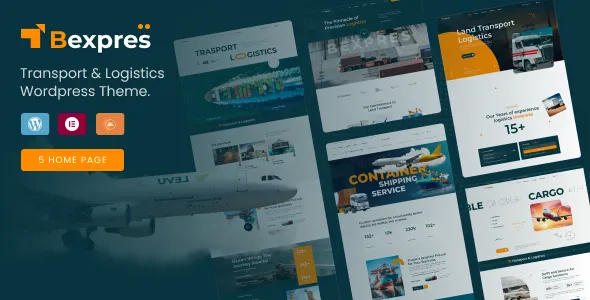
Bexpres – Transport & Logistics WordPress Theme
Bexpres – Transport & Logistics WordPress Theme is a website design solution for transportation companies, logistics providers, freight forwarding businesses, cargo services, shipping companies, and supply chain management organizations looking to establish a professional online presence. A well-structured logistics website helps businesses communicate their services, explain their transportation capabilities, present company information, and make it easier for potential customers to request shipping details or discuss delivery requirements. With WordPress as its content management foundation, Bexpres can be considered for building a business website tailored to the needs of the transport and logistics industry.
The transportation sector depends on clear communication, dependable service information, and efficient coordination between businesses and customers. Companies may handle domestic deliveries, international freight, warehouse operations, cargo transportation, distribution, or specialized shipping requirements. A professional website provides a central location where customers can learn about available services, understand the company’s approach, and find the information needed to begin a business relationship.
Bexpres is designed around the transport and logistics website category, making it a potential starting point for businesses that want to present their operations through an industry-focused website. With suitable customization, companies can organize their service descriptions, introduce their teams, showcase operational capabilities, publish industry updates, and provide convenient contact options. The final design and available functionality depend on the installed theme version, its documented features, and the plugins or integrations used alongside it.
What Is Bexpres Transport & Logistics WordPress Theme?
Bexpres is a transport and logistics WordPress theme intended for businesses that need a dedicated website to communicate transportation services and logistics expertise. Rather than starting with a generic website structure, an industry-focused theme can provide a useful design foundation for organizing content around freight, cargo, shipping, distribution, and related business operations.
Transportation companies often serve different customer groups, including manufacturers, wholesalers, retailers, eCommerce businesses, importers, exporters, and individual customers. Each group may have different questions about shipping options, service coverage, delivery processes, and operational requirements. A well-organized website can address these questions through clear service pages and accessible company information.
WordPress allows website owners to manage pages, publish articles, organize media, and update business information through an administrative interface. Depending on the features included in Bexpres, its available customization settings, and compatible tools, a business may be able to adapt the presentation to its branding and content requirements.
For example, a freight forwarding company could use a logistics website to explain its freight services and shipping process. A road transport operator might focus on regional delivery coverage and cargo handling, while a warehouse provider could emphasize storage, inventory coordination, and distribution support.
Before installation, businesses should review the current product demo and documentation to confirm the available layouts, compatibility requirements, and supported functionality.
Professional Design for Transportation Businesses
A professional website helps transport and logistics companies establish credibility and communicate their services to potential customers. Visitors should be able to understand the business, identify relevant services, and locate contact information without navigating through confusing pages.
Bexpres can serve as a starting point for creating a consistent digital identity for transportation and logistics operations. The final appearance will depend on the available theme layouts, colors, typography, imagery, and customization options.
A clear homepage can introduce the company and explain its main services. Supporting sections may provide information about freight transportation, cargo handling, supply chain support, warehouse services, or distribution operations, depending on what the business actually offers.
Visual content can help communicate the scale and nature of logistics operations. Photographs of delivery vehicles, warehouses, freight facilities, cargo handling, and transportation networks may provide useful context when they accurately represent the company’s services.
Design should support clarity rather than distract from the message. Readable text, consistent spacing, descriptive headings, and recognizable navigation elements help visitors locate important information.
Companies should also avoid publishing unsupported claims about delivery speed, geographic coverage, or service capacity. Accurate information helps set realistic expectations and supports a more dependable professional image.
Responsive Design for Desktop and Mobile Devices
Customers and business partners may visit a logistics website from desktop computers, tablets, and smartphones. A responsive design helps ensure that essential information remains accessible across different screen sizes.
Bexpres should be evaluated for how its layouts adapt to mobile devices, including navigation menus, service descriptions, images, and contact sections. The exact responsive behavior should be verified using the current theme version and the intended website configuration.
Mobile visitors may want to check available services, review company contact details, or send a shipping inquiry while away from their office. Important information should therefore remain easy to locate, and forms or buttons should be comfortable to use on smaller screens.
A responsive layout should also maintain a logical content hierarchy. Headings need to remain readable, images should fit the available space, and multiple-column sections should reorganize appropriately when the screen becomes narrower.
Testing should cover more than the homepage. Service pages, company information, blog posts, quotation forms, and other important sections may behave differently depending on their content and supporting plugins.
Custom CSS, embedded maps, third-party widgets, and additional scripts can affect mobile presentation. Reviewing the complete website after customization helps identify layout problems before customers encounter them.
Freight Transportation and Cargo Services
Freight transportation is a central part of the logistics industry, connecting suppliers, manufacturers, distributors, and customers through the movement of goods. A dedicated website can help freight companies explain their transportation options and communicate the types of cargo they handle.
Bexpres may be suitable for businesses offering road freight, commercial cargo transport, regional distribution, or other transportation services, depending on the company’s actual operations and the website’s customization.
A freight service page can describe the types of shipments accepted, the geographical areas served, the general transportation process, and any requirements customers should understand before requesting a quotation. Businesses can also explain how they coordinate pickup, cargo preparation, transportation, and delivery.
Customers often need to know whether a provider handles full truckloads, smaller shipments, specialized cargo, or recurring commercial deliveries. Clear service descriptions can help prospective customers determine whether the company matches their requirements.
Where applicable, companies can provide information about packaging guidelines, shipment documentation, cargo restrictions, and delivery coordination. Any operational details should be reviewed regularly to ensure they remain accurate.
A professional freight website should explain services without suggesting that every transport option is automatically available. The published information should reflect the company’s actual fleet, partners, facilities, service areas, and operating capabilities.
Road Transport and Delivery Solutions
Road transportation plays an important role in moving goods between warehouses, distribution centers, businesses, and final destinations. Transport companies can use a website to explain their delivery services and help customers understand the types of transportation available.
Bexpres can be considered for road transport businesses that need to present their operations, service categories, company experience, and contact information through WordPress.
A transportation company may organize its website around commercial freight, local distribution, regional deliveries, long-distance transportation, or specialized cargo services. Each service page should describe the intended customers and explain the process in practical terms.
For example, a business serving retailers may emphasize scheduled deliveries and distribution coordination. A manufacturer-focused transport provider may explain how it handles bulk shipments or recurring transportation requirements.
Information about vehicle types, cargo capacity, operating regions, and handling procedures should only be published when it reflects the company’s actual capabilities. This helps customers evaluate service suitability before making an inquiry.
The website can also include frequently asked questions covering shipment preparation, service availability, quotation requests, and general delivery procedures. These explanations can reduce uncertainty and make communication more efficient.
Shipping and Freight Forwarding Services
Freight forwarding involves coordinating the movement of goods through transportation networks and, where applicable, different carriers or logistics partners. Businesses working in this area need to communicate their services clearly to customers dealing with domestic or international shipments.
Bexpres can be evaluated for freight forwarding websites that introduce shipping services, explain business processes, and provide a professional point of contact for commercial inquiries.
A shipping page can describe the types of freight coordination offered, the destinations served, and the information required to assess a shipment. Companies may also explain their role in coordinating carriers, handling shipment documentation, or supporting import and export processes when these services are genuinely provided.
International shipping can involve customs procedures, regulatory requirements, insurance arrangements, and multiple transport providers. Website content should explain the company’s role accurately and avoid promising services that depend on third parties or external authorities.
Businesses can provide a clear inquiry pathway for customers who need assistance with shipping requirements. A well-designed form may collect details such as origin, destination, cargo type, approximate weight, dimensions, and preferred shipping dates.
Such forms do not automatically calculate freight prices or confirm shipment availability. Automated quotations and shipping integrations require suitable supporting systems and should be verified separately.
Warehouse and Distribution Management
Warehousing and distribution support the movement of products through the supply chain. Businesses may need to explain storage options, inventory coordination, order preparation, and the movement of goods between facilities and customers.
Bexpres may be adapted for warehouse operators, distribution providers, and logistics businesses that combine transportation with storage or fulfillment services.
A warehouse service page can describe the available facilities, storage categories, handling procedures, and distribution support provided by the company. Depending on the business model, the website might also explain order consolidation, dispatch coordination, inventory processes, or connections between storage and transportation services.
Visual content can help customers understand the business environment. Genuine facility photographs, loading areas, storage spaces, and distribution activities may be useful when they accurately represent the company’s operations.
Businesses should be specific about the services they provide. A website that describes warehousing should not imply that inventory tracking, real-time stock visibility, or warehouse management software is included unless those systems are actually available.
If a company offers specialized storage or handling, the relevant requirements should be described clearly. This can help prospective customers determine whether the facility is suitable for their products and operational needs.
Supply Chain and Logistics Management
Supply chain management involves coordinating activities associated with sourcing, transportation, storage, distribution, and the movement of products between different participants. Logistics companies can use their websites to explain how their services support customers’ operational requirements.
Bexpres can serve as a potential website foundation for businesses that provide logistics coordination, distribution support, freight management, or related services.
A supply chain page may explain how the company works with manufacturers, suppliers, carriers, warehouses, and retailers. Clear descriptions can help business customers understand the company’s responsibilities and the types of support it offers.
For example, a logistics provider might coordinate transportation between production facilities and distribution centers. Another company may support regional delivery networks or help businesses organize recurring freight movements.
Case studies can provide additional context by describing a genuine customer challenge, the services delivered, and the outcome achieved. Any performance figures should be supported by reliable information and presented with appropriate context.
A professional website should avoid broad claims about reducing costs, eliminating delays, or guaranteeing efficiency without evidence. Instead, it should explain the processes, experience, and capabilities that support the company’s services.
Homepage Layout and Content Structure
The homepage is often the first introduction to a transportation or logistics company. It should communicate the business’s purpose and guide visitors toward relevant service information.
A Bexpres-based website may be organized around an introductory banner, a summary of services, company information, operational highlights, project examples, customer feedback, and contact opportunities, depending on the layouts available in the theme.
The opening section should explain what the company does and which customers it serves. A transport provider might emphasize freight services, while a logistics business could introduce its broader transportation and distribution capabilities.
Service summaries can direct visitors to dedicated pages containing more detailed information. A company overview may describe its experience and approach, while operational photographs can help illustrate the services provided.
Testimonials and case studies may support credibility when they are genuine and used with appropriate permission. Contact sections should provide clear instructions for requesting information or discussing a potential shipment.
Not every homepage needs every possible element. A small regional transport business may benefit from a concise layout, while a larger logistics organization may require a more detailed service structure.
The best homepage is one that helps customers understand the company quickly and makes the next step clear.
Customization and Brand Identity
A consistent visual identity helps logistics companies distinguish themselves in a competitive market. Branding should make the website recognizable while keeping important information easy to understand.
Depending on its current version and supported customization tools, Bexpres may allow changes to colors, typography, images, spacing, page layouts, and other visual elements. Businesses should consult the theme documentation to determine which settings are available.
A road transportation company may choose imagery that reflects its fleet and delivery operations. A freight forwarding provider may emphasize shipping networks, cargo handling, and international logistics, while a warehouse business might focus on storage facilities and distribution activities.
Colors and typography should be selected for readability and consistency. Important information should not depend solely on decorative effects, and buttons should remain visually distinct from ordinary text.
Use original company information wherever possible. Genuine photographs, accurate service descriptions, and current contact details make the website more relevant than generic placeholder content.
Before applying extensive customization, maintain a backup and test significant changes in a staging environment when possible. This can help reduce the risk of disrupting the live website.
SEO-Friendly Website Structure
Search engine optimization can help transportation and logistics companies improve the discoverability of their services. A suitable theme provides a website foundation, but search performance also depends on content quality, technical configuration, competition, and other factors.
Each service page should have a clear topic and useful information. A company may create separate pages for freight transportation, warehouse services, cargo handling, distribution, or freight forwarding when these are distinct offerings.
Descriptive page titles, logical headings, readable URLs, and relevant internal links help organize information. Visitors should be able to understand what each page covers without encountering repetitive or confusing text.
Local transport businesses can publish accurate service-area information where relevant. Companies serving broader markets may develop useful content around their logistics capabilities, shipment processes, or industry requirements.
Images should have descriptive alternative text when they convey meaningful information. Optimized file sizes can also help improve page loading performance, especially on mobile devices.
Compatible SEO plugins may assist with metadata, sitemaps, redirects, and other technical settings, depending on the website configuration. Regular reviews can help identify broken links, outdated information, or indexing issues.
Content should prioritize genuine customer questions rather than excessive keyword repetition. No theme can guarantee specific search rankings, leads, or traffic levels.
Lead Generation and Freight Quotation Inquiries
For many logistics companies, the website is an important channel for receiving new business inquiries. Customers may want to request freight rates, discuss shipment requirements, learn about service coverage, or arrange a consultation.
Bexpres can be configured with appropriate contact links or compatible form solutions, depending on the features included and the plugins installed. The presence of a theme does not by itself guarantee a working quotation or booking system.
A freight inquiry form can collect information such as the customer’s name, business email, pickup location, destination, cargo description, shipment dimensions, approximate weight, and preferred transport date.
The form should request only information needed to evaluate the inquiry. Clear labels and helpful instructions can make it easier for customers to provide accurate details.
A quotation request should not be confused with a confirmed price or booking. Freight rates may depend on distance, cargo specifications, fuel costs, capacity, customs requirements, and other operational factors.
Before launch, test form submissions, email delivery, validation, confirmation messages, and spam protection. Make sure inquiries reach the correct team and that contact details remain current.
Performance and Mobile User Experience
Website performance influences how comfortably visitors can explore company information and submit inquiries. Slow pages may create frustration, especially for customers using mobile devices or unreliable connections.
The actual performance of a Bexpres website depends on the theme implementation, hosting, image sizes, scripts, plugins, and third-party integrations. A responsive layout does not automatically guarantee fast loading.
Start by optimizing images used in banners, service sections, and company galleries. Use suitable dimensions, compress files appropriately, and avoid unnecessary media that adds little value.
Review plugins and external widgets to determine whether they are needed. Excessive scripts or overlapping extensions may introduce performance problems or compatibility issues.
Performance should be tested across important pages, including the homepage, service descriptions, company profile, blog, and contact forms. Different layouts may load differently depending on their content.
Regular monitoring can help identify oversized images, inefficient integrations, and other issues as the website develops. A well-maintained site makes it easier for customers to locate information and contact the business.
Accessibility and Clear Navigation
A logistics website should make information accessible and straightforward to navigate. Clear page structures help customers find the services, locations, and contact details relevant to their needs.
Use descriptive navigation labels such as Services, About Us, Industries Served, FAQs, and Contact where appropriate. The exact menu should reflect the business’s real services rather than include unnecessary sections.
Headings should follow a logical hierarchy, text should remain readable, and links should describe their destinations. Images that communicate important information should have appropriate alternative text.
Forms need clear labels and understandable error messages. Buttons and other interactive elements should be easy to identify, and essential content should not rely only on color or animation.
Accessibility should be reviewed throughout the website rather than only on the homepage. Service pages, embedded maps, inquiry forms, and other interactive components may require additional testing.
A clear, accessible interface helps more visitors understand the company’s services and complete important tasks.
WordPress Plugins and Supporting Integrations
A logistics website may need additional tools for contact forms, SEO, analytics, security, backups, caching, or other business requirements. The appropriate combination depends on the company’s goals and the capabilities already provided by the theme.
Before installing Bexpres, review its current documentation for WordPress compatibility, dependencies, supported customization tools, and any required plugins. Test important functionality before publishing the website.
A contact form plugin may support freight inquiries, while an SEO tool can help manage metadata and sitemap settings. Analytics tools may provide insights into page visits and inquiry activity, subject to applicable privacy requirements.
More advanced functions, such as live shipment tracking, automatic freight calculations, customer portals, fleet management, and warehouse integrations, generally require suitable external systems or custom development unless explicitly included and documented.
Do not assume that a visual element represents a fully functioning operational system. A tracking interface, for example, needs a connection to reliable shipment data before it can display accurate information.
Choose reputable extensions, check their maintenance history, and avoid installing overlapping tools without a clear purpose. Test the website after updates to ensure that menus, forms, and other essential elements continue to work.
Security and Ongoing Website Maintenance
A professional transport website needs ongoing maintenance to remain dependable. Regular reviews can help protect the website, maintain accurate business information, and reduce avoidable technical issues.
Use secure hosting, enable HTTPS, create strong administrator credentials, and assign user permissions according to each person’s responsibilities. Keep WordPress, the theme, and compatible plugins updated after checking for compatibility and creating appropriate backups.
Obtain themes and plugins from trustworthy sources. Remove unused components when appropriate, and review access permissions periodically.
Backups should be created on a schedule suitable for the website and stored securely. It is also important to verify that backups can be restored if a problem occurs.
Content maintenance is equally important. Review service descriptions, operating regions, company contact details, and any published information about transportation capabilities. Remove outdated claims and correct broken links.
A practical maintenance routine helps keep the website professional and ensures that customers receive accurate information when researching the business.
Who Should Use Bexpres Transport & Logistics WordPress Theme?
Bexpres may be suitable for different businesses operating in the transportation and logistics sector.
Transport companies: Present road transport services, operating regions, company information, and contact details.
Logistics providers: Explain logistics coordination, distribution services, and supply chain support.
Freight forwarding businesses: Introduce freight coordination services and provide a convenient channel for shipping inquiries.
Cargo companies: Describe cargo handling, shipment preparation, and transportation options.
Shipping businesses: Present shipping services and explain the general process for arranging freight movements.
Warehouse operators: Communicate storage facilities, handling procedures, and distribution support where applicable.
Courier and delivery services: Explain delivery options, service areas, and customer inquiry procedures.
Import and export businesses: Provide information about relevant freight services, documentation support, and international shipping coordination where offered.
Supply chain service providers: Present their capabilities and explain how their services support customers’ logistics requirements.
The most appropriate use depends on the business’s needs and the theme’s verified capabilities. Reviewing the current demo, documentation, responsive behavior, and supported integrations can help determine whether Bexpres is a suitable choice.
Tips for Building an Effective Logistics Website with Bexpres
A successful logistics website should be built around accurate information and the needs of its intended customers. Begin by defining the primary purpose of the website, such as generating freight inquiries, explaining transport services, introducing warehouse operations, or supporting business development.
Prepare clear descriptions for each major service. Explain what the company offers, who the service is intended for, which locations it covers, and how customers can request additional information.
Use authentic images when possible. Photographs of vehicles, facilities, cargo handling, and staff can help visitors understand the company’s operations, provided that the images accurately represent the business.
Keep navigation simple and make contact information easy to find. Visitors should be able to reach the relevant service page without navigating through unnecessary sections.
Test all important website functions before launch. Review responsive layouts, loading speed, forms, email delivery, navigation links, accessibility, and the accuracy of published content.
If the business later adds shipment tracking, online quotations, customer accounts, or other advanced features, verify the required integrations and data sources before presenting those capabilities as available.
Finally, maintain the website regularly. Updated service descriptions, secure software, working forms, and accurate contact details help preserve a professional online presence as the company grows.
Final Thoughts on Bexpres – Transport & Logistics WordPress Theme
Bexpres – Transport & Logistics WordPress Theme is a potential website foundation for transportation companies, freight providers, cargo businesses, warehouse operators, and logistics organizations that want to establish a professional online presence with WordPress.
A well-organized logistics website can introduce company services, explain transportation processes, present operational capabilities, and provide convenient contact opportunities for prospective customers. Dedicated service pages and clear navigation can help visitors understand the company’s offerings and determine whether they match their requirements.
The final website’s design and functionality depend on the installed theme version, its documented features, available customization settings, and compatible plugins or external systems. Businesses should review the current product documentation before relying on specific layouts or advanced functions.
Long-term effectiveness also depends on accurate content, responsive usability, search optimization, website security, performance, and regular maintenance. A theme alone cannot guarantee new customers, higher rankings, or operational capabilities such as real-time tracking, but it can provide a useful foundation for communicating logistics services.
For businesses seeking an industry-focused WordPress design, Bexpres can be evaluated as part of a broader digital strategy. With clear service information, consistent branding, tested contact options, and ongoing improvements, a professional website can support customer communication, strengthen business credibility, and help create opportunities for growth.