My Account
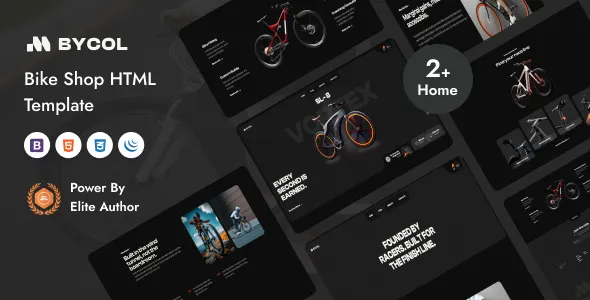
Bycol – Bike Shop HTML Template
Bycol – Bike Shop HTML Template is a website template designed for bicycle retailers, cycling stores, bike repair shops, sporting goods businesses, and cycling equipment providers looking to establish a professional online presence. With a focus on showcasing bicycles, accessories, cycling gear, and related services, Bycol offers a potential frontend foundation for creating an engaging website that helps customers explore products and learn more about a cycling business. Its HTML-based structure allows developers to customize page layouts, visual elements, product presentations, and content according to the store’s branding and business requirements.
A well-designed bicycle shop website makes it easier for customers to discover available products, compare bicycle types, review specifications, and find essential store information. Whether shoppers are looking for mountain bikes, road bicycles, city commuters, electric bikes, children’s bicycles, helmets, or maintenance accessories, a clearly organized website can help them navigate the product range more efficiently.
Bycol can be evaluated for bicycle retailers, independent bike dealers, cycling equipment stores, repair workshops, and businesses serving recreational or professional cyclists. Developers can adapt the template to highlight product categories, featured collections, promotional campaigns, service offerings, and store contact information. The exact pages, components, and functionality depend on the template version, so reviewing the current demo and documentation is recommended before implementation.
What Is Bycol Bike Shop HTML Template?
Bycol is an HTML website template intended for businesses operating in the bicycle retail and cycling services industry. It provides a starting point for presenting products and services through a structured website rather than creating every frontend element from scratch.
A bicycle shop website needs to communicate product information clearly. Customers may want to compare frame styles, bicycle sizes, gear systems, braking options, wheel specifications, and intended riding conditions before deciding which model suits their needs.
Bycol can provide a visual framework for organizing these details into product-focused pages and supporting sections. Developers can customize the supplied HTML, CSS, JavaScript, and other included assets, depending on the package, to reflect the store’s identity and product range.
The template may be suitable for a small neighborhood bicycle shop, a specialist mountain bike retailer, an electric bicycle dealer, or a cycling equipment business with multiple product categories.
As an HTML template, Bycol primarily provides frontend presentation. Features such as shopping carts, payment processing, stock management, customer accounts, order tracking, and automated checkout generally require backend development or third-party integrations unless they are explicitly included in the package.
Modern Design for Bicycle Retail Websites
A bicycle store website should combine strong product presentation with practical navigation. Customers need to find the bicycles or accessories they want without having to work through confusing menus or overcrowded pages.
Bycol can be customized to create a visual style that reflects the store’s target audience. A performance cycling retailer may prefer a bold, technical design with large bicycle photographs, while a city bike shop might use a cleaner presentation that emphasizes everyday transportation and comfort.
Product images should be clear and informative. Photographs showing bicycles from different angles can help shoppers understand frame geometry, colors, components, and design details. Accessories such as helmets, lights, locks, pumps, and repair tools can also benefit from consistent product photography.
A professional layout should balance promotional content with useful information. Featured products and seasonal campaigns can attract attention, while category links, specifications, service details, and contact information help customers make informed decisions.
Consistent typography, spacing, colors, and button styles across the website contribute to a recognizable brand identity and a more comfortable browsing experience.
Homepage Design for Bicycle Shops
The homepage introduces the business and helps visitors navigate its most important offerings. For a bicycle retailer, it should communicate the store’s identity, highlight popular categories, and provide convenient access to products and services.
A Bycol-based homepage can be organized around a prominent cycling banner, featured bicycles, product categories, promotional offers, brand highlights, and store information, depending on the layouts included in the selected version.
The main banner can introduce the store’s focus, such as mountain biking, urban cycling, road racing, or electric mobility. Supporting text can explain the product range and direct visitors toward relevant collections.
Category sections can help shoppers explore bicycles, helmets, cycling apparel, spare parts, and accessories. Featured product cards may highlight selected models or seasonal promotions when the store has suitable product information available.
A service section can introduce bicycle maintenance, repairs, assembly, or fitting services if the business provides them. Store location and contact details can then help visitors plan an in-person visit or make an inquiry.
The most effective homepage is not necessarily the longest. Every section should have a clear purpose and help customers understand what the business offers or what they should do next.
Bicycle Product Pages and Specifications
Product pages are essential for customers who want to understand the differences between bicycle models before making a purchase. Clear product information can help shoppers evaluate suitability, compare features, and identify important compatibility requirements.
Bycol can be adapted to present individual bicycle listings with product images, descriptions, specifications, pricing where applicable, and calls to action, depending on the available components.
A mountain bike product page may describe the frame material, wheel size, suspension configuration, braking system, drivetrain, and intended terrain. A road bicycle listing may emphasize frame geometry, weight information where verified, gearing, tire clearance, and riding position.
Electric bicycle pages may require additional details about motor specifications, battery capacity, charging arrangements, and estimated range under stated conditions. Any performance figures should be based on reliable manufacturer information and explained accurately.
Product images should represent the actual model and selected color wherever possible. If multiple sizes or variants are offered, customers should be able to understand the available choices and any differences between them.
Useful product pages should also explain what is included with the bicycle, whether assembly is required, and how shoppers can ask questions about fit or compatibility.
Product Categories for Different Cycling Needs
A well-organized category structure helps visitors find suitable bicycles and accessories according to their riding style, experience, and budget.
Bycol can be customized to present different product groups based on the store’s actual inventory and the category layouts supported by the template.
Mountain bikes: Present bicycles designed for trail riding and off-road use, with specifications relevant to suspension, tires, frame geometry, and terrain.
Road bikes: Showcase models intended for paved roads, endurance riding, recreational cycling, or performance-oriented use.
City and commuter bikes: Highlight practical options for everyday travel, neighborhood riding, and urban transportation.
Electric bikes: Organize electric bicycle models by their intended use and verified motor, battery, and equipment specifications.
Hybrid bicycles: Present versatile options for riders who need a balance between commuting, recreational rides, and light paths.
Kids’ bikes: Help families explore suitable models by age guidance, wheel size, fit information, and intended riding environment.
Cycling accessories: Include helmets, lights, locks, bottles, pumps, bags, gloves, and other useful equipment.
Category pages should use consistent naming and logical navigation so customers can move between related products without confusion.
Cycling Accessories, Parts, and Equipment
A bicycle shop often serves customers who need more than a complete bicycle. Accessories and replacement parts can support maintenance, safety, comfort, and individual riding preferences.
Bycol can provide a frontend structure for presenting cycling equipment alongside bicycle listings, depending on the template’s included layouts.
Safety accessories may include helmets, front and rear lights, reflective equipment, and suitable locks. Maintenance products may include tire levers, pumps, lubricants, cleaning supplies, repair kits, and compatible replacement components.
Cycling apparel and comfort accessories can include gloves, jerseys, padded shorts, bottles, bottle cages, saddlebags, and handlebar grips. Product descriptions should explain relevant sizing, materials, compatibility, and intended use.
Replacement parts require particular attention to compatibility. Brake components, chains, cassettes, tires, inner tubes, and drivetrain parts may vary according to bicycle standards and model specifications.
A useful product listing should explain the key details shoppers need to check before purchasing. Clear descriptions and accurate product information can reduce confusion and help customers select suitable equipment.
Search, Filtering, and Product Discovery
When a store offers many bicycle models and accessories, customers need convenient ways to narrow down the available options.
Bycol can serve as a frontend starting point for product discovery features, but the availability of functional search and filtering depends on the supplied implementation and any additional development.
For a bicycle retailer, useful filters might include bicycle category, brand, frame size, wheel size, price range, color, and selected technical specifications. Electric bike filters could include verified battery or motor information where relevant.
Search functionality can help customers locate products using model names, brands, or common product terms. Clear category navigation can complement search by helping shoppers discover products they may not know how to name.
Filtering controls should be straightforward to operate on both desktop and mobile devices. If a customer selects several filters, the interface should communicate which conditions are active and provide an easy way to clear them.
A static HTML template does not automatically provide a live product database or sophisticated search engine. Dynamic filtering and inventory-aware search may require JavaScript, a connected product catalog, or backend services.
Responsive Design for Mobile and Desktop
Customers may browse bicycles from desktop computers at home or use smartphones while comparing products in a store. A responsive website helps provide a consistent experience across these environments.
Bycol’s responsive behavior should be confirmed through its documentation and live demo. Where the supplied layouts support responsive design, developers can use them as a foundation for adjusting product grids, navigation, images, and content sections to different screen sizes.
On desktop screens, product listings can display several items side by side, making comparisons easier. On mobile devices, product cards may need to stack into fewer columns, while navigation should remain accessible and important product details should be easy to read.
Buttons and form controls should be convenient to select with touch input. Product images should fit the available screen width, and wide specification tables should remain usable through appropriate responsive layouts or horizontal scrolling.
Testing should cover the homepage, category pages, product details, contact forms, and other important sections. Responsive behavior can vary between different page structures, so reviewing only the homepage is not sufficient.
A well-tested mobile experience can help shoppers explore the store more comfortably and reach essential product information without unnecessary effort.
Customization and Brand Identity
A bicycle retailer should present a website that reflects its business identity, customer base, and product positioning. Customization allows developers to adapt Bycol rather than using an unchanged generic design.
Because Bycol is an HTML template, developers can work with its supplied markup and styling files, subject to the package structure and licensing terms. Depending on the implementation, customization may include colors, typography, navigation, product cards, banners, icons, images, and content sections.
A specialist racing shop may choose a bold visual style with technical product information, while a family-oriented bicycle retailer may emphasize approachable navigation and clear size guidance. An electric bike store may prioritize commuter use cases, battery specifications, and charging information.
Consistency across the website is important. Product cards, buttons, category headings, and promotional sections should follow a shared visual language.
Developers should keep custom styles organized and test modifications across the complete website. Changes to shared stylesheets can affect several pages, including product grids, navigation menus, and responsive layouts.
Before making substantial changes, review the template’s file structure, dependencies, documentation, and recommended customization workflow.
SEO-Friendly Structure for Bicycle Retail Websites
Search engine optimization can help potential customers discover a bicycle shop when researching bicycles, cycling accessories, replacement parts, and related services.
Bycol provides a possible frontend starting point, but search visibility depends on product information, technical implementation, competition, website performance, and the broader SEO strategy.
Each important page should have a clear topic, descriptive title, logical headings, and original content. Separate category pages can help shoppers explore specific bicycle types, while detailed product pages can answer questions about features and compatibility.
Product descriptions should provide meaningful information rather than copying generic manufacturer text without context. Where accurate information is available, explain the intended use, important specifications, sizing considerations, and relevant compatibility details.
Image files should be appropriately sized, and meaningful product images should have suitable alternative text. Internal links can connect related products, accessories, maintenance services, and buying guides.
Additional tools or development may be required for metadata management, XML sitemaps, canonical URLs, structured data, and other technical SEO tasks. Product structured data must reflect accurate prices, availability, and product details.
No HTML template guarantees specific search rankings or sales results. A useful product catalog, clear navigation, reliable information, and ongoing maintenance support a stronger long-term SEO strategy.
E-Commerce Integration and Online Shopping
A bicycle shop may want to sell products directly through its website, allow customers to compare models, or encourage shoppers to contact the store before visiting in person.
Bycol can provide a visual foundation for an online catalog, but the actual shopping workflow depends on the package and any connected e-commerce system.
A functional online store generally needs product data, pricing, variant management, cart functionality, checkout, payment processing, order confirmation, and appropriate inventory handling. These capabilities are not automatically provided by static HTML pages.
Developers can integrate the frontend with a suitable e-commerce platform or custom backend when supported by the project’s architecture and licensing requirements. The integration should keep product details, stock status, pricing, and order information synchronized with the relevant system.
For bicycle retailers, product variants can be particularly important. Frame sizes, colors, component configurations, and model versions should be presented clearly to reduce ordering errors.
Before launch, the complete purchase process should be tested, including variant selection, cart updates, checkout validation, payment outcomes, confirmation messages, and error handling. If the website is intended only to display products, the calls to action should clearly direct customers toward inquiries or in-store visits instead.
Bicycle Repair and Maintenance Services
Many bicycle retailers also provide maintenance, repairs, assembly, or inspection services. A website can help customers understand these offerings and learn how to arrange service.
Bycol can be adapted to include a service section or dedicated pages describing the workshop’s actual capabilities.
Common services may include puncture repair, brake adjustments, gear tuning, drivetrain maintenance, tire replacement, bicycle assembly, and general inspections, depending on the business.
Service descriptions should explain what the work involves and how customers can request assistance. If the store provides appointments, the website can describe the booking process and relevant opening hours.
A service inquiry form might collect contact details, bicycle type, a brief description of the issue, and preferred appointment times. A functional scheduling system requires additional processing or a compatible third-party service if not included in the template.
Accurate service information can help customers determine whether the shop handles their requirements before making a visit.
Website Performance and Image Optimization
Website speed is important for product-focused websites, where customers may open several category pages and product details while comparing options.
Bycol’s actual performance depends on the included assets, code, hosting environment, external scripts, and modifications made during implementation. Developers should measure the completed website to identify areas that need improvement.
Bicycle product photography can involve large image files, particularly when several views are available for each model. Images should be resized for their display areas and compressed while preserving sufficient detail for shoppers to inspect the products.
Unnecessary scripts, unused assets, and third-party widgets should also be reviewed. Depending on the implementation, caching, efficient font loading, and lazy loading for below-the-fold images may improve loading performance.
Performance testing should include category grids, product detail pages, galleries, and any interactive shopping components. Pages with many product images may behave differently from a simple informational page.
Optimization should preserve product clarity. Customers need images and specifications that are useful for evaluating a bicycle, so file reduction should not make important details difficult to inspect.
Accessibility and User-Friendly Navigation
An accessible bicycle shop website can help a wider range of customers browse products, understand specifications, and contact the business.
When customizing Bycol, developers should use readable typography, sufficient color contrast, descriptive link text, and meaningful form labels. Product information should remain understandable without relying solely on color-coded indicators.
Navigation should use familiar labels such as Bikes, Accessories, Parts, Services, About, and Contact where relevant to the store. The most important categories should be easy to locate from both desktop and mobile layouts.
Product images should have suitable alternative text when they convey important information. Buttons, menus, filters, and forms should support keyboard navigation and provide visible focus indicators.
Forms should explain validation errors clearly, while important status messages should be communicated in text rather than through color alone.
Accessibility testing should include automated tools, keyboard navigation, and manual review of important shopping or inquiry workflows. These practices can improve usability for all customers, not only those who use assistive technologies.
HTML Structure and Third-Party Integrations
Bycol is an HTML website template, making it a potential choice for developers who want direct access to the frontend structure and styling of a bicycle retail website.
Depending on the package, the supplied files may include HTML pages, CSS stylesheets, JavaScript, images, icons, and fonts. Developers should inspect the actual download and documentation to confirm the included assets and dependencies.
The template can be integrated into a larger website project when the licensing terms and technical requirements permit. Additional development may be necessary to connect the frontend with an e-commerce platform, product database, inventory service, appointment system, or content management system.
For example, an HTML product page can display a bicycle’s specifications, but live stock availability requires a reliable data source. A service inquiry form may need server-side processing to send requests to the workshop.
Third-party integrations should be tested for compatibility, responsive behavior, and security. Developers should also document changes and avoid exposing private API credentials in frontend files.
Understanding which functions are included and which need additional development helps businesses plan realistic budgets and implementation schedules.
Security, Privacy, and Ongoing Maintenance
A bicycle shop website should remain accurate, reliable, and secure as products and business requirements change. Even a simple catalog may collect personal information through contact forms, service inquiries, or online purchases.
Developers should use HTTPS, validate form submissions appropriately, and send personal information only to intended systems. If the website supports e-commerce, customer records, orders, and payment-related workflows should be handled through suitable services with appropriate safeguards.
Third-party dependencies should be reviewed and maintained. Updates should be tested before deployment to reduce the risk of compatibility problems with product layouts, forms, and other interactive features.
Routine maintenance should include checking navigation links, reviewing product specifications, updating prices where applicable, verifying service information, and removing outdated promotions.
If the site displays stock status or availability, this information should be synchronized with the actual inventory source. Inaccurate product information can frustrate customers and create avoidable support requests.
Regular backups, a documented deployment process, and periodic performance checks can help maintain a dependable online presence as the business grows.
Who Should Use Bycol Bike Shop HTML Template?
Bycol can be evaluated by businesses and developers creating websites for bicycle retail and cycling-related services.
Bicycle shops: Showcase available bicycles, accessories, services, store information, and featured products.
Mountain bike retailers: Present off-road bicycles, protective equipment, components, and products suited to different riding environments.
Road cycling stores: Organize performance bicycles, cycling apparel, helmets, and specialist equipment.
Electric bike dealers: Introduce e-bike models, explain verified specifications, and provide information about charging and maintenance.
Cycling accessories stores: Present helmets, locks, lights, pumps, bags, and replacement components.
Bicycle repair workshops: Explain repair services, maintenance options, operating hours, and service inquiry procedures.
Online cycling retailers: Use the frontend as a potential foundation for a product catalog connected to an appropriate e-commerce platform.
Web development agencies: Adapt the template for cycling-industry clients, subject to the applicable license and project requirements.
The most suitable use depends on the store’s product range, required functionality, and the layouts available in the selected version. Reviewing the current demo and documentation can help confirm whether Bycol meets those needs.
Tips for Building a Successful Bike Shop Website
Begin by identifying the main customer groups the store serves. A retailer focused on commuters may need different product categories and buying guidance from a shop specializing in competitive road cycling or mountain biking.
Organize the catalog around recognizable product categories and provide accurate specifications. For bicycles, include relevant size guidance, component details, intended use, and manufacturer information where available.
Use clear product photography that represents the actual models and variants. Make it easy for customers to compare products and locate related accessories or maintenance services.
If online purchases are supported, test the entire shopping workflow before launch. Confirm that variant selection, pricing, inventory information, checkout, and order notifications work correctly.
Review the website on mobile devices and desktop browsers. Test navigation, filters, contact forms, service pages, and all external links.
Finally, maintain product information and technical components regularly. Accurate specifications, current promotions, accessible design, secure integrations, and reliable performance can help create a better experience for cycling customers.
Final Thoughts on Bycol Bike Shop HTML Template
Bycol – Bike Shop HTML Template is a potential frontend solution for bicycle retailers, cycling equipment stores, repair workshops, and businesses serving recreational and professional cyclists. Its intended focus makes it relevant to websites that need to showcase bicycles, organize accessories, explain services, and provide practical information for customers.
With appropriate customization, developers can create a coherent website that combines product categories, detailed specifications, promotional sections, service information, and convenient contact options. Responsive layouts, accessible navigation, accurate product descriptions, and optimized images can further improve the browsing experience.
The final capabilities depend on the specific template version, its included assets, and additional integrations. Features such as shopping carts, checkout, payment processing, stock synchronization, customer accounts, and order tracking should be verified or implemented separately where necessary.
For bicycle businesses planning a professional online presence, Bycol can be considered as part of a broader web development strategy. Thoughtful customization, reliable product information, secure e-commerce integration where required, and ongoing maintenance can help turn the template into a useful digital storefront for connecting customers with bicycles, accessories, and cycling services.