My Account
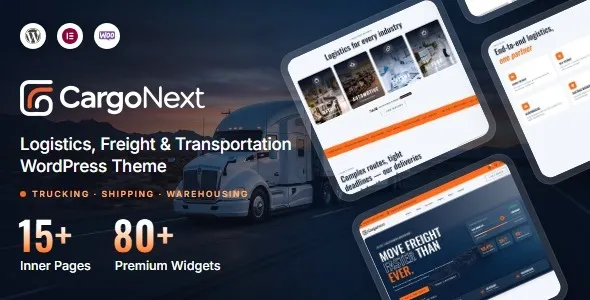
CargoNext – Logistics, Freight & Transportation WordPress Theme
CargoNext – Logistics, Freight & Transportation WordPress Theme is a professional website solution designed for businesses operating in logistics, freight forwarding, transportation, cargo handling, shipping, warehousing, and supply chain management. Created for companies that need to establish a strong digital presence in the transportation industry, CargoNext provides a foundation for presenting logistics services, showcasing operational capabilities, communicating with customers, and generating business inquiries. Whether you manage a freight transportation company, a cargo delivery service, a logistics consultancy, or a warehouse and distribution business, this WordPress theme can help you build a website that reflects your brand and communicates your services clearly.
In a competitive logistics market, customers need reliable information before choosing a transportation partner. Businesses often compare delivery services, shipping options, freight capabilities, warehouse facilities, service coverage, and customer support before requesting a quotation. A professional website helps organize these details and gives potential customers a convenient way to understand what a company offers. CargoNext can be customized to present your business information, highlight your transportation solutions, introduce your team, and guide visitors toward contacting your company.
With an appropriate WordPress setup, CargoNext can serve as a practical starting point for a logistics website that supports brand visibility, customer communication, and long-term digital marketing. Its industry-focused concept is suitable for companies that want to present a professional image while making essential information accessible to customers, business partners, importers, exporters, and supply chain professionals.
Modern Website Design for Logistics Businesses
A logistics website should communicate efficiency, organization, reliability, and professionalism. Customers want to know how a transportation provider can support their shipping requirements, which services are available, and how they can request additional information. CargoNext offers an industry-oriented starting point for creating a website that addresses these expectations.
A modern logistics website can combine clear service descriptions, transportation imagery, organized content sections, and prominent contact options. Images of freight trucks, shipping containers, warehouses, cargo aircraft, distribution centers, and transportation networks can help visitors quickly understand the company’s area of expertise.
Businesses can customize their website’s visual identity using appropriate brand colors, typography, logos, photography, and content layouts. A consistent presentation across the homepage, services, company profile, and contact pages can reinforce brand recognition and create a more cohesive customer experience.
The design should support the information rather than distract visitors from it. Clear headings, readable text, and straightforward navigation help customers find relevant services without unnecessary effort. This approach is especially useful for logistics businesses that offer several transportation methods or serve multiple industries.
Suitable for Freight and Transportation Companies
Freight transportation companies need websites that explain their capabilities and help customers determine whether their services meet specific shipping requirements. CargoNext can be adapted for businesses involved in road freight, regional transportation, long-distance trucking, cargo delivery, and commercial transportation services.
A transportation company can create separate pages for full truckload shipping, less-than-truckload transportation, domestic freight, commercial deliveries, and specialized cargo handling where these services are offered. Each page can explain the service, identify its intended customers, describe the general process, and provide a convenient way to request a quote.
Companies can also publish information about service regions, available vehicle types, cargo categories, and delivery arrangements. Accurate details help potential customers understand the company’s operating scope before starting a conversation.
By presenting transportation services in a structured format, CargoNext can help businesses communicate their capabilities to manufacturers, wholesalers, retailers, distributors, and other organizations that depend on freight transportation.
Logistics Services Website for Growing Companies
Logistics businesses frequently provide multiple services that work together to move goods from suppliers to customers. These may include freight coordination, transportation planning, warehousing, distribution, cargo handling, inventory support, and delivery management.
CargoNext can provide a foundation for organizing these services into a clear website structure. Rather than placing every offering on a single page, businesses can create dedicated sections that explain the purpose and scope of each service.
A logistics services page might describe how the company coordinates shipments, works with transportation partners, handles customer requests, or supports distribution activities. Companies should ensure that every description accurately reflects their real operations and service agreements.
A well-organized services section can also help visitors identify the most relevant solution for their needs. A business searching for warehouse support should be able to find that information quickly, while a customer seeking freight transportation should have a clear route to the appropriate service page.
Dedicated Freight Forwarding Services Pages
Freight forwarders coordinate the movement of goods through transportation networks and may work with carriers, shipping companies, customs specialists, warehouses, and other logistics partners. Their websites need to explain these services clearly without creating confusion about responsibilities or coverage.
CargoNext can be customized to present freight forwarding services for businesses involved in domestic and international trade. Relevant pages may cover shipment coordination, cargo documentation support, multimodal transportation arrangements, import and export logistics, and communication throughout the shipping process.
Each service description should identify what the company provides directly and which activities depend on third-party partners. This distinction helps set appropriate expectations and gives customers a clearer understanding of the service arrangement.
Companies can also include an inquiry form for customers to provide shipment origin, destination, cargo type, approximate weight, dimensions, and preferred shipping schedule. Collecting the information needed for an initial assessment can make quotation requests more useful for both customers and the logistics team.
Homepage Design for Logistics and Shipping
The homepage is an important introduction to a transportation business. It should communicate the company’s main services, operating focus, and value proposition while helping visitors locate important information quickly.
A customized CargoNext homepage can feature a prominent headline, supporting transportation imagery, a concise company introduction, and clear links to major service categories. Additional sections may introduce freight services, warehouse capabilities, delivery solutions, service regions, customer testimonials, or featured logistics projects when relevant.
A strong homepage should also include a visible call to action. Depending on the company’s business model, this could encourage visitors to request a freight quotation, discuss a delivery requirement, inquire about warehousing, or contact the logistics team.
Companies should prioritize the services that are most important to their target customers. A freight forwarder may emphasize international shipping coordination, while a regional transport provider may highlight local and long-distance delivery services. This focused approach helps visitors understand the business quickly.
Responsive Design for Desktop and Mobile Users
Customers and business partners may access a logistics website from desktop computers, laptops, tablets, and smartphones. A mobile-friendly experience helps them review services, locate contact information, and submit inquiries across different devices.
CargoNext can be configured as part of a responsive website, with attention to readable text, clear navigation, appropriately sized buttons, and well-organized content sections. Service descriptions and contact forms should remain usable on smaller screens.
Responsive design is particularly relevant for customers who need to contact a transportation provider while coordinating deliveries, managing warehouse operations, or working away from the office. A clear mobile experience can make essential information easier to access when time is limited.
Website owners should test the finished site across common screen sizes and browsers. The final experience depends on the theme implementation, selected plugins, page content, and customization choices, so testing remains an important part of launching a professional logistics website.
Warehouse and Distribution Service Presentation
Warehousing and distribution are important parts of many logistics operations. Businesses may need to explain storage services, goods handling, inventory coordination, order preparation, and distribution support to prospective customers.
CargoNext can be customized with dedicated pages describing warehouse facilities and related services, provided these reflect the company’s actual capabilities. Businesses can explain the types of goods they handle, the general storage arrangements available, and the distribution services they offer.
Warehouse photographs, facility descriptions, and process diagrams can help customers understand the operation. Where appropriate, companies may also describe available storage categories, operating procedures, and service coverage.
If the business provides specialized storage, temperature-controlled facilities, hazardous-material handling, or other regulated services, all published claims should be accurate and supported by the appropriate qualifications and operational arrangements.
Clear warehouse service pages can help manufacturers, retailers, wholesalers, and e-commerce businesses evaluate whether a logistics provider is suitable for their distribution requirements.
Cargo Shipping and Delivery Solutions
Cargo shipping services often involve multiple transportation stages, delivery schedules, documentation requirements, and coordination between different parties. A website can explain these services in a way that makes the process easier for prospective customers to understand.
With CargoNext, businesses can organize information about cargo pickup, transportation arrangements, shipment coordination, delivery options, and customer communication. Companies can explain how customers initiate a shipment request, which details are needed for an estimate, and how the next steps are communicated.
Businesses that offer multiple transportation modes can create separate pages for road, sea, and air freight, depending on their actual service portfolio. Each page can explain the general characteristics of the service and the types of shipments it may suit.
The website should avoid promising delivery times or coverage that cannot be guaranteed. Clear explanations of service conditions, geographic limitations, and quotation requirements help establish realistic expectations before customers make an inquiry.
Freight Quotation and Customer Inquiry Forms
For many logistics companies, the website’s primary commercial purpose is to generate qualified inquiries. Customers may need a freight quotation before deciding which carrier or service provider to use, making a clear request process especially important.
CargoNext can be adapted to include quotation request forms and contact sections, depending on the available theme layouts and selected form plugins. A form may collect the shipment origin, destination, cargo type, approximate weight, dimensions, preferred shipping date, and customer contact details.
The information requested should match the company’s quotation process. A short form may be sufficient for general inquiries, while a more detailed form may help the team evaluate complex shipments.
A clear confirmation message can explain what happens after a customer submits a request. Businesses should also test form delivery, spam protection, and mobile usability to ensure inquiries reach the appropriate team.
For companies handling sensitive commercial information, privacy notices and appropriate data-handling practices should be considered when collecting customer details.
Showcase Transportation Fleet and Equipment
Transportation equipment can be an important part of a logistics company’s service offering. Customers may want to understand whether a provider has suitable vehicles, handling equipment, or transportation partnerships for their cargo requirements.
CargoNext can support a fleet presentation section featuring relevant vehicle categories, equipment descriptions, and supporting photographs. Depending on the business, this might include heavy trucks, delivery vehicles, trailers, refrigerated transport, container transport, or specialized cargo equipment.
Each entry can describe the vehicle or equipment category, its intended use, and any relevant operating limitations. Companies should only list vehicles and capabilities that are actually available to them, whether owned directly or provided through clearly described partner arrangements.
A fleet section can be particularly helpful for businesses serving customers with specific cargo requirements. However, equipment details should be reviewed regularly so the website does not display outdated fleet information or inaccurate service claims.
International Shipping and Global Logistics
Businesses engaged in international trade often need logistics partners who can coordinate shipments across countries, transportation modes, and commercial requirements. A professional website can explain the company’s international shipping services and help prospective customers understand the available options.
CargoNext can be adapted to present international freight forwarding, import and export coordination, sea freight, air freight, and multimodal transportation arrangements where these are part of the company’s offering.
Relevant content may explain shipment planning, documentation coordination, communication with logistics partners, and the general stages involved in moving cargo internationally. Businesses can also identify the regions and trade routes they serve when this information is accurate.
International shipping can involve customs regulations, taxes, import restrictions, insurance considerations, and country-specific documentation. Website content should avoid implying that every shipment follows the same process or that all regulatory requirements are automatically covered.
Companies should explain their responsibilities clearly and direct customers to the appropriate team for shipment-specific guidance. Accurate information helps customers begin the process with a better understanding of what may be required.
WordPress Content Management and Easy Updates
WordPress provides a content management environment that allows website administrators to update pages, publish articles, revise service descriptions, and maintain company information through an administrative dashboard.
With a suitable CargoNext configuration, logistics businesses can maintain essential website content as their services and operations evolve. New service regions, updated contact details, company announcements, and additional project examples can be published without rebuilding the entire website.
Different team members may contribute to website management according to their responsibilities. For example, a marketing team can prepare service content, operations staff can verify logistics information, and administrators can manage publishing and technical maintenance.
The exact editing experience depends on the theme’s supported tools, its documentation, and the plugins used in the website setup. Before beginning extensive customization, businesses should review the available features and confirm compatibility with their preferred WordPress version.
Regular content reviews help ensure that service descriptions, operating information, and contact details remain accurate over time.
Search Engine Optimization for Logistics Websites
Search engine optimization helps businesses improve the discoverability of their websites for relevant search queries. For logistics companies, useful search topics may include freight forwarding services, cargo transportation, warehouse logistics, shipping solutions, and regional delivery services.
CargoNext can serve as a foundation for an SEO-focused website when combined with well-written content and appropriate technical configuration. Businesses should create dedicated pages for their main services and, where useful, the specific locations or industries they serve.
Each important page should have a descriptive title, a clear heading structure, a useful meta description, and relevant internal links. Image alternative text should describe meaningful visual content, while page URLs should be readable and relevant to the topic.
A WordPress SEO plugin may assist with metadata management, XML sitemaps, canonical settings, and other optimization tasks. Website performance, useful content, accessibility, and mobile usability are also important considerations.
Search rankings depend on multiple factors, including competition, content quality, technical health, and search engine evaluation. Using a particular theme does not guarantee first-page rankings or immediate organic traffic.
Content Marketing for Freight and Supply Chain Businesses
Content marketing can help logistics companies answer common customer questions, demonstrate industry knowledge, and attract visitors researching shipping or supply chain services.
A CargoNext website can include a blog or resource section featuring articles about freight planning, warehouse management, cargo packaging, delivery coordination, transportation documentation, and logistics cost considerations. The most relevant topics will depend on the company’s services and target audience.
Educational articles should provide practical information rather than simply repeating promotional messages. For example, a guide to preparing a shipment can explain the importance of accurate dimensions, packaging, destination information, and documentation, while directing readers to the company’s relevant service page.
A consistent publishing schedule can help businesses maintain a useful resource library. Internal links between articles and service pages can guide visitors from general research toward relevant company offerings.
Content should be reviewed periodically to ensure that industry information, regulatory references, and operational recommendations remain current.
Build Trust With Company Information and Testimonials
Trust is essential when customers select a logistics provider to handle commercial goods, deliveries, or supply chain activities. A professional website should give visitors enough information to evaluate the business and understand how to contact it.
CargoNext can be customized with an About Us page explaining the company’s background, service focus, operational approach, and experience. Businesses may also present team information, relevant qualifications, verified certifications, and partnerships where applicable.
Customer testimonials and case studies can provide additional context when they are genuine and published with appropriate permission. Project summaries may describe the customer’s logistics challenge, the services provided, and the outcome supported by available evidence.
Companies should avoid publishing invented testimonials, unverified customer logos, or unsupported performance statistics. Accurate, transparent information creates a stronger foundation for long-term business relationships than exaggerated claims.
Improve Website Navigation and User Experience
A logistics website may contain many service categories, locations, equipment types, and informational resources. Clear navigation helps customers find the relevant information without having to explore every page.
A customized CargoNext website can use a straightforward menu with sections such as Home, About Us, Services, Freight Solutions, Warehousing, Fleet, Resources, and Contact. The final menu should reflect the company’s actual offerings rather than including unnecessary categories.
Related services can be grouped logically, while prominent links can guide visitors toward high-priority actions such as requesting a quotation or contacting the company. Contact details should be easy to find, particularly for customers who need a quick response.
Consistent page layouts can make the website easier to navigate and maintain. Businesses should also review page titles, link labels, forms, and mobile menus before launch to ensure that visitors can complete important tasks without confusion.
Performance and Website Maintenance
Website performance contributes to the overall user experience. Visitors should be able to load important service pages, view transportation images, and access contact forms without unnecessary delays.
When building a CargoNext website, businesses should optimize large images, select suitable hosting, avoid unnecessary plugins, and use compatible caching or performance tools when appropriate. These measures can help reduce page weight and improve loading efficiency.
Ongoing maintenance should include regular WordPress, theme, and plugin updates; secure backups; form testing; and periodic reviews of important pages. Testing updates in a staging environment can help identify potential compatibility problems before they affect the live website.
Businesses should also monitor broken links, outdated service descriptions, missing images, and changes to contact information. A website that is maintained consistently is better positioned to remain useful as the business develops.
Performance depends on the complete website configuration, including hosting, content, plugins, and customization, rather than the theme alone.
Security and Customer Data Protection
Logistics companies may receive business contact details, shipment descriptions, and other commercial information through their websites. Protecting this information should be part of the website management process.
A responsible WordPress setup can include strong administrator passwords, appropriate user permissions, secure hosting, HTTPS, regular backups, and timely software updates. Businesses should install plugins from reputable sources and remove extensions that are no longer needed.
Contact forms should be configured with suitable spam protection and tested regularly. A privacy policy should explain what information is collected, why it is collected, and how it is handled according to applicable requirements.
If customers submit shipment details or sensitive commercial information, the company should evaluate whether its website and associated tools are suitable for collecting and processing that information. Additional security controls may be necessary depending on the business’s obligations.
Security requires ongoing attention to the entire website environment and should not be assumed to come from the theme itself.
Suitable for Different Logistics Industry Segments
CargoNext can be adapted to serve businesses across a wide range of transportation and supply chain activities. Its industrial and logistics-oriented positioning makes it a potential starting point for companies that need to communicate freight and delivery services online.
Potential applications include freight forwarding agencies, road transportation companies, cargo handling providers, shipping coordinators, warehouse operators, distribution companies, courier businesses, and supply chain consultants. It may also suit specialized transportation providers that need a professional company website.
Each segment has different customer expectations. A freight forwarder may focus on international shipping coordination, while a warehouse provider may emphasize storage services and distribution support. A regional delivery business may prioritize geographic coverage and booking inquiries.
By tailoring its content to a specific audience, a business can make its website more relevant and informative. Industry-specific language, accurate service details, and clear contact options can help visitors understand whether the company is suitable for their requirements.
E-Commerce and Advanced Logistics Integrations
Some logistics businesses need additional functionality beyond a standard informational website. Depending on their operations, they may want online service bookings, shipment inquiry workflows, customer portals, payment collection, or connections to external logistics software.
CargoNext may be used as a starting point for these projects, subject to its supported layouts and compatibility with the required plugins or external services. A suitable integration could help connect the website with a booking process, customer relationship management system, or other business tools.
Live shipment tracking, carrier rate calculations, automated label generation, and customer account portals generally require dedicated services, APIs, or specialized software. These functions should not be assumed to be included in the theme itself.
Before adding advanced features, businesses should document their requirements, review integration compatibility, and confirm any ongoing subscription or development costs. Careful planning helps ensure that the final website supports real operational needs rather than adding unnecessary complexity.
Support Business Growth With a Flexible Website
As logistics companies grow, their websites may need to accommodate new service categories, additional locations, changing fleet information, new partnerships, and broader customer groups. A structured WordPress website can provide a foundation for expanding this information over time.
Businesses using CargoNext can begin with the essentials: a professional homepage, clear service descriptions, company information, accurate contact details, and a practical inquiry process. Additional pages can be introduced as the business develops its offerings and gains more customer experience to share.
Website analytics can help identify which pages attract visitors, what content customers explore, and which channels generate inquiries. These insights can guide future improvements to content, navigation, and marketing campaigns.
The most useful website goals are measurable and connected to business priorities. A company may focus on increasing qualified freight inquiries, improving engagement with service pages, receiving more warehouse requests, or strengthening its visibility in a particular service region.
Why Choose CargoNext – Logistics, Freight & Transportation WordPress Theme?
CargoNext is a relevant option for businesses seeking an industry-focused website foundation for logistics, freight forwarding, cargo handling, transportation, and supply chain services. Its intended positioning makes it suitable for developing a professional online presence that explains business capabilities and guides potential customers toward the next step.
The theme can serve as a starting point for service pages, company information, transportation content, warehouse descriptions, project examples, and quotation inquiries. With appropriate customization, businesses can align the website with their brand identity and the specific needs of their customers.
WordPress provides a content management environment for maintaining website information and publishing new resources as the business evolves. Additional plugins and integrations may extend the site’s capabilities when required, subject to compatibility and the available technical setup.
Before installation, review the theme documentation, included layouts, supported editing tools, responsiveness, plugin compatibility, and technical requirements. This helps establish which capabilities are available directly and which may require additional configuration or development.
Conclusion
CargoNext – Logistics, Freight & Transportation WordPress Theme provides a starting point for creating a professional website for freight forwarders, transportation providers, cargo companies, warehouse operators, distribution businesses, and logistics consultants. By presenting services, company information, transportation capabilities, and customer inquiry options in a clear structure, businesses can make their offerings easier to understand and support communication with potential clients.
A successful logistics website combines an appropriate visual identity with accurate service information, intuitive navigation, mobile-friendly presentation, search engine optimization, and consistent maintenance. Businesses should customize the website according to their real operations, customer requirements, and long-term marketing goals.
Whether the objective is to promote freight services, introduce warehousing solutions, explain transportation capabilities, or generate qualified quotation requests, CargoNext can serve as a foundation for a tailored digital presence. With useful content, careful configuration, and ongoing improvement, a logistics business can use its website to strengthen brand credibility, improve customer access to information, and support its wider business development strategy.