My Account
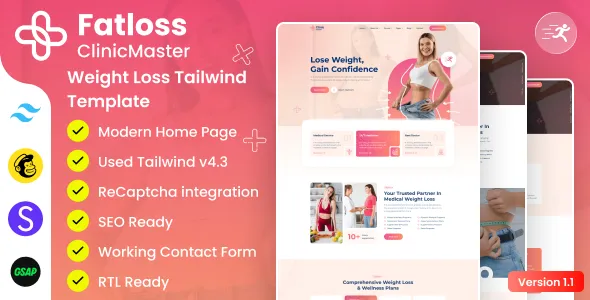
ClinicMaster – Fat Loss & Weight Management Tailwind CSS Template
ClinicMaster – Fat Loss & Weight Management Tailwind CSS Template is a modern website design solution for weight management clinics, wellness centers, nutrition consultants, fitness professionals, and healthcare businesses that want to establish a professional online presence. Designed around the fat loss and weight management industry, ClinicMaster can serve as a foundation for presenting wellness services, introducing professional expertise, sharing educational resources, and helping potential clients learn more about available programs. Its focused design concept makes it suitable for businesses seeking a structured website that communicates their services and supports a clear, user-friendly browsing experience.
A professional website plays an important role in helping visitors understand a wellness business before making contact. People searching for weight management services may want to learn about nutrition counseling, personalized wellness plans, lifestyle guidance, fitness support, or consultations with qualified professionals. A well-organized website can present these offerings in an accessible format while explaining the business’s approach, available services, and consultation process. ClinicMaster can be customized to reflect a brand’s identity and communicate relevant information to its intended audience.
Built around Tailwind CSS, ClinicMaster offers a frontend development starting point for creating a responsive website. Tailwind CSS is a utility-first CSS framework that allows developers to style interfaces using predefined utility classes and a configurable design system. This approach can support consistent layouts and efficient customization when used according to the project’s structure. The exact pages, components, interactions, and integrations available with ClinicMaster depend on the current template version and its documentation. Reviewing the live demo and included files before implementation is recommended.
What Is ClinicMaster Fat Loss and Weight Management Tailwind CSS Template?
ClinicMaster is a website template focused on fat loss, weight management, wellness, and related professional services. It can be evaluated by businesses that need an organized online platform for introducing their services, explaining their programs, presenting professional information, and encouraging visitors to make inquiries.
A specialized website template provides a starting structure for communicating with a specific audience. Instead of creating every interface from scratch, developers can adapt existing layouts and components to match the business’s content, branding, and objectives.
A weight management clinic may use a suitable website structure to introduce consultations, nutrition guidance, lifestyle support, and wellness services. A nutrition consultant might focus on educational content and individual consultation options. A wellness center could present its programs, explain its approach, and provide contact details for prospective clients.
ClinicMaster’s suitability depends on the actual content and components supplied with the template. Businesses should verify the available page layouts, responsive behavior, forms, navigation features, and other included elements before planning their website around them.
Modern Website Design for Weight Management Clinics
Weight management businesses need websites that communicate information clearly and present services in a professional, approachable way. Visitors may be exploring different providers, researching wellness options, or trying to understand which type of professional support matches their needs.
ClinicMaster can provide a starting point for organizing this information into a coherent website. Depending on the available layouts, a customized website may include an introductory homepage, service descriptions, professional profiles, educational resources, frequently asked questions, and contact information.
A clinic can use the homepage to explain its general approach and introduce its main services. Dedicated service pages can provide more detailed information about consultations, nutrition support, or lifestyle guidance. A professional profile can describe relevant qualifications and areas of expertise, helping visitors understand who provides the services.
Visual presentation should support the information rather than make unrealistic promises. Clear headings, readable text, appropriate imagery, and straightforward navigation can help visitors find answers without feeling overwhelmed.
For healthcare-related services, accuracy is especially important. Claims about weight loss, health outcomes, or treatment effectiveness should be evidence-based and reviewed by appropriately qualified professionals. The website should avoid guaranteeing specific results or suggesting that one program is suitable for everyone.
Tailwind CSS for Flexible Frontend Development
Tailwind CSS is a utility-first CSS framework that enables developers to build interfaces by applying utility classes directly within markup. Instead of relying exclusively on large collections of predefined component styles, developers can combine utilities for spacing, colors, typography, positioning, layout, and responsive behavior.
For a template such as ClinicMaster, Tailwind CSS can provide a flexible foundation for adapting the visual presentation to a clinic’s identity. Developers may customize colors, font sizes, spacing, content widths, responsive layouts, and other design details according to the project’s configuration.
Utility-based styling can also help maintain consistency. Shared design conventions can be applied across the homepage, service pages, informational sections, and contact forms. This is useful when a website contains multiple pages that need to follow the same visual language.
The exact Tailwind CSS version, configuration, build process, and included dependencies should be confirmed in the template documentation. Developers should follow the supplied project setup instructions rather than assuming that every Tailwind-based template uses the same configuration.
Before changing the design system, review the existing source files and determine how styling is organized. Keeping customization consistent and avoiding unnecessary overrides can make the website easier to maintain.
Responsive Layout for Desktop, Tablet, and Mobile
Potential clients may discover a weight management clinic through a mobile search, explore services on a tablet, or return later using a desktop computer. A responsive website should provide a convenient experience across these different screen sizes.
Responsive layouts adjust the arrangement of content according to the available viewport. A desktop page may use multiple columns for services or professional profiles, while a mobile page may stack those sections vertically to improve readability.
ClinicMaster should be tested on common device sizes to ensure that headings, navigation, images, cards, and forms remain usable. Buttons should be easy to tap, text should remain legible, and important contact information should not be hidden behind awkward layouts.
Responsive testing should cover the entire website rather than only the homepage. Long service descriptions, profile cards, educational articles, and contact forms can behave differently on smaller screens.
Tailwind CSS includes responsive utility patterns, but the final result depends on how those utilities are applied and how the template is customized. Added scripts, third-party widgets, large images, and custom components can introduce layout issues.
A mobile-friendly website should also load efficiently and minimize unnecessary interactions. Testing on real devices and different browsers can help identify problems that may not appear in a desktop development environment.
Website Solutions for Weight Loss and Wellness Clinics
Weight management clinics may offer a range of services depending on their professional scope, staff qualifications, and business model. A website should explain these services clearly so that visitors understand what is available and how to request further information.
ClinicMaster can be evaluated for presenting services such as weight management consultations, nutrition education, lifestyle coaching, general wellness support, or fitness-related guidance when these services are genuinely provided.
A clinic might introduce its consultation process, explain how appointments are arranged, and outline what information clients should prepare before their first visit. A nutrition professional may describe their approach to food planning and behavior changes, while a wellness center may explain how its services are organized.
Each service description should identify the intended audience, explain the general process, and provide appropriate next steps. If a service requires assessment by a licensed healthcare professional, that requirement should be communicated accurately.
Avoid using a generic list of wellness services that the business does not actually provide. A focused and truthful website is more useful than one that promises every possible solution.
Nutrition Consultation and Healthy Lifestyle Services
Nutrition-related content can help visitors understand the type of support a qualified professional offers. Depending on the business, a website may explain nutrition consultations, meal-planning guidance, food education, or support for developing sustainable lifestyle habits.
ClinicMaster can be customized to introduce these offerings through dedicated service pages or homepage sections, depending on the included layouts. The content should clearly describe the services available and distinguish general education from individualized medical or nutritional advice.
A nutrition consultation page might explain how an appointment works, what topics may be discussed, and how follow-up support is organized. It could also introduce the professional’s qualifications and relevant experience.
Educational content can cover general topics such as balanced eating patterns, meal preparation, hydration, sleep routines, and the relationship between daily habits and overall well-being. Content involving medical conditions, medications, nutritional deficiencies, or specialized diets should be reviewed by appropriately qualified professionals.
Weight management is influenced by many factors, including individual health, lifestyle, environment, and personal circumstances. Website content should reflect this complexity and avoid blaming people for their weight or promoting extreme dietary restrictions.
Clear, respectful communication can help a clinic create an inclusive experience for visitors seeking information about wellness and weight management.
Present Weight Management Programs Clearly
A weight management business may offer different forms of support depending on its services and professional capabilities. Visitors need clear information about the structure of these programs before deciding whether to make contact.
A ClinicMaster-based website can be organized to explain program objectives, consultation formats, available support, and general participation requirements. The actual program details should be written by the business and reviewed for accuracy.
For example, a service page may describe whether consultations are offered in person or remotely, how appointments are arranged, and whether follow-up sessions are available. If the business offers group education, individual consultations, or structured lifestyle support, each option can be described separately.
Program pages should avoid guaranteeing a specific amount of weight loss within a fixed period. Individual outcomes vary, and a website should not present testimonials or illustrative examples as a prediction of results for every visitor.
If pricing is published, explain what the fee includes and whether additional services may cost extra. If prices depend on individual requirements, provide a clear way for visitors to request details.
The goal is to help visitors understand the service rather than pressure them into making a decision through unrealistic claims.
Professional Profiles and Team Presentation
Professional profiles can help visitors understand the experience and qualifications of the people providing a clinic’s services. This is particularly relevant in healthcare and wellness, where trust depends on accurate information and appropriate professional credentials.
ClinicMaster can be considered for presenting team members through profile sections or dedicated pages, depending on its available components. A profile may include a professional photograph, role, relevant qualifications, areas of expertise, and a concise biography.
Only verified credentials should be published. If a professional is licensed or registered with a relevant body, the information should be accurate and presented in accordance with applicable rules. Do not imply that someone is a doctor, dietitian, nutritionist, or other regulated professional unless that description is appropriate.
Profiles should focus on the information visitors need to make an informed choice. Clear explanations of professional experience and the services offered are generally more useful than exaggerated claims about expertise.
If the business employs several professionals, consistent profile layouts can help visitors compare roles and understand who provides each service.
Homepage Structure and User Journey
The homepage is often the first major introduction to a clinic’s website. It should communicate the business’s purpose and help visitors locate important information without unnecessary effort.
A customized ClinicMaster homepage may include an introductory section, a summary of services, professional profiles, educational content, frequently asked questions, and contact opportunities, depending on the available design.
The opening section should state what the clinic offers and who it serves. Supporting text can explain the general approach and direct visitors toward relevant service pages.
A services section can summarize the main offerings, while professional profiles provide background about the people delivering them. Educational articles may help visitors explore general wellness topics, and a contact section can explain how to request a consultation.
Not every website needs every section. A small practice may benefit from a concise homepage that emphasizes its services and contact details, while a larger clinic may need additional pages for its team, programs, and educational resources.
Calls to action should use clear wording such as “Contact the Clinic,” “Explore Our Services,” or “Request an Appointment” where those actions are supported. The wording should accurately describe what happens when visitors select the link or button.
Customization and Brand Identity
A clinic website should reflect its own identity rather than appear like an unchanged template. Customization helps communicate the business’s values, service approach, and intended audience.
Depending on ClinicMaster’s included files and configuration, developers may be able to customize the color palette, typography, spacing, imagery, page layouts, and interface components. The exact options should be confirmed from the source code and documentation.
A wellness clinic may prefer a calm, readable design with restrained colors and clear information hierarchy. A fitness-oriented business may choose a more energetic visual style, while a professional healthcare practice may prioritize clarity and accessibility.
Consistency is important across all pages. Use a defined set of heading styles, body text sizes, buttons, form fields, and spacing rules. This makes the website easier to navigate and helps visitors recognize interactive elements.
Images should be relevant to the business and respectful of the people represented. Avoid imagery that reinforces stigmatizing assumptions about body size or implies that a particular appearance is necessary for health.
Before making extensive changes, preserve the original template files and use version control when possible. This helps track modifications and makes future maintenance more manageable.
SEO-Friendly Structure for Weight Management Websites
Search engine optimization can help people discover a clinic’s website when they search for relevant services and educational information. A template can provide the frontend structure, but search performance depends on content quality, technical implementation, competition, local relevance, and ongoing maintenance.
ClinicMaster can be customized with descriptive page titles, meaningful headings, relevant internal links, and original service content. Each page should have a clear purpose and provide useful information for its intended audience.
A clinic may create separate pages for weight management consultations, nutrition services, wellness coaching, or other offerings that it genuinely provides. Each page should explain the service in detail rather than repeating the same content with different keywords.
Image optimization is also important. Use suitable image dimensions, compressed formats, and meaningful alternative text for informative images. Make sure the website remains readable and usable on mobile devices.
Educational articles can address general questions about nutrition, healthy routines, consultation preparation, or the services offered by the clinic. Health-related content should be accurate, reviewed by qualified professionals where appropriate, and updated when recommendations change.
Avoid keyword stuffing and unsupported health claims. A page should be written primarily to help readers understand a topic or service. No HTML template can guarantee rankings, traffic, or a particular number of inquiries.
Local SEO for Wellness and Weight Management Clinics
Many clinics serve customers in a particular city or surrounding area. Local SEO helps prospective clients understand where the business operates and how to contact it.
A ClinicMaster website can include accurate business details such as the clinic’s name, address where applicable, phone number, email address, and operating hours. If appointments are required, explain how visitors can request or arrange them.
Service-area information should reflect the actual locations served. A clinic should not claim to operate in cities where it does not provide services. If remote consultations are available, explain the relevant service conditions and geographical restrictions.
Consistent contact information across the website and relevant business listings helps reduce confusion. Keep operating hours and service descriptions current, especially when the clinic changes its schedule or offerings.
Local pages should provide useful, location-specific information rather than duplicate the same paragraphs across multiple areas. Educational resources, clinic details, and clear contact options can make local pages more helpful.
For healthcare-related businesses, local marketing should also respect applicable advertising, professional, and privacy requirements.
Website Performance and Loading Speed
Website performance affects how quickly visitors can access information and interact with a page. A slow website may discourage people from exploring services or completing a contact form.
The performance of a ClinicMaster website depends on its HTML structure, Tailwind CSS build configuration, JavaScript, image sizes, hosting environment, and any third-party scripts added during customization. Using Tailwind CSS does not automatically guarantee a fast website.
Developers should optimize images, remove unnecessary assets, and ensure that the production CSS build includes the required styles without carrying avoidable code. Large hero images, profile photographs, and decorative backgrounds should be sized appropriately.
Review external scripts, animations, and embedded services to determine whether they contribute enough value to justify their loading cost. Caching and other performance tools may help depending on the hosting configuration.
Test important pages individually, including the homepage, service pages, professional profiles, educational articles, and contact page. Pages with many images or interactive elements may require additional optimization.
Regular performance testing helps identify problems introduced by new content or design changes. A fast, responsive website can provide a more comfortable experience for visitors using different devices and network conditions.
Contact Forms and Appointment Inquiries
A clinic website should provide a clear way for visitors to ask questions or request information about available services. The appropriate inquiry process depends on whether the business accepts general questions, consultation requests, or appointment bookings.
ClinicMaster can be adapted to include contact forms or appointment inquiry interfaces if supported by the available components. If the template only provides a visual form, additional development or a suitable form service may be required to process submissions.
A general inquiry form may request a name, contact method, and brief message. Avoid requesting detailed medical histories or sensitive health information through an ordinary contact form unless the system has been specifically designed and approved for that purpose.
Forms should use clear labels, appropriate validation, understandable error messages, and a confirmation message after successful submission. Test delivery and verify that inquiries reach the intended recipient.
If appointment scheduling is required, confirm whether an actual booking system is included or whether a separate integration must be added. A button that looks like an appointment control should not be presented as a functioning booking feature until it has been connected and tested.
Privacy notices and consent mechanisms should be included where required by applicable law and the information being collected.
Accessibility and User-Friendly Navigation
An accessible website makes information easier to use for a wider range of visitors. Clear navigation, readable typography, sufficient contrast, and understandable forms are important for wellness and healthcare websites.
When customizing ClinicMaster, use semantic HTML elements and maintain a logical heading hierarchy. Navigation labels should be descriptive, links should make sense in context, and interactive controls should be usable with a keyboard.
Images that convey important information should have appropriate alternative text. Decorative images should not create unnecessary distractions for assistive technologies. Color should not be the only way information or form status is communicated.
Forms should identify required fields clearly and provide helpful explanations when an error occurs. Text should remain readable when users increase browser zoom, and the layout should continue to work on small screens.
Automated accessibility tools can identify some common problems, but manual testing is also necessary. Review keyboard navigation, focus indicators, form behavior, and the clarity of page content before launch.
Accessibility should be treated as an ongoing responsibility because new content, custom components, and third-party integrations can introduce issues over time.
Privacy, Security, and Website Maintenance
Wellness and healthcare businesses should pay particular attention to privacy and the security of information collected through their websites. The appropriate safeguards depend on the type of information gathered, the services provided, and the applicable legal requirements.
Use HTTPS, secure hosting, and trustworthy third-party libraries. Keep the website’s dependencies and hosting software updated according to their maintenance recommendations. Restrict access to administrative tools and protect any credentials used by connected services.
If the website includes contact forms, protect them against spam and handle submitted information responsibly. Do not collect more personal information than necessary, and avoid sending sensitive health details through insecure channels.
Create regular backups of website files and configuration. If the website connects to a backend service, database, or external booking system, ensure that relevant data and settings are covered by an appropriate backup and recovery plan.
Routine maintenance should include checking broken links, testing forms, updating professional profiles, reviewing service descriptions, and monitoring performance. Keeping content accurate is particularly important when visitors use the website to make decisions about wellness services.
A planned maintenance process helps preserve reliability and supports a more trustworthy experience for visitors.
Who Should Use ClinicMaster Tailwind CSS Template?
ClinicMaster – Fat Loss & Weight Management Tailwind CSS Template may be suitable for a range of businesses and professionals working in wellness, nutrition, and weight management.
Weight management clinics: Businesses can present their consultation services, explain their approach, and provide clear contact information.
Nutrition consultants: Qualified professionals can introduce their services, professional background, and educational resources.
Wellness centers: Centers offering general wellness programs may use a suitable layout to organize their services and explain available support.
Fitness and lifestyle professionals: Trainers or coaches can present relevant services within their qualifications and professional scope.
Health-focused businesses: Organizations that provide legitimate wellness-related services can develop a website to communicate information and help visitors make inquiries.
Web development agencies: Agencies can evaluate the template as a starting point for client websites that need a weight management or wellness-oriented design.
Freelance developers: Developers can customize the frontend according to a client’s branding, content, and technical requirements.
The best choice depends on the project’s needs. Before implementation, review the current demo, documentation, included pages, responsive behavior, Tailwind CSS configuration, licensing terms, and any additional requirements for forms or external integrations.
Best Practices for Launching a ClinicMaster Website
A successful website launch begins with clear goals and accurate information. Determine which services the business offers, who the intended audience is, and what visitors should be able to do after browsing the website.
Prepare the essential content before making extensive design changes. This may include service descriptions, professional biographies, contact details, consultation information, frequently asked questions, and educational resources.
Use original text and relevant imagery that accurately represent the business. Avoid exaggerated claims, guaranteed weight-loss promises, misleading testimonials, and unsupported medical statements. Have health-related content reviewed by an appropriately qualified professional where necessary.
Keep navigation straightforward and ensure that important information is easy to locate. Each page should have a clear purpose, and calls to action should guide visitors toward an appropriate next step.
Before launch, test the website on desktop and mobile devices. Check links, forms, responsive layouts, page titles, image loading, accessibility, and privacy notices. Verify any appointment or inquiry functionality instead of assuming that a visual interface is fully operational.
After launch, monitor performance and review the content regularly. Update service information, maintain security, fix technical issues, and use genuine visitor feedback to identify improvements.
Final Thoughts on ClinicMaster – Fat Loss & Weight Management Tailwind CSS Template
ClinicMaster – Fat Loss & Weight Management Tailwind CSS Template is a potential frontend solution for weight management clinics, nutrition professionals, wellness centers, and other businesses that need a professional website focused on their services. Its specialized positioning makes it relevant to projects that require clear service information, professional profiles, educational content, and convenient contact opportunities.
With suitable customization, ClinicMaster can provide a foundation for a responsive website that reflects a business’s identity and helps visitors explore its offerings. Tailwind CSS offers a utility-first approach to styling, which can support consistent visual design when used with the project’s documented configuration.
The final capabilities depend on the template’s current release, included components, technical requirements, and any additional development or integrations. Features such as appointment scheduling, working forms, payment processing, or advanced content management should be verified before being treated as included functionality.
Long-term success also depends on accessible design, useful content, responsible health communication, local SEO, performance optimization, privacy, and ongoing maintenance. A template cannot guarantee search rankings or client conversions, but it can provide a useful starting point for a well-organized website.
For businesses looking to establish an online presence in the fat loss and weight management sector, ClinicMaster is worth evaluating against their branding, content, and technical needs. With accurate information, thoughtful customization, and regular testing, a professional website can help visitors understand the services available and take an informed next step.