My Account
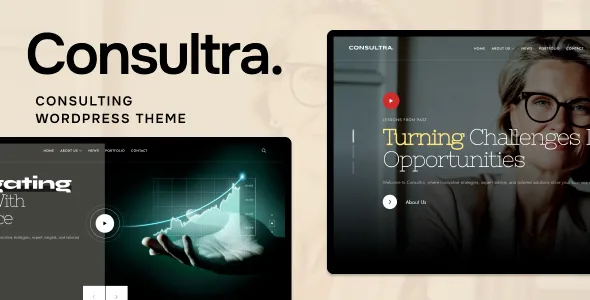
Consultra – Consulting WordPress Theme
Consultra – Consulting WordPress Theme is a professional website design solution for business consultants, management advisors, financial consulting firms, corporate service providers, and professional organizations looking to establish a strong online presence with WordPress. Designed for the consulting industry, Consultra offers a potential foundation for presenting business expertise, explaining professional services, showcasing client projects, and generating inquiries from prospective customers. Whether you operate a management consulting firm, a financial advisory business, a strategy consultancy, or an independent professional practice, this theme can be considered for creating a website aligned with your business goals.
A consulting website needs to communicate expertise, credibility, and value clearly. Prospective clients often want to understand a firm’s capabilities, review its experience, explore its service offerings, and determine whether its approach fits their business challenges. A well-organized website can make this process easier by presenting information in a structured and accessible format. With suitable customization, relevant content, and a consistent visual identity, Consultra can help consulting professionals introduce their services and build a recognizable digital presence.
WordPress provides a flexible content management system for creating pages, publishing articles, managing images, and maintaining business information. A consulting-focused theme provides a starting point for organizing company profiles, service descriptions, case studies, team information, and contact opportunities. The actual features available with Consultra depend on the installed theme version, its documented capabilities, and compatible plugins. Reviewing the current demo and documentation before installation helps ensure that the theme supports your website requirements.
What Is Consultra Consulting WordPress Theme?
Consultra is a WordPress theme positioned for consulting businesses and professional service providers that need a structured website to communicate their expertise. Its consulting-focused direction makes it relevant to organizations offering strategic advice, operational support, financial guidance, business development services, and other professional solutions.
Unlike a general-purpose website, a consulting website should help visitors understand the relationship between a business challenge and the services offered. Potential clients may be looking for assistance with planning, organizational improvement, financial management, market research, digital transformation, or operational efficiency.
Consultra can be evaluated for consulting firms, independent advisors, corporate consultants, management professionals, financial service providers, business coaches, and specialist agencies. Depending on the available templates and customization options, a website may include service pages, company information, team profiles, project examples, client testimonials, educational articles, and consultation inquiries.
The theme can serve as a design foundation for presenting these elements in a professional format. However, advanced functions such as appointment scheduling, customer portals, online payments, or automated lead management may require additional plugins or external services. These capabilities should be verified through the current product documentation rather than assumed.
Professional Design for Consulting Businesses
A professional visual presentation helps consulting firms communicate reliability, competence, and attention to detail. Because consulting services often involve important business decisions, visitors need to find clear information about the firm’s experience, capabilities, and working approach.
Consultra provides a consulting-oriented design direction for businesses that want to present their services in an organized and credible manner. Depending on its available layouts, users can create pages that introduce the company, explain its expertise, showcase selected projects, and guide prospective clients toward further discussions.
A management consultancy may emphasize strategic planning and organizational development, while a financial consulting business may focus on financial analysis, business planning, and advisory services. An independent consultant might prioritize a professional biography, qualifications, service packages, and selected examples of previous work.
Design consistency plays an important role in the overall experience. Readable typography, balanced spacing, clear headings, and recognizable calls to action can help visitors navigate the website without confusion. Relevant photography and restrained visual elements can support a polished professional identity.
The website should prioritize useful information over decorative effects. Clear service descriptions, accurate business details, and straightforward navigation are more valuable than a complicated layout that makes essential information difficult to find.
Responsive Design for Desktop, Tablet, and Mobile
Responsive design is essential for modern consulting websites because potential clients may research professional services using different devices. A business owner might discover a consultancy on a smartphone, review its services on a laptop, and return later to submit an inquiry from a tablet.
Consultra should be evaluated for responsive behavior through its current demo and installed version. A well-configured responsive website adjusts its content to fit different screen sizes while maintaining readability and usability.
Headings should remain clear, body text should be comfortable to read, and navigation menus should be easy to operate on touchscreens. Contact buttons and forms should also remain accessible on smaller devices.
For consulting firms, mobile usability can influence how easily potential clients locate telephone numbers, review services, or request a meeting. Important information should be easy to find without requiring excessive scrolling or navigating complex menus.
Responsive testing should cover the homepage, individual service pages, team profiles, case studies, blog articles, and contact forms. Custom CSS, third-party widgets, and additional plugins may affect individual layouts, so the complete website should be checked across multiple screen sizes before launch.
Website Solutions for Management Consultants
Management consultants help organizations evaluate challenges, improve operations, and develop strategies for achieving business objectives. Their websites need to communicate the nature of their services and explain how their expertise relates to practical organizational needs.
Consultra can be considered for a management consultancy website that presents strategic planning, operational improvement, organizational development, change management, and business performance advisory services, where these match the firm’s actual capabilities.
A homepage can introduce the consultancy’s main focus and direct visitors toward dedicated service pages. Each service page can explain the types of challenges addressed, the process involved, and the kinds of deliverables clients may receive.
For example, an operational consulting page might discuss workflow reviews, process documentation, resource allocation, and performance measurement. A strategy consulting page could explain market analysis, business planning, growth opportunities, and decision-support services.
Case studies can demonstrate how the consultancy approaches real business challenges. They should describe the client’s situation, the scope of the work, the consultant’s contribution, and any documented outcomes that can be shared appropriately.
By presenting its services in practical terms, a management consultancy can help potential clients determine whether the firm’s expertise aligns with their needs.
Financial and Business Advisory Services
Financial and business consultants often need to explain complex topics in a clear and responsible way. Their services may include budgeting support, financial planning, business analysis, cash flow assessment, investment-related consulting, or business growth advisory, depending on their qualifications and the nature of their practice.
Consultra can be evaluated for financial consulting firms and professional advisors that need a website to introduce their expertise, describe their service scope, and provide contact opportunities.
A financial consulting page can explain the types of businesses served, the information clients may need to prepare, and the general process followed during an engagement. A business advisory page might cover planning, performance analysis, operational reviews, and strategic decision support.
Professional service websites should clearly communicate the limits of their offerings. Financial claims, projected outcomes, and descriptions of regulated services should be accurate and consistent with applicable requirements. A website should not promise guaranteed returns or imply qualifications that the business does not hold.
Clear service descriptions and transparent communication help visitors understand the available support before requesting a consultation.
Corporate Consulting and Professional Services
Corporate consulting firms may work with organizations across multiple departments, industries, and business functions. Their websites need to present their capabilities without making the service offering difficult to understand.
Consultra can provide a starting point for a corporate consulting website that organizes company information, service categories, team profiles, and selected projects into a coherent structure.
A firm serving corporate clients might introduce its areas of expertise, explain its consulting methodology, and provide information about the industries it understands. Dedicated pages can describe individual services in greater detail, while company pages can introduce leadership, professional experience, and the firm’s approach to client engagements.
A well-organized website can also explain the typical stages of a consulting project, from initial discussions and needs assessment to recommendations and implementation support. The description should reflect the firm’s actual process rather than rely on generic claims.
Corporate clients often need enough information to evaluate a potential provider before initiating contact. Clear information about experience, service scope, and communication practices can make that evaluation easier.
Homepage Layout and Content Organization
The homepage is often the first introduction to a consulting firm. It should communicate the business’s main offering and help visitors locate relevant information quickly.
A Consultra-based website can be planned around an introductory section, service summaries, company information, selected projects, team profiles, client feedback, educational content, and contact opportunities, depending on the available theme layouts.
The introductory section should explain what the consultancy does and whom it serves. Supporting content can highlight the firm’s main capabilities and direct visitors toward detailed service pages.
A services section helps visitors understand the available offerings, while project examples can demonstrate how the consultancy approaches business challenges. Team profiles may introduce relevant expertise, and genuine testimonials can provide additional context when they are authorized for publication.
Calls to action should be clear and relevant to the page. For example, visitors might be invited to discuss a business challenge, request further information, or arrange an introductory meeting.
Not every homepage needs every possible section. A focused structure that reflects the needs of the target audience is more effective than a crowded page with too many competing messages.
Customization and Corporate Brand Identity
A consistent visual identity helps consulting firms communicate professionalism and distinguish themselves from competitors. The website’s presentation should align with the company’s positioning, audience, and service offering.
Depending on the theme’s available settings and compatible design tools, Consultra may allow adjustments to colors, typography, spacing, page layouts, imagery, and other visual elements. The precise customization options should be confirmed through the current theme documentation.
A corporate consultancy may choose a restrained color palette and structured layouts, while a creative strategy firm may prefer a more expressive visual style. An independent consultant may prioritize a personal profile and selected work, whereas a larger organization may emphasize its team and service categories.
Consistency across the website is essential. A defined heading hierarchy, readable body text, repeated button styles, and balanced spacing help create a unified experience.
Use relevant images and original business content wherever possible. Professional photographs, authorized project visuals, and accurate team profiles provide more value than generic imagery that does not reflect the consultancy’s work.
Before making major design changes, identify which elements are controlled by the theme, the page builder, or additional plugins. Keeping backups and testing significant changes in a staging environment can help reduce avoidable problems.
Service Pages That Communicate Business Value
Service pages are central to a consulting website because they help potential clients understand what the firm provides and whether its capabilities match their requirements.
Consultra can be evaluated for a website structure that gives each major service its own dedicated page. This allows the business to explain individual offerings in greater detail instead of placing every service into a single, difficult-to-navigate section.
Each service page should identify the intended audience, describe the challenge addressed, explain the consultant’s approach, and outline the expected scope of work. Where appropriate, the page can also include relevant qualifications, examples, frequently asked questions, and a contact option.
For example, a business planning service might explain how the consultant supports market research, goal setting, resource planning, and performance review. A process improvement service could describe workflow analysis, documentation, and recommendations for improving operational efficiency.
Specific descriptions help clients understand the service without relying on vague promises. Avoid guaranteeing outcomes that depend on market conditions, client decisions, or other factors outside the consultant’s control.
A clear service structure also makes it easier to connect related articles, case studies, and contact opportunities throughout the website.
Case Studies, Projects, and Client Testimonials
Case studies and project examples can help consulting firms demonstrate how they work and communicate their experience. Because consulting services are often intangible, relevant examples can provide useful context for potential clients evaluating a provider.
Consultra can be considered for websites that showcase selected engagements, professional projects, or documented business outcomes, depending on the available page layouts.
A useful case study can introduce the business challenge, describe the scope of the engagement, explain the consultant’s contribution, and summarize the results that can be verified and shared. When numerical outcomes are available, they should include appropriate context and avoid misleading comparisons.
Client testimonials may provide another perspective on the working relationship. They should be genuine, accurate, and published with permission. Avoid inventing reviews or presenting anonymous statements in ways that imply they have been independently verified.
Confidentiality is especially important in consulting. Remove sensitive information and obtain the necessary authorization before publishing client names, company details, internal documents, or project results.
A thoughtful collection of case studies and testimonials can help visitors understand the consultancy’s experience while maintaining professional standards.
SEO-Friendly Structure for Consulting Websites
Search engine optimization can help consulting businesses improve their website’s discoverability. A WordPress theme provides a design foundation, but search performance also depends on content quality, technical setup, competition, and how well pages address the needs of potential clients.
An effective SEO strategy begins with a logical website structure. Consulting firms can create separate pages for important services, industries, or specialist areas when they have relevant expertise and useful information to share.
Each page should have a descriptive title, a clear heading hierarchy, informative content, and appropriate internal links. Service pages should explain the offering in practical terms, while company pages should provide accurate information about the business and its capabilities.
Descriptive URLs, optimized images, and links between related pages can help visitors navigate the website and understand its structure. For firms serving specific regions, location-specific content can be useful when it reflects genuine service coverage.
Compatible SEO plugins may assist with metadata, XML sitemaps, redirects, canonical settings, and supported structured data. Website owners should also monitor broken links, indexing problems, duplicate content, and other technical issues.
Content should be written for people first. Natural keyword usage and detailed answers to real business questions are more useful than repeatedly inserting the same phrase into every paragraph.
No theme can guarantee specific rankings or a certain volume of client inquiries. Sustainable SEO requires useful content, technical maintenance, and continued attention to audience needs.
Content Marketing and Consulting Blog
Content marketing can help consulting firms demonstrate expertise, explain industry concepts, and provide practical information to potential clients. A blog offers a place to publish educational articles, business insights, professional guidance, and updates relevant to the consultancy’s work.
Consultra can be considered for websites that combine service pages with a WordPress blog, depending on the theme’s available blog templates and archive options.
A management consultancy might publish articles about business planning, organizational development, process improvement, or leadership practices. A financial consulting firm could discuss budgeting principles, financial reporting, or business planning considerations within its professional scope.
Consultants can also publish guides that explain common challenges, compare different approaches, or help businesses prepare for a consulting engagement. Such resources can make the website more useful and demonstrate the firm’s ability to explain complex topics clearly.
Internal links can connect articles to relevant service pages, case studies, and contact information. For example, an article about operational challenges may link to a service page that explains the consultancy’s process improvement offering.
A manageable publishing schedule is often more sustainable than producing large volumes of shallow content. Focus on accuracy, relevance, and practical value to create resources that support the firm’s broader communication strategy.
Lead Generation and Consultation Forms
Generating qualified inquiries is an important objective for many consulting websites. Potential clients may want to discuss a business challenge, request information about a service, arrange an introductory meeting, or ask about pricing.
Consultra can be configured to provide contact opportunities through the available layouts and compatible WordPress form plugins. The exact functionality depends on the theme and the supporting tools installed.
A consultation form might collect a name, business email address, company name, area of interest, and a brief description of the challenge. The form should request only the information needed to respond appropriately.
Clear calls to action can encourage visitors to begin a conversation without creating unnecessary pressure. The website may also explain what happens after an inquiry is submitted, such as an initial review or follow-up discussion.
Forms should have readable labels, understandable validation messages, and appropriate confirmation after submission. Website owners should test email delivery, spam protection, and notification settings before launch.
A simple and dependable inquiry process makes it easier for prospective clients to take the next step and helps the consulting firm manage incoming opportunities.
Appointment Scheduling and Client Communication
Some consulting firms offer introductory meetings, discovery calls, or structured consultation sessions before beginning an engagement. A clear scheduling process can help potential clients understand how to arrange a discussion.
Consultra can provide the visual foundation for presenting consultation options, although online booking may require a compatible plugin or external scheduling service.
A consultation page can explain the meeting’s purpose, expected duration, and the information clients may want to prepare. For example, businesses might be asked to identify their main challenge, describe their objectives, and provide relevant background information.
If an online booking system is added, verify its time-zone settings, available slots, confirmation messages, cancellation procedures, and calendar synchronization. These capabilities depend on the selected scheduling solution.
Client communication should also be explained clearly. Consulting firms can outline how they handle inquiries, arrange meetings, share information, and establish project expectations.
A straightforward scheduling process can make the initial client experience more organized without adding unnecessary complexity to the website.
Integrations and Supporting WordPress Plugins
A consulting website may need additional tools for contact forms, appointment scheduling, SEO, analytics, security, backups, and other business functions. The appropriate combination depends on the website’s objectives and the functionality already available in Consultra.
Before installing a plugin, review its compatibility with the current WordPress version, the theme, and any page-building tools in use. Check the documentation, update history, licensing terms, and support arrangements.
A form plugin can support consultation inquiries, while a scheduling tool may help manage meetings. SEO plugins can assist with metadata and sitemap management, and analytics tools can provide information about website traffic and visitor behavior, subject to applicable privacy and consent requirements.
Some businesses may also need customer relationship management tools, email marketing integrations, or payment processing for paid consultations. These capabilities depend on the selected external services and their available integrations.
Avoid installing multiple plugins that perform the same task without a clear reason. Overlapping functionality can increase maintenance work and create compatibility problems.
After adding or updating a plugin, test the affected pages and workflows. Pay particular attention to contact forms, scheduling, navigation, responsive layouts, and any external integrations.
Website Performance and Speed Optimization
Website performance influences how easily visitors can access information and interact with a consulting business. A professional website should load important content efficiently, especially when visitors are researching services or trying to submit an inquiry.
The actual performance of a Consultra website depends on the theme implementation, hosting environment, images, fonts, scripts, plugins, and external services. A professional design does not automatically guarantee fast loading, so performance should be tested after customization.
Start by resizing and compressing images while maintaining sufficient visual quality. Avoid unnecessary animations, large background videos, and external widgets that add little value to the visitor experience.
Quality hosting, caching, and other optimization tools may improve performance depending on the website’s configuration. Unnecessary plugins and overlapping integrations should be reviewed to reduce avoidable overhead.
Test important pages separately, including the homepage, service pages, case studies, blog articles, and contact forms. Different templates may behave differently depending on their content and interactive elements.
Regular performance checks can identify problems as the website grows. Keeping WordPress, the theme, and compatible plugins updated can also support reliability when updates are managed carefully.
Accessibility and User-Friendly Navigation
An effective consulting website should make information easy to locate and understand. Clear navigation, readable text, suitable contrast, and logical content structures help visitors explore professional services without confusion.
Use descriptive menu labels, meaningful link text, and a consistent heading hierarchy. Important information should not rely on color alone, and interactive elements should be clearly distinguishable from ordinary text.
The navigation should reflect the website’s main objectives. A consulting firm might prioritize Home, About, Services, Industries, Case Studies, Insights, and Contact, while a smaller independent practice may need a simpler structure.
Contact forms should provide clear field labels and understandable error messages. Interactive elements should also be usable with appropriate input methods, including keyboard navigation where applicable.
Accessibility depends on the theme, the content, and the way individual components are configured. Automated tools can help identify some issues, but manual testing is also important for reviewing navigation, forms, and other interactive elements.
A clear and accessible website makes it easier for potential clients to find relevant information and evaluate the consultancy’s services.
Security and Ongoing Website Maintenance
A professional WordPress website requires regular maintenance to remain reliable and secure. Consulting firms may rely on their websites to receive business inquiries, publish professional insights, and communicate with existing or prospective clients.
Use reputable hosting, enable HTTPS, create strong administrator passwords, and assign user roles according to each person’s responsibilities. Keep WordPress, the theme, and compatible plugins updated, with backups available before significant changes.
Obtain themes and plugins from trustworthy sources and review their compatibility before installation. Remove unused components when appropriate and avoid granting unnecessary administrative access.
Create regular backups and store them in a location that supports recovery if a technical problem occurs. It is also important to understand how to restore a backup and verify that the website functions correctly afterward.
Maintenance should include content reviews as well as technical checks. Service descriptions, team profiles, qualifications, contact details, case studies, and published articles should remain accurate.
A planned maintenance routine helps reduce avoidable issues and supports a dependable professional presence.
Who Should Use Consultra Consulting WordPress Theme?
Consultra may be suitable for a variety of consulting businesses and professional service providers that need a structured WordPress website.
Management consultants: Professionals can present strategic planning, operational improvement, organizational development, and related advisory services.
Business consultants: Firms can explain business planning, performance analysis, growth strategies, and operational support.
Financial consulting firms: Advisors can introduce their professional services and explain their areas of expertise, subject to applicable qualifications and requirements.
Corporate consulting agencies: Organizations can showcase service categories, team capabilities, company information, and selected projects.
Independent consultants: Freelance professionals can build a website featuring their experience, services, portfolio, and contact information.
Marketing consultants: Professionals can present marketing strategy, market research, campaign planning, and other services that match their expertise.
HR and organizational consultants: Firms can explain their approach to recruitment support, organizational development, workforce planning, and related services.
Technology consultants: Specialists can introduce digital transformation, technology planning, software consulting, and technical advisory offerings.
Business coaches and advisors: Professionals can describe their coaching or advisory services and provide information about consultation options.
The best choice depends on the available layouts, customization options, required integrations, and business objectives. Reviewing the current demo and documentation can help determine whether Consultra fits the intended website.
Tips for Building a Successful Website with Consultra
A consulting theme provides the design foundation, but the effectiveness of the finished website also depends on clear messaging, useful content, and a consistent professional identity.
Begin by defining the website’s primary objective. Decide whether the main goal is to generate consultation inquiries, explain specialist services, showcase project experience, publish educational content, or introduce a larger consulting firm.
Prepare essential content before customizing every page. This may include a company introduction, service descriptions, professional biographies, relevant qualifications, authorized testimonials, case studies, frequently asked questions, and contact information.
Create dedicated pages for important services and explain each offering in practical terms. Identify the audience, describe the challenge addressed, and outline the process or scope of work without making unsupported promises.
Establish a consistent visual identity using suitable colors, readable typography, relevant imagery, and clear calls to action. Replace placeholder content with accurate information that reflects the firm’s actual experience and capabilities.
Test the website across desktop computers, tablets, and mobile devices. Review navigation, loading speed, accessibility, contact forms, scheduling integrations, and all important links before launch.
Finally, create a maintenance plan that includes backups, software updates, performance checks, and periodic content reviews. These practices help the website remain accurate, secure, and useful as the consulting business grows.
Final Thoughts on Consultra Consulting WordPress Theme
Consultra – Consulting WordPress Theme is a potential website design option for management consultants, business advisors, financial consulting firms, corporate service providers, and independent professionals seeking to establish a professional online presence. Its consulting-oriented positioning makes it relevant to websites that need to communicate expertise, explain services, and help potential clients take the next step.
A well-planned website can combine service descriptions, company information, professional profiles, case studies, educational articles, and consultation opportunities. Independent consultants can use these elements to introduce their expertise, while larger firms can organize multiple service categories and present their broader capabilities.
The final functionality depends on the installed theme version, its documented features, customization options, and supporting plugins. Features such as appointment booking, customer relationship management, online payments, and advanced lead management may require additional integrations.
Long-term website effectiveness also depends on content quality, responsive design, accessibility, SEO practices, performance, security, and regular maintenance. A theme alone cannot guarantee search rankings or client acquisition, but it can provide a useful foundation for presenting a consulting business in a clear and organized way.
For businesses seeking a WordPress design focused on professional consulting services, Consultra can be evaluated as part of a broader digital strategy. With thoughtful customization, accurate information, relevant project examples, and a straightforward inquiry process, a professional website can support brand visibility, client communication, and long-term business development.