My Account
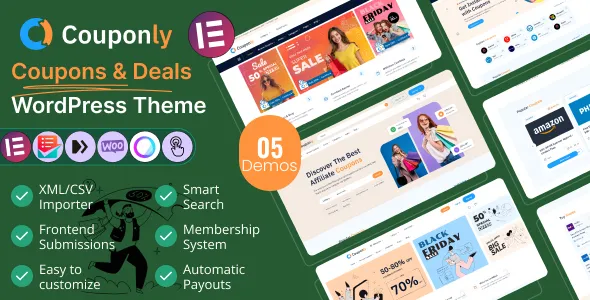
Couponly – Coupons, Deals, Discounts & Affiliate WordPress Theme
Couponly – Coupons, Deals, Discounts & Affiliate WordPress Theme is a website design solution for entrepreneurs, affiliate marketers, deal publishers, coupon websites, and businesses looking to build an online platform for sharing promotional offers and discount opportunities. A coupon website helps visitors discover deals, compare promotions, explore savings opportunities, and find offers from different retailers in one convenient location. With WordPress as its content management foundation, Couponly can be considered for creating a dedicated website focused on coupons, discounts, affiliate marketing, and promotional content.
Online shoppers frequently look for ways to save money before making a purchase. They may search for coupon codes, seasonal promotions, limited-time offers, cashback opportunities, or discounts on particular products and services. A well-organized deals website can make this process easier by presenting promotional information in a clear, accessible format. For publishers, it also creates an opportunity to develop useful shopping content and build relationships with an audience interested in finding value.
Couponly is designed for the coupons, deals, discounts, and affiliate website category. Depending on its current version and available customization options, it can serve as a starting point for organizing offers, publishing promotional articles, presenting merchant information, and guiding visitors toward relevant retailer websites. The final functionality depends on the theme’s documented features, WordPress configuration, and compatible plugins or affiliate tools used alongside it.
What Is Couponly Coupons and Deals WordPress Theme?
Couponly is a WordPress theme intended for websites that focus on coupons, discount offers, promotional deals, and affiliate marketing content. It provides a potential design foundation for publishers who want to organize shopping offers and help visitors discover promotions from different brands or retailers.
A coupon website may contain several types of content, including discount codes, sale announcements, merchant profiles, product recommendations, shopping guides, and seasonal deal collections. Organizing these resources into clear categories helps visitors find offers relevant to their interests.
WordPress allows website owners to publish pages, manage articles, organize media, and update website content through an administrative interface. A theme determines much of the visual presentation, while compatible plugins or additional development may be needed for more specialized features.
For example, an affiliate publisher might create separate sections for electronics, fashion, home products, travel, beauty, and digital services. Another website could focus on a particular shopping category or regional market, helping visitors discover relevant promotions without browsing unrelated offers.
Couponly can be evaluated for these types of projects, but the exact layouts, coupon submission options, expiration indicators, filtering controls, and affiliate-related functions should be confirmed through the current product demo and documentation.
Professional Design for Coupon and Deal Websites
The presentation of a coupon website plays an important role in helping visitors understand available offers. Promotional information should be easy to scan, and the most important details should be clearly distinguished from supporting descriptions.
Couponly can provide a starting point for a website that organizes deals through structured sections and a consistent visual identity. Depending on the available templates, publishers may be able to customize page layouts, colors, typography, images, and other presentation elements to match their brand.
A useful deals homepage can introduce featured promotions, highlight popular categories, and direct visitors toward recently published offers. Individual deal pages can provide more detail about the promotion, the participating retailer, relevant restrictions, and the steps required to redeem the offer.
Design consistency helps visitors become familiar with the website. Repeated visual patterns for merchant names, offer summaries, discount information, and calls to action can make the browsing experience easier to understand.
However, promotional information should remain accurate and transparent. A large discount label should not replace clear details about eligibility, minimum purchase requirements, expiration dates, or other applicable conditions.
By combining a clear layout with reliable offer information, a coupon website can provide a more useful experience for shoppers and create a professional environment for affiliate content.
Responsive Design for Mobile Shopping
Many shoppers discover deals while browsing on smartphones. A coupon website therefore needs to provide a convenient experience across desktop computers, tablets, and mobile devices.
Couponly should be evaluated for how its current layouts adapt to different screen sizes. Responsive behavior may include adjusting content columns, reorganizing navigation, resizing promotional images, and making important controls easier to use on smaller screens.
Mobile visitors should be able to locate an offer, understand its conditions, and follow the appropriate redemption instructions without unnecessary effort. Long descriptions should remain readable, while buttons and links should be easy to select.
A responsive layout is particularly important for coupon cards and deal listings. If promotional content becomes crowded or essential details are hidden, visitors may struggle to determine whether an offer is relevant.
Testing should cover the homepage, category pages, individual deal pages, merchant profiles, and blog articles. Contact forms, search tools, and other interactive components should also be reviewed if they are included in the configuration.
The final mobile experience depends on the theme, the content, and the supporting plugins. Regular testing after updates helps ensure that the website remains practical for shoppers using different devices.
Coupon Codes and Promotional Offers
Coupon codes are an important content type for many discount websites. They provide shoppers with a code that may be entered during checkout to receive a qualifying promotion.
Couponly can be considered for a website that publishes coupon-related content, subject to the theme’s verified layouts and available integrations. A coupon listing can include the merchant’s name, a short description of the offer, the code where applicable, expiration information, and redemption instructions.
Useful coupon content should explain the conditions associated with the promotion. Some codes may apply only to selected products, new customers, particular order values, or specific geographic regions. These details help visitors understand whether the offer is likely to work for their purchase.
Publishers should also distinguish between verified codes and offers that have not been recently tested. A clear editorial process can help reduce outdated information and improve the usefulness of the website.
The presence of a coupon display in a theme does not automatically mean that codes are validated or updated in real time. Those capabilities may require manual editorial work, a supported plugin, an external affiliate feed, or custom development.
Maintaining accurate coupon information is essential for building a dependable resource that visitors are willing to use again.
Daily Deals and Limited-Time Discounts
Deal-focused websites often publish promotions that remain available for a limited period. These may include seasonal sales, weekend offers, clearance events, product discounts, or special promotions from participating merchants.
Couponly can be evaluated as a starting point for organizing time-sensitive promotional content. Depending on the available page layouts, a publisher may arrange offers into featured sections, recent listings, or categories based on shopping interests.
Each deal should communicate the essential information clearly. Visitors may need to know what is discounted, which retailer is offering the promotion, when the offer expires, and whether any restrictions apply.
A limited-time promotion should only be described as active when the publisher has a reasonable basis for that claim. Expired offers should be removed, updated, or clearly marked so visitors are not misled.
Publishers can develop an editorial schedule around major shopping periods, including holiday sales, seasonal clearance events, back-to-school promotions, and other relevant retail occasions. However, every published offer should be checked for accuracy rather than relying on old promotional information.
A well-maintained deal website combines an organized presentation with regular content reviews, helping visitors find current offers more efficiently.
Affiliate Marketing Website Development
Affiliate marketing allows publishers to earn commissions when visitors complete qualifying actions through tracked referral links, subject to the terms of the relevant affiliate program. A coupon website can use this model to connect shoppers with participating merchants while publishing useful promotional information.
Couponly is intended for the coupon and affiliate website category, making it a potential option for publishers planning an affiliate-focused WordPress project. The theme’s design can be evaluated alongside the requirements of the affiliate programs and tools the publisher intends to use.
An affiliate website may include merchant pages, product recommendations, shopping guides, deal listings, and editorial articles. Each page should help visitors understand the offer and make an informed decision rather than relying only on promotional language.
Affiliate links should be implemented using the appropriate tracking methods provided by the relevant program. Commission attribution, merchant approval, product feeds, and reporting are generally handled through affiliate networks, plugins, or external platforms rather than by a visual theme alone.
Publishers should also provide clear affiliate disclosures wherever required by applicable laws, regulations, and program policies. Readers should be able to understand when the website may receive compensation from qualifying purchases.
The strongest affiliate content provides genuine value through accurate details, useful comparisons, and relevant recommendations.
Merchant Listings and Brand Pages
Merchant pages can help visitors discover promotions from specific retailers without searching through unrelated offers. These pages can also provide a central location for a merchant’s deals, shopping information, and relevant editorial content.
Couponly may be suitable for a website that organizes offers around retailer or merchant categories, depending on its available templates and content-management options.
A merchant profile can introduce the retailer, describe the types of products it sells, and direct visitors to relevant promotions. It may also include shopping tips, information about common offer conditions, and links to related categories.
For example, an electronics merchant page could group promotions for accessories, computers, and home technology products. A fashion retailer page might highlight clothing, footwear, and seasonal collections.
Publishers should ensure that merchant names, logos, descriptions, and offer information are accurate. Brand assets should be used according to the relevant permissions and guidelines.
If a website requires automatic merchant imports, affiliate feed synchronization, or advanced filtering across thousands of offers, these capabilities should be verified separately. They may require compatible plugins, external services, or custom development.
Organized merchant pages can improve navigation and give visitors a convenient way to explore offers from retailers they already know.
Category Organization for Different Shopping Interests
A coupon website becomes easier to use when promotional content is organized into categories that reflect visitors’ shopping interests. Categories help users narrow their search and discover offers that are relevant to their needs.
Couponly can be evaluated for a category-based structure that separates deals by product type, merchant, promotion type, or other useful criteria.
Common categories might include electronics, fashion, beauty, home and garden, travel, food delivery, entertainment, fitness, and software subscriptions. The best categories depend on the website’s audience and the types of offers it publishes.
Category pages should provide meaningful content rather than functioning only as long lists of unrelated links. A short introduction can explain the types of offers visitors may find and provide useful context about common promotions.
Publishers should avoid creating excessive categories with very little content. A manageable structure makes the website easier to maintain and helps visitors understand how information is organized.
As the website grows, review category names and navigation periodically. Consolidate overlapping sections and create new categories only when there is enough relevant content to justify them.
A clear category structure supports discovery and makes the coupon website more practical for returning visitors.
Homepage Layout and Featured Offers
The homepage is often the first page visitors see when discovering a coupon and deals website. It should communicate the site’s purpose quickly and provide convenient access to the most relevant promotional content.
A Couponly-based website may be organized around featured offers, popular categories, recent deals, selected merchants, and shopping guides, depending on the layouts supported by the installed version.
A clear introductory section can explain what the website offers and how visitors can use it. Promotional sections can then highlight relevant content without overwhelming the page with too many competing elements.
Featured deals should be selected based on their relevance, accuracy, and usefulness. If the website highlights popular offers, the method used to determine popularity should be clear and reliable.
The homepage should also make navigation straightforward. Visitors may want to browse a category, search for a retailer, read a buying guide, or open a specific promotion.
Not every website needs every possible section. A specialized coupon publisher may benefit from a focused homepage, while a larger deals platform may require more extensive navigation.
The objective is to help visitors find useful information quickly and encourage them to explore the website’s content.
Search and Deal Discovery Experience
Visitors often arrive at a coupon website with a particular product, merchant, or type of discount in mind. Search and discovery tools can help them find relevant offers without browsing every category.
Couponly should be reviewed to determine which search, filtering, and navigation features are available in the current theme version. If the website requires advanced deal discovery, additional plugins or custom development may be necessary.
Useful discovery options may include searching by keyword, browsing merchant pages, selecting product categories, or viewing recently published offers. More advanced filters could help visitors narrow results by promotion type, expiration status, or other relevant attributes when supported.
Search results should provide enough information for visitors to identify relevant offers. A clear title, merchant name, short description, and current status can make the results more useful.
Website owners should also review how the site behaves when a search returns no matching offers. Helpful suggestions or links to popular categories can guide visitors toward alternative content.
Any advanced filtering system should be tested with the site’s actual data and content structure. A visual search box alone does not guarantee sophisticated filtering or real-time offer matching.
SEO-Friendly Structure for Coupon Websites
Search engine optimization can help coupon and deal websites reach shoppers looking for specific promotions, merchants, and product categories. A WordPress theme provides a visual foundation, but search visibility also depends on content quality, technical setup, competition, and the accuracy of published offers.
Each important page should have a clear topic, descriptive title, and useful information. Merchant pages, category pages, and individual deal articles can be organized around distinct user needs.
For example, a shopping guide can explain how to evaluate seasonal discounts, while a merchant page can organize relevant offers and provide helpful background information. Avoid creating large numbers of nearly identical pages that contain little original value.
Internal links can connect related deals, categories, merchant profiles, and buying guides. Descriptive anchor text helps visitors understand the destination before opening a link.
Images should use appropriate dimensions and meaningful alternative text when they communicate useful information. Page titles and descriptions should be written naturally rather than repeating the same keyword excessively.
Compatible SEO plugins may help manage metadata, sitemaps, canonical settings, and redirects, depending on the site’s configuration. Publishers should also monitor broken links, indexing issues, and outdated promotional pages.
SEO success cannot be guaranteed by a theme alone. Original content, a useful user experience, technical maintenance, and a sustainable publishing strategy all contribute to long-term performance.
Content Marketing for Deals and Affiliate Publishers
Content marketing can help a coupon website attract visitors who need more than a discount code. Shopping guides, product comparisons, seasonal articles, and practical savings advice can provide additional value while supporting the website’s overall content strategy.
Couponly can be considered for a WordPress website that combines deal listings with articles and other editorial resources, subject to the available blog and page layouts.
A publisher might create guides explaining how to compare prices, evaluate product features, understand sale conditions, or plan purchases around seasonal promotions. Merchant-specific articles can introduce a retailer’s product categories and explain how shoppers can evaluate relevant offers.
Useful content should be original, accurate, and aligned with the audience’s needs. Rewriting merchant descriptions without adding meaningful information is unlikely to create a strong reader experience.
Articles can link to related deals when the connection is genuinely useful. For example, a guide about home office equipment may direct readers toward relevant product categories or active offers.
Publishers should maintain a manageable content schedule and prioritize quality over volume. Regularly review older articles to update prices, links, product information, and promotional details.
A thoughtful content strategy can help create a resource that remains useful even when individual coupons expire.
Affiliate Links, Transparency, and Trust
Trust is particularly important for coupon and affiliate websites because visitors rely on published information when deciding whether to follow an offer or make a purchase.
Couponly can serve as a design foundation for presenting affiliate content, but the website owner remains responsible for the accuracy of promotional information and compliance with applicable requirements.
Affiliate links should direct visitors to the intended merchant or offer. Publishers should review links periodically, particularly when campaigns end or retailers change their landing pages.
Disclosures should be clear and easy to understand. Where applicable, explain that the website may receive a commission when visitors make qualifying purchases through affiliate links. Follow the relevant affiliate network’s terms and local advertising or consumer-protection requirements.
Offer descriptions should identify important conditions, including exclusions, minimum order values, eligible products, and expiration dates where known. Avoid presenting an unverified promotion as guaranteed to work.
A consistent review process can help publishers identify expired coupons, broken links, and inaccurate descriptions. When an offer cannot be confirmed, update the listing or explain its status appropriately.
Transparent communication supports a better experience for shoppers and helps establish a more dependable relationship with the audience.
Integrations and Supporting WordPress Plugins
A coupon and affiliate website may need supporting tools for SEO, analytics, contact forms, caching, security, affiliate tracking, and other specialized requirements. The appropriate setup depends on the site’s objectives and the functions already included with the theme.
Before installing Couponly, review the current product documentation for WordPress compatibility, required dependencies, supported customization tools, and any recommended plugins.
An affiliate plugin may help manage referral links or reporting, depending on the chosen program. Other integrations may support external product feeds, merchant data, email newsletters, or content management workflows.
However, a theme should not be assumed to include automatic coupon verification, affiliate network synchronization, commission tracking, advanced search, or live promotional updates unless those features are explicitly documented.
Choose reputable plugins and verify that they are compatible with the installed WordPress version. Avoid overlapping tools that perform the same task without a clear reason.
After installing or updating an integration, test important pages, links, and interactive elements. This is especially important when affiliate redirects, coupon displays, or external data sources are involved.
A carefully selected set of integrations can extend the website while keeping maintenance manageable.
Website Performance and Mobile Usability
A coupon website may display many promotional images, merchant logos, deal cards, and product links. These elements should be managed carefully to maintain a comfortable browsing experience.
The actual performance of a Couponly website depends on the theme implementation, hosting, images, plugins, scripts, and external integrations. A responsive design does not automatically guarantee fast loading.
Optimize image dimensions and file sizes before uploading promotional graphics. Use suitable formats, avoid unnecessarily large banners, and review whether decorative elements contribute meaningful value.
Caching and other performance tools may help depending on the hosting environment and website configuration. Measure performance before and after making changes rather than relying on assumptions.
Test the homepage, category pages, merchant profiles, deal listings, and articles. Large content archives may require particular attention because their loading behavior can differ from that of smaller pages.
Mobile testing should focus on readability, navigation, and the ease of opening relevant offers. Buttons should be easy to select, and promotional details should remain visible without awkward scrolling or overlapping content.
Regular performance reviews can help maintain a website that visitors can browse comfortably as the volume of content increases.
Security, Privacy, and Website Maintenance
A coupon website needs regular maintenance to keep its content accurate and its technical environment dependable. This is particularly important when the website contains numerous promotional links, external integrations, or user-submitted information.
Use secure hosting, enable HTTPS, create strong administrator credentials, and assign permissions according to each user’s responsibilities. Keep WordPress, the theme, and compatible plugins updated after reviewing compatibility and creating appropriate backups.
Install themes and plugins from trustworthy sources, and remove unused components when appropriate. Backups should be stored securely and tested so that the website can be restored if a problem occurs.
If the website collects email addresses, account information, or other personal data, explain the relevant data practices through appropriate privacy information and follow applicable requirements. Use analytics and marketing tools in accordance with relevant privacy rules and consent obligations.
Review promotional content regularly. Remove or update expired offers, correct broken links, and verify merchant information when practical.
A consistent maintenance routine supports both the technical reliability of the website and the quality of the information presented to visitors.
Who Should Use Couponly Coupons and Deals WordPress Theme?
Couponly may be worth evaluating for a range of online publishing and affiliate marketing projects.
Coupon website owners: Organize discount codes, promotional offers, and shopping information into a dedicated website.
Affiliate marketers: Publish product recommendations and merchant promotions through an affiliate-focused content strategy.
Deal publishers: Highlight seasonal sales, limited-time discounts, and selected shopping opportunities.
Shopping blogs: Combine savings advice, buying guides, product comparisons, and promotional content.
Niche deal websites: Focus on categories such as fashion, electronics, home products, beauty, travel, or digital services.
Merchant promotion platforms: Organize retailer information and relevant offers into merchant-focused sections.
Content creators: Build a website that complements social media, newsletters, or other publishing channels.
Digital entrepreneurs: Explore a content-based business model built around useful shopping information and eligible affiliate partnerships.
The suitability of Couponly depends on the required functionality, the intended audience, and the theme’s verified features. Review the current demo and documentation before choosing it for a project that requires specialized coupon management or automated affiliate workflows.
Tips for Building a Successful Coupon Website with Couponly
A successful coupon website needs more than promotional cards and affiliate links. It should provide accurate information, intuitive navigation, and content that helps visitors make informed shopping decisions.
Begin by selecting a clear niche or defining the main audience. A website focused on a few related categories may be easier to organize and maintain than one that attempts to cover every type of product immediately.
Create a consistent process for publishing and reviewing offers. Record the merchant, offer conditions, relevant dates, destination URL, and any verification information available. Update or remove expired promotions promptly.
Use clear descriptions and avoid misleading discount claims. If an offer has restrictions, explain them where appropriate. Distinguish between verified codes and promotions that have not been recently tested.
Organize content into logical categories and merchant pages. Add helpful shopping guides when they answer genuine questions, and connect related articles with relevant offers.
Review affiliate links and disclosures regularly. Make sure links lead to the intended destinations and that the website follows the requirements of its affiliate programs.
Before launch, test the website on desktop and mobile devices. Check navigation, page speed, deal links, search functionality, accessibility, and any forms or integrations.
Finally, review performance and content quality over time. Use reliable analytics to understand which pages attract visitors, maintain accurate promotional information, and improve sections that create confusion.
Final Thoughts on Couponly – Coupons, Deals, Discounts & Affiliate WordPress Theme
Couponly – Coupons, Deals, Discounts & Affiliate WordPress Theme is a potential option for publishers, affiliate marketers, and entrepreneurs who want to create a dedicated website for coupons, deals, discounts, and shopping promotions using WordPress.
A well-organized coupon website can bring together promotional listings, merchant information, category pages, shopping guides, and affiliate links in one accessible location. Clear presentation helps visitors understand available offers, while useful editorial content can provide context beyond the discount itself.
The final design and functionality depend on the installed theme version, its documented features, the available customization options, and the plugins or external services used alongside it. Advanced capabilities such as automated coupon verification, affiliate feed synchronization, and commission reporting should be confirmed separately before they are treated as available.
Long-term results also depend on accurate content, transparent affiliate disclosures, search optimization, website performance, and regular maintenance. A theme alone cannot guarantee traffic, commissions, or conversions, but it can provide a useful foundation for a well-planned affiliate publishing website.
For businesses and creators looking to develop a coupon-focused online presence, Couponly can be evaluated as part of a broader content and affiliate marketing strategy. With relevant offers, clear navigation, trustworthy information, and consistent updates, a professional deals website can help shoppers discover promotions while supporting sustainable publishing goals.