My Account
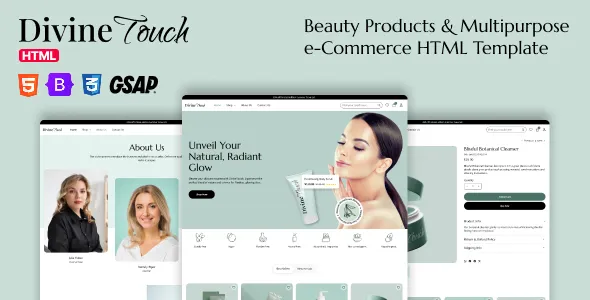
Divine Touch – Beauty eCommerce HTML Template
Divine Touch – Beauty eCommerce HTML Template is a modern website design solution for beauty stores, skincare retailers, cosmetics brands, makeup businesses, and personal care product sellers looking to establish a professional online shopping presence. Designed for beauty-focused eCommerce projects, Divine Touch can serve as a front-end foundation for showcasing cosmetic collections, presenting skincare products, highlighting beauty essentials, and creating an organized browsing experience for customers. Its HTML-based structure provides developers with a starting point for building a visually appealing online store that reflects a beauty brand’s identity and product range.
The beauty industry relies heavily on visual presentation, product information, and customer confidence. Shoppers often want to explore product categories, compare available options, review ingredients, and understand how products fit their personal care needs. A well-organized beauty website helps visitors discover suitable products while making important details easy to access. Divine Touch can be evaluated for projects involving makeup, skincare, fragrances, haircare, beauty accessories, and other personal care products, depending on the layouts included in the supplied template.
An HTML eCommerce template provides the structure and visual styling needed to develop a storefront without designing every page from scratch. Developers can customize the interface, connect it to an appropriate shopping platform, and extend it according to business requirements. Features such as inventory management, payment processing, customer accounts, and order tracking generally require backend development or eCommerce integration unless they are explicitly included in the product package.
What Is Divine Touch Beauty eCommerce HTML Template?
Divine Touch is an HTML template intended for beauty-focused online retail websites. It can be considered by businesses that want a dedicated storefront for cosmetics, skincare, makeup, and personal care products rather than a generic online shopping layout.
Beauty retailers often manage a diverse product catalog. A store may sell facial cleansers, moisturizers, serums, foundations, lip products, fragrances, hair treatments, and beauty tools. Each category requires clear presentation so customers can understand the product range and locate relevant information.
Divine Touch can serve as a starting point for presenting these collections through product listings, category sections, promotional banners, and individual product pages, depending on the supplied layouts. Developers can adapt the design to suit a premium cosmetics brand, a natural skincare shop, a makeup retailer, or a multi-category beauty store.
The exact functionality depends on the included HTML files, stylesheets, scripts, and documented features. Before implementation, review the product demo and documentation to verify the available pages, responsive behavior, dependencies, licensing terms, and compatibility with your intended development workflow.
Modern Design for Beauty and Cosmetics Stores
Visual design is particularly important for beauty eCommerce websites because product appearance, packaging, brand identity, and photography influence how customers explore a collection. A professional storefront should combine attractive visuals with clear navigation and readable product information.
Divine Touch can provide a foundation for creating a consistent beauty-focused visual identity. Depending on the supplied source files, developers may be able to customize the color palette, typography, imagery, spacing, product layouts, and promotional sections.
A premium skincare retailer might use a clean design with generous spacing and refined typography. A colorful makeup store may prefer expressive imagery and vibrant product collections, while a natural beauty brand could emphasize ingredient information and a more understated presentation.
Consistency across the homepage, product categories, product details, and checkout interface helps create a cohesive shopping experience. Use high-quality product photography, clear headings, and descriptive calls to action to help visitors understand what each section offers.
The design should support product discovery rather than overwhelm shoppers with excessive animations, competing promotions, or unnecessary decorative elements.
Homepage Layout and Featured Beauty Collections
The homepage introduces visitors to the brand and provides a convenient entry point to the product catalog. A well-planned layout can highlight important collections, communicate the store’s identity, and guide customers toward products that match their interests.
Depending on the available layouts, a Divine Touch-based storefront could include an introductory banner, featured products, popular categories, seasonal promotions, new arrivals, and selected brand collections.
A skincare business may emphasize cleansers, moisturizers, serums, and sun protection products. A cosmetics retailer might feature foundations, lipsticks, eye makeup, and makeup brushes. A broader beauty store may organize its homepage around skincare, makeup, haircare, fragrances, and personal care essentials.
Promotional banners should communicate genuine offers, new collections, or useful shopping information. Featured products should reflect the store’s actual catalog and availability.
Avoid adding every possible section to the homepage. Prioritize content that helps visitors understand the brand and find relevant products without unnecessary scrolling.
Product Pages for Skincare and Cosmetics
Product pages provide the details customers need to evaluate beauty products before purchasing them. A useful page should present the item clearly, explain its relevant characteristics, and provide accurate information about price and availability.
Divine Touch can be evaluated for product-page layouts that display images, product names, descriptions, pricing, and other relevant details, depending on the included source files.
For beauty products, useful information may include:
- Product name and brand
- Product type and intended use
- Available sizes, shades, or variants
- Ingredients and formulation details
- Usage instructions and care information
- Product quantity and packaging details
- Price and availability
- Relevant warnings or storage guidance
The required information varies by product category and local regulations. Makeup products may need shade options, while skincare products may require ingredient lists and usage directions. Fragrances may benefit from details about size and product type.
Use accurate descriptions and avoid unsupported medical, therapeutic, or performance claims. Product pages should help shoppers understand what they are buying without promising results that cannot be substantiated.
Clear images and consistent product information also make it easier to compare similar items across the store.
Product Categories and Beauty Navigation
A well-organized category structure helps shoppers explore a beauty catalog efficiently. Customers may arrive looking for a specific item, while others want to browse products by category, brand, or personal care interest.
Divine Touch can be assessed for a navigation structure that organizes the store into clear product groups, depending on the available layouts and customization options.
Skincare: Cleansers, moisturizers, serums, masks, toners, and other facial care products.
Makeup: Foundations, concealers, lipsticks, blushes, eye makeup, and makeup tools.
Haircare: Shampoos, conditioners, styling products, treatments, and hair accessories.
Fragrances: Perfumes, body mists, and other fragrance products.
Body care: Body lotions, washes, scrubs, hand creams, and personal care essentials.
Beauty tools: Brushes, applicators, organizers, and other permitted accessories.
Beauty collections: Selected products grouped around a brand, campaign, season, or relevant shopping theme.
The category structure should reflect the products actually sold. Avoid creating too many overlapping categories, and use labels that customers can understand immediately.
For larger catalogs, search and filtering features may help customers narrow results by price, brand, product type, shade, size, or other relevant attributes. Confirm whether the supplied template includes these controls or whether they need to be developed separately.
Responsive Design for Mobile, Tablet, and Desktop
Customers may browse a beauty store using smartphones, tablets, laptops, or desktop computers. Responsive design helps ensure that product images, descriptions, navigation, and shopping controls remain usable across different screen sizes.
Divine Touch’s actual responsive behavior should be verified using the supplied version. Test the homepage, product grids, category pages, product details, search interface, cart, and checkout on different devices.
On mobile screens, product cards should remain readable, images should fit their containers, and buttons should be easy to select. Navigation menus should provide access to important categories without taking up excessive space.
Product variations require special attention. Shade selectors, size options, quantity controls, and other interactive elements should be easy to understand and operate on smaller screens.
Custom styling, external scripts, and third-party integrations can affect responsive behavior. After modifying the template, test the complete shopping journey rather than relying solely on the original demo.
Customization and Beauty Brand Identity
A distinct brand identity helps beauty retailers communicate their positioning and create a recognizable online presence. Customization allows a store to align its visual presentation with its products, target audience, and overall brand strategy.
Depending on the supplied HTML and CSS, Divine Touch may be adapted through changes to colors, typography, imagery, spacing, product cards, and page layouts. Review the source files and documentation to determine how the template is intended to be customized.
A luxury beauty brand may prefer a restrained palette and elegant typography, while a youthful cosmetics store may use brighter colors and expressive product photography. A skincare retailer might prioritize readable product information and ingredient details.
Maintain consistent styling across all pages. Establish a clear heading hierarchy, use a limited set of complementary colors, and ensure that buttons and links have recognizable visual treatments.
Replace demo content with genuine brand assets, accurate product information, and appropriate imagery. Before making extensive changes, keep a backup or version-control checkpoint so that customizations remain manageable over time.
SEO-Friendly Structure for Beauty eCommerce Websites
Search engine optimization can help customers discover beauty products, product categories, and helpful content through search engines. A well-structured template provides a foundation, but search visibility also depends on content quality, technical implementation, competition, and other factors.
A Divine Touch storefront should use descriptive page titles, logical headings, readable URLs, and original product descriptions. Each category page should clearly communicate the type of products it contains.
For example, separate pages for skincare, makeup, haircare, and fragrances can help visitors navigate the catalog and allow the store to provide relevant information for each product group.
Use important search terms naturally in titles, headings, and descriptions without repeating them excessively. Avoid keyword stuffing, copied descriptions, and unsupported claims about product benefits.
Optimize product images to reduce loading time while preserving sufficient detail. Add meaningful alternative text to informative images and use internal links to connect related products, categories, and articles.
Compatible SEO tools or backend systems may support metadata, sitemaps, redirects, and other technical requirements. Ensure that public pages are accessible to search engines while private account and administrative pages receive appropriate protection.
No HTML template can guarantee rankings, organic traffic, or sales.
Content Marketing and Beauty Guides
Educational content can complement a beauty store by helping shoppers understand product categories, ingredients, routines, and general product-care considerations. A useful content section may also help visitors discover relevant items within the catalog.
Divine Touch can be evaluated for integration with blog or editorial layouts if these are included in the package. Otherwise, developers can create additional pages or connect the design to a suitable content management system.
Potential content topics include skincare routine basics, makeup application guides, product comparisons, haircare tips, ingredient explainers, and seasonal beauty recommendations. Content should be accurate, useful, and appropriate for the intended audience.
Avoid presenting beauty products as medical treatments or making unsupported claims about curing skin conditions. Health-related information should be handled carefully and supported by appropriate evidence.
Editorial articles can link to relevant products when those links provide genuine value to readers. For example, a guide to makeup tools may direct visitors to a related product category.
Focus on helpful, original content rather than publishing repetitive pages designed only to target keywords. A consistent editorial strategy can support both customer education and product discovery.
Search, Filtering, and Product Discovery
A convenient discovery experience helps shoppers locate products that match their needs. Customers may search for a particular brand or item, while others want to compare products across a category.
A Divine Touch-based storefront can be adapted to include search and filtering controls where the required components and functionality are available. A visual search field alone does not automatically search a product database; functional search requires JavaScript logic, backend processing, or integration with an eCommerce platform.
Useful filters for beauty products may include brand, price, product type, size, shade, skin or hair category where appropriate, and product availability. The available filters should match the information maintained in the catalog.
Search results should display relevant details, such as product names, images, and prices, so visitors can quickly identify suitable options.
For larger stores, consider pagination or other methods for managing extensive product listings. Keep controls easy to use on mobile devices and provide a clear message when no products match a search.
Test search behavior with realistic queries, different spellings, partial product names, and varied filter combinations before launch.
Shopping Cart and Checkout Experience
A reliable purchasing journey helps customers move from product discovery to order completion. Shoppers should be able to review selected items, update quantities, understand the total cost, and provide the necessary information without confusion.
Divine Touch may provide visual layouts for shopping-related pages, depending on the supplied template package. However, a static HTML template does not automatically process transactions or maintain an order database.
A functioning store may require product selection, cart management, shipping calculations, tax settings, payment integration, order confirmation, and inventory updates. These capabilities must be provided by the selected eCommerce platform or developed as part of the application.
Keep checkout forms straightforward and explain delivery costs, payment options, return conditions, and other relevant policies. If products have selectable shades, sizes, or quantities, ensure that the selected options are correctly reflected in the cart.
Test successful and unsuccessful payment scenarios, form validation, order emails, and mobile checkout usability. A carefully tested purchasing process helps reduce confusion and supports customer confidence.
Performance and Website Loading Speed
A beauty storefront often relies on product photography, promotional banners, and collection images. These visual elements can improve presentation, but large files and unnecessary scripts may affect loading performance.
The actual performance of a Divine Touch implementation depends on the supplied code, hosting environment, image sizes, JavaScript, fonts, and third-party integrations. The template should not be assumed to guarantee a particular speed score.
Optimize product images according to their display dimensions and compress them while preserving sufficient visual quality. Avoid loading assets that are not needed on a particular page, and review external scripts for their effect on performance.
Test the homepage, category listings, product pages, cart, and checkout individually. Image-heavy collection pages may behave differently from simpler informational pages.
Remove unused dependencies where appropriate and use efficient asset-loading practices supported by the chosen implementation. Monitor performance after adding new products, scripts, or integrations.
Regular performance testing helps maintain a smooth browsing experience as the store grows.
Accessibility and User-Friendly Navigation
An effective beauty store should be easy to navigate and understand for visitors with different needs and interaction preferences. Clear navigation, readable text, adequate contrast, and meaningful interface labels all contribute to usability.
When customizing Divine Touch, use semantic HTML, logical headings, descriptive link text, and visible focus indicators. Informative product images should have appropriate alternative text, while decorative images should not introduce unnecessary descriptions.
Forms should have clear labels and understandable validation messages. Shade selectors, size controls, quantity fields, and buttons should be usable with appropriate input methods wherever possible.
Avoid relying on color alone to communicate product availability, selection states, or errors. Use text or other clear indicators to convey the same information.
Test navigation and purchasing controls on both desktop and mobile devices. Accessibility depends on the original template, the customization work, and any connected plugins or services, so it should be reviewed throughout development.
Integration with eCommerce Platforms and Backend Systems
An HTML template provides the visual structure of a website, while a functioning online store generally needs a platform or backend to manage products, customers, transactions, and orders.
Divine Touch can be evaluated for integration with a suitable eCommerce platform or custom application, depending on its source structure and technical requirements. Developers may adapt the front end to work with technologies such as PHP, Laravel, Node.js, or other suitable frameworks.
Integration may involve connecting product cards to database records, loading product details dynamically, managing cart state, processing checkout requests, and displaying order confirmations.
If a content management system is required, the template may need to be converted into a theme or integrated with the platform’s existing template structure. This can require changes to routing, asset management, data handling, and reusable page components.
Do not assume that payment gateways, customer accounts, stock management, or order tracking are automatically included. Verify the product documentation and plan any missing functionality separately.
Security and Ongoing Website Maintenance
An online beauty store may process customer details, delivery addresses, order records, and payment-related information. Security and maintenance should therefore be considered from the beginning of the project.
Use reputable hosting, enable HTTPS, keep dependencies updated, and obtain third-party libraries from trusted sources. If the template is connected to a backend, implement appropriate authentication, authorization, input validation, and secure data handling.
Never place secret credentials or private API keys in publicly accessible HTML or JavaScript files. Sensitive operations should be handled through secure server-side processes or approved service integrations.
Create regular backups of source code and application data where applicable. Test major updates in a development or staging environment before deploying them to the live store.
Maintenance should also include reviewing product descriptions, ingredient information, pricing, stock availability, promotional offers, and contact details. Remove outdated information and verify that all product pages and checkout processes continue to work correctly.
A consistent maintenance routine helps protect the website and keeps its information accurate for customers.
Who Should Use Divine Touch Beauty eCommerce HTML Template?
Divine Touch may be suitable for several types of beauty-related online retail projects, depending on the supplied layouts and development requirements.
Cosmetics stores: Retailers can evaluate the template for presenting makeup collections, product details, and promotional content.
Skincare brands: Businesses can create a product catalog for cleansers, moisturizers, serums, masks, and related personal care items.
Makeup retailers: Stores can organize foundations, lip products, eye makeup, brushes, and other cosmetic categories.
Haircare businesses: Retailers can present shampoos, conditioners, treatments, styling products, and hair accessories.
Fragrance shops: Businesses can showcase perfumes and other fragrance products with clear product information.
Natural beauty brands: Companies can introduce relevant product collections and communicate ingredient information accurately.
Independent beauty retailers: Smaller businesses can establish a branded online presence and organize their products for convenient browsing.
Web development agencies: Developers and freelancers can consider the template as a starting point for custom beauty eCommerce projects.
Before selecting Divine Touch, review the demo, documentation, source files, licensing terms, responsive behavior, and integration requirements to ensure that it fits your intended use.
Tips for Building a Successful Beauty Store with Divine Touch
Begin by defining the store’s target audience and product range. A premium skincare business may need a different visual direction and category structure from a colorful makeup retailer or a multi-category personal care shop.
Prepare accurate product information before populating the catalog. Confirm product names, ingredients, sizes, shades, usage instructions, prices, and availability where applicable.
Use consistent product photography and maintain a recognizable brand identity. Keep the homepage focused on important categories, featured products, and genuine promotions rather than overcrowding it with competing messages.
Create clear product pages that help customers understand the items they are considering. Avoid unsupported claims and ensure that any required warnings or product information are presented appropriately.
Test the complete shopping journey on desktop and mobile devices. Check category navigation, search, product variations, cart behavior, checkout, and order notifications.
Before launch, review privacy information, shipping policies, return conditions, and customer support details. Verify that the selected eCommerce platform handles transactions securely and that all integrations operate as intended.
After launch, monitor performance, maintain backups, update dependencies, and review product information regularly. Customer feedback can also help identify opportunities to improve navigation and product discovery.
Final Thoughts on Divine Touch Beauty eCommerce HTML Template
Divine Touch – Beauty eCommerce HTML Template is a potential starting point for businesses and developers building online stores focused on cosmetics, skincare, makeup, haircare, fragrances, and personal care products. Its beauty-oriented purpose makes it worth evaluating for projects that need a consistent visual identity and an organized product-browsing experience.
A successful beauty website combines attractive product presentation with clear navigation, accurate descriptions, responsive layouts, accessible controls, and a reliable purchasing process. Retailers can organize collections according to product type, while individual product pages can provide the details customers need to make informed decisions.
The actual capabilities of Divine Touch depend on the supplied HTML files, included page layouts, dependencies, and documented features. A static template does not automatically provide database management, payment processing, inventory synchronization, or order administration, so required functionality should be verified and implemented through a suitable eCommerce system.
Long-term results also depend on product quality, customer service, website performance, search optimization, security, and ongoing maintenance. A template alone cannot guarantee search rankings or sales, but it can provide a useful visual foundation for a professional beauty storefront.
With thoughtful customization, accurate product information, appropriate backend integration, and regular testing, Divine Touch can be evaluated as part of a broader strategy for building a convenient and visually consistent beauty eCommerce website.