My Account
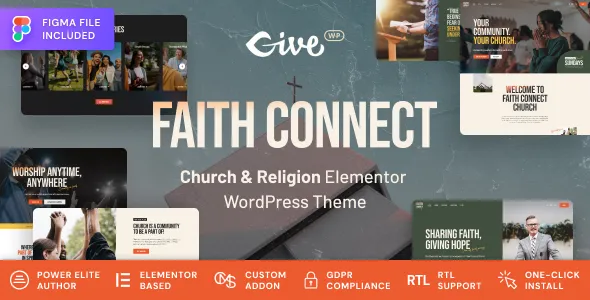
Faith Connect – Religion & Church WordPress Theme
Faith Connect – Religion & Church WordPress Theme is a website design solution for churches, religious organizations, ministries, faith communities, spiritual centers, and nonprofit groups looking to establish a welcoming and informative online presence with WordPress. Designed for religion-focused websites, Faith Connect can serve as a foundation for sharing organizational information, communicating upcoming activities, publishing inspirational messages, introducing community programs, and helping visitors connect with their local faith community. With suitable customization, organizations can create a website that reflects their values, communicates their mission, and makes essential information accessible to members and newcomers.
A church website serves as more than an online information page. It can help people discover service times, learn about community activities, read announcements, explore educational resources, and find ways to participate in volunteer initiatives. It can also provide a central destination for sharing updates and communicating with people who may not be able to attend in person. Faith Connect can be considered for organizations that want to bring these different forms of communication together in a structured digital environment.
WordPress provides a flexible content management system for maintaining pages, publishing articles, managing images, and organizing website information. A suitable religious website theme can help present this content in a consistent and approachable style. The exact layouts, customization controls, and integrations available with Faith Connect depend on its current version and documentation. Before installation, review the product demo and compatibility requirements to determine whether the theme meets your organization’s needs.
What Is Faith Connect Religion & Church WordPress Theme?
Faith Connect is a religion and church-oriented WordPress theme intended for organizations that need a professional website to communicate their mission, share information, and support community engagement. It can be evaluated for churches, ministries, religious institutions, spiritual organizations, community outreach programs, and faith-based nonprofit groups.
Religious organizations often need to communicate several types of information through one website. Visitors may want to learn about the organization, understand its beliefs and activities, check service schedules, find contact information, or discover opportunities to participate in community programs.
A well-organized website helps make this information easier to find. An organization can introduce its history and mission, publish announcements, present leadership information, share educational resources, and provide details about community initiatives.
Faith Connect can be considered as a starting point for organizing these elements into a consistent online experience. Its actual templates, page layouts, and available customization options should be verified through the current product documentation.
WordPress allows authorized administrators to update content as schedules, events, and organizational information change. This can be especially useful for churches and community organizations that regularly publish announcements or communicate upcoming activities.
Professional Design for Church and Religious Websites
A religious website should feel welcoming, clear, and consistent with the organization’s identity. Visitors should be able to locate essential information without navigating through confusing menus or crowded page sections.
Faith Connect can be evaluated for organizations seeking a website that presents religious activities and community information in a professional format. A thoughtfully arranged layout can introduce the organization, explain its mission, highlight activities, and direct visitors toward relevant pages.
The visual style should support the organization’s communication goals. Readable typography, suitable spacing, clear navigation, and relevant imagery can help create a comfortable browsing experience. Photographs of community gatherings, worship spaces, volunteer activities, or organizational events may provide useful context when used appropriately.
Different organizations may prefer different visual approaches. A large church may need a structured website with several ministries and activity categories, while a smaller community group may require a simpler design focused on service times, contact details, and announcements.
The final appearance depends on the theme’s available design options and the content selected by the organization. Replacing placeholder text and unrelated imagery with accurate, meaningful content helps create a more authentic online presence.
Responsive Design for Mobile and Desktop Devices
People may visit a church website from a smartphone while traveling, use a tablet to read an article, or access the site from a desktop computer at home. A responsive website helps keep important information accessible across different screen sizes.
When evaluating Faith Connect, test its current version on desktop computers, tablets, and smartphones to confirm how its layouts adapt. Responsive behavior should be checked across the homepage and important internal pages rather than assumed from the theme category alone.
For mobile visitors, navigation should be straightforward, text should remain readable, and buttons should be easy to select. Service schedules, event details, contact information, and announcements should fit comfortably within the available screen space.
Religious websites may include image galleries, embedded videos, event information, educational articles, and community program descriptions. Each section should be reviewed to ensure that it remains usable on smaller screens.
Custom styling, additional plugins, and embedded media can affect the mobile experience. Testing after customization helps identify layout issues and ensures that important information remains accessible.
A consistent responsive experience makes it easier for members, visitors, and community participants to find the information they need on their preferred devices.
Build an Informative Church Homepage
The homepage is often the first point of contact between a religious organization and its online visitors. It should introduce the organization clearly and help people find essential information quickly.
A Faith Connect website can be planned around an introductory section, a mission statement, service information, upcoming activities, ministry summaries, community announcements, educational resources, and contact details, depending on the available layouts and the organization’s priorities.
The opening section should explain the organization’s identity and provide a welcoming introduction. Supporting text can describe its purpose, while clear navigation helps visitors explore the rest of the website.
Service information is particularly important for organizations that welcome visitors to regular gatherings. Relevant details may include days, times, locations, and any practical instructions for first-time attendees.
Upcoming activities can be highlighted to encourage participation, while ministry or community program summaries can introduce opportunities for involvement. Recent articles or messages may provide a convenient way to access educational and inspirational content.
Not every organization needs every section. A smaller church may benefit from a concise homepage, while a larger institution may require more extensive navigation and dedicated pages for different programs.
The most effective homepage structure makes the organization’s purpose clear and helps visitors take a relevant next step.
Share Church Services and Gathering Information
Church websites often serve as a practical source of information for regular gatherings and worship services. Visitors may need to confirm the schedule, locate the venue, or understand what to expect before attending.
Faith Connect can be considered for a website that presents service information through dedicated pages or homepage sections, depending on the theme’s available layouts and customization options.
Useful information may include service days, start times, location details, directions, accessibility information, and contact details for questions. If an organization holds several gatherings or activities, separate sections can help visitors distinguish between them.
Schedules should be reviewed regularly to ensure that published information remains accurate. Temporary changes, special services, holiday gatherings, and community events should be communicated clearly.
Organizations may also provide information for first-time visitors, such as parking arrangements, family facilities, dress expectations where relevant, or guidance about participation. The wording should reflect the organization’s own practices and traditions.
Clear service information helps reduce uncertainty and allows visitors to plan their attendance more confidently.
Ministry Programs and Community Activities
Many religious organizations support different ministries, educational programs, volunteer groups, and community activities. A website can introduce these opportunities and help people understand how to participate.
Faith Connect may be suitable for presenting information about ministry programs, subject to its available templates and customization options. Each program can have a dedicated section explaining its purpose, intended participants, schedule, and contact details.
For example, an organization might publish information about youth activities, children’s programs, family support, study groups, community outreach, volunteer opportunities, or educational sessions. The actual categories should reflect the organization’s activities rather than a generic list of assumed services.
Each program page should provide practical information and explain how interested people can learn more. If registration or applications are required, the organization should identify the appropriate process and provide a working contact or form.
Program information should be kept current, particularly when schedules or participation requirements change. Clear descriptions help community members identify opportunities that match their interests and availability.
A well-organized ministry section can make the website more useful for both established members and people discovering the organization for the first time.
Religious Articles, Sermons, and Educational Resources
Publishing religious and educational content can help organizations share their teachings, provide learning resources, and keep community members connected with their activities. WordPress offers tools for publishing articles and organizing content into categories.
Faith Connect can be evaluated for websites that want to combine organizational information with articles, messages, study materials, or other educational resources. The exact presentation of these materials depends on the theme’s available templates and configuration.
Organizations may publish written messages, reflections, study notes, newsletters, announcements, or educational articles relevant to their community. Content should be reviewed for accuracy and consistency with the organization’s own teachings and editorial approach.
A clear content structure helps readers find resources by topic, date, speaker, or category where appropriate. Descriptive titles and readable formatting make longer articles easier to follow on both desktop and mobile devices.
If the organization shares recorded messages or educational videos, compatible embedding tools may be used when suitable. Media performance and accessibility should be tested before publication.
Regularly reviewing published material helps keep the resource library organized and ensures that outdated schedules or announcements do not remain prominent.
Events and Special Religious Occasions
Religious organizations may hold regular gatherings, celebrations, educational sessions, fundraising activities, volunteer events, and community outreach programs. A website can provide a central place for communicating these activities.
Faith Connect can be configured to present event information through supported page layouts or compatible WordPress tools. A dedicated event management system may be required if the organization needs advanced calendar, booking, or registration functionality.
Useful event details include the title, date, time, venue, description, intended audience, and relevant contact information. For larger events, organizations may also provide practical guidance about accessibility, transportation, or participation requirements.
Special occasions may require separate pages that explain the schedule and provide information for visitors. Keeping these pages clear and accurate helps attendees understand what is planned.
If online registration is required, verify the availability and compatibility of a suitable form or event plugin. A theme alone should not be assumed to include ticketing, payment processing, attendance management, or automated reminders.
After an event has finished, update or archive its information so visitors do not mistake an old announcement for a current activity.
Community Outreach and Volunteer Opportunities
Community outreach is an important activity for many faith-based organizations. A website can explain these initiatives, introduce the people they support, and provide practical information for volunteers or donors.
Faith Connect may be considered for organizations that want to communicate outreach activities and community programs. Depending on the website’s requirements, dedicated pages can explain food assistance, educational support, community visits, donation drives, local partnerships, or other initiatives.
Each page should explain the program’s purpose, the community it serves, and how interested people can participate. If volunteers need to meet particular requirements or attend an orientation, those details should be communicated clearly.
Organizations can also share updates about completed activities and ongoing needs. Photographs, project summaries, and outcome information can help explain the work being carried out, provided that privacy and consent considerations are respected.
When publishing stories involving children, vulnerable individuals, or people receiving assistance, obtain appropriate permission and avoid disclosing sensitive personal information.
A clear outreach section helps visitors understand how the organization contributes to its community and how they may become involved.
Customization and Religious Brand Identity
A website should reflect the identity, values, and communication style of the organization it represents. Consistent visual choices help create a recognizable online experience.
When using Faith Connect, review the theme’s available customization options to determine how colors, typography, page layouts, images, and other design elements can be adjusted. The exact controls depend on the current theme version and any compatible editing tools.
Some organizations may prefer a traditional visual style with restrained colors and familiar imagery. Others may choose a contemporary design that emphasizes community photography, clear typography, and simple navigation.
Consistency is important across the homepage, ministry pages, articles, event information, and contact sections. A defined visual style can help the website feel unified as new content is added.
Use original logos, relevant photographs, and imagery that accurately represents the organization. Avoid leaving placeholder content or using visuals that could confuse visitors about the organization’s identity or activities.
Before making extensive design changes, review the documentation and keep a backup of the website. Testing major changes in a staging environment can reduce the risk of disrupting the live site.
SEO-Friendly Structure for Church Websites
Search engine optimization helps people discover a religious organization through relevant searches. A suitable WordPress theme can provide a foundation, but search visibility also depends on useful content, technical configuration, competition, and ongoing maintenance.
A Faith Connect website should use descriptive page titles, clear headings, relevant internal links, and original content. Important information, such as service schedules, location details, ministry programs, and community activities, should be presented in a clear and accessible format.
Where relevant, organizations can create separate pages for their main programs and services rather than placing all information on a single page. This helps visitors locate specific details and gives each page a clear purpose.
Local search visibility may be particularly important for organizations that serve a defined geographic community. Accurate contact information, consistent organization details, and clear location information can help visitors understand where activities take place.
Image optimization is also useful. Use suitable image dimensions, compress large files, and provide meaningful alternative text for informative images.
Compatible SEO plugins may help manage metadata, XML sitemaps, redirects, and other supported functions. Review broken links, indexing issues, and outdated content periodically.
No theme can guarantee a particular search ranking. Useful information, accurate details, and a well-maintained website provide a stronger foundation for discoverability.
Contact Forms and Community Communication
A church website should make it easy for visitors and members to contact the organization. People may have questions about services, request information about a program, inquire about volunteer opportunities, or need assistance locating the right person.
Faith Connect can be configured for contact opportunities using supported page layouts and compatible form plugins. The actual form functionality should be verified rather than assumed to be included with the theme.
A general contact form may request a name, email address, subject, and message. Program-specific forms can collect additional information when necessary, but they should avoid requesting unnecessary personal details.
Provide clear labels, understandable validation messages, and an appropriate confirmation after submission where supported. Make sure the organization has a process for reviewing and responding to incoming messages.
Alternative contact options, such as an official email address or telephone number, can be useful for visitors who prefer not to use a form.
Before launch, test form submissions, email delivery, spam protection, and mobile usability. If the website collects personal information, explain how it will be used and handled in accordance with applicable privacy requirements.
Integrations and WordPress Plugin Compatibility
A religious organization may need additional tools for contact forms, event calendars, newsletters, online donations, media embedding, analytics, security, and backups. The appropriate combination depends on the organization’s activities and the features already available in the theme.
Before installing plugins alongside Faith Connect, review compatibility with the current WordPress version and the theme’s documented requirements. Check the plugin’s support information, update history, and setup instructions.
A contact form plugin can help manage inquiries, while an event plugin may provide calendar or registration features. A newsletter tool may support communication with subscribers, and donation functionality may require a specialized plugin or external service.
Do not assume that a WordPress theme automatically includes online giving, recurring donations, member accounts, livestreaming, event registration, or payment processing. Verify the required functionality and select a suitable integration if needed.
Avoid installing multiple plugins that perform the same task without a clear reason. Overlapping tools can create conflicts and increase maintenance requirements.
After adding or updating a plugin, test the affected pages, forms, navigation, and responsive layouts. A focused and compatible setup is generally easier to maintain.
Website Speed and Performance Optimization
A church website should load efficiently so visitors can access schedules, announcements, articles, and contact information without unnecessary delays.
The performance of a Faith Connect website depends on the theme implementation, hosting environment, images, scripts, plugins, embedded media, and other configuration choices. Test the completed website rather than assuming that its theme determines performance by itself.
Start by optimizing images and using suitable dimensions for banners, galleries, and community photographs. Large files should be compressed while preserving sufficient visual quality.
Review unnecessary animations, external widgets, and embedded media that may affect page loading. Suitable hosting, caching, and other optimization tools may help depending on the website’s configuration.
Test the homepage, event pages, articles, galleries, and contact forms individually. Pages containing video or large images may behave differently from simpler text-based pages.
Monitor performance after major content changes or plugin updates. Regular checks can help identify oversized assets, inefficient integrations, and technical issues before they become more disruptive.
A well-maintained website provides a smoother experience for members, visitors, and community participants.
Accessibility and User-Friendly Navigation
An effective church website should make information easy to find and understand for people with different needs and levels of digital experience. Clear navigation, readable typography, sufficient contrast, and accessible forms can improve usability.
When configuring Faith Connect, use logical heading structures, descriptive link text, meaningful alternative text for informative images, and clear form labels. Avoid relying on color alone to communicate important information.
Navigation should prioritize commonly requested details, such as service times, location, events, programs, articles, and contact information. Menus should remain understandable on both desktop and mobile devices.
If the website includes videos, consider captions or other accessible alternatives where appropriate. Forms should provide clear instructions and understandable error messages, while interactive elements should be easy to identify.
Accessibility depends on the theme, selected components, and how the website is configured. Automated tools can identify some issues, but keyboard testing and practical usability reviews are also valuable.
Clear navigation and accessible content help more visitors use the website comfortably and locate relevant information.
Security and Ongoing Website Maintenance
Regular maintenance helps keep a WordPress website reliable, secure, and up to date. Religious organizations may rely on their websites for important announcements, schedules, educational content, and community communication, making dependable access valuable.
Use reputable hosting, enable HTTPS, create strong administrator passwords, and assign user permissions according to each person’s responsibilities. Update WordPress, the theme, and compatible plugins carefully.
Create backups before significant updates and confirm that the restoration process works. Store backup copies securely and establish a routine for checking whether they are current.
Install themes and plugins from trustworthy sources and review compatibility before use. Remove unused components when appropriate, and avoid granting administrative access to people who do not need it.
Maintenance should also include content reviews. Service times, event details, contact information, leadership profiles, and program descriptions should remain accurate.
A planned maintenance routine helps reduce avoidable technical issues and ensures that visitors receive reliable information.
Who Should Use Faith Connect WordPress Theme?
Faith Connect may be suitable for a range of religious and community-focused organizations seeking a WordPress website.
Churches and congregations: Share service times, organizational information, announcements, and community activities.
Religious ministries: Present programs, educational resources, volunteer opportunities, and contact information.
Faith-based nonprofits: Explain their mission, highlight community initiatives, and provide information about participation.
Spiritual centers: Communicate schedules, programs, and practical information for visitors.
Religious educational organizations: Publish articles, learning resources, and details about educational activities.
Community outreach groups: Introduce initiatives, explain volunteer opportunities, and share relevant updates.
Religious leaders and organizations: Publish messages, announcements, biographies, and other authorized information.
Local faith communities: Create a central online destination for members, visitors, and people seeking information about the organization.
The best choice depends on the website’s required structure and functionality. Review the current theme demo, documentation, compatibility information, and available customization options before selecting Faith Connect for a live project.
Tips for Building a Successful Website with Faith Connect
A theme provides a starting point, but the website’s usefulness depends on the accuracy of its information, the clarity of its structure, and how well it serves the community.
Begin by identifying the most important visitor needs. These may include finding service times, learning about the organization, discovering upcoming activities, accessing educational resources, or contacting a staff member.
Prepare the essential content before making extensive design decisions. This may include the organization’s introduction, mission, service schedule, program descriptions, leadership information, location, and contact details.
Choose a consistent visual identity that reflects the organization’s character. Use readable typography, relevant images, clear navigation, and layouts that make important information easy to locate.
Keep event information and service schedules current. Remove outdated announcements when appropriate and review contact details regularly.
Before launch, test the website on desktop and mobile devices. Check links, forms, accessibility, loading performance, spelling, and the accuracy of published information.
Finally, establish a maintenance routine that includes backups, software updates, security checks, and periodic content reviews. These practices help keep the website dependable as the organization continues its work.
Final Thoughts on Faith Connect Religion & Church WordPress Theme
Faith Connect – Religion & Church WordPress Theme is an option to evaluate for churches, ministries, religious organizations, faith-based nonprofits, and community groups looking to establish a professional online presence with WordPress. Its religion-focused positioning makes it relevant to websites that need to communicate organizational information, share activities, publish resources, and help visitors connect with a community.
With suitable customization, an organization can create a website that introduces its mission, presents service information, highlights programs, publishes educational content, and provides convenient contact opportunities. Clear navigation and accurate information can help members and newcomers find what they need.
The exact capabilities depend on the current theme version, available layouts, documented features, WordPress compatibility, and any additional plugins or integrations used. Reviewing the current demo and documentation before installation helps confirm whether the theme meets the organization’s requirements.
Long-term usefulness also depends on content accuracy, accessibility, search optimization, website performance, security, and regular maintenance. A theme alone cannot guarantee increased attendance, donations, or community participation, but it can provide a useful foundation for clear and consistent digital communication.
For organizations seeking a dedicated website design starting point for religious and community activities, Faith Connect can be considered as part of a broader strategy focused on accessibility, useful information, consistent presentation, and meaningful community engagement.