My Account
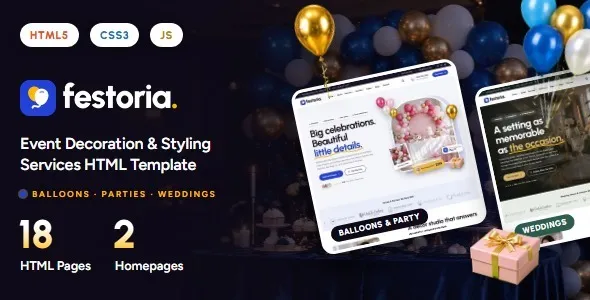
Festoria – Event Decoration & Styling Services HTML Template
Festoria – Event Decoration & Styling Services HTML Template is a website template designed for event decorators, wedding stylists, party planners, event design studios, and creative businesses specializing in memorable celebrations. It provides a potential foundation for showcasing decoration services, presenting event portfolios, introducing creative concepts, and helping customers connect with professionals who can transform venues into visually appealing experiences. With suitable customization, Festoria can support businesses that want to establish a professional online presence and communicate their creativity, services, and event styling expertise through an organized website.
Event decoration plays an important role in creating the atmosphere of weddings, birthday parties, engagement ceremonies, corporate functions, anniversaries, private celebrations, and other special occasions. Customers often look for professionals who can understand their vision, coordinate decorative details, and create an environment that suits the event’s theme and purpose. A well-designed website helps event styling businesses communicate their approach, display previous projects, explain their services, and provide a convenient way for prospective clients to discuss their requirements.
As an HTML template, Festoria can serve as a starting point for building a website using standard web technologies. Developers can customize the structure, styling, images, content, and interactive elements according to a business’s branding and operational needs. The actual features, included layouts, dependencies, and customization options depend on the specific template package. Before implementation, review the current demo and documentation to confirm its available components, technical requirements, and compatibility with the intended development environment.
What Is Festoria Event Decoration & Styling Services HTML Template?
Festoria is a specialized website template intended for businesses that provide event decoration, creative styling, and celebration design services. It can be considered by professionals who want to introduce their business, showcase completed events, explain available packages, and encourage visitors to make inquiries.
Unlike a generic business website, an event decoration website benefits from visual storytelling. Potential customers want to see examples of previous work, explore different decoration styles, understand what services are available, and determine whether a decorator’s creative approach matches their preferences.
Festoria can be adapted to organize this information into relevant website sections. Depending on the layouts available in the template, a website might include a homepage, about section, decoration services, event portfolio, packages, testimonials, frequently asked questions, blog, and contact page.
A wedding decorator may focus on floral arrangements, ceremony backdrops, reception styling, and personalized decorative details. A party decoration company may emphasize birthday setups, balloon installations, themed celebrations, and custom party designs. A corporate event stylist may prioritize professional stage decoration, branded environments, product launches, and business functions.
The final website should reflect the services the business genuinely provides. The precise layouts and functionality available should be confirmed from the current template documentation rather than assumed from its title alone.
Professional Design for Event Decoration Businesses
A professional website helps event styling businesses communicate creativity while making their services easy to understand. Visitors should be able to explore the company’s work, discover suitable services, and find a convenient way to discuss their upcoming event.
Festoria can be customized to establish a visual identity that reflects a decoration business’s style. Depending on the supported design options, developers may adjust colors, typography, image placement, page sections, spacing, and other visual elements to create a cohesive presentation.
An elegant wedding decorator may prefer soft colors, refined typography, and large photographs of ceremony and reception arrangements. A contemporary party styling business might choose brighter colors, playful imagery, and energetic layouts. A corporate event design studio may benefit from a more structured presentation that emphasizes project quality, organization, and professional experience.
Visual consistency is essential. Headings, buttons, images, background colors, and content spacing should follow a clear design system throughout the website. A consistent presentation helps visitors recognize the brand and understand the information without unnecessary distractions.
The design should also support usability. Navigation needs to be straightforward, service descriptions should be readable, and contact opportunities should be easy to locate. A visually attractive website is most effective when it helps customers make informed decisions.
Ideal for Wedding Decoration and Styling Services
Weddings often involve multiple decorative elements that need to work together to create a consistent atmosphere. Couples may want a specific theme, coordinated colors, personalized details, and decorations that suit their venue and celebration style.
Festoria can be considered for wedding decoration businesses that want to showcase their creative work and explain their services. A customized website may feature wedding ceremony styling, reception decoration, floral arrangements, entrance installations, table settings, stage backdrops, and other services that the business actually offers.
A wedding portfolio can display different styles, such as classic, contemporary, romantic, minimalist, traditional, or nature-inspired designs. Each project should be presented with high-quality images and, where appropriate, a short description of the client’s vision and the decorative approach used.
Dedicated service pages can explain what is included in each offering. Couples may want to know whether the business provides design consultation, decorative materials, setup, dismantling, venue coordination, or customized arrangements.
Clear information helps prospective clients understand the available options before arranging a consultation. It also provides an opportunity for the decorator to communicate their working process and explain which details need to be confirmed before a quotation can be prepared.
Birthday Party and Celebration Decoration
Birthday parties and private celebrations often involve customized themes, coordinated decorations, and creative details suited to the person or occasion being celebrated. A professional website can help decorators demonstrate their range of styles and attract customers looking for a personalized setup.
Festoria can be adapted for businesses specializing in birthday decoration, anniversary styling, baby showers, engagement celebrations, graduation parties, and other private events.
A birthday decoration page might feature themed backdrops, balloon arrangements, welcome displays, cake-table styling, decorative signage, and coordinated color schemes. The website can also present examples for different age groups and celebration preferences where those services are available.
For customers planning a themed party, photographs are particularly useful because they demonstrate how decorative elements work together. A project description can explain the theme, color palette, venue considerations, and special details included in the setup.
Decorators should describe their packages accurately. If certain props, flowers, furniture, lighting elements, or customized items are available only by request, the website should explain this clearly.
By presenting its work in an organized way, a party decoration business can help customers identify suitable styles and understand how to begin planning their event.
Corporate Event Decoration and Styling
Corporate events require a different approach from private celebrations. Businesses may need professional stage backgrounds, conference styling, branded installations, exhibition displays, product-launch environments, or decorations for award ceremonies and company celebrations.
Festoria can be customized for corporate event styling businesses that want to communicate their ability to create organized, visually consistent environments for professional occasions.
A corporate services section may describe conference decoration, stage design, product-launch styling, exhibition environments, company anniversaries, networking events, and award-night arrangements. Each service should reflect the company’s real capabilities and experience.
Corporate customers often need practical information about project coordination, venue requirements, timelines, installation arrangements, and customization options. Clear descriptions can help them understand the planning process and prepare relevant details for an inquiry.
A corporate portfolio should prioritize relevant examples. Photographs of completed stages, branded environments, conference spaces, or exhibition setups can help prospective clients assess the business’s experience.
Where project details are confidential, obtain the necessary permission before publishing client names, logos, photographs, or other identifying information.
A professional presentation can help corporate event stylists demonstrate their creative approach while communicating the practical considerations involved in delivering event decoration services.
Showcase Your Event Decoration Portfolio
A portfolio is one of the most important content areas for a creative event styling business. Customers often want to see completed work before deciding whether to contact a decorator, so a carefully organized portfolio can help demonstrate experience and creative range.
Festoria can be adapted to present selected projects using the image layouts and page structures available in the template. Each project might include photographs, the event type, the decoration theme, and a short description of the work performed.
A portfolio could be organized into categories such as weddings, birthday parties, corporate events, engagement ceremonies, baby showers, festive celebrations, and private functions. Categories should reflect the business’s actual services and help visitors locate examples relevant to their needs.
High-quality photography is particularly valuable. Images should show the decorative details clearly, including backdrops, table arrangements, floral installations, lighting, entrance displays, and the overall venue atmosphere.
When possible, present projects in a way that tells a story. Explain the client’s objectives, the chosen theme, and the decorative elements used to achieve the desired result. Avoid publishing exaggerated descriptions or claiming responsibility for work performed by other vendors.
A smaller collection of well-presented projects can be more effective than a large gallery of unrelated images. Select examples that demonstrate the business’s strongest work and the types of events it wants to attract.
Event Decoration Services and Packages
Customers need to understand what an event decoration business offers and how its services can fit their requirements. A dedicated services section helps organize these offerings and makes the website easier to navigate.
Festoria can provide a starting point for presenting different decoration services, depending on the available layouts and customization options. A business might create separate sections for wedding styling, birthday decoration, engagement setups, corporate events, floral arrangements, balloon installations, and customized event concepts.
Each service description should explain what the offering includes, which occasions it suits, and what customers should consider before requesting a quotation.
Packages may be organized by event type, decoration scope, venue requirements, or level of customization. If the business publishes prices, they should be accurate and explain what is included. If pricing varies according to the venue, guest count, materials, design complexity, and event date, provide a clear way for customers to request an estimate.
Avoid listing services that the business cannot reliably deliver. Customers benefit from understanding the actual scope of work, including any exclusions, setup requirements, and additional charges that may apply.
Clear service information can reduce confusion and make the initial discussion more productive for both the decorator and the customer.
Customization and Creative Brand Identity
Every event decoration business has a distinctive creative style. Some specialize in luxurious weddings, while others focus on modern minimalism, colorful birthday themes, floral styling, or corporate event environments. A website should communicate that identity consistently.
Festoria can be customized according to the styling controls and source structure included in the template. Depending on its implementation, this may involve changing the color palette, typography, page layouts, image treatments, navigation, icons, and content sections.
Choose visual elements that support the brand’s positioning. A premium wedding stylist may prefer restrained colors and elegant typography, while a children’s party decorator may use brighter colors and more playful graphics. A corporate event business may benefit from a clean layout that gives greater prominence to project photographs and service information.
Consistency should extend across the homepage, portfolio, service pages, and contact section. Repeated visual patterns help visitors understand the website and create a more recognizable brand experience.
Use authentic business photographs where possible. If professional images are used from external sources, confirm that the licensing terms allow the intended commercial use. Replace placeholder text and imagery before publishing the site.
Organized customization also makes future updates easier. Developers should identify which styles and components control the relevant sections and keep changes maintainable as the website grows.
Homepage Structure and Content Organization
The homepage introduces the event decoration business and guides visitors toward relevant information. It should communicate the company’s services clearly while giving potential customers a reason to explore the portfolio or make contact.
A Festoria-based website can be organized around sections supported by the template’s available layouts. These may include an introductory banner, a business overview, featured services, selected event projects, customer testimonials, process information, frequently asked questions, and a contact call to action.
The opening section should explain the business’s main offering and communicate its style. Supporting text can describe the types of events served and the value customers can expect from working with the team.
Service summaries provide a quick overview of the available offerings. Portfolio highlights demonstrate the business’s work, while an about section can introduce its experience, creative approach, and working philosophy.
Testimonials can help communicate customer experiences when they are genuine and published with appropriate permission. Avoid invented reviews or unsupported claims about customer satisfaction.
Not every homepage needs every possible section. A small decorator may benefit from a concise presentation focused on services and portfolio examples, while a larger event styling company may need more detailed navigation and separate service categories.
Every section should serve a clear purpose, such as explaining an offering, demonstrating expertise, answering a common question, or helping visitors take the next step.
Responsive Design for Desktop, Tablet, and Mobile
Customers may discover an event decorator through a desktop search, explore photographs on a tablet, or browse services from a smartphone while planning a celebration. A responsive website helps maintain usability across these different devices.
Festoria’s actual responsive behavior should be confirmed through its current demo and documentation. Developers should test the provided layouts at different screen sizes and make any necessary adjustments during customization.
Important considerations include readable headings, appropriately scaled photographs, easy-to-use navigation, well-spaced buttons, and contact forms that work on smaller screens. Images should not overflow their containers, and text should remain readable without awkward horizontal scrolling.
Mobile visitors should be able to browse portfolio categories, open service pages, and locate contact details without difficulty. Buttons and form fields should be comfortable to select using a touchscreen.
Testing should cover the complete website rather than just the homepage. Image galleries, project details, service pages, and inquiry forms may behave differently on smaller screens.
Custom CSS, JavaScript effects, embedded media, and third-party components can affect the final layout. Test the website after significant changes to ensure that the experience remains consistent.
SEO-Friendly Structure for Event Decoration Websites
Search engine optimization can help potential customers discover an event decoration business when searching for relevant services. An HTML template provides only part of the foundation; search visibility also depends on content quality, technical implementation, competition, and local relevance.
When customizing Festoria, create descriptive page titles, clear headings, useful URLs, and original content for the business’s main services. Avoid using identical descriptions across every page.
An event decorator might create separate pages for wedding decoration, birthday party styling, corporate event decoration, floral arrangements, and balloon installations. Location-specific pages may also be useful when the business serves defined areas, provided that each page contains accurate and meaningful local information.
Write content that answers customers’ practical questions. Explain the services offered, the planning process, the types of events supported, and how to request a quotation. Use relevant search terms naturally instead of repeating keywords excessively.
Images should be optimized for loading speed and include meaningful alternative text where appropriate. Internal links can connect service pages, portfolio projects, and related articles to help visitors explore the website.
Depending on the implementation, developers may also configure XML sitemaps, canonical URLs, structured data, and other technical SEO elements. These features may require additional configuration or compatible tools.
No template can guarantee a particular ranking position or amount of website traffic. Sustainable SEO requires relevant content, a sound technical setup, useful information, and regular maintenance.
Image Optimization and Website Performance
Event decoration websites rely heavily on photography. Large images can demonstrate creative work effectively, but poorly optimized files may slow down pages and make the browsing experience less convenient.
The performance of a Festoria website depends on its code, hosting environment, image assets, fonts, scripts, and any third-party integrations. Performance should therefore be tested in the actual deployment environment.
Use appropriately sized images for hero banners, portfolio galleries, service cards, and project pages. Compress photographs while preserving enough detail to display decorative arrangements clearly.
Where suitable, modern image formats and responsive image techniques can help deliver appropriate file sizes for different devices. Lazy loading may also be useful for images that appear farther down a long page, depending on the implementation.
Review CSS and JavaScript resources for unnecessary dependencies. Avoid adding animations, sliders, or external widgets unless they contribute meaningfully to the user experience.
Test the homepage, service pages, and image-heavy portfolio sections using performance tools. Check for oversized assets, slow requests, layout shifts, and other issues that could affect usability.
Regularly review performance after adding new galleries or integrating additional features. A visually rich website should remain practical to browse on mobile devices and slower connections.
User-Friendly Navigation and Accessibility
A well-organized website helps visitors find relevant information without unnecessary effort. Clear navigation is especially important for event decorators because customers may want to compare services, explore project examples, or understand the inquiry process.
When adapting Festoria, organize navigation around the pages customers need most. Depending on the business, this might include Home, About, Services, Portfolio, Packages, Blog, and Contact.
Use descriptive menu labels, a logical heading hierarchy, readable text, and clear link names. Interactive elements should have visible focus indicators and remain usable with appropriate input methods.
Forms should include clear field labels and understandable instructions. If a field is required, communicate that requirement. Error messages should explain what needs to be corrected rather than simply indicating that a submission failed.
Use sufficient color contrast and avoid relying on color alone to communicate important information. Provide meaningful alternative text for informative photographs, while decorative images should not introduce unnecessary distractions.
Accessibility depends on the complete implementation, including content, styling, and interactive behavior. Automated checks can identify some issues, but manual testing is also important.
A website that prioritizes accessibility and clear navigation can provide a more welcoming experience for a broader range of visitors.
Contact Forms and Event Booking Inquiries
A contact form provides a convenient way for potential customers to discuss their event requirements. For decoration businesses, an inquiry may need to include information about the event date, venue, occasion, expected guest count, and preferred styling.
Festoria can be customized to provide contact options that match the business’s workflow, depending on the components included in the template. These may include a general contact form, an event inquiry form, an email link, or a telephone contact option.
A useful inquiry form should request enough information to support an initial discussion without becoming unnecessarily complicated. Typical fields may include the customer’s name, email address, event type, preferred date, venue location, and a brief description of the desired decoration.
Additional fields can be introduced when they genuinely help the business prepare an estimate. For example, customers may be invited to share a preferred theme, color palette, reference images, or budget range.
It is important to distinguish an inquiry from a confirmed booking. Submitting a form does not necessarily mean that a date has been reserved or that the business has accepted the project. The website should explain the next step clearly.
Test form validation, submission handling, confirmation messages, spam protection, and email delivery before launch. If personal information is collected, handle it according to applicable privacy requirements.
Customer Testimonials and Social Proof
Potential customers often want reassurance that an event decorator can deliver work consistent with their expectations. Genuine testimonials and carefully presented project examples can help communicate previous customer experiences.
Festoria can be customized to present testimonials if the template includes a suitable component or if an appropriate section is added. Feedback may describe the customer’s experience with communication, planning, styling, setup, or the overall service.
Only publish authentic testimonials and obtain the necessary permission to use customer names, photographs, or other identifying information. Do not create fictional reviews or imply that a customer endorsed a service when no such endorsement exists.
Portfolio case studies can provide another form of evidence. Explain the event type, the styling objectives, and the decorative work completed. Where appropriate, describe how the team handled venue limitations or coordinated different decorative elements.
Social media links can also help visitors discover additional examples of the business’s work. Ensure that linked profiles are active and represent the correct business.
Trust is built through accurate information and consistent service, not simply through promotional statements. Honest testimonials and relevant project examples help customers form a clearer understanding of what the business offers.
Content Marketing for Event Styling Businesses
A blog or resource section can help event decorators share useful ideas and answer common questions from customers. It can also provide additional opportunities to explain services and connect related content with portfolio projects.
Depending on the page structures available in Festoria, the website may be extended with articles about wedding decoration trends, birthday party themes, seasonal styling ideas, floral arrangements, venue decoration, and event planning considerations.
Content should address genuine customer needs. A wedding decoration guide might explain how to choose a color palette, while a birthday party article could discuss coordinating a backdrop, cake table, and balloon display. Corporate event content may cover stage styling, branded environments, and practical venue considerations.
Photographs can make articles more informative, provided that the business has the necessary rights to use them. Internal links can direct readers from educational content to relevant services and project examples.
Avoid publishing articles that simply repeat keywords without offering meaningful information. Clear explanations, original examples, and useful recommendations are more valuable to readers.
A manageable publishing schedule is generally more sustainable than producing large quantities of shallow content. Review older articles periodically to keep recommendations and examples accurate.
Integrations and Additional Website Functionality
An event decoration website may require additional tools to support communication, marketing, and day-to-day business operations. The appropriate integrations depend on the website’s goals and the functionality already included in the template.
Festoria can be evaluated as a front-end foundation for features such as contact forms, analytics tools, email marketing services, social media links, maps, or other external integrations. Compatibility and implementation requirements should be verified before development begins.
A contact form may help collect customer inquiries, while analytics tools can provide information about how visitors navigate the website. Maps can help customers identify the business’s location or understand its service area, when relevant.
Online scheduling, deposits, invoicing, customer accounts, and event management generally require additional systems or development unless they are explicitly included in the package. A static HTML template should not automatically be treated as a complete booking or business management platform.
Every integration should serve a clear purpose. Unnecessary scripts can increase loading time and maintenance work, while external services may introduce privacy or security considerations.
After adding an integration, test it across desktop and mobile devices. Check that forms work, links open the correct destinations, and embedded components do not interfere with the page layout.
Security and Ongoing Website Maintenance
Regular maintenance helps keep an event decoration website reliable and professional. Even a well-designed template can develop problems if its code, dependencies, content, and external integrations are not reviewed.
Use reputable hosting and enable HTTPS. Keep relevant software and dependencies updated according to their documentation, and remove unused files or components when appropriate.
If the website includes server-side processing, contact forms, a database, or third-party services, review the security requirements of those components. Validate submitted data and avoid exposing sensitive credentials in public-facing code.
Back up important website files and any associated data where applicable. Test the recovery process so that the business has a practical way to restore the website after a technical problem or accidental change.
Content maintenance is equally important. Check service descriptions, contact details, portfolio images, testimonials, and external links periodically. Outdated information may confuse customers or create expectations the business can no longer meet.
After making substantial design or code changes, test the main pages, navigation, forms, and responsive layouts. A consistent maintenance routine helps preserve the website’s quality as the business grows.
Who Should Use Festoria Event Decoration HTML Template?
Festoria may be suitable for a range of creative businesses that provide event decoration and styling services.
Wedding decorators: Professionals can showcase ceremony styling, reception decoration, floral designs, and personalized wedding concepts.
Party decoration businesses: Companies can present birthday setups, themed celebrations, engagement parties, and other private-event styling services.
Event planners: Businesses that coordinate event concepts and decorative arrangements can introduce their services and display completed projects.
Corporate event stylists: Creative teams can present conference decoration, stage design, product launches, exhibitions, and company celebrations.
Floral designers: Florists offering event arrangements can highlight floral installations, table styling, ceremony designs, and related services.
Balloon decoration specialists: Businesses can showcase balloon arches, themed backdrops, entrance displays, and other decorative installations.
Event design studios: Creative agencies can use the website as a starting point for presenting their approach, project portfolio, and service categories.
Freelance event stylists: Independent professionals can introduce their experience, preferred styling approach, selected projects, and contact information.
Before selecting the template, review its available layouts, included files, licensing terms, technical requirements, and customization options. Choose a setup that matches the business’s needs and the development team’s capabilities.
Tips for Building a Successful Website with Festoria
Begin by identifying the main purpose of the website. Decide whether the business wants to generate wedding inquiries, promote birthday decoration services, attract corporate clients, showcase a portfolio, or support several related services.
Define the target audience and prepare content that answers its questions. Customers may want to understand the available services, the planning process, the types of events supported, and how to request a quotation.
Select strong project photographs and organize them into relevant categories. Use images that accurately represent the business’s work and ensure that the required usage permissions are in place.
Create a consistent visual identity with a suitable color palette, typography, image style, and button treatment. Replace placeholder content with accurate business information before launch.
Keep navigation simple and make the main services, portfolio, and contact options easy to find. Every page should have a clear purpose and provide a useful next step for visitors.
Test the website across desktop, tablet, and mobile devices. Review image loading, navigation, contact forms, accessibility, spelling, and the accuracy of all published information.
Finally, establish a maintenance plan that includes backups, software updates where applicable, content reviews, and periodic performance testing. These practices help the website remain useful as the business develops.
Final Thoughts on Festoria – Event Decoration & Styling Services HTML Template
Festoria – Event Decoration & Styling Services HTML Template is a potential starting point for event decorators, wedding stylists, party decoration businesses, floral designers, and creative event agencies looking to establish a professional online presence.
Its intended focus makes it relevant to businesses that need to present decoration services, showcase completed events, communicate their creative identity, and encourage customers to make inquiries. With suitable customization, the website can be adapted to different event categories, brand styles, and customer requirements.
The final result depends on the actual template features, available layouts, quality of the content, and customization work. Reviewing the current demo, documentation, included assets, and licensing terms before implementation helps ensure that the template is appropriate for the project.
A successful event styling website also depends on responsive design, useful service information, accessible navigation, optimized photographs, search optimization, and regular maintenance. A template alone cannot guarantee bookings or search rankings, but it can provide a foundation for a well-organized business website.
For event decoration professionals seeking an HTML website starting point, Festoria can be evaluated as part of a broader digital strategy. By combining authentic portfolio photography, clear service descriptions, a consistent visual identity, and a straightforward inquiry process, businesses can create a website that helps potential customers explore their work and take the next step toward planning an event.