My Account
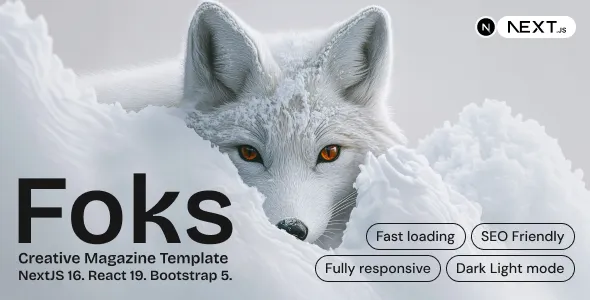
Foks – Lightweight Magazine Blog NextJS Template
Foks – Lightweight Magazine Blog NextJS Template is a modern website development solution designed for bloggers, online publishers, digital magazines, content creators, journalists, editorial teams, and media organizations looking to establish a professional online presence. Built with Next.js and React, Foks provides a frontend foundation for developing content-focused websites that prioritize readability, organized article presentation, and a convenient browsing experience.
In today’s digital publishing environment, blogs and online magazines require websites that present information clearly while maintaining an engaging visual identity. Readers expect to discover articles easily, explore different categories, browse featured stories, and access content across desktop and mobile devices. Foks offers a starting point for creating a lightweight publishing website that can be customized according to the needs of individual writers, editorial teams, and digital media businesses.
Its magazine and blog-oriented structure makes it suitable for a variety of content categories, including technology, business, lifestyle, fashion, travel, entertainment, education, health, and general news. The Next.js development foundation allows developers to customize the frontend, organize content presentation, and integrate additional functionality according to project requirements.
Whether you are creating a personal blog, an online magazine, a niche publication, or a professional editorial website, Foks can serve as a flexible starting point for developing a modern digital publishing platform. The final capabilities depend on the included package, supported framework versions, documentation, and additional development or integrations.
What Is Foks Lightweight Magazine Blog NextJS Template?
Foks is a lightweight magazine and blog website template designed for developers who want to build content-focused websites using Next.js.
Unlike conventional business websites that primarily present services or company information, magazine and blog websites focus on publishing articles, organizing editorial content, and helping readers discover relevant information.
Foks provides a frontend design foundation that can be customized for different publishing requirements. Developers can adapt the layout, typography, article presentation, navigation, and content sections to match the branding and editorial objectives of a publication.
Next.js is a React-based framework used for developing modern web applications. Depending on the version and configuration, it supports routing, different rendering approaches, and development features that can help organize content-oriented websites.
Foks can be considered by developers who want to work within the React and Next.js ecosystem while creating a website for blogging, digital publishing, or editorial content.
Before beginning development, review the official product documentation to confirm the included layouts, components, Next.js version, dependencies, installation requirements, and customization options.
Lightweight Design for Modern Publishing Websites
A lightweight website design can be beneficial for digital publications because readers frequently navigate between articles, categories, and featured content.
Foks is positioned as a lightweight magazine and blog template, making efficient presentation and content organization important considerations for its intended use.
A publishing website should provide a clear structure that helps readers understand what content is available and where to find it. The homepage can introduce featured stories, recent articles, popular topics, and editorial highlights, depending on the available components.
The overall design should prioritize readability and usability. Article titles should be easy to scan, descriptions should provide useful context, and navigation should help readers explore relevant content.
Developers should evaluate the actual performance of the completed website rather than relying exclusively on the lightweight positioning of the template. Performance depends on the implementation, images, scripts, dependencies, hosting environment, and content delivery configuration.
Next.js and React Development Foundation
One of the defining characteristics of Foks is its Next.js development foundation.
React is a JavaScript library that enables developers to build user interfaces using reusable components. This component-based approach can be particularly useful for magazine and blog websites where article cards, navigation elements, content sections, and page layouts are reused throughout the project.
Next.js provides a framework for developing React applications. Depending on the selected version and configuration, it supports different routing conventions, rendering methods, and optimization capabilities.
Foks can serve as a starting point for developers who want to customize a content-focused website within the Next.js ecosystem.
Developers should verify the supported Next.js and React versions, package dependencies, configuration requirements, and available scripts before integrating the template into an existing workflow.
The framework provides a development foundation, while content management, dynamic article publishing, database integration, and other application-specific capabilities depend on the included implementation and additional development work.
Magazine Homepage and Editorial Content
The homepage of an online magazine plays an important role in introducing readers to the publication’s content.
Foks can be customized to create an editorial homepage that presents featured stories, recent posts, selected categories, and other content highlights according to the available layouts.
A technology magazine may prioritize industry updates, software articles, and technology reviews. A lifestyle publication may focus on travel, wellness, fashion, and everyday topics. A business magazine may highlight entrepreneurship, market insights, and professional developments.
The homepage should maintain a clear content hierarchy. Featured articles can receive greater prominence, while supporting sections help readers explore additional stories.
A well-organized editorial homepage provides a useful overview of the publication and encourages visitors to discover relevant content.
Blog Article Layouts and Readability
Article presentation is one of the most important elements of a successful blog or magazine website.
Foks can be adapted to display editorial articles in a structured format that supports comfortable reading and organized content presentation.
A typical article may include a headline, introductory paragraph, featured image, author information, publication date, category, and the main body of the content, depending on the included components.
Readable typography, suitable line spacing, clear headings, and appropriate content width help improve the reading experience.
Long-form articles should be organized into meaningful sections. Descriptive headings help readers understand the subject and navigate the information more easily.
The template provides a frontend foundation, while features such as automated article publishing, content revisions, editorial scheduling, and dynamic author management depend on the underlying content management implementation.
Category-Based Content Organization
Categories help digital publications organize articles around specific subjects and make content easier to discover.
Foks can be customized to support category-oriented browsing, depending on the available page layouts and components.
A magazine website may organize its content into categories such as:
- Technology and innovation
- Business and entrepreneurship
- Lifestyle and wellness
- Fashion and beauty
- Travel and tourism
- Education and learning
- Entertainment and culture
- Sports and recreation
The category structure should reflect the publication’s actual editorial focus.
A niche blog may require only a few categories, while a broader digital magazine may need a more detailed content hierarchy.
Consistent category organization helps readers understand the publication and locate articles relevant to their interests.
Featured Stories and Popular Articles
Featured content can help readers discover important or particularly relevant articles when visiting a magazine website.
Foks can be customized to present selected stories through prominent content sections, depending on the included design components.
An editorial team may use featured articles to highlight major publications, seasonal content, important updates, or in-depth stories.
Popular articles can provide another way for readers to discover content that attracts attention. The method used to determine popularity depends on the actual implementation, such as editorial selection or integration with analytics and content management systems.
A static featured section is different from a dynamic recommendation system. Automated content ranking, personalized recommendations, and popularity tracking require additional implementation or integrations unless expressly included in the package.
Responsive Design for Multiple Devices
Responsive design is essential for modern blogs and online magazines because readers may access content through desktop computers, laptops, tablets, and smartphones.
Foks is intended for contemporary website development, and its responsive behavior should be evaluated according to the layouts and components included in the current package.
A responsive publishing website should maintain readable text, properly displayed images, and convenient navigation across different screen sizes.
Article pages require particular attention because they may contain long text sections, photographs, embedded media, and other content elements.
Developers should test the homepage, category pages, article layouts, and other important sections across different devices.
Custom CSS, third-party scripts, and additional components can affect responsive behavior. Testing after customization helps maintain a consistent reading experience.
Customization and Editorial Branding
Every publication has its own identity, audience, editorial approach, and visual style.
Foks can be customized to reflect a magazine’s branding through appropriate typography, colors, layouts, images, and content presentation, depending on the available options.
A business publication may prefer a structured and professional visual identity, while a fashion magazine may use more expressive typography and imagery.
A personal blog may focus on simplicity and readability, whereas an editorial publication may require a more extensive content hierarchy.
Consistent branding across article pages, category layouts, navigation, and homepage sections helps create a recognizable publishing experience.
Developers should review the template’s source code and documentation before making extensive modifications to ensure that the existing structure and dependencies are understood.
Author Profiles and Editorial Information
Author information can help readers understand who created an article and explore other content from the same contributor.
Foks can be evaluated for websites that require author-oriented presentation, depending on the available components.
An author profile may include a name, professional biography, photograph, areas of expertise, and links to published articles.
For a publication with multiple contributors, author pages can provide a consistent way to present editorial information.
However, dynamic author registration, profile management, permissions, and content assignment require a suitable content management system or additional backend functionality unless included in the package.
Accurate author information can help establish transparency and provide context for published content.
SEO-Friendly Structure for Blog and Magazine Websites
Search engine optimization can help digital publications improve the discoverability of their articles and reach readers searching for relevant information.
Foks can be customized with descriptive page titles, meaningful headings, organized categories, relevant content, and logical navigation.
Each article should focus on a clear subject and provide useful information for its intended audience.
A technology blog may publish tutorials, reviews, and educational articles. A business magazine may develop content around entrepreneurship, management, and industry developments. A lifestyle publication may focus on practical guides and informative resources.
Developers should also consider descriptive URLs, internal linking, image optimization, mobile usability, and page loading performance.
Depending on the selected Next.js version and implementation, additional SEO features may require configuration or integration. Metadata management, canonical URLs, structured data, and sitemap generation should be verified against the package and project requirements.
No template can guarantee search engine rankings. Original content, accurate information, technical quality, and ongoing optimization remain important factors.
Content Marketing and Digital Publishing
Content marketing is an important part of building and maintaining a successful blog or digital magazine.
Foks can be adapted for websites that publish educational articles, industry updates, editorial features, opinion pieces, reviews, and other informational content.
A publication may develop a content strategy based on its audience and subject matter. For example, a technology blog can publish tutorials and software-related articles, while a business magazine can share professional insights and industry analysis.
Useful articles should address genuine reader questions and provide accurate, relevant information.
Internal links can connect related articles, categories, and other resources, helping readers discover additional content.
A sustainable publishing strategy should prioritize quality, consistency, and relevance rather than producing large volumes of shallow content.
Search Functionality and Article Discovery
Search functionality can improve the usability of a blog or magazine website by helping readers locate specific articles and topics.
Foks can be evaluated for content discovery interfaces according to the components included in the package.
A complete search system may require additional implementation, including content indexing, query processing, search result presentation, and index updates when new articles are published.
Developers may implement a suitable search solution or integrate an external search service based on the size and complexity of the publication.
Search results should provide useful article titles and descriptions so readers can identify relevant content quickly.
For larger magazines with extensive archives, search accuracy, performance, and content organization should be considered during development.
Performance and Website Optimization
Website performance is an important consideration for digital publishing because readers often browse multiple articles in a single visit.
The actual performance of a Foks-based website depends on its implementation, Next.js configuration, images, scripts, dependencies, hosting environment, and content delivery setup.
Developers should optimize article images, review unnecessary scripts, and ensure that resources are loaded efficiently.
Next.js provides various development and rendering capabilities depending on its version and configuration. Developers should consult the appropriate documentation to determine which options are suitable for the project.
Performance testing should include article pages, category sections, homepage content, and other important browsing experiences.
Regular monitoring can help identify issues and support ongoing optimization as the publication grows.
Integration and Content Management
Blog and magazine websites often require additional tools for managing articles, authors, categories, images, and publishing workflows.
Foks provides a Next.js frontend development foundation, but the availability of content management functionality depends on the included package and implementation.
Depending on project requirements, developers may need to integrate:
- A content management system for editorial publishing
- A database for storing articles and related information
- Search services for indexing published content
- Author management and editorial permissions
- Newsletter subscription services
- Analytics tools for understanding reader engagement
- Social sharing and external content integrations
These integrations should be selected according to the publication’s needs and compatibility requirements.
Before adding third-party services, developers should review their documentation, dependencies, licensing, and maintenance requirements.
Testing the integrated website helps ensure that article publishing, content display, navigation, and related workflows operate correctly.
Accessibility and User-Friendly Navigation
A magazine website should provide an accessible and convenient browsing experience for a wide range of readers.
Foks can be customized with a logical navigation structure that organizes articles, categories, featured content, and other editorial resources.
Developers should use readable typography, descriptive navigation labels, appropriate color contrast, meaningful image alternative text, and clear heading structures.
Interactive elements should be easy to identify and operate, while article layouts should remain understandable across different devices.
Accessibility depends on the implementation and the way content and components are configured. Manual testing and usability reviews can help identify issues that automated checks may not detect.
A clear and accessible interface helps readers focus on the content and navigate the publication more comfortably.
Who Should Use Foks Lightweight Magazine Blog NextJS Template?
Foks can be considered by developers and organizations looking to create content-focused websites using React and Next.js.
Bloggers: Individuals can develop personal blogs that present articles, opinions, experiences, and educational content.
Digital magazines: Editorial teams can create websites that publish stories, features, and articles across different categories.
Content creators: Professionals can establish an online platform for sharing informative resources and specialized content.
Technology publications: Developers and technology organizations can create websites for tutorials, software articles, reviews, and industry information.
Business publishers: Organizations can develop content-focused websites that communicate professional insights and business-related information.
Lifestyle magazines: Publishers can organize articles about fashion, wellness, travel, culture, and everyday topics.
News and editorial platforms: Content publishers can customize the website for structured article presentation and editorial browsing.
Niche content websites: Businesses and individuals can create focused publications dedicated to particular industries, subjects, or audience interests.
The suitability of Foks depends on the required content structure, customization needs, and the functionality included in the package.
Final Thoughts on Foks Lightweight Magazine Blog NextJS Template
Foks – Lightweight Magazine Blog NextJS Template is a potential option for developers who want to build modern blogging and digital publishing websites using React and Next.js. Its magazine-oriented positioning makes it relevant to bloggers, editorial teams, online publishers, content creators, and organizations that need a structured platform for presenting articles and information.
The template can provide a frontend foundation for displaying featured stories, organizing content categories, presenting article layouts, and establishing a consistent editorial identity. Its Next.js development structure offers flexibility for customization and integration into modern frontend workflows.
The final capabilities depend on the included components, supported framework versions, documentation, and additional development work. Features such as dynamic content management, automated publishing, advanced search, author management, newsletter subscriptions, and analytics integrations should be verified before implementation.
With thoughtful customization, original content, responsive testing, performance optimization, SEO planning, and ongoing maintenance, Foks can support the development of a professional magazine or blog website that provides readers with an organized and engaging digital publishing experience.