My Account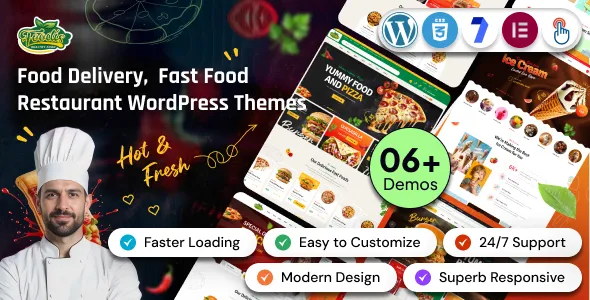
Foodis – Restaurant & Fast Food WordPress Theme
Foodis – Restaurant & Fast Food WordPress Theme is a modern and versatile WordPress theme designed for restaurants, fast food businesses, cafes, food trucks, bakeries, coffee shops, takeaways, diners, food delivery businesses, pizzerias, burger restaurants, dessert shops, catering companies, and other food-related businesses that want to establish a professional online presence. With a visually engaging structure and a food-focused presentation, Foodis provides a flexible foundation for showcasing menus, food items, restaurant services, business information, special offers, locations, contact details, and other important content in an attractive and organized way.
Foodis – Restaurant & Fast Food WordPress Theme Overview
A restaurant website is often the first place potential customers visit before deciding where to eat. Customers may want to view a menu, discover popular dishes, check opening hours, find the restaurant location, learn about delivery options, explore special offers, or simply look at food images before placing an order. A professional website can bring all of this information together in one convenient location.
Foodis – Restaurant & Fast Food WordPress Theme is designed to provide a strong digital foundation for businesses operating in the food and hospitality industry. Its flexible structure can be adapted for different restaurant concepts, from casual fast food outlets and burger shops to elegant restaurants, cafes, bakeries, food trucks, takeaway businesses, and food delivery services.
Modern customers increasingly use smartphones to discover restaurants and make dining decisions. A restaurant website therefore needs to provide information quickly and clearly. Foodis can be customized to present menus, food categories, promotional offers, restaurant information, contact details, and other customer-focused content in a structured way.
The theme can also support businesses that want to strengthen their brand identity online. Restaurant owners can customize website content, imagery, colors, logos, typography, menus, service descriptions, and other elements to create a website that matches their unique concept.
Whether the business is launching a new restaurant, refreshing an existing website, expanding into online ordering, or creating a digital presence for a food brand, Foodis offers a practical WordPress foundation for building a professional restaurant website.
Modern Restaurant Website Design
Restaurant websites benefit from visually appealing design because food is highly visual. Customers often make decisions based on photographs, menu presentation, restaurant atmosphere, branding, and the overall quality of the online experience.
Foodis is designed around the needs of food businesses that want to present their offerings in a modern and engaging way. Website owners can use attractive food photography, menu sections, promotional banners, category blocks, restaurant information, and calls to action to create a complete digital experience.
The website can be structured so visitors can quickly discover the most important information. Instead of forcing customers to search through large amounts of content, restaurant owners can highlight popular dishes, featured items, special offers, menus, and ordering options.
A well-organized restaurant website can also help create a consistent brand experience between the physical restaurant and its digital presence.
Restaurant WordPress Theme for Modern Food Businesses
Foodis is suitable for a wide variety of food businesses. A restaurant can customize the theme around its own menu, target customers, location, service model, and visual identity.
Potential applications include:
- Restaurants
- Fast food restaurants
- Cafes
- Coffee shops
- Bakeries
- Pizzerias
- Burger restaurants
- Food trucks
- Takeaway businesses
- Dessert shops
- Catering companies
- Food delivery services
- Diners
- Street food businesses
- Juice bars
- Snack shops
- Casual dining businesses
- Family restaurants
- Specialty food stores
This versatility makes Foodis useful for businesses with different food concepts and customer experiences.
Fast Food Website Design
Fast food businesses need websites that make information easy to access. Customers may want to know what meals are available, which items are popular, whether delivery is available, and where the restaurant is located.
Foodis can be customized to emphasize speed, convenience, menu visibility, promotional offers, and ordering options.
A fast food homepage can feature:
- Signature meals
- Popular products
- Combo offers
- Food categories
- Promotional deals
- Restaurant information
- Delivery details
- Opening hours
- Location
- Contact options
- Online ordering buttons
This type of structure can help visitors move quickly from discovery to action.
Restaurant Homepage
The homepage is one of the most important pages for a restaurant website because it creates the first digital impression.
A strong restaurant homepage can introduce the restaurant’s identity immediately while highlighting the food and services customers care about.
Foodis can be adapted to include sections such as:
- Hero banner
- Restaurant introduction
- Featured dishes
- Popular menu items
- Food categories
- Special offers
- About the restaurant
- Customer reviews
- Gallery
- Restaurant locations
- Opening hours
- Contact information
- Ordering call to action
The exact structure can be customized according to the business’s requirements.
Food Menu Showcase
The menu is usually the most important piece of content on a restaurant website.
Customers want to see food names, descriptions, prices, categories, and sometimes ingredients or dietary information.
Foodis can be used to create an organized menu presentation where food items are separated into meaningful categories.
Possible categories include:
- Starters
- Burgers
- Pizza
- Sandwiches
- Wraps
- Salads
- Main courses
- Rice dishes
- Pasta
- Snacks
- Desserts
- Cakes
- Ice cream
- Beverages
- Coffee
- Tea
- Fresh juices
- Smoothies
- Combo meals
Restaurant owners can structure categories according to their actual menu.
Digital Restaurant Menu
A digital menu provides customers with convenient access to food information before they visit or place an order.
A restaurant can publish its menu online so customers can review dishes from a smartphone or desktop computer.
Digital menus are particularly useful for customers searching for restaurants through Google and other online platforms. Instead of requiring customers to visit the restaurant just to view the menu, businesses can provide essential information online.
Foodis can serve as a visual foundation for presenting this menu content.
Food Item Presentation
Food items should be easy to understand at a glance.
A food menu section can include:
- Food image
- Dish name
- Short description
- Price
- Category
- Special label
- Dietary information
- Ordering button
The exact features available depend on the website configuration and plugins used.
Clear presentation can help customers compare options and discover dishes they may want to try.
Restaurant Food Photography
Food photography is one of the strongest visual elements of a restaurant website.
High-quality images can showcase the appearance of dishes and help communicate the restaurant’s personality.
Suitable images may include:
- Burgers
- Pizza
- Sandwiches
- Pasta
- Desserts
- Coffee
- Cocktails and beverages where appropriate
- Salads
- Main courses
- Snacks
- Signature dishes
Restaurant owners should use high-quality images that accurately represent the actual food being served.
Featured Food Section
Restaurants often have signature or bestselling dishes that deserve special attention.
A featured food section can highlight these products and help visitors discover popular choices.
Featured sections can be used for:
- Chef specials
- Bestselling dishes
- New menu items
- Seasonal dishes
- Customer favorites
- Limited-time meals
- Special combinations
This creates an opportunity to direct attention toward specific menu items.
Special Offers and Promotions
Promotions can be an important part of restaurant marketing.
Businesses may offer:
- Lunch specials
- Meal combos
- Family deals
- Weekend offers
- Seasonal promotions
- New customer offers
- Limited-time discounts
- Special menus
- Delivery promotions
Foodis can provide a suitable presentation framework for promotional content.
Restaurant owners should ensure that promotions are accurate and that terms and conditions are clearly communicated.
Restaurant Branding
Strong branding helps restaurants become recognizable.
Foodis can be customized with the restaurant’s own visual identity, including:
- Logo
- Brand colors
- Typography
- Food photography
- Background imagery
- Icons
- Marketing messages
- Menu styling
- Promotional graphics
These elements can be combined to create a consistent online brand experience.
Cafe Website
Cafes need websites that can showcase beverages, snacks, desserts, atmosphere, location, and opening hours.
Foodis can be adapted for coffee shops and cafes that want to present:
- Coffee menu
- Tea
- Cold beverages
- Desserts
- Breakfast options
- Snacks
- Bakery items
- Special offers
- Location
- Opening hours
- Gallery
A cafe can use attractive photography to create a warm and inviting digital experience.
Coffee Shop WordPress Website
Coffee shops can use Foodis to create a website focused on their drinks and food selection.
The website can showcase espresso drinks, specialty coffee, iced beverages, pastries, cakes, sandwiches, breakfast options, and other menu items.
A coffee shop can also publish information about its atmosphere, seating, Wi-Fi availability, events, and community activities where relevant.
Bakery Website
Bakeries can use the theme to present products such as:
- Bread
- Cakes
- Pastries
- Cookies
- Cupcakes
- Donuts
- Pies
- Desserts
- Specialty baked goods
Product pages can provide descriptions, images, prices, availability information, and ordering instructions.
Pizza Restaurant Website
Pizza businesses can create dedicated online menus featuring different pizza categories.
Potential categories include:
- Classic pizzas
- Specialty pizzas
- Vegetarian pizzas
- Cheese pizzas
- Spicy pizzas
- Family pizzas
- Pizza combos
- Sides
- Desserts
- Beverages
The website can also highlight delivery and takeaway options.
Burger Restaurant Website
Burger restaurants can use Foodis to showcase signature burgers, combo meals, sides, beverages, and desserts.
A visually focused homepage can emphasize bestselling burgers and provide direct access to the complete menu.
Burger businesses can also highlight vegetarian or plant-based options where available.
Food Truck Website
Food trucks often need simple websites that help customers find their current location, view menus, and check operating times.
Foodis can be adapted for food truck businesses with sections for:
- Current location
- Weekly schedule
- Menu
- Food photos
- Events
- Catering
- Contact information
- Social media
This can make the website useful even for businesses without a permanent restaurant location.
Takeaway Restaurant Website
Takeaway businesses can use the theme to present their menu and ordering information.
Customers can browse dishes online before visiting the restaurant or placing an order through the business’s preferred ordering system.
The website can emphasize convenience, opening hours, pickup information, and contact details.
Food Delivery Business Website
Restaurants that provide delivery can use Foodis to create a website focused on online food discovery and ordering.
Depending on the chosen WordPress plugins or external services, the website can potentially integrate online ordering systems.
Restaurant owners should clearly explain delivery areas, minimum order requirements, fees, estimated times, and other relevant conditions.
Online Ordering Integration
A modern restaurant website may include online ordering functionality.
WordPress supports various restaurant ordering and e-commerce solutions that can allow customers to browse products and submit orders.
Foodis can serve as the visual foundation while appropriate plugins provide ordering functionality.
The exact ordering experience depends on the chosen plugin, payment gateway, delivery system, restaurant workflow, and other technical factors.
Restaurant Reservation Website
Restaurants that accept reservations can include booking information on their website.
A reservation section can communicate:
- Reservation availability
- Booking instructions
- Restaurant hours
- Party size information
- Contact details
- Reservation policies
Appointment or reservation functionality can be implemented through compatible WordPress plugins or external booking platforms.
Table Booking
Table booking can make the website more useful for dine-in restaurants.
Customers may be able to select a date, time, and number of guests depending on the chosen reservation solution.
Restaurant owners should clearly communicate cancellation policies, arrival requirements, and reservation limitations.
Restaurant Location Information
Location is extremely important for restaurants.
Customers often search for a restaurant because they want to visit a specific area.
Foodis can include location-focused content such as:
- Address
- Map
- Opening hours
- Parking information
- Nearby landmarks
- Contact details
- Directions
Businesses with multiple branches can provide information for each location.
Multiple Restaurant Locations
Restaurant chains and growing food businesses may have multiple locations.
A website can create individual pages for each branch with:
- Branch address
- Phone number
- Opening hours
- Menu information
- Location map
- Parking details
- Local services
- Ordering options
This can improve the user experience for customers searching for the nearest branch.
Local Restaurant SEO
Restaurants can benefit from local SEO because many customers search for food businesses in specific locations.
Potential search phrases may include:
- Restaurant near me
- Fast food restaurant in [city]
- Best burger restaurant in [location]
- Pizza restaurant in [location]
- Cafe in [location]
- Bakery near [area]
- Food delivery in [location]
Businesses should only target locations they genuinely serve.
Restaurant SEO-Friendly Structure
Foodis can provide a foundation for building an SEO-focused restaurant website.
However, a theme alone does not guarantee search rankings.
Restaurant owners should create original content, optimize page titles, write useful descriptions, maintain accurate business information, optimize images, create location-specific pages where appropriate, and build relevant local authority.
Restaurant Keyword Strategy
A restaurant website can target different keyword groups based on its business model.
Examples include:
- Restaurant WordPress theme
- Fast food WordPress theme
- Cafe WordPress theme
- Food delivery WordPress theme
- Pizza restaurant website
- Burger restaurant website
- Restaurant website template
- Food business WordPress theme
- Bakery WordPress theme
- Coffee shop WordPress theme
- Food truck WordPress website
- Takeaway restaurant website
Keywords should be used naturally throughout relevant pages.
Long-Tail Restaurant SEO Keywords
Long-tail searches can help restaurants target customers with more specific intent.
Examples include:
- WordPress theme for fast food restaurants
- WordPress theme for modern restaurants
- restaurant WordPress theme with menu
- WordPress theme for food delivery business
- WordPress theme for pizza restaurant
- WordPress theme for burger restaurant
- WordPress theme for coffee shop
- WordPress theme for bakery business
- restaurant website theme for online ordering
- WordPress restaurant theme for takeaway business
The most useful keywords depend on the restaurant’s niche, audience, location, and services.
Restaurant Blog
A restaurant blog can support marketing and SEO while giving customers additional information.
Potential blog topics include:
- New menu announcements
- Food preparation stories
- Restaurant news
- Seasonal dishes
- Cooking tips
- Ingredient stories
- Food guides
- Restaurant events
- Behind-the-scenes content
- Chef interviews
- Local food topics
The blog should provide genuine value rather than simply publishing keyword-heavy articles.
Food Blog Content
Food businesses can use blogs to tell stories about their dishes and ingredients.
For example, a restaurant might explain how a signature dish was developed or introduce the ingredients used in a popular recipe.
This can make the brand more memorable and give customers a reason to engage with the website.
Restaurant Story
Customers often appreciate knowing the story behind a restaurant.
The About page can explain:
- When the restaurant started
- Why it was created
- The food philosophy
- The inspiration behind the menu
- The team
- The restaurant’s values
- The local community connection
Authentic storytelling can strengthen brand identity.
Chef Profile
Chef profiles can add personality to restaurant websites.
A profile may include the chef’s professional background, cooking philosophy, specialties, and experience.
Restaurants should only publish accurate professional information and obtain appropriate permission for personal details.
Restaurant Team Section
A team section can introduce:
- Chefs
- Managers
- Restaurant staff
- Hospitality professionals
- Founders
- Bakers
- Baristas
This helps customers connect with the people behind the business.
Customer Reviews
Customer reviews can provide useful social proof.
Restaurants can display genuine reviews or link customers to established review platforms.
Reviews should never be fabricated or misleading.
A website can use authentic feedback to reinforce the restaurant’s reputation.
Testimonials Section
Testimonials can highlight real customer experiences.
Examples may discuss food quality, service, atmosphere, delivery experience, or hospitality.
Businesses should obtain appropriate permission before publishing identifiable customer testimonials.
Restaurant Gallery
A photo gallery can showcase the restaurant’s atmosphere and food.
Possible gallery categories include:
- Restaurant interior
- Outdoor seating
- Food dishes
- Chef activities
- Events
- Customer experiences
- Special occasions
- Kitchen
- Branding
A gallery can help potential customers understand what to expect before visiting.
Food Gallery
Food photography can be organized into dedicated gallery sections.
This allows customers to visually explore the menu and discover dishes that interest them.
Images should accurately represent the actual products.
Restaurant Events
Restaurants often host events such as:
- Live music
- Food festivals
- Private dining
- Seasonal celebrations
- Community events
- Cooking workshops
- Special dinners
Foodis can be used to present event information through pages or blog posts.
Catering Business Website
Restaurants that provide catering can create a dedicated catering page.
This page can explain:
- Catering packages
- Event types
- Menu options
- Service areas
- Guest capacity
- Booking process
- Contact information
Foodis can provide the visual foundation for presenting these catering services.
Wedding Catering Website
Restaurants and catering businesses can use the theme to promote wedding catering services.
Content may include menus, packages, food galleries, event services, consultation information, and contact details.
Corporate Catering Website
Corporate catering services can use a professional website to target offices, conferences, meetings, and business events.
The website can present catering packages and explain how businesses can request a quote.
Party Catering Website
Party catering businesses can showcase menu options for birthdays, celebrations, family gatherings, and private events.
The website can make it easier for potential customers to discover packages and contact the business.
Food Business Landing Pages
Landing pages can be created for specific restaurant promotions, services, or products.
Examples include:
- Lunch menu
- Dinner menu
- Catering
- Food delivery
- Party packages
- Seasonal menu
- New product launch
- Special offers
Each landing page can focus on one customer intent.
Seasonal Restaurant Marketing
Food businesses often introduce seasonal products and promotions.
Seasonal landing pages can showcase:
- Holiday menus
- Summer drinks
- Winter specials
- Festive desserts
- Seasonal ingredients
- Limited-time dishes
This gives the website fresh content throughout the year.
New Menu Launches
Restaurants can create dedicated pages or blog posts when introducing new menus.
Content can include food photography, descriptions, pricing, availability, and ordering information.
This also gives businesses an opportunity to promote the launch through social media and email marketing.
Restaurant Promotions
Promotional sections can be used to highlight limited-time offers.
Restaurant owners should clearly state:
- Offer period
- Eligible products
- Conditions
- Availability
- Location
- Ordering method
Transparent promotion information creates a better customer experience.
Mobile-Friendly Restaurant Website
A large percentage of restaurant searches happen on smartphones.
Customers may search for food while traveling, commuting, or deciding where to eat.
A mobile-friendly website should make it easy to:
- View the menu
- Call the restaurant
- Get directions
- Check opening hours
- Place an order
- Make a reservation
- Read important information
Foodis can provide a responsive foundation for these customer journeys.
Click-to-Call Functionality
Mobile visitors may want to contact the restaurant immediately.
A click-to-call button can make phone contact easier on compatible devices.
This can be especially useful for restaurants accepting reservations, catering inquiries, takeaway orders, or event bookings by phone.
Map Integration
Maps can help customers locate the restaurant.
A location page can include an embedded map along with the address and directions.
Businesses should verify that the displayed address is correct.
Opening Hours
Opening hours should be easy to find.
Restaurants should update hours when they change because incorrect opening information can frustrate customers.
Holiday hours and temporary closures should also be communicated clearly when relevant.
Delivery Information
Restaurants providing delivery should explain the service clearly.
Useful information can include:
- Delivery areas
- Delivery hours
- Delivery fees
- Minimum order
- Estimated delivery time
- Ordering method
- Payment options
- Contact information
Actual delivery policies should be supplied by the business.
Pickup Information
Takeaway businesses can provide pickup instructions.
Customers may need to know:
- Pickup address
- Pickup hours
- Estimated preparation time
- Where to collect orders
- Contact number
- Payment options
Clear instructions can make pickup more convenient.
Restaurant Payment Options
A restaurant website can explain accepted payment methods.
Depending on the business, these may include:
- Cash
- Cards
- Digital payments
- Online payment gateways
- Restaurant-specific payment options
The website should only advertise payment methods that the business actually accepts.
Food Delivery Platform Integration
Some restaurants receive orders through external food delivery platforms.
The website can provide appropriate links or buttons to those ordering channels.
Businesses should verify current platform availability and geographic coverage before publishing information.
E-Commerce for Restaurants
Restaurants selling packaged foods, merchandise, gift cards, sauces, snacks, or other products may use WordPress e-commerce functionality.
Foodis can provide the visual website foundation while an appropriate e-commerce solution handles products, shopping carts, payments, and order management.
Restaurant Gift Cards
Restaurants may sell gift cards or vouchers.
A gift card page can explain:
- Available values
- Redemption rules
- Expiration information
- Purchase process
- Terms and conditions
Specific functionality may require an appropriate plugin or external service.
Restaurant Merchandise
Some restaurants develop merchandise such as:
- T-shirts
- Mugs
- Bottles
- Caps
- Branded accessories
An e-commerce system can be used to manage these products.
Online Food Store
Food businesses selling packaged products can create online stores for:
- Sauces
- Spices
- Snacks
- Bakery products
- Coffee beans
- Packaged meals
- Specialty ingredients
Foodis can be combined with compatible e-commerce functionality for such projects.
Restaurant Subscription Services
Some food businesses offer recurring services such as meal plans or subscription boxes.
A suitable membership or subscription system can be integrated depending on business requirements.
Meal Plan Website
Meal preparation companies can use Foodis to present different plans.
Possible categories include:
- Weekly meals
- Healthy meals
- Family plans
- Office meals
- Fitness-oriented meals
- Vegetarian plans
Businesses should provide accurate nutritional and ingredient information where relevant.
Healthy Food Restaurant Website
Healthy food businesses can use the theme to showcase salads, fresh meals, smoothies, bowls, juices, and other menu items.
Nutrition-focused content should be accurate and should not make unsupported health claims.
Vegetarian Restaurant Website
Vegetarian restaurants can create dedicated menu categories highlighting vegetarian dishes.
The website can communicate ingredients, preparation styles, and dietary information.
Vegan Restaurant Website
Vegan restaurants can use the theme to highlight plant-based menu options.
Clear ingredient information can help customers understand which dishes meet their dietary requirements.
Dessert Shop Website
Dessert businesses can use Foodis for cakes, pastries, ice cream, cookies, donuts, chocolates, and other sweet products.
High-quality product photography can play a major role in the website design.
Juice Bar Website
Juice bars can showcase:
- Fresh juices
- Smoothies
- Fruit bowls
- Healthy snacks
- Specialty beverages
The website can also provide information about ingredients and ordering.
Street Food Website
Street food businesses can use Foodis to present their menu, locations, events, and social media information.
This is especially useful for mobile food businesses that operate at changing locations.
Food Festival Website
Restaurants or food organizations participating in food festivals can create dedicated pages for upcoming events, menu items, locations, and schedules.
Restaurant Reservation SEO
Restaurants can create informative reservation pages targeting searches related to dining in their location.
The page should explain actual booking options and provide accurate restaurant information.
Restaurant Menu SEO
Menu pages can be optimized with descriptive dish names and useful descriptions.
Instead of simply writing “Burger,” a restaurant might describe the dish accurately using its ingredients and style.
However, descriptions should remain natural and customer-focused.
Local Business Information
Restaurants should maintain consistent business information across their website and external platforms.
Important details include:
- Business name
- Address
- Phone number
- Opening hours
- Website
- Service areas
Consistency can help customers and local search systems understand the business.
Restaurant Structured Data
Restaurants may benefit from appropriate structured data implemented according to current search engine guidelines.
Structured data can help search engines understand information such as business type, location, opening hours, menu information, and other eligible details.
Implementation should be handled carefully and should only include accurate information.
Image SEO for Food Websites
Images can also contribute to search visibility when properly optimized.
Restaurant owners should use descriptive filenames, appropriate alternative text, suitable image dimensions, and optimized file sizes.
The goal should be to improve accessibility and usability rather than simply inserting keywords into every image attribute.
Website Speed for Restaurant Websites
Restaurant websites often contain many food images, which can create performance challenges.
Large image files can increase page loading time.
Website owners should optimize images and consider caching, content delivery networks, reliable hosting, and other performance techniques where appropriate.
Restaurant Social Media Integration
Food businesses often rely heavily on social media.
A website can connect customers with social profiles where businesses share:
- New dishes
- Daily specials
- Restaurant events
- Food photography
- Customer content
- Promotions
- Behind-the-scenes content
The website should remain the central source for important business information.
Instagram-Focused Restaurant Branding
Food photography performs strongly on visual social platforms.
Restaurants can use their website to create a consistent visual identity that matches their social media presence.
Using similar colors, photography styles, logos, and messaging can strengthen brand recognition.
Email Marketing for Restaurants
Restaurants can build email lists to share:
- New menu announcements
- Special offers
- Events
- Seasonal promotions
- Restaurant news
Businesses should follow applicable email marketing and privacy requirements.
Customer Loyalty Programs
Restaurants may offer loyalty programs to encourage repeat visits.
A loyalty program can provide rewards based on purchases, visits, or other criteria.
The exact functionality can be added through suitable WordPress plugins or external services.
Restaurant Membership Programs
Some businesses may offer membership-based dining clubs or customer programs.
WordPress can be extended with membership functionality when required.
Restaurant Community Building
Restaurants can use their websites to build a community around food.
Content can include chef stories, customer events, food education, recipes, restaurant news, and local collaborations.
This can help transform the website from a simple menu page into a broader brand platform.
Food Brand Storytelling
A restaurant’s story can be part of its marketing identity.
Businesses can explain their inspiration, ingredients, cooking philosophy, founders, community connections, and culinary approach.
Authentic storytelling can differentiate one restaurant from another.
Menu Photography Strategy
A consistent photography style can improve the overall website appearance.
Restaurant owners should consider using similar lighting, backgrounds, framing, and image quality across menu photos.
Consistency can make the website feel more professional.
Restaurant Accessibility
Restaurant websites should be accessible to as many users as possible.
Important practices include:
- Readable text
- Appropriate color contrast
- Keyboard-friendly navigation
- Descriptive alternative text
- Clear form labels
- Accessible buttons
- Logical headings
Accessibility should be considered throughout the website development process.
Restaurant Privacy Practices
Restaurants may collect customer information through contact forms, reservation systems, newsletter forms, ordering systems, and other tools.
Businesses should explain how personal data is collected and used and should implement appropriate privacy and security practices.
Restaurant Website Security
WordPress websites should be maintained securely.
Recommended practices include:
- Strong administrator passwords
- HTTPS
- Regular updates
- Reliable hosting
- Security monitoring
- Regular backups
- Trusted plugins
- Limited administrator access
Restaurants handling customer information should take appropriate additional precautions.
WordPress Content Management
WordPress makes it possible for restaurant owners and staff to update website content.
Businesses can add:
- New dishes
- Menu categories
- Blog posts
- Promotions
- Events
- Team members
- Photos
- Restaurant information
This makes WordPress useful for restaurants whose offerings change regularly.
Easy Menu Updates
Restaurant menus may change due to seasonal ingredients, pricing updates, new dishes, or availability.
A WordPress-based website allows businesses to update menu content as needed.
Keeping online menus synchronized with the actual restaurant menu is essential for maintaining customer trust.
Seasonal Menu Management
Seasonal menus can be published as temporary content.
Restaurants can create dedicated pages or categories for seasonal dishes and remove or archive them after the season ends.
Restaurant Website Scalability
A small restaurant may begin with a simple website but later expand into catering, online ordering, multiple locations, events, and e-commerce.
A flexible WordPress foundation can accommodate these growing requirements.
Foodis can be customized as the business evolves.
Multi-Branch Restaurant Website
Restaurant chains can create pages for different branches while maintaining consistent branding.
Each branch can have its own:
- Address
- Hours
- Contact information
- Menu
- Location map
- Services
- Ordering options
This creates a better experience for customers looking for a specific location.
Franchise Restaurant Website
Franchise businesses may require centralized brand control while also providing local information.
A suitable WordPress structure can help maintain consistent branding across multiple locations.
Technical requirements for large franchise systems should be evaluated separately.
Restaurant Website for Agencies
Web design agencies can use Foodis as a starting point for restaurant clients.
Each client project can be customized with different branding, menu styles, images, colors, content, and business functionality.
This can reduce repetitive design work while preserving flexibility.
Restaurant Website for Freelancers
Freelance WordPress developers can use a restaurant-focused theme to accelerate client website projects.
Developers can focus on customization and business-specific functionality rather than building every design element from scratch.
Restaurant Website for Entrepreneurs
Entrepreneurs launching food businesses can use Foodis as a foundation for creating a digital brand.
The website can grow with the business as new menu items, locations, services, and marketing campaigns are introduced.
Restaurant Website for Startups
New food delivery brands, cloud kitchens, food startups, and modern dining concepts can use Foodis to introduce their business online.
A startup website can focus on its unique food concept, menu, ordering process, brand story, and customer experience.
Cloud Kitchen Website
Cloud kitchens can use the theme to present menus and ordering information without relying on a traditional dine-in restaurant model.
The website can focus heavily on:
- Online ordering
- Delivery
- Menu categories
- Food photography
- Delivery areas
- Contact information
Ghost Kitchen Website
A virtual restaurant operating primarily through delivery platforms can create a dedicated website to establish its brand identity.
The website can present menu items and link customers to the appropriate ordering channels.
Food Subscription Website
Meal subscription businesses can use Foodis as a visual foundation for presenting plans, menus, delivery schedules, and subscription information.
Catering Lead Generation
Catering businesses can use landing pages and contact forms to generate inquiries.
A catering page can showcase previous events, menu options, service areas, and inquiry instructions.
Restaurant Contact Forms
Contact forms can help customers ask questions about:
- Reservations
- Catering
- Private events
- Menu items
- Delivery
- Business partnerships
Forms should request only information that is necessary for the inquiry.
Private Dining Website
Restaurants offering private dining can create a dedicated page explaining:
- Private room options
- Guest capacity
- Menu choices
- Event types
- Booking process
- Contact information
Restaurant Event Booking
Event booking can be integrated through suitable WordPress solutions.
This can support restaurants that regularly host private events, celebrations, workshops, or special dining experiences.
Restaurant News Section
A news section can communicate important updates such as:
- New locations
- New chefs
- Menu launches
- Awards
- Events
- Temporary closures
- Holiday schedules
Keeping this content updated can improve customer communication.
Restaurant Awards and Recognition
If a restaurant has received legitimate awards or recognition, these can be highlighted on the website.
All claims should be accurate and verifiable.
Restaurant Partnerships
Food businesses may collaborate with local suppliers, chefs, organizations, or community groups.
Partnership information can be included where relevant to the brand.
Local Supplier Stories
Restaurants that emphasize local ingredients can create content explaining their supplier relationships.
This can help communicate the restaurant’s sourcing philosophy while creating additional original content.
Ingredient Information
Customers increasingly want to understand what they are eating.
Restaurants can provide ingredient information where appropriate, particularly for dishes involving common allergens or specific dietary requirements.
Allergen Information
Restaurants should provide accurate allergen information where required.
The exact legal requirements vary by location, so businesses should follow applicable food labeling and consumer information regulations.
Dietary Preferences
Menus can identify appropriate dietary categories when accurate.
Possible labels include:
- Vegetarian
- Vegan
- Gluten-free
- Dairy-free
- Spicy
- Contains nuts
Labels should only be used when the business can substantiate them.
Restaurant Menu Categories
Organizing food into categories makes menus easier to browse.
Categories can be based on meal type, cuisine, dietary requirements, or customer preferences.
A restaurant should choose categories that make sense for its actual menu.
Cuisine-Specific Restaurant Websites
Foodis can be customized for many cuisines, including:
- Indian
- Italian
- Mexican
- Chinese
- American
- Mediterranean
- Japanese
- Thai
- Korean
- Middle Eastern
- Fusion cuisine
The visual branding and content should reflect the restaurant’s actual culinary identity.
Indian Restaurant Website
Indian restaurants can use the theme to showcase dishes such as curries, biryanis, breads, starters, vegetarian dishes, desserts, and beverages.
Menu categories can be customized according to the restaurant’s regional or culinary specialization.
Italian Restaurant Website
Italian restaurants can highlight pizza, pasta, salads, starters, desserts, and beverages.
Food photography can be used to emphasize signature dishes.
Mexican Restaurant Website
Mexican restaurants can present tacos, burritos, nachos, bowls, quesadillas, sides, desserts, and beverages.
Fusion Restaurant Website
Fusion restaurants can use flexible menu categories to explain their unique combinations of culinary traditions.
Fine Dining Website
Although Foodis is suitable for fast food businesses, its customizable presentation can also be adapted for restaurants that want a more refined and elegant visual identity.
Fine dining websites may focus on:
- Chef profiles
- Tasting menus
- Restaurant story
- Reservations
- Private dining
- Events
- Food photography
Casual Dining Website
Casual restaurants can focus on menu discovery, location, opening hours, reservations, family dining, and promotions.
Family Restaurant Website
Family restaurants can highlight menu variety, dining atmosphere, family-friendly services, location information, and special offers.
Food Court Business Website
Food court businesses can use the theme to present menu items, locations, opening hours, and ordering information.
Restaurant Franchise Marketing
Franchise restaurants can create centralized pages for brand information while providing local branch information.
A suitable content structure can make it easier for customers to discover nearby locations.
Restaurant Website Conversion Strategy
A successful restaurant website should make important actions easy.
Visitors may want to:
- View menu
- Order food
- Reserve a table
- Call the restaurant
- Get directions
- Request catering
- Explore offers
Each important action should have a clear path.
Call-to-Action Buttons
Examples of restaurant calls to action include:
- View Menu
- Order Now
- Book a Table
- Find a Location
- Get Directions
- Contact Us
- Explore Offers
- Request Catering
- Reserve Now
Businesses should choose calls to action based on their actual services.
Restaurant Customer Journey
A typical online restaurant customer journey may look like:
- Discover restaurant through search or social media.
- Visit website.
- Review food images and menu.
- Check location and hours.
- Read reviews or restaurant information.
- Place an order or make a reservation.
- Visit or receive delivery.
- Return for future offers or promotions.
A website can be designed to make this journey straightforward.
Restaurant Website Analytics
Analytics can help restaurant owners understand how customers use their websites.
Useful metrics may include:
- Website visits
- Menu page views
- Ordering clicks
- Reservation requests
- Contact form submissions
- Phone clicks
- Location interactions
- Traffic sources
- Popular content
Businesses can use this information to improve their website and marketing strategy.
Restaurant Conversion Tracking
Restaurants can track important actions such as:
- Online orders
- Reservation requests
- Catering inquiries
- Phone clicks
- Menu downloads
- Direction clicks
Tracking should be configured responsibly and in accordance with applicable privacy requirements.
Restaurant Marketing Campaigns
Foodis can support dedicated landing pages for marketing campaigns.
Restaurants may create campaigns around:
- New menu
- Seasonal offers
- Holiday meals
- Lunch specials
- Catering
- Delivery
- Special events
Campaign pages can focus on one clear customer action.
Restaurant Email Campaigns
Email marketing can help restaurants maintain relationships with customers.
Businesses can send updates about new dishes, events, promotions, and seasonal menus.
Emails should be sent according to applicable consent and marketing laws.
Restaurant Loyalty Marketing
A restaurant can promote loyalty programs through its website.
The site can explain rewards, membership conditions, benefits, and signup instructions.
Restaurant Content Calendar
A restaurant blog and marketing system can follow a content calendar.
Possible monthly content may include:
- New food item
- Chef story
- Seasonal menu
- Customer event
- Food guide
- Restaurant announcement
Consistent content can help keep the website active.
User Experience for Food Websites
Restaurant websites should prioritize usability.
Customers should not have to search extensively to find the menu, location, hours, or ordering options.
Foodis can be structured around these high-priority customer needs.
Simple Website Navigation
A restaurant navigation menu can remain relatively simple.
Common items include:
- Home
- Menu
- About
- Services
- Gallery
- Blog
- Contact
Additional pages can be added when necessary.
Restaurant Footer Navigation
The footer can provide secondary navigation and contact information.
This can include links to:
- Menu
- Locations
- Reservations
- Delivery
- Catering
- Privacy policy
- Terms
- Contact
- Social media
Restaurant Website Typography
Readable typography is important because restaurant menus can contain many product names and descriptions.
A clear hierarchy can make menu information easier to scan.
Restaurant Color Branding
Food brands often use color to communicate personality.
A fast food business may prefer bold branding, while a premium restaurant may use a more understated visual identity.
Foodis can be customized according to the restaurant’s branding requirements.
Restaurant Iconography
Icons can help communicate categories and services visually.
Possible uses include icons for:
- Food categories
- Delivery
- Reservations
- Location
- Opening hours
- Contact
- Special offers
Icons should remain understandable and support the content rather than replace it.
Restaurant Website Maintenance
Restaurant websites require regular updates because menu prices, food availability, opening hours, promotions, and events can change frequently.
Regular maintenance ensures customers receive accurate information.
Keeping Menus Updated
An outdated menu can create a poor customer experience.
Restaurants should regularly check that online menu items, prices, descriptions, and availability match the actual offering.
Keeping Restaurant Information Accurate
Business information should be reviewed regularly.
This includes:
- Address
- Phone number
- Opening hours
- Holiday hours
- Menu
- Ordering links
- Reservation information
WordPress Updates
WordPress core, themes, and plugins should be updated responsibly.
Before major updates, businesses should maintain backups and test important website functions.
Restaurant Website Backup
Regular backups can protect against accidental data loss or technical problems.
Backup frequency should reflect how frequently the website content changes.
Restaurant Website Hosting
A reliable hosting environment can contribute to website speed, stability, and security.
Restaurant businesses should choose hosting appropriate for expected traffic and technical requirements.
Scalable Restaurant Website
As a restaurant grows, the website may need new features.
Possible additions include:
- More locations
- Online ordering
- E-commerce
- Catering
- Reservations
- Loyalty programs
- Events
- Blog
- Newsletter
- Customer accounts
WordPress provides a flexible ecosystem for extending website functionality.
Restaurant Website for New Businesses
New restaurants need to establish their digital presence before opening.
A website can publish:
- Opening date
- Restaurant concept
- Menu preview
- Location
- Team
- Social links
- Contact information
A pre-launch page can build awareness before the opening.
Restaurant Grand Opening Website
A restaurant preparing for a grand opening can create a dedicated page with event details, opening date, location, menu preview, and contact information.
Restaurant Rebranding Website
Established restaurants can use Foodis to create a refreshed digital identity.
The new website can introduce updated branding, menu presentation, photography, and customer experience.
Restaurant Website Redesign
An outdated website may make it difficult for customers to view menus or find basic information.
A modern WordPress theme can provide a more organized foundation for redesigning the website.
Foodis for Professional Restaurant Websites
Foodis is designed to support a wide variety of restaurant website projects while allowing businesses to maintain their individual identity.
Its flexible structure can accommodate different menu sizes, restaurant concepts, customer journeys, and marketing strategies.
Why Choose Foodis – Restaurant & Fast Food WordPress Theme
Foodis – Restaurant & Fast Food WordPress Theme provides a practical foundation for creating a modern website for food and hospitality businesses.
Key advantages include:
- Restaurant-focused website structure
- Suitable for fast food businesses
- Flexible menu presentation
- Food-focused visual content
- Responsive website approach
- Customizable branding
- Suitable for cafes and bakeries
- Suitable for food delivery businesses
- Suitable for food trucks
- Suitable for catering companies
- Blog and content opportunities
- Local SEO potential
- Reservation integration possibilities
- Online ordering integration possibilities
- Flexible WordPress content management
- Suitable for agencies and freelancers
Who Should Use Foodis
Foodis is suitable for businesses such as:
- Restaurants
- Fast food outlets
- Cafes
- Coffee shops
- Bakeries
- Pizza restaurants
- Burger restaurants
- Food trucks
- Takeaway restaurants
- Food delivery companies
- Catering companies
- Dessert shops
- Juice bars
- Street food businesses
- Family restaurants
- Casual dining restaurants
- Cloud kitchens
- Food startups
Benefits for Restaurant Owners
Restaurant owners can use Foodis to create a centralized online location for their menus, food images, restaurant information, promotions, and contact options.
A professional website can make it easier for customers to research the restaurant before deciding to visit or order.
Benefits for Food Startups
Food startups can use a restaurant-focused website to establish their brand identity from the beginning.
The website can introduce the concept, showcase the menu, explain ordering options, and provide contact information.
Benefits for Agencies
Web agencies can use Foodis as a foundation for client projects in the restaurant and hospitality industry.
Each project can be customized with unique branding, food photography, menu categories, content, and functionality.
Benefits for Freelancers
Freelance developers can use a restaurant-focused WordPress theme to accelerate website development for food businesses.
The theme can serve as a starting point while developers focus on client-specific customization.
Benefits for Restaurant Chains
Restaurant chains can use a flexible WordPress foundation to present consistent branding while creating pages for different locations.
Benefits for Local Food Businesses
Local restaurants can create location-focused websites that make it easier for nearby customers to discover their menus, opening hours, location, and ordering options.
SEO Best Practices for Foodis Websites
A restaurant theme can support SEO, but website owners should implement a complete SEO strategy.
Important practices include:
- Original restaurant content
- Unique page titles
- Descriptive meta descriptions
- Clear headings
- Optimized images
- Mobile-friendly pages
- Fast loading times
- Internal linking
- Accurate business information
- Local SEO
- Useful blog content
- Secure HTTPS
- Relevant backlinks
- Structured data where appropriate
No theme can guarantee search engine rankings.
Local SEO Strategy for Restaurants
Local restaurant SEO should focus on genuine business information.
Restaurants can optimize their website by clearly displaying their actual location, service areas, opening hours, contact information, menus, and other useful local content.
Businesses should also maintain accurate profiles on relevant local platforms.
Restaurant Review Strategy
Customer reviews can influence restaurant discovery and customer decisions.
Businesses should encourage genuine customers to leave honest reviews on appropriate platforms without using misleading incentives or fabricated feedback.
Restaurant Content Marketing
Content marketing can help restaurants remain visible beyond their menu pages.
Potential content includes food stories, chef introductions, recipes, ingredient information, restaurant events, local food guides, and company news.
Building a Restaurant Brand Online
A strong restaurant brand should be recognizable across the website, social media, packaging, signage, menus, and physical location.
Foodis can be customized to help maintain consistent visual branding across the website.
Restaurant Website Trust
Customers want to know that the restaurant information they see online is accurate.
Clear menus, real food photographs, accurate opening hours, transparent prices, genuine reviews, and reliable contact information can help establish confidence.
Foodis for Modern Restaurant Marketing
Foodis can be used as more than a basic online menu. It can become a central marketing platform for a restaurant.
Businesses can use it to promote new dishes, events, catering, seasonal offers, delivery services, and customer engagement initiatives.
Restaurant Website as a Digital Menu
For some small restaurants, the website may primarily serve as a digital menu.
Even a simple menu website can benefit from clear navigation, mobile-friendly design, food photography, pricing, contact information, and location details.
Restaurant Website as an Ordering Platform
Businesses with online ordering can expand the website into a complete digital ordering experience using appropriate plugins and integrations.
The theme provides the presentation layer, while specialized systems handle ordering and payment functionality.
Restaurant Website as a Marketing Platform
Restaurants can use the website to communicate with existing customers and attract new ones.
Blog posts, promotions, events, menu updates, and local content can all support marketing efforts.
Restaurant Website as a Brand Hub
A restaurant website can bring together all important digital channels in one place.
Customers can find the menu, social media, location, reviews, reservations, delivery links, contact information, and business story.
Foodis Product Positioning
Foodis is particularly useful for website owners looking for a Restaurant WordPress Theme, Fast Food WordPress Theme, Cafe WordPress Theme, Food Delivery WordPress Theme, or Food Business WordPress Theme that can be customized for different types of food-related businesses.
Long-Term Website Value
A restaurant website can continue providing value long after launch.
As the business grows, the website can become a resource for menus, marketing campaigns, customer communication, events, catering inquiries, online ordering, and local search visibility.
Future Expansion
Restaurant businesses can gradually add functionality as their needs change.
A website might begin with a simple menu and contact page and later add:
- Online ordering
- Reservations
- Catering
- Multiple locations
- E-commerce
- Blog
- Loyalty programs
- Newsletter
- Events
- Customer accounts
This makes WordPress a flexible platform for long-term website development.
Frequently Asked Questions About Foodis – Restaurant & Fast Food WordPress Theme
What is Foodis – Restaurant & Fast Food WordPress Theme?
Foodis – Restaurant & Fast Food WordPress Theme is a WordPress theme designed for restaurants, fast food businesses, cafes, food trucks, bakeries, pizza shops, burger restaurants, catering companies, food delivery services, and other food-related businesses.
Who can use Foodis?
Restaurants, cafes, fast food outlets, bakeries, coffee shops, pizzerias, burger businesses, food trucks, catering companies, takeaway businesses, cloud kitchens, dessert shops, and food startups can adapt Foodis for their websites.
Can Foodis be used for a restaurant website?
Yes. Foodis is designed specifically for restaurant and food business websites and can be customized with menus, food images, restaurant information, contact details, promotions, and other content.
Can I create a digital menu with Foodis?
Yes. WordPress allows restaurant owners to publish menu content, and Foodis can provide the visual structure for presenting food categories, dish descriptions, images, and pricing.
Can I add online ordering?
Online ordering can be implemented using compatible WordPress restaurant ordering or e-commerce solutions. The exact functionality depends on the selected plugin and configuration.
Can I accept restaurant reservations?
Reservation functionality can be added using an appropriate WordPress booking plugin or external reservation service, depending on the business requirements.
Can Foodis be used for a cafe?
Yes. Cafes can customize the theme to showcase coffee, beverages, desserts, breakfast items, snacks, and other menu products.
Can a bakery use Foodis?
Yes. Bakeries can use the theme to showcase cakes, pastries, bread, cookies, desserts, and other baked products.
Can a pizza restaurant use Foodis?
Yes. Pizza restaurants can create dedicated menu categories for pizza, sides, beverages, desserts, and combination meals.
Can a burger restaurant use Foodis?
Yes. Burger businesses can showcase burgers, combos, sides, drinks, and other menu items.
Can a food truck use Foodis?
Yes. Food truck businesses can use the website to display menus, operating locations, schedules, events, and contact information.
Can a catering business use Foodis?
Yes. Catering companies can create pages for catering packages, menus, service areas, event types, galleries, and inquiries.
Is Foodis mobile-friendly?
Foodis is intended to support a modern responsive website experience. Restaurant owners should test their customized website across the devices and browsers used by their customers.
Can I customize the restaurant branding?
Yes. WordPress websites can be customized with branding elements such as logos, colors, typography, images, menus, and content, depending on the available theme settings and development options.
Can I add a restaurant blog?
Yes. WordPress includes blogging functionality, allowing restaurants to publish news, food stories, announcements, recipes, events, and educational content.
Can I create separate pages for menu categories?
Yes. WordPress allows businesses to organize content into pages and categories according to their requirements.
Can I create pages for different restaurant locations?
Yes. A multi-location restaurant can create individual pages for different branches containing addresses, opening hours, contact information, maps, and local services.
Is Foodis suitable for local SEO?
Foodis can provide a foundation for a local SEO-focused restaurant website. Local SEO success depends on accurate business information, useful content, local authority, reviews, technical SEO, and other factors.
Does Foodis guarantee Google rankings?
No. A WordPress theme cannot guarantee Google rankings. Search performance depends on many factors including content, technical SEO, competition, backlinks, website quality, relevance, and search intent.
Can I add Google Maps?
A compatible map solution can generally be added to WordPress pages. The exact implementation depends on the chosen mapping service and plugin.
Can I add customer reviews?
Yes. Genuine customer reviews or testimonials can be displayed using appropriate WordPress functionality or external review integrations.
Can I add food galleries?
Yes. WordPress supports media galleries, allowing restaurants to showcase food, interiors, events, chefs, and other images.
Can I sell food products online?
If the business model supports online sales, an appropriate e-commerce solution can be integrated with WordPress. The exact setup depends on the products, payment system, delivery process, and legal requirements.
Can I sell restaurant gift cards?
Gift card functionality can be added through suitable WordPress plugins or external services, depending on the business requirements.
Can I integrate payment gateways?
Payment gateways can be integrated through compatible e-commerce, ordering, or payment plugins. The available options depend on the selected platform and the business’s location.
Can Foodis be used for a cloud kitchen?
Yes. Cloud kitchens can use the theme to present their menus, delivery areas, ordering options, and brand information.
Can I create a food delivery website?
Yes. Food delivery businesses can customize Foodis around menus, delivery services, ordering information, service areas, and contact options.
Is Foodis suitable for a new restaurant?
Yes. New restaurants can use the theme to launch a professional website with menu information, location details, opening announcements, food photography, and contact options.
Can I use Foodis for restaurant promotions?
Yes. Restaurants can create promotional sections and landing pages for special offers, seasonal menus, new dishes, and events.
Can I use Foodis for restaurant events?
Yes. Event pages or blog posts can be created for restaurant events, special dinners, live entertainment, private parties, and other activities.
Can I use Foodis for a fine dining restaurant?
Yes. The theme can be customized with a more refined visual identity and content structure suitable for fine dining businesses.
Can I use Foodis for casual dining?
Yes. Casual restaurants can customize the theme around menus, restaurant information, promotions, reservations, and location details.
Can Foodis be used by web agencies?
Yes, provided that the product’s licensing terms permit the intended agency and client use. Agencies can customize the theme for restaurant clients.
Can freelancers use Foodis?
Freelancers can use the theme as a foundation for suitable client websites, subject to the applicable product license.
Does Foodis include restaurant ordering functionality automatically?
The availability of specific ordering functionality depends on the product package and included features. Additional restaurant ordering functionality may require compatible plugins or external services.
Does Foodis include payment processing?
Payment processing depends on the e-commerce or ordering system implemented on the website. A theme itself does not automatically provide a complete payment infrastructure unless explicitly included in the product package.
Is Foodis an online food delivery service?
No. Foodis is a WordPress theme. It provides a website design foundation and is not itself a food delivery company or ordering marketplace.
Is Foodis suitable for SEO?
Foodis can be used as the foundation for an SEO-friendly restaurant website. However, website owners need to implement appropriate SEO practices, create original content, optimize performance, and maintain accurate business information.
Why choose Foodis – Restaurant & Fast Food WordPress Theme?
Foodis offers a flexible foundation for food businesses that want a professional online presence. Its restaurant-focused structure can be adapted for menus, food galleries, promotions, locations, contact information, catering, delivery, reservations, and other restaurant requirements.
Conclusion
Foodis – Restaurant & Fast Food WordPress Theme provides a flexible and professional foundation for restaurants, fast food outlets, cafes, bakeries, food trucks, pizzerias, burger businesses, catering companies, food delivery brands, cloud kitchens, dessert shops, and other food-related businesses.
A restaurant website needs to do more than display a logo and address. It should help customers discover the menu, understand the restaurant’s identity, view food images, check opening hours, find the location, explore offers, make reservations, place orders where supported, and contact the business easily. Foodis can provide the visual and structural foundation for creating this type of digital experience.
With WordPress, businesses can continue expanding their website after launch. New menu items, promotions, blog posts, events, locations, catering services, online ordering systems, and other functionality can be added as the restaurant grows.
For SEO, restaurant owners can build dedicated service and menu pages, publish useful food-related content, optimize local business information, improve image performance, create internal links, maintain accurate opening hours, and develop content that answers genuine customer questions. These efforts can help create a stronger digital presence, although search rankings can never be guaranteed by a theme alone.
Foodis is therefore a practical choice for businesses searching for a Restaurant WordPress Theme, Fast Food WordPress Theme, Cafe WordPress Theme, Food Delivery WordPress Theme, Bakery WordPress Theme, or a customizable Food Business WordPress Theme.
With thoughtful branding, authentic food photography, accurate menu information, useful content, responsive design, reliable hosting, appropriate security, and a customer-focused website strategy, Foodis can become the foundation for a professional restaurant website that supports discovery, engagement, marketing, and long-term business growth.