My Account
Framo | Multipurpose & Shop Website Template
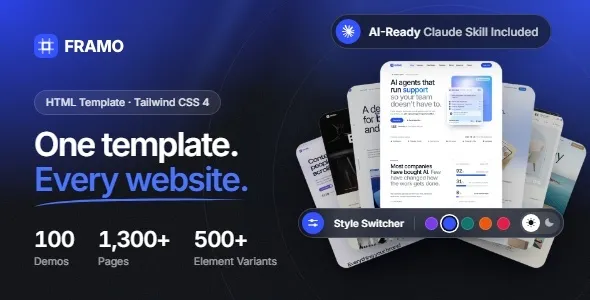
Framo | Multipurpose & Shop Website Template is a versatile and professionally designed website template created for businesses, online retailers, creative professionals, and entrepreneurs looking to establish a modern digital presence. With its multipurpose positioning and shop-oriented design, Framo provides a flexible foundation for developing business websites, online storefronts, product showcase pages, service websites, and commercial web projects. Its adaptable structure makes it suitable for different industries while allowing developers to customize the design, content, and presentation according to specific business requirements.
In today’s competitive digital marketplace, a professional website is an important part of building brand recognition, presenting products, and connecting with potential customers. Businesses need websites that communicate their offerings clearly, provide convenient navigation, and create a consistent browsing experience across devices. Framo offers a website design starting point for projects that require a combination of business-oriented layouts and eCommerce-inspired presentation.
Whether you are creating a retail website, a fashion storefront, a lifestyle brand website, a product catalog, a corporate website, or a multipurpose commercial project, Framo can be considered as a flexible development resource. Its shop-focused design direction can help businesses present products and commercial information in an organized way, while its multipurpose positioning allows developers to adapt the website for different audiences and objectives. The actual functionality depends on the included package, technologies, documentation, and additional integrations.
What Is Framo Multipurpose & Shop Website Template?
Framo is a multipurpose and shop-oriented website template designed to provide a visual foundation for building modern commercial websites. A multipurpose template allows developers to work with a flexible design structure that can be customized for different business categories rather than being limited to one particular industry.
The shop-oriented aspect makes Framo relevant to projects that need to present products, categories, collections, promotional content, and commercial information. Businesses can adapt the available layouts to create a website that reflects their brand identity and product offerings.
Depending on the included page designs, Framo may be considered for projects such as:
- Online fashion and apparel storefronts
- Furniture and home decor websites
- Electronics and technology product websites
- Beauty and cosmetics storefronts
- Lifestyle and accessories websites
- General retail and product catalog websites
- Business and corporate websites
- Creative brand and portfolio websites
- Product showcase and promotional websites
- Small business and startup websites
Before implementation, developers should review the actual demo, included pages, source files, and product documentation to determine which layouts and components are available.
Multipurpose Design for Different Business Industries
A multipurpose website template offers flexibility for businesses that need to establish an online presence without starting the entire design process from scratch.
Framo can be adapted to different commercial and professional projects depending on the available layouts and customization options. This flexibility allows developers to adjust the presentation according to the type of business, its audience, and its website objectives.
A fashion brand may focus on product photography, collections, and seasonal promotions. A furniture business might prioritize room-based categories, product details, and lifestyle imagery. A technology retailer may emphasize specifications, product comparisons, and organized product listings.
Service-oriented businesses can also adapt multipurpose layouts to introduce their offerings, communicate their expertise, and provide contact information.
The most effective approach is to select the layouts that directly support the project’s purpose. A multipurpose template should provide flexibility without making the finished website feel generic or overcrowded.
Shop-Oriented Website Design
A shop-oriented website needs to present products and commercial information in a way that is clear, organized, and convenient for visitors.
Framo provides a shop-focused design direction that can be useful for developing product showcase websites and eCommerce-inspired storefronts. Depending on the included layouts, developers may customize product presentation areas, category sections, promotional banners, and other commercial page elements.
A well-organized shop website should make it easy for visitors to understand what a business offers and explore its product categories. Product imagery, descriptive content, and consistent layouts help create a professional shopping experience.
Businesses can organize their product presentation around relevant categories, collections, or featured items. A clear visual hierarchy helps customers identify important information without unnecessary distractions.
However, a shop-oriented template should not automatically be considered a complete eCommerce system. Features such as shopping cart functionality, checkout, payment processing, inventory management, customer accounts, and order tracking depend on the included package or additional platform and backend integrations.
Homepage Design and Content Organization
The homepage serves as the primary introduction to a website. It should communicate the business’s identity, introduce its main offerings, and guide visitors toward relevant pages.
Framo can be customized to create a homepage that combines business information with shop-oriented content, depending on the available layouts.
A practical homepage structure may include:
Hero and Promotional Section
The hero section introduces the website’s primary message through a headline, supporting text, and relevant visual content.
For a shop website, this area can highlight a featured collection, product category, seasonal campaign, or brand message. For a corporate website, it can introduce the business and its primary services.
Featured Products or Collections
A featured product section allows businesses to highlight selected products, collections, or important offerings.
Retail websites can use this section to introduce new arrivals, popular categories, or selected products. The displayed content should reflect the business’s actual product range.
Category Navigation
Product category sections help visitors explore the website more efficiently.
A fashion website might organize products by clothing, footwear, and accessories. A home decor business may organize content around furniture, lighting, and decorative products.
Brand Introduction
A business introduction section can explain the company’s background, values, and product philosophy.
This helps establish context and provides visitors with a better understanding of the brand.
Contact and Conversion Sections
The homepage can include contact information, inquiry links, or calls to action that direct visitors toward relevant next steps.
The final homepage structure should be determined by the website’s purpose rather than including every possible section.
Product Catalog and Category Presentation
Product organization is an important consideration for shop-oriented websites. Visitors should be able to explore relevant categories and understand the available product range.
Framo can serve as a starting point for designing product catalog pages and category-based layouts, depending on its included components.
A product catalog may contain product images, names, short descriptions, pricing information, and other relevant details. The layout should maintain consistency so that visitors can compare products and navigate the catalog conveniently.
Businesses with large product collections should prioritize logical category organization. Clear labels and descriptive category pages help visitors locate products without unnecessary navigation.
Product images should be relevant, visually consistent, and appropriately optimized. Accurate descriptions are also important because they help communicate product information and set appropriate customer expectations.
Dynamic catalog functionality, including search, filtering, sorting, pagination, and inventory updates, may require additional development or integration with an eCommerce platform.
Product Details and Shopping Experience
Product detail pages are important for commercial websites because they provide information that visitors may need before making a purchase decision.
Framo’s shop-oriented structure can be evaluated for product presentation layouts, depending on the package contents. Developers can adapt these pages to display relevant product information and maintain a consistent brand experience.
A product detail page may include:
- Product name and descriptive content
- Main product image and supporting visuals
- Product specifications and characteristics
- Available sizes, colors, or variations
- Pricing and relevant purchase information
- Related or recommended products
- Customer information and support details
The actual functionality of these elements depends on the implementation.
For example, product variations, dynamic pricing, stock availability, shopping cart updates, and checkout processing require suitable application logic or eCommerce platform integration unless explicitly included in the template.
A clear product presentation structure can help businesses communicate their offerings while supporting a convenient browsing experience.
Responsive Design for Desktop and Mobile Devices
Responsive design is an important requirement for modern commercial websites. Visitors may browse products or business information using desktop computers, tablets, and smartphones.
Framo should be evaluated for responsive behavior across its included layouts and components. Developers should test the actual implementation on different screen sizes rather than assuming every page will behave identically.
A mobile-friendly website should provide readable typography, appropriately sized images, convenient navigation, and accessible interactive elements.
Shop-oriented pages require particular attention because product grids, category navigation, promotional banners, and product detail layouts may need adjustments on smaller screens.
Responsive testing should include the homepage, category pages, product details, contact sections, and other important layouts.
Custom styling, third-party components, and additional integrations may affect the final responsive experience. Regular testing helps maintain consistency as the website is customized.
Customization and Brand Identity
A professional website should reflect the identity of the business rather than appear like an unmodified template.
Framo can be customized according to its supported design settings and source structure. Developers may adapt colors, typography, spacing, images, page layouts, and other visual elements depending on the available customization options.
A fashion brand may choose expressive typography and visually rich product photography. A technology retailer might prefer a clean layout with structured product information. A corporate website may use a restrained visual style that emphasizes clarity and professionalism.
Brand consistency is important across the entire website. Headings, buttons, colors, images, and content presentation should follow a recognizable visual system.
Businesses should replace placeholder content and demo imagery with original assets that represent their products and services accurately.
Before making extensive design changes, review the template documentation and identify the components and styling conventions used in the project.
Build a Professional Business Website
Framo’s multipurpose positioning makes it relevant to more than online retail. Businesses can also adapt its layouts to create professional websites that communicate their services, expertise, and commercial offerings.
A corporate website may use the template to introduce the company, describe services, showcase projects, and provide contact information.
A creative agency can customize the design to present its portfolio, capabilities, and completed projects. A startup may use it to introduce its brand, explain its products, and communicate its business objectives.
A service-based business can organize its website around service descriptions, company information, frequently asked questions, and inquiry opportunities.
The key is to select a website structure that reflects the business’s actual objectives. Unnecessary sections should be removed, while important information should receive appropriate emphasis.
Content Marketing and Blog Integration
Content marketing can help businesses provide useful information, communicate expertise, and improve their online visibility.
Framo can be considered for projects that combine commercial pages with informational content, depending on its included blog or article layouts.
A retail business might publish product guides, buying advice, styling recommendations, or information about product care. A corporate organization may publish company updates, industry insights, and educational articles.
Blog content should be organized into relevant categories and connected to related website pages through internal links.
Original and informative articles can help visitors understand the business and explore its offerings. A sustainable publishing schedule is generally more useful than producing repetitive content without a clear purpose.
If the template requires additional development to support a blog or content management system, developers should implement the necessary functionality according to the project’s technical requirements.
SEO-Friendly Website Structure
Search engine optimization is an important consideration for commercial websites that want to improve their organic visibility.
Framo provides a design foundation, but SEO performance depends on content quality, technical configuration, competition, website structure, and other factors.
An effective SEO strategy begins with organizing pages around relevant topics, products, categories, and services.
Each important page should have a descriptive title, clear headings, useful content, and an appropriate URL structure. Product and category pages should provide original information that helps visitors understand the available offerings.
Internal links can connect related products, categories, articles, and business pages. This creates a more organized website structure and helps visitors discover additional information.
Image optimization is also important. Product and promotional images should have suitable file sizes, dimensions, and meaningful alternative text where appropriate.
Depending on the template’s technology and implementation, additional SEO configuration may be required for metadata, canonical URLs, structured data, sitemap generation, and other technical elements.
SEO should focus on useful content and a clear website experience rather than excessive keyword repetition. No template can guarantee particular search rankings or traffic results.
Performance and Website Speed Optimization
Website performance affects how visitors interact with commercial and business websites. Slow-loading pages can create unnecessary friction and reduce the quality of the browsing experience.
The performance of a Framo-based website depends on its implementation, hosting environment, images, scripts, dependencies, and third-party integrations.
Large product images and promotional banners should be optimized to maintain visual quality while reducing unnecessary file sizes.
Developers should also review unnecessary scripts, external resources, and components that may affect page loading.
Appropriate caching and hosting configurations may provide additional improvements depending on the website’s technical requirements.
Performance testing should cover important pages, including the homepage, category listings, product details, and content pages.
Regular monitoring can help identify issues as the website grows and additional components are introduced.
Integration with eCommerce Platforms and Backend Systems
Shop-oriented websites often require additional functionality to support product management, customer interactions, and commercial transactions.
Framo can serve as a visual development foundation for projects that require integration with suitable eCommerce platforms or backend systems, depending on the template’s structure and documentation.
Potential integration requirements may include:
- Product and category management
- Shopping cart functionality
- Customer account registration and login
- Checkout and payment processing
- Inventory and stock management
- Order processing and administration
- Shipping and delivery configuration
- Product search and filtering
- Email notifications and customer communication
These features require suitable application logic, platform integration, or backend development unless they are explicitly included in the package.
Developers should review the available source files and determine whether Framo is intended as a frontend template or includes additional application functionality.
A clear integration strategy helps ensure that the final website meets the project’s technical and business requirements.
Technical Requirements and Development Considerations
Before using Framo, developers should review its documentation and technical specifications to understand the development environment and customization process.
Important considerations include:
- Supported programming languages and frameworks
- Required dependencies and package versions
- Installation and configuration instructions
- Included page layouts and source files
- Responsive design implementation
- Browser compatibility requirements
- Customization and development guidelines
- Licensing and permitted usage
The exact requirements depend on the version and package provided with the product.
Developers should configure the development environment carefully and test the template before making significant modifications.
It is also important to understand the scope of the product license and ensure that the template is used according to its applicable terms.
Security and Website Maintenance
Maintaining a reliable website requires regular technical and content reviews.
For projects that include backend functionality or eCommerce integration, developers should implement appropriate security practices, data validation, access controls, and secure configuration.
Sensitive credentials should be protected, and website owners should use trustworthy hosting and maintain supported dependencies.
Regular backups are important for websites containing business-critical information or customer data. Recovery procedures should also be tested to ensure that backups can be restored when needed.
Maintenance should include checking navigation links, contact forms, product information, images, and important website functionality.
A consistent maintenance routine helps keep the website reliable and supports long-term business development.
Who Should Use Framo Multipurpose & Shop Website Template?
Framo can be evaluated for different types of commercial and professional website projects.
Online retailers: Businesses that want to present products through a structured and visually appealing storefront.
Fashion brands: Clothing, footwear, accessories, and lifestyle businesses looking for a customizable website design foundation.
Furniture and home decor businesses: Companies that need product-focused layouts for furniture, home accessories, and interior products.
Electronics stores: Retailers that want to organize product catalogs and communicate product information.
Beauty and cosmetics brands: Businesses that require attractive product presentation and brand-focused website layouts.
Small businesses: Organizations looking for a multipurpose website structure to communicate services and business information.
Creative agencies: Professionals who want to customize layouts for portfolios, projects, and creative services.
Startups and entrepreneurs: New businesses that need a flexible foundation for establishing their digital presence.
The best choice depends on the actual project requirements, available layouts, technical compatibility, and desired functionality.
Best Practices for Building a Website with Framo
A successful website requires more than a suitable template. It should provide relevant information, communicate a clear message, and offer a convenient browsing experience.
Start by identifying the website’s primary objective. Determine whether the main focus is product sales, brand awareness, business inquiries, service presentation, or a combination of related goals.
Prepare essential content before customization. This includes product descriptions, category information, company details, service pages, contact information, and relevant images.
Establish a consistent visual identity using appropriate colors, typography, and image styles. Replace demo content with original material that accurately represents the business.
Keep navigation simple and organize information according to visitor needs. Each page should have a clear purpose and guide visitors toward relevant next steps.
Test the website on different devices and browsers. Review responsive behavior, loading speed, navigation, forms, and any integrated functionality.
Finally, maintain the website through regular content updates, technical reviews, performance monitoring, and security checks.
Final Thoughts on Framo | Multipurpose & Shop Website Template
Framo | Multipurpose & Shop Website Template is a versatile website design option for businesses, retailers, entrepreneurs, and developers looking to create a professional commercial website. Its multipurpose and shop-oriented positioning makes it suitable for projects that require adaptable layouts, organized product presentation, and a consistent visual identity.
Businesses can customize the design to introduce their brand, showcase products, present services, and communicate relevant information to their audiences. Developers can evaluate the template as a starting point for building retail storefronts, business websites, product catalogs, and other commercial web projects.
The final capabilities depend on the included package, documentation, technical structure, and additional integrations. Features such as checkout, payment processing, inventory management, customer accounts, and order handling should be verified before implementation.
With thoughtful customization, original content, responsive testing, SEO planning, performance optimization, and ongoing maintenance, Framo can provide a useful foundation for developing a professional and engaging online presence.