My Account
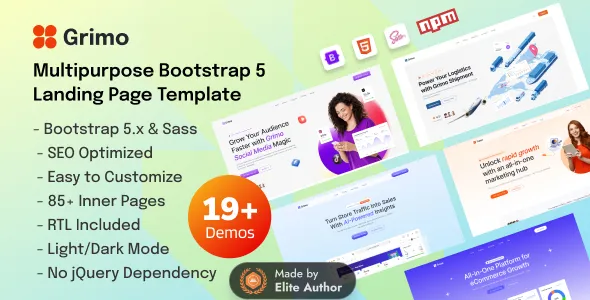
Grimo – Multipurpose Landing Page HTML Template
Grimo – Multipurpose Landing Page HTML Template is a versatile and modern website template designed for businesses, startups, creative agencies, freelancers, technology companies, and digital entrepreneurs who want to establish a professional online presence. With its multipurpose approach, Grimo offers a flexible foundation for developing landing pages that introduce products, promote services, communicate brand identity, and encourage meaningful visitor engagement. Whether you are launching a new business, presenting a digital product, promoting a mobile application, introducing a SaaS platform, or building a marketing website for a professional service, Grimo provides a starting point for creating an attractive and informative digital experience.
A successful landing page should communicate its purpose clearly, present important information in an organized way, and guide visitors toward relevant actions. Grimo can be customized to support different business objectives, including product promotion, service presentation, lead generation, campaign marketing, and brand awareness. Its multipurpose nature makes it suitable for projects that require adaptable content structures and a contemporary visual presentation.
Built with HTML, Grimo provides a frontend development foundation that developers can customize according to their requirements. HTML-based templates are useful for creating structured web pages while allowing developers to work with CSS, JavaScript, and compatible frontend technologies. The actual functionality of the finished website depends on the template package, its included resources, and any additional development or integrations implemented during customization.
What Is Grimo Multipurpose Landing Page HTML Template?
Grimo is a multipurpose HTML landing page template designed to help developers and businesses create modern promotional websites for different industries and digital projects. It provides a frontend structure that can be adapted to showcase business information, product features, services, marketing campaigns, and other relevant content.
Rather than developing every page element from scratch, developers can start with an existing website structure and customize it to meet the project’s branding and content requirements. This can help streamline the initial design and development process while providing a consistent foundation for the finished website.
A startup may use Grimo to introduce its business concept and highlight its main offerings. A creative agency can customize the template to showcase its services, projects, and professional expertise. A software company may use it to promote a digital product, while a freelancer can build a landing page to present a portfolio and attract potential clients.
The multipurpose approach makes Grimo suitable for different website objectives. However, developers should review the available layouts, included assets, and documentation to understand the exact features and customization options provided by the template.
Multipurpose Design for Different Business Requirements
Every business has different goals, audiences, and communication requirements. A multipurpose landing page template provides flexibility to organize website content according to those needs.
Grimo can be adapted for a variety of website projects, including corporate landing pages, startup websites, digital marketing campaigns, software product promotions, agency websites, personal portfolios, and professional service businesses.
For a corporate website, the landing page can focus on company information, services, achievements, and business contact details. For a creative agency, it may emphasize visual projects, service descriptions, and client-oriented content. For a digital product, the page can introduce its functionality, benefits, and intended audience.
The most effective approach is to customize the layout around a clearly defined objective. Instead of using every available section, developers should prioritize information that helps visitors understand the business and take relevant action.
A multipurpose template offers design flexibility, but its success depends on thoughtful content organization, accurate information, and a consistent visual identity.
HTML-Based Frontend Development
HTML is the fundamental language used to structure content on the web. It defines the elements that organize text, images, navigation, forms, links, and other website content.
Grimo uses HTML as its frontend foundation, making it suitable for developers who want direct access to website markup and customization. HTML templates provide a starting point for implementing page structures without requiring a particular content management system.
Developers can customize headings, paragraphs, images, navigation menus, content sections, and other elements according to project requirements. Styling can be adjusted using CSS, while JavaScript can be used to implement interactive behavior where supported or required.
HTML-based development is especially useful for projects that require a lightweight promotional website or a customized frontend experience. Developers can also integrate the template with backend technologies or external services when the website requires dynamic content or application-level functionality.
The included technologies, dependencies, and development requirements should be verified in the template documentation before beginning customization.
Modern and Professional Landing Page Layout
A professional landing page needs a well-organized structure that helps visitors understand the main message quickly. The layout should support readability, visual consistency, and convenient navigation.
Grimo provides a starting point for designing a contemporary landing page with content sections that can be customized according to the project’s objectives and the available template structure.
A typical landing page may include:
- An introductory hero section with a headline and supporting message.
- A business or product overview.
- Key features and benefits.
- Services or solutions offered.
- Product screenshots or supporting visuals.
- Testimonials or customer feedback.
- Pricing or promotional information.
- Frequently asked questions.
- Contact details and calls to action.
Not every website requires all these sections. A simple product campaign may need only a concise introduction, selected benefits, and a contact or conversion section. A corporate landing page may require more extensive information about the company and its services.
The objective is to create a logical content flow that allows visitors to explore the website without unnecessary distractions.
Responsive Design for Multiple Devices
Responsive web design is essential for creating websites that work across desktop computers, laptops, tablets, and smartphones. Visitors may access a landing page from different devices depending on their browsing habits and circumstances.
Grimo can be used as a foundation for developing responsive landing pages, with layouts customized to fit different screen sizes. A responsive structure helps maintain readable text, suitable image dimensions, and convenient navigation on smaller displays.
For mobile visitors, important information should remain easy to access. Headlines should fit comfortably within the screen, buttons should be convenient to interact with, and content sections should maintain a logical sequence.
Responsive design is particularly important for marketing campaigns because visitors may arrive through mobile advertisements, social media links, email promotions, or search results.
Developers should test the complete website across multiple screen sizes. Navigation menus, image galleries, forms, feature sections, and other interactive components may require additional adjustments depending on the implementation.
Suitable for Startup and Business Landing Pages
Startups often need a website that introduces their business concept, communicates their value proposition, and presents their products or services to potential customers.
Grimo can be adapted for startup landing pages that focus on innovation, business development, product introductions, and customer engagement. A startup can organize its page around the problem it addresses, its proposed solution, its main benefits, and its intended audience.
A technology startup might present its software platform and explain how it supports particular workflows. A business service startup could introduce its consulting or operational services. An eCommerce startup may use a landing page to promote a selected product category or seasonal campaign.
The content should communicate the business’s purpose without overwhelming visitors with unnecessary information. Clear headlines, concise descriptions, and relevant visuals can help establish a professional first impression.
A landing page should also provide a convenient way for interested visitors to request more information, explore a product, or contact the business.
Landing Pages for Digital Products and SaaS Solutions
Digital products and SaaS platforms often require dedicated landing pages to explain their capabilities and communicate their value to potential customers.
Grimo can serve as a starting point for promoting software products, online services, subscription platforms, productivity tools, business applications, and digital solutions.
A SaaS landing page may introduce the product, describe its primary features, highlight practical benefits, and explain how users can get started. Additional sections can present pricing information, product screenshots, use cases, supported integrations, and frequently asked questions.
A digital product landing page may focus on a specific offering rather than presenting an entire company website. This can help create a more targeted experience for visitors who arrive through advertisements, email campaigns, or search engine results.
When adapting the template, developers should ensure that all product descriptions and technical claims are accurate. Dynamic features such as account registration, subscription management, payment processing, or user dashboards require appropriate backend functionality or integrations unless they are explicitly included in the package.
Creative Agency and Portfolio Website Development
Creative agencies need websites that demonstrate their professional capabilities, communicate their services, and showcase selected projects. A well-designed landing page can help agencies present their brand identity and attract potential clients.
Grimo can be customized for creative studios, branding agencies, digital marketing companies, web design businesses, advertising agencies, and independent designers.
An agency landing page may include an introductory section, a summary of services, selected portfolio projects, information about the creative process, and contact details. Each section should communicate a specific aspect of the agency’s professional offering.
Portfolio content is particularly valuable when it provides context. Rather than displaying images alone, project descriptions can explain the client’s objectives, the challenge addressed, and the work completed.
Freelancers can also use Grimo to create personal portfolio landing pages. A developer may highlight technical expertise and completed projects, while a designer may focus on visual work and professional experience.
The final design should reflect the agency’s identity and the expectations of its target audience.
Customization and Brand Identity
Brand identity helps businesses create a recognizable and consistent online presence. A landing page should reflect the company’s visual style and communicate its personality through appropriate design choices.
Grimo offers a frontend foundation that developers can customize according to branding requirements and the styling options available in the package.
Customization may include:
- Brand colors and background treatments.
- Typography and heading styles.
- Navigation structure and menu presentation.
- Images, illustrations, and visual assets.
- Content section layouts.
- Button styles and calls to action.
- Spacing and alignment.
- Footer content and contact information.
A technology company may choose a clean and minimal visual presentation, while a creative business may prefer more expressive imagery and typography. A corporate organization may prioritize clarity and consistency, whereas a product-focused startup may emphasize its offering through prominent visuals.
Maintaining a consistent design across all sections helps create a cohesive user experience. Original branding and relevant images can also make the website more distinctive than an unmodified template.
User-Friendly Navigation and Content Structure
Navigation plays an important role in helping visitors understand and explore a website. A landing page should make important information easy to locate without requiring unnecessary scrolling or complicated menus.
Grimo can be customized with navigation structures that suit different project requirements. A small landing page may use a simple menu linking to key sections, while a larger business website may require links to separate service pages, portfolio content, or additional resources.
Navigation labels should be clear and descriptive. Visitors should be able to understand where a link leads before interacting with it.
Content organization is equally important. Each section should have a specific purpose and contribute to the overall message. Headlines should introduce the subject, while supporting text provides useful details.
A logical structure helps visitors move from understanding the business to exploring its offerings and identifying the next step.
Product and Service Feature Presentation
Feature sections help businesses explain their offerings and demonstrate how their products or services address customer needs.
Grimo can be customized to present features through structured content sections, visual elements, icons, illustrations, and supporting descriptions, depending on the available components.
For a SaaS product, feature sections may explain software capabilities and use cases. A professional service business can describe its areas of expertise and service process. A digital marketing agency may introduce campaign planning, content creation, analytics, and other services that it genuinely provides.
Each feature should focus on practical information rather than vague promotional language. Clear descriptions help visitors understand what is offered and whether it matches their requirements.
Feature sections should also remain visually consistent. Similar heading structures, spacing, and presentation styles can make information easier to scan and compare.
Lead Generation and Conversion-Focused Design
Many landing pages are designed to encourage visitors to take a specific action. This may involve requesting a quotation, contacting a business, registering interest, booking a consultation, or exploring a product.
Grimo can be adapted for conversion-focused landing pages by placing relevant calls to action throughout the content structure.
The introductory section can include a primary action that directs visitors toward the next step. Service descriptions can provide additional opportunities to request information, while contact sections can offer a convenient way to reach the business.
Calls to action should be specific and appropriate to the context. A software company might invite visitors to explore a product demonstration, while a consultant could encourage them to request a consultation.
If the landing page includes forms, developers should verify form validation, submission behavior, confirmation messages, and email delivery. HTML forms alone do not automatically provide secure data processing or backend functionality. These requirements should be implemented using appropriate server-side technologies or integrations.
A well-planned conversion experience should make the next step clear without overwhelming visitors with repeated or confusing requests.
SEO-Friendly Website Structure
Search engine optimization can help businesses improve the discoverability of their landing pages and website content. A well-structured HTML template provides a foundation for organizing content, but search visibility depends on several additional factors.
Grimo can be customized with SEO-friendly content and page structures according to project requirements. Developers and website owners should focus on creating useful information that addresses the needs of their target audience.
Important SEO practices include:
- Writing descriptive and relevant page titles.
- Creating original meta descriptions.
- Using a logical heading hierarchy.
- Organizing content around relevant topics.
- Adding descriptive URLs.
- Using appropriate internal links.
- Optimizing images and alternative text.
- Maintaining mobile usability.
- Improving website loading performance.
- Ensuring important content can be crawled and indexed.
A landing page should target a clear topic or business objective. Businesses can also create additional pages to cover related services, products, and informational topics where appropriate.
Keyword usage should remain natural and relevant. Excessive repetition can reduce readability and does not guarantee better search rankings.
Performance and Website Loading Optimization
Website performance contributes to a positive user experience. Visitors expect pages to load efficiently and interact smoothly, especially when browsing from mobile devices or slower connections.
The performance of a Grimo-based website depends on the template implementation, image assets, CSS, JavaScript, hosting environment, and third-party integrations.
Developers can review image sizes, optimize visual assets, and remove unnecessary resources where appropriate. Efficient CSS and JavaScript implementation can also contribute to a more responsive website experience.
Performance should be evaluated throughout development rather than only after deployment. Testing important landing pages helps identify potential issues with images, scripts, and interactive elements.
If additional animations or third-party services are introduced, their effect on page loading and responsiveness should be considered. A visually appealing website should also remain efficient and convenient to use.
Integration With JavaScript and Backend Technologies
HTML templates provide a frontend structure that can be extended using JavaScript and other compatible technologies.
Grimo can be customized with JavaScript to support frontend interactions, such as navigation behavior, visual effects, interactive elements, and other functionality included in the template or added during development.
If a project requires dynamic content, user accounts, database connectivity, payment processing, or business application functionality, additional backend development may be necessary.
Developers can integrate the template with appropriate backend frameworks, APIs, or external services according to the project requirements. The implementation should include proper validation, error handling, and testing.
It is important to distinguish between the frontend layout provided by the HTML template and the dynamic functionality developed separately. Reviewing the package documentation helps clarify what is included and what additional development work may be required.
Accessibility and User Experience Considerations
Accessibility helps make a website more usable for visitors with different abilities, devices, and browsing preferences.
When customizing Grimo, developers should consider readable text, sufficient color contrast, meaningful heading structures, descriptive link text, and appropriate alternative text for informative images.
Interactive elements should be visually distinguishable and usable with a keyboard where applicable. Navigation should remain clear, and forms should include descriptive labels and understandable validation messages.
Accessibility depends on the final implementation and the content added to the template. Developers should test customized pages rather than assuming that a prebuilt design automatically meets every accessibility requirement.
A user-friendly landing page combines accessible design, clear content, responsive behavior, and convenient navigation to create a more effective digital experience.
Who Can Use Grimo Multipurpose Landing Page HTML Template?
Grimo can be considered for a range of website projects that require a flexible HTML landing page foundation.
Startups: Introduce new business concepts, communicate value propositions, and promote products or services.
Small businesses: Create professional landing pages for company information, business offerings, and customer inquiries.
Digital marketing agencies: Present marketing services, campaign information, and professional capabilities.
Creative agencies: Showcase creative work, branding services, portfolio projects, and business information.
SaaS companies: Promote software products, subscription services, and digital platforms.
Freelancers: Build personal websites to present skills, experience, and selected projects.
Technology companies: Introduce software solutions, technical services, and innovative products.
Product marketers: Create campaign-specific landing pages for product launches and promotional activities.
Consultants: Present professional expertise, consulting services, and opportunities for prospective clients to make contact.
The suitability of Grimo depends on the requirements of the project, the available layouts, and the level of customization needed to achieve the intended result.
Documentation, Compatibility, and Development Setup
Before implementing Grimo in a project, developers should review the included documentation and verify the technical requirements.
Important considerations include the HTML structure, styling framework, JavaScript dependencies, included assets, installation instructions, browser compatibility, and any additional development requirements.
Understanding the template’s file organization helps developers identify page layouts, reusable elements, scripts, stylesheets, and supporting resources.
If the website requires additional functionality, developers should determine whether it is included in the template or needs separate implementation.
Testing the customized website in a development environment before deployment can help identify layout issues, compatibility problems, broken links, and unexpected behavior.
A structured development process helps ensure that the final website meets the business’s requirements and provides a consistent experience for visitors.
Final Thoughts on Grimo Multipurpose Landing Page HTML Template
Grimo – Multipurpose Landing Page HTML Template is a flexible frontend development option for businesses, startups, agencies, freelancers, and digital entrepreneurs looking to create a professional online presence. Its multipurpose positioning makes it suitable for a range of website projects, from corporate landing pages and SaaS promotions to creative portfolios and marketing campaigns.
With an HTML-based foundation, developers can customize page structures, visual styling, content sections, and frontend interactions according to their project requirements. This flexibility allows businesses to adapt the template to their branding, audience, and communication goals.
The effectiveness of the final website depends on thoughtful customization, original content, responsive design, accessibility, performance optimization, and appropriate technical implementation. Additional dynamic features may require backend development or external integrations, depending on the package’s included functionality.
For developers seeking a customizable HTML starting point for a modern landing page, Grimo can be evaluated as part of a broader website development strategy. With clear content organization, consistent branding, and careful implementation, it can support a professional and engaging digital experience that communicates business value and helps visitors discover relevant products and services.