My Account
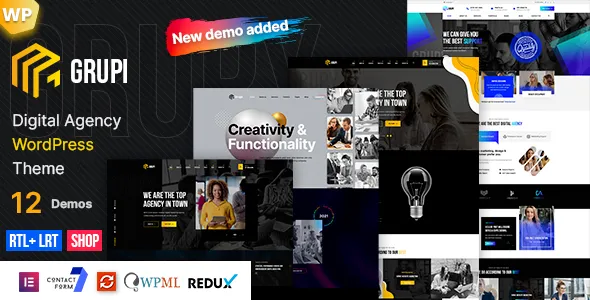
Grupi – Digital Agency WordPress Theme
Grupi – Digital Agency WordPress Theme is a modern website solution designed for digital agencies, creative studios, marketing companies, branding professionals, and businesses that want to establish a professional online presence. With a contemporary design approach and a flexible website structure, Grupi provides a foundation for presenting agency services, highlighting completed projects, introducing team members, and communicating a brand’s unique value. Whether you are building a website for a digital marketing agency, a web design studio, a creative consultancy, or a technology-focused business, this WordPress theme can help you create a polished online experience that supports your business goals.
A successful digital agency website needs to do more than display information. It should communicate expertise, build trust, explain services clearly, and encourage potential clients to take the next step. Grupi is intended for agencies that want to organize their digital presence around these priorities. By combining professional visual presentation with the content-management capabilities of WordPress, it offers a starting point for creating a website that reflects your company’s identity and makes essential information accessible to visitors.
Whether you are launching a new agency or refreshing an established business website, Grupi can serve as a foundation for presenting your brand consistently across important website sections. Its overall purpose is to help agencies communicate their services, showcase their creative work, and provide prospective customers with a convenient way to learn about their expertise.
Modern Design for Digital Agencies
First impressions play an important role in how potential clients evaluate a digital agency. Visitors often look at a company’s website to understand its capabilities, design standards, communication style, and level of professionalism. Grupi – Digital Agency WordPress Theme is suited to businesses seeking a contemporary presentation that helps communicate these qualities from the beginning of the browsing experience.
A thoughtfully arranged agency website can guide visitors through an introduction to the business, a summary of its services, examples of completed projects, and information about the people behind the company. This structure helps make complex offerings easier to understand while giving visitors clear reasons to continue exploring. With Grupi, you can build a website around your agency’s priorities and adapt its content to the audience you want to reach.
The theme can be used as a foundation for a variety of creative directions. A branding agency might emphasize visual identity projects and creative strategy, while a performance marketing company could focus on campaign management, advertising, and measurable business outcomes. A web development studio may prefer to highlight technical expertise, website launches, and digital solutions. Tailoring the website’s imagery, written content, colors, and project examples allows the overall presentation to reflect the character of your business.
A consistent visual identity also makes the website easier to recognize. By using a coordinated selection of typography, imagery, colors, and page layouts, agencies can create a professional digital environment that supports their brand rather than distracting visitors from the services being offered.
Designed for Creative and Marketing Businesses
Digital agencies operate across many industries, and their websites need to communicate different types of expertise. Grupi offers a suitable starting point for organizations that want to present specialized services through a dedicated business website.
Creative agencies can use their website to explain their approach to branding, visual communication, art direction, and content production. Digital marketing companies can organize information around search engine optimization, paid advertising, social media management, and campaign strategy. Technology agencies may focus on website development, application development, digital transformation, and business automation.
The theme can also be considered by independent consultants, small creative teams, startup service providers, and established companies that want to present their digital capabilities professionally. By adapting the content to a specific audience, businesses can make their website more relevant to the people most likely to become customers.
A focused agency website should explain not only what a company offers but also why those services matter. Clear descriptions, relevant project examples, and helpful calls to action make it easier for visitors to understand how an agency can solve their problems. Grupi provides a foundation around which these important elements can be organized.
Professional Homepage Presentation
The homepage is often the first major point of contact between an agency and a potential client. It should introduce the business, explain its main services, and establish a clear path toward further information. Grupi can be used to build a homepage that communicates the agency’s purpose without overwhelming visitors with unnecessary details.
An effective homepage may include a prominent introductory section, a concise description of the agency, a selection of core services, featured projects, client feedback, and contact information. The exact layout and available sections depend on the theme’s supplied design and configuration, but these content elements provide a useful structure for most agency websites.
The opening section should quickly answer three questions: what the agency does, who it helps, and what makes its approach valuable. A clear headline supported by concise explanatory text gives visitors an immediate understanding of the business. A relevant call to action can then direct them toward a service page, portfolio, consultation request, or contact form.
Further down the homepage, service summaries can help visitors identify the solutions that match their needs. Featured projects provide practical examples of the agency’s work, while an introduction to the team or company story adds a human element to the presentation. Contact information at appropriate points throughout the page helps interested visitors move forward without searching extensively.
When planned carefully, these elements turn the homepage into a useful introduction to the agency and its capabilities.
Flexible Service Page Structure
Service pages are essential for digital agencies because they explain the value of individual offerings in greater detail. A general list of services may introduce the company’s capabilities, but dedicated pages allow visitors to understand the scope, process, and benefits of each solution.
With Grupi, you can organize your agency’s content around the services most relevant to your business model. A digital marketing agency could create separate pages for SEO, paid media, content marketing, and social media strategy. A creative studio might develop pages for brand identity, graphic design, website design, and creative direction. A technology consultancy could describe web development, software integration, and digital consulting.
Each service page should focus on the questions potential clients are likely to ask. Explain the problem the service addresses, describe the approach your team follows, outline the expected deliverables, and clarify how customers can get started. Where appropriate, include examples of related projects or testimonials from previous clients.
This approach improves the usefulness of the website and creates opportunities to target specific search queries. Instead of relying on one broad agency page, businesses can publish detailed information that aligns with the needs and interests of different customer groups.
Clear service organization also makes the website easier to maintain as the agency grows. New offerings can be introduced through additional pages, while existing pages can be updated when the company’s processes, target audience, or service packages change.
Portfolio and Project Showcase
A portfolio is one of the most valuable elements of a creative agency website. Potential customers want to see evidence of an agency’s experience, understand the type of work it produces, and evaluate whether its style and expertise match their requirements.
Grupi can provide a starting point for presenting selected projects in an organized and visually engaging way. Agencies can use project descriptions, screenshots, photography, and supporting content to explain their work and demonstrate their capabilities. The exact portfolio layouts and project features available should be confirmed against the theme’s current version and documentation.
An effective portfolio should do more than display attractive images. Whenever possible, explain the client’s original challenge, the strategy behind the project, the services provided, and the final outcome. This gives prospective customers useful context and helps them understand how the agency approaches real business problems.
For example, a branding project might explain how a company developed a new visual identity to appeal to a different audience. A website project could describe the objectives behind a redesigned digital experience. A marketing case study might discuss campaign planning, audience targeting, and verified performance results.
Use genuine project information and obtain the necessary permissions before publishing client materials. Accurate case studies build credibility and demonstrate expertise without relying on unsupported claims.
A carefully maintained portfolio also gives agencies useful content for social media, sales presentations, and other marketing activities. The website becomes a central destination where prospective clients can explore the quality and relevance of the agency’s work.
Suitable for Digital Marketing Agencies
Digital marketing businesses need websites that explain their strategies and show how their services support client growth. Grupi can serve as a foundation for presenting a range of marketing solutions, including search engine optimization, content planning, paid advertising, social media marketing, email campaigns, and digital analytics.
A marketing agency website should make its service offering easy to understand. Instead of using vague statements, describe what each service includes and how it fits into a broader marketing strategy. Visitors should be able to identify whether the agency supports brand awareness, qualified lead generation, customer acquisition, online visibility, or another business objective.
You can also use educational content to explain common marketing challenges and demonstrate the team’s knowledge. Articles about search optimization, content strategy, campaign planning, and website performance can provide value to visitors while supporting a long-term content marketing strategy.
Where the agency has permission to share results, case studies can illustrate the impact of its work. Clearly distinguish measured outcomes from general expectations, and explain the timeframe and circumstances behind any performance figures.
By combining service descriptions, useful educational resources, and relevant project examples, businesses can create a digital marketing website that communicates their expertise and encourages qualified inquiries.
Ideal for Branding and Creative Studios
Branding agencies and creative studios need a website that communicates originality while maintaining clarity and usability. Their visitors often evaluate visual quality, creative thinking, consistency, and the agency’s ability to understand a brand’s personality.
Grupi can be adapted to present services such as brand strategy, logo design, visual identity, graphic design, creative direction, advertising concepts, and digital content production. A carefully selected visual style can help communicate the agency’s creative philosophy while allowing the work itself to remain the main focus.
High-quality project imagery can make portfolio sections more engaging, but visual presentation should be supported by informative descriptions. Explain the thinking behind a design, the intended audience, and the goals the project was created to achieve. This helps prospective customers see the value of the agency’s process rather than judging the work solely by appearance.
Creative businesses can also use their website to share their story, introduce their team, and explain what distinguishes their approach. A concise description of the agency’s values and working methods can help visitors decide whether the business is the right partner for their project.
Consistency across the website is especially important for branding companies. Typography, color selection, photography, spacing, and written tone should work together to demonstrate the same attention to detail that the agency promises to deliver for its clients.
Useful for Web Design and Development Companies
Web design and development agencies need a professional online presence that demonstrates both creative ability and technical understanding. Their website should explain how they help clients plan, build, improve, and maintain digital products.
Grupi can be used as a starting point for presenting services such as website design, WordPress development, front-end development, custom web solutions, user experience design, website redesign, and ongoing support. Businesses can create individual service pages to explain their process and identify the types of projects they are equipped to handle.
Project examples are particularly valuable for web development companies. A portfolio can include website screenshots, project objectives, design decisions, and relevant technical details that the agency is permitted to disclose. These examples help prospective clients evaluate whether the team has experience with similar requirements.
A development agency may also benefit from explaining its project workflow. Information about discovery, planning, design, implementation, testing, launch, and maintenance can set realistic expectations and help clients understand how collaboration works.
Technical claims should remain accurate and specific. If your company specializes in particular platforms, frameworks, integrations, or content management systems, describe those skills directly instead of making broad promises that are difficult to verify.
With a well-organized website, development teams can communicate their expertise in a way that is accessible to business owners as well as technical decision-makers.
Responsive Website Experience
Visitors access agency websites through a variety of devices, including desktop computers, laptops, tablets, and smartphones. A responsive design is therefore an important consideration when selecting a WordPress theme.
Grupi is intended for modern agency website projects, where content should be presented clearly across different screen sizes. Before launching, test the installed theme on commonly used devices and browsers to confirm that the layout, navigation, images, and interactive elements work as expected.
Mobile visitors should be able to read service descriptions, explore projects, open navigation menus, and contact the agency without unnecessary difficulty. Text should remain readable, buttons should be convenient to use, and important information should not become hidden behind oversized visual elements.
Responsive presentation can also influence the quality of the overall user experience. When a website adjusts appropriately to different screen sizes, visitors can focus on the information they need rather than struggling with awkward layouts or difficult navigation.
For best results, optimize images, avoid unnecessarily large page sections, and test forms and menus on touch-enabled devices. Responsive behavior and performance can depend on the theme version, selected plugins, custom styling, and hosting environment, so testing is an essential part of the website setup process.
Built on the WordPress Content Management Platform
WordPress is widely used for business websites because it provides a content management environment for publishing pages, updating articles, managing media, and organizing website information. Grupi is designed for use within the WordPress ecosystem, making it a potential choice for agencies that want to manage their website content through this platform.
A WordPress-based workflow can help agency teams update service information, publish project stories, introduce staff members, and maintain a company blog without rebuilding the entire website whenever content changes. Depending on the theme’s implementation and the tools installed, users may also have options for adjusting page layouts and visual elements.
Before installation, review the theme’s stated WordPress requirements, supported PHP versions, bundled dependencies, and recommended plugins. Confirm that the theme is compatible with your intended hosting setup and any existing website functionality you plan to retain.
It is also good practice to test changes on a staging website before applying them to a live business site. Backups, updates, and compatibility checks can help reduce the risk of unexpected problems during maintenance.
By combining the flexibility of WordPress with a design suited to agency businesses, Grupi can provide a practical foundation for managing a professional company website over time.
Opportunities for Search Engine Optimization
Search engine optimization can help potential customers discover an agency when they search for relevant services. A well-structured website makes it easier for visitors and search engines to understand what the company offers, which audiences it serves, and where its expertise lies.
Grupi can be used as part of an SEO-focused website strategy when its page structure is combined with helpful content, descriptive titles, relevant internal links, and appropriate technical configuration. A theme alone cannot guarantee search rankings, but it can support the presentation of content that forms part of a broader optimization effort.
Begin by creating a clear page for each important service. Use headings that describe the content accurately and write page titles and meta descriptions that reflect the subject of each page. Include relevant search terms naturally rather than repeating the same phrases excessively.
For example, an agency that serves local businesses may publish dedicated pages describing its location, target industries, and relevant services. A specialized development studio could create informative pages for the technologies and project types it genuinely supports.
Image optimization is another useful consideration. Use descriptive file names and meaningful alternative text where appropriate, compress images to reduce unnecessary page weight, and avoid uploading multiple oversized versions of the same asset.
A blog can provide additional opportunities to answer questions that prospective customers are researching. Articles about marketing strategy, website planning, brand development, and digital business challenges can attract relevant visitors when they offer original, useful information.
Finally, monitor the website with appropriate analytics and search performance tools. Review which pages attract visitors, which search queries generate impressions, and where users tend to leave the website. Use this information to improve content quality and navigation over time.
Content Marketing and Agency Blogging
A blog can help a digital agency demonstrate expertise while providing practical information to existing and potential customers. Rather than publishing content solely to fill a website, agencies can create articles that answer real questions and explain the reasoning behind their services.
With Grupi, a company can plan a content strategy around its areas of specialization, provided the installed configuration supports the required blog presentation. Possible topics include website design principles, marketing campaign planning, branding fundamentals, content strategy, search engine optimization, and digital transformation.
Educational content should focus on the audience’s needs. A small business owner may want to understand the difference between a website redesign and a new website project, while a marketing manager may be researching campaign measurement or lead generation strategies.
Publishing useful content regularly can create opportunities to link articles to relevant service pages and project examples. These internal links help visitors explore related information and provide a logical path from educational material to the agency’s commercial offerings.
A sustainable publishing schedule is generally more useful than producing a large number of repetitive articles. Focus on accuracy, original insights, clear structure, and practical recommendations. Update older articles when information becomes outdated, and make sure claims are supported by reliable evidence.
When supported by thoughtful planning, an agency blog can become an ongoing resource for building trust, explaining complex services, and attracting visitors with relevant interests.
Build Trust with Team and Company Information
Choosing an agency often involves a significant investment of time and money. Prospective clients therefore want to know who they will work with, how the company operates, and whether its expertise matches their project requirements.
Grupi can be adapted to present company information that helps visitors understand the people and principles behind the business. Depending on the website’s chosen layout, useful content may include an agency introduction, team profiles, company milestones, areas of expertise, and a description of the working process.
Team profiles can introduce relevant experience and responsibilities without overwhelming visitors with unnecessary personal details. An agency introduction can explain why the business was established, the customers it serves, and the values that guide its work.
Testimonials and client references may also contribute to credibility when they are genuine and used with permission. If the agency publishes client logos, endorsements, or case studies, make sure the materials are accurate and that any required authorization has been obtained.
Avoid presenting fabricated awards, invented customer feedback, or unsupported performance claims. A trustworthy website is built through clear communication, useful information, and evidence that visitors can evaluate for themselves.
These elements help transform a generic business website into a more personal introduction to the agency and the people responsible for delivering its services.
Lead Generation and Contact Opportunities
A digital agency website should make it easy for interested visitors to begin a conversation. Even a visually impressive website may lose potential opportunities if its contact process is confusing or difficult to find.
Grupi can serve as a foundation for a contact-focused website experience, with calls to action directing visitors toward inquiries, consultation requests, project discussions, or other relevant next steps. The precise form functionality depends on the installed theme, compatible plugins, and chosen configuration.
Place contact opportunities where they make sense in the visitor journey. Someone reading a service page may be ready to discuss a project, while someone exploring a portfolio may first want to learn more about the agency’s process. Clear links and appropriately placed calls to action can accommodate both situations.
A contact form should request only the information needed to respond effectively. Depending on the agency’s workflow, this might include a name, business email address, project category, approximate budget, and a short description of the requirements.
Make sure forms are tested before launch. Confirm that submissions reach the correct email address, validation works as expected, and confirmation messages provide useful next steps. Privacy information should also be accessible wherever personal information is collected.
For agencies that receive inquiries from multiple sources, a consistent process for reviewing and responding to leads can help prevent missed opportunities. The website should be supported by a clear internal workflow so that prospective clients receive timely and relevant communication.
Customization for Your Brand Identity
Every agency has its own audience, service offering, and visual personality. A successful website should reflect those differences rather than looking like a generic copy of another business.
Grupi can be considered as a design foundation that agencies adapt to their own branding requirements. Depending on the available theme options, customization may involve colors, typography, imagery, logos, page content, and other presentation settings. Review the current theme documentation to identify the exact customization methods and supported design controls.
Start with the agency’s established visual identity. Use the correct logo, brand colors, and typography wherever possible, and select imagery that supports the company’s positioning. A creative studio may prefer a bold visual approach, while a consulting agency may benefit from a more restrained and information-focused design.
Content customization is equally important. Replace generic introductory text with clear explanations of your services and business advantages. Add authentic project examples, update team information, and make sure every page reflects the agency’s actual capabilities.
Navigation should also be organized around the way customers look for information. Keep the main menu focused on important sections, and avoid including too many competing links at the same level.
If additional custom code is required, use an approach that is compatible with the theme’s update process. A child theme or another documented customization method may help preserve modifications when the parent theme receives updates.
User-Friendly Navigation and Information Architecture
Website navigation helps visitors understand where they are and how to find relevant information. For an agency website with multiple services and portfolio projects, a clear information architecture is especially valuable.
Grupi can be configured around a straightforward navigation structure that groups related pages into logical categories. A typical agency website might include Home, About, Services, Portfolio, Blog, and Contact sections, with additional pages added when the business needs them.
The best navigation structure depends on the agency’s size and business model. A small creative studio may need only a few primary pages, whereas a larger company with several specialized teams may benefit from service categories and more detailed project organization.
Keep menu labels clear and familiar. Visitors should not need to guess what a page contains based on an abstract or overly creative title. Use descriptive page headings and provide internal links that connect related services, articles, and portfolio entries.
Long pages should also be divided into meaningful sections so visitors can scan the content before deciding what to read. Short paragraphs, informative subheadings, and descriptive links can improve readability and make complex information easier to navigate.
Review the website from the perspective of a first-time visitor. Check whether someone can quickly identify your main services, find relevant work, understand your agency’s experience, and discover how to make contact.
Performance and Website Maintenance
Website performance affects how visitors experience an agency’s online presence. Pages that load slowly or respond inconsistently can make it harder for users to explore services and complete important actions.
Grupi’s performance on a live website will depend on several factors, including the theme implementation, image sizes, active plugins, hosting quality, caching configuration, external scripts, and custom code. The theme itself should therefore be evaluated as part of the complete website environment rather than treated as the only factor influencing speed.
Use appropriately sized images and compress visual assets before uploading them. Remove unnecessary plugins, keep the WordPress installation updated, and review third-party scripts that may add unnecessary requests. A caching solution and a suitable hosting environment may also improve performance when configured correctly.
After making substantial design or plugin changes, test important pages on both desktop and mobile devices. Check the homepage, service pages, portfolio entries, blog posts, and contact forms to make sure the website continues to function as expected.
Regular maintenance should include backups, security reviews, compatibility checks, and updates to the theme, WordPress core, and plugins. Before applying significant updates to a production website, consider testing them on a staging environment.
A maintenance routine helps keep the website dependable and reduces the likelihood that technical problems will interfere with client inquiries or business operations.
Security and Responsible Website Management
An agency website may contain business information, project details, contact forms, and other content that should be managed carefully. Security should be considered throughout the setup and maintenance process.
Start by obtaining Grupi from a legitimate source and reviewing its installation instructions and update policy. Check the stated requirements, confirm compatibility with your WordPress environment, and install only the plugins needed for your website’s intended functionality.
Use strong administrator passwords and enable appropriate account protection measures where available. Limit administrator access to trusted users who require it, and assign lower permission levels to team members when those permissions are sufficient for their responsibilities.
Keep WordPress, the theme, and plugins updated after reviewing compatibility and maintaining current backups. Remove unused plugins and themes when appropriate, and use reputable security tools if they suit the website’s needs.
Contact forms should be configured responsibly, especially if they collect personal information. Publish an appropriate privacy policy, limit data collection to what is necessary, and follow the privacy requirements applicable to your business and visitors.
Security cannot be guaranteed by a theme alone. Reliable hosting, sensible account management, timely updates, and regular monitoring all contribute to a more secure WordPress website.
Accessibility and Readable Content
An effective agency website should make its information accessible to as many visitors as reasonably possible. Readable typography, logical headings, clear navigation, and sufficient visual contrast contribute to a more inclusive browsing experience.
When customizing Grupi, choose font sizes that remain comfortable to read on smaller screens. Avoid using color as the only way to communicate important information, and make sure interactive elements have clear labels and visible focus states where applicable.
Images that communicate meaningful information should include appropriate alternative text. Decorative images can be handled differently depending on their implementation. Headings should follow a logical structure so visitors can understand the relationship between major sections and supporting content.
Forms should use descriptive labels and provide helpful feedback when information is missing or entered incorrectly. Links should explain their destination instead of relying exclusively on vague phrases.
Accessibility depends on the entire website, including its content, theme implementation, plugins, and customizations. Test important pages with keyboard navigation and, where possible, assistive technologies. Address any problems identified during testing rather than assuming that a responsive layout automatically makes the website accessible.
Website Setup and Implementation
Planning the website before installation can make the setup process more efficient. Begin by identifying the agency’s audience, primary services, visual identity, and main conversion goals. These decisions will help determine which pages are required and what information each page should contain.
Next, review the theme package and official documentation to understand the installation process, available layouts, required plugins, and any included demo content. The exact setup process may differ depending on the version and distribution of Grupi.
Install the theme in a suitable WordPress environment and follow the documented instructions. If demo content is available, it may help you understand the intended page structure, but replace sample text, images, and placeholder details before publishing the website.
Create your main pages and organize the navigation around the information your visitors need most. Configure the website title, logo, typography, colors, permalink structure, and other relevant settings according to the options available in your installation.
Then add authentic service descriptions, project examples, team information, and contact details. Install only the plugins needed for functions such as forms, search optimization, security, caching, or analytics, and verify compatibility before relying on them.
Finally, test the complete website. Review links, forms, responsive layouts, page titles, image loading, and navigation behavior. Check that contact submissions reach the intended destination and that visitors can access the information required to make an informed decision.
Who Should Choose Grupi – Digital Agency WordPress Theme?
Grupi may be a suitable option for businesses that want to create or refresh an agency-focused WordPress website. Its intended audience includes organizations that need a professional way to introduce their services, present creative work, and communicate with prospective clients.
Digital marketing agencies: Businesses offering SEO, paid advertising, social media management, content marketing, and campaign strategy can use an agency website to explain their services and share relevant case studies.
Creative studios: Branding companies, graphic designers, art directors, and creative teams can build a website around their portfolio, design philosophy, and specialized services.
Web design agencies: Website designers can organize their projects, explain their process, and introduce the solutions they offer to different types of customers.
Web development companies: Development teams can use service pages and technical project examples to communicate their experience with websites, digital products, and integrations.
Business consultants: Consultants specializing in digital strategy, business growth, or technology services can create an online presence that explains their approach and encourages qualified inquiries.
Startups and small businesses: New companies that need a dedicated website for their agency or digital service business can use a theme-based starting point rather than designing every page from scratch.
Freelancers and independent professionals: Individual service providers can adapt an agency-style website to introduce their skills, display selected projects, and make their contact details easy to find.
Before selecting the theme, compare its current features, available page layouts, support arrangements, licensing terms, and compatibility requirements with your project. This ensures that the theme is appropriate for your intended use and avoids relying on features that may not be included.
Benefits of Using a Dedicated Agency WordPress Theme
Choosing a theme created for agency websites can provide a more relevant starting point than adapting a design intended for an unrelated industry. Grupi is positioned for the digital agency category, making it worth considering for businesses that want their website to focus on services, projects, company information, and client communication.
A theme-based approach can help establish a consistent visual direction across different pages. Rather than designing every component independently, the website owner can begin with the theme’s available layouts and then adapt the content and styling to suit the business.
WordPress also provides a familiar content-management workflow for many website owners. Once the site has been configured, authorized users can update page content, publish articles, replace images, and maintain business information through the available administration tools.
Another potential advantage is the ability to expand the website gradually. An agency may begin with a homepage, services, portfolio, and contact page before adding articles, detailed case studies, additional service pages, or other content as its business develops.
However, the actual benefits depend on the theme’s implementation, the available documentation, and the requirements of the project. Reviewing a current demo and testing the theme before committing to a production website is a sensible way to evaluate its suitability.
Best Practices for Creating an Effective Agency Website
A well-designed theme is only one part of a successful online presence. The quality of the content, the clarity of the service offering, and the reliability of the website all influence how visitors perceive an agency.
Start by identifying the primary audience and writing content that addresses its real needs. Explain the services in straightforward language and avoid relying on generic marketing phrases that do not communicate a clear benefit.
Keep the most important information easy to find. Visitors should be able to understand the agency’s main offering, review relevant work, learn about its process, and make contact without unnecessary steps.
Use authentic imagery and accurate project examples. Where client work is confidential, obtain permission before sharing details or use an appropriate anonymized presentation. Avoid making performance claims that cannot be supported.
Pay attention to the technical foundation. Keep the theme and plugins updated, optimize images, test the website on mobile devices, and maintain backups. Review analytics and search performance regularly to identify opportunities for improvement.
Finally, treat the website as an ongoing business asset rather than a one-time design project. Update outdated information, publish useful content when appropriate, improve pages based on visitor behavior, and make sure contact processes continue to work correctly.
Conclusion
Grupi – Digital Agency WordPress Theme is a theme option to consider when creating a professional website for a digital agency, creative studio, marketing business, web design company, or technology service provider. It offers a starting point for presenting company information, organizing service descriptions, showcasing project work, and guiding potential customers toward relevant next steps within a WordPress-based website.
By combining a consistent visual identity with clear navigation, useful content, genuine portfolio examples, and accessible contact opportunities, agencies can develop an online presence that communicates their capabilities more effectively. Search optimization, responsive testing, performance improvements, and ongoing maintenance can further support the site’s usefulness as the business grows.
For the best results, review the current Grupi theme demo, documentation, supported requirements, and licensing details before installation. Confirm which layouts and functions are included in the version you intend to use, and test the complete website after setup. With thoughtful customization and a content strategy focused on customer needs, Grupi can serve as a foundation for an agency website designed to communicate expertise, strengthen brand recognition, and support long-term digital business goals.