My Account
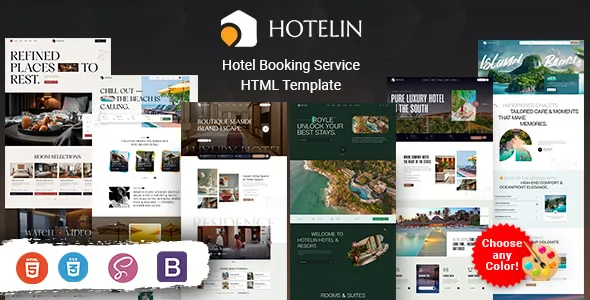
Hotelin – Hotel Booking HTML Template
Hotelin – Hotel Booking HTML Template is a website template designed for hotels, resorts, boutique accommodations, guesthouses, hospitality businesses, and travel-related service providers looking to establish a professional online presence. Created for hotel booking and hospitality website projects, Hotelin provides a starting point for presenting accommodation options, showcasing property facilities, communicating guest services, and guiding visitors toward reservation inquiries. Its HTML-based structure can be customized by developers to match different hospitality brands, property styles, and business requirements.
In the competitive hospitality industry, a well-designed website helps travelers discover accommodation, explore room options, review amenities, and make informed booking decisions. Guests often compare room types, location, available facilities, pricing, and reservation policies before choosing a property. A clear and attractive website can help hotels communicate these details while presenting a consistent brand identity.
Hotelin can be considered for hotel websites that need to showcase rooms, suites, dining facilities, leisure amenities, special offers, and essential guest information. Depending on the template’s included pages and components, developers can adapt its layout to support a small boutique hotel, a luxury resort, a business hotel, a family accommodation provider, or a hospitality group. The actual booking functionality depends on the implementation: a booking-themed interface does not automatically provide live room availability, payment processing, reservation management, or integration with a hotel management system.
What Is Hotelin – Hotel Booking HTML Template?
Hotelin is an HTML website template intended for hotel booking and hospitality-related website projects. It offers a design foundation that developers can use to build pages introducing a property, displaying accommodation options, describing facilities, and providing information for prospective guests.
HTML templates are commonly used to structure website content and interface elements. Depending on the supplied files, a template may also include CSS styling, JavaScript interactions, responsive layouts, and other frontend assets that help developers customize the website.
For a hotel business, this foundation can be adapted to present room categories, property photographs, restaurant information, leisure facilities, guest services, location details, and contact options. A hotel can use these sections to communicate its atmosphere and explain what guests can expect during their stay.
The precise page collection, design elements, scripts, and supported interactions included with Hotelin should be confirmed through its current product demo and documentation. Developers should also check whether the template requires particular libraries, build tools, or additional integrations.
A functional reservation system typically requires more than static HTML. If the business needs live availability, date selection, guest management, booking confirmation, or online payments, those capabilities must be supplied by a compatible booking platform, backend application, or third-party integration.
Modern Website Design for the Hospitality Industry
A hotel website should communicate comfort, quality, convenience, and the character of the property. Visitors often make their initial judgments based on the website’s visual presentation, room photographs, descriptions, and ease of navigation.
Hotelin can provide a starting point for creating a hospitality website that combines visual presentation with useful guest information. Developers can organize the content to introduce the property, highlight accommodation options, explain facilities, and help visitors find reservation details.
A strong homepage typically presents the property’s identity, a selection of accommodation options, important amenities, and clear pathways to room information or booking inquiries. Supporting sections can explain the hotel’s location, dining options, leisure facilities, and special services.
Photography is particularly important in hospitality. High-quality images of rooms, suites, common areas, restaurants, swimming pools, gardens, and surrounding attractions can help guests understand the property’s atmosphere. Images should accurately represent the accommodation and avoid creating expectations that the actual property cannot meet.
Consistent typography, spacing, colors, and navigation can help maintain a professional appearance throughout the website. With appropriate customization, Hotelin can be adapted to reflect a property’s brand, target audience, and hospitality offering.
Suitable for Hotels, Resorts, and Boutique Accommodations
Hospitality businesses differ in size, style, location, and target market. A business hotel may focus on convenience and work-friendly facilities, while a resort may emphasize relaxation, recreation, and on-site experiences. Boutique accommodations may prioritize individuality, design, and personalized service.
Hotelin can be evaluated for different types of hospitality websites, including:
- Hotels: Present room categories, guest facilities, dining options, and property information.
- Luxury resorts: Showcase suites, leisure amenities, spa facilities, restaurants, and premium guest experiences.
- Boutique hotels: Communicate distinctive interiors, personalized service, and the property’s individual character.
- Business hotels: Highlight location, meeting facilities, connectivity, and services relevant to business travelers.
- Guesthouses and inns: Provide accommodation details, house policies, local information, and contact options.
- Holiday accommodations: Present rooms, suites, or other available lodging options for leisure travelers.
- Hospitality groups: Establish a consistent presentation for a property or a collection of accommodations, subject to suitable customization.
The final website should reflect the property’s real facilities and services. Clear, accurate descriptions help prospective guests understand whether the accommodation matches their travel plans.
Room Listings and Accommodation Details
Room presentation is one of the most important parts of a hotel website. Guests need to understand the differences between available room categories, including occupancy, bed arrangements, amenities, and other conditions that may affect their stay.
Hotelin can serve as a foundation for creating accommodation pages or room listings, depending on the layouts included with the template. Developers can customize these sections to present room photographs, descriptions, facilities, and relevant pricing information.
A room detail page may include the room category, approximate size, bed configuration, maximum occupancy, available amenities, and applicable policies. Hotels may also explain whether the room includes a balcony, a particular view, a workspace, or additional sleeping arrangements when those features are available.
Room photographs should be clear and representative. A combination of wide-angle views and selected detail images can help visitors understand the layout and atmosphere without relying on excessive promotional language.
If the property offers several room categories, a comparison layout can help guests understand the differences. The descriptions should explain meaningful distinctions instead of repeating the same content for every room.
Live availability and room inventory require an operational booking system or property management integration. A static room listing can present accommodation information, but it cannot independently confirm whether a room is available for a particular date.
Hotel Booking and Reservation Experience
An effective hotel website should make it easy for guests to explore accommodation options and understand how to reserve a room. A straightforward reservation journey can reduce confusion and help visitors find the information required before completing a booking.
Hotelin is designed around the hotel booking website category, making it a potential starting point for a reservation-focused interface. Depending on the included components, developers may customize date selection fields, guest information sections, room links, reservation buttons, and other booking-related visual elements.
However, it is important to distinguish between a booking interface and a fully operational reservation system. A functional booking process generally needs to check room availability, calculate applicable rates, validate guest information, store reservations, and provide confirmation.
Hotels that accept online payments may also need a payment gateway and appropriate transaction handling. A property management system or booking engine may be required to synchronize reservations, room inventory, cancellation policies, and rate changes.
Before deployment, verify whether Hotelin includes any working booking integration or only the frontend presentation. If a separate booking platform is used, ensure that the reservation links and forms connect to the correct system and that the complete guest journey is tested.
Responsive Design for Mobile and Desktop Visitors
Travelers use different devices when researching and booking accommodation. A guest may discover a hotel on a smartphone, compare room options on a laptop, and complete a reservation later on a tablet or desktop computer.
A responsive website adapts its layout to the available screen size, helping content remain accessible across different devices. Hotelin should be tested using its current demo and actual implementation to confirm how its pages behave on mobile, tablet, and desktop screens.
Room cards, photographs, menus, and booking forms need particular attention. Large images should fit the screen without unnecessary cropping, while text should remain readable and interactive elements should be easy to select.
Navigation should allow visitors to reach important pages such as Rooms, Facilities, About, Location, and Contact without excessive scrolling or complicated menus. Booking-related controls should remain clear and usable on smaller screens.
Responsive behavior can be affected by custom CSS, third-party scripts, image sizes, and external widgets. Developers should test all major pages after making changes and verify that the website remains usable at common viewport sizes.
A well-tested mobile experience helps guests access accommodation information conveniently while traveling or planning a trip.
Showcase Hotel Amenities and Guest Services
Hotel amenities can strongly influence a guest’s accommodation decision. Travelers may look for facilities such as restaurants, room service, Wi-Fi, parking, swimming pools, fitness areas, meeting rooms, or accessibility features.
Hotelin can be customized to present the property’s amenities and guest services in a clear, organized format. Dedicated sections can explain the facilities available on-site and help visitors understand which services are relevant to their needs.
A resort may highlight leisure facilities, gardens, wellness services, and recreational activities. A business hotel may emphasize meeting spaces, work-friendly rooms, connectivity, and transport access. A family accommodation provider may focus on family rooms, dining arrangements, and other suitable facilities.
Every amenity description should reflect what the property actually offers. If a service is available only during certain hours, requires an additional fee, or must be reserved in advance, that information should be explained clearly.
Where useful, photographs and short descriptions can help visitors understand the facilities before arrival. Accurate information supports guest expectations and reduces the likelihood of confusion after a reservation.
Restaurant, Dining, and Hospitality Features
Many hotels provide restaurants, cafés, bars, breakfast services, or other dining options. These facilities can be an important part of the guest experience and may deserve dedicated presentation on the website.
Hotelin may be adapted to include dining information through suitable page layouts or customized content sections. A restaurant page can introduce the dining concept, describe available meal options, display representative photographs, and explain opening hours where applicable.
Hotels offering breakfast packages or meal plans should describe the relevant conditions clearly. Guests may need to understand whether breakfast is included in a room rate, whether restaurant reservations are required, and whether special dining arrangements are available.
Visual presentation should support the property’s brand and accurately represent its dining facilities. Menus, food photographs, and service descriptions should remain current.
If the hotel accepts restaurant reservations or dining orders online, the required functionality may need a separate reservation platform or backend integration. A static restaurant section can communicate information but does not automatically manage bookings, orders, or payments.
Location Information and Nearby Attractions
Location is often a major factor in choosing accommodation. Travelers may prioritize proximity to business districts, transport stations, tourist attractions, beaches, conference venues, shopping areas, or other destinations.
Hotelin can be customized to present the property’s address, contact details, directions, and relevant nearby attractions. A location section can help visitors understand where the hotel is situated and how it relates to their travel plans.
Descriptions should use accurate geographic information and explain practical details, such as nearby transport options or approximate distances to important destinations, when those details have been verified.
Hotels serving business travelers may emphasize access to commercial areas and conference facilities. Leisure accommodations may highlight nearby attractions, outdoor activities, cultural destinations, or dining options.
An interactive map can be added if supported by the website’s implementation or a compatible mapping service. Such functionality may require an API key or an external service configuration.
Location content should be maintained as surrounding businesses, transport arrangements, and attractions change. Accurate information helps visitors plan their stay more effectively.
Special Offers, Packages, and Seasonal Promotions
Hotels frequently create special offers to attract different types of travelers. These may include seasonal packages, extended-stay rates, honeymoon arrangements, family offers, business travel packages, or promotions tied to local events.
Hotelin can provide a starting point for presenting promotional content through suitable banners, offer cards, or dedicated pages, depending on its included layouts.
A promotion should clearly explain its applicable dates, included services, booking conditions, and any restrictions. For example, an extended-stay package may require a minimum number of nights, while a seasonal offer may apply only during a specified period.
Visual elements should attract attention without making the terms difficult to find. Visitors should be able to understand the value of an offer and determine whether it applies to their travel dates.
If special offers are connected to live room rates or booking inventory, the promotional information should be synchronized with the operational booking system. A static banner cannot automatically adjust prices or verify eligibility.
Keeping promotions accurate and up to date helps maintain a professional website and reduces the risk of presenting offers that are no longer available.
Customization and Hotel Brand Identity
A hotel website should communicate the property’s unique identity. A boutique hotel may use distinctive typography and photography, while a family resort may emphasize spacious layouts, activities, and welcoming imagery. A business hotel may prefer a structured presentation focused on convenience and practical services.
Hotelin can be evaluated as a design foundation for different visual identities. Depending on the supplied source files and styling options, developers may customize colors, fonts, spacing, images, section layouts, and other presentation elements.
A consistent visual system should be applied across the homepage, room listings, amenity pages, restaurant sections, and contact information. This helps visitors recognize the brand and navigate the website comfortably.
Use the hotel’s actual logo and property photography where possible. Placeholder images should be replaced with accurate visuals, and all room descriptions should reflect the accommodation being offered.
Before making extensive modifications, review the template’s file structure and documentation. Developers should keep backups of the original files and test major changes before deploying the website.
SEO-Friendly Structure for Hotel Websites
Search engine optimization helps hotels improve their visibility when travelers search for accommodation and hospitality services. A well-organized website provides a foundation for presenting relevant content, but search performance also depends on competition, technical quality, location, reputation, and other factors.
Each important page should have a descriptive title, a clear heading structure, and content that addresses the visitor’s needs. A hotel may create separate pages for rooms, suites, dining, meeting facilities, wellness services, and special packages when those pages provide genuinely useful information.
Location-related content can help visitors understand where the property is situated. Hotels should use accurate location names and explain nearby attractions or transport options where relevant. Avoid creating repetitive location pages that provide little value.
Image optimization is especially important for hotel websites because large photographs can affect loading performance. Use appropriately sized image files and descriptive alternative text for meaningful images.
Internal links can connect room listings with relevant amenities, offers, and booking information. This helps visitors explore related content and understand the property’s services.
Depending on the implementation, developers may need to configure meta descriptions, canonical URLs, XML sitemaps, structured data, and other technical SEO elements. These features should be verified rather than assumed to be included automatically.
No HTML template guarantees specific search rankings or booking volumes. Useful content, accurate business information, technical maintenance, and a good user experience contribute to a stronger website foundation.
Website Performance and Image Optimization
Website speed can influence how comfortably visitors explore hotel pages. Slow-loading photographs or poorly optimized scripts may make it harder for guests to compare rooms or review amenities, particularly on mobile connections.
Hotelin’s performance depends on the supplied assets, code structure, hosting environment, image formats, scripts, and any third-party integrations added during customization. Using an HTML template does not automatically guarantee fast loading.
Developers should optimize room photographs, banners, gallery images, and other large media assets. Images should be sized appropriately for their display areas, and unnecessary scripts or styles should be reviewed.
Performance testing should cover the homepage, accommodation pages, gallery sections, and any booking-related interfaces. Pages containing numerous photographs may require particular attention.
Caching, compression, and other optimization techniques may improve performance depending on the hosting environment and website setup. Improvements should be guided by testing rather than assumptions.
Regular monitoring helps identify performance issues that appear after adding new content or external integrations. A responsive, well-optimized website makes it easier for travelers to explore accommodation details and navigate toward reservation options.
Contact Forms and Guest Inquiries
Not every visitor is ready to make an immediate reservation. Some guests may need clarification about room availability, group accommodation, event facilities, accessibility, cancellation policies, or special requirements.
Hotelin can be customized to provide clear contact options for these inquiries. A hotel may include a contact form, telephone number, email address, location details, and links to relevant reservation channels.
Forms should collect only the information needed to respond appropriately. Common fields may include a guest’s name, email address, inquiry topic, and message. If travel dates or guest numbers are required, those fields should be clearly labeled.
A well-designed form should provide useful validation messages and a clear confirmation after submission. The hotel should also verify that inquiries reach the intended email address or customer management system.
If forms collect personal information, the website should explain how the information is handled and follow applicable privacy requirements. Spam protection may also be necessary to maintain the quality of incoming inquiries.
Before launch, test form submission, email delivery, mobile usability, and any integrations connected to the inquiry process.
Integrations for Booking and Hotel Management
A hotel website may need additional systems to manage reservations, availability, rates, guest records, and payments. These systems are distinct from the frontend design provided by an HTML template.
Hotelin may be used as the presentation layer for a website that connects to a suitable booking engine or property management system. Depending on the business’s needs, integrations may support room availability checks, reservation creation, confirmation messages, payment processing, or synchronization with other sales channels.
The appropriate solution depends on the hotel’s size, existing technology, reservation workflow, and operational requirements. Smaller properties may use a hosted booking platform, while larger businesses may need more extensive integration with a property management system.
Before selecting an integration, review compatibility, licensing, payment requirements, data handling, and the technical documentation supplied by the service provider.
All booking journeys should be tested carefully, including date selection, room selection, rate calculation, payment handling where applicable, confirmation messages, and cancellation workflows.
Do not advertise automated reservations or real-time availability until those functions have been implemented and verified. Clear distinctions between informational pages and operational booking features help maintain accurate guest expectations.
Accessibility and User-Friendly Navigation
An accessible hotel website makes it easier for visitors to understand accommodation options and reach important information. Clear navigation, readable typography, suitable contrast, and properly labeled forms support a more inclusive experience.
Use logical headings, descriptive link text, and meaningful alternative text for relevant images. Interactive elements should be identifiable, and important information should not depend solely on color or visual placement.
Room descriptions and amenity details should be organized so visitors can scan the content without difficulty. Menus should use familiar labels, and reservation or inquiry buttons should clearly explain their purpose.
Forms should provide understandable labels and error messages. Keyboard navigation and visible focus indicators should be tested, particularly for dropdown menus, date fields, and other interactive components.
Accessibility depends on the template’s implementation and the changes made during development. Reviewing the website with automated tools and practical manual testing can help identify areas that need improvement.
Who Should Use Hotelin – Hotel Booking HTML Template?
Hotelin may be suitable for a variety of hospitality and accommodation projects.
Hotels: Present room categories, property facilities, guest services, location details, and reservation pathways.
Resorts: Showcase leisure amenities, suites, dining facilities, recreational services, and the property’s atmosphere.
Boutique accommodations: Communicate distinctive design, personalized service, and the character of the property.
Business hotels: Explain accommodation options, meeting facilities, connectivity, and practical services for business travelers.
Guesthouses and inns: Provide room information, house policies, location details, and guest contact options.
Hospitality startups: Establish an initial website that introduces the property and explains its accommodation offering.
Hotel marketing agencies: Use the template as a starting point for developing hospitality websites for clients, subject to the applicable license.
Property management businesses: Present accommodation information for a hotel or a collection of properties, depending on customization and integration requirements.
The right choice depends on the template’s current features, the project’s design requirements, and the functionality needed for daily hotel operations. Businesses requiring a complete booking engine or hotel management platform should evaluate those systems separately.
Tips for Building a Successful Hotel Website with Hotelin
Begin by identifying the hotel’s target audience. Consider whether the property mainly serves business travelers, families, couples, tourists, or guests seeking a specialized experience. This will help determine which services and information deserve the most attention.
Prepare accurate content before customizing the template. Collect room descriptions, property photographs, amenity details, contact information, directions, policies, and current offers.
Organize the website around the guest’s decision-making process. Visitors should be able to understand the property, compare accommodation options, review relevant facilities, and find a clear route to booking or inquiry information.
Use genuine photography wherever possible and ensure that images accurately represent the property. Keep pricing, policies, service descriptions, and promotional information current.
Review the template’s documentation, dependencies, and licensing conditions before installation. Test the pages across desktop and mobile devices, verify all links, and check image performance and form functionality.
If the website connects to a booking platform, test the entire reservation journey before launch. Confirm that room details, dates, rates, availability, payment steps, and confirmation messages behave as expected.
Finally, maintain the website with regular content reviews, performance checks, security updates where applicable, and testing of third-party integrations. These practices help the website remain accurate and useful as the hotel’s services change.
Final Thoughts on Hotelin – Hotel Booking HTML Template
Hotelin – Hotel Booking HTML Template is a potential option for hotels, resorts, boutique accommodations, guesthouses, and hospitality businesses seeking a professional website foundation. Its focus on hotel booking and accommodation presentation makes it relevant for projects that need to showcase rooms, communicate property facilities, explain guest services, and guide visitors toward reservation options.
An HTML template can help developers establish the frontend structure and visual presentation of a hotel website. Its effectiveness depends on the actual layouts, supplied assets, responsive behavior, customization process, and any additional integrations required by the business.
Features such as live room availability, online payments, booking management, and property management system synchronization should be verified or implemented separately when needed. Reviewing the current demo and documentation before purchase helps ensure that the template matches the intended project.
With thoughtful customization, accurate accommodation details, high-quality photography, accessible navigation, appropriate SEO practices, and ongoing maintenance, Hotelin can provide a useful starting point for a hospitality website that communicates the property’s identity and helps prospective guests make informed accommodation decisions.