My Account
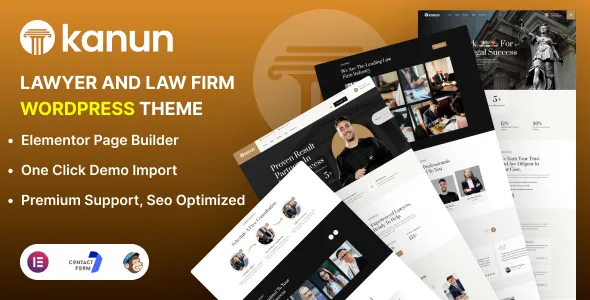
Kanun – Legal Services WordPress Theme
Kanun – Legal Services WordPress Theme is a professional website design solution for law firms, attorneys, advocates, legal consultants, corporate legal departments, and other professionals offering legal services. Designed for the legal industry, Kanun provides a starting point for building a WordPress website that introduces a legal practice, presents areas of expertise, highlights professional experience, and helps potential clients find relevant information. With a structured website layout and suitable customization, legal professionals can create an online presence that reflects their firm’s identity, communicates its services, and provides convenient ways for visitors to make inquiries. The specific features, templates, and customization options available depend on the installed theme version and its documented compatibility.
A law firm website needs to communicate professionalism, clarity, and reliability. Visitors may be looking for information about legal representation, business law, property matters, family law, civil disputes, or other areas of legal practice. They need to understand the firm’s services, learn about its lawyers, and identify the appropriate next step for discussing their requirements. Kanun can serve as a foundation for organizing this information into a clear and accessible website experience. By combining professional branding, informative service pages, accurate lawyer profiles, and straightforward navigation, a legal business can create a website that supports client communication and professional visibility.
WordPress provides a flexible content management system for publishing pages, maintaining articles, managing images, and organizing business information. A legal services theme can help establish a consistent presentation across the website while allowing the firm to adapt its content to its practice areas and audience. Depending on the current version and compatible tools, Kanun may be customized to suit different types of legal businesses, from independent advocates and boutique law firms to established legal consultancies. Reviewing the latest theme demo and documentation before installation is essential to confirm the available layouts, technical requirements, and supported functionality.
What Is Kanun – Legal Services WordPress Theme?
Kanun is a WordPress theme intended for websites focused on legal services and professional law-related businesses. It offers a potential starting point for law firms and legal practitioners who want to present their services, introduce their team, share professional information, and provide clear contact details through a dedicated website.
Legal services often involve complex subjects, specific terminology, and important decisions. A well-organized website helps visitors locate relevant information without needing to navigate through unrelated content. Instead of placing every service and professional detail on one page, a law firm can organize its website into sections dedicated to its practice areas, team members, firm background, articles, and inquiries.
For example, an attorney may need a website that highlights individual legal services and professional qualifications. A corporate law firm may focus on business legal advisory, contracts, company compliance, and commercial matters. An independent legal consultant may prefer a simpler structure emphasizing expertise, consultation arrangements, and contact information.
Kanun can be evaluated for these different use cases according to its available templates and customization options. Website owners should confirm the exact capabilities of the installed version rather than assuming that every legal website feature is included automatically.
Designed for Law Firms and Legal Professionals
Law firms need websites that explain their professional services clearly while maintaining an appropriate and credible presentation. Potential clients often compare firms based on their areas of practice, professional background, experience, location, and communication process.
Kanun can provide a starting point for presenting this information in a structured format. A firm can introduce its legal practice, describe its services, provide lawyer biographies, and explain how prospective clients can make an inquiry.
An individual advocate may prioritize professional qualifications, selected practice areas, and contact information. A larger firm may require separate pages for different legal departments, individual lawyers, firm locations, and informational resources.
The content should reflect the firm’s actual capabilities. Claims about professional experience, qualifications, registrations, certifications, or case outcomes should be accurate and supported by appropriate information. Legal websites should also comply with applicable professional advertising and solicitation rules.
Clear service descriptions help visitors determine whether a firm may be relevant to their situation. Rather than promising a particular outcome, the website can explain the nature of the service, the general process involved, and how a visitor can request further information.
With appropriate customization, Kanun can support a professional website that communicates the firm’s identity and makes important legal information easier to find.
Legal Consultancy and Advisory Website Solutions
Legal consultancy businesses often work with individuals, entrepreneurs, startups, and established organizations that need assistance understanding legal requirements or managing legal matters. Their websites should explain the scope of available services and help visitors identify the appropriate contact pathway.
Kanun can be considered for a legal consultancy website that organizes services into dedicated pages. Depending on the business’s actual offerings, these may cover contract review, business legal advisory, documentation support, corporate matters, regulatory guidance, dispute-related services, or other areas of legal practice.
Each service page should describe the work provided in clear language. It may explain the types of clients served, the general issues addressed, and the information a prospective client should prepare before making an inquiry.
For example, a consultancy working with businesses may describe assistance with commercial agreements, company documentation, or legal risk reviews. A property-focused practice may explain the types of property-related legal matters it handles. A firm serving individuals may provide general information about its relevant areas of practice.
The website should avoid presenting general information as individualized legal advice. It should also make clear that the suitability of a service depends on the facts of a particular matter and the professional’s scope of practice.
A structured consultancy website can help visitors understand the firm’s services before deciding whether to contact it.
Professional Design and Brand Identity
The design of a legal website should support confidence and make information easy to understand. A consistent visual identity helps visitors recognize the firm and navigate between different sections without unnecessary distractions.
Kanun can serve as a foundation for a professional visual presentation, subject to the settings and design controls available in the current version. Website owners can plan their branding around suitable typography, colors, spacing, imagery, and page organization.
Some law firms may prefer a traditional, restrained visual identity, while others may choose a contemporary design that reflects their business-focused approach. Independent legal professionals may prioritize simplicity and personal credibility, whereas larger firms may need a more extensive structure to represent multiple practice areas and team members.
Regardless of the design direction, readability should remain a priority. Headings should identify the purpose of each section, body text should be comfortable to read, and contact information should be easy to locate.
Images should be relevant to the firm and should not create a misleading impression of its services or qualifications. Professional team photographs, appropriate office imagery, and carefully selected supporting visuals can help maintain a consistent appearance.
A coherent design system across the homepage, service pages, lawyer profiles, and articles helps create a unified online presence.
Homepage Structure for Legal Services
The homepage is often the first introduction to a law firm or legal consultancy. It should communicate the firm’s identity, summarize its main services, and guide visitors toward useful information.
A Kanun-based website can be planned around a firm introduction, an overview of practice areas, lawyer profiles, professional background, useful articles, and contact options. The exact structure should be based on the layouts available in the installed theme version.
The introductory section should explain the type of legal services offered and the audience the firm serves. A concise headline can communicate the firm’s focus, while supporting text provides additional context.
A practice-area section can direct visitors to dedicated pages covering specific legal services. A lawyer or team introduction may provide a brief overview of professional backgrounds, while a firm profile can explain the organization’s approach and experience.
The homepage can also include links to relevant educational articles or frequently asked questions. These resources can help visitors understand common legal concepts before contacting the firm.
Calls to action should be clear and appropriate. For example, a button may invite visitors to explore a practice area or submit an inquiry. Avoid making unsupported promises about case outcomes or creating pressure around sensitive legal decisions.
A well-organized homepage helps visitors understand the firm’s services and find the next step that suits their needs.
Practice Area Pages for Better Information Organization
Dedicated practice-area pages help law firms explain different legal services in greater detail. Instead of describing every service in one long section, the website can organize information around specific areas of practice.
Kanun can be evaluated for a website structure that includes individual pages for the services the firm actually provides. Depending on the firm’s expertise, these may include:
- Corporate and commercial law
- Civil litigation and dispute resolution
- Family and matrimonial law
- Property and real estate matters
- Employment and labor law
- Intellectual property law
- Contract drafting and review
- Business legal consultancy
- Legal documentation and compliance support
These are examples of possible practice areas, not a claim that every service is included with the theme or offered by every law firm.
Each page should explain the general nature of the service, the types of matters handled, and how a prospective client can request further information. Content should use accessible language while preserving the accuracy of legal terminology.
The website should also distinguish between the general information published for visitors and advice tailored to a specific legal matter. Where requirements vary by jurisdiction or depend on the circumstances, the content should explain that professional assessment may be necessary.
A clear practice-area structure improves usability and helps visitors identify the services relevant to their needs.
Lawyer Profiles and Professional Credentials
Lawyer profiles provide an opportunity to introduce the people behind the legal practice. Visitors may want to understand a lawyer’s qualifications, professional background, areas of practice, and relevant experience before making contact.
Kanun can be used as a starting point for organizing individual profiles, depending on the available page templates and customization controls. A profile may include the lawyer’s name, professional role, qualifications, practice areas, languages, and a concise biography.
All credentials should be accurate and current. Professional titles, registrations, memberships, and certifications should only be published when the individual is entitled to use them. Where applicable, firms should review local professional rules governing the presentation of qualifications and experience.
Descriptions of experience should be specific and factual. A lawyer may explain the types of matters they handle or the industries they serve without guaranteeing results. If case studies or representative matters are discussed, the firm should ensure that confidentiality obligations and applicable professional requirements are respected.
Consistent profile formatting makes it easier for visitors to compare the information available for different team members. Professional photographs and concise biographies can also help create a more recognizable presentation.
A well-maintained team section supports transparency and helps visitors understand who may be involved in providing the firm’s services.
About Page for Building Professional Credibility
An About page helps explain the firm’s background, values, professional approach, and organizational structure. It provides context beyond the individual service descriptions and allows visitors to learn more about the practice.
With Kanun, a legal business can plan an About page that introduces its history, explains its professional focus, and describes how it works with clients. Depending on the organization, the page may include information about the founding team, practice philosophy, professional experience, and service approach.
The content should focus on verifiable information rather than broad marketing claims. For example, the firm can explain the industries it serves, the types of matters it handles, and its approach to communication or legal research, where these statements accurately reflect its operations.
If the firm publishes information about memberships, registrations, awards, or professional achievements, those details should be checked before publication. Any client testimonials or case-related information should be used only where permitted and appropriately authorized.
A clear About page helps visitors understand the organization behind the website. It should be informative, concise, and consistent with the firm’s professional identity.
Contact Forms and Client Inquiry Management
A legal services website needs a convenient way for prospective clients to ask questions or request information. Clear contact options can help visitors understand how to initiate communication with a law firm.
Kanun can be configured with appropriate contact pathways through its available layouts and compatible form tools. Depending on the installed setup, a website may include a general inquiry form, service-specific inquiry links, telephone details, email information, or an appointment request option.
A form should collect only the information needed for its intended purpose. Basic fields may include a name, contact method, general inquiry category, and a short description of the request.
Because legal matters may involve confidential facts, website owners should be cautious about inviting visitors to submit sensitive documents or detailed case information through an ordinary contact form. The website should explain that submitting an inquiry does not automatically establish a lawyer-client relationship unless the firm’s actual engagement process provides otherwise.
Contact forms should use clear labels, accessible fields, and understandable validation messages. After submission, visitors should receive confirmation that their inquiry was received, without implying that a lawyer has accepted the matter.
Before launch, test form delivery, spam protection, mobile usability, and the handling of submitted information. A clear process for reviewing and responding to inquiries helps maintain professional communication.
Legal Blog and Educational Resources
A legal blog can help a law firm explain general legal concepts, discuss developments in its areas of practice, and answer common questions from potential clients. WordPress provides tools for publishing articles and organizing them into categories.
Kanun can be evaluated for a website that combines service pages with educational content, subject to the blog layouts and publishing options available in the installed version.
Potential article topics include understanding common contract terms, preparing for a property transaction, organizing business documentation, general employment rights, or explaining the purpose of legal notices. Topics should match the firm’s expertise and the needs of its intended audience.
For firms serving India, articles may discuss relevant Indian legal topics when the content is prepared and reviewed appropriately. Laws, rules, procedures, and court decisions can change, so legal articles should be checked against current authoritative sources before publication.
Each article should identify its subject clearly and explain relevant concepts in accessible language. Where the legal position depends on jurisdiction or individual circumstances, the article should make that limitation clear.
Educational content should not promise a particular outcome or imply that a general article can replace advice from a qualified legal professional. A well-maintained blog can help visitors understand general issues and identify when they may need to seek professional assistance.
SEO-Friendly Structure for Legal Websites
Search engine optimization can help people discover a law firm when they search for relevant legal services or information. A theme provides part of the website foundation, but search performance depends on content quality, technical configuration, competition, website usability, and other factors.
A Kanun-based website should organize content around the firm’s genuine practice areas and the questions its intended audience commonly asks. Dedicated service pages can explain specific offerings, while educational articles can address general legal topics in greater detail.
Page titles should describe the content accurately, and headings should help visitors understand each section. Descriptive URLs, logical navigation, and relevant internal links can make the website easier to use and help search engines understand the relationships between pages.
For a firm serving a defined geographic area, location information may be useful when it accurately reflects the firm’s actual operations. Location pages should provide meaningful information rather than repeating nearly identical text for multiple cities.
Images should be optimized for loading performance and include suitable alternative text where appropriate. Compatible SEO plugins may assist with metadata, XML sitemaps, redirects, canonical settings, and supported structured data.
Legal content requires particular attention to accuracy. Avoid publishing outdated information, misleading legal claims, or repetitive keyword-heavy pages. No theme can guarantee a particular search ranking or volume of client inquiries.
A sustainable SEO approach combines useful content, technically sound implementation, accessible design, and regular review of website performance.
Responsive Design for Desktop and Mobile Devices
People may visit a law firm’s website using desktop computers, laptops, tablets, or smartphones. A responsive design helps ensure that service information and contact options remain accessible across different devices.
Kanun should be evaluated for responsive behavior across the templates needed by the firm. The actual experience depends on the installed theme version, WordPress environment, and any additional plugins or custom elements.
On mobile screens, navigation should be easy to operate, text should remain readable, and buttons should be large enough to select comfortably. Lawyer profiles, practice-area descriptions, and article pages should adapt to smaller screen sizes without becoming difficult to read.
Legal websites often contain detailed paragraphs and longer explanations. Appropriate line spacing, clear headings, and concise sections can help visitors navigate this information more comfortably.
If the website includes contact forms or appointment request tools, these elements should be tested on phones and tablets. Embedded maps, external widgets, and custom blocks may also require additional adjustments.
Responsive testing should cover the homepage, practice-area pages, team profiles, articles, and contact pages. Testing the entire website helps identify layout issues that may not appear on the homepage alone.
A consistent experience across devices makes it easier for visitors to access information and contact the firm when needed.
Accessibility and User-Friendly Navigation
Accessibility and usability are important considerations for a professional legal website. Visitors should be able to locate information, understand the content, and use the website’s interactive elements without unnecessary difficulty.
When configuring Kanun, use a logical heading hierarchy, readable font sizes, suitable color contrast, and descriptive link text. Navigation labels should clearly identify the pages they lead to.
Legal information can be complex, so page content should be structured into manageable sections. Short paragraphs, descriptive subheadings, lists, and clear explanations can help visitors navigate unfamiliar terminology.
Forms should identify required fields and provide understandable feedback when information is missing or invalid. Interactive elements should be distinguishable and usable through appropriate input methods, including keyboard navigation where applicable.
Avoid relying on color alone to communicate important information. Images that convey meaningful content should have suitable alternative text, while purely decorative images should not distract from the page’s purpose.
Accessibility depends on the theme, content, plugins, and configuration. Automated tools can help identify some issues, but manual keyboard testing and practical usability reviews are also important.
A clear, accessible website helps a wider range of visitors find the legal information they need.
Website Speed and Performance Optimization
Website performance influences how easily visitors can access legal information and navigate between pages. A slow website may discourage people from reading service descriptions or submitting an inquiry.
The actual speed of a Kanun website depends on its implementation, hosting environment, images, fonts, scripts, plugins, and third-party integrations. A theme alone does not guarantee a particular loading time.
Start by optimizing images and using appropriate dimensions for each display area. Professional photographs and supporting graphics should retain sufficient quality without being unnecessarily large.
Review plugins, external widgets, and decorative effects for their impact on page loading. Only add functionality that serves a clear purpose, and confirm that additional tools are compatible with the installed theme and WordPress version.
Quality hosting, caching, and other performance tools may help when selected and configured according to the website’s measured needs. Test important pages separately because the homepage, service pages, team profiles, and articles may behave differently.
Regular monitoring can help identify oversized assets, inefficient integrations, or issues introduced by updates. A well-maintained website supports a smoother experience for visitors and helps keep essential information accessible.
WordPress Plugin Compatibility and Integrations
A legal services website may require additional tools for contact forms, SEO, analytics, security, backups, or appointment requests. The right combination depends on the firm’s needs and the functionality already available in the installed theme.
Before installing a plugin with Kanun, review its compatibility with the current WordPress version, update history, documentation, licensing terms, and support arrangements.
A form plugin may help manage inquiries, while an SEO plugin can support metadata and sitemap management. Analytics tools may provide information about visitor behavior, subject to applicable privacy and consent requirements. Appointment tools may be useful when the firm has a defined scheduling process.
Legal businesses should pay particular attention to the privacy and security of submitted information. Any service that collects or stores client-related details should be reviewed carefully for its data-handling practices and suitability for the intended purpose.
Avoid installing multiple plugins that perform the same function without a clear reason. Overlapping tools can increase maintenance work and introduce compatibility problems.
After adding or updating an integration, test relevant pages, contact forms, navigation, and responsive layouts. Careful integration management helps maintain a reliable website as the firm’s requirements evolve.
Security and Ongoing Website Maintenance
A professional legal website requires regular maintenance to remain reliable and protect the information visitors provide. Security depends on the complete WordPress environment, including hosting, user permissions, updates, plugins, and any connected services.
Website owners should use reputable hosting, enable HTTPS, create strong administrator credentials, and assign user permissions according to each person’s responsibilities. WordPress, the theme, and compatible plugins should be updated carefully, with backups available before significant changes.
Themes and plugins should be obtained from trustworthy sources. Unused components should be removed where appropriate, and administrator accounts should be reviewed periodically to ensure that access remains limited to authorized individuals.
Regular backups provide a recovery option if an update or configuration change disrupts the website. It is also important to test the restoration process and verify that essential content and settings can be recovered.
Maintenance should include checking contact details, practice-area descriptions, lawyer profiles, article accuracy, privacy notices, and links to external resources. Legal information that refers to current regulations or procedures should be reviewed periodically.
If the website collects personal or confidential information, the firm should ensure that its data-handling practices and privacy documentation reflect the applicable requirements. A planned maintenance routine supports a dependable professional presence.
Who Should Use Kanun – Legal Services WordPress Theme?
Kanun may be suitable for different types of legal professionals and organizations seeking a WordPress website focused on legal services.
Law firms: Firms can introduce their practice, organize service areas, present lawyer profiles, and provide clear inquiry options.
Independent advocates: Individual legal professionals can create a website that explains their areas of practice, professional background, and contact arrangements.
Legal consultants: Consultants can describe their advisory services, explain the types of clients they serve, and publish relevant educational information.
Corporate legal service providers: Businesses offering legal support to organizations can organize information about commercial matters, documentation, and other services they genuinely provide.
Boutique legal practices: Smaller firms can develop a focused website with a clear introduction, selected practice areas, professional biographies, and contact details.
Property law professionals: Practitioners working in property-related matters can create dedicated pages explaining their relevant services and general process.
Family law practitioners: Professionals working in family-related legal matters can provide clear information about their areas of practice and appropriate inquiry methods.
Legal information publishers: Organizations that publish general legal education resources may use a structured website to organize articles and explain their professional purpose.
The suitability of the theme depends on the firm’s requirements, intended audience, and technical setup. Before installation, review the current demo, documentation, supported layouts, customization controls, responsive behavior, and plugin compatibility.
Tips for Building a Successful Legal Website with Kanun
A successful legal website requires more than a professional appearance. The quality of its information, clarity of its navigation, accuracy of its claims, and reliability of its contact process all contribute to the visitor experience.
Begin by defining the website’s primary purpose. Determine whether the firm wants to introduce its practice, explain particular legal services, present a team, publish educational resources, or support several related goals.
Prepare essential content before making extensive design changes. This may include the firm introduction, practice-area descriptions, lawyer biographies, professional credentials, contact details, frequently asked questions, and relevant articles.
Create a consistent visual identity using suitable typography, colors, spacing, and imagery. Replace placeholder content with accurate information, and ensure that all statements about qualifications, experience, and services reflect the firm’s actual position.
Keep navigation straightforward and make important information easy to find. Each practice-area page should explain its purpose clearly and provide an appropriate next step, such as reading related information or making an inquiry.
Review privacy and professional compliance requirements before launch. Test contact forms, links, mobile layouts, page loading, accessibility, and any third-party integrations. Confirm that inquiries reach the correct recipient and that the website does not imply that an engagement has been accepted before the firm’s actual process is complete.
Finally, establish a regular maintenance routine that includes backups, software updates, security reviews, performance monitoring, and content checks. These practices help keep the website accurate, secure, and useful as the legal practice develops.
Final Thoughts on Kanun – Legal Services WordPress Theme
Kanun – Legal Services WordPress Theme is a potential option for law firms, advocates, attorneys, legal consultants, and other professional service providers seeking a WordPress-based website focused on legal services. Its legal industry positioning provides a starting point for presenting practice areas, introducing professionals, sharing general legal information, and helping visitors find appropriate contact options.
A well-planned legal website should combine clear service descriptions, accurate professional profiles, straightforward navigation, accessible content, and a dependable inquiry process. Educational articles and dedicated practice-area pages can help visitors understand the firm’s expertise and find information relevant to their needs.
The actual layouts, customization options, and integrations available with Kanun depend on the installed theme version and compatible components. Reviewing the current documentation and testing the required functionality before installation helps establish whether the theme meets the firm’s needs.
Search visibility and business results also depend on content quality, technical implementation, competition, professional reputation, and ongoing maintenance. No theme can guarantee search rankings, client inquiries, or legal outcomes.
For legal professionals seeking a structured starting point for their online presence, Kanun can be evaluated as part of a broader website development strategy. With thoughtful customization, accurate content, appropriate privacy safeguards, and consistent maintenance, the finished website can support professional communication and help visitors understand the legal services offered.