My Account
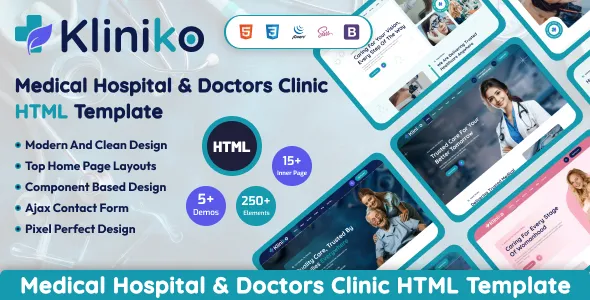
Kliniko – Medical & Healthcare HTML Template
Kliniko – Medical & Healthcare HTML Template is a professional website template designed for hospitals, medical clinics, healthcare centers, private practices, dental offices, diagnostic laboratories, rehabilitation facilities, and other healthcare-related organizations looking to establish a reliable online presence. With a healthcare-focused design direction and an HTML-based foundation, Kliniko provides a starting point for creating informative, accessible, and visually organized medical websites. Whether you want to introduce a healthcare facility, present medical services, showcase healthcare professionals, publish patient information, or help visitors find the right department, this template can be adapted to support a wide range of healthcare website projects.
A well-designed medical website plays an important role in helping patients and visitors access essential information. People often search online for clinic locations, medical services, consultation procedures, opening hours, specialist information, and contact details before visiting a healthcare provider. A clear and professionally organized website can make this information easier to find while helping patients understand what a facility offers and how to contact the appropriate department.
Kliniko – Medical & Healthcare HTML Template is intended to provide a foundation for presenting healthcare information in a structured digital format. Its medical-focused purpose makes it relevant to organizations that need dedicated pages for services, departments, doctors, facilities, health resources, announcements, and contact information. Developers can customize the design, update the content, and adapt the page structure to reflect a particular healthcare brand or practice.
The template can be considered by healthcare organizations, web developers, freelance designers, and digital agencies building websites for medical professionals and healthcare businesses. The exact pages, visual components, integrations, and functional features depend on the supplied package. Buyers should review the current product documentation and demonstration to confirm which elements are included before choosing Kliniko for a specific project.
Professional Website Design for Healthcare Providers
Healthcare websites need to communicate information clearly and create a comfortable browsing experience for patients, caregivers, families, and other visitors. People looking for medical assistance may already feel uncertain about their symptoms, treatment options, or the process of arranging an appointment. An organized website can help reduce unnecessary confusion by making important information easy to understand.
Kliniko provides a starting point for developing a professional healthcare website with a clear content structure. A medical facility can use an adapted homepage to introduce its organization, summarize its services, highlight selected departments, and direct visitors toward contact or appointment information.
A clinic may prioritize its medical specialties, doctor profiles, consultation procedures, and location details. A hospital may require a broader structure that covers multiple departments, diagnostic services, patient resources, and visitor information. A private medical practice may prefer a simpler presentation focused on its practitioners, available consultations, and practical information for new patients.
The final design should reflect the needs of the intended audience. Consistent typography, readable content, meaningful images, and straightforward navigation help visitors understand the website without having to search through unnecessary sections. A professional visual identity can also make the website feel more connected to the healthcare provider’s real-world services.
Suitable for Hospitals and Medical Centers
Hospitals and medical centers often provide a wide range of services and need to communicate information to patients, families, staff, and visitors. Their websites may include details about departments, diagnostic facilities, specialist consultations, visitor procedures, patient support, and administrative contacts.
A customized Kliniko website can be structured to present these details through separate sections. The homepage can introduce the facility and highlight key information, while department pages explain specific services and direct visitors toward the relevant contact channels.
A hospital may organize its website around departments such as cardiology, pediatrics, orthopedics, dermatology, general medicine, and diagnostic imaging, provided those services are actually available. Each department page can describe the service, explain how to obtain further information, and introduce relevant healthcare professionals.
Medical centers can also publish practical information about locations, operating hours, accessibility, parking, and the process for requesting an appointment. Clear information can help visitors prepare for a visit and identify the correct point of contact.
Larger hospitals may require advanced functionality such as appointment management, patient portals, staff directories, or connections to existing hospital systems. These features should be evaluated separately because a static HTML template does not automatically provide a complete hospital management platform.
Website Solution for Private Clinics and Medical Practices
Private clinics need websites that explain their services, introduce their practitioners, and help patients understand how to arrange a consultation. A focused and well-organized online presence can be particularly useful for practices that want to make essential information available outside regular business hours.
Kliniko can serve as a starting point for medical practices that want to establish a professional digital presence. Doctors and clinic administrators can customize the content to introduce their qualifications, areas of practice, consultation arrangements, and patient support information.
A clinic homepage can include a concise introduction, a summary of medical services, links to practitioner profiles, and clear contact details. Additional pages can explain consultation procedures, accepted appointment methods, office hours, and the location of the practice.
For a small clinic, a straightforward website may be sufficient to answer common questions and direct visitors toward telephone or email contact. A larger practice may need separate pages for different specialists, treatment areas, diagnostic services, and patient resources.
All medical information should be accurate, reviewed by qualified professionals where appropriate, and written in language patients can understand. The website should not make unsupported claims about treatment results, medical expertise, or the availability of services.
Medical Services and Healthcare Department Pages
Patients often visit healthcare websites because they want to understand which services are available and where to obtain additional information. Dedicated service pages can help explain these offerings in a clear and organized way.
With appropriate customization, Kliniko can support pages for different medical specialties, consultation types, diagnostic services, preventive care programs, and rehabilitation services. The exact layout depends on the pages provided in the package and the additional work completed during development.
Each service page can include a descriptive heading, an introduction, an explanation of the service, relevant preparation instructions, and contact information. Where appropriate, a page may also introduce the medical professionals responsible for providing that service.
For example, a dental clinic may explain its preventive dentistry, restorative care, and consultation services. A rehabilitation center may present physiotherapy programs and recovery support. A diagnostic center may describe its available testing services and explain how patients can request practical information.
The goal is to make service information easier to explore without overwhelming visitors with medical jargon. Use concise paragraphs, descriptive headings, and clear links to related pages.
Healthcare providers should verify all service descriptions before publication. Eligibility, availability, consultation procedures, and preparation instructions may vary by facility and patient circumstances, so the website should reflect the provider’s actual policies.
Doctor Profiles and Healthcare Professional Information
Introducing healthcare professionals can help patients learn about the people who provide care. A doctor profile may explain a practitioner’s qualifications, specialty, clinical interests, professional experience, and consultation availability.
A customized Kliniko website can include a dedicated section for doctors or healthcare staff if the necessary layouts are available or developed during implementation. Consistent profile formatting helps visitors compare relevant information and identify the practitioner they need.
A profile may include a professional photograph, full name, medical specialty, verified qualifications, languages spoken, and a short biography. Additional details, such as clinic locations or consultation schedules, may be included where appropriate and kept up to date.
Healthcare organizations should verify every published qualification and professional claim. Profile photographs should be used with appropriate permission, and private contact information should not be published without authorization.
For larger medical organizations, a searchable doctor directory may be helpful. Filtering by specialty, location, or other relevant criteria can make a large directory easier to use, but these interactive features may require JavaScript enhancements or backend development beyond the basic template.
Appointment Information and Consultation Requests
Appointment information is one of the most important parts of many medical websites. Visitors need to understand how to contact the clinic, what information to provide, and what to expect after requesting a consultation.
Kliniko can be customized to present appointment instructions, consultation hours, relevant telephone numbers, and links to the appropriate booking service. If the supplied package includes an appointment form, review whether it supports actual submissions or simply displays the visual elements of a form.
A working appointment request system generally requires more than front-end HTML. Depending on the implementation, it may need server-side processing, availability management, confirmation messages, secure storage, and integration with a calendar or scheduling platform.
A basic inquiry form may ask for a patient’s name, contact details, preferred appointment time, and a brief reason for contacting the clinic. Healthcare providers should collect only the information needed for the stated purpose and avoid requesting unnecessary sensitive medical details through an unsecured form.
If appointments are managed through an external booking platform, the website should clearly explain what happens when visitors follow the booking link. Before launch, test the entire process to ensure that requests reach the correct destination and that users receive understandable confirmation or error messages.
Patient Information and Healthcare Resources
A healthcare website can serve as an information resource as well as a point of contact. Patients may want to learn about clinic procedures, visiting arrangements, general preventive care, preparation for appointments, or available support services.
A customized Kliniko website can include patient information pages that answer common questions and explain how the organization operates. These pages may cover registration procedures, appointment policies, accessibility arrangements, contact channels, and other practical matters.
Healthcare providers can also publish educational articles that explain general health topics in an accessible format. Articles might cover preventive health, routine screenings, healthy lifestyle practices, or general information about medical services offered by the organization.
Medical content should be reviewed by appropriately qualified professionals and updated when recommendations or organizational policies change. Information should distinguish general educational guidance from individual medical advice and should encourage readers to contact a qualified healthcare professional when personal assessment is needed.
A well-organized resource section can reduce repetitive administrative questions while helping patients prepare for interactions with the facility. However, educational articles should not be used as a substitute for appropriate clinical evaluation or urgent medical care.
Dental Clinics and Specialized Healthcare Practices
Different healthcare providers have different communication needs. A dental practice may focus on oral health services, while a physiotherapy clinic may prioritize rehabilitation programs and appointment information. A specialist medical practice may need to explain a particular area of care in greater detail.
Kliniko can be adapted to suit these different contexts by changing the content, images, page organization, and visual identity. A dental clinic may present practitioner profiles, treatment descriptions, office information, and consultation instructions. A physiotherapy center may explain available services, rehabilitation approaches, and practical information for patients preparing for a visit.
A dermatology practice could organize content around consultations and available clinical services, while a diagnostic facility might prioritize its testing categories, location details, and instructions for obtaining service information.
These examples describe possible customizations rather than guaranteed built-in modules. The final website should use only the services and information that accurately represent the healthcare provider.
Responsive Design for Mobile and Desktop Users
Patients may access a medical website from a desktop computer, tablet, or smartphone. A responsive layout helps ensure that important information remains usable across different screen sizes.
Before publishing a Kliniko-based website, verify the responsive behavior of the supplied version. If responsive styles are included, test the navigation, service pages, doctor profiles, contact information, forms, and images at multiple viewport sizes. Additional CSS adjustments may be necessary to improve smaller-screen layouts.
Mobile visitors should be able to find telephone numbers, addresses, appointment instructions, and opening hours without excessive zooming or horizontal scrolling. Buttons should be easy to tap, text should remain readable, and the navigation should provide a clear way to move between important sections.
Responsive behavior should be tested using realistic content. Long doctor names, detailed service descriptions, multiple contact methods, and large photographs can expose layout problems that are not visible in a simple preview.
The finished website should be tested across the browsers and devices relevant to its audience. Responsive performance depends on the supplied implementation and any changes made during development, so it should be verified rather than assumed.
Customizable Design and Healthcare Branding
A consistent visual identity helps patients recognize a healthcare provider and understand the relationship between its website and physical services. Clinics and hospitals may already have established logos, colors, typography, and communication guidelines that should be reflected in their digital presence.
Kliniko can be customized to align with a healthcare organization’s branding where the supplied code allows these changes. Developers may update the logo, color palette, fonts, buttons, spacing, imagery, and page content to create a cohesive presentation.
Medical websites often benefit from a clean layout that emphasizes clarity and readability. Important contact details should be easy to locate, headings should explain each section, and interactive elements should be visually recognizable.
Photography should be selected carefully. Relevant images of the facility, consultation rooms, medical professionals, or healthcare environments can make the website more informative. Use properly licensed images and obtain appropriate consent for photographs of identifiable patients or staff.
A professional design should support accurate communication rather than rely on exaggerated claims. Healthcare providers should avoid implying certifications, facilities, treatment capabilities, or medical outcomes that cannot be verified.
HTML5 Foundation for Website Development
HTML5 provides a foundation for structuring website content, including headings, paragraphs, images, links, navigation, and forms. An HTML template can be useful for developers who want direct control over the front-end code and need a starting point for a customized website.
Kliniko offers a healthcare-focused direction for HTML website development. Depending on the supplied package, developers may be able to modify HTML files, adjust CSS styles, update JavaScript behavior, replace images, and create additional pages to suit the project.
For a simple medical website, the HTML foundation may be sufficient for presenting services, staff profiles, contact details, and educational content. Projects requiring frequently updated information or more complex workflows may benefit from connecting the front end to a content management system or custom backend.
Developers should inspect the project structure, dependencies, installation instructions, and customization documentation before making extensive changes. It is also important to review the licensing terms for the template and any included third-party resources.
Remember that a front-end template is not automatically a complete medical application. Patient portals, electronic health records, appointment scheduling, payment processing, and other data-driven services require appropriate software and secure integrations unless explicitly included in the product package.
User-Friendly Navigation and Content Structure
Healthcare websites should make it easy for visitors to locate the information they need. Patients should not have to explore multiple unrelated pages just to find a clinic’s telephone number or learn how to request an appointment.
When customizing Kliniko, organize the navigation around the questions visitors are most likely to ask. Common sections may include Home, About, Services, Doctors, Departments, Patient Information, News, and Contact, depending on the actual services provided and the pages available.
Use descriptive menu labels and keep the hierarchy manageable. Important actions, such as contacting the clinic or visiting the appointment system, should be easy to identify without competing with too many secondary elements.
Each page should have a clear main heading, concise introductory text, and logically arranged supporting sections. Related links can help visitors move between service descriptions, doctor profiles, and appointment information.
For larger healthcare websites, a search feature or categorized service directory may improve navigation. These capabilities may require additional development and should be implemented according to the size of the website and the needs of its users.
SEO-Friendly Structure for Medical Websites
Search engine optimization can help patients discover healthcare providers, medical practices, and relevant service information online. A well-structured website supports this process by making its pages clear, accessible, and useful to visitors.
Kliniko can serve as the design foundation for an SEO-focused healthcare website, but search visibility depends on the implementation and ongoing content strategy rather than the template alone.
Each important page should have a descriptive title, a unique meta description, a clear primary heading, and useful content that accurately reflects the service being offered. A clinic’s location and service area may be included naturally where relevant, provided the information is correct.
Dedicated pages for genuinely distinct services or departments can help visitors find specific information. These pages should offer meaningful explanations rather than repeating generic text with only a few words changed.
Images should be optimized and given appropriate alternative text when they convey meaningful information. Internal links should connect related services and practitioner profiles, while page URLs should be descriptive and easy to understand.
Technical SEO may also involve XML sitemaps, canonical URLs, appropriate indexing directives, redirects, and structured data where suitable. These tasks depend on the final hosting and development setup.
Healthcare content requires particular care because inaccurate medical information can affect important decisions. Content should be reliable, reviewed appropriately, and written with the intended audience in mind. No HTML template can guarantee rankings or specific search traffic.
Website Performance and Image Optimization
Medical websites often use photographs of facilities, practitioners, equipment, and service environments. Large images, unnecessary scripts, and poorly optimized assets can affect page loading time, especially for visitors using slower mobile connections.
Before launching a Kliniko-based website, review the size and format of the supplied images and replace demonstration content with appropriately optimized assets. Images should be sized for their intended display, compressed where suitable, and delivered in modern formats when supported by the target environment.
Developers should also review the JavaScript and CSS files used by the project. Remove unnecessary assets when safe to do so and avoid adding external scripts that do not support the website’s goals.
Caching, compression, and appropriate hosting configuration may improve performance. Below-the-fold images can use lazy loading where appropriate, while essential visible content should load promptly.
Performance testing should be performed after real content and integrations have been added. Browser tools and website audits can help identify large resources, render-blocking scripts, layout shifts, and other issues affecting the user experience.
Actual loading speed depends on the finished implementation, hosting environment, network conditions, and third-party services. Regular testing is therefore important as the website evolves.
Accessibility and Inclusive Healthcare Communication
Healthcare websites should be accessible to people with different abilities, levels of technical experience, and methods of browsing. Accessibility can help visitors locate important information and use essential contact or appointment features more effectively.
When customizing Kliniko, developers should use semantic HTML, logical heading structures, descriptive links, meaningful image alternatives, and properly labeled form controls. Interactive menus and buttons should be usable with a keyboard, and visible focus indicators should help users understand which element is currently selected.
Text should have sufficient contrast against its background, and important information should not rely on color alone. Forms should explain what information is required and provide clear error messages when a field is incomplete or invalid.
Medical language should be understandable to the intended audience. Where technical terms are necessary, provide explanations when appropriate. Instructions about appointments, clinic locations, and service procedures should be written clearly and organized into manageable sections.
Accessibility should be tested using both automated tools and manual review. Healthcare organizations should consider applicable accessibility standards and legal requirements and evaluate the completed website before making it publicly available.
Secure Handling of Patient Inquiries
Medical websites may receive sensitive information through appointment requests, contact forms, or other communication channels. These forms should be designed carefully to reduce unnecessary data collection and protect submitted information.
If Kliniko includes contact or appointment form layouts, verify whether they are functional or only provide a front-end interface. A working form may require a backend service, secure submission handling, validation, spam prevention, and a reliable destination for messages.
Collect only the information required for the stated purpose. Avoid requesting detailed medical histories, diagnostic information, or other sensitive information through a basic website form unless the organization has established an appropriate secure process for handling it.
The website should communicate how submitted information will be used and provide relevant privacy information. Access to inquiries should be restricted to authorized personnel, and the organization should follow applicable privacy and data protection requirements.
A secure website requires more than a visual form and an HTTPS connection. The complete submission workflow, storage system, access controls, and any third-party integrations should be evaluated according to the sensitivity of the information being processed.
Useful for Healthcare Web Designers and Agencies
Freelance developers and digital agencies often build websites for clinics, dentists, hospitals, diagnostic centers, therapists, and specialist medical practices. A healthcare-focused HTML template can help establish a starting design for these client projects.
Kliniko can be evaluated for client work when its supplied layouts, source code, and licensing terms match the project requirements. Developers can adapt the website to the client’s branding, organize the relevant service information, and identify which additional features are necessary.
A structured workflow begins by gathering information about the healthcare provider, its services, target audience, location, brand guidelines, and communication requirements. The developer can then map the content to the available layouts and determine whether additional pages or integrations are needed.
Before launch, test the finished website for responsive behavior, working links, form submissions, content accuracy, accessibility, and loading performance. Contact details and service descriptions should be approved by the client, while medical content should receive suitable professional review.
Agencies should also confirm the template license and the terms of included photographs, icons, fonts, and third-party libraries. Permission to use a template does not necessarily grant unrestricted rights to every asset in its package.
Important Things to Check Before Purchase
Before selecting Kliniko – Medical & Healthcare HTML Template, review the current product demonstration and documentation to confirm that it matches the intended project.
Check the available homepage designs, inner-page layouts, doctor profiles, service pages, department sections, contact layouts, and any other components required for the website. Confirm responsive behavior, supported browsers, dependencies, and the instructions for installing and customizing the files.
If the project requires appointment booking, doctor search, patient accounts, online payments, or integration with an existing medical system, verify whether those features are included. Many HTML templates provide visual layouts without the complete backend functionality needed to operate these systems.
It is also helpful to review the code organization, asset folders, styling approach, and documentation. A clear understanding of the supplied implementation can make customization and future maintenance easier.
Finally, consider the privacy and security requirements of the healthcare organization. If the website will collect patient information or connect to medical systems, plan the necessary secure infrastructure and verify that the complete implementation meets the relevant operational and legal requirements.
Conclusion
Kliniko – Medical & Healthcare HTML Template provides a starting point for developing professional websites for hospitals, clinics, private medical practices, dental offices, diagnostic centers, rehabilitation facilities, and other healthcare providers. Its medical-focused purpose makes it relevant to projects that need to present healthcare services, introduce medical professionals, share patient information, and make contact details easier to find.
By customizing the design and content, developers can create a website that reflects a healthcare organization’s identity and helps visitors navigate essential information. Clear service descriptions, accessible layouts, accurate practitioner profiles, responsive behavior, and carefully organized navigation all contribute to a more useful patient-facing experience.
For the best results, combine the template with verified healthcare content, appropriate accessibility testing, optimized images, technical SEO, and regular maintenance. Features such as appointment scheduling, patient portals, and secure information processing should be verified or developed separately rather than assumed to be included.
If you are planning a medical or healthcare website, Kliniko – Medical & Healthcare HTML Template is worth evaluating against your content needs, desired features, documentation, compatibility, and licensing requirements. With thoughtful customization and suitable technical implementation, it can provide a foundation for presenting healthcare information in a professional, organized, and accessible way.