My Account
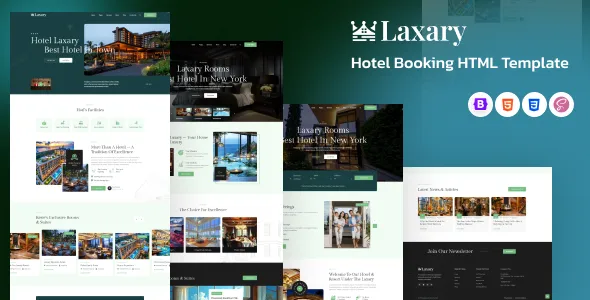
Laxary – Hotel Booking HTML Template
Laxary – Hotel Booking HTML Template is a professionally designed website template created for hotels, resorts, luxury accommodations, boutique properties, guest houses, vacation rentals, and hospitality businesses looking to establish a modern online presence. Designed around the needs of the hospitality industry, Laxary provides a frontend foundation for presenting accommodation options, showcasing property facilities, introducing hospitality services, and communicating with potential guests. Whether you are developing a website for a luxury hotel, a boutique resort, a vacation property, or a hospitality management business, this HTML template can serve as a starting point for building an attractive and informative digital experience.
A professional hotel website plays an important role in helping travelers explore accommodation options, understand available amenities, view property photographs, and discover essential booking information. Visitors often compare room categories, facilities, locations, and services before making travel arrangements. Laxary is intended to support these requirements through a hospitality-focused website structure that can be customized according to the property’s branding and business objectives.
As an HTML template, Laxary provides frontend design resources for website development rather than automatically delivering a complete hotel reservation management system. Developers can customize its HTML, CSS, JavaScript, and included assets to build a website suited to their needs. Functional features such as real-time room availability, reservation processing, payment gateways, guest accounts, and booking management require suitable backend development or third-party integrations unless explicitly included in the purchased package.
What Is Laxary Hotel Booking HTML Template?
Laxary is an HTML website template intended for hospitality businesses that need a dedicated digital platform to present accommodation services and property information. Its hotel-oriented design direction makes it relevant to projects involving room listings, hospitality facilities, guest experiences, and reservation-related communication.
Hotels and resorts require websites that combine attractive visual presentation with practical information. Guests should be able to explore accommodation options, review room details, understand available facilities, and locate relevant contact or booking information without unnecessary navigation.
Laxary can be considered for different hospitality website projects, including luxury hotels, boutique accommodations, resorts, vacation rentals, serviced apartments, and guest houses. Developers can customize the available layouts and content structure to reflect the property’s services, brand identity, and target audience.
The exact pages, components, and technical resources depend on the supplied package. Before implementation, developers should review the product demo, source files, documentation, and dependencies to confirm the available features and compatibility requirements.
Modern Website Design for Hotels and Resorts
A hotel website should communicate the property’s identity, atmosphere, and accommodation experience while making important information easy to access. A well-organized website can help visitors explore the property and understand its offerings before contacting the business or making a reservation.
Laxary can serve as a starting point for creating a hospitality website with sections such as Home, About Us, Rooms, Suites, Amenities, Gallery, Services, Testimonials, and Contact, depending on the layouts included in the package.
A hotel homepage may introduce the property through an engaging visual section, followed by room highlights, hospitality facilities, featured experiences, and relevant guest information.
Luxury hotels may emphasize premium accommodation, elegant interiors, and personalized hospitality. Resorts may focus on recreational facilities, outdoor experiences, and leisure activities. Boutique properties may prioritize their distinctive atmosphere and personalized services.
The website should reflect the property’s actual offerings and maintain a consistent visual identity. A balanced combination of photographs, readable content, and intuitive navigation can help create a professional hospitality presentation.
Room Listings and Accommodation Details
Room listings are an important component of hotel websites because travelers often compare accommodation categories before making decisions. Clear room information helps visitors understand available options and identify the accommodation that suits their requirements.
Laxary can be customized to present room categories and accommodation details through suitable frontend layouts, depending on the available package components.
A room listing may include photographs, room names, descriptions, occupancy information, bed arrangements, and relevant amenities. Individual room pages can provide additional information about the accommodation experience and available facilities.
Hotels may organize their listings into categories such as standard rooms, deluxe rooms, executive rooms, suites, family rooms, or other accommodation types, depending on their actual inventory.
Developers should ensure that the information presented is accurate and consistent with the property’s services. Room rates, occupancy limits, and availability should not be displayed as live data unless they are connected to an appropriate booking system.
A well-organized room presentation helps visitors explore the accommodation options and understand the property’s hospitality offering.
Hotel Reservation and Booking Interface
An online booking interface can make it convenient for travelers to inquire about accommodation or begin a reservation. Hotel websites often provide booking-related elements that allow visitors to enter travel dates, guest information, and room preferences.
Laxary can serve as a frontend starting point for developing booking-related interfaces, depending on the components included in the template. Developers may customize date fields, guest selectors, room selection areas, and inquiry forms where supported by the supplied resources.
However, a functional reservation system requires more than a visual booking form. Real-time availability, date validation, room inventory management, reservation confirmation, cancellation policies, and payment processing require suitable backend functionality or external integrations unless explicitly included in the package.
Hotels may also require connections to property management systems, channel managers, or booking engines. These integrations should be evaluated according to the property’s operational requirements.
The booking process should be designed to communicate essential information clearly and help guests understand the next steps without confusion.
Responsive Design for Hospitality Websites
Responsive design is important for hotel websites because travelers frequently research accommodation using smartphones and tablets. A website should provide a convenient browsing experience across different devices and screen sizes.
Laxary is positioned as an HTML template for hotel booking websites, making responsive presentation an important consideration for its intended use. Developers should verify the actual responsive behavior through the product demo and test the customized website across different screen dimensions.
On mobile devices, room photographs should display appropriately, navigation should remain easy to use, and booking-related elements should be accessible without excessive scrolling or zooming.
Responsive design also helps maintain consistency across the website’s different sections, including room listings, galleries, amenities, and contact pages.
Custom CSS, external scripts, and additional integrations can influence the final layout. Developers should test the complete website after customization to identify potential responsive issues and ensure that the interface remains usable.
Homepage Design and Hospitality Content Organization
The homepage is often the first introduction to a hotel or resort. It should communicate the property’s identity and help visitors discover the information most relevant to their stay.
Laxary can be customized to organize homepage content around a prominent introductory section, accommodation highlights, property facilities, hospitality services, featured experiences, and contact opportunities, depending on the included layouts.
A hotel homepage may introduce the property through photography and descriptive content. Room summaries can guide visitors toward accommodation pages, while amenity highlights can explain the facilities available to guests.
Resorts may feature recreational experiences and leisure activities, while boutique hotels may emphasize distinctive design and personalized hospitality.
A clear content hierarchy helps visitors navigate the website without feeling overwhelmed. Every section should contribute to the overall presentation or provide information that supports the guest’s decision-making process.
Hotel Amenities and Hospitality Services
Amenities and hospitality services can influence how travelers evaluate accommodation. Hotel websites should clearly communicate the facilities and services that guests can expect during their stay.
Laxary can provide a frontend foundation for presenting hotel amenities and hospitality-related information, depending on the available page components.
A property may feature facilities such as restaurants, swimming pools, fitness centers, spa services, conference rooms, parking, Wi-Fi, or other amenities when these are genuinely available.
Dedicated service sections can explain dining experiences, guest assistance, transportation arrangements, recreational activities, and other hospitality offerings.
Developers should ensure that amenity descriptions are accurate and relevant to the property. Information about operating hours, service availability, and additional charges should be reviewed before publication.
A well-organized presentation of facilities helps guests understand the accommodation experience and find answers to common questions.
Hotel Gallery and Property Photography
Visual presentation is particularly important for hospitality websites because travelers often evaluate properties through photographs before making a reservation.
Laxary can be customized to showcase hotel interiors, room categories, common areas, facilities, and surrounding attractions through appropriate image layouts, depending on the package contents.
A property gallery may include photographs of guest rooms, suites, reception areas, restaurants, swimming pools, gardens, meeting facilities, and other relevant spaces.
Developers should prioritize authentic and high-quality images that accurately represent the property. Photographs should be optimized for web performance while retaining sufficient visual quality.
Images can be organized by category to help visitors explore different areas of the hotel. Descriptive captions may provide useful context about the facilities or accommodation being presented.
A carefully organized gallery can strengthen the website’s visual presentation and help potential guests understand the property’s environment.
Customization and Hotel Brand Identity
A hotel website should reflect the property’s brand identity and hospitality style. Customization allows developers to adapt the visual presentation to the business’s positioning and intended audience.
Laxary can be customized using the available HTML, CSS, JavaScript, and frontend assets included in the package. Depending on the supported components, modifications may involve colors, typography, spacing, navigation, image sections, and page layouts.
A luxury hotel may prefer a refined visual presentation with elegant typography and carefully selected photography. A resort may use a more vibrant style that emphasizes leisure and recreational facilities. A boutique property may focus on distinctive visual elements that reflect its individual character.
Consistency is important across the homepage, room listings, amenities, galleries, and contact sections. A defined visual identity helps maintain a professional and recognizable website.
Before making extensive changes, developers should review the template’s source structure and documentation. Organized customization and regular testing can help simplify maintenance.
Location Information and Travel Convenience
Location information is an important part of a hotel website because travelers often consider accessibility, nearby attractions, transportation, and surrounding facilities when selecting accommodation.
Laxary can be customized to present property location details and relevant travel information, depending on the included components.
A hotel website may provide an address, directions, nearby attractions, transportation information, and details about the surrounding area. A map integration can help visitors understand the property’s location and plan their journey.
Hotels located near airports, business districts, tourist attractions, beaches, or transportation hubs may highlight these details when they accurately reflect the property’s location.
Developers can also include practical information about check-in procedures, parking arrangements, and transportation services where applicable.
Clear and accurate location information helps visitors understand the property’s accessibility and plan their stay more conveniently.
Contact Forms and Guest Inquiries
Contact opportunities are important for hotel websites because travelers may need clarification about accommodation, services, group bookings, or special requirements before making a reservation.
Laxary can be customized to include contact sections and inquiry forms where supported by the supplied frontend resources.
A general inquiry form may collect a visitor’s name, email address, contact number, and message. A reservation inquiry form may require additional information such as travel dates, guest count, accommodation preferences, and special requests.
The actual information collected should depend on the property’s needs. Forms should remain straightforward and avoid requesting unnecessary personal details.
An HTML form does not automatically process submissions, send confirmation emails, or store reservation information. These functions require suitable backend development or third-party integrations unless explicitly included in the package.
Before launch, developers should test form validation, submission handling, email delivery, and confirmation messages.
SEO-Friendly Structure for Hotel Websites
Search engine optimization can help hotels improve the discoverability of their websites and attract travelers searching for relevant accommodation and hospitality services.
Laxary can be customized to support a logical website structure with descriptive page titles, meaningful headings, organized room listings, and relevant content.
Hotels may create dedicated pages for accommodation categories, hospitality services, facilities, dining experiences, and location information. This helps visitors explore specific topics and understand the property’s offerings.
Descriptive URLs and internal links can connect room pages with amenities, galleries, and contact sections. Informational content about the property or surrounding area may also support visitors who are researching their travel plans.
Images should use appropriate filenames and alternative text when relevant. Page resources should be optimized to support efficient loading and a convenient browsing experience.
Compatible SEO tools can help manage metadata, sitemaps, canonical settings, and indexing controls. Developers should review the completed website for broken links, duplicate content, and technical issues.
SEO content should remain informative and natural. Avoid keyword stuffing and unsupported claims about the property, accommodation, or guest services.
Performance Optimization and Website Speed
Website performance is important for hospitality businesses because visitors may browse hotel websites while traveling or using mobile connections.
The performance of a Laxary-based website depends on its implementation, image assets, scripts, hosting environment, and additional integrations.
Developers can improve performance by compressing property photographs, using suitable image dimensions, reviewing unnecessary scripts, and reducing oversized frontend resources.
Image-heavy room galleries and property sections should be optimized carefully to balance visual quality and loading speed.
Caching and other performance tools may help depending on the hosting environment and website requirements. These should be selected based on measured performance rather than added without evaluation.
Performance testing should include the homepage, room pages, gallery sections, amenities, and booking-related interfaces. Different layouts may behave differently, particularly when they contain large photographs or interactive elements.
Regular monitoring helps maintain a responsive experience as the website grows.
Integrations and Additional Booking Functionality
Hotels often require additional functionality beyond the frontend resources supplied with an HTML template. The appropriate integrations depend on the property’s operational requirements.
Laxary can serve as a starting point for a customized website connected to suitable backend systems or third-party services.
Potential integrations may include booking engines, property management systems, channel managers, payment gateways, email notifications, customer relationship management tools, and analytics services.
A reservation system may require room inventory management, date availability, pricing rules, booking confirmation, cancellation handling, and payment processing.
These capabilities depend on the backend architecture and external systems used during implementation. Developers should review compatibility, documentation, security requirements, and ongoing maintenance responsibilities before choosing integrations.
Avoid assuming that a frontend booking form automatically provides complete reservation functionality. Each integration should be tested carefully to ensure that it works as intended.
Security and Website Maintenance
A professional hotel website requires ongoing maintenance to remain reliable, secure, and up to date.
When customizing Laxary, developers should review the security implications of external scripts, contact forms, integrations, and backend connections. Appropriate security practices depend on the website architecture and the type of information collected.
If the website includes reservation inquiries or guest information, submission handling and data storage should be implemented responsibly. Access permissions, secure communication, and relevant privacy requirements should be considered.
Hotels should also maintain accurate information about room categories, amenities, operating details, policies, contact information, and property services.
Regular backups, technical testing, and content reviews help reduce avoidable issues. A planned maintenance routine supports a dependable website experience over time.
Who Should Use Laxary Hotel Booking HTML Template?
Laxary can be evaluated by different hospitality businesses and developers looking for a hotel-focused HTML website foundation.
Luxury hotels: Properties can create websites that highlight accommodation, premium facilities, hospitality services, and guest experiences.
Boutique hotels: Independent properties can establish a distinctive online identity and present their accommodation options.
Resorts: Hospitality businesses can showcase rooms, recreational facilities, dining experiences, and leisure activities.
Guest houses: Smaller accommodation providers can organize room information, property details, and contact opportunities.
Vacation rental businesses: Developers can customize the template to present accommodation listings and property information, depending on the required functionality.
Serviced apartments: Businesses can develop websites that introduce accommodation categories, facilities, and guest services.
Hospitality website developers: Freelancers and agencies can use the template as a starting point for customized hotel and accommodation website projects.
The suitability of Laxary depends on the actual package contents, technical requirements, customization needs, and additional functionality required for the project.
Tips for Building a Successful Hotel Website with Laxary
A successful hotel website should communicate the property’s identity clearly and help visitors explore accommodation options and hospitality services conveniently.
Begin by identifying the website’s primary purpose. Determine whether the property focuses on luxury accommodation, boutique hospitality, resort experiences, vacation rentals, or another specific category.
Prepare essential content before customizing every page. This may include property information, room descriptions, amenities, photographs, location details, policies, and contact information.
Use consistent branding and replace placeholder content with authentic property photographs. Clear navigation helps visitors locate room information, facilities, and booking-related details without unnecessary steps.
Test the website across different screen sizes and browsers. Review loading performance, image display, navigation, forms, and any interactive components.
If the business requires real-time reservations, payment processing, or property management integration, plan the backend functionality separately and verify the necessary technical requirements.
Finally, establish a maintenance process that includes backups, security reviews, performance monitoring, and periodic content updates. These practices help keep the website accurate and reliable as the business develops.
Final Thoughts on Laxary Hotel Booking HTML Template
Laxary – Hotel Booking HTML Template is a potential frontend solution for hotels, resorts, boutique accommodations, guest houses, vacation rental businesses, and hospitality providers looking to establish a professional online presence.
Its hospitality-focused design direction can help organize accommodation information, present property facilities, showcase photographs, and communicate guest services through a structured website experience.
As an HTML template, its role is to provide a website design and development foundation rather than automatically deliver a complete hotel reservation management platform. Features such as real-time room availability, booking confirmation, payment processing, guest accounts, reservation management, and property management system integration require additional implementation unless explicitly included in the purchased package.
Before selecting Laxary for a project, review the current demo, included pages, source files, technical dependencies, and documentation to ensure that the template aligns with the intended requirements.
With thoughtful customization, authentic property photography, clear accommodation information, responsive testing, and ongoing maintenance, Laxary can serve as a useful foundation for building a professional hotel website that supports hospitality communication, accommodation discovery, and guest inquiries.